
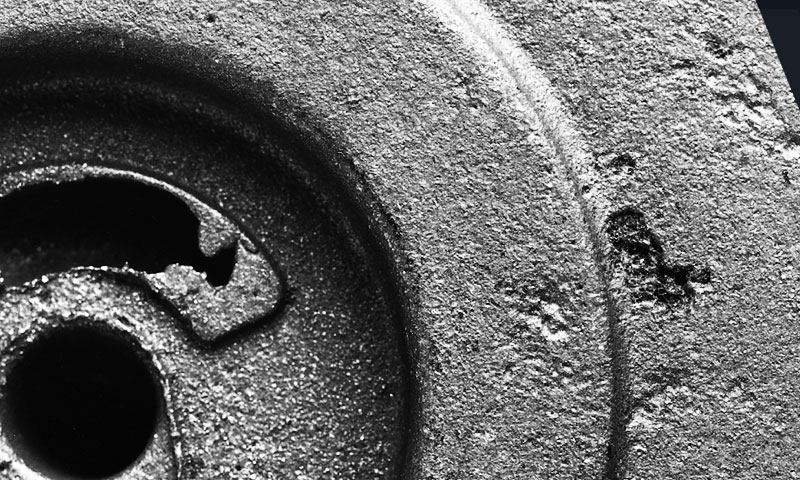
1. การแนะนำ
ความแม่นยำ (การลงทุน) การหล่อใช้กันอย่างแพร่หลายสำหรับใบพัดปั๊ม, ตัววาล์ว, ส่วนประกอบเทอร์โบ, medical implants and bespoke parts where geometry, surface finish and metallurgical integrity are critical.
สแตนเลส are attractive for those applications because of corrosion resistance, mechanical properties and heat-resistance.
But the combination of complex shapes, thin sections and stainless-steel metallurgy amplifies the risk of defects.
Mitigating these risks requires an integrated approach from material selection and pattern design through melting, shell manufacture, เท, การรักษาความร้อน, inspection and finishing.
2. Key stainless-steel families used in precision casting
- ออสเตนนิติก (เช่น, 304, 316, 321, CF-3M): High Ni/Cr content, good ductility and corrosion resistance.
Austenitics are forgiving in terms of cracking but are prone to gas porosity (ไฮโดรเจน), surface oxidation and internal carburization/decoking in some atmospheres.
They do not transform on cooling, so control of solidification and inclusion cleanliness is key. - ดูเพล็กซ์ (ferritic-austenitic): Higher strength and improved SCC resistance in some environments.
Duplex grades are more sensitive to thermal history: prolonged exposure in the 300–1000°C range can promote embrittling phases (ซิกม่า), and imbalance in cooling can lead to undesired ferrite/austenite ratios. - มาร์เทนซิติก / การตกตะกอน (เช่น, 410, 17-4พีเอช): Used when higher strength/stiffness or hardness is needed.
These alloys can be more susceptible to cracking if solidification shrinkage or thermal gradients are not properly managed and require careful post-casting heat treatment. - High-alloy/specialty (เช่น, 6โม, 20Cr-2Ni): Increased alloying can intensify problems with segregation, oxidation and refractory compatibility; melting practice and slag control become even more important.
3. The precision casting process — critical steps and controlling variables
Key stages where defects are introduced:
- ลวดลาย & การออกแบบ gating: wax or polymer pattern, ทางเข้าออก, riser strategy, เนื้อ, ร่าง.
- Shell building: slurry chemistry, stucco size, drying/cure cycles and shell thickness control.
- Pattern removal / dewax: cleanliness and absence of residues.
- อุ่น / อบ: controlled temperature to remove residual organics and to control thermal shock.
- ละลาย & metal treatment: melting practice (induction, vacuum induction, cupola avoided for stainless), การทำออกซิเดชั่น, slag removal, การขจัดคราบ (อาร์กอน), inclusion control, and alloy chemistry accuracy.
- เท: อุณหภูมิเท, เทคนิค (bottom/top pour), สำหรับม้าม, and atmosphere control.
- การแข็งตัว & การทำให้เย็นลง: การแข็งตัวของทิศทาง, riser performance, control of thermal gradients.
- Shell removal, cleaning and fettling: mechanical and chemical cleaning, การตรวจสอบ.
- การบำบัดความร้อนหลังการหล่อ: วิธีแก้ปัญหาการหลอม, ดับ, การแบ่งเบาบรรเทา, stress relief as dictated by alloy and mechanical needs.
- การทดสอบแบบไม่ทำลาย & จบ: NDT, เครื่องจักรกล, HIP if specified, surface finishing and passivation.
Control variables include: melt cleanliness and chemistry, shell porosity and permeability, preheat profile, pouring temperature and turbulence, risering and feeder configuration, and post-casting thermal cycles.
4. Most common defects in stainless-steel precision castings
This section lists the defects that most frequently appear in stainless-steel การหล่อการลงทุน, explains how and why they form, and gives practical detection, prevention and remediation measures.
ความพรุนของแก๊ส (ช่องลม, รูเข็ม, honeycomb porosity)
What it looks like: spherical or rounded voids distributed through the casting; surface-breaking pinholes or clusters of subsurface porosity; sometimes a honeycomb network in interdendritic regions.
Root causes: dissolved gas (predominantly hydrogen, sometimes nitrogen/oxygen) released during solidification; moisture or volatile organics in the shell or pattern; inadequate degassing; turbulent pouring entraining air or dross; reactions in the melt producing gas.
How to detect: ภาพ (surface pinholes), dye-penetrant for surface-breaking pores, radiography/CT for subsurface porosity, ultrasonic or helium leak testing for pressure-critical parts.
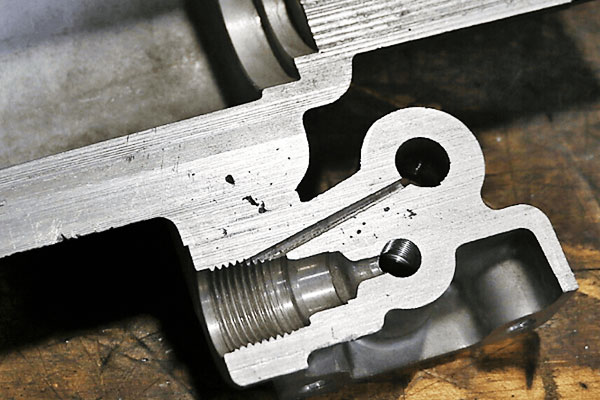
การป้องกัน: dry shells rigorously and control dewax/ash removal; perform melt degassing (argon/argon-oxygen mixes, การกำจัดสูญญากาศ);
use clean charge materials and minimize reactive flux; pour with laminar flow or bottom-pour techniques; control pouring temperature to balance fluidity vs gas pick-up.
Remediation: กด isostatic ร้อน (สะโพก) to close internal porosity where function demands; local machining to remove surface pores; weld repair for isolated defects if metallurgy and design permit.
ความพรุนหดตัว (interdendritic shrinkage)
What it looks like: irregular, often interconnected voids concentrated at last-to-freeze locations (thick sections, junctions)—may appear as a dendritic network or central void.
Root causes: inadequate feeding during solidification; alloys with wide freezing ranges that promote interdendritic shrinkage;
poor riser/gating placement; insufficient superheat or over-insulation that delays solidification at hot spots.
How to detect: radiography and CT for internal void mapping; metallographic sectioning to confirm interdendritic morphology.
การป้องกัน: apply directional solidification practices—place risers/feeders on last-to-freeze volumes, use chills to modify solidification path, revise gating to ensure feeding, use simulation software to verify hot-spot behavior.
Remediation: HIP to densify internal shrinkage; redesign to add feeding or change section geometry for subsequent production; localized weld build-up for allowable, accessible shrinkage.
Inclusions and slag entrapment
What it looks like: dark angular particles or stringers in the matrix (ตะกรัน, ฟิล์มออกไซด์, refractory fragments), sometimes visible on machined surfaces or in fracture cross sections.
Root causes: inadequate skimming/slag removal in furnace, turbulent pour entraining dross, incompatible shell materials spalling into the melt, inadequate fluxing, or insufficient melt refining.
How to detect: radiography/CT for larger inclusions, metallography for small particles, white-etch inspection and fractography for failure analysis.
การป้องกัน: rigorous melt cleaning (การอ่านผ่านๆ, การไหล), controlled pouring to avoid turbulence, bottom-pour or submerged pouring where practical,
compatible shell formulation with controlled friability, and periodic ladle transfer practices that minimize slag entrainment.
Remediation: machining out surface inclusions; weld repair or section replacement for load-bearing parts; improved melt practice and inspection before subsequent pours.
Cold shuts and misruns (ไส้ที่ไม่สมบูรณ์)
What it looks like: surface lines, cold lap lines, incomplete sections, or thin areas where the cavity was not fully filled.
Root causes: low pouring temperature, insufficient molten metal flow, poor gating or venting, excessive shell permeability or wet spots, overly thin sections or long flow paths.
How to detect: visual inspection and dimensional checks for surface defects; CT/radiography to confirm incomplete fill in concealed regions.
การป้องกัน: validate gating and venting for laminar, uninterrupted flow; adjust pouring temperature and pour rate to maintain fluidity;
ensure uniform section thickness or add feed channels; improve shell drying to avoid localized cooling.
Remediation: rework by welding and machining where geometry allows; redesign gating for future runs.
ร้อนน้ำตาแตก / แคร็กร้อน (solidification cracks)
What it looks like: irregular cracks in regions that solidify last, often on external surfaces or near fillets and constrained features, appearing during cooling.
Root causes: tensile strains during the semi-solid/late-solidification interval when metal ductility is low; constrained geometry, abrupt section changes, inadequate feeding or poor mold compliance; alloys with wide solidification ranges are more susceptible.
How to detect: visual and dye-penetrant for surface cracks; radiography/CT for subsurface cracks; metallography to confirm solidification morphology and crack timing.
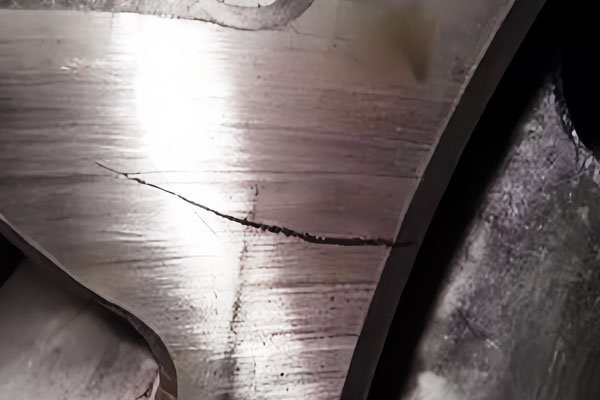
การป้องกัน: design to reduce restraint (เพิ่มเนื้อ, increase radii, avoid rigid cores that fix movement), modify gating/riser strategy to reduce tensile strain during solidification,
use mold materials with slight compliance or insulating sleeves, and refine casting sequence to reduce thermal gradients.
Remediation: sometimes repairable by weld overlay and post-weld heat treatment if geometry and metallurgy permit; otherwise redesign and reissue tooling.
What it looks like: ความขรุขระ, sharp embedded refractory particles, loose shell fragments or sections of scale that flake off. Shell washout can create large surface cavities.
Root causes: weak shell (inadequate stucco, underbaked shell), chemical attack between molten metal and shell binder, excessive pouring turbulence, or excessive metal temperature causing shell breakdown.
How to detect: visual inspection of as-cast surface, metallography to identify refractory inclusions, and fractography to determine shell bonding involvement.
การป้องกัน: control slurry composition and stucco grading, apply correct shell drying and dewax schedules, use shell coatings where appropriate to limit metal-shell reaction, and use appropriate pour practices to limit mechanical erosion.
Remediation: remove and patch surface cavities by welding and machining; rework or scrap if contamination compromises structural integrity; correct shell process for subsequent runs.
ออกซิเดชัน, scale formation and surface contamination
What it looks like: heavy oxide scale, black/gray surface films, dark spots or staining; in severe cases, spalled oxide exposing rough metal.
Root causes: exposure to air/oxygen at elevated melt/pour temperatures, inadequate protective flux/cover, dewax residues or carbonaceous contaminants leading to localized reactions.
How to detect: visual inspection, surface chemistry tests, and optical/metallographic cross sections to inspect oxide thickness and penetration.
การป้องกัน: use protective flux covers or inert gas covers over the melt, control pour temperature and atmosphere, ensure thorough dewaxing and shell washing, and specify appropriate shell and coating systems that minimize reaction.
Remediation: mechanical removal (ยิงระเบิด, บด), chemical cleaning, การขัดด้วยไฟฟ้า, and passivation to re-establish corrosion-resistant surface; in severe cases, replace the part.
คาร์บูริเซชั่นคาร์โบไฮเดรต / decarburization and surface chemistry changes
What it looks like: darkened or brittle surface layer (carburization) or soft, depleted surface (decarburization), leading to reduced fatigue resistance and localized corrosion susceptibility.
Root causes: carbon diffusion from binders, residual wax, carbonaceous shell components, or reducing atmospheres during heat treatment; decarburization caused by oxidizing atmospheres or over-baking at elevated temperatures.
How to detect: microhardness profiling, metallographic cross sections, surface carbon/sulfur analysis.
การป้องกัน: choose shell systems and binders with low residual carbon, control baking/heat cycles, incorporate bake-out protocols that eliminate volatiles, and use controlled atmosphere furnaces for heat treatment.
Remediation: machining to remove compromised surface, appropriate heat treatment in inert or vacuum atmosphere, or localized grinding followed by passivation.
Segregation and centerline / macrosegregation
What it looks like: compositional variations across large casting sections—concentration of alloying elements or impurities at the centerline or other hot spots, sometimes accompanied by hard or brittle microconstituents.
Root causes: dendritic segregation during solidification, slow cooling rates in large sections, long freezing ranges for some stainless alloys, and lack of homogenizing heat treatment.
How to detect: chemical mapping (EDS/WDS), microhardness surveys, metallography and compositional analysis across sections.
การป้องกัน: control solidification rate via chills or modified sectioning, optimize gating to reduce long solidification paths,
use homogenization anneal when geometry and metallurgy allow, and consider melt technology (VIM/VAR) to reduce macrosegregation.
Remediation: homogenization heat treatment to reduce segregation effects or component redesign to avoid critical property dependence on segregated regions; HIP with subsequent heat treat can also mitigate.
การบิดเบือน, residual stresses and post-machining cracking
What it looks like: warped parts, out-of-tolerance dimensions after shell removal or heat treatment; cracking during machining or in service.
Root causes: non-uniform cooling, การแปลงเฟส (in martensitic or duplex grades), constrained cooling, machining that releases built-in residual stress, and inappropriate heat treatment schedules.
How to detect: การตรวจสอบมิติ, distortion mapping, dye-penetrant or magnetic particle testing for cracks, and metallographic phase analysis.
การป้องกัน: control cooling rates, perform stress-relief heat treatments before heavy machining where applicable, sequence machining to balance material removal, and avoid abrupt section transitions that trap stress.
Remediation: stress-relief anneal, re-heat treatment cycles, machining strategy changes, or thermal straightening in controlled conditions.
Surface finish defects (ความหยาบ, shell texture transfer, บ่อ)
What it looks like: excessive roughness, visible shell grain/texture on the casting surface, localized pitting or etching after heat treatment.
Root causes: coarse stucco, poor shell slurry control, inadequate shell wash, binder ash residue, or aggressive heat-treatment atmospheres.
How to detect: profilometry, visual inspection, and microscopy.
การป้องกัน: choose correct stucco particle size for target finish, control slurry viscosity and application, ensure thorough shell cleaning and controlled bake cycles,
and use post-cast finishing processes (shot blast, vibratory tumbling, เครื่องจักรกล) as specified.
Remediation: mechanical finishing (บด, ขัด), chemical etch/pickling and electropolishing; apply passivation afterward.
Microcracking and intergranular attack (IGSCC tendency)
What it looks like: fine intergranular cracks, often associated with areas of sensitization or localized corrosion after exposure to corrosive environments.
Root causes: chromium carbide precipitation at grain boundaries (อาการแพ้) from improper heat treatment, segregation, or prolonged exposure in the sensitization temperature range; residual stresses exacerbate cracking under corrosive attack.
How to detect: metallography with etch for sensitization, สารแทรกซึมสีย้อมสำหรับรอยแตกร้าวบนพื้นผิว, and corrosion testing (เช่น, intergranular corrosion tests where applicable).
การป้องกัน: appropriate solution anneal and quench cycles for austenitic grades, control of delta-ferrite in castings, and use stabilized grades (Ti/Nb) where sensitization risk exists.
Remediation: solution annealing to dissolve carbides (if geometry and part constraints allow), localized grinding/welding with appropriate post-weld heat treatment, or replacing with stabilized or low-C grades for future production.
5. Case studies — representative troubleshooting examples
กรณี 1 — Recurrent internal porosity in pump impellers
สาเหตุที่แท้จริง: inadequate degassing and turbulent bottom-pour technique entraining oxygen; complex thin-to-thick transitions causing interdendritic shrinkage.
สารละลาย: implemented argon degassing, switched to low-turbulence bottom pouring, redesigned gating and added chills; applied HIP on flight critical parts.
กรณี 2 — Cold shuts and misruns in thin-walled heat exchangers
สาเหตุที่แท้จริง: pour temperature too low and insufficient venting through cores; shell permeability inconsistent.
สารละลาย: increased pour temp within alloy window, improved shell drying, optimized venting channels and modified gating to ensure laminar flow—cold shuts eliminated.
กรณี 3 — Surface sulfur staining and local corrosion after casting
สาเหตุที่แท้จริง: carbonaceous binder residue and inadequate shell cleaning leading to localized sulfide staining and pitting.
สารละลาย: revised dewax and shell wash process, introduced higher-temperature shell bake to remove volatiles and carried out electropolishing plus citric passivation.
6. บทสรุป
Stainless-steel precision casting enables complex geometries, high dimensional accuracy and excellent surface quality, but it is inherently sensitive to metallurgical and process-related variables.
The most common casting defects—such as porosity, การหดตัว, การรวม, hot tearing and surface chemistry issues—are not random events; they are direct results of alloy selection, melting practice, mold quality, thermal control and part design.
The key to quality and reliability lies in preventive control rather than post-casting repair.
Early decisions in design-for-casting, gating and riser layout, shell fabrication and melt discipline eliminate the majority of defects before they form.
While corrective measures such as HIP, heat treatment and weld repair can recover value in critical components, they increase cost and should not replace robust process control.
สรุปแล้ว, stainless-steel precision casting becomes a predictable and high-value manufacturing solution when engineering design, material science and process control are aligned.
Systematic prevention, targeted verification and continuous improvement are the foundations of long-term casting quality and performance.

