1. การแนะนำ
นิกเกิล “rarely rusts” because it tends to form a thin, สานุศิษย์, and slow-growing oxide/hydroxide surface layer that is protective under many service conditions.
That passive film — typically a nanometer-scale NiO / ใน(โอ้)₂-type layer — dramatically reduces further metal dissolution by blocking direct metal–water contact and by slowing ionic transport.
การผสม, very stable thermodynamics for nickel oxide formation, and relatively slow oxidation kinetics combine to make nickel and many nickel-rich alloys highly corrosion-resistant in a wide range of atmospheres and aqueous environments.
That said, nickel is not immune: in some aggressive media and at elevated temperatures it can corrode, and special alloys or coatings are chosen where exceptional environments occur.
2. What “rust” means
“Rust” is a common word usually reserved for the flaky, เหล็กออกไซด์ที่มีรูพรุน (iron oxyhydroxides) that form when iron or carbon steel corrodes in the presence of water and oxygen.
Rust typically denotes non-protective, voluminous corrosion products that permit continued rapid attack of the underlying metal.
When engineers ask “Does nickel rust?” they typically mean: does nickel undergo the same form of progressive, self-accelerating corrosion that iron does?
The short technical answer: no — nickel does not form the same flaky, non-protective rust that iron does, because nickel forms a compact passive oxide that limits further attack. But nickel can corrode under conditions that destroy or dissolve that protective layer.
3. Atomic and electronic reasons nickel resists corrosion
ในระดับอะตอม, corrosion resistance depends on how strongly atoms bond to oxygen and how stable those oxides are thermodynamically and structurally.
- Electronic structure and bonding. Nickel is a transition metal with partially filled 3d orbitals. These 3d electrons participate in bonding to oxygen to form nickel oxides and hydroxides.
The thermodynamics of Ni→NiO (and related oxides/hydroxides) yield an oxide that is relatively stable and not highly soluble in neutral water. - Oxide cohesion and compactness. The crystal structure of NiO and the typical oxide/hydroxide layers are compact and adherent, with relatively low porosity.
This contrasts with many iron corrosion products (เช่น, FeO·OH) that are porous and permit electrolyte penetration. - Low ionic mobility. For a protective oxide to be effective, transport of ions (either metal cations outward or oxygen/water inward) through the film must be slow.
Nickel oxides have sufficiently low ionic conductivity at ambient temperatures that growth is self-limiting and protective.
Put tersely: nickel’s chemistry favors formation of a บาง, สานุศิษย์, low-solubility oxide rather than voluminous, porous corrosion products.
4. ทู่: chemistry and structure of the protective film
The dominant reason nickel “rarely rusts” in common environments is passivation — the spontaneous formation of a very thin (nanometre–micrometre), หนาแน่น, and adherent oxide/hydroxide layer on the metal surface that dramatically reduces further reaction.
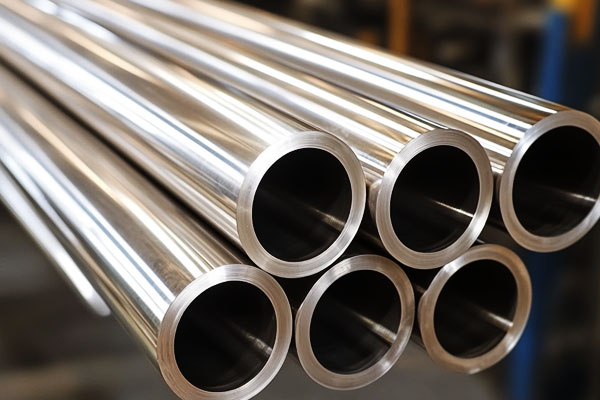
Key points about nickel passivation:
- องค์ประกอบ. The passive film is typically composed of nickel(ครั้งที่สอง) oxide/hydroxide species (NiO and Ni(โอ้)₂) and may include mixed valence oxides or hydroxides depending on pH and redox potential.
- รักษาตัวเอง. If the film is mechanically damaged or locally removed, rapid reformation occurs in the presence of oxygen or oxidizing species, re-establishing protection.
- Adhesion and density. Unlike the flaky, non-protective iron oxides (Fe₂O₃/FeOOH) that grow and spall on steel, nickel’s oxide layer is compact and tightly bound to the substrate, which makes it an effective diffusion barrier against further oxygen and ion ingress.
- Thermodynamic stability. The thermodynamic stability domains (as represented in Pourbaix diagrams) show that over a wide range of pH and potential nickel supports a passive oxide rather than dissolving as Ni²⁺.
That window explains why nickel resists corrosion in many aqueous environments.
5. Kinetics and physical properties that slow oxidation
Beyond thermodynamic favorability, kinetic factors limit corrosion:
- Rapid formation of a thin, protective film. The initial oxide forms quickly, then growth becomes self-limiting because diffusion of ionic species through the oxide is slow.
- Low defect density. A dense oxide film presents fewer diffusion pathways for oxygen and metal ions; slower ion transport reduces the corrosion current.
- Surface finish and metallurgy. เรียบ, work-hardened or plated nickel surfaces have fewer initiation sites for localized attack compared with rough, porous surfaces.
Mechanical polishing, electroless or electrolytic plating can improve corrosion resistance by reducing surface defects.
6. Role of alloying, coatings and microstructure
Pure nickel already passivates, but in engineering practice nickel is commonly used as an alloying element or as a surface coating; these uses further enhance corrosion resistance.
- โลหะผสมนิกเกิล. Materials such as Monel, Inconel and Hastelloy (โลหะผสมที่ใช้นิกเกิล) combine nickel with chromium, โมลิบดีนัม, copper and other elements.
Chromium and molybdenum increase the stability and repairability of the passive film and provide improved resistance to pitting, crevice corrosion and reducing acids. - Electroless and electroplated nickel. These coatings provide a continuous, dense barrier that isolates the substrate from the environment and often have good adhesion and uniform thickness.
- โครงสร้างจุลภาค. Grain size, precipitates and second-phase particles affect local electrochemistry.
Homogeneous solid solutions without detrimental second phases reduce micro-galvanic cells that would otherwise promote localized corrosion.
7. Environmental boundaries — where nickel does corrode
Nickel’s passivity has limits. Understanding conditions that compromise the passive film explains when nickel will corrode:
- Chloride attack and pitting. High chloride concentrations (เช่น, seawater or high-salt brines) can destabilize passive films and cause localized pitting or crevice corrosion—especially at elevated temperatures.
Some nickel alloys resist pitting much better than pure nickel because of chromium and molybdenum. - Strong reducing acids. Certain reducing acid environments (เช่น, กรดไฮโดรคลอริก, sulfuric acid at particular concentrations and temperatures) can promote active dissolution of nickel.
- High temperature and oxidizing conditions. Elevated temperatures change oxide properties and can accelerate diffusion through films, enabling higher corrosion rates in some oxidizing atmospheres or molten salts.
- Alkaline chloride environments and microbiologically influenced corrosion. Combined chemical and biological factors can create microenvironments that attack the passive film.
- Galvanic coupling to very noble materials or particular design geometries can create local anodic/cathodic sites under constrained conditions.
8. Failure modes and mitigation strategies
Common failure modes for nickel and nickel-alloys include pitting, การกัดกร่อนของรอยแยก, intergranular attack and stress-assisted corrosion. Mitigation strategies are practical and used in design and maintenance:
- การเลือกวัสดุ. Choose an appropriate nickel alloy (เช่น, nickel-chromium for oxidizing environments, nickel-molybdenum for chloride tolerance) matched to the service conditions.
- การรักษาพื้นผิว. นิกเกิลไฟฟ้า, ชุบนิกเกิล, passivation treatments and polishing reduce initiation sites and improve film uniformity.
- Design details. Avoid crevices, tight joints, and stagnation zones; provide drainage and access for inspection.
- Cathodic protection and sacrificial anodes. In some systems where nickel is part of a multi-metal assembly, impressed current or sacrificial anodes protect more active metals.
บันทึก: when nickel is more noble it will not benefit from sacrificial anodes itself. - Environmental control and inhibitors. Controlling chloride levels, ปริมาณออกซิเจน, and using corrosion inhibitors can preserve passivity.
- Regular inspection. Monitor for early signs of localized attack and remediate before propagation.
9. Industrial uses that exploit nickel’s corrosion behaviour
Because nickel forms protective films and yields robust alloys, it is used widely:

- Nickel plating and electroplating: nickel deposits form attractive, corrosion-resistant surfaces on steel and other substrates (used on decorative and functional finishes).
- โลหะผสมนิกเกิลฐาน (อินโคเนล, ฮาสเตลลอย, โมเนล): used in chemical plants, กังหันก๊าซ, heat exchangers and marine environments where corrosion resistance and high-temperature performance are required.
- เหรียญกษาปณ์, stainless fasteners and electronics: nickel and nickel alloys are used for durability and corrosion resistance.
- Batteries and electrochemistry: nickel hydroxide and nickel oxides are active battery electrode materials (Ni–MH, Ni–Cd, Ni-based cathodes).
- Catalysis and specialty chemical processing: nickel surfaces and alloys are common catalysts and catalyst supports.
Designers choose nickel or nickel-rich alloys for applications where passive behaviour, ความมั่นคง, and predictable corrosion rates เป็นลำดับความสำคัญ.
10. Comparison with similar materials
| วัสดุ (typical form) | ภาพยนตร์แฝง / mechanism | Typical aqueous general corrosion rate (เชิงคุณภาพ) | บ่อ / crevice resistance (chloride service) | Does Rust? |
| Pure nickel (commercial Ni) | NiO / ใน(โอ้)₂ passive film; self-healing in oxidizing media | ต่ำ | ปานกลาง — susceptible in warm, concentrated chlorides | เลขที่ — does not form iron “rust”; corrodes via nickel oxide/hydroxide formation and can undergo localized attack under aggressive conditions |
| โลหะผสมที่มีนิกเกิลเป็นส่วนประกอบหลัก (เช่น, อินโคเนล, ฮาสเตลลอย, โมเนล) | ซับซ้อน, stable mixed oxides (enhanced by Cr, โม, ฯลฯ); robust passivity | ต่ำมาก | ยอดเยี่ยม (many grades engineered for chloride and mixed-acid resistance) | เลขที่ — not liable to form iron rust; highly corrosion-resistant but can fail by localized modes if alloy selection is inappropriate |
สแตนเลส 304 |
Cr₂O₃ passive film (chromium-rich passive layer) | ต่ำ in many neutral/atmospheric conditions | ยากจน — readily pits/crevices in chloride environments | ใช่ (possible) — contains iron and can form iron oxide (“rust”) if passive film is broken or overwhelmed (เช่น, high chlorides) |
| สแตนเลส 316 (L/LM) | Cr₂O₃ with Mo additions that improve film stability | ต่ำ | ดี — better chloride resistance than 304 but finite limit | ใช่ (less likely than 304) — still an iron-based alloy; rusting is uncommon in moderate service but possible if passivity is compromised |
| ทองแดง (บริสุทธิ์ในเชิงพาณิชย์, C11000) | Cu₂O / CuO and stable patina in many environments | ต่ำ in many waters | ปานกลาง — localized attack with halides, แอมโมเนีย, ซัลไฟด์ | เลขที่ — does not form iron rust; forms copper oxides/patina and experiences other corrosion forms (การทำให้บริสุทธิ์, pitting in some media) |
Aluminium alloys (5xxx/6xxx series) |
Al₂O₃ thin, adherent oxide film | ต่ำ - ปานกลาง (environment dependent) | ยากจน — prone to pitting in chloride media | เลขที่ — does not form iron rust; corrodes by aluminum oxide formation and localized pitting in halide environments |
| ไทเทเนียม (ระดับ 2 บริสุทธิ์ในเชิงพาณิชย์) | TiO₂ extremely stable, adherent passive film | ต่ำมาก | ยอดเยี่ยม — outstanding resistance to chlorides and crevice attack in most aqueous media | เลขที่ — does not form iron rust; shows exceptional overall corrosion resistance though specific chemistries (เช่น, fluorides) can attack titanium |
11. บทสรุป
Nickel “rarely rusts” because it combines intrinsic electrochemical nobility with the ability to form a dense, adherent passive oxide/hydroxide film that is self-limiting and self-healing.
Alloying and surface treatments further widen the safe service window. อย่างไรก็ตาม, nickel’s passivity has defined limits — chlorides, certain acids, high temperatures and poor design can overcome corrosion resistance.
Understanding the thermodynamics (stability domains), kinetics (film formation and transport), โลหะวิทยา (microstructure and alloying) and environment (เคมี, อุณหภูมิ, กลศาสตร์) is essential to predict performance and to design robust, long-lived components.
คำถามที่พบบ่อย
Is nickel completely immune to corrosion?
เลขที่. Nickel is resistant to many environments because of passivation, but aggressive chemistries (strong complexing acids, hot chlorides, certain sulphide atmospheres) can corrode nickel or its alloys. Proper alloy selection is essential.
How does nickel plating protect steel?
Nickel plating acts primarily as a สิ่งกีดขวาง against corrosive agents and, depending on the system, as a noble (แคโทด) พื้นผิว.
Nickel is more noble than iron; it will not sacrificially protect steel — if the coating is breached, steel can corrode preferentially at the exposed site.
What’s the difference between nickel and stainless steel corrosion resistance?
Stainless steels rely heavily on chromium content to form Cr₂O₃ passive films; nickel and nickel alloys rely on NiO/Ni(โอ้)₂ films and often include Cr, Mo or Cu to enhance protection.
Alloy design determines which material performs best in a given environment.
Can I use nickel in seawater?
Some nickel alloys (เช่น, โมเนล, certain Ni–Cu alloys) perform well in seawater. Others are less suitable.
Seawater environments are complex (คลอไรด์, ออกซิเจน, biology); select alloys with demonstrated seawater performance.
Does temperature affect nickel passivation?
ใช่. Elevated temperature can accelerate corrosion processes, change oxide solubilities, and in some cases destabilize passive films. Consult alloy data for high-temperature service limits.
นิกเกิลเป็นสนิมหรือไม่?
No — not in the way iron does. Nickel does not form “rust” (the flaky iron oxide typical of steel). แทน, nickel rapidly develops a thin, หนาแน่น, adherent oxide/hydroxide film (commonly NiO / ใน(โอ้)₂ and mixed oxides) that passivates the surface and greatly slows further corrosion.
That said, นิกเกิล สามารถ corrode under certain aggressive conditions (chloride-rich media, strong reducing acids, อุณหภูมิสูง, ฯลฯ).