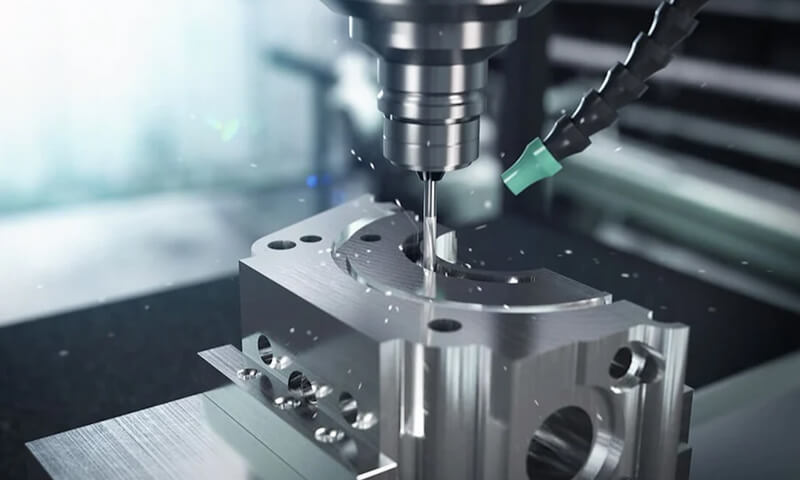
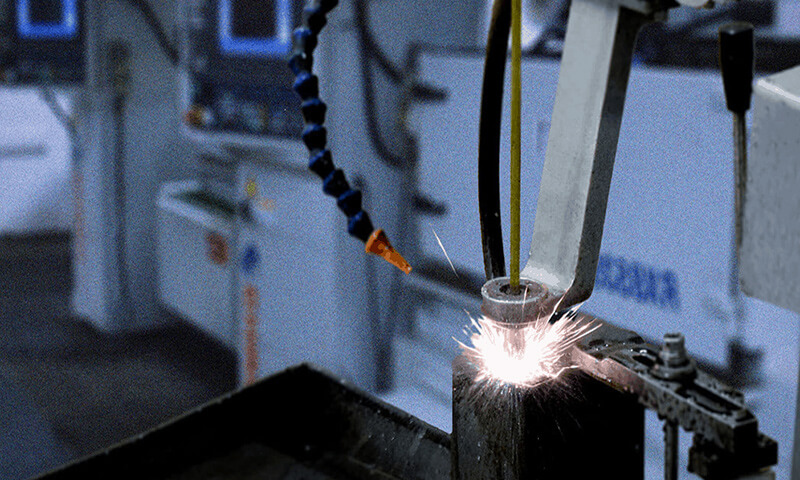
1. การแนะนำ
การหล่อแม่พิมพ์เหล็ก represents a precision casting technique that merges the superior mechanical properties of ductile iron with the dimensional accuracy and surface quality of shell molding technology.
As industries increasingly demand complex geometries, ความอดทนที่เข้มงวดยิ่งขึ้น, and cost-effective production methods, this process has gained prominence in sectors such as automotive, ไฮดรอลิก, เครื่องจักร, and electrical equipment.
2. เหล็กดัดคืออะไร?
องค์ประกอบและโครงสร้างจุลภาค
เหล็กดัด is an alloy of iron, คาร์บอน, และซิลิคอน, โดยมีปริมาณคาร์บอนโดยทั่วไปตั้งแต่ 3.0% ถึง 4.0% and silicon around 1.8% ถึง 3.0%.
The defining characteristic of ductile iron is its spheroidal graphite structure.
ในระหว่างกระบวนการหล่อ, a small amount of magnesium (โดยปกติ 0.03% - 0.06%) or cerium is added to the molten iron.
These elements transform the graphite flakes, characteristic of gray iron, into spherical nodules. This change in graphite morphology has a profound impact on the material’s properties.
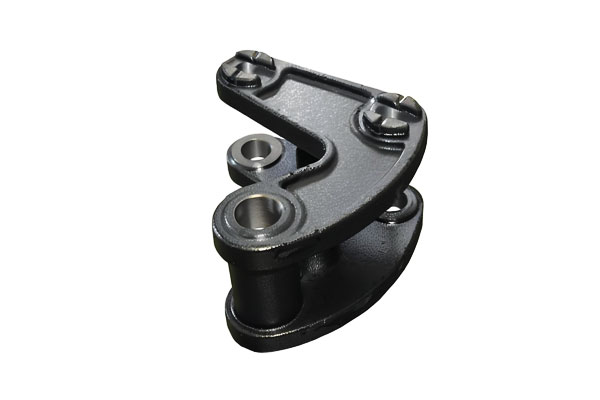
คุณสมบัติเชิงกลที่สำคัญ
- มีความแข็งแรงสูง: Ductile iron can achieve tensile strengths ranging from 400 MPa (for grades like ASTM A536 60-40-18) ไป 800 MPa (such as ASTM A536 120-90-02).
This strength makes it suitable for applications where structural integrity under heavy loads is crucial. - ความเหนียว: It exhibits significant ductility, with elongation values that can reach up to 18% in some grades.
This allows ductile iron components to deform under stress without fracturing, enhancing their reliability in dynamic loading conditions. - ทนต่อแรงกระแทก: The nodular graphite structure acts as tiny shock absorbers within the matrix. ส่งผลให้, ductile iron has good impact resistance, far superior to gray iron.
This property is vital for applications where components may be subject to sudden impacts or vibrations.
มาตรฐานทั่วไป
- ASTM A536: Widely used in North America, this standard specifies the requirements for different grades of ductile iron.
ตัวอย่างเช่น, ระดับ 60-40-18 indicates a minimum tensile strength of 60 ksi (414 MPa), a minimum yield strength of 40 ksi (276 MPa), and a minimum elongation of 18%. - EN-GJS: In Europe, the EN-GJS series of standards defines the properties and characteristics of ductile iron.
Each grade in this standard is also specified by its mechanical property requirements, ensuring consistent quality across the industry. - ไอเอสโอ 1083 – Global designation for spheroidal graphite iron
3. การหล่อแม่พิมพ์เปลือกคืออะไร?
พื้นฐานของการหล่อแม่พิมพ์เปลือกหอย
Shell mold casting is an expendable mold casting process that uses resin-covered sand to form the mold. The process begins with a heated metal pattern, typically made of aluminum or cast iron.
The pattern is heated to a temperature in the range of 200 – 300°C. Resin-coated sand, usually a mixture of fine silica sand and thermosetting phenolic resin, is then introduced to the heated pattern.
The heat from the pattern causes the resin to melt and bond the sand particles together, forming a hard, thin shell around the pattern. Once the shell has hardened, it is removed from the pattern.
The mold is typically made up of two halves, known as the cope and the drag, which are assembled to create the cavity into which the molten metal will be poured.

การไหลของกระบวนการทีละขั้นตอนของการหล่อแม่พิมพ์เหล็ก
การเตรียมรูปแบบ:
The metal pattern is designed with precision to match the desired shape of the final casting.
Shrinkage allowances, โดยทั่วไปแล้วจะอยู่รอบๆ 1.5% - 2.5% สำหรับเหล็กดัด, are incorporated into the pattern design to account for the contraction of the metal during solidification.
มุมร่าง, usually in the range of 0.5° – 1°, are added to ensure easy removal of the shell from the pattern.
การก่อตัวของเปลือกหอย:
The preheated pattern is placed in a machine where resin-coated sand is applied.
This can be done through methods such as dipping the pattern into a hopper of sand or using a sand-blasting technique to spray the sand onto the pattern.
The heat from the pattern cures the resin within 10 - 30 วินาที, forming a shell with a thickness typically between 3 - 10 มม.
การประกอบแม่พิมพ์:
The two shell halves (รับมือและลาก) are carefully aligned and joined together. This can be achieved using adhesives, mechanical fasteners, or by clamping.
สำหรับชิ้นส่วนที่ซับซ้อน, additional cores made of the same resin-coated sand are inserted into the mold to create internal cavities or features.
การเทโลหะ:
เหล็กกล้า, heated to a temperature of around 1320 – 1380°C, is poured into the assembled mold.
The smooth inner surface of the shell mold allows for efficient filling of the cavity, minimizing turbulence and the formation of defects such as porosity or inclusions.
ความเย็นและการตกแต่ง:
หลังจากเท, the casting is allowed to cool within the mold.
The high thermal conductivity of the shell mold (รอบๆ 1 - 2 W/ม·เค) accelerates the cooling process, which can take anywhere from 5 - 15 นาทีสำหรับชิ้นส่วนเล็ก ๆ.
เมื่อเย็นลงแล้ว, the brittle shell is removed, often by vibration or air blasting. The casting may then undergo post-casting treatment.
การรักษาหลังการคัดเลือก:
This can include operations such as heat treatment, เครื่องจักรกล, และการตกแต่งพื้นผิว.
การรักษาความร้อน, such as annealing at 600 – 650°C, can further enhance the mechanical properties of the ductile iron.
Machining may be required to achieve the final dimensions and surface finish, although the need for machining is significantly reduced compared to other casting methods.
ลักษณะของการหล่อแม่พิมพ์เปลือกหอย
| คุณสมบัติ | ค่า / พิสัย |
| ความหนาของเปลือก | 3–10 มม |
| ความทนทานต่อมิติ | ±0.2 to ±0.5 mm |
| พื้นผิวเสร็จสิ้น (รา) | 3.2–6.3 µm |
| อุณหภูมิแม่พิมพ์ | 200–300 ° C (ลวดลาย) |
| อุณหภูมิเท | 1320–1380 ° C (เหล็กดัด) |
| Cooling Time | 5–15 minutes (ขึ้นอยู่กับขนาดของชิ้นส่วน) |
| Max Typical Part Weight | ≤30–50 kg (มีขนาดใหญ่ขึ้นด้วยการตั้งค่าที่กำหนดเอง) |
4. เหตุใดจึงต้องใช้การหล่อแม่พิมพ์เชลล์สำหรับเหล็กดัด?
การหล่อแม่พิมพ์เชลล์มีข้อได้เปรียบที่สำคัญเมื่อผลิตส่วนประกอบเหล็กดัดซึ่งต้องการความแม่นยำในมิติสูง, การตกแต่งพื้นผิวที่ดีเยี่ยม, และความสมบูรณ์ทางกลที่เหนือกว่า.
กระบวนการนี้เชื่อมช่องว่างระหว่างการหล่อทรายแบบดั้งเดิมและการหล่อเพื่อการลงทุน.
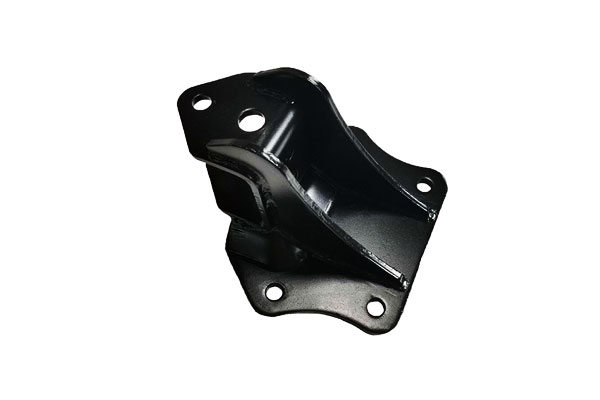
ความแม่นยำและความแม่นยำของมิติ
เชลล์แม่หล่อหล่อส่งมอบ ความคลาดเคลื่อนมิติที่แน่น, โดยทั่วไปในช่วงของ ±0.2 to ±0.5 mm, ซึ่งดีกว่าการหล่อหาดทรายสีเขียวทั่วไปอย่างมาก (± 1.0–2.0 มม.).
ระดับความแม่นยำนี้ช่วยลดความจำเป็นในการตัดเฉือนรอง, โดยเฉพาะอย่างยิ่งในคุณสมบัติที่สำคัญเช่นรูยึด, พื้นผิวการปิดผนึก, และรูปทรงเรขาคณิตการผสมพันธุ์ที่ซับซ้อน.
พื้นผิวที่เหนือกว่า
แม่พิมพ์เชลล์ให้ พื้นผิวที่เรียบ นั่นเป็นสิ่งที่ดีในการหล่อ, โดยทั่วไป RA 3.2-6.3 μm.
This reduces or eliminates the need for surface grinding or polishing, which can be labor-intensive and costly in high-volume manufacturing.
เรขาคณิตที่ซับซ้อนและผนังบาง ๆ
Due to the rigidity and fine sand grain size of the shell, the process is well-suited for casting รูปร่างที่ซับซ้อน, ผนังบาง (down to 2.5–4 mm), and sharp internal features.
ความเสถียรของมิติในระหว่างการทำให้แข็งตัว
The rigid shell mold resists deformation during metal pouring and solidification, reducing common defects such as warping, swelling, or mold shift.
ประสิทธิภาพของกระบวนการและการลดของเสีย
Shell mold casting is highly compatible with ระบบอัตโนมัติ และ การผลิตจำนวนมาก, particularly for parts weighing ≤30–50 kg.
5. ข้อ จำกัด และความท้าทายของการหล่อแม่พิมพ์เหล็ก

ข้อ จำกัด ขนาดและน้ำหนัก
Shell molds are typically limited to parts weighing up to 30–50 kg due to the relatively thin shell structure and the mechanical strength of the mold itself.
Larger or heavier components risk mold damage during handling or metal pouring.
เครื่องมือเริ่มต้นที่สูงขึ้นและต้นทุนรูปแบบ
Compared to traditional sand casting, shell mold casting requires precision-machined metal patterns that must withstand repeated heating cycles (200–300 ° C).
The use of resin-coated sand and automated equipment also increases upfront capital expenditure.
ข้อ จำกัด ทางความร้อนและการก่อตัวของฮอตสปอต
The thin shell mold has limited thermal mass, which can lead to uneven cooling rates and localized hot spots, especially in thick sections of the casting. This may cause defects such as:
- ร้อนน้ำตาแตก
- Incomplete solidification
- Increased internal stresses
- ผลกระทบ: Challenges in casting complex parts with variable wall thickness.
- การบรรเทาผลกระทบ: Advanced mold design, ควบคุมการระบายความร้อน, and gating optimization are essential.
การควบคุมความหนาของเปลือก
Too thin (≤3 มม) and the shell may crack during pouring; too thick (≥10มม.) and cooling slows, coarsening nodules.
สารละลาย: Optimize resin content (3-4%) and pattern heating time (60-90 วินาที) to achieve uniform 5-8 mm shells.
ความสามารถในการนำกลับมาใช้ใหม่ของแม่พิมพ์ได้ จำกัด
Shell molds are single-use and must be broken away after casting.
Although the resin-coated sand can often be reclaimed and recycled, mold components cannot be reused, increasing the consumption of materials.
6. พฤติกรรมของวัสดุในการหล่อแม่พิมพ์เปลือกหอย

ข้อควรพิจารณาทางโลหะวิทยา
- Nodule count and shape control: The rapid cooling in shell mold casting can affect the nodule count and shape in ductile iron.
To ensure a sufficient number of well-formed nodules (aiming for 15 - 25 ก้อน/mm²),
careful control of the inoculation process is necessary. ผู้มีเชื้อสาย, such as ferrosilicon, are added to the molten iron to promote the formation of graphite nodules.
The amount and timing of inoculant addition need to be optimized to account for the faster cooling rate in shell mold casting. - Avoiding carbide formation: ในบางกรณี, the high cooling rates can cause the formation of carbides in the ductile iron matrix.
Carbides are hard and brittle phases that can reduce the ductility of the material. To prevent carbide formation, alloying elements such as nickel may be added to the molten iron.
Nickel helps to stabilize the austenite phase during cooling, reducing the likelihood of carbide precipitation. - Ensuring proper inoculation and magnesium treatment: The addition of magnesium is critical for nodularizing the graphite in ductile iron.
In shell mold casting, the magnesium treatment needs to be carefully controlled to ensure that the correct amount of magnesium is present in the molten iron.
Too little magnesium may result in incomplete nodularization, while too much can lead to other defects.
ในทำนองเดียวกัน, proper inoculation is essential to promote the formation of a fine, uniform distribution of graphite nodules.
พฤติกรรมการแข็งตัวในเปลือกบาง ๆ
The thin shell mold affects the solidification behavior of ductile iron. The high thermal conductivity of the shell causes the molten metal to solidify rapidly from the surface towards the center.
This can lead to a finer grain structure near the surface of the casting. The solidification rate also impacts the formation of the ferrite-pearlite matrix in the ductile iron.
Faster cooling rates tend to promote the formation of more pearlite, which can increase the strength of the material but may slightly reduce its ductility.
Heat transfer dynamics and impact on grain structure
The heat transfer from the molten ductile iron to the shell mold plays a crucial role in determining the grain structure of the casting.
The rapid heat transfer in shell mold casting results in a steep temperature gradient between the molten metal and the mold.
This gradient causes the formation of a columnar grain structure near the surface of the casting, where the grains grow perpendicular to the mold surface.
As the distance from the surface increases, the grain structure becomes more equiaxed.
The grain structure has a significant impact on the mechanical properties of the ductile iron, with finer grains generally leading to improved strength and toughness.
7. Applications of Ductile Iron Shell Mold Castings
Ductile iron shell mold castings combine the superior mechanical properties of ductile iron with the dimensional precision and surface finish of shell mold technology.
This synergy makes them ideal for applications requiring tight tolerances, รูปทรงเรขาคณิตที่ซับซ้อน,
and high performance under mechanical stress or thermal cycling.

อุตสาหกรรมยานยนต์
- วงเล็บ & Mounts: Suspension brackets, ข้อนิ้วของพวงมาลัย, and alternator mounts require strength,
ต้านทานความเหนื่อยล้า, and precision—qualities delivered by ductile iron shell mold castings. - การแพร่เชื้อ & Drivetrain Housings: Castings with complex geometries and internal passages benefit from the excellent surface finish and dimensional accuracy of shell molds.
- ท่อร่วมไอเสีย (in high-nickel ductile iron): Withstands thermal cycling up to 600°C in turbocharged engine systems.
ข้อดี: Lightweighting through near-net-shape design, reduced post-machining, and improved fuel efficiency due to precise tolerances.
Hydraulic and Fluid Power Systems
- ร่างกายวาล์ว & เรือน: Critical for controlling fluid flow in high-pressure environments (เช่น, 3000+ psi hydraulic systems).
- ส่วนประกอบปั๊ม: ใบพัด, เลื่อน, and gear pump housings benefit from excellent internal surface finish and dimensional repeatability.
ข้อดี: Leak-tight fitment, smooth flow paths, high pressure tolerance, and minimized casting porosity.
Industrial and Agricultural Machinery
- Wear Parts & ตอร์ปิโด: Shell castings with wear-resistant ductile iron grades are used in abrasive environments like soil tillage, การขุด, และการก่อสร้าง.
- Precision Gear Blanks & Pulleys: Require concentricity and balance for rotational stability—achieved with shell mold tolerances (typically ±0.3 mm or better).
ข้อดี: อายุการใช้งานที่ยาวนาน, consistent geometry, and suitability for high-load, high-wear conditions.
Electrical and Power Equipment
- มอเตอร์ & Generator Housings: Require both electromagnetic compatibility (EMC shielding) and mechanical robustness.
- Switchgear Frames & Busbar Supports: Complex components cast with minimal need for secondary machining.
ข้อดี: ที่ไม่ต้องบ่ม, thermally stable, และทนต่อการกัดกร่อน (with appropriate coatings or alloy variants).
8. Quality Control and Testing of Ductile Iron Shell Mold Casting
การทดสอบแบบไม่ทำลาย (NDT)
- การทดสอบด้วยรังสี: This method uses X-rays or gamma rays to penetrate the casting and detect internal defects such as porosity, รอยแตก, หรือการรวม.
By analyzing the radiograph, any flaws within the casting can be identified and evaluated. - การทดสอบอัลตราโซนิก: Ultrasonic waves are transmitted through the casting, and the reflections are analyzed to detect defects.
This technique is particularly useful for detecting internal flaws in thick sections of the casting. - การทดสอบสีย้อม penetrant: A colored dye is applied to the surface of the casting. If there are any surface-breaking defects, the dye will seep into the cracks.
After removing the excess dye, the presence of defects is revealed by the dye remaining in the cracks.
การตรวจสอบมิติ
- เครื่องวัดพิกัด (ซีเอ็มเอ็ม): CMMs are used to precisely measure the dimensions of the casting.
By comparing the measured dimensions to the design specifications, any deviations can be identified.
CMMs can achieve accuracies in the range of ±0.01 mm, ensuring that the castings meet the tight tolerances required in many applications. - Optical Scanning: This technique uses lasers or structured light to create a 3D model of the casting.
The 3D model can then be compared to the CAD model of the part to detect any dimensional variations. Optical scanning is a fast and efficient way to inspect complex geometries.
การวิเคราะห์ทางโลหะ
- Microstructure Examination: Samples of the casting are polished and etched to reveal the microstructure.
By examining the microstructure under a microscope, the nodule count, nodule shape, and the proportion of ferrite and pearlite in the matrix can be determined.
This information helps to assess the quality of the ductile iron and its compliance with the required standards. - การทดสอบความแข็ง: Hardness tests, such as the Brinell, หิน, or Vickers tests, are used to measure the hardness of the casting.
The hardness is related to the mechanical properties of the material, and deviations from the expected hardness values may indicate problems such as incorrect heat treatment or improper alloy composition. - Tensile Tests: Tensile specimens are machined from the casting and tested to determine the tensile strength, ความแข็งแรงของผลผลิต, and elongation of the material.
These mechanical properties are crucial for ensuring that the casting can withstand the intended loads in its application.
Casting defect prevention and resolution strategies
To prevent casting defects, strict control of the process parameters is essential. This includes careful monitoring of the temperature during shell formation, เท, และความเย็น.
The quality of the resin-coated sand and the metal used in casting also needs to be closely controlled.
If defects are detected, strategies such as re-melting and recasting, or performing localized repairs using techniques like welding, may be employed.
อย่างไรก็ตาม, prevention is always preferred over repair to ensure the highest quality castings.
9. Shell Mold vs. วิธีการหล่ออื่น ๆ (for Ductile Iron)
| ด้าน | การหล่อแม่เหล็ก | การหล่อหาดทรายสีเขียว | การหล่อการลงทุน |
| ความแม่นยำของมิติ | ★★★★☆ (± 0.3–0.5 มม.) | ★★☆☆☆ (±1.0–2.5 mm) | ★★★★☆ (± 0.3–0.8 มม.) |
| พื้นผิวเสร็จสิ้น (รา ม) | 3.2 - 6.3 | 6.3 - 25 | 1.6 - 6.3 |
| Casting Complexity | ★★★★☆ – Supports intricate features, ผนังบาง | ★★☆☆☆ – Limited by mold strength | ★★★★☆ – Very complex parts possible |
| ต้นทุนเครื่องมือ | ปานกลาง | ต่ำ | สูง |
| ความเหมาะสมของปริมาณการผลิต | Medium to High | Low to High | ต่ำถึงปานกลาง |
| ช่วงน้ำหนัก | 0.1 - 30 กิโลกรัม | 0.1 - >5000 กิโลกรัม | < 10 กิโลกรัม |
| ประสิทธิภาพของวัสดุ | Good – Less waste, thinner sections achievable | Moderate – Larger gating/riser systems required | Fair – Wax loss and higher material usage |
| คุณสมบัติทางกล (เหมือนหล่อ) | Excellent – Fine microstructure, รูพรุนต่ำ | Good – Coarser structure, variable quality | Very Good – Can be tailored with alloys |
| อัตราการระบายความร้อน / โครงสร้างจุลภาค | Fast – Finer grains, better nodule shape control | Slow – Coarser grains, less uniform nodularity | Moderate – Controlled solidification |
| ความต้องการโพสต์มาสเตอร์ | Minimal – Tight tolerances reduce machining | Extensive – Large allowances needed | Moderate – Often requires finishing |
| การใช้งานทั่วไป | Precision housings, ร่างกายปั๊ม, ชิ้นส่วนไฮดรอลิก | บล็อกเครื่องยนต์, กรอบขนาดใหญ่, municipal castings | การบินและอวกาศ, ทางการแพทย์, detailed precision parts |
10. What is the maximum part size for ductile iron shell mold casting?
ที่ maximum part size สำหรับ ductile iron shell mold casting typically depends on the capabilities of the foundry, but in general:
- Weight range: ขึ้นไป 20–30 กก (44–66 lbs) is common for shell molding.
- ขนาด: Parts are generally limited to small-to-medium sizes, typically with maximum dimensions around 500 มม (20 นิ้ว) per side, though some foundries may handle slightly larger parts.
- ความหนาของผนัง: Shell molding excels at producing parts with thin walls and fine detail, โดยทั่วไป 2.5 มม. ถึง 6 มม หนา.
Why this limitation?
Shell mold casting uses resin-coated sand molds that are baked onto heated metal patterns.
This process offers high dimensional accuracy and surface finish but has limitations in handling large volumes of molten ductile iron due to:
- Mold strength: Thin shell molds can crack or deform under the weight of very large castings.
- Thermal stress: Larger parts generate more heat, increasing the risk of defects like hot tears or inclusions.
- การจัดการ & pouring logistics: Shell mold equipment is optimized for smaller components.
11. บทสรุป
Ductile iron shell mold casting bridges the gap between precision and strength.
It is ideal for medium-to-high volume production of geometrically complex components requiring high accuracy and consistent quality.
While tooling costs are higher, the long-term savings in machining, material use, and quality assurance make it a cost-effective solution in the right contexts.
การเสียสละเหล่านี้บริการหล่อเหล็ก
ที่ นี้, เรามีความเชี่ยวชาญในการส่งมอบการหล่อเหล็กที่มีประสิทธิภาพสูงโดยใช้เทคโนโลยีการหล่อขั้นสูงเต็มรูปแบบ.
โครงการของคุณต้องการความยืดหยุ่นหรือไม่ การหล่อหาดทรายสีเขียว, ความแม่นยำของ แม่พิมพ์ หรือ การหล่อการลงทุน, ความแข็งแกร่งและความสม่ำเสมอของ แม่พิมพ์โลหะ (แม่พิมพ์ถาวร) การคัดเลือกนักแสดง, หรือความหนาแน่นและความบริสุทธิ์ที่จัดทำโดย การปั่นป่วน และ การหล่อโฟมที่หายไป,
นี้ มีความเชี่ยวชาญด้านวิศวกรรมและกำลังการผลิตเพื่อให้ตรงตามข้อกำหนดที่แน่นอนของคุณ.
สิ่งอำนวยความสะดวกของเราพร้อมที่จะจัดการทุกอย่างตั้งแต่การพัฒนาต้นแบบไปจนถึงการผลิตปริมาณสูง, สนับสนุนโดยเข้มงวด การควบคุมคุณภาพ, การตรวจสอบย้อนกลับของวัสดุ, และ การวิเคราะห์ทางโลหะ.
จาก ภาคยานยนต์และพลังงาน ถึง โครงสร้างพื้นฐานและเครื่องจักรกลหนัก,
นี้ นำเสนอโซลูชั่นการคัดเลือกนักแสดงที่กำหนดเองซึ่งรวมความเป็นเลิศทางโลหะวิทยา, ความแม่นยำมิติ, และผลการดำเนินงานระยะยาว.
คำถามที่พบบ่อย
How does shell mold casting affect the cost of ductile iron components?
Shell mold casting has higher upfront tooling costs ($5,000–20,000) than sand casting but reduces machining costs by 50–70% due to better surface finish and tolerances.
For volumes >10,000 ชิ้นส่วน, the total lifecycle cost is typically 10–15% lower than sand casting.
Can shell mold cast ductile iron be heat-treated?
ใช่. Common heat treatments include annealing (600–650°ซ) for improved ductility and austempering (320–380°C) to produce high-strength ADI (เหล็กดัดออสเทมเปอร์) มีความต้านทานแรงดึงสูงสุด 1,200 MPa.
What causes cold shuts in shell mold castings, and how are they prevented?
Cold shuts occur when molten metal flows in separate streams and fails to fuse, often due to low pouring temperatures or inadequate gating.
Prevention involves maintaining a pouring temperature of 1,320–1,380°C and designing gating systems with minimal turbulence (ความเร็ว <1.5 M/S).
Is shell mold casting suitable for corrosion-resistant ductile iron parts?
ใช่, but corrosion resistance depends on the alloy, not the casting method.
Adding 1–3% nickel to ductile iron improves corrosion resistance in freshwater, while coating (เช่น, อีพ็อกซี่) is required for marine environments.
How does shell mold casting impact the fatigue life of ductile iron components?
Rapid cooling in shell molds refines graphite nodules (5–10 μm) and reduces porosity, increasing fatigue strength by 10–15% compared to sand casting.
Shell mold cast parts typically achieve 250–350 MPa fatigue strength at 10⁷ cycles, suitable for dynamic applications like gears.