1. บทสรุปผู้บริหาร
CE3MN is the cast counterpart to wrought super-duplex alloys (เช่น, US S32750): it combines very high chromium (≈24–26 %), significant molybdenum (≈3–4 %), elevated nickel (≈6–8 %), controlled copper and nitrogen
to produce a two-phase microstructure with high yield strength, excellent resistance to pitting/crevice corrosion and substantially improved resistance to chloride-induced stress-corrosion cracking relative to conventional austenitics.
Its cast form allows complex geometry components for harsh environments (ตัววาล์ว, ปลอกปั๊ม, มากมาย), but requires strict process control (การละลาย, การทำให้แข็งตัว, วิธีแก้ปัญหาการหลอม) to deliver the expected performance and to avoid embrittling intermetallic phases.
2. What is CE3MN Cast Duplex Stainless Steel?
CE3MN cast duplex สแตนเลส มีประสิทธิภาพสูง, two-phase (ferritic-austenitic) stainless alloy engineered specifically for demanding corrosive and mechanically stressed environments where conventional austenitic or ferritic stainless steels do not provide adequate durability.
มันเป็นของ super-duplex stainless steel family, distinguished by elevated chromium (Cr), โมลิบดีนัม (โม), ไนโตรเจน (เอ็น) และนิกเกิล (ใน) contents that deliver an exceptional combination of ความแข็งแกร่ง, localized corrosion resistance and crack resistance.
In standardized nomenclature, CE3MN is commonly referenced in casting specifications such as ASTM A995 / ASME SA351 & SA995 เกรด (ตัวอย่างเช่น CD3MWCuN, also marketed as “6A”). ของมัน UNS designation is J93404.
It is widely accepted as the cast equivalent to wrought super-duplex stainless steels like US S32750 / ASTM A F55, and is used when lightweight, complex geometries or single-piece components of high corrosion resistance are required.
The conceptual goal behind CE3MN is to bridge the gap between conventional duplex stainless steels (เช่น, 2205) และ โลหะผสมนิกเกิลฐาน
by maximizing corrosion resistance (particularly pitting and crevice corrosion in chloride environments) while maintaining good mechanical performance, weldability and cost efficiency for large or intricate cast parts.
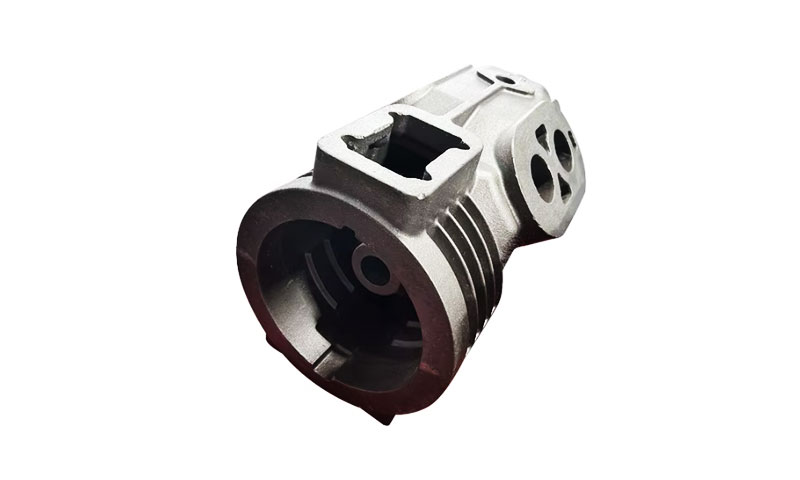
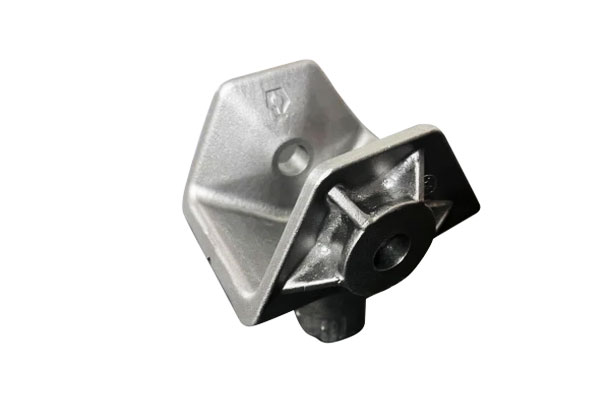
It is frequently selected for ตัววาล์ว, ปลอกปั๊ม, manifolds and subsea components ใน น้ำมัน & แก๊ส, ปิโตรเคมี, ทะเล, desalination and power industries.
3. Chemical Composition of CE3MN Cast Duplex Stainless Steel
| องค์ประกอบ | ช่วงทั่วไป (wt%) | บทบาท / comment |
| Cr (โครเมียม) | 24.0 - 26.0 | Primary element for passivity and general corrosion resistance; major contributor to PREN. |
| ใน (นิกเกิล) | 6.0 - 8.0 | Austenite stabiliser; improves toughness and helps achieve duplex phase balance. |
| โม (โมลิบดีนัม) | 3.0 - 4.0 | Strongly increases pitting and crevice corrosion resistance; key PREN contributor. |
| เอ็น (ไนโตรเจน) | 0.14 - 0.30 | Potent pitting-resistance and strength enhancer (multiplies in PREN formula); critical for duplex performance. |
| ลูกบาศ์ก (ทองแดง) | 0.3 - 1.5 | Present in some cast grades to improve resistance in certain reducing environments and to modify solidification behaviour. |
ค (คาร์บอน) |
≤ 0.03 | Kept low to limit carbide precipitation and intergranular embrittlement. |
| มน (แมงกานีส) | ≤ 2.0 | Deoxidiser / partial austenite former; controlled to avoid excessive inclusion formation or segregation. |
| และ (ซิลิคอน) | ≤ 1.0 | Deoxidiser; limited to control oxidation and inclusion formation. |
| ป (ฟอสฟอรัส) | ≤ 0.03 | Impurity control — kept low to preserve toughness. |
| ส (กำมะถัน) | ≤ 0.01 | Impurity — minimised to avoid hot cracking and loss of ductility. |
| เฟ (เหล็ก) | สมดุล (≈ 40–50%) | Remainder of alloy — ferrite + austenite matrix. |
4. Microstructure and phase balance
- Dual-phase structure: CE3MN is intentionally duplex — ferrite (d) + ออสเทนไนต์ (ค).
The mechanical and corrosion properties are a direct function of the phase fraction, chemistry partitioning และ ความสม่ำเสมอของโครงสร้างจุลภาค. - Target phase balance: Typically aim for ~40–60% ferrite; too much ferrite lowers toughness and weldability; too little ferrite reduces strength and resistance to chloride stress-corrosion cracking.
- Intermetallics risk: การระบายความร้อนช้า, improper heat cycles (or local re-heating) promote σ (ซิกม่า), χ, and other chromium-rich intermetallics which are เปราะ, Cr/Mo-rich and Ni-poor; these dramatically reduce toughness and corrosion resistance.
5. Typical physical & mechanical properties — CE3MN (cast super-duplex stainless steel)
ขอบเขต & คำเตือน: values below are typical engineering ranges for cast CE3MN/J93404 in a properly solution-annealed condition.
การหล่อ (especially large/thick sections) show greater scatter than wrought products and are sensitive to section size, การรักษาความร้อน, and actual phase balance (δ/γ).
For design and safety-critical work always use supplier-certified test data for the specific heat/lot and validate with part-level tests.
Physical properties (ทั่วไป)
| คุณสมบัติ | ค่าปกติ (cast CE3MN, solution-annealed) | การแสดงความคิดเห็น |
| ความหนาแน่น | ≈ 7.8 - 8.0 ก.ซม.⁻³ | Similar to other stainless alloys; ใช้ 7.85 g/cm³ for mass calculations. |
| ละลาย / solidification range | ≈ 1,375 - 1,425 องศาเซลเซียส | Broad solidification range due to high alloying; affects feeding and shrinkage. |
| การนำความร้อน (20 องศาเซลเซียส) | ≈ 12 - 18 w ·m⁻⁻·k⁻⁻ | Lower than carbon steels; impacts thermal gradients during casting and welding. |
| Specific heat (20 องศาเซลเซียส) | ≈ 420 - 500 j ·kg⁻⁻·k⁻⁻ | Use ~460 J·kg⁻¹·K⁻¹ for thermal calculations. |
ค่าสัมประสิทธิ์การขยายตัวเนื่องจากความร้อน (20–300 ° C) |
≈ 12.5 - 14.5 ×10⁻⁶ K⁻¹ | Lower than many austenitic grades; important when joining to other metals. |
| โมดูลัสของยัง (room temp) | ≈ 190 - 210 เกรดเฉลี่ย | For elastic design use 200 GPa conservatively. |
| ความต้านทานไฟฟ้า (20 องศาเซลเซียส) | ≈ 0.6 - 0.9 μΩ·m | Typical stainless range; varies with exact composition. |
| แม่เหล็ก | Slightly ferritic; may show weak magnetic response | Fully austenitic regions non-magnetic; duplex shows mild magnetism due to ferrite. |
คุณสมบัติทางกล (ทั่วไป, solution-annealed cast form)
| คุณสมบัติ | ช่วงทั่วไป | หมายเหตุ |
| ความแข็งแรงของผลผลิต (rp0.2) | ≈ 400 - 550 MPa | Much higher than 300-series stainless steels; depends on section, heat-treatment and ferrite fraction. |
| ความต้านทานแรงดึง (RM) | ≈ 750 - 900 MPa | Use certified lot data for allowable stresses. |
| การยืดตัว (ก, % ใน 50 มม) | ≈ 10 - 25 % | Cast parts trend toward the lower end; thicker sections and residual σ/χ reduce ductility. |
ความแข็ง (HB) |
≈ 220 - 360 HB | Cast super-duplex values vary with microstructure and any intermetallics; hardness correlates with strength and embrittlement. |
| Charpy V-notch impact | ≈ 30 - 120 เจ (room temp) | ช่วงกว้าง: หล่อ, section size and precipitates lead to scatter—measure for critical parts. |
Fracture toughness (เค_ไอซี, approximate) |
≈ 50 - 120 MPA ·√m | Highly dependent on microstructure, notch size and testing method; use part-specific fracture mechanics where necessary. |
| ความเหนื่อยล้า (rotating bending / endurance) | Indicative endurance ≈ 250 - 400 MPa | การตกแต่งพื้นผิว, residual stress and porosity dominate fatigue life—quantify experimentally. |
| Creep resistance | ปานกลาง (not high-temperature creep alloy) | Suitable for intermittent elevated-temperature exposure; not recommended for sustained high-stress creep service above ~350–400 °C without qualification. |
Elevated-temperature behaviour & service guidance
- Practical continuous service temperature: โดยทั่วไป ≤ ~300 °C for corrosion-sensitive applications; mechanical strength will drop progressively with temperature.
- Short-term exposure: material retains reasonable strength to ~400–500 °C but long-term exposure risks precipitation of intermetallics (อัน, χ) that embrittle the alloy.
- Creep & stress rupture: CE3MN offers better high-temperature strength than many austenitics but is ไม่ a substitute for nickel-base alloys where long-term creep is required.
For sustained load at elevated temperature select appropriate creep-rated material and perform creep testing.
6. Casting behavior and solidification challenges
CE3MN’s design as a cast alloy enables one-piece components with complex internal passages, integrated features and fewer joints — advantages in manufacturing efficiency, leak minimization and part integrity compared with fabrications from multiple forgings or weldments.
กำลังหล่อ CE3MN introduces process-specific risks:
- Non-equilibrium solidification and segregation: interdendritic residual liquid becomes enriched in Cr, Mo and Ni (or conversely depleted depending on element partition coefficients),
producing local chemistry variations that can foster intermetallic formation (σ/χ) in the as-cast condition. - Wide freezing range: high alloy content broadens solidification interval, increasing shrinkage risk and feeding difficulty—requiring careful riser design, chills and feeding strategy.
- Hot tearing and hot cracking: duplex cast alloys can be susceptible to hot tearing if restraint and thermal gradients are not managed; grain refinement and gating optimization help.
- Surface and internal defects: ความพรุน (gas and shrinkage), oxide entrainment and inclusions are common if melt control and filtration are insufficient.
การบรรเทาผลกระทบ: precise melt chemistry control, ceramic-foam filtration, การขจัดคราบ, optimized gating and feeder layout guided by solidification simulation, and post-casting solution annealing are essential.
7. การรักษาความร้อน, การเชื่อม, and fabrication controls
สารละลายหลอม & ดับ
- วัตถุประสงค์: dissolve as-cast intermetallics and homogenize chemistry to achieve the desired duplex balance.
- Typical practice: solution anneal in the range 1,050–1,100 ° C (exact range depends on part section) followed by rapid quench to avoid intermetallic reprecipitation.
- Caveats: large/ thick castings require hold times and quench strategies tailored to section size; insufficient solutionizing leaves residual σ/χ and segregation.
การเชื่อม & thermal cutting
- Weld metallurgy: consumables should be selected to match or slightly overmatch alloy chemistry and to promote balanced phase ratio in HAZ/weld metal.
- การควบคุมอินพุตความร้อน: excessive or improperly sequenced heat input shifts phase balance and can locally precipitate σ/χ.
- Post-weld treatment: for critical assemblies, post-weld solution anneal or local heat treatment may be required to restore microstructure.
- Thermal cutting caution: as observed in practice, การอุ่น + local hot cutting (เช่น, oxy-fuel) followed by slow cooling can produce σ/χ precipitation and embrittlement at the cut edge;
best practice is to solution-treat before any thermal cutting or to use cold-cutting (sawing) followed by solution anneal.
8. Common defects and failure modes (practical focus)
- อัน / χ intermetallic precipitation: forms in interdendritic and α/γ interfaces on slow cooling or during post-casting thermal exposure; causes embrittlement and corrosion susceptibility.
- การแบ่งแยก (Ni/Cr/Mo partitioning): leads to local PREN depression and preferential attack.
- Gas and shrinkage porosity: reduce load-bearing section and fatigue life.
- ร้อนน้ำตาแตก: from constrained solidification in thick sections.
- Thermal-cut induced embrittlement: cutting risers on as-cast components without prior solution anneal can precipitate σ/χ at the cut root and initiate cracking (practical remedy: solution anneal before thermal cutting or cold saw then solutionize).
9. Typical Applications of CE3MN Cast Duplex Stainless Steel
CE3MN cast duplex stainless steel is selected for applications where ความแข็งแรงเชิงกลสูง, excellent resistance to localized corrosion, and structural reliability under severe service conditions are simultaneously required.
As a cast super-duplex grade, it is particularly well suited to complex, thick-walled, pressure-containing components that are difficult or uneconomical to manufacture from wrought products.

น้ำมัน & gas and petrochemical industry
- Valve bodies and valve components (บอลวาล์ว, วาล์วประตู, ตรวจสอบวาล์ว) for sour service and high-chloride environments
- ปลอกปั๊มและใบพัด handling seawater, ผลิตน้ำ, or aggressive hydrocarbon mixtures
- Manifolds and flow control components exposed to high pressure, การกัดเซาะ, and corrosive fluids
Offshore and marine engineering
- Seawater handling systems (ตัวเรือนปั๊ม, เครื่องกรอง, valve blocks)
- Offshore platform structural castings subject to continuous seawater exposure
- Desalination plant components including brine pumps and valve bodies
Chemical and process industries
- Reactor internals and casings exposed to mixed acids, คลอไรด์, และอุณหภูมิสูงขึ้น
- Heat exchanger components such as channel heads and water boxes
- Agitator housings and pump components in aggressive chemical service
Power generation and energy systems
- Cooling water systems in thermal and nuclear power plants
- Flue gas desulfurization (FGD) system components
- High-pressure water handling castings in renewable energy facilities
เยื่อกระดาษ, กระดาษ, and environmental engineering
- Digester and bleaching system components
- ปั๊ม, เครื่องผสม, และร่างกายวาล์ว exposed to chloride-rich and alkaline media
- Wastewater and effluent treatment equipment
การทำเหมืองแร่, mineral processing, and slurry handling
- Slurry pump casings and impellers
- สวมใส่- and corrosion-resistant housings for mineral transport systems
High-integrity pressure-containing components
- ส่วนประกอบของเรือแรงดัน
- Thick-walled cast housings and covers
- Custom-engineered cast parts with complex internal passages
10. Comparison with Other Alternative Materials
CE3MN cast duplex stainless steel is often selected over other stainless steels, super-austenitic alloys, and nickel-based alloys because of its unique combination of corrosion resistance, ความแข็งแรงทางกล, and cost-effectiveness in cast form.
The following comparison highlights its relative performance and application suitability.
| คุณสมบัติ / เกณฑ์ | CE3MN (คาสต์ดูเพล็กซ์, 25Cr-7Ni-Mo-N) | 316ล / 1.4404 (Austenitic SS) | 904ล / 1.4539 (Super-Austenitic SS) | โลหะผสมนิกเกิล (เช่น, Hastelloy C-22) |
| ความต้านทานการกัดกร่อน | ความต้านทานต่อหลุมที่ดีเยี่ยม, การกัดกร่อนของรอยแยก, and stress corrosion in chloride environments; ไม้≈ 40 | ปานกลาง; prone to pitting/crevice in high-chloride media | สูงมาก; comparable PREN (≈ 40–42), strong acid resistance | Outstanding in oxidizing and reducing acids |
| ความแข็งแรงทางกล | มีความแข็งแรงสูง (Rp0.2 ≈ 450–550 MPa, Rm ≈ 750–900 MPa); ความเหนียวที่ดี | ปานกลาง (Rp0.2 ≈ 200–250 MPa, Rm ≈ 500–600 MPa) | ปานกลางถึงสูง; lower than duplex in yield | สูง, but often expensive to fabricate |
เฟส / โครงสร้างจุลภาค |
ดูเพล็กซ์ (เฟอร์ไรท์ + ออสเทนไนต์) for optimized strength-corrosion balance | Fully austenitic | Fully austenitic | Fully austenitic or complex |
| ความสามารถในการหล่อ | Excellent for complex, thick-walled parts; lower shrinkage than high-alloy austenitics | ดี, but lower strength in thick sections | ยากจน; expensive for large castings | ยาก; ค่าใช้จ่ายสูง, complex melt control |
Elevated-Temperature Performance |
ปานกลาง; suitable ≤ 300–350 °C; limited creep | ปานกลาง; austenite softens at high T | ปานกลาง; slightly better than 316L | ยอดเยี่ยม; can handle 400–600 °C in aggressive media |
| ค่าใช้จ่าย & ความพร้อม | ปานกลาง; more economical than 904L and nickel alloys | ต่ำ; มีอยู่อย่างกว้างขวาง | สูง; limited casting suppliers | สูงมาก; specialty alloy |
| การใช้งานทั่วไป | วาล์ว, ปั๊ม, pressure housings in chloride-rich, แรงกดดันสูง, บริการเคมี | General chemical equipment, อาหาร, water handling | Acid-resistant tanks, เครื่องแลกเปลี่ยนความร้อน | Highly aggressive chemical processes, extreme temperature or corrosion |
ประเด็นสำคัญ:
- CE3MN vs 316L: CE3MN offers far superior corrosion resistance in chloride and aggressive chemical environments, with higher strength, making it ideal for high-pressure or thick-walled components.
- CE3MN vs 904L: CE3MN provides higher mechanical strength and castability, often at lower cost, while 904L is preferable for thin-walled, highly acid-resistant components.
- CE3MN vs Nickel-Based Alloys: Nickel alloys outperform in extreme corrosive and high-temperature conditions,
but CE3MN provides an economical balance of strength, ความต้านทานการกัดกร่อน, and manufacturability for most industrial applications.
11. บทสรุป
CE3MN cast duplex stainless steel is a purpose-built alloy for demanding corrosive and mechanically loaded environments where complex cast geometries are required.
ของมัน super-duplex chemistry delivers an attractive combination of high strength and excellent localized-corrosion resistance — but these advantages only materialize when melting, การคัดเลือกนักแสดง, solution annealing and fabrication are executed with discipline to avoid segregation and brittle intermetallic precipitation.
For critical industrial or subsea components, procuring CE3MN from proven suppliers with rigorous qualification and testing will yield durable, high-performance castings that justify the material and processing premium.