
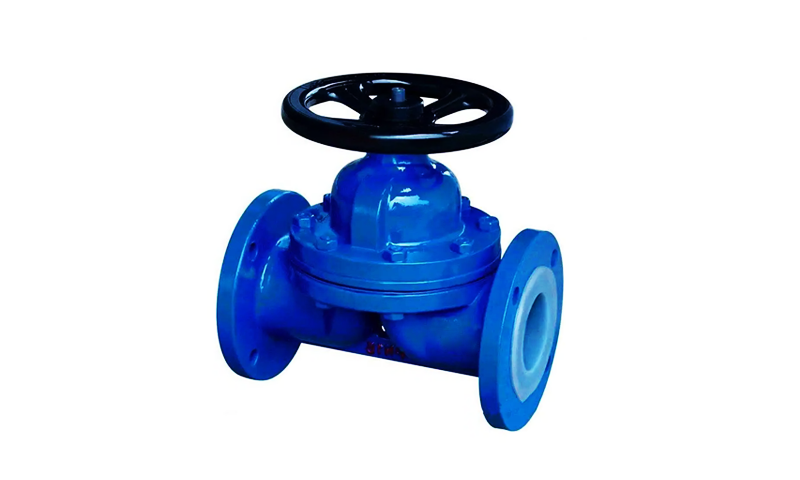
1. Bevezetés
Membránszelepek have carved a niche in applications requiring sanitary, non-contaminating, and corrosion-resistant performance.
Commonly used in pharmaceuticals, vízkezelés, vegyi feldolgozás, és az élelmiszertermelés, they are favored for their simple construction, leak-tight sealing, és ability to handle aggressive or abrasive fluids.
Unlike traditional valve designs, the diaphragm valve isolates the operating mechanism from the process fluid, providing enhanced cleanliness and durability.
2. What is a Diaphragm Valve?
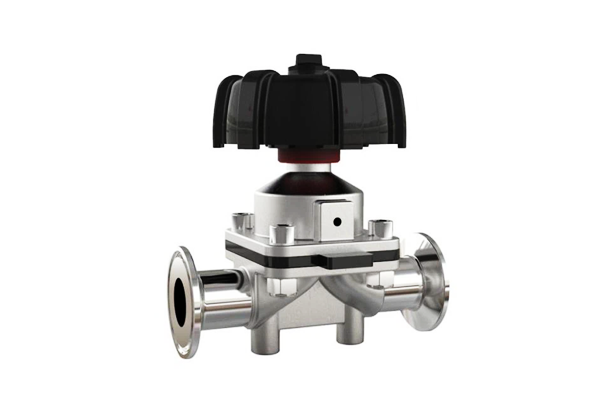
A diaphragm valve is a linear motion valve that controls flow by flexing a resilient diaphragm against a weir (a raised lip) or seat in the valve body.
The key distinction is that the diaphragm acts as both a closure element and a barrier, preventing contact between the flow media and the valve’s actuator or stem.
This isolation makes diaphragm valves ideal for applications where contamination, korrózió, or hygiene is critical.
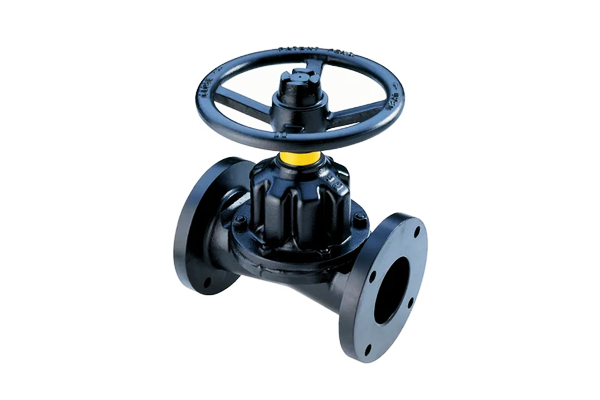
Működési elv: How Diaphragm Valves Control Flow
Diaphragm valves operate on a linear motion principle that uses a flexible diaphragm to regulate the passage of fluid.
The diaphragm is moved vertically—pressed against or lifted away from a flow path—to start, Stop, or modulate fluid flow.
This design ensures a szoros tömítés, minimizes contamination, and offers excellent compatibility with corrosive or particulate-laden media.
Core Mechanism of Flow Control
The working principle involves three major components working in coordination:
- Működtető (Kézikönyv, Pneumatikus, or Electric):
Applies downward or upward force to the valve stem. This motion is transmitted to a diaphragm that either seals off or opens the flow path. - Valve Stem and Compressor:
Connects the actuator to the diaphragm. When the actuator is engaged, it pushes the compressor downward, which in turn flexes the diaphragm. - Flexible Diaphragm:
The diaphragm is clamped between the valve body and bonnet. Made of elastomeric or thermoplastic material, it flexes to follow the stem’s motion.
When pressed downward, it contacts the weir (in weir-type valves) or the opposite seat (in straight-through types), forming a leak-tight seal.
Flow Control Positions
- Zárt pozíció:
The diaphragm is fully pressed against the seat or weir. No fluid passes through.
This creates a hermetic seal between the process fluid and the actuator compartment, preventing contamination or corrosion of internal parts. - Nyitott pozíció:
The diaphragm lifts away completely, allowing fluid to flow freely. In straight-through designs, this enables minimal flow resistance—ideal for slurries or viscous media. - Modulating Position (Részben nyitva):
The diaphragm is only partially pressed down. While diaphragm valves are not designed for precise throttling like globe valves, they can offer basic flow control, especially in weir-type models.
3. Design and Core Components of Diaphragm Valve
The diaphragm valve’s robust yet simple construction is one of its greatest strengths.
Its design emphasizes clean flow paths, reliable sealing, és separation between process media and mechanical components, making it ideal for sterile and corrosive environments.
Key Components of a Diaphragm Valve
| Összetevő | Function and Description |
| Szeleptest | The main housing that contains the flow passage and seat. Elérhető: gát típusú vagy egyenesen át configurations and constructed from metals (PÉLDÁUL., rozsdamentes acél, öntöttvas) vagy műanyagok (PÉLDÁUL., PVDF, polipropilén) a korrózióállóság érdekében. |
| Diafragma | A flexible membrane (typically made of PTFE, EPDM, FKM, stb.) that acts as both the shut-off element És a primary process seal. It isolates the fluid from internal mechanical components, ensuring leak-free operation. |
| Motorháztető (Valve Cover) | The upper enclosure that houses the actuator mechanism. It connects to the body and protects the valve stem and other internal parts from contamination. |
| Compressor (or Plunger) | Transfers motion from the actuator or handwheel to the diaphragm, pushing it against the valve seat to regulate flow. Designed to distribute force evenly and avoid damaging the diaphragm. |
| Valve Stem | Connects the actuator or handwheel to the compressor. Converts rotary or linear actuation into vertical motion. |
| Actuator or Handwheel | Provides the actuation force—manually (via handwheel) vagy automatically (via pneumatic, hidraulikus, vagy elektromos működtetők). Determines whether the valve is open, zárt, vagy fojtó. |
Flow Path Designs
Diaphragm valves come in two primary flow configurations:
Weir-Type (Saddle Type)
- Features a raised “weir” or seat in the middle of the flow path.
- The diaphragm closes against this weir to stop flow.
- Ideális a tiszta folyadékok, low solids, és aseptic applications.
- Enables easy drainability and reduced dead volume.
Straight-Through (Full-Bore)
- Has no internal weir; the diaphragm seals directly against the opposite seat.
- A legjobb kecskék, viszkózus folyadékok, vagy csiszolóanyag where unobstructed flow is required.
- More prone to diaphragm stress during closing; used when cleanability is less critical than flow volume.
Tömítési mechanizmus
A diaphragm serves as the primary seal between the valve’s wetted components and the external environment. Kínál:
- Buborékmentes elzárás, even with aggressive or abrasive media.
- Isolation of fluid from the valve stem and actuator, eliminating packing leaks.
- Superior performance in higiénikus és maró hatású environments where conventional valves risk contamination or degradation.
4. Types of Diaphragm Valves
Diaphragm valves come in various configurations tailored to meet different industrial requirements, including hygiene, korrózióállóság, media type, és automatizálás.
They are generally classified by flow path design, működtetési módszer, and material of construction.
Weir-Type Diaphragm Valve
The weir-type diaphragm valve features a raised lip or saddle (the “weir”) molded into the valve body.
When the diaphragm is pressed down by the actuator or handwheel, it seals against this weir, stopping fluid flow.
Only the outer edge and center of the diaphragm flex during operation, minimizing wear.
The flow path in this design is not entirely straight, which helps maintain a compact footprint while still allowing relatively good drainability if properly installed (with a slight slope).
This configuration is especially well-suited to clean or sterile environments, as the design allows for minimal fluid entrapment and supports clean-in-place (Cip) or steam-in-place (KORTY) folyamatok.

Előnyök:
- Suitable for clean, low-solid fluids
- Self-draining when installed at proper angles
- Ideal for hygienic and aseptic systems
Korlátozások:
- Not suitable for high-viscosity fluids or heavy slurries
- Slight pressure drop due to weir obstruction
Alkalmazások:
- Biotech and pharmaceutical processing
- Food and beverage manufacturing
- Sterile water and ultrapure media lines
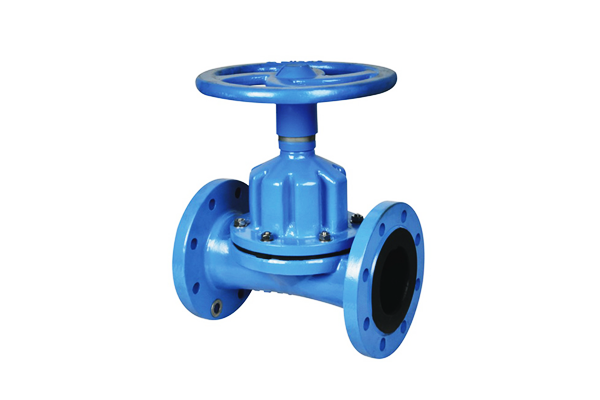
Straight-Through (Full-Bore) Membránszelep
The straight-through or full-bore valve eliminates the raised weir, providing a direct, unobstructed flow path from inlet to outlet.
This design is particularly advantageous in systems handling viscous, fibrous, or particulate-laden media, as it reduces the chances of clogging and minimizes pressure drop across the valve.
The diaphragm in this configuration must flex more significantly during operation, which can result in reduced diaphragm life compared to the weir type.
Viszont, it provides a better solution for abrasive or slurry-based processes that require unrestricted flow.
Előnyök:
- Minimizes pressure drop
- Allows passage of viscous, csiszoló, or slurry-laden fluids
- Easier flushing and cleaning of the pipeline
Korlátozások:
- Diaphragm experiences more flexing, reducing service life
- Less suited to sterile or hygienic systems due to potential pooling
Alkalmazások:
- Mining and mineral processing
- Chemical slurry pipelines
- Industrial wastewater systems
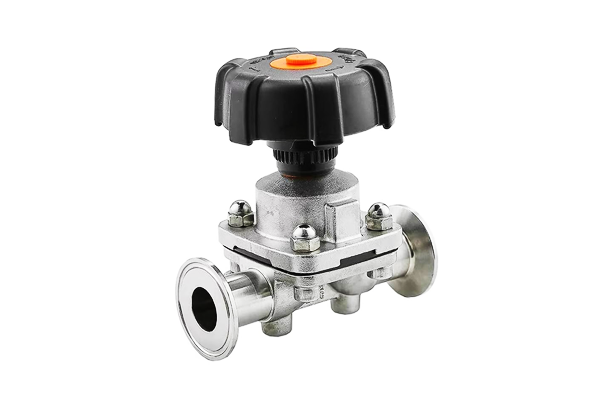
Manual Diaphragm Valve
Manual diaphragm valves are operated using a handwheel or lever, making them ideal for systems requiring direct operator control without the complexity or cost of automation.
These valves are mechanically simple, Könnyen karbantartható, and allow for precise throttling in small-scale or low-cycle applications.
They are commonly used in laboratory setups, utility lines, and low-frequency processes where automation isn’t necessary.
The user turns the handwheel to lift or press down the diaphragm onto the seat, manually regulating flow.
Előnyök:
- Precise control for throttling or shut-off
- Nincs szükség külső energia szükséges
- Low initial cost and simple operation
Korlátozások:
- Labor-intensive in large systems
- Incompatible with automated process control
Alkalmazások:
- Laboratories and pilot plants
- Small-scale process lines
- Maintenance bypasses and backup systems
Pneumatic and Solenoid-Actuated Diaphragm Valves
These valves are designed for automated flow control using either pneumatic actuators (air-operated) or solenoid systems (electromagnetic actuation).
In pneumatic models, air pressure is applied to open or close the diaphragm through linear motion, while solenoid valves use an electric coil to move a plunger and engage the diaphragm.
These valves are integral to modern process automation, offering high-speed actuation and compatibility with programmable logic controllers (PLC-k), distributed control systems (DCS), or remote supervisory control platforms.
They’re often equipped with positioners, feedback sensors, and stroke limiters for precise, valós idejű ellenőrzés.
Előnyök:
- High-speed, automatizált működés
- Compatible with industrial control systems
- Ideal for remote or hazardous locations
Korlátozások:
- Magasabb kezdeti költség
- Requires external energy (compressed air or electricity)
- More complex maintenance and calibration
Alkalmazások:
- Cleanroom and sterile filling operations
- Batch process control in chemical plants
- CIP/SIP systems in pharmaceutical and food industries
Műanyag vs. Metal Body Diaphragm Valves
| Anyag | Leírás |
| Műanyag (PÉLDÁUL., PVC, PVDF, PP) | Korrózióálló, könnyűsúlyú, és költséghatékony. Often used in chemical and water treatment industries. |
| Fém (PÉLDÁUL., rozsdamentes acél, öntöttvas) | Provides superior pressure ratings, mechanikai erő, and temperature resistance. Ideal for sanitary, ipari, és nagynyomású alkalmazások. |
5. Materials of Construction of Diaphragm Valve
Az előadás, tartósság, and chemical compatibility of diaphragm valves are heavily influenced by the materials used in their construction.
The correct combination of diaphragm material és valve body material ensures reliable operation under diverse conditions such as corrosive environments, sterile processing, and abrasive media.

Diaphragm Materials
The diaphragm is the critical sealing element that comes in direct contact with the process fluid.
It must exhibit flexibility, vegyszerállóság, mechanikai erő, és tartósság. Below are commonly used diaphragm materials with their typical properties:
| Anyag | Üzemi hőmérsékleti tartomány | Legfontosabb tulajdonságok | Tipikus alkalmazások |
| EPDM (Etilén-propilén-dién-monomer) | -40°C to +120°C | Excellent resistance to water, gőz, and dilute acids. Good elasticity. Not suitable for hydrocarbons. | Vízkezelés, élelmiszer -feldolgozás, HVAC |
| PTFE (Politetrafluor-etilén) | -20°C to +200°C | Exceptional chemical resistance. Tapadásgátló, nem reaktív. Often bonded to a backing elastomer. | Agresszív vegyszerek, sterile services, high purity |
| FKM (Fluoroelastomer, PÉLDÁUL., Viton®) | -20°C to +180°C | Excellent resistance to oils, oldószerek, és szénhidrogének. Less suited for steam. | Vegyi feldolgozás, olaj & gáz |
| Butyl Rubber (IIR) | -50°C to +120°C | Good impermeability to gases and resistance to dilute acids and alkalis. | Gas systems, moderate chemical environments |
| Natural Rubber (NR) | -50°C to +80°C | Excellent abrasion resistance and elasticity. Poor resistance to oils. | Slurry services, koptató folyadékok |
| Szilikon | -60°C to +180°C | Excellent flexibility at low and high temperatures. Biokompatibilis. | Pharmaceutical and food-grade services |
Jegyzet: Diaphragms can be reinforced with fabric (PÉLDÁUL., nylon or polyester) to enhance pressure and fatigue resistance.
In high-purity or aggressive service, multi-layered diaphragms (PÉLDÁUL., PTFE over EPDM) gyakoriak.
Szeleptest anyagok
The valve body houses the diaphragm and supports system pressure.
Selection of the body material depends on mechanical strength, korrózióállóság, termikus teljesítmény, és a szabályozási követelmények.
| Anyag | Tulajdonságok | Alkalmazások |
| Rozsdamentes acél (304, 316, 316L) | Kiváló korrózióállóság, nagy szilárdság, and compatibility with clean-in-place (Cip) and steam-in-place (KORTY) rendszer. 316L is preferred for low carbon and high purity. | Gyógyszeripari termékek, biotechnology, élelmiszer & ital |
| Öntöttvas | Gazdaságos, tartós, moderate corrosion resistance when lined or coated. Suitable for non-aggressive fluids. | HVAC, general water services, non-corrosive media |
| PVDF (Polyvinylidene Fluoride) | Excellent resistance to strong acids, bázisok, és oldószerek. High purity and good mechanical properties. | Semiconductor processing, ultrapure water systems |
| Polipropilén (PP) | Költséghatékony, könnyűsúlyú, and corrosion resistant to many chemicals. Limited temperature and pressure range. | Vegyi adagolás, low-pressure pipelines |
| PTFE-Lined Bodies | Provide universal chemical resistance while allowing the use of metal for mechanical strength. | Agresszív vegyszerek, maró hatású iszapok |
| Bronz | Jó korrózióállóság, különösen a tengervízben. Not suitable for strong acids. | Tengeri rendszerek, sóoldat, water lines |
Material Compatibility and Selection Guidelines
When selecting diaphragm valve materials, the following factors must be evaluated:
- Kémiai kompatibilitás: Ensure all wetted materials resist the process fluid.
PTFE is the gold standard for universal resistance, but elastomers like EPDM or FKM may suffice for less aggressive media. - Hőmérséklet és nyomás: Both diaphragm and body materials must withstand the system’s operational extremes.
Például, steam lines demand high-temperature diaphragms like PTFE or silicone and bodies like stainless steel. - Mechanical Load and Wear: For abrasive services (PÉLDÁUL., kecskék), materials like natural rubber diaphragms and lined or reinforced metal bodies improve wear resistance.
- Sanitary Requirements: For sterile or food-grade systems, FDA-compliant elastomers and 316L stainless steel are standard. Smooth surfaces and cleanability (CIP/SIP) elengedhetetlenek.
- Költség vs. Teljesítmény: Plastic valves are cost-effective but have pressure and temperature limits. Metal valves offer durability but are more expensive.
6. Key Advantages of Diaphragm Valve
- Hygienic Design: The diaphragm valve’s design eliminates dead spaces and crevices, making it fully compatible with Clean-in-Place (Cip) and Sterilize-in-Place (KORTY) eljárások.
This feature is critical for pharmaceutical, biotechnology, and food processing industries where sterility is paramount. - Media Isolation: The diaphragm acts as a physical barrier between the actuator and the process fluid, preventing contamination and corrosion of valve internals, enhancing durability and product purity.
- Leak-tight Shutoff: Diaphragm valves commonly achieve ANSI Class VI leakage standards (≤0.0005% of design flow), offering superior sealing performance compared to many globe and gate valves.
- Könnyű karbantartás: The diaphragm can typically be replaced in 15–30 minutes without removing the valve from the pipeline, significantly reducing downtime and maintenance complexity.
- Chemical and Corrosion Resistance: Various diaphragm materials (EPDM, PTFE, FKM) and body materials (rozsdamentes acél, PVDF) provide excellent resistance to aggressive chemicals and corrosive media.
- Suitability for Abrasive Fluids: The flexible diaphragm and smooth flow path make these valves ideal for slurries and abrasive fluids, minimizing wear and extending service life.
- Költséghatékonyság: Especially for small diameters (≤2 hüvelyk), diaphragm valves often have a lower initial cost compared to ball valves, providing an economical choice for many applications.
7. Limitations and Considerations of Diaphragm Valve
- Pressure and Temperature Constraints: Most diaphragm valves are limited to pressures ≤150 psi (≈10 bar) and temperatures ≤250°F (≈120°C).
These limits exclude their use in high-pressure steam or hydrocarbon service environments. - Diaphragm Wear and Replacement: The diaphragm is a wear part subject to fatigue, especially under frequent cycling (>10,000 műveleteket).
Depending on the media and usage, diaphragms typically require replacement every 6 -hoz 24 hónap. - Flow Limitations: Weir-type diaphragm valves are prone to clogging or blockage with highly viscous fluids (PÉLDÁUL., honey, iszap) unless a straight-through design is specified. Is, their throttling precision is inferior to globe valves.
- Size and Actuation Limits: Diaphragm valves are rarely used beyond pipe sizes of 8 hüvelykes (DN200) because larger sizes require much higher actuation forces, which complicates operation and increases cost.
8. Industrial Applications of Diaphragm Valve
Diaphragm valves are widely used in industries requiring reliable, contamination-free flow control and corrosion resistance:
- Gyógyszeripari termékek & Biotechnology: Ideal for sterile processes due to CIP/SIP compatibility and chemical-resistant diaphragms, ensuring contamination-free fluid handling.
- Élelmiszer & Ital: Used extensively for hygienic fluid control in dairy, italok, and sauces, meeting FDA and sanitary standards.
- Víz & Szennyvízkezelés: Suitable for controlling potable water, iszap, and treated effluent, especially with corrosion-resistant plastic bodies.
- Vegyi feldolgozás: Handle aggressive chemicals with leak-tight seals and chemical-resistant materials, perfect for dosing and batch processes.
- Bányászati & Iszap: Resistant to abrasion, effectively controlling solid-laden fluids and reducing valve wear.
- HVAC & Általános iparág: Used for regulating cooling water, gőz, and compressed air with reliable shutoff and corrosion resistance.
9. Összehasonlítás más szeleptípusokkal
When selecting valves for process control, understanding how diaphragm valves compare to alternatives like globe, labda, and butterfly valves is essential.
| Jellemző | Membránszelep | Gömbszelep | Golyószelep | Pillangószelep |
| Tömítési teljesítmény | Excellent leak-tight seal (ANSI osztály VI) | Jó, but seat wear can cause leaks | Good for on/off, less leak-tight than diaphragm | Mérsékelt, may leak under certain conditions |
| Áramlásszabályozás | Smooth throttling, moderate pressure drop | Precíz fojtás, handles high pressure/temperature | Quick on/off, korlátozott fojtás | Alacsony nyomásesés, less precise throttling |
| Karbantartás | Egyszerű membráncsere, fluid isolated from moving parts | Complex internals exposed to fluid, higher wear | Mérsékelt, seals may wear, but robust | Egyszerű kialakítás, alacsony karbantartási igény |
| Hygienic Suitability | Kiváló; fluid contacts only diaphragm and body | Limited by crevices and sealing surfaces | Mérsékelt; potential dead zones | Mérsékelt; not ideal for sterile fluids |
| Nyomás & Hőmérséklet tartomány | Typically ≤150 psi, ≤250°F | High pressure and temperature capability | Magas nyomás, broad temperature range | Moderate pressure and temperature limits |
| Mérettartomány | Usually ≤8 inches | Széles választék, including large sizes | including very large | Széles választék, common in large pipes |
| Költség | Cost-effective for small sizes and corrosive media | Higher cost due to complex design | Moderate to high depending on size/material | Generally low cost and lightweight |
| Működési sebesség | Lassabban, due to diaphragm movement | Mérsékelt | Fast quarter-turn operation | Fast quarter-turn operation |
Összefoglalás
- Membránszelepek stand out for their leak-tight sealing, hygienic design, és a karbantartás könnyűsége, making them ideal for sanitary and corrosive applications at moderate pressure and temperature.
- Globe szelepek offer superior throttling precision and higher pressure ratings but require more maintenance.
- Golyós szelepek excel in fast on/off control and high-pressure systems but are less suitable for sterile environments.
- Pillangószelepek are cost-effective for large pipelines with low-pressure drop needs but have moderate sealing capabilities.
11. Következtetés
Diaphragm valves are uniquely suited for process environments that demand tisztaság, vegyszerállóság, és megbízható elzárás.
Their design—simple yet highly effective—has stood the test of time in sanitary, maró hatású, and abrasive applications.
While not suited for high-pressure or precise throttling, diaphragm valves remain the preferred choice in biotechnológia, élelmiszer, kémiai, and water industries.
As materials and automation technologies advance, diaphragm valves continue to play a vital role in the next generation of process control systems.
EZ: Nagy pontosságú szelepöntési megoldások igényes alkalmazásokhoz
EZ a precíziós szelepöntési szolgáltatások szakosodott szolgáltatója, nagy teljesítményű alkatrészek szállítása a megbízhatóságot igénylő iparágak számára, nyomás integritása, és méretpontosság.
A nyers öntvényektől a teljesen megmunkált szeleptestekig és szerelvényekig, EZ végpontok közötti megoldásokat kínál, amelyeket úgy terveztek, hogy megfeleljenek a szigorú globális szabványoknak.
Szelepöntési szakértelmünk magában foglalja:
Befektetési casting a szeleptestekhez & Vágás
Utilizing lost wax casting technology to produce complex internal geometries and tight-tolerance szelep alkatrészek with exceptional surface finishes.
Homoköntés & Héjas penészöntés
Ideális közepes és nagy szeleptestekhez, karimák, és motorháztetők – költséghatékony megoldást kínálnak a robusztus ipari alkalmazásokhoz, beleértve az olajat is & gáz- és áramtermelés.
Precíziós megmunkálás a szelephez & Pecsét integritása
CNC megmunkálás ülések, szálak, és a tömítőfelületek biztosítják, hogy minden öntött alkatrész megfeleljen a méretre és a tömítési teljesítményre vonatkozó követelményeknek.
Anyagválaszték kritikus alkalmazásokhoz
Rozsdamentes acélból (CF8/CF8M/CF3/CF3M), sárgaréz, csillapító vas, duplex és erősen ötvözött anyagokhoz, EZ korrozív hatású szelepöntvényeket szállít, nagynyomású, vagy magas hőmérsékletű környezetben.
Akár egyedi pillangószelepekre van szüksége, diaphragm valves, gömbszelepek, tolózárak, vagy ipari szelepöntvények nagy volumenű gyártása, EZ az Ön megbízható partnere a pontosság érdekében, tartósság, és minőségbiztosítás.
GYIK
Can diaphragm valves handle slurries?
Igen, but only straight-through (fúrás) tervez, which avoid weirs that trap solids. Use abrasion-resistant diaphragms (PÉLDÁUL., reinforced rubber) for long service life.
How often should diaphragms be replaced?
In clean services (víz, gyógyszerkészítmények), every 1–2 years. In harsh chemical or abrasive services, every 6–12 months.
Are diaphragm valves suitable for high-pressure steam?
Nem. Most diaphragm valves are limited to ≤150 psi and ≤250°F; gőzrendszerek (300+ PSI) require globe or ball valves.
What is the difference between ANSI Class VI and Class IV leakage?
VI. Osztály (diaphragm valves) allows ≤0.0005% of design flow leakage; IV. Osztály (gömbszelepek) allows ≤0.01%, making diaphragm valves superior for tight shutoff.
Can diaphragm valves be used in vacuum applications?
Igen, but ensure the diaphragm material is compatible with vacuum (no outgassing). PTFE diaphragms work well for vacuum systems up to 29 inHg.

