1. Bevezetés
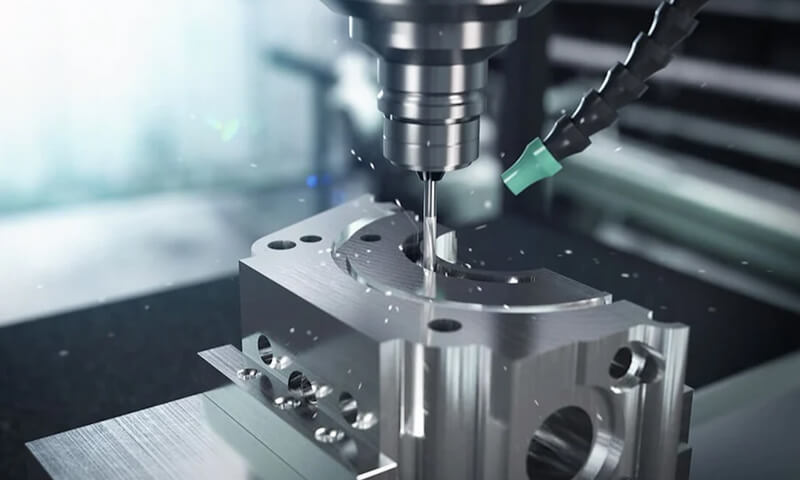
A mai gyártási környezetben, CNC (Számítógépes numerikus vezérlés) machining stands as a pivotal technology that enables the production of highly precise and complex components.
Viszont, the success of any CNC project heavily depends on selecting the right material.
The appropriate choice can significantly impact the performance, tartósság, költség, and overall efficiency of the final product.
This blog post aims to provide an in-depth guide to CNC machining materials, exploring their properties and how they influence the machining process.
2. Understanding Material Properties
Before exploring specific materials, it’s crucial to understand how material properties impact CNC machining.
Different materials behave differently under machining conditions, and choosing the right material is essential for achieving optimal results.

Here are the key material properties that influence CNC machining:
Keménység
Hardness is the ability of a material to resist indentation, vakarózás, és viselni.
Harder materials generally offer greater resistance to wear, making them ideal for parts that will experience abrasion or stress over time.
Viszont, harder materials can be more challenging to machine due to their resistance to cutting tools.
- Kulcsfontosságú megfontolások: Materials like hardened steel, titán, and tool steels are known for their high hardness, which makes them ideal for heavy-duty applications.
A flip oldalán, softer materials like aluminum or plastics are easier to machine, but they may wear down more quickly when used in high-stress environments. - Példa: For CNC machining, Olyan anyagok, mint a H13 szerszámacél (hardness around 45-50 HRC) are often used for molding or heavy-duty tooling,
míg 6061 alumínium (with a Brinell hardness of about 95) is softer and more machinable.
Szívósság
Toughness refers to a material’s ability to absorb energy and deform without fracturing.
It’s a combination of strength and ductility, making it a crucial property for parts exposed to high-impact or shock loads.
Tough materials perform better under conditions that involve sudden forces or mechanical shock, such as automotive or aerospace components.
- Kulcsfontosságú megfontolások: Materials that are both strong and tough can withstand impacts, rezgés, and high-stress conditions.
Fémek, mint titán és szénacél are known for their toughness and are used in industries requiring reliable and durable parts, such as aerospace or heavy machinery. - Példa: Titánötvözetek (mint például Ti-6Al-4V) are highly tough, offering excellent strength-to-weight ratios while resisting cracking under stress.
Hajlékonyság
Ductility is the ability of a material to undergo significant plastic deformation before breaking, usually through stretching or bending.
High ductility is important for parts that need to be shaped, bent or stretched during the manufacturing process or in use.
It’s especially critical when the material needs to absorb stress without failure.
- Kulcsfontosságú megfontolások: Ductile materials can be easily formed and manipulated without cracking.
For CNC machining, ductile materials are preferred for applications that require complex shapes or parts that need to bend or stretch without breaking. - Példa: Réz és alumínium are both highly ductile and can be easily shaped into intricate components like electrical connectors or thin-walled parts.
Erő
Strength is the material’s ability to withstand an applied force without breaking or failing.
The greater the material’s strength, the more weight or pressure it can support without deformation.
For CNC machining, understanding strength is essential for selecting the right material for structural or load-bearing parts.
- Kulcsfontosságú megfontolások: Materials with higher tensile strength (the resistance to being stretched or pulled apart) are ideal for parts that will endure significant mechanical stress.
Például, titán és szénacél are used for their exceptional strength in aerospace and automotive applications. - Példa: 7075 alumínium, known for its high tensile strength of 83,000 PSI, is commonly used in aerospace, míg rozsdamentes acél offers excellent strength and resistance to fatigue.
Korrózióállóság
Corrosion resistance is the ability of a material to resist chemical degradation caused by environmental factors like moisture, só, vagy vegyi anyagok.
Materials that exhibit excellent corrosion resistance are necessary for applications exposed to harsh environments, mint például a tengeri, kémiai, or outdoor applications.
- Kulcsfontosságú megfontolások: Choosing materials with high corrosion resistance ensures the longevity and durability of the final product.
Rozsdamentes acél (főleg 316), titán, és alumínium are commonly chosen for their excellent corrosion resistance properties. - Példa: 316 rozsdamentes acél is highly resistant to corrosion from chlorides and other chemicals, making it a top choice for marine environments and medical implants.
3. Factors to Consider When Choosing CNC Machining Materials
Choosing the right material for CNC machining is a balancing act, considering multiple factors that will affect both performance and cost. Here are the most critical factors to consider:
Tartósság
Durability is the material’s ability to withstand wear, korrózió, and fatigue over time.
In applications where components are exposed to harsh environmental conditions, durability is a primary concern.
Highly durable parts require less frequent replacements, reducing the total cost of ownership and ensuring long-term functionality.
- Kulcsfontosságú megfontolások: Look for materials that combine both strength and resistance to environmental factors like moisture, vegyszerek, és szélsőséges hőmérsékletek.
Rozsdamentes acél és titán are highly durable and resistant to corrosion, making them ideal for medical devices, tengeri környezet, és űrrepülési alkalmazások. - Példa: Titánötvözetek are commonly used in aerospace and medical industries for their ability to withstand harsh environments without degrading over time.
Rozsdamentes acél ötvözetek, mint 316 are also highly durable and corrosion-resistant, making them ideal for equipment exposed to saltwater or chemicals.
Megmunkálhatóság
Machinability refers to how easily a material can be cut, alakúra, or finished during the CNC machining process.
Materials with high machinability require less energy to process, which can result in faster production times, hosszabb szerszámélettartam, and reduced overall machining costs.
- Kulcsfontosságú megfontolások: Materials that are too hard or abrasive can wear out cutting tools quickly, increasing the overall cost and machining time.
Másrészt, softer materials tend to machine more easily but may wear down faster in service.
Alumínium és sárgaréz are known for their excellent machinability, making them cost-effective and efficient for mass production.
Egymással szemben, keményebb anyagok, mint pl titán vagy Kuncol require specialized tools and slower machining speeds. - Példa: 6061 alumínium is widely used in CNC machining for its ease of machining and ability to produce precise parts quickly,
míg titán demands more attention due to its tougher nature and higher tooling costs.
Termikus tulajdonságok
Thermal properties are crucial when selecting materials for applications exposed to high temperatures or significant temperature fluctuations.
These properties include thermal conductivity, hőállóság, and thermal expansion. Materials with poor thermal properties can distort, weaken, or fail under temperature changes.
- Kulcsfontosságú megfontolások: If your application requires components that will be exposed to heat, you’ll need a material with high thermal resistance and low thermal expansion.
Titán és Kuncol are ideal for high-temperature environments, such as aerospace or turbine applications, where maintaining material integrity under extreme heat is critical.
Olyan anyagok, mint a alumínium are good for heat dissipation due to their high thermal conductivity. - Példa: Kuncol is often chosen for its ability to withstand extremely high temperatures (up to 2,000°F) mechanikai tulajdonságainak elvesztése nélkül.
Alumínium (mint 6061) is often used for heat sinks and thermal management components because of its excellent thermal conductivity.
Költség
Cost is often one of the most critical factors when selecting CNC machining materials, especially for large-scale production runs.
Olyan anyagok, mint a alumínium és sárgaréz are more cost-effective compared to specialty materials like titán vagy Kuncol.
Viszont, selecting a cheaper material may lead to compromises in performance or longevity, so it’s important to balance cost with the required performance standards.
- Kulcsfontosságú megfontolások: Consider not just the upfront material cost, but also factors like machining time, szerszám kopás, and potential maintenance or replacement costs over the long term.
For low-cost, nagy volumenű alkalmazások, alumínium és műanyag mint például akril és nejlon are often used.
For high-performance parts, the additional cost of materials like titán may be justified. - Példa: Alumínium 6061 is often chosen for its excellent balance between cost and performance, especially for structural and lightweight parts in industries like automotive and aerospace.
Titán, míg drágább, is selected for its unique properties in demanding applications such as aerospace and medical implants.
Finish Requirements
The finish requirements of a part can significantly influence the material choice.
Materials that offer better surface finishes with minimal additional post-processing are preferred for applications where aesthetics
or functional surface properties (like smoothness, korrózióállóság, or conductivity) kritikusak.
- Kulcsfontosságú megfontolások: For parts that require a high-quality finish, Olyan anyagok, mint a rozsdamentes acél vagy alumínium are easier to polish and anodize, tisztaságot biztosítva, visually appealing result.
Other materials, mint például szerszámcél és Kuncol, might require additional processing steps like grinding or polishing to achieve the desired finish. - Példa: Alumínium 6061 is popular for its ability to take a high-quality finish, whether anodizing, porbevonat, or simple polishing.
Rozsdamentes acél, különösen 304 vagy 316, is often used in applications where a shiny,
aesthetically pleasing finish is required, such as kitchen appliances or architectural components.
Industry Application
Different materials are tailored for specific industries, depending on the performance requirements and environmental conditions.
Understanding the specific needs of the industry is critical when selecting CNC machining materials.
- Kulcsfontosságú megfontolások: Each industry may prioritize different material properties. Például, űrrepülés requires materials with high strength-to-weight ratios and heat resistance,
medical applications demand biocompatibility and corrosion resistance, és autóalkatrészek benefit from cost-effective, tartós anyagok. - Példa: A űrrepülés ipar, Olyan anyagok, mint a titán és Kuncol are favored for their high strength-to-weight ratio and resistance to high temperatures,
míg orvosi implantátumok often rely on rozsdamentes acél vagy titán due to their corrosion resistance and biocompatibility.
4. Common CNC Machining Materials
Let’s break down some of the most commonly used materials in CNC machining, típus szerint kategorizálva:

Fémek:
- Alumínium (PÉLDÁUL., 6061, 7075): Az alumínium könnyű, korrózióálló, and easy to machine, making it one of the most popular choices.
Például, 6061 aluminum has good strength, és jó korrózióállóság, and is often used in the aerospace and automotive industries.
Másrészt, 7075 alumínium, with its higher strength-to-weight ratio, is preferred for high-performance applications like aircraft parts.
-
- Tulajdonságok: Erő: 30-50 ksi (-ra 6061), Megmunkálhatóság: Kiváló
- Alkalmazások: Űrrepülés, autóipar, fogyasztási cikkek.
- Rozsdamentes acél (PÉLDÁUL., 304, 316): Stainless steel is strong, tartós, és ellenáll a korróziónak, which makes it perfect for demanding environments like food processing, orvosi berendezések, és tengeri alkalmazások.
Például, 304 stainless steel is one of the most widely used grades due to its excellent corrosion resistance and relatively lower cost.
-
- Tulajdonságok: Erő: 70-100 ksi, Korrózióállóság: Kiváló
- Alkalmazások: Orvosi, élelmiszer -feldolgozás, tengeri.
- Titán: Titanium alloys are known for their high strength-to-weight ratio and resistance to corrosion.
Titanium is commonly used in aerospace, orvosi, and military applications where performance and reliability are critical.
-
- Tulajdonságok: Erő: 130-160 ksi, Megmunkálhatóság: Nehéz
- Alkalmazások: Űrrepülés, orvosi implantátumok, katonai.
- Réz & Sárgaréz: Copper is excellent for electrical conductivity, while brass is known for its corrosion resistance.
These materials are commonly used for electrical and plumbing components.
-
- Tulajdonságok: Vezetőképesség: 58% IACS (Réz), Erő: 50-70 ksi (Sárgaréz)
- Alkalmazások: Elektromos csatlakozók, vízvezeték szerelvények.
- Szénacél: Carbon steel is strong, költséghatékony, és sokoldalú. It’s commonly used for structural components and parts that don’t require extreme corrosion resistance.
-
- Tulajdonságok: Erő: 50-70 ksi, Költség: Alacsony
- Alkalmazások: Autóipar, építés, general manufacturing.
Műanyag:
- Akril (PMMA): Acrylic is lightweight, átlátszó, and easy to machine, making it an ideal choice for applications like signage, világítótestek, és megjeleníti.
-
- Tulajdonságok: Megmunkálhatóság: Kiváló, Ütköző ellenállás: Mérsékelt
- Alkalmazások: Displays, jelzések, optical lenses.
- Nejlon: Nylon is a tough, wear-resistant plastic often used for gears, perselyek, and moving parts in machinery.
-
- Tulajdonságok: Erő: 10-15 ksi, Kopásállóság: Kiváló
- Alkalmazások: Fogaskerék, csapágyak, autóipar.
- Delrin (Acetál): Delrin is a high-strength plastic known for its rigidity and precision. It’s often used for parts requiring tight tolerances, például fogaskerekek és csapágyak.
-
- Tulajdonságok: Erő: 20-25 ksi, Dimenziós stabilitás: Kiváló
- Alkalmazások: Precíziós alkatrészek, fogaskerék, csapágyak.
- Polikarbonát: Polycarbonate is known for its impact resistance and is used in applications requiring toughness, such as protective covers.
-
- Tulajdonságok: Ütköző ellenállás: Nagyon magas, Átláthatóság: Kiváló
- Alkalmazások: Protective covers, optical lenses.
Kompozitok:
- Szénszálas: Carbon fiber is incredibly lightweight and strong, making it ideal for high-performance applications in industries like aerospace and sports equipment.
-
- Tulajdonságok: Erő: 150-300 ksi, Súly: 30-50% könnyebb, mint az alumínium
- Alkalmazások: Űrrepülés, autóipar, sporteszközök.
- Üveggyapot: Fiberglass offers strength and resistance to corrosion, commonly used for structural applications and parts exposed to harsh environments.
-
- Tulajdonságok: Erő: 40-80 ksi, Tartósság: Magas
- Alkalmazások: Csónakok, szerkezeti elemek.
5. Specialty CNC Machining Materials
Kuncol
They are designed for high-temperature resistance, making them indispensable in aerospace and power generation sectors.
Kuncol 718 can withstand temperatures up to 700°C, ensuring stability in extreme conditions.
Hastelloy
It is highly corrosion-resistant, particularly in aggressive chemical environments, and is frequently used in marine and chemical processing industries.
Hastelloy C-276 exhibits excellent resistance to pitting, hasadás korrózió, and stress-corrosion cracking.
Kerámia
Ceramic materials are exceptionally hard and wear-resistant, suited for applications like cutting tools, csapágyak, and semiconductor manufacturing.
Silicon nitride ceramics, például, have a hardness of 15 GPA, providing outstanding durability and longevity.
Szerszámacélok
Tool steels are specifically engineered for molds and dies, offering outstanding hardness and toughness for high-stress applications.
A2 tool steel, with a Rockwell hardness of HRC 60-62, ensures reliable performance in demanding manufacturing processes.
6. További figyelembe veendő tényezők
Tolerances Required
Tight tolerances necessitate using materials that machine predictably and hold dimensions accurately.
Precision engineering often requires tolerances within ±0.001mm, which can be achieved reliably with materials like titanium and stainless steel.
Post-Machining Processes
Some materials benefit from or require post-machining processes such as heat treatment, bevonat, vagy polírozás.
These processes can enhance material properties or aesthetics. Például, anodizing aluminum not only improves its corrosion resistance but also adds an attractive finish.
Környezeti feltételek
The operating environment of the component should be considered, including exposure to chemicals, nedvesség, UV sugárzás, és a hőmérsékleti ingadozások.
Polikarbonát, például, offers excellent UV resistance, making it suitable for outdoor applications.
7. How Material Selection Affects CNC Machining
Megmunkálási idő
Harder materials generally take longer to machine, potentially increasing production costs and lead times.
Például, machining titanium can extend machining time by up to 30% az alumíniumhoz képest, impacting overall efficiency.
Szerszámkopás
More abrasive materials can accelerate tool wear, leading to higher maintenance costs and frequent tool replacement.
Using diamond-coated tools can extend tool life by up to 40%, az állásidő és a költségek csökkentése.
Felszíni befejezés
Certain materials inherently produce better surface finishes, reducing the need for additional finishing steps and improving overall efficiency.
Delrin, például, can achieve surface roughness values as low as Ra 0.8 μm, minimizing post-processing requirements.
Költséghatékonyság
Balancing material cost with production efficiency is crucial.
Expensive materials might justify their cost through improved performance or reduced machining times, while cheaper alternatives could lead to higher long-term expenses if they require more extensive processing.
Például, choosing aluminum over titanium can reduce initial costs but may result in higher maintenance and replacement costs over time.

8. Következtetés
Selecting the appropriate material for CNC machining is a critical decision that impacts every aspect of the project—from initial design to final performance.
By understanding the properties and considerations involved, manufacturers can choose materials that best meet the demands of their application while balancing cost and efficiency.
Choosing the right material not only enhances the quality and durability of the final product but also optimizes the entire manufacturing process.
Embrace the precision and potential of CNC megmunkálás by making well-informed material selections, and elevate your projects to new heights.
A DEZE egy professzionális CNC-feldolgozó gyár. If you have any CNC processing needs for any material, Kérjük, nyugodtan bátran vegye fel velünk a kapcsolatot.