1. Introduction
Bronze is not one material with one fixed density. In modern copper-alloy practice, the bronze family includes tin bronzes, leaded tin bronzes, high-leaded tin bronzes, nickel-tin bronzes, and aluminum bronzes, and each group has a different composition and therefore a different density.
That is why “the density of bronze” is best understood as a range rather than a single value.
2. What Density Means in a Bronze Alloy
Density is the mass of a material per unit volume. In bronze, it is not just a catalog number; it is a direct expression of the alloy’s chemistry and microstructure.
Bronze alloys are copper-based, but the addition of tin, zinc, aluminum, nickel, manganese, iron, and sometimes lead shifts the final density away from pure copper.
Copper itself has a density of 8.89 g/cm³, so some bronzes end up slightly lighter than copper, while others are close to copper or even slightly denser, depending on the alloy family.
That is why bronze density matters in engineering. It affects part weight, inertia, shipping mass, handling, and how a component behaves in rotating, sliding, or load-bearing service.
In bearing and marine applications, for example, density is not merely about “heaviness”; it is part of the overall mechanical and thermal balance of the component.
3. Why Bronze Density Varies Across Families
Bronze is a family name, not a single alloy specification. The formal cast-bronze classification separates the family into copper-tin bronzes, leaded tin bronzes, high-leaded tin bronzes, nickel-tin bronzes, and aluminum bronzes.
Because these families use different alloying systems and different proportions of alloying elements, their densities are not the same.
This is the key metallurgical point: density changes because alloying changes the mass per unit volume of the material system.
A bronze with more zinc or aluminum will not behave like a bronze with more tin or lead, and a nickel-aluminum bronze will not have the same density profile as a high-leaded tin bronze.
The published property tables for C90500, C93200, C86300, C95400, and C95500 make that difference visible in real numbers rather than theory alone.
4. Representative Density Values of Common Bronze Alloys
The density values are drawn from published alloy datasheets at 20°C / 68°F.
| Bronze alloy | Family | Density (g/cm³) | Density (kg/m³) | Density (lb/in³) |
| C95400 | Aluminum bronze | 7.45 | 7,450 | 0.269 |
| C95500 | Nickel aluminum bronze | 7.53 | 7,530 | 0.272 |
| C95600 | Nickel aluminum bronze | 7.70 | 7,700 | 0.278 |
| C95800 | Nickel aluminum bronze | 7.64 | 7,640 | 0.276 |
| C86300 | Manganese bronze | 7.83 | 7,830 | 0.283 |
| C86400 | Manganese bronze | 8.33 | 8,330 | 0.301 |
| C90300 | Tin bronze | 8.80 | 8,800 | 0.318 |
| C90500 | Tin bronze | 8.72 | 8,720 | 0.315 |
| C90700 | Tin bronze | 8.77 | 8,770 | 0.317 |
| C90800 | Tin bronze | 8.77 | 8,770 | 0.317 |
| C93200 | High-leaded tin bronze | 8.91 | 8,910 | 0.322 |
| C93500 | High-leaded tin bronze | 8.86 | 8,860 | 0.320 |
| C93600 | High-leaded tin bronze | 9.00 | 9,000 | 0.325 |
| C93800 | High-leaded tin bronze | 9.25 | 9,250 | 0.334 |
5. What Bronze Density Means in Design and Manufacturing
Density Is a Design Variable, Not Just a Catalog Number
In bronze selection, density is not merely a descriptive property.
It is a design variable that influences part mass, inertia, handling, shipping weight, and dynamic response, especially when the component is large, rotating, or repeatedly accelerated and decelerated.
That is why engineers should not ask only “How dense is bronze?” but rather “What does this density do to the finished part in service?”
Bronze is a family of alloys used in very different duty cycles, so the density of the selected UNS grade should always be interpreted together with load, speed, lubrication, and environment.
Mass, Inertia, and Structural Behavior
A denser bronze produces a heavier component for the same geometry. In static hardware, that may be irrelevant or even desirable if mass contributes to damping or contact stability.
In rotating or reciprocating parts, however, mass changes the inertia of the system, which affects startup torque, stopping behavior, vibration response, and the energy needed to accelerate the component.
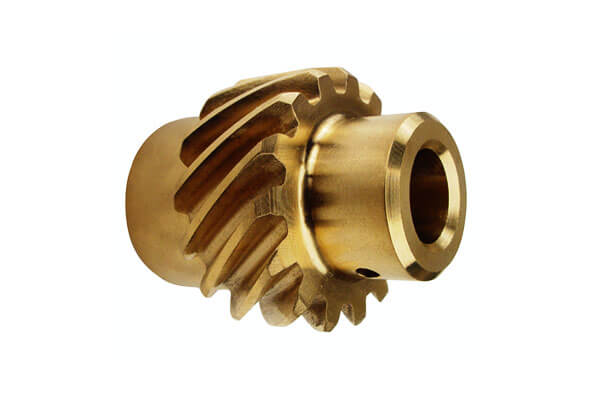
This is one reason bronze density matters in gears, cams, impellers, propellers, and other motion-related parts.
The density choice therefore becomes part of the mechanical design, not just the material specification.
Why Density Matters So Much in Bearings
Bronze is one of the classic bearing-material families, but the alloy is selected primarily for its load-speed capability, lubrication regime, wear behavior, and compatibility with the shaft, not for density alone.
The cast bronze bearing design manual emphasizes that bearing performance depends on whether the system operates in full-film, mixed-film, or boundary lubrication,
and that bronze bearings are commonly used in very slow-speed or heavily loaded conditions where lubrication quality is critical.
In that context, density affects the practical mass and thermal inertia of the bearing, but it does not replace the more important questions of shaft hardness, lubricant supply, and contact regime.
A useful way to think about it is this: a heavier bronze bearing can be mechanically robust and stable, but if the lubrication system is poor, density will not save the design.
The bronze-bearing literature is explicit that lubrication rate, viscosity, and bearing geometry must be correct for the bearing to operate properly. Density matters, but only within that larger tribological system.
Density and Manufacturing Efficiency
In manufacturing, bronze density influences more than the final part weight.
It also affects material consumption, casting yield per shot or pour, shipping cost, handling burden, and downstream machining load.
A large casting made from a denser bronze contains more mass for the same envelope, so the foundry and machine shop must move more metal through every step of the process.
That does not make a dense bronze better or worse by itself, but it does change the economics of production.
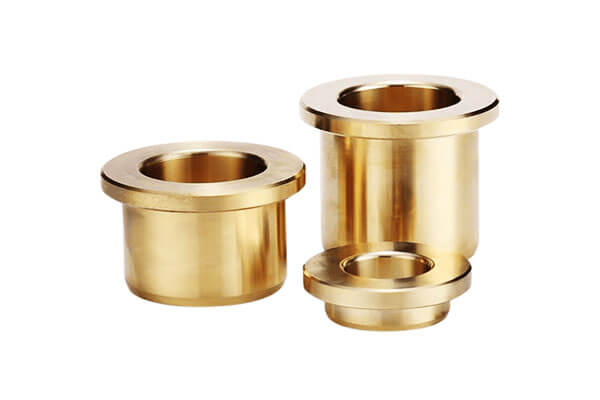
This is especially important in components such as valve bodies, propeller hardware, bushes, and heavy-duty machine parts, where the alloy is already being used because it offers a favorable combination of strength, corrosion resistance, and wear resistance.
Nickel aluminum bronzes, for example, are described as having excellent resistance to cavitation and strong seawater performance, which is why they are established in marine service.
In those cases, the density penalty is often accepted because the service benefit is larger than the weight cost.
Density Versus Porosity: A Critical Distinction
In bronze manufacturing, it is easy to confuse material density with part density.
They are not the same. Material density is a property of the alloy itself; part density depends on the alloy, the process route, and any porosity present in the finished component.
This distinction becomes especially important in powder metallurgy bronze parts, where the sintered density is intentionally lower than full density so that the part can retain oil.
The copper-alloy literature notes that bronze P/M parts can absorb 10% to 30% by volume of oil depending on sintered density, which is exactly why self-lubricating bronze bearings work at low speeds.
That point is valuable beyond powder metallurgy. It reminds engineers that density is not only about weight; it also relates to internal structure, load sharing, and functional porosity.
In other words, a “lower-density bronze part” may be either a design choice or a defect, depending on the process route. Understanding that difference is essential for quality control.
How Engineers Should Use Density Correctly
The correct workflow is simple but often overlooked.
First, specify the exact UNS bronze grade. Second, verify whether the value refers to fully dense cast material, wrought stock, or sintered P/M material.
Third, check whether the design is sensitive to mass, inertia, thermal behavior, or lubricant retention.
Only then should density be used as part of the selection decision. This is the only way to avoid using a catalog number as if it were a complete engineering answer.
6. How Engineers Use Density Data Correctly
The correct way to use bronze density is to specify the exact alloy, not just the word “bronze.”
A bearing bronze such as C93200 has a very different density from an aluminum bronze such as C95400, and those differences can materially change the part mass in a production design.
The datasheet values above are therefore useful only when they are tied to a specific UNS number and product form.
Engineers also need to remember that density does not determine performance by itself.
Two bronzes with similar densities may behave very differently in wear, corrosion, machinability, or load capacity.
For example, C95500 and C86300 are both around the 7.5–7.8 g/cm³ range, but they are used in different severe-service niches because their chemistries and mechanical profiles are different.
7. Selection Logic: Choosing the Right Bronze by Density and Function
If weight reduction matters, aluminum bronzes such as C95400 are often attractive because they sit at the lighter end of the bronze spectrum while still offering strong corrosion and wear performance.
For heavy-duty bearing or marine hardware, the engineer may accept a denser bronze, such as C93200 or C86300, because the service benefits outweigh the mass penalty.
If the application is severe-service marine hardware or propeller-related equipment, nickel aluminum bronzes such as C95500 offer a strong compromise between weight, strength, and corrosion resistance.
So the selection rule is simple: do not choose bronze by density alone.
Choose the alloy whose density, strength, wear resistance, corrosion resistance, castability, and machinability together match the function of the part.
Bronze density is important, but it is only one axis in a multi-variable material decision.
8. Bronze Density vs. Competing Materials
| Material | Representative grade | Density (g/cm³) | Density (kg/m³) | Density (lb/in³) |
| Bronze | C86300 manganese bronze | 7.83 | 7,830 | 0.283 |
| Brass | C26000 cartridge brass | 8.53 | 8,530 | 0.308 |
| Copper | Pure copper | 8.93 | 8,930 | 0.323 |
| Carbon steel | AISI 1018 | 7.87 | 7,870 | 0.284 |
| Stainless steel | AISI 304 | 8.00 | 8,000 | 0.289 |
| Aluminum alloy | 6061-T6 | 2.70 | 2,700 | 0.0975 |
| Gray cast iron | ASTM A48 Class 40 | 7.15 | 7,150 | 0.258 |
| Titanium alloy | Ti-6Al-4V (Grade 5) | 4.43 | 4,430 | 0.160 |
| Nickel-based superalloy | INCONEL 718 | 8.19 | 8,190 | 0.296 |
9. Conclusion
The density of bronze is best treated as a family property with a broad range, not as a single fixed value.
Representative bronze alloys span from about 7.45 g/cm³ in aluminum bronze to 9.25 g/cm³ in high-leaded tin bronze, with several other common bronzes sitting in between.
That spread reflects the fact that bronze is a family of copper-based alloys with different alloying systems and different service priorities.
For engineers, the practical lesson is clear: bronze density affects mass, inertia, shipping, and balance, but it should always be interpreted alongside strength, wear behavior, corrosion resistance, and manufacturability.
The “best” bronze is not the lightest or the heaviest bronze; it is the bronze whose density fits the rest of the design brief.
FAQs
Is bronze heavier than copper?
Not always. Copper has a density of 8.89 g/cm³, while bronze densities vary widely by alloy. Some bronzes are lighter than copper, while others, such as C93200, are slightly denser.
Does lower density always mean better bronze?
No. Lower density may help with weight reduction, but bronze selection must also consider strength, wear resistance, corrosion resistance, castability, and machining behavior.
Why do bronze alloys have such different densities?
Because bronze is a family of copper-based alloys with different alloying systems—tin, lead, nickel, aluminum, manganese, and iron all shift the final density and service behavior.