

1. Introduction
UNS C95500 is one of the most important nickel aluminum bronzes in modern engineering because it combines high strength, excellent corrosion resistance, good wear performance, and strong service reliability in severe environments.
It is widely used in marine hardware, valve components, bearings, bushings, gears, aircraft parts, and other applications where ordinary copper alloys are no longer sufficient.
The alloy is also notable for retaining useful strength at elevated temperatures and for performing well in seawater and other aggressive media.
What makes C95500 especially interesting is that it is not a “single-purpose” alloy.
It is a systems alloy: its value appears differently depending on whether the engineer is optimizing for corrosion, wear, pressure tightness, structural loading, or temperature stability.
2. What Is UNS C95500 Nickel Aluminum Bronze?
UNS C95500 is a cast nickel aluminum bronze in the copper–aluminum–iron–nickel family.
It is specifically formulated for demanding service where strength, wear resistance, corrosion resistance, and toughness must be balanced in one alloy rather than optimized separately.
In practice, this places C95500 in the group of high-performance structural bronzes used for marine hardware, valve components, bushings, gears, and other severe-service parts.
Unlike free-machining brasses or general-purpose bronzes, C95500 is not chosen for convenience.
It is selected because its metallurgical design supports load-bearing performance in aggressive environments, especially where seawater, sliding wear, and long service life are all part of the design brief.
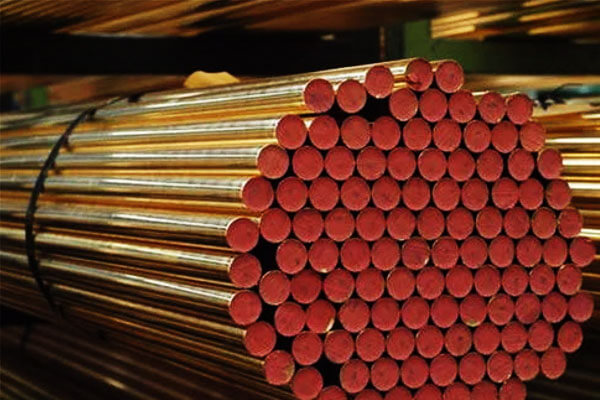
Alloy Identity
C95500 belongs to the C95000–C95999 family of copper-aluminum-iron and copper-aluminum-iron-nickel alloys.
That family classification matters because it distinguishes nickel aluminum bronzes from ordinary brasses and from tin bronzes:
the alloy system is built around aluminum as the principal strengthening element, with iron and nickel added to improve strength, structure control, and service performance.
In specification terms, C95500 is a cast aluminum bronze rather than a wrought alloy.
That means its typical engineering role is to deliver complex shape plus high performance in the as-cast or heat-treated condition, instead of relying on rolling or drawing to achieve properties.
Chemical composition
Chemical composition according to ASTM B505/B505M-23
| Element | C95500 Composition |
| Cu | 78.0% min. |
| Fe | 3.0–5.0% |
| Ni | 3.0–5.5% |
| Al | 10.0–11.5% |
| Mn | up to 3.5% |
| Named-elements total | 99.5% min. |
3. Physical Properties of UNS C95500
| Physical / Functional Property | Metric Unit | Imperial Unit |
| Density | 7.53 g/cm³ | 0.272 lb/in³ |
| Specific gravity | 7.53 | 7.53 |
| Electrical conductivity | 8% IACS | 8% IACS |
| Thermal conductivity | 41.9 W/m·K | 24.2 Btu/sq ft/hr/°F |
| Coefficient of thermal expansion | 15.5 × 10⁻⁶ /°C | 9 × 10⁻⁶ /°F |
| Specific heat capacity | 419 J/kg·K | 0.1 Btu/lb·°F |
| Modulus of elasticity | 110 GPa | 16,000 ksi |
| Poisson’s ratio | 0.32 | 0.32 |
| Magnetic permeability, as-cast | 1.32 | 1.32 |
| Magnetic permeability, TQ50 temper | 1.2 | 1.2 |
| Melting point, liquidus | 1054°C | 1930°F |
| Melting point, solidus | 1038°C | 1900°F |
4. Mechanical Properties of UNS C95500
UNS C95500 is a high-strength nickel aluminum bronze whose mechanical performance is usually evaluated in two published conditions: the standard continuous-cast C95500 condition and the heat-treated C95500HT condition.
The values below are representative room-temperature properties reported for ASTM B505/B505M-23 product forms.
Mechanical Properties of Continuous-Cast C95500
| Property | Metric Unit | Imperial Unit |
| Tensile strength, min. | 655 MPa | 95 ksi |
| Yield strength at 0.5% extension, min. | 290 MPa | 42 ksi |
| Elongation in 2 in. (50 mm), min. | 10% | 10% |
| Brinell hardness, typical | 208 HBW | 208 HBW |
Mechanical Properties of Heat-Treated C95500HT
| Property | Metric Unit | Imperial Unit |
| Tensile strength, min. | 758 MPa | 110 ksi |
| Yield strength at 0.5% extension, min. | 427 MPa | 62 ksi |
| Elongation in 2 in. (50 mm), min. | 8% | 8% |
| Brinell hardness, typical | 228 HBW | 228 HBW |
5. Corrosion Resistance
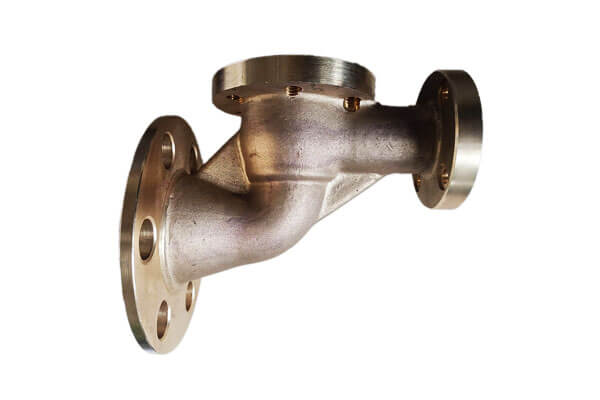
The corrosion story is one of the main reasons C95500 is so widely used. The alloy is repeatedly identified as having excellent corrosion resistance, including in seawater and marine environments.
It is also used for equipment handling seawater, sour mine waters, nonoxidizing acids, industrial process fluids, sewage-treatment applications, and marine hardware.
The reason this matters is not simply “it does not rust.” Rather, C95500 offers an unusually valuable combination: corrosion resistance plus wear resistance plus strength.
In seawater, many materials fail either by general corrosion, cavitation, erosion, or galling. C95500 is attractive because it addresses several of those failure modes at once,
which is why it appears in pump and valve components, bushings, shafts, propeller-related service, and heavily loaded marine hardware.
This multi-mechanism resistance is the core of the alloy’s reputation.
In demanding service, the most valuable materials are not those that excel at one isolated property, but those that remain stable across several failure mechanisms. C95500 is a textbook example of that principle.
6. Manufacturing Perspective
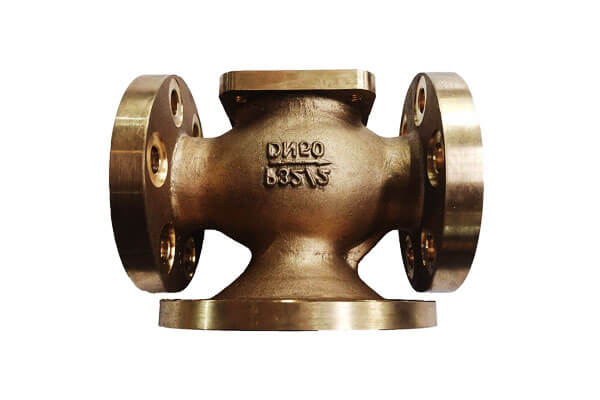
Casting: A Strong Alloy, But Not a Forgiving One
UNS C95500 is fundamentally a casting alloy, and its process behavior reflects that identity.
Published casting data describe it as having low casting yield, high drossing tendency, medium fluidity, medium gassing tendency, and high solidification shrinkage.
That combination tells a very clear engineering story: C95500 can produce high-performance castings, but it demands disciplined melt practice, sound gating and risering design, and careful control of oxidation and feeding.
C95500 is highly versatile in casting practice, but it is not forgiving.
It performs well across sand, shell, ceramic, investment, permanent mold, continuous, and centrifugal casting, yet every one of those routes demands careful control of feeding, oxide management, and solidification behavior.
Its short freezing range supports sound castings, but only when the foundry actively prevents drossing, shrinkage defects, and gas-related issues.
That is why C95500 is considered a premium casting bronze rather than an easy one.
Machining: Fully Machinable, But Not Free-Cutting
C95500 is machinable, but it is not a free-machining copper alloy.
Its published machinability rating is 50, which places it in the moderate-machinability category rather than the easy-cutting class.
The alloy tends to produce curled swarf, and the published engineering guidance warns that this can jam tooling and create surface imperfections through partial welding and tearing, particularly during bore machining.
For that reason, dry cutting, chip control, and tooling strategy matter much more than they would in a free-cutting brass.
A useful processing nuance is that when heavy machining has already been performed, a low-temperature stress relief around 350°C for at least one hour is recommended before final machining.
This is not mainly about making the alloy easier to cut; it is about reducing the risk of residual-stress-driven distortion and improving final dimensional stability.
In other words, C95500 can be machined efficiently, but it should be approached as a structural bronze that requires process discipline, not as a soft shop brass.
Welding: Possible in Specific Methods, But Not Universally Easy
Welding behavior in nickel aluminum bronze is strongly influenced by the protective aluminum-rich oxide film that naturally forms on the surface.
Because of that oxide layer, soldering, brazing, and oxy-acetylene welding are generally not recommended as primary joining routes for these alloys.
The more appropriate welding processes identified in the engineering guide are TIG/GTAW, MIG/GMAW, MMA, electron beam welding, and friction welding.
Published fabrication data for C95500 also classify oxyacetylene welding as not recommended, while gas shielded arc welding and coated metal arc welding are listed as suitable.
That distinction is important: C95500 is not a “weld-anywhere” alloy, but it is also not unweldable.
It can be joined successfully when the process is chosen with the oxide behavior, thermal input, and joint design in mind.
For critical parts, welding procedure qualification and proper control of heat affected zones are essential because the alloy’s property balance is tied closely to its microstructure.
Heat Treatment: A Major Lever for Performance
Heat treatment is one of the most important reasons C95500 is so widely used in demanding service.
The alloy can be processed in a quench-and-temper cycle that increases proof strength, ultimate tensile strength, impact strength, and hardness, while only slightly improving ductility.
For cast CuAl10Fe5Ni5-type nickel aluminum bronze, the published guide describes heating to 900–950°C, holding for about one hour, water quenching, and then tempering at 600–650°C for approximately two hours.
That sequence raises strength significantly while preserving useful toughness.
The same guidance also notes an important practical limitation: complicated shapes can distort during the heating and quenching cycle, so part geometry, furnace capacity, and section thickness must all be considered before heat treatment is selected.
In other words, heat treatment is a powerful performance tool, but it is not free. It improves the alloy’s mechanical envelope only when the component design can tolerate the thermal cycle.
7. Advantages and Disadvantages of UNS C95500
Major Advantages
High strength with useful ductility.
Excellent resistance to seawater and aggressive media.
Strong wear and anti-galling performance.
Good elevated-temperature capability.
Non-Sparking and Non-Magnetic
Main Disadvantages
High Initial Cost
Machining is possible, but not easy.
Casting is technically demanding.
Welding is process-sensitive.
Electrical conductivity is low.
8. Applications of UNS C95500
Marine and Offshore Hardware
C95500 is one of the most established materials for marine service because it combines seawater corrosion resistance, strength, and wear resistance.
It is used in seawater piping and valve systems, marine hardware, propeller-related components, hatches, couplings, seals, and other shipboard equipment.
The alloy family’s suitability for seawater handling is a major reason for its long-standing reputation in naval and marine engineering.
Valve, Pump, and Flow-Control Components
The alloy is widely used for valve bodies, valve seats, valve guides, valve components, pump fluid ends, glands, stuffing box nuts, and sealing flanges.
These applications benefit from its combination of corrosion resistance, wear resistance, and mechanical strength, especially where water, process fluids, or mildly aggressive chemicals are present.
Bearings, Bushings, and Wear Parts
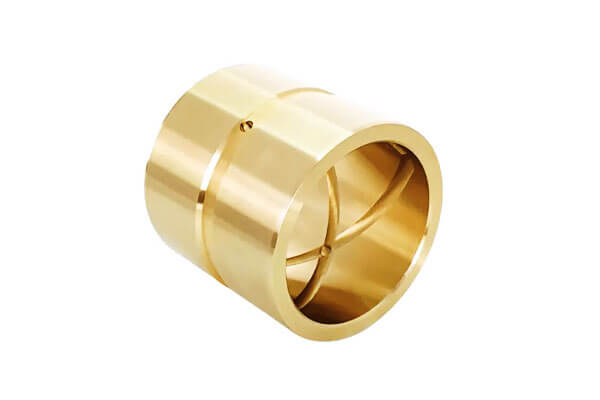
C95500 is frequently selected for bearings, bushings, wear plates, piston guides, and machine parts because it performs well under sliding contact and heavy loading.
Its wear resistance and toughness make it suitable where surface damage, galling, or abrasive wear are concerns.
Gears and Power-Transmission Parts
The alloy is used in gears, worms, worm wheels, and related transmission components.
These parts require a material that can tolerate contact stress, maintain dimensional stability, and resist wear over long service intervals. C95500’s mechanical balance makes it a practical choice for such duty.
Industrial Process and Harsh-Service Equipment
The alloy is used in pickling equipment, sewage treatment applications, hot mill guides, and industrial hardware.
These uses reflect the alloy’s ability to survive corrosive media, mechanical loading, and repeated service cycling.
In industrial settings, that combination can reduce maintenance intervals and improve reliability.
Electrical and Specialty Hardware
Although C95500 is not an electrical-conductivity alloy, it still appears in some electrical hardware and specialty components where structural reliability, corrosion resistance, and wear behavior are more important than conductivity.
It is also used in piano keys and musical instruments, where the alloy’s mechanical stability and manufacturability are useful.
9. Conclusion
UNS C95500 nickel aluminum bronze is a high-value engineering alloy because it combines properties that are often difficult to obtain together:
high strength, excellent corrosion resistance, strong wear resistance, good toughness, and serviceability across a wide temperature range.
Its chemistry is carefully tuned, its casting behavior is demanding but manageable, and its heat-treatment response gives designers an extra performance lever when required.
In practical terms, C95500 is best understood as a severe-service alloy.
It is most compelling where failure modes are mixed and unforgiving—seawater, moving load, sliding contact, pressure duty, and long-life mechanical service.
That is why it remains one of the most respected nickel aluminum bronzes in engineering practice.
FAQ
Is C95500 a casting alloy or a wrought alloy?
C95500 is primarily used as a casting alloy, with published references covering continuous cast, sand cast, centrifugal cast, and precision cast forms.
Is C95500 good in seawater?
Yes. It is repeatedly identified as having excellent corrosion resistance, including salt-water resistance, which is one of the main reasons it is used in marine hardware and valve systems.
Can C95500 be heat treated?
Yes. The published engineering guide shows both as-cast and heat-treated performance for C95500, with heat treatment increasing strength further.
Is C95500 easy to machine?
It is machinable, but not free-machining. Its machinability rating is 50, so it is a moderate-machinability alloy rather than an easy-cutting one.
What is the main advantage of C95500 over ordinary bronzes?
Its main advantage is the combination of high strength, excellent corrosion resistance, and wear resistance, especially in harsh marine or industrial environments.

