1. Introduction
Galvanizing is a metal-coating process primarily aimed at protecting steel and iron from corrosion by applying a layer of zinc.
This protective zinc layer can be applied through various techniques, each with its own characteristics, but the overarching goal remains the same: to enhance the durability and lifespan of the base metal in different environmental conditions.
Historical background
The history of galvanizing dates back to the 18th century. In 1742, French chemist Paul Jacoulet de La Faye first described the process of coating iron with zinc.
However, it was not until 1836 that French engineer Stanislas Sorel patented the hot-dip galvanizing process, which marked a significant milestone in the industrial application of galvanizing.
Since then, the process has continuously evolved and improved, becoming an indispensable part of modern manufacturing.
2. What Is Galvanizing?
Galvanizing is the process of applying a protective zinc coating to steel or iron to inhibit corrosion.
By metallurgically bonding a layer of zinc onto the substrate, galvanizing delivers both barrier protection—physically blocking moisture and oxygen—and cathodic protection, wherein the zinc sacrificially corrodes before the steel.

Electrochemical protection mechanism
The core of galvanizing’s protective effect lies in the electrochemical protection mechanism.
When a galvanized coating is exposed to an electrolyte (such as moisture in the air or water), a galvanic cell is formed.
Zinc, being more electrochemically active than steel (with a standard electrode potential of-0.76 V for zinc and-0.036 V for iron), acts as the anode,
while the steel serves as the cathode. In this setup, zinc oxidizes preferentially, releasing electrons.
These electrons flow through the electrolyte to the steel surface, preventing the oxidation (rusting) of the steel.
Role of Zinc and Sacrificial Anodes
Zinc not only powers the cathodic protection but also forms its own protective patina:
- Barrier Formation
Corrosion of zinc produces zinc oxide (ZnO) and zinc hydroxide (Zn(OH)₂).
These compounds adhere strongly to the surface, filling micro-cracks and pores to slow further attack. - Self-Healing Capability
Even if the coating is scratched, the adjacent zinc continues to corrode first, steering corrosive currents away from the exposed steel edge. - Long-Term Durability
Typical loss rates for zinc in rural atmospheres are only 0.7–1.0 µm per year. A 100 µm thick layer can thus protect steel for a half-century or more.
3. Types of Galvanizing
Hot-Dip Galvanizing (HDG)
- Process: In hot-dip galvanizing, the steel or iron component is first pre-treated.
This involves degreasing to remove oil and grease, pickling in an acid bath (usually hydrochloric or sulfuric acid) to eliminate rust and scale,
and fluxing to prevent oxidation during immersion in the molten zinc bath.
The pre-treated part is then immersed in a bath of molten zinc at around 450°C (842°F).
A metallurgical reaction occurs, forming a series of zinc-iron alloy layers on the steel surface, topped with a layer of pure zinc. - Advantages: It provides excellent long-term corrosion resistance. In a typical outdoor environment, a hot-dip galvanized coating can protect steel for 20-50 years.
The coating thickness can range from 30-120 micrometers, offering good protection against mechanical damage. - Disadvantages: The process may cause surface roughness or a spangled appearance, which may not be suitable for aesthetically sensitive applications.
Large-scale equipment is required, and there are size limitations for the parts that can be processed.
Electrogalvanizing
- Process: Electrogalvanizing is an electrochemical process. The steel component is placed in an electrolyte solution containing zinc salts.
The steel acts as the cathode, and a zinc-coated anode is also immersed in the solution.
When an electric current is passed through the solution, zinc ions from the anode are attracted to the steel cathode and deposit as a thin, uniform zinc layer. - Advantages: It offers a smooth, aesthetically pleasing surface finish, making it ideal for automotive body panels and household appliances.
The coating thickness can be precisely controlled, usually ranging from 5-15 micrometers. - Disadvantages: Electrogalvanized coatings have lower corrosion resistance compared to hot-dip galvanized coatings, especially in harsh environments.
The process is more energy-intensive and cost-effective, mainly due to the need for electrical power and specialized equipment.
Sherardizing
- Process: Sherardizing involves heating the steel parts with zinc powder in a sealed container at a temperature below the melting point of zinc (usually around 320-370°C).
The zinc vaporizes and diffuses into the steel surface, forming a zinc-iron alloy coating. - Advantages: It provides a uniform coating with good corrosion resistance, especially for small parts.
The process is relatively low-temperature, reducing the risk of distortion in heat-sensitive components. - Disadvantages: The coating thickness is limited (usually up to 20-30 micrometers), and the process is relatively slow, making it less suitable for large-scale production.
Mechanical Plating
- Process: In mechanical plating, the steel components are placed in a rotating drum along with zinc powder, glass beads, and a chemical activator.
As the drum rotates, the zinc powder adheres to the steel surface through mechanical impact and chemical bonding.
The glass beads help ensure an even distribution of zinc particles and provide a polishing effect. - Advantages: It is a low-temperature process, suitable for heat-sensitive parts.
It is particularly effective for coating small parts, such as screws and fasteners, and offers good corrosion resistance for moderate-corrosive environments. - Disadvantages: The coating thickness is relatively thin (up to around 20-30 micrometers),
and the adhesion of the coating may be lower compared to hot-dip galvanizing under high-stress conditions.
Zinc-rich painting and spray metallizing
- Zinc-rich painting: This method involves applying a paint containing a high proportion of zinc powder (usually more than 80% by weight).
The zinc in the paint provides sacrificial protection similar to other galvanizing methods.
It is a cost-effective solution for on-site application and can be used for touch-up work or for protecting large structures where other galvanizing methods are not practical. - Spray metallizing: In spray metallizing, molten zinc is sprayed onto the steel surface using a high-velocity air stream.
This method can produce a relatively thick and uniform coating quickly.
It is suitable for large-scale structures and can be used to repair damaged galvanized coatings. However, it requires specialized equipment and skilled operators.
4. Materials Suitable for Galvanizing
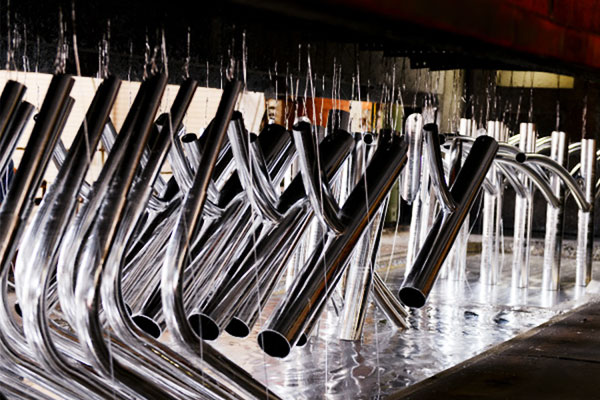
Galvanizing is primarily used to protect ferrous metals, particularly various grades of steel and cast iron, due to their susceptibility to rust.
However, not all metals are equally compatible with the galvanizing process.
Types of Steel and Iron Suitable for Galvanizing
Carbon Steel
- Low-carbon (mild) steel is ideal due to its relatively simple microstructure and consistent surface chemistry.
- High-carbon steels can be galvanized but may develop rougher or thicker coatings due to silicon and phosphorus content (see Sandelin effect).
Structural Steel
- Widely used in hot-dip galvanizing (HDG) for bridges, buildings, and industrial structures.
- Grade S275, S355, A36, etc. are common in galvanizing applications.
Cast Iron and Malleable Iron
- Can be galvanized via hot-dip or mechanical plating.
- Challenges: Porosity and surface roughness can lead to uneven coatings or gas entrapment.
Ductile Iron (Nodular Iron)
- Suitable for galvanizing but may require pre-treatment to avoid flaking due to graphite nodules interrupting adhesion.
Surface Preparation Requirements
Proper surface preparation is critical to ensure metallurgical bonding and long-term coating adhesion:
- Degreasing: Removes oils, greases, and organic contaminants.
- Pickling: Acid cleaning (e.g., HCl or H₂SO₄) removes oxides, scale, and rust.
- Fluxing: Promotes wetting and prevents oxidation before immersion in zinc.
Surfaces with paint, mill scale, or heavy corrosion may resist coating adhesion and require abrasive blasting.
Limitations on Other Metals
While zinc adheres well to iron-based substrates, non-ferrous metals often pose challenges:
| Material | Galvanizing Compatibility | Notes |
| Aluminum | ❌ Poor | Forms oxide barrier; does not bond with zinc easily |
| Copper & Alloys | ❌ Incompatible | Risk of galvanic corrosion with zinc |
| Stainless Steel | ⚠️ Limited | Can be galvanized, but coating adhesion is poor |
| Lead, Tin, Zinc | ❌ Not suitable | Already corrosion-resistant or incompatible |
5. Process Overview
Surface cleaning (degreasing, pickling, fluxing)
- Degreasing: As mentioned, degreasing removes organic contaminants from the metal surface.
For example, in the automotive industry, where parts may have machining oils or lubricants, alkaline degreasers are commonly used.
These degreasers break down the oil and grease into smaller droplets that can be rinsed away, ensuring a clean surface for subsequent processes. - Pickling: Pickling is crucial for removing rust and scale. In the construction industry, steel beams and plates often have mill scale formed during the manufacturing process.
Hydrochloric acid pickling is a popular choice as it effectively dissolves iron oxides.
The pickling time depends on the thickness of the scale and the type of steel, usually ranging from a few minutes to half an hour. - Fluxing: Fluxing agents play a vital role in hot-dip galvanizing. They create a protective layer on the metal surface, preventing oxidation when the part is immersed in the molten zinc bath.
Fluxes also help in wetting the metal surface, allowing the zinc to adhere more effectively.
Galvanizing methods (batch vs continuous)
- Batch galvanizing: In batch galvanizing, individual parts or small groups of parts are processed together.
This method is suitable for irregularly shaped parts, small-scale production, or parts with varying sizes.
The parts are loaded into a basket or rack, pre-treated, and then immersed in the molten zinc bath. After galvanizing, they are removed, cooled, and inspected. - Continuous galvanizing: Continuous galvanizing is used for high-volume production of long, flat products such as steel sheets and coils.
The steel strip is fed continuously through a series of pre-treatment tanks, then through the molten zinc bath, and finally undergoes post-treatment processes.
This method offers high production efficiency and consistent coating quality, making it ideal for the automotive and construction industries that require large quantities of galvanized steel.
Post-treatment processes (quenching, passivation, painting over galvanizing)
- Quenching: Quenching is sometimes used in hot-dip galvanizing to rapidly cool the galvanized parts. This can improve the hardness and mechanical properties of the zinc-iron alloy layers.
For example, in the production of galvanized bolts and nuts, quenching can enhance their resistance to wear and tear. - Passivation: Passivation involves treating the galvanized surface with a chemical solution,
usually chromate-based (although non-chromate alternatives are becoming more common due to environmental concerns).
This process forms a thin, protective oxide layer on the zinc surface, further enhancing corrosion resistance. - Painting over galvanizing: Painting over a galvanized surface can provide additional protection and aesthetic appeal.
In architectural applications, galvanized steel structures are often painted to match the design requirements while also increasing the lifespan of the structure by adding an extra barrier against the elements.
6. Performance and Benefits of Galvanized Coatings
Galvanized coatings, typically created through the process of hot-dip galvanization, involve applying a protective layer of zinc to steel or iron to prevent corrosion.
These coatings are widely recognized for their durability, cost-effectiveness, and environmental advantages.

Corrosion Protection
- Barrier Protection: The zinc coating serves as a physical barrier that prevents corrosive substances from reaching the underlying metal.
- Cathodic Protection: Zinc acts as a sacrificial anode. Even if the coating is scratched, the zinc continues to protect the exposed steel by corroding in place of the base metal.
- Long-Term Durability: Galvanized coatings can last 20–100 years, depending on the environment, especially in rural and suburban settings.
Cost Efficiency
- Lower Lifecycle Costs: Although initial costs may be higher than some coatings, the long-term savings due to reduced maintenance and repair far outweigh initial expenses.
- Minimal Maintenance: Galvanized steel requires little to no maintenance, particularly in non-aggressive environments, reducing costs over time.
Mechanical Performance
- Toughness: The metallurgical bond between zinc and steel gives the coating high resistance to mechanical damage during handling, transport, and installation.
- Abrasion Resistance: Zinc coatings are highly resistant to wear and impact, especially compared to paint-based systems.
Aesthetic and Application Flexibility
- Consistent Appearance: Galvanized surfaces have a uniform, silvery appearance that can also be painted over if desired.
- Wide Applicability: Suitable for a range of structures, including bridges, buildings, fences, and utility poles.
- Fast Turnaround: The hot-dip galvanizing process is rapid and can be easily scheduled, reducing lead times in projects.
7. Mechanical & Structural Implications of Galvanizing
Galvanizing enhances corrosion protection, but its influence on the mechanical and structural behavior of steel components must be understood, especially in safety-critical or high-performance applications.

Structural Integrity and Mechanical Strength
In most cases, galvanizing does not significantly alter the tensile or yield strength of carbon or low-alloy steels, particularly those with yield strengths below 460 MPa.
However, for high-strength steels (above 550 MPa), the thermal exposure (approx. 450°C in hot-dip galvanizing) can potentially lead to microstructural changes, such as grain growth or reduced ductility.
Therefore, material selection and pre-qualification are essential when galvanizing high-performance steels.
Fatigue and Wear Considerations
Galvanized coatings can affect fatigue performance:
- Slight reduction in fatigue strength (5–20%) may occur due to surface micro-cracks in the brittle zinc-iron alloy layer, which can act as crack initiation sites under cyclic stress.
- However, in some cases, the compressive stresses introduced by the coating can slightly improve fatigue life, especially when surface roughness is minimized.
In wear-critical applications, galvanized surfaces provide moderate abrasion resistance, particularly in hot-dip coatings, which can reach hardness values up to 250 HV.
However, they are less wear-resistant than specialized hard coatings (e.g., nitriding or carbide overlays).
Hydrogen Embrittlement Risks
Hydrogen embrittlement (HE) is a critical concern, especially for high-strength, thin-section components such as bolts and fasteners.
During acid pickling, atomic hydrogen may diffuse into the steel, leading to delayed brittle failure. Mitigation strategies include:
- Post-galvanizing baking (200–230°C for 2–4 hours)
- Using alternative cleaning methods
- Avoiding galvanizing ultra-high-strength components unless specifically engineered for it
Dimensional Tolerance and Coating Uniformity
Galvanized coatings add thickness (typically 40–200 µm), which can affect:
- Thread engagement on bolts and fasteners
- Fit and function in close-tolerance assemblies
- Edge protection, as thinner coatings on corners and edges may corrode faster
To manage these effects, engineers often allow for tolerance compensation, thread retapping, or post-galvanizing machining.
Uniform drainage and vent hole design are also essential for consistent coating application.
8. Applications of Galvanizing
Galvanizing plays a pivotal role in protecting steel structures and components across a wide range of industries.
Construction and Infrastructure
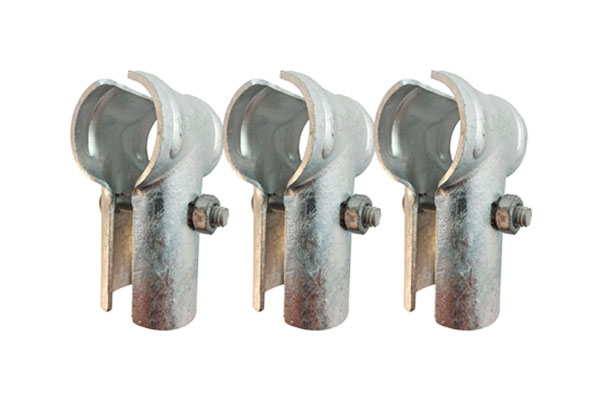
Galvanized steel is a foundational material in modern civil and structural engineering. It is used extensively for:
- Bridges and highway guardrails
- Utility poles and transmission towers
- Reinforcement bars in concrete (rebar)
- Roofing, wall cladding, and structural framing
- Manhole covers, culverts, and drainage components
Automotive and Transportation
In the automotive industry, galvanizing—especially continuous galvanizing of steel sheets—is essential to vehicle longevity and structural safety.
- Car bodies and panels (anti-corrosion skin panels)
- Underbody frames and chassis components
- Bus and train components
- Trailer bodies and cargo containers
Agriculture and Utility Structures
Galvanized coatings are critical in agriculture due to exposure to moisture, fertilizers, and animal waste—conditions highly conducive to corrosion.
- Fencing, gates, and corrals
- Barn roofing and grain silos
- Greenhouses and irrigation equipment
- Electrical and water utility structures
Energy and Renewable Installations
With the global shift to sustainable infrastructure, galvanized steel plays a major role in the durability of renewable energy systems.
- Solar panel support frames
- Wind turbine towers and platforms
- Electrical transmission towers
- Oil and gas pipe racks
Marine and Coastal Equipment
Galvanized coatings are ideal for saltwater-prone environments, offering high resistance to chloride-induced corrosion.
- Boat trailers and docks
- Coastal signage and light poles
- Port fencing and ladders
- Seawalls and breakwaters
9. Comparison with Other Coatings
While galvanizing is widely recognized for its superior corrosion protection and cost-effectiveness, it is not the only option available.
Key Coating Types Compared with Galvanizing:
| Coating Type | Protection Mechanism | Typical Thickness | Lifespan (moderate environment) | Maintenance Frequency | Common Uses |
| Hot-Dip Galvanizing | Sacrificial (zinc) | 45–200 µm | 40–75 years | Low | Bridges, guardrails, towers |
| Zinc-Rich Paints | Sacrificial + barrier | 50–125 µm | 5–20 years | Moderate | Touch-ups, pipelines, ship hulls |
| Powder Coating | Barrier only | 60–150 µm | 10–25 years | Moderate | Indoor/outdoor furniture, appliances |
| Epoxy/Polyurethane | Barrier only | 75–250 µm | 10–30 years | High (especially in wet/humid settings) | Chemical tanks, marine structures |
| Metalizing (Thermal Spray Zinc) | Sacrificial (zinc or Zn-Al) | 100–250 µm | 20–40 years | Low to moderate | Marine/coastal steel, repair applications |
| Stainless Steel | Passive film (Cr₂O₃) | N/A (bulk alloy) | 50+ years | Very Low | Architecture, food processing equipment |
Strengths and Limitations of Galvanizing vs. Alternatives
Advantages of Galvanizing
- Long service life: Up to 75+ years in non-aggressive environments.
- Self-healing protection: Zinc sacrifices itself to protect exposed steel at cuts or scratches.
- Low maintenance: Ideal for hard-to-access structures.
- Full surface coverage: Even internal surfaces of pipes and hollow sections.
- Lower life-cycle cost than most barrier-only systems.
Limitations
- Limited color options: Aesthetic constraints compared to powder coatings or paints.
- High processing temperature: Not suitable for heat-sensitive or ultra-high-strength steels.
- Coating thickness control is less precise than in sprayed or painted methods.
- Surface roughness may be higher than other coatings, affecting smooth finishes.
When to Choose Other Coatings Over Galvanizing
- Highly decorative applications → Prefer powder coating or duplex systems.
- Chemical immersion or high pH/low pH environments → Use epoxy/polyurethane systems.
- High-precision components → Prefer electroplating or metalizing for controlled thickness.
- Extreme marine exposure → Duplex system (HDG + epoxy or polyurethane topcoat) is recommended.
- Structural stainless alternatives → Use 304/316 stainless steel when aesthetics, hygiene, or extreme durability are required.
10. Future Trends and Innovations
The galvanizing industry is evolving rapidly, driven by increasing demands for enhanced performance, environmental sustainability, and cost efficiency.
Advanced Alloy Coatings:
Emerging formulations such as zinc-aluminum-magnesium (Zn-Al-Mg) alloys offer superior corrosion resistance, especially in aggressive environments, while reducing zinc consumption.
These coatings demonstrate improved self-healing properties and longer service lives compared to traditional pure zinc coatings.
Duplex Systems:
Combining galvanizing with advanced paint or powder coatings continues to gain traction.
Duplex coatings provide synergistic protection, doubling or even tripling the lifespan of galvanized steel, especially in harsh marine or industrial settings.
Smart and Self-Healing Coatings:
Research is progressing into coatings embedded with microcapsules or nanoparticles that release corrosion inhibitors upon damage.
These smart systems aim to extend service life and reduce maintenance by autonomously repairing minor coating defects.
Environmental and Process Improvements:
Innovations in flux chemistry, bath composition, and recycling techniques aim to lower the environmental footprint of galvanizing.
Non-chromate passivation treatments are replacing traditional chromate-based ones to meet stricter regulations without compromising corrosion resistance.
Automation and Quality Control:
Advances in automation and real-time coating thickness measurement are enhancing consistency, reducing waste, and improving process efficiency in both batch and continuous galvanizing operations.
11. Conclusion
Galvanizing remains a fundamental technology for protecting steel and iron across industries, leveraging zinc’s sacrificial electrochemical protection to significantly extend metal lifespan and reduce maintenance costs.
Various galvanizing methods—from hot-dip to electrogalvanizing—address diverse application needs, balancing durability and aesthetics.
Galvanized coatings excel in corrosion resistance, adhesion, and mechanical durability, making them essential in construction, automotive, agriculture, energy, and marine sectors.
While challenges like hydrogen embrittlement and surface prep exist, galvanizing’s cost-effectiveness and long-term protection outperform many alternatives.
Looking forward, innovations such as advanced alloy coatings, duplex systems, and smart self-healing technologies promise to enhance galvanizing’s sustainability, durability, and adaptability,
ensuring its vital role in modern industry and infrastructure protection continues well into the future.
FAQs
1. What is galvanizing, and why is it used?
Galvanizing is the process of applying a protective zinc coating to steel or iron to prevent corrosion.
It extends the lifespan of metal components by providing sacrificial protection and a physical barrier against rust.
2. How long does a galvanized coating typically last?
Depending on the environment and coating thickness, galvanized steel can last anywhere from 40 to over 75 years in moderate conditions, significantly longer than uncoated steel.
3. What are the main types of galvanizing?
The primary methods include hot-dip galvanizing, electrogalvanizing, sherardizing, and mechanical plating, each suited for different materials, shapes, and application requirements.
4. Can galvanized steel be painted?
Yes, painting over galvanized steel is common to enhance aesthetics and provide extra protection, especially in architectural and marine applications.