To address these limitations, V-Process Casting, also known as Vacuum Molding Casting or Vacuum-Sealed Molding (V-Process), has emerged as an advanced molding technology that combines the flexibility of sand casting with improved casting quality and environmental performance.
Unlike conventional sand molding, the V-Process relies on vacuum pressure rather than chemical binders or moisture to maintain mold strength.
Dry, unbonded silica sand is held in place by atmospheric pressure acting on plastic film-lined molds, creating a highly stable molding system without the need for resin binders or clay.
Originally developed in Japan in the early 1970s, V-Process casting has gained widespread acceptance in industries requiring large, complex, and high-quality castings,
including automotive manufacturing, mining equipment, agricultural machinery, pumps, valves, railway components, and heavy industrial machinery.
The process is especially valued for producing castings with clean surfaces, low defect rates, excellent sand recyclability, and reduced post-processing requirements.
1. What Is V-Process Casting?
V-Process Casting, or Vacuum Molding Casting, is a binder-free sand casting process in which vacuum pressure is used to create and maintain mold rigidity throughout metal pouring and solidification.
Instead of relying on clay, chemical binders, or moisture to hold molding sand together, the process utilizes plastic films and vacuum suction to stabilize dry silica sand around the pattern.
The process begins by heating a thin thermoplastic film and forming it tightly over a metal pattern using vacuum pressure.
Dry, unbonded sand is then poured into the molding flask and compacted through vibration.
A second plastic film is applied to the sand surface, and vacuum is maintained within the mold.
Atmospheric pressure compresses the dry sand into a rigid mold capable of withstanding molten metal during pouring.
Once the casting has solidified, the vacuum is released, causing the mold to collapse naturally.
The loose sand can then be recovered and reused with minimal processing, significantly improving material utilization and reducing waste.
Unlike investment casting, which sacrifices wax patterns, or resin sand casting, which consumes chemical binders,
V-Process casting produces molds that are clean, reusable, and environmentally sustainable, making it particularly attractive for modern green manufacturing initiatives.

Key Characteristics
| Characteristic | Description |
| Binder-free sand | Uses dry, silica sand with no additives, water, or chemical binders. |
| Vacuum holding | Vacuum pressure (typically 50-100 kPa) holds the sand particles together. |
| Thin plastic film | A heat-softened plastic film (0.05-0.2 mm) is draped over the pattern to create a smooth mold surface. |
| Reusable sand | Sand is almost 100% recyclable because it contains no binders. |
Excellent surface finish |
As-cast surface finishes of Ra 6.3-12.5 µm are achievable. |
| High dimensional accuracy | Tolerances of ±0.2-0.5 mm per 25 mm are possible. |
| Environmentally friendly | No binders, smoke, or toxic emissions. |
| Requires specialized equipment | Needs vacuum systems, plastic film, and flask handling equipment. |
2. Working Principle of V-Process Casting
The V-Process relies on a simple yet elegant physical principle: dry sand behaves like a solid when compressed by vacuum.
The Physics Behind Vacuum Molding
| Principle | Explanation |
| Friction between sand grains | When atmospheric pressure compacts dry sand, the intergranular friction increases, creating a rigid mass. |
| Vacuum differential | A vacuum (typically -50 to -100 kPa) is applied beneath the sand, causing atmospheric pressure to press the sand particles together. |
| Plastic film sealing | A thin plastic film, softened by heat, is drawn against the pattern by the vacuum, creating a smooth, accurate mold face. |
| Uniform density | The vacuum ensures uniform sand compaction, eliminating the density variations common in green sand molding. |
The Role of Plastic Film
The plastic film (usually polyethylene, EVA, or PVC) serves multiple critical functions:
- Creates a smooth, accurate mold cavity—the film conforms to the pattern surface.
- Prevents metal-sand reactions—acts as a barrier between molten metal and the sand.
- Maintains vacuum integrity—the film seals the mold, allowing vacuum to be held.
- Improves surface finish—the smooth film surface is transferred to the casting.
3. Complete V-Process Casting Manufacturing Process
The success of V-Process casting relies on a precisely controlled manufacturing sequence, where every stage—from plastic film forming to vacuum release—directly influences mold integrity, dimensional accuracy, surface finish, and casting soundness.
A standard V-Process casting cycle consists of the following seven stages.
3.1 Pattern Preparation and Thermoplastic Film Heating
The process begins with the preparation of a precision reusable pattern, typically manufactured from aluminum, cast iron, epoxy resin, or high-density wood, depending on production volume and dimensional requirements.
To facilitate vacuum forming, the pattern incorporates numerous micro vacuum vent holes, allowing air to be extracted uniformly beneath the thermoplastic film.

A thin EVA (Ethylene-Vinyl Acetate) or polyethylene thermoplastic film, generally 0.08–0.15 mm thick, is heated to approximately 80–120°C until it becomes soft and highly elastic.
Proper film heating is one of the most critical process controls:
- Underheated film lacks flexibility and cannot fully conform to intricate pattern details, resulting in poor surface reproduction.
- Overheated film becomes excessively thin and may tear or wrinkle at deep-draw sections, compromising mold integrity.
Modern production lines typically employ automatic infrared or electric heating systems with closed-loop temperature control to ensure consistent film quality.
3.2 Vacuum Film Forming and Refractory Coating Application
Once the film reaches the desired forming temperature, it is positioned over the pattern, and vacuum is applied through the pattern’s vent holes.
Atmospheric pressure forces the softened film tightly against every contour, accurately reproducing even fine surface textures and complex geometries.
This vacuum-forming process provides several important advantages:
- Precise replication of pattern geometry
- Smooth mold cavity surface
- Reduced pattern wear
- Easy pattern removal after molding
For castings produced from carbon steel, alloy steel, stainless steel, or other high-temperature alloys, a thin refractory coating (typically 0.3–0.5 mm thick) is often sprayed or brushed onto the formed plastic film.
The refractory coating performs multiple functions:
- Improves resistance to molten metal erosion
- Prevents metal penetration into the sand
- Reduces burn-on defects
- Enhances casting surface finish
- Improves thermal insulation and mold stability
The coating is then dried before the molding process proceeds to the next stage.
3.3 Dry Sand Filling and Vibration Compaction
After the film has been formed, a specially designed molding flask is positioned over the pattern.
The flask is filled with clean, dry, binder-free silica sand, typically with an AFS grain fineness of 50–100, selected according to the casting size, alloy type, and required surface finish.
Unlike green sand or resin sand molding, no moisture, clay, or chemical binders are added.
Instead, sand particles are compacted solely through controlled mechanical vibration.
Typical vibration parameters include:
| Parameter | Typical Value |
| Sand Type | Dry silica sand |
| Grain Fineness | AFS 50–100 |
| Vibration Frequency | 30–50 Hz |
| Relative Compaction Density | 85–90% |
Proper vibration is essential for producing a uniform mold:
- Insufficient vibration results in low sand density, poor mold strength, and cavity deformation.
- Excessive vibration may cause particle segregation, reducing permeability and dimensional stability.
Uniform sand compaction also improves vacuum distribution throughout the mold, contributing to consistent hardness and better casting accuracy.
3.4 Back Film Sealing and Vacuum Stabilization
Once the molding flask is completely filled, a second thermoplastic film is placed over the top surface of the sand to create an airtight enclosure.
Vacuum is then applied directly to the sand mass through the flask, typically reaching –0.04 to –0.08 MPa (300–600 mmHg).
As air is evacuated, atmospheric pressure compresses the loose sand particles together, instantly transforming the unbonded sand into a rigid, self-supporting mold.
Unlike conventional molding methods, mold strength is generated entirely by pressure differential rather than chemical bonding.
The benefits of vacuum stabilization include:
- Uniform mold hardness
- Excellent dimensional stability
- Reduced mold deformation during pouring
- Minimal sand movement
- High resistance to molten metal pressure
Stable vacuum pressure is maintained throughout mold assembly and metal pouring to ensure consistent mold rigidity.
3.5 Pattern Withdrawal and Mold Assembly
After the mold has achieved sufficient strength, vacuum beneath the pattern is released while vacuum within the sand mold is maintained.
The pattern is then withdrawn vertically from the mold cavity with minimal resistance.

Because the plastic film creates an exceptionally smooth interface between the pattern and the mold, draft angles can often be reduced to nearly zero, compared with the 1.5°–3° draft typically required for conventional bonded sand molds.
This capability enables:
- Greater design freedom
- Improved dimensional accuracy
- Sharper corners
- Better reproduction of complex geometries
- Reduced machining allowance
The cope and drag mold halves are produced separately using the same procedure.
If required, sand or metal cores are accurately positioned before the mold halves are assembled.
Throughout assembly, vacuum remains active to preserve mold rigidity until pouring is complete.
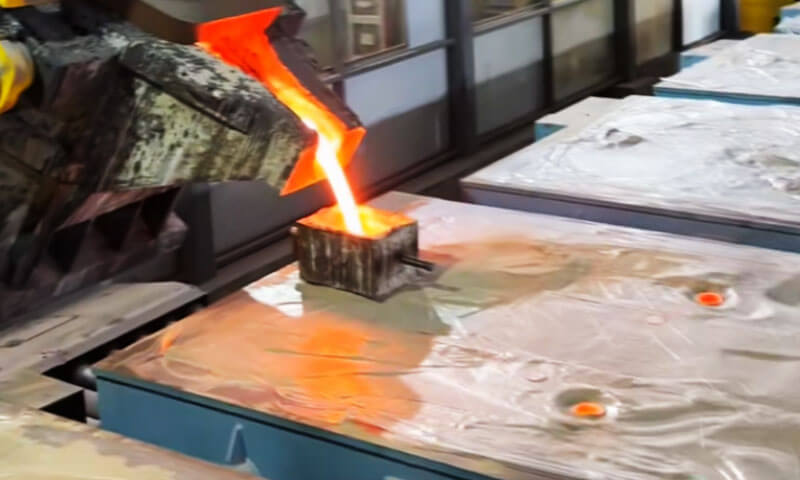
3.6 Vacuum-Assisted Pouring and Controlled Solidification
Molten metal is poured into the mold while the vacuum system continues to maintain mold stability.

The controlled negative pressure offers several metallurgical advantages:
- Improved mold filling
- Reduced turbulence
- Enhanced gas evacuation
- Lower porosity formation
- Better filling of thin-wall sections
- Improved surface quality
Vacuum pressure is typically adjusted during different stages of the casting cycle to optimize mold strength and solidification behavior.
| Casting Stage | Typical Vacuum Level |
| Metal Pouring | –0.07 to –0.08 MPa |
| Early Solidification | –0.05 to –0.06 MPa |
| Final Solidification | –0.04 to –0.05 MPa |
Gradually reducing vacuum during cooling helps relieve thermal stresses while maintaining sufficient mold support throughout solidification.
At this stage, proper gating and riser design remain essential to control molten metal flow, promote directional solidification, and prevent shrinkage defects.
3.7 Vacuum Release, Shakeout, and Sand Reclamation
After the casting has completely solidified and cooled to a safe handling temperature, vacuum is released from the mold.
Without atmospheric pressure compressing the sand particles, the mold instantly loses its strength and collapses into free-flowing dry sand.
Compared with traditional sand casting, this provides several operational advantages:
- No mechanical shakeout equipment required
- Reduced casting damage
- Easier gate and riser removal
- Lower cleaning costs
- Shorter production cycle
The reclaimed sand is subsequently:
- Cooled
- Screened to remove oversized particles
- Dedusted
- Recycled directly back into production
Because the sand contains no clay or chemical binders, the reclamation process is exceptionally efficient, with reuse rates typically exceeding 98%, making V-Process casting one of the most sustainable molding technologies available.
4. Materials Suitable for V-Process Casting
One of the greatest strengths of V-Process casting is its excellent material adaptability.
Because the molding process uses dry, binder-free silica sand stabilized by vacuum pressure rather than chemical binders, it is compatible with a wide range of ferrous and non-ferrous alloys.
Ferrous Metals
| Material | Typical grades | Castability | Applications |
| Gray iron | ASTM A48 Class 20-60 | Excellent | Engine blocks, brake drums, machine bases, pipes. |
| Ductile iron | ASTM A536 60-40-18, 80-55-06 | Excellent | Crankshafts, gears, connecting rods, pipe fittings. |
| Carbon steel | ASTM A27, A216 WCB | Good | Valve bodies, pump housings, structural parts. |
| Alloy steel | AISI 4140, 4340 | Good | Gears, shafts, heavy-duty components. |
| Stainless steel | 304, 316, 17-4PH | Good | Corrosion-resistant valves, pumps, food equipment. |
Non-Ferrous Metals
| Material | Typical grades | Castability | Applications |
| Aluminum alloys | A356, A380, 356, 319 | Excellent | Automotive parts, electronics housings, aerospace components. |
| Copper alloys | C80100, C81100 | Good | Electrical components, heat exchangers. |
| Brass | C85700, C86200, C87800 | Good | Plumbing fittings, decorative hardware, valves. |
| Bronze | C90500, C93200, C95400 | Good | Marine propellers, bearings, sculptures. |
5. Common Casting Defects and Engineering Solutions
Like all casting processes, V-Process is susceptible to certain defects. However, many defects can be eliminated through proper process control.
| Defect | Visual / NDT signature | Root cause | Preventive measures |
| Gas porosity | Round internal voids | Dissolved gases; inadequate degassing; vacuum failure. | Degas melt; maintain vacuum; use clean charge. |
| Shrinkage porosity | Jagged, irregular voids | Insufficient feeding; poor riser design. | Optimise gating/risering; use simulation. |
| Sand inclusion | Irregular non-metallic particles | Film tearing; sand erosion; poor gating. | Ensure film integrity; improve gating; reduce turbulence. |
| Misrun / cold shut | Incomplete filling | Low pouring temperature; poor fluidity; insufficient vacuum. | Increase pouring temperature; improve gating; check vacuum. |
Surface roughness |
Rough surface | Improper film thickness; film tearing; sand fines. | Use proper film thickness; ensure uniform vacuum; control sand quality. |
| Dimensional deviation | Out-of-tolerance dimensions | Pattern wear; film thickness variation; mold movement. | Maintain pattern; control film thickness; secure mold. |
| Pinhole / blister | Small surface pinholes | Moisture in sand; film outgassing; gas entrapment. | Dry sand; use proper film; degas melt. |
| Casting distortion | Warpage or non‑uniform geometry | Uneven cooling; mold movement; insufficient vacuum. | Control cooling; secure mold; ensure uniform vacuum. |
6. Advantages of V-Process Casting
V-Process casting combines vacuum-assisted molding technology with binder-free dry sand, offering significant technical, economic, and environmental advantages over conventional sand casting processes.
It is particularly suitable for producing medium to large castings that require high dimensional accuracy, excellent surface quality, and stable production consistency.
High dimensional accuracy
Typical casting tolerance reaches ISO 8062 CT7–CT9, one to two tolerance grades better than conventional green sand casting (typically CT10–CT13).
The rigid vacuum-supported mold minimizes cavity deformation, resulting in excellent dimensional consistency and reduced machining allowance.
Excellent surface finish
Typical surface roughness ranges from Ra 3.2–12.5 μm, approximately 2–3 quality grades smoother than green sand casting (Ra 25–100 μm).
The smooth thermoplastic film prevents direct contact between molten metal and sand, significantly reducing burn-on, metal penetration, and surface defects.
Outstanding sand reclamation efficiency
Since no clay or chemical binders are used, more than 95–98% of the molding sand can be reclaimed and directly reused after simple cooling, screening, and dust removal.
This dramatically lowers raw material consumption and waste disposal costs.
Low gas generation and cleaner castings
The binder-free molding system produces very little gas during pouring, greatly reducing the occurrence of gas porosity, blowholes, pinholes, and carbon-related defects.
This is especially advantageous for carbon steel, alloy steel, and stainless steel castings.
Excellent mold rigidity
Vacuum pressure provides uniform mold strength throughout the sand body, preventing mold deformation during pouring and solidification.
Stable mold rigidity contributes to higher dimensional accuracy and improved repeatability.
Reduced machining requirements
The combination of accurate mold replication, smooth casting surfaces, and minimal dimensional variation reduces machining stock, shortens processing time, lowers tooling wear, and improves overall manufacturing efficiency.
High suitability for complex and large castings
V-Process casting is well suited for producing large, heavy, and geometrically complex components, including pump housings, valve bodies, mining equipment, construction machinery, and power generation components, while maintaining excellent structural integrity.
Environmentally friendly production
Without chemical binders, the process generates minimal smoke, odors, VOC emissions, and hazardous waste, creating a cleaner working environment and supporting sustainable foundry operations.
Excellent pattern life
Because the plastic film acts as a protective interface between the pattern and the sand, mechanical wear during pattern withdrawal is extremely low.
As a result, metal patterns can achieve a significantly longer service life than those used in conventional sand molding.
Lower total production cost
Although the initial equipment investment is relatively high, the combination of high sand reuse, reduced machining, lower defect rates, simplified cleaning, and improved production efficiency often results in a lower total manufacturing cost over long production runs.
7. Limitations and Challenges of V-Process Casting
Despite its numerous advantages, V-Process casting is not universally suitable for every casting application.
Successful implementation requires careful consideration of equipment investment, process stability, product characteristics, and production volume.
Higher initial equipment investment
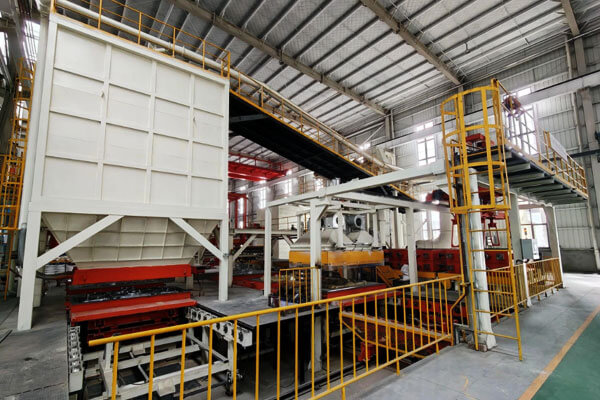
V-Process production lines require specialized equipment, including vacuum pumps, airtight molding flasks, plastic film heating systems, vacuum control units, and automated handling equipment.
Initial capital investment is therefore considerably higher than for conventional green sand casting.
Dependence on stable vacuum control
The entire molding process relies on maintaining a stable vacuum.
Any leakage, vacuum fluctuation, or equipment malfunction may reduce mold strength, causing cavity deformation, dimensional inaccuracies, or mold collapse during pouring.
Plastic film consumption
Each mold requires new thermoplastic films for both the cavity and backing surfaces.
Although film consumption is relatively low, it represents an additional operating cost and requires proper recycling or disposal management.
Longer mold preparation cycle
Compared with traditional green sand molding, V-Process includes additional operations such as film heating, vacuum forming, sealing, and vacuum stabilization, which can increase mold preparation time for small production batches.
Limited suitability for extremely thin-wall precision castings
Although vacuum assistance improves mold filling, investment casting remains the preferred process for ultra-thin-wall components with highly intricate geometries and exceptionally tight tolerances, such as aerospace turbine blades or medical implants.
Not always economical for very small production runs
For low-volume or prototype production, the equipment setup time and operating costs may outweigh the technical advantages. Simpler casting methods may be more cost-effective in such cases.
Large equipment footprint
Complete V-Process production lines—including vacuum systems, film handling equipment, sand reclamation units, and automated molding stations—typically require more factory space than traditional sand molding systems.
8. Industrial Applications of V-Process Casting
The combination of excellent surface quality, high dimensional accuracy, clean production, and efficient sand reclamation makes V-Process casting suitable for a broad range of industrial sectors.

Automotive Industry
The automotive industry demands lightweight, dimensionally accurate, and cost-effective cast components.
V-Process casting is widely used for manufacturing structural and powertrain parts where surface quality and consistency are critical.
Typical components include:
- Engine blocks
- Transmission housings
- Differential cases
- Brake components
- Suspension brackets
- Flywheel housings
Pump and Valve Industry
Pump and valve manufacturers benefit significantly from the excellent surface finish and dimensional stability of V-Process castings.
Typical products include:
- Ball valve bodies
- Butterfly valve bodies
- Gate valve bodies
- Check valve housings
- Pump casings
- Impellers
- Compressor housings
Construction and Heavy Machinery
Heavy equipment requires castings with high structural strength and excellent dimensional consistency.
Common applications include:
- Excavator components
- Loader housings
- Bulldozer frames
- Hydraulic manifolds
- Gearbox housings
- Bearing supports
Agricultural Machinery
Agricultural equipment operates under harsh environmental conditions, demanding durable and wear-resistant cast components.
Typical castings include:
- Tractor transmission housings
- Seeder frames
- Plow components
- Irrigation pump bodies
- Gear housings
Mining Equipment
Mining machinery requires large, heavy-duty castings capable of withstanding impact, abrasion, and continuous loading.
Typical products include:
- Crusher frames
- Mill liners
- Pump housings
- Wear-resistant components
- Conveyor parts
Railway Industry
Railway infrastructure and rolling stock require precision castings with excellent fatigue resistance.
Applications include:
- Brake system components
- Coupler parts
- Bogie frames
- Axle housings
- Suspension brackets
Marine Industry
Marine environments demand corrosion-resistant castings with reliable mechanical performance.
Common products include:
- Propeller hubs
- Pump casings
- Valve bodies
- Deck equipment
- Offshore structural components
Energy and Power Generation
Power generation equipment often operates under high temperatures and pressures, requiring high-integrity cast components.
Typical applications include:
- Steam valve bodies
- Turbine casings
- Boiler fittings
- Heat exchanger components
- Nuclear power equipment
General Industrial Machinery
V-Process casting is also widely used for general-purpose machinery and equipment, including:
- Machine tool beds
- Compressors
- Industrial gearboxes
- Material handling systems
- Robotics bases
- Industrial automation equipment
9. V-Process Casting vs. Other Casting Processes
Each casting process has unique strengths and limitations in terms of dimensional accuracy, surface finish, production cost, casting size, environmental impact, and suitable applications.
Selecting the optimal process requires balancing technical requirements, production volume, material type, and economic considerations.
| Comparison Factor | V-Process Casting | Green Sand Casting | Resin Sand Casting | Investment Casting | Shell Mold Casting |
| Mold Material | Dry silica sand + thermoplastic film + vacuum | Wet sand with clay binder | Resin-coated sand | Ceramic shell | Resin-coated shell sand |
| Binder Requirement | None | Clay and water | Chemical resin | Ceramic slurry | Thermosetting resin |
| Mold Strength | High (vacuum-supported) | Medium | High | Very high | High |
| Typical Casting Tolerance | CT7–CT9 | CT10–CT13 | CT8–CT10 | CT4–CT6 | CT6–CT8 |
| Surface Roughness (Ra) | 3.2–12.5 μm | 25–100 μm | 6.3–25 μm | 1.6–6.3 μm | 3.2–12.5 μm |
| Minimum Wall Thickness | 4–6 mm | 5–8 mm | 4–6 mm | 0.5–3 mm | 3–5 mm |
| Maximum Casting Size | Very large (several tons or more) | Extremely large | Very large | Small to medium | Small to medium |
| Casting Complexity | High | Medium | High | Very high | High |
| Dimensional Stability | Excellent | Moderate | Good | Excellent | Excellent |
| Sand Reclamation Rate | 95–98% | 80–90% | 70–90% | Not applicable | Limited |
| Gas Generation | Very low | Medium | High | Very low | Medium |
| Risk of Gas Porosity | Low | Medium | Medium | Very low | Low |
| Typical Casting Defects | Vacuum leakage, film wrinkles, incomplete filling | Sand inclusion, blowholes, mold erosion | Gas porosity, resin burn-on | Ceramic shell cracking, misrun | Shell cracking, gas defects |
| Environmental Performance | Excellent | Good | Fair | Good | Fair |
| Tooling Cost | Medium to high | Low | Medium | High | Medium |
| Production Cost | Medium | Low | Medium | High | Medium |
| Production Efficiency | High | Very high | High | Medium | High |
| Suitable Production Volume | Medium to high | All volumes | Medium to high | Low to high | High-volume production |
| Typical Materials | Iron, steel, stainless steel, aluminum, copper alloys | Primarily iron and steel | Iron, steel, alloy steel | Almost all castable alloys | Iron and non-ferrous alloys |
Typical Applications |
Pumps, valves, mining equipment, heavy machinery, automotive parts | Engine blocks, machine bases, agricultural equipment | Large steel castings, machine components | Aerospace, medical devices, precision valves, turbine components | Automotive parts, gear housings, hydraulic components |
| Major Advantages | High accuracy, excellent surface finish, binder-free, high sand recyclability, environmentally friendly | Lowest cost, simple process, suitable for very large castings | High mold strength, suitable for complex steel castings | Highest precision and surface quality for intricate parts | High productivity and consistent quality |
| Main Limitations | Requires vacuum equipment and plastic film | Lower accuracy and rougher surface | Resin emissions and higher reclamation cost | High tooling cost, limited casting size | Higher tooling cost, size limitations |
10. Future Development Trends of V-Process Casting
As the global foundry industry continues to evolve toward high precision, intelligent manufacturing, energy efficiency, and sustainable production, V-Process casting is expected to play an increasingly important role in modern metal casting.
Intelligent Automation and Smart Foundries
Automation is becoming one of the most significant trends in V-Process casting.
Modern foundries are increasingly replacing manual operations with automated equipment to improve productivity, consistency, and workplace safety.
Future automated V-Process production lines will incorporate:
- Robotic pattern handling
- Automatic plastic film feeding and heating
- Intelligent vacuum control systems
- Automated sand filling and vibration
- CNC-controlled pouring systems
- Robotic casting extraction
- Automated grinding and finishing
Integrated automation minimizes human error, shortens production cycles, and ensures stable process parameters across large production batches.
Digital Process Simulation
Computer-Aided Engineering (CAE) software has become an indispensable tool for casting design and process optimization.
Before production begins, engineers can simulate the entire casting process to identify potential defects and optimize process parameters.
Common simulation analyses include:
- Mold filling behavior
- Solidification sequence
- Temperature distribution
- Shrinkage prediction
- Residual stress analysis
- Deformation prediction
- Gating and riser optimization
By reducing trial-and-error during production, simulation technology lowers development costs while improving casting yield and product reliability.
AI-Driven Process Optimization
Artificial Intelligence (AI) is rapidly transforming foundry manufacturing by enabling real-time process monitoring and predictive quality control.
Future AI applications in V-Process casting may include:
- Automatic defect prediction
- Intelligent pouring parameter adjustment
- Vacuum pressure optimization
- Predictive equipment maintenance
- Pattern life prediction
- Energy consumption optimization
- Real-time process diagnostics
Machine learning algorithms can analyze large volumes of production data to continuously improve casting quality and reduce scrap rates.
Sustainable and Low-Carbon Manufacturing
Environmental sustainability has become a strategic priority for foundries worldwide.
V-Process casting already offers significant environmental advantages due to its binder-free molding process, and future developments will further enhance its sustainability.
Key initiatives include:
- Higher sand recycling efficiency
- Reduced energy consumption
- Recyclable plastic films
- Waste heat recovery
- Low-carbon melting technologies
- Renewable energy integration
- Carbon footprint monitoring
As governments implement stricter environmental regulations, V-Process casting is well positioned as one of the most environmentally responsible sand casting technologies.
Advanced Materials and High-Performance Alloys
The growing demand for lightweight structures, higher operating temperatures, and greater corrosion resistance is driving the development of new casting alloys.
Future applications will increasingly involve:
- Super duplex stainless steels
- High-entropy alloys
- Heat-resistant alloy steels
- Wear-resistant alloys
- Advanced aluminum alloys
- Nickel-based superalloys
- Copper-nickel marine alloys
Process optimization will enable V-Process casting to produce these advanced materials with improved microstructural control and reduced defect formation.
Improved Plastic Film Technology
The plastic film is a key component of the V-Process. Ongoing research is focused on improving film performance to enhance mold quality and production efficiency.
Future film developments may include:
- Higher heat resistance
- Greater flexibility
- Improved dimensional stability
- Biodegradable materials
- Recyclable polymers
- Reduced film thickness
- Enhanced surface smoothness
These innovations will lower material consumption while improving casting quality.
11. Conclusion
V-Process casting has established itself as one of the most innovative and environmentally friendly molding technologies in modern foundry manufacturing.
By replacing conventional binders with vacuum-assisted dry sand molding, the process delivers a unique combination of high dimensional accuracy, excellent surface finish, superior sand recyclability, and reduced environmental impact.
Looking ahead, the integration of automation, digital simulation, artificial intelligence, Industry 4.0 technologies, and sustainable manufacturing practices will further enhance the capabilities of V-Process casting.
As manufacturers continue to demand cleaner production, higher precision, and improved resource efficiency,
the technology is expected to play an increasingly important role in sectors such as automotive, energy, mining, marine engineering, industrial machinery, pumps, valves, and heavy equipment.
For manufacturers seeking an optimal balance between casting quality, environmental responsibility, and long-term production economics, V-Process casting represents a mature, reliable, and future-oriented solution capable of meeting the evolving demands of modern industrial manufacturing.
FAQs
Is V-Process casting environmentally friendly?
Yes. V-Process casting is considered one of the most environmentally responsible sand casting technologies because it uses dry, binder-free silica sand, significantly reducing smoke, volatile organic compound (VOC) emissions, and hazardous waste.
The sand can also be reclaimed and reused at a very high rate.
What level of dimensional accuracy can V-Process casting achieve?
Typical dimensional accuracy ranges from ISO 8062 CT7 to CT9, depending on casting size, alloy type, and process control.
This is considerably better than conventional green sand casting and suitable for many industrial applications requiring near-net-shape components.
Is V-Process casting suitable for large castings?
Yes. One of the major strengths of V-Process casting is its ability to produce medium to very large castings with excellent dimensional stability and surface quality.
It is widely used for machine bases, pump housings, valve bodies, mining equipment, and heavy machinery components.
What is the difference between V-Process and vacuum casting?
V-Process uses vacuum to hold dry sand together in a mold.
Vacuum casting typically refers to vacuum‑assisted pouring (e.g., vacuum investment casting), where the melt is poured under vacuum to reduce gas porosity. They are different processes.
What is the maximum casting weight for V-Process?
Typically up to 500‑1,000 kg. However, larger castings are possible with larger equipment; the weight limit is more a function of equipment size and handling capabilities than the process itself.