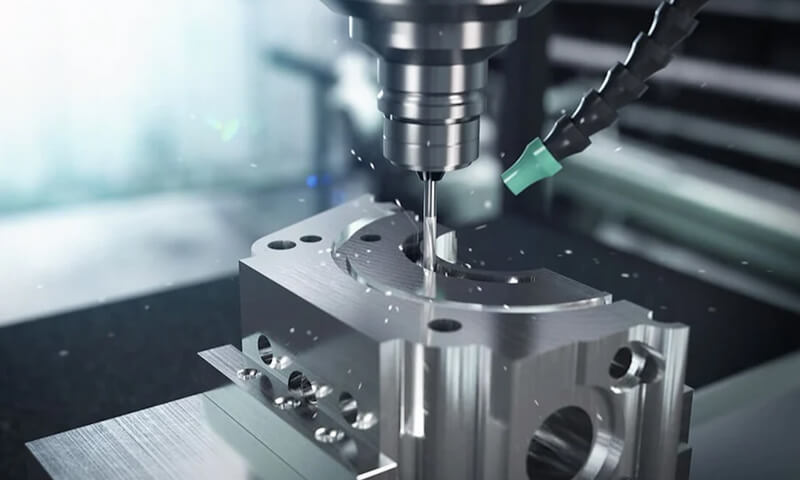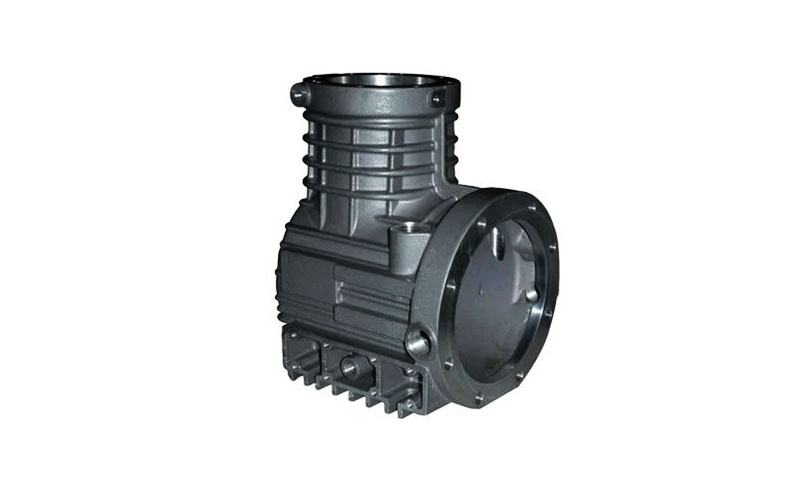
Stainless steel castings made in metal (permanent) molds or precision investment molds present a unique set of opportunities and risks.
Compared with sand-mold castings, metal-mold castings cool and solidify faster and the mold offers no “give” during shrinkage.
That faster cooling plus zero mold compliance increases internal stresses, raises the chance of cracking and magnifies defects such as misruns, cold-shuts and incomplete fill.
To produce robust, reliable stainless-steel cast structures, three categories of design and process control deserve primary attention:
(1) ensuring complete filling and avoiding cold defects, (2) preventing solidification cracking and mechanical cracking, and (3) designing for mold extraction, tooling and dimensional stability.
The following explains each area in depth and gives concrete, engineering-grade actions and checklists.
Overview — why stainless steel castings in metal molds are special
- Faster cooling → higher thermal gradients. Rapid extraction of heat increases internal tensile stresses during solidification and at room temperature.
- No mold compliance. Unlike sand, metal dies do not compress to accommodate shrinkage; restrained shrinkage causes cracking or hot-tearing unless designs permit free contraction or feeding.
- Surface/flow behaviour changes. Thin sections lose metal fluidity quickly; large horizontal surfaces and sharp corners worsen oxide formation, cold flow and misruns.
- Alloy sensitivity. Stainless-steel alloys (austenitic, duplex, martensitic cast grades) differ in freezing range, fluidity and susceptibility to hot cracking—so alloy-specific design is essential.
1. Preventing incomplete filling, cold shuts and other filling defects
Core problem: in metal molds stainless melts lose heat rapidly and may solidify before the cavity is completely filled, producing misruns, cold laps and oxide entrapment.
Design principles
- Smooth, streamlined external geometry. Avoid abrupt section changes, sharp corners, and step changes that disturb flow.
Prefer rounded transitions and filleted junctions to maintain laminar metal flow and reduce entrapment of oxide film. - Avoid large horizontal flats. Horizontal surfaces cause slow filling, extensive air/metal contact (oxidation) and loss of fluidity; break large flats with gentle camber, ribs or sloped features.
- Use appropriate section thickness. Do not make extensive large-area thin walls.
Thin sections in large components cool and lose flowability rapidly—either thicken critical sections or design local thickenings for feeding. - Optimized gating and runner design. Locate gates to feed the heaviest or slowest-filling regions first; use well-sized ingates, rounded entrances and flow expansions to minimise turbulence and oxide entrainment.
Employ ingate geometries that keep the liquid metal temperature high when it reaches the furthest cavity points.
Process controls
- Superheat management. Maintain melt temperature on the high side of the recommended range for the chosen alloy (within safe limits), to prolong fluidity without promoting oxidation.
- Protective atmospheres / fluxing. Minimise oxidation (especially in thin passages) using cover fluxes, vacuum or protective atmospheres where feasible.
- Insulated or heated gates and feeders. Local heating or insulating sleeves on runners can retain heat and reduce misruns.
- Use chills where needed. Strategic external chills help direct solidification and can reduce cold-shut risk when combined with proper gating; avoid chills that prematurely solidify the last flow path.
- Simulation (solidification/flow CFD) should be used to confirm fill time and identify cold-shut risk before die fabrication.
2. Preventing casting cracks, hot tears and stress fractures
Core problem: restrained shrinkage, thermal gradients and local stress concentrators cause hot tearing during solidification or cracking on cooling.
Structural design rules
- Uniform wall thickness. Design walls to be as uniform as practicable.
Avoid sudden transitions between thin and thick sections; where transitions are required, use gradual tapers and generous fillets. - Add ribs and gussets to weak zones. Thin webs, thin bosses or long unsupported walls are crack-prone—strengthen with ribs or bosses, but design them so they do not create restrictive constraints on shrinkage.
- Minimise features that block free shrinkage. Lugs, flanges and embedded bosses that mechanically restrain contraction are frequent crack initiators; reduce number, relocate, or design them with compliant relief.
- Prefer inclined joins to vertical butt joins. Replace vertical stepwise connections with sloping or tapered connections where possible—slopes help avoid trapped tensile stress during solidification.
- Generous fillets at all internal/external corners. Sharp corners act as stress concentrators and nucleation sites for cracks.
For cast stainless parts, use larger radii than for sand casting—scale fillet radius with wall thickness (see prescription below).
Process & metallurgical controls
- Control solidification direction. Use directional solidification principles (riser placement and chills) so that solidification proceeds from thin to thick and feeding is adequate; avoid isolated hot spots.
- Feeders/riser design and placement. Ensure well-designed risers feed the last solidifying regions.
For permanent-mold casting, riser efficiency must account for faster cooling and shorter feeding times; use insulating risers or exothermic sleeves where helpful. - Relieve internal stresses by heat treatment. For critical components, consider post-casting stress-relief annealing or homogenisation to reduce quench stresses that can precipitate cracking.
Note: some stainless grades may require specific thermal cycles to avoid sensitization or undesired phases—coordinate HT with metallurgist. - Use hot-tearing-resistant alloys or grain refiners. Where possible choose grades or additives that reduce susceptibility to hot tearing, and apply grain refiners to control dendritic structure.
- Avoid abrupt cooling differences. Manage mold temperatures and cooling rates to reduce sharp thermal gradients (pre-heat molds where beneficial).
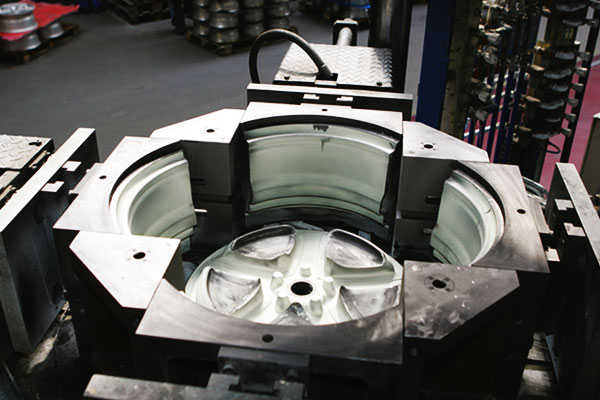
3. Mold extraction, draft, fillets and manufacturability for metal molds
Core problem: permanent molds have no give; cores and castings must be designed for reliable ejection and minimal tooling damage while also accommodating thermal contraction.
Key considerations and actions
- Increase draft (taper) relative to sand casting. Because metal molds lack the collapsibility of sand, provide larger draft angles—typically 30–50% larger than those used for sand casting.
Practically: if your sand-cast draft is 1°–2°, design permanent-mold draft angles of ~1.3°–3° (scale with surface finish, alloy and wall height).
Larger drafts facilitate ejection and reduce tool wear. - Enlarge fillet radii and corner radii. Use generous radii at junctions to: (a) reduce stress concentration and cracking, (b) ease mold-filling, and (c) allow better part release.
As a rule of thumb, make fillet radii scale with local wall thickness (e.g., radii on the order of 5–15% of local wall thickness, with minimum practical radii of a few millimetres for small castings). (Adjust per geometry and tooling constraints.) - Minimum wall thickness — increase vs sand casting. Metal-mold cast stainless parts typically require larger minimum wall thickness than the equivalent sand-cast component because the metal mold extracts heat faster.
As a rule, increase the sand-casting minimum by 20–50% for the same alloy and geometry unless the part design and process are validated. Always verify with foundry process capability and alloy data. - Inner cavities and ribs: internal webs and ribs should be 0.6–0.7× the thickness of the adjacent external wall(s) to avoid slow cool zones and differential shrinkage that cause cracking.
If inner ribs are too thick relative to surrounding walls they will solidify last and be hot-spot crack initiators. - Draft for cores and core prints: because cores cannot compress, core prints and extraction features must be robust and incorporate release tapers. Consider collapsible cores or split cores when geometry is complex.
- Simplify complex outer shapes where possible. If a complex shape causes production difficulties, simplify external geometry or split the component into sub-assemblies to avoid yield loss—do so while maintaining functional requirements.
4. Additional practical topics — metallurgy, inspection and production controls
Alloy selection and treatment
- Select the right stainless cast family for the function. Austenitic grades are ductile and forgiving but have different solidification ranges than duplex or martensitic alloys—each requires specific gating, riser and heat-treat sequences.
- Post-cast heat treatment must be specified. Solution anneal, stress relief or tempering may be needed; for duplex grades control heat input to avoid undesirable sigma phase formation.
Mold and tooling practice
- Surface finish and lubrication. Use appropriate die lubricants to reduce casting surface defects and facilitate ejection, but avoid over-lubrication that causes porosity or contamination.
- Mold temperature control. Pre-heating and maintaining controlled mold temperature reduces thermal shocks and inconsistent solidification.
- Vent and degas. Provide vents and use degassing to avoid gas pores. Permanent molds must be designed with vents or vacuum assist when casting stainless to control porosity and gas entrapment.
Quality assurance & validation
- Use solidification and flow simulation. CFD and solidification models are extremely effective at predicting cold shuts, misruns and hot-tearing risk for metal-mold stainless castings—use them before die construction.
- Non-destructive testing per criticality. Radiography, ultrasonic testing or CT scanning identify internal porosity, inclusions and cracks.
Level of NDT should be commensurate with safety and function. - Pilot runs & process qualification. Validate tooling, gating and heat treatment with pilot castings and then document process windows (melt temp, mold temp, fill time, quench regimen, post-cast HT).
5. Quick summary table — three attention areas and top actions
| Attention area | Problems to avoid | Top practical actions |
| Filling & flow | Misruns, cold shuts, oxide entrapment | Streamline geometry; avoid large horizontal flats; optimize gating; maintain superheat; use insulation/feeds |
| Crack & hot-tear prevention | Hot tearing, solidification cracking, shrinkage cracks | Uniform wall thickness; gradual transitions; ribs designed to allow shrinkage; directional solidification + proper risers; stress-relief HT |
| Mold extraction & manufacturability | Ejection damage, stuck cores, tool wear, distortion | Increase draft by 30–50% vs sand casting; larger fillets; increase minimum wall thickness; design core prints and collapsible cores |
6. Final remarks
Designing stainless-steel cast structures for metal-mold production is a systems problem that spans geometry, metallurgy and process engineering.
The three focus areas above—filling & flow, crack prevention, and mold extraction/manufacturability—capture the principal failure modes and point directly to engineering remedies: smooth shapes, controlled thicknesses and transitions, appropriate gating and feeding, adequate draft and filleting, and validated heat-treatment.
Use simulation, pilot trials and close collaboration between designers and foundry engineers to turn a challenging design into a robust, repeatable production part.
Key References
ASTM A351-23: Standard Specification for Castings, Austenitic Stainless Steel, for Pressure-Containing Parts.
American Foundry Society (AFS). (2022). Permanent Mold Casting Handbook. AFS Press.
ISO 3740:2019: Metallic Materials—Castings—General Requirements for Inspection and Testing.
Davis, J. R. (2019). Stainless Steel Casting Handbook. ASM International.