A stainless steel ball check valve is a one-way valve that uses a spherical closure (the ball) to prevent reverse flow.
Because of stainless steel’s corrosion resistance, mechanical strength and hygienic properties, stainless steel ball check valves are widely used across water, chemical, petrochemical, oil & gas, food & beverage and pharmaceutical industries.
This article examines their design, materials, manufacturing, performance metrics, applications, selection criteria, maintenance practices, failure modes, testing, and future developments — providing engineers and procurement teams with an authoritative, practical reference.
1. What is a Ball Check Valve? — Principle of Operation
A ball check valve is a type of non-return valve (NRV) that uses a spherical component – the ball – to control flow direction automatically.
Its fundamental purpose is to allow fluid to move in one direction while preventing reverse flow, thereby protecting pumps, piping systems, and downstream equipment from backflow damage or contamination.

Core Operating Principle
- Flow Opening: When upstream fluid pressure exceeds downstream pressure (typically by 0.1–1 bar, known as the “cracking pressure”), the fluid pushes the ball off its seat, creating a passage for flow.
The ball may be unguided (relying on fluid flow to position it) or guided by a cage or stem to prevent misalignment. - Flow Closing: When upstream pressure drops or downstream pressure surges (reverse flow condition), the ball returns to its seat—either by gravity (in horizontal installations),
spring force (in spring-loaded designs), or reverse fluid pressure—sealing the flow path and preventing backflow.
Key Components of a Stainless Steel Ball Check Valve
- Valve body — houses the ball and seat, designed to withstand system pressure and often engineered with smooth internal contours to minimize turbulence and pressure drop.
- Ball — serves as the closure element; precision-machined for perfect sphericity to ensure tight sealing, may be solid or hollow and sometimes coated for enhanced wear and corrosion resistance.
- Seat — provides the sealing surface for the ball; can be metal or soft material depending on required leakage class, temperature limits, and chemical compatibility.
- Spring(if applicable) — applies force to return the ball to its seat quickly, enabling installation in any orientation and improving closure speed to reduce backflow.
- Guide/Retainer — maintains the ball’s alignment during operation, ensuring consistent seating and reducing wear on the ball and seat.
- End connections — interface between valve and piping, available in threaded, flanged, welded, or sanitary clamp types to suit installation and maintenance needs.
- Seals/Gaskets — prevent external leakage at body joints and end connections; selected for chemical compatibility, temperature resistance, and long-term sealing performance.
2. Why Stainless Steel? — Material Science and Grades
Stainless steel is the dominant material choice for ball check valves when corrosion resistance, mechanical strength, and long-term reliability are critical.
Its metallurgy combines high chromium content (≥ 10.5 %) with other alloying elements to form a passive oxide film that protects against oxidation and chemical attack – a feature especially valuable in aggressive or sanitary environments.

Core Material Advantages
- Corrosion Resistance — Chromium forms a passive Cr₂O₃ layer that self-heals if damaged; molybdenum additions further improve pitting resistance in chloride-rich media.
- Mechanical Strength — Retains high tensile and yield strength over a broad temperature range, supporting high-pressure service.
- Temperature Tolerance — Performs well in cryogenic service (austenitic grades) and at elevated temperatures, depending on alloy.
- Hygienic Properties — Smooth, non-porous surface resists bacterial growth; easy to clean, making it suitable for food, beverage, and pharmaceutical industries.
- Durability & Life-Cycle Cost — Longer service life reduces replacement frequency and downtime, often offsetting higher initial cost.
- Recyclability — Stainless steel is 100% recyclable without property loss, supporting sustainability goals.
Common Stainless Steel Grades in Ball Check Valves
| Casting Grade | Equivalent Wrought Grade | Composition Highlights | Key Advantages | Typical Applications |
| CF8 | 304 | ~18% Cr, 8% Ni | General-purpose corrosion resistance, good formability | Water treatment, HVAC, mild chemical service |
| CF8M | 316 | ~16% Cr, 10% Ni, 2% Mo | Better pitting resistance in chloride environments, improved chemical resistance | Marine systems, chemical processing, food & beverage |
| CF3 | 304L | ~18% Cr, 8% Ni, low carbon (≤0.03%) | Excellent resistance to intergranular corrosion after welding | Sanitary piping, food & beverage |
| CF3M | 316L | ~16% Cr, 10% Ni, 2% Mo, low carbon | High pitting resistance + intergranular corrosion resistance | Pharmaceutical, ultrapure water |
| CN7M | Alloy 20 | ~35% Ni, Cu, Mo | Excellent resistance to sulfuric, phosphoric acids, and chlorides | Fertilizer, acid processing |
| CD4MCu | Duplex 2205 | ~25% Cr, 5% Ni, 2% Mo, Cu | Duplex structure, high strength, excellent chloride SCC resistance | Desalination, petrochemical, pulp & paper |
| CE8MN | Super Duplex 2507 | ~25% Cr, 7% Ni, 4% Mo, N | Superior pitting/crevice corrosion resistance, high strength | Subsea oil & gas, seawater service |
| CK3MCuN | 904L | ~20% Cr, 25% Ni, 4.5% Mo, Cu | Exceptional resistance to strong reducing acids (e.g., sulfuric acid), very high pitting resistance | Chemical processing, acid handling, high-purity systems |
3. Design Variants and Constructions
Stainless steel ball check valves come in multiple design configurations to suit different process requirements, installation orientations, and performance priorities.

Gravity-Operated Ball Check Valves
- Description: Relies on the weight of the ball and reverse flow to seat it.
- Key Features:
-
- Simplest construction, no spring.
- Typically requires vertical installation (flow upward).
- Low cracking pressure (close to zero).
- Advantages: Minimal parts, low cost, very low pressure drop.
- Limitations: Not suitable for horizontal lines; slower closing speed can allow minor backflow.
- Typical Use: Gravity-fed systems, sump pump discharge, low-pressure water lines.
Spring-Assisted Ball Check Valves
- Description: Uses a corrosion-resistant spring to push the ball into the seat, independent of orientation.
- Key Features:
-
- Can be installed in horizontal or vertical lines.
- Defined cracking pressure based on spring force.
- Faster closure reduces backflow risk.
- Advantages: Orientation flexibility, faster response.
- Limitations: Slightly higher pressure drop; spring fatigue possible in high-cycle service.
- Typical Use: Pump discharge lines, chemical transfer systems, compressed gas lines.
Cartridge-Style Ball Check Valves
- Description: Compact insert unit containing the ball, seat, and spring/guide assembly.
- Key Features:
-
- Designed to be easily inserted into valve bodies or manifolds.
- Often used in OEM equipment where modular replacement is desired.
- Advantages: Quick maintenance, minimal downtime, standardized dimensions.
- Limitations: Flow capacity may be lower than full-body designs of the same size.
- Typical Use: Hydraulic systems, instrumentation, compact process skids.
Inline / Axial Flow Ball Check Valves
- Description: Flow path and ball movement aligned axially with piping; designed for full-bore or near-full-bore flow.
- Key Features:
-
- Smooth internal profile minimizes pressure drop.
- Spring-assisted closure is common for quick response.
- Advantages: High Cv (flow coefficient), reduced turbulence, suitable for high flow rates.
- Limitations: More complex machining; larger body length.
- Typical Use: High-capacity process lines, critical pump protection.
Guided Ball Check Valves
- Description: Ball movement is constrained by a guide or cage to ensure perfect seating.
- Key Features:
-
- Reduces risk of ball misalignment and uneven seat wear.
- Often paired with heavy-duty or high-cycle applications.
- Advantages: Consistent sealing, suitable for high vibration environments.
- Limitations: Guide design must avoid debris accumulation; slightly higher cost.
- Typical Use: High-pressure pumps, abrasive fluid service, reciprocating compressor discharge.
Seat Configurations
- Metal-to-Metal Seats:
-
- High temperature and pressure resistance; suitable for abrasive or high-velocity flows.
- Leakage rates per metal seat standards (ANSI/FCI).
- Soft Seats (PTFE, PEEK, elastomers):
-
- Bubble-tight sealing possible.
- Limited by temperature and chemical compatibility of seat material.
4. Key performance parameters
When specifying or evaluating a valve, these parameters should be quantified:

- Cracking pressure: minimum differential to open; critical in low-pressure systems.
- Flow coefficient (Cv or Kv): indicates flow capacity and helps predict pressure drop.
- Pressure rating (PN or class / psi): maximum allowable working pressure at a given temperature.
- Temperature rating: determined by metal and seat materials.
- Seat leakage class: bubble-tight vs allowable leakage (e.g., ANSI/FCI classes).
- Response time / closing speed: important where reverse flow or pump shutdowns could cause damage.
- End connection type: threaded, butt-weld, socket-weld, flanged (raised face, RTJ), sanitary tri-clamp.
5. Manufacturing and Quality Control
The reliability and longevity of stainless steel ball check valves depend on high-precision manufacturing, controlled assembly, and rigorous testing and inspection.
Each stage ensures compliance with international standards (e.g., API 594, ASME B16.34, ISO 5208) and guarantees performance under demanding service conditions.

Casting, Forging, or Bar Stock Preparation
- Casting: Used for medium-pressure valves or complex geometries. Investment casting or sand casting produces near-net-shape bodies, reducing machining effort.
Strict control of pouring temperature (650–700°C) and mold quality prevents porosity and defects. - Forging: Preferred for high-pressure valves (ANSI Class ≥600) to improve grain structure and eliminate internal voids.
Hot forging at 1100–1250°C followed by annealing ensures optimal mechanical properties. - Bar Stock: For smaller components like balls, seats, and springs, high-grade stainless steel bars (CF8, CF8M, 904L, duplex 2205) are selected.
Each batch undergoes chemical composition verification and mechanical testing per ASTM standards.
Machining and Dimensional Accuracy
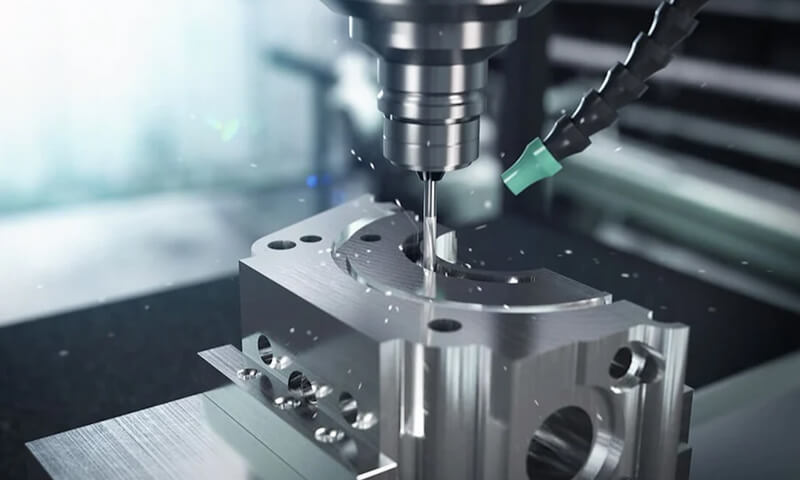
- CNC Machining: Valve bodies, balls, and seats are precision machined to tight tolerances (port diameter ±0.05 mm; seat pocket ±0.01 mm; flange flatness ≤0.1 mm/m).
- Ball Precision: Spherical balls are ground and polished to Ra 0.4–0.8 μm surface finish with sphericity error ≤0.005 mm, critical for sealing performance.
- Cages/Guides: CNC-machined for concentricity ≤0.05 mm runout to ensure smooth ball movement and prevent misalignment.
Surface Treatment
- Passivation: Stainless steel surfaces are chemically treated to remove free iron, enhancing corrosion resistance and longevity.
- Polishing: Critical flow paths and sealing surfaces are polished to minimize friction, prevent leakage, and improve flow efficiency.
- Coatings (Optional): Some valves may receive food-grade or anti-corrosion coatings, depending on application (e.g., sanitary, chemical service).
Assembly Process
The assembly of stainless steel ball check valves is a critical stage that directly impacts performance, sealing integrity, and service life.
For hygienic or food/pharma applications, assembly is conducted in a controlled cleanroom environment (Class 10,000) to minimize contamination.
Every step follows a strict sequence with defined torque and preload specifications to ensure consistency and reliability.
Component Cleaning:
All valve components—including body, ball, seat, and spring—are ultrasonically cleaned in deionized water at 60°C for 20 minutes.
This step removes machining debris, oil residues, and micro-particles that could compromise sealing or cause premature wear.
Seat Installation:
- Metal Seats: Press-fitted into the valve body with a controlled force of 5–10 kN to achieve a precise interference fit, ensuring long-term stability.
- Soft Seats (e.g., PTFE, Viton®): Bonded using food-grade or chemically resistant adhesives for hygienic or chemical service applications.
Proper alignment and uniform bonding are verified to prevent leaks and deformation under pressure.
Ball and Spring Placement:
The valve ball is positioned accurately in the seat pocket.
For spring-loaded designs, the spring is installed with a pre-calibrated preload corresponding to the design cracking pressure (e.g., 0.5 bar ≈ 10 N spring force).
This ensures precise opening behavior and consistent operational performance.
Closure and Torqueing:
The valve cover, if applicable, is secured with bolts torqued to 20–50 N·m following ASME PCC-1 guidelines.
Correct torque ensures uniform compression of seal rings (PTFE or Viton®), prevents external leakage, and maintains mechanical stability under cyclic loading.
Preliminary Leak Test:
Assembled valves are dried and pressurized with air to identify immediate assembly defects such as misalignment, improper seat fit, or spring tension errors.
This step serves as an early quality checkpoint before final performance testing.
6. Common Applications of Stainless Steel Ball Check Valves
Stainless steel ball check valves are widely used in industries where corrosion resistance, reliability, and tight shut-off are critical.

Water and Wastewater Treatment
- Pump Protection: Prevents backflow in pump discharge lines, protecting pumps from reverse rotation and cavitation.
- Pipeline Isolation: Ensures unidirectional flow in municipal water distribution and wastewater systems.
- Chemical Compatibility: Stainless steel resists corrosion from chlorinated water and wastewater with variable pH levels.
Chemical and Petrochemical Industries
- Acidic and Alkaline Fluids: 316L, 317L, and 904L stainless steels handle aggressive chemicals like sulfuric acid, hydrochloric acid, and caustic solutions.
- Corrosion Prevention: Metal-to-metal or soft seats prevent leakage of toxic or hazardous chemicals, maintaining safety and regulatory compliance.
- High-Temperature Fluids: Suitable for processes requiring stable performance at elevated temperatures (up to 400°C in some grades).
Food, Beverage, and Pharmaceutical Applications
- Hygienic Standards: Cleanable, corrosion-resistant surfaces compatible with FDA, 3-A, or EHEDG standards.
- Flow Control in Pipelines: Prevents contamination by ensuring one-way flow in beverage, dairy, and pharmaceutical production lines.
- Sanitary Cleaning: Smooth internal surfaces facilitate CIP (Clean-In-Place) and SIP (Sterilize-In-Place) operations.
Oil and Gas Industry
- Pipeline Integrity: Protects compressors, pumps, and separators from backflow in crude oil, natural gas, and refined product pipelines.
- High-Pressure Systems: Forged or duplex stainless steel valves can withstand ANSI Class 600+ conditions in upstream and downstream operations.
- Corrosion-Resistant Materials: Duplex and 904L stainless steels resist sulfide stress cracking in sour gas and seawater injection applications.
HVAC and Industrial Process Systems
- Chilled Water and Steam Lines: Prevents reverse flow in heating, ventilation, and cooling systems.
- Process Fluids: Maintains unidirectional flow in chemical reactors, heat exchangers, and condensate return lines.
- Energy Efficiency: Reduces pump cycling and protects system components, improving operational efficiency.
Marine and Offshore Applications
- Seawater Systems: 316L, duplex, and 904L stainless steels resist chloride-induced corrosion in seawater intake, cooling, and ballast systems.
- Subsea and Offshore Platforms: Metal-to-metal sealing and robust construction ensure reliability under high-pressure, high-salinity conditions.
- Maintenance Reduction: Simple design and corrosion resistance reduce downtime and maintenance costs in remote or harsh environments.
7. Failure modes, root causes, and troubleshooting
Common failures and remedies:
- Seat wear / leakage — caused by abrasive particles, improper seat material, or cycling fatigue. Remedy: install strainers, select harder seat or metal seat, schedule replacements.
- Ball deformation or scoring — results from debris or vibration. Remedy: filtration/strainers; inspect ball finish.
- Spring failure or loss of preload (in spring-assisted valves) — cyclical fatigue or corrosion. Remedy: use corrosion-resistant spring alloys, periodic replacement.
- Sticking (ball not seating) — build-up of deposits or improper orientation. Remedy: cleaning, passivation, or design change.
- Water hammer / slamming — sudden closure causing pressure spikes. Remedy: add damping, soft-close designs, or surge protection.
- Corrosion / pitting — inadequate alloy for chloride environments. Remedy: upgrade material (duplex/super duplex) and improve design to avoid stagnant zones.
8. Cost, life-cycle, and sustainability considerations
- CapEx vs OpEx: stainless steel valves cost more initially than carbon steel/plastic but can yield lower life-cycle cost due to longer service life and lower maintenance.
- Total cost of ownership: include downtime, spare parts, energy cost from pressure drop, and inspection intervals.
- Sustainability: stainless steel is highly recyclable; material choice and durability reduce lifetime environmental impact. Consider designing for serviceability and remanufacturing to extend life.
9. Emerging trends and future directions
- Advanced alloys: increased use of duplex and nickel-based alloys where extreme corrosion resistance and strength are needed.
- Surface engineering: PVD coatings, polymer liners and advanced passivation methods to reduce fouling and increase life.
- Additive manufacturing: potential for complex internal geometries and rapid prototyping; qualification and cost are still evolving.
- Smart valves: integrated sensors to monitor flow direction, pressure, cycle counts and predict maintenance needs.
- Hygienic innovations: improved finishes and clean-in-place (CIP) compatibility for pharma/food industries.
10. Comparison to Other Check Valve Types
Stainless steel ball check valves are one of several check valve designs used for backflow prevention.
Understanding their advantages and limitations compared to other types helps in selecting the optimal solution for specific applications.
Ball Check Valve vs. Swing Check Valve
| Feature | Ball Check Valve | Swing Check Valve |
| Design | Spherical ball moves within a seat; spring may assist closure | Hinged disc swings on a pin to open/close |
| Orientation | Suitable for horizontal and vertical flow; spring-assisted designs handle downward flow | Works best in horizontal pipelines; vertical flow requires careful design |
| Response Time | Fast closure, minimal water hammer if spring-assisted | Slower closure, may generate water hammer in high-speed flows |
| Size Range | Commonly DN15–DN300; compact for tight spaces | Often DN50–DN1200; bulkier due to swing arm |
| Maintenance | Easy to disassemble; few moving parts | Hinged disc may require more maintenance; springless versions prone to wear |
Key Insight: Ball check valves excel in quick response and compact applications, whereas swing check valves are better for larger pipelines with moderate flow rates.
Lift Check Valve vs. Ball Check Valve
| Feature | Ball Check Valve | Lift Check Valve |
| Operation Principle | Ball moves vertically or with flow; spring may aid closure | Disc lifts off the seat vertically under flow pressure |
| Flow Direction Sensitivity | Can operate in horizontal and vertical lines; spring improves low-flow performance | Typically vertical installation required |
| Sealing | Tight seal (metal or soft seat) for ANSI Class VI; minimal leakage | Seal depends on disc weight and seat; more leakage possible at low pressure |
| Pressure Drop | Low to moderate, depends on ball size | Moderate; disc can obstruct flow slightly more |
| Applications | Water, chemical, steam, food, low- to high-pressure systems | High-pressure pipelines, steam, and process lines where slow closure is acceptable |
Key Insight: Ball check valves provide better sealing at low pressures, while lift check valves are preferred in high-pressure, vertical flow systems.
Ball Check Valve vs. Diaphragm Check Valve
| Feature | Ball Check Valve | Diaphragm Check Valve |
| Design | Rigid ball seated in metal or soft cavity | Flexible diaphragm bends to allow flow and block backflow |
| Flow Media | Handles liquids and gases, including slurries with proper design | Best for clean or slightly viscous liquids; sensitive to solids |
| Installation Orientation | Flexible, horizontal or vertical | Can be horizontal or vertical; depends on diaphragm material |
| Maintenance | Easy to replace ball or seat | Diaphragm wear requires complete replacement |
| Response Time | Quick; minimal water hammer with spring | Fast but can fatigue over time; slower for high-flow surges |
Key Insight: Diaphragm check valves are ideal for hygienic or low-pressure systems, while ball check valves are more robust and suitable for high-pressure or abrasive media.
11. Conclusion
Stainless steel ball check valves are versatile, mechanically simple devices that provide reliable one-way flow control across many industries.
Their successful deployment depends on matching material choices and design variants to the fluid chemistry and operating conditions, ensuring proper manufacturing and testing, and following installation and maintenance best practices.
Advances in materials, coatings, and sensor integration are expanding their capabilities, but fundamental engineering choices — seat compatibility, cracking pressure, and flow capacity — remain central to long service life and dependable performance.
DEZE: High-Precision Valve Casting Solutions for Demanding Applications
DEZE provides high-precision valve casting solutions designed for the most demanding industrial applications where reliability, pressure integrity, and dimensional accuracy are critical.
Offering comprehensive end-to-end services—from raw castings to fully machined valve bodies and assemblies—DEZE ensures every component meets stringent global quality standards.
Our Valve Casting Expertise Includes:
- Investment Casting: Utilizing advanced lost wax technology to create complex internal geometries and tight-tolerance valve components with superior surface finishes, ideal for precision valve bodies and trims.
- Sand and Shell Mold Casting: Cost-effective methods perfect for medium to large valve bodies, flanges, and bonnets, widely used in rugged sectors such as oil & gas and power generation.
- Precision CNC Machining: Accurate machining of seats, threads, and sealing surfaces guarantees dimensional accuracy and optimal sealing performance for every casting.
- Material Versatility: Supplying a broad range of materials including stainless steels (CF8, CF8M, CF3, CF3M), brass, ductile iron, duplex, and high-alloy alloys to withstand corrosive, high-pressure, and high-temperature conditions.
Whether your project demands custom butterfly valves, check valves, globe valves, gate valves, or high-volume industrial valve castings, DEZE stands as a trusted partner committed to precision, durability, and quality assurance.
Contact Us Today!
FAQs
What is the difference between a spring-loaded and a non-spring (standard) ball check valve?
- Non-spring: Relies solely on fluid pressure to open and close the ball. Simple, reliable, and suitable for horizontal or slightly inclined installations.
- Spring-loaded: Includes a spring behind the ball to ensure faster closing at low flow rates or in vertical pipelines. Useful when backflow prevention is critical in low-pressure systems.
Can these valves handle slurry or viscous fluids?
- Standard stainless steel ball check valves are suitable for clean liquids.
For slurries or high-viscosity fluids, modifications like larger ball diameters, metal seats, or guided cage designs are recommended to prevent clogging.
What’s the maximum pressure and temperature range for stainless steel ball check valves?
- Pressure: Typically ranges from ANSI Class 150 to Class 600+, depending on design (cast or forged).
- Temperature: Stainless steel valves generally operate from -50°C to 400°C, with specific grades like 904L or duplex 2205 suitable for higher temperatures and aggressive media.
What is the difference between soft-seat and metal-seat valves?
- Soft-seat (PTFE, Viton®): Provides bubble-tight shut-off (ANSI Class VI), lower wear resistance, suitable for low-temperature and clean media.
- Metal-seat (stainless steel, ceramic): Handles high temperatures, abrasive fluids, and high-pressure service, but may have slightly higher leakage rates compared to soft seats.
How long is the typical service life of a stainless steel ball check valve?
- With proper material selection, installation, and maintenance, service life ranges from 10 to 20+ years, depending on media, pressure, and operating conditions.