1. INNGANGUR
Cast stainless steels combine corrosion resistance, good mechanical strength and castability for complex shapes.
They are used where corrosion, hitastig, or sanitary requirements preclude ordinary carbon steels and where fabrication of complex geometry from wrought plate would be costly or impossible.
Performance depends on alloy family (austenítískt, Tvíhliða, ferritic, martensitic, úrkomu-harðnandi), steypuaðferð, heat treatment and quality control.
Proper specification and process control are essential to avoid embrittling phases and casting defects that can negate the metal’s intrinsic advantages.
2. Core Definition & Classification of Cast Stainless Steel
Core definition — what we mean by “cast stainless steel”
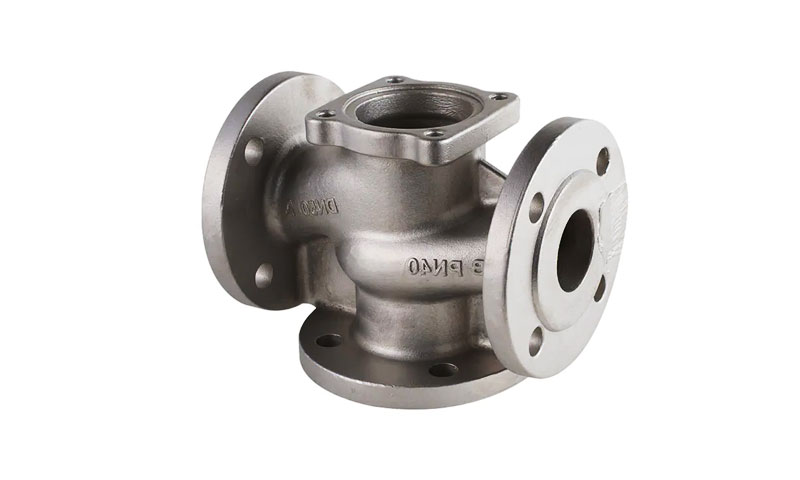
Leikarar ryðfríu stáli refers to chromium-bearing iron alloys that are produced by pouring molten alloy into a mold and allowing it to solidify, then finishing and heat-treating as required.
The defining feature that makes them “stainless” is a sufficient chromium content (and often other alloying elements) to form and maintain a continuous, self-healing chromium oxide (Cr₂O₃) film that dramatically reduces general corrosion.
Castings are used where complex geometry, integral features (passages, bossing, rifbein), or economic advantages of casting outweigh the benefits of wrought fabrication.
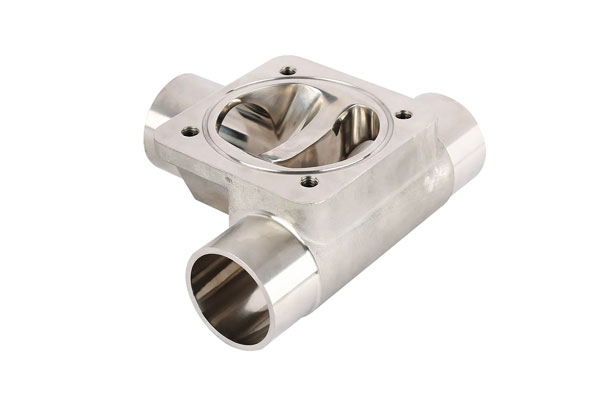
Family-by-family summary (borð)
| Fjölskylda | Key Alloys (ASTM A351) | Core strengths | Dæmigerð notkun |
| Austenitic | CF8, CF8M, CF3, CF3M | Excellent ductility and toughness; very good general corrosion resistance; good low-temperature performance; easy to fabricate and weld | Dæla & loki líkama, sanitary equipment, Matur & pharmaceutical components, general chemical service, cryogenic fittings |
| Tvíhliða (Ferrite + Austenite) | CD3MN, CD4MCu (duplex cast equivalents) | High yield and tensile strength; superior pitting/crevice resistance (high PREN); improved resistance to chloride SCC; góð hörku | Undan ströndum & subsea hardware, olía & gas valves and pumps, sjóþjónustu, highly stressed corrosive components |
| Járn | CB30 | Good resistance to stress-corrosion in selected environments; lower coefficient of thermal expansion than austenitics; segulmagnaðir | Exhaust/flow parts, chemical fittings, components where moderate corrosion resistance and magnetism are required |
Martensitic |
CA15, Ca6nm | Heat-treatable to high strength and hardness; good wear and abrasion resistance when hardened; good fatigue strength after HT | Stokka, valve/trunnion components, wear parts, applications requiring high hardness and dimensional stability |
| Úrkoma-Herðing (PH) & Super-austenitics | (various proprietary/standard PH cast grades; super-austenitic equivalents with high Mo/N) | Very high attainable strength after aging (PH); super-austenitics give exceptional pitting/crevice resistance and resistance to harsh chemical media | Specialty high-strength components, severe corrosive environments (T.d., aggressive chemical processing), high-value process plant equipment |
Naming conventions & common cast grades (practical note)
- Cast stainless grades often use casting designations rather than wrought numbers (til dæmis: CF8 ≈ 304, CF8M ≈ 316 equivalents in many specifications).
These casting codes and alloy names vary by standard system (ASTM, In, Hann er, o.fl.). - “CF” / “CA” / “CD” prefixes are typical in some standards to denote cast austenitic/ferritic/duplex groupings; manufacturers may also use proprietary names.
Always specify both the chemical range og mechanical/heat-treatment requirement in procurement documents to avoid ambiguity.
3. Metallurgy and Microstructure
Alloy families and their defining features
- Austenitic (T.d., 304, 316, CF8/CF3 equivalents in cast): face-centered-cubic (FCC) iron matrix stabilized by nickel (or nitrogen).
Excellent toughness and ductility, outstanding general corrosion resistance; susceptible to chloride pitting and stress-corrosion cracking (Scc) in some environments. - Tvíhliða (T.d., 2205-type cast equivalents): roughly equal ferrite (líkamsmiðjuð teningur, BCC) + austenite phases.
Mikill styrkur, superior pitting/crevice resistance and better resistance to SCC than austenitics due to lower chromium-depleted zone formation; requires control of cooling to avoid brittle phases. - Járn: mostly BCC chromium-stabilized; better stress-corrosion performance in some environments, lower toughness at low temp compared with austenitics.
- Martensitic: heat-treatable, can be made very strong and hard, moderate corrosion resistance compared with austenitic and duplex; used for wear-resistant cast parts.
- Úrkoma-herðandi (PH): alloys that can be age hardened (Ni-based or stainless PH grades), offering high strength with reasonable corrosion resistance.
Critical microstructural concerns
- Carbide precipitation (M₂₃C6, M₆C) Og sigma (A.) áfangi formation occur when castings are held too long in the 600–900 °C range (or cooled slowly through it).
These brittle, chromium-rich phases deplete the matrix of chromium and reduce toughness and corrosion resistance. - Intermetallics and inclusions (T.d., silicides, súlfíð) can act as crack initiators.
- Segregation (chemical non-uniformity) is inherent to casting and must be minimized by melt and solidification control and sometimes homogenization heat treatments.
4. Physical properties of Cast Stainless Steel
| Eign | Typical value (ca.) | Athugasemdir |
| Þéttleiki | 7.7 - 8.1 g·cm⁻³ | Varies slightly with alloying (austenitic ~7.9) |
| Melting range | ~1370 – 1450 ° C. (alloy-dependent) | Castability driven by liquidus-solidus range |
| Stuðull Young (E) | ≈ 190 - 210 GPA | Comparable across stainless families |
| Varmaleiðni | 10 - 25 W·m⁻¹·K⁻¹ | Low compared with copper/aluminum; duplex somewhat higher than austenitic |
| Coefficient of thermal expansion (CTE) | 10–17 ×10⁻⁶ K⁻¹ | Austenitics higher (~16–17); duplex and ferritic lower |
| Electrical conductivity | ≈1–2 ×10⁶ S·m⁻¹ | Lágt; stainless is much less conductive than copper or aluminum |
| Typical tensile strength (eins og steypt) | Austenitic: ~350–650 MPa; Tvíhliða: ~600–900 MPa; Martensitic: allt að 1000+ MPA | Wide ranges—depends on alloy class, hitameðferð, and defects |
| Typical yield strength (eins og steypt) | Austenitic: ~150–350 MPa; Tvíhliða: ~350–700 MPa | Duplex grades have high yield due to dual-phase microstructure |
| Hörku (Hb) | ~150 – 280 Hb | Martensitic and precipitation-hardening grades higher |
Values above are representative engineering ranges. Always consult supplier data for specified grade, casting route and heat-treatment state.
5. Rafmagns & Magnetic Properties of Cast Stainless Steel
- Rafmagnsþol: Austenitic cast stainless steels (CF8, CF3M) have high resistivity (700–750 nΩ·m at 25°C)—3× higher than cast carbon steel (200 nΩ·m).
This makes them suitable for electrical insulation applications (T.d., spennihús). - Segulmagn: Austenitic einkunnir (CF8, CF3M) eru ekki segulmagnaðir (relative permeability μ ≤1.005) due to their FCC structure—critical for medical devices (T.d., MRI-compatible components) or electronic enclosures.
Járn (CB30) and martensitic (CA15) grades are ferromagnetic, limiting their use in magnetic-sensitive environments.
6. Casting processes and how they affect properties
Common casting routes for stainless:
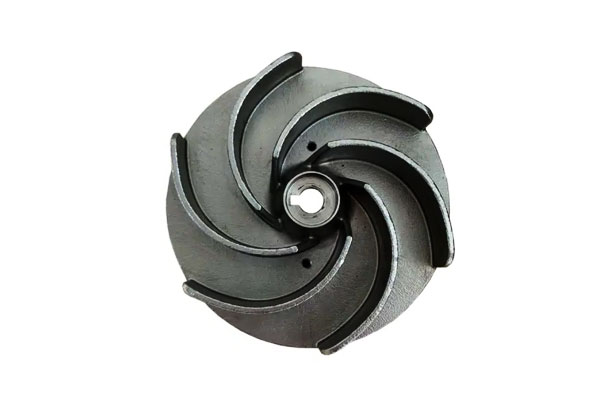
- Sandsteypu (Grænn sandur, resin sand): flexible for large or complex parts.
Coarser microstructure and higher risk of porosity unless controlled. Suitable for many pump bodies and large valves. - Fjárfesting (tapað-vax) steypu: excellent surface finish and dimensional accuracy; often used for smaller, complex parts requiring tight tolerances.
- Miðflótta steypu: produces sound, fine-grained cylindrical parts (rör, ermarnar) with directional solidification that minimizes internal defects.
- Shell and vacuum casting: improved cleanliness and reduced gas entrapment for critical applications.
Process influences:
- Cooling rate affects dendrite spacing; faster cooling (Fjárfesting, miðflótta) → finer microstructure → generally better mechanical properties.
- Melt cleanliness and pouring practice determine inclusion and bifilm levels that directly influence fatigue and leak tightness.
- Directional solidification and risering design minimize shrinkage cavities.
7. Mechanical properties of Cast Stainless Steel
Strength and ductility
- Austenitic castings: good ductility and toughness; UTS typically in mid hundreds of MPa; ductility high (elongation often 20–40% in cast 316L when free of defects).
- Duplex castings: higher yield and UTS due to ferrite + Austenite; typical UTS ~600–900 MPa with yield often >350 MPA.
- Martensitic/PH castings: can reach very high UTS and hardness but with reduced ductility.
Þreyta
- Fatigue life is very sensitive to casting defects: Porosity, innifalið, surface roughness and shrinkage are common crack starters.
For rotating or cyclic loads, low-porosity processes, Skot Peening, Mjöðm (heitt jafnstöðuþrýstingur), and surface machining are commonly used to improve fatigue performance.
Creep and elevated temperature
- Some stainless grades (especially high-alloy and duplex) retain strength at elevated temperatures; however long-term creep performance needs to be matched to alloy and expected life.
Carbide/σ-phase precipitation under thermal exposure can severely reduce creep and toughness.
8. Hitameðferð, microstructure control and phase stability
Lausn annealing (dæmigert)
- Tilgangur: dissolve undesirable precipitates and restore a uniform austenitic/ferritic matrix; recover corrosion resistance by returning chromium to solid solution.
- Typical regime: heat to the appropriate solution temperature (often 1,040–1,100 °C for many austenitics), hold to homogenize, þá rapid quench to retain the solved-in elements. Exact temperature/time depends on grade and section thickness.
- Caveat: crucible and section size limit achievable quench rates; heavy sections may require special procedures.
Aging and precipitation
- Tvíhliða Og martensitic grades may be aged for property control; aging/time–temperature windows must avoid sigma and other deleterious phases.
- Overaging or inappropriate thermal histories produce carbides and sigma that embrittle and reduce corrosion resistance.
Avoiding sigma phase and chromium depletion
- Control cooling through the vulnerable temperature range, avoid prolonged hold between ~600–900 °C, and use post-weld or solution annealing where needed.
Material selection and heat treatment design are the main defenses.
9. Corrosion Resistance — Core Advantage of Cast Stainless Steel
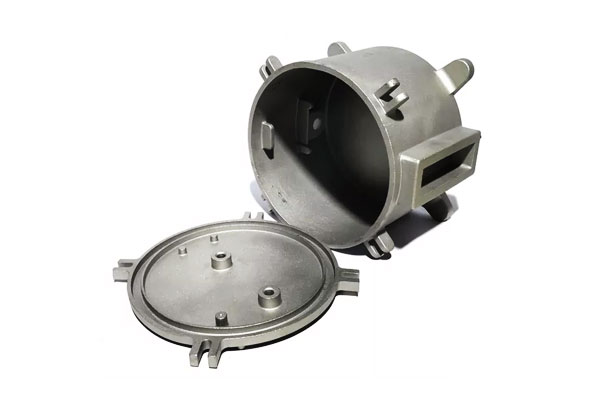
Corrosion resistance is the primary reason engineers choose cast stainless steel.
Unlike many structural metals that rely on bulky coatings or sacrificial protection, stainless steels gain durable environmental resistance from their chemistry and surface reactivity.
How stainless steels resist corrosion — the passive film concept
- Passive protection: Chromium in the alloy reacts with oxygen to form a thin, continuous chromium-oxide layer (Cr₂O₃).
This film is only nanometres thick but is highly effective: it reduces ionic transport, blocks anodic dissolution, and—crucially—is self-healing when damaged provided oxygen is available. - Alloy synergy: Nikkel, molybdenum and nitrogen stabilize the matrix and improve the passive film’s resistance to local breakdown (sérstaklega í klóríðumhverfi).
The passive film’s stability is therefore an outcome of chemistry, yfirborðsástand, and local environment.
Forms of corrosion that matter for cast stainless steels
Understanding likely failure modes focuses material selection and design:
- Almennt (einkennisbúningur) tæring: Rare for properly alloyed stainless in most industrial atmospheres — the passive film keeps uniform loss very low.
- PITTING Tæring: Staðbundið, often small and deep pits initiated when the passive film breaks down locally (chlorides are the classic initiator). Pitting can be critical because small defects penetrate quickly.
- Crevice corrosion: Occurs inside shielded gaps where oxygen becomes depleted; the oxygen gradient encourages local acidification and chloride concentration, undermining passivity inside the crevice.
- Spennutæringarsprunga (Scc): A brittle cracking mechanism that requires a susceptible alloy (commonly austenitic stainless in chloride environments), tensile stress, and a specific environment (warm, chloride-bearing). SCC can appear suddenly and catastrophically.
- Microbially influenced corrosion (MIC): Biofilms and microbial metabolism (T.d., sulfate-reducing bacteria) can produce localized chemistries that attack stainless castings, particularly in stagnant or low-flow crevices.
- Erosion-corrosion: Combination of mechanical wear and chemical attack, often where high velocity or impingement strips protective film and exposes fresh metal.
The role of alloying — what to specify and why
Certain elements strongly influence localized corrosion resistance:
- Króm (Cr): Foundation of passivity; minimum content defines “stainless” behavior.
- Molybden (Mo.): Very effective at increasing pitting and crevice resistance — essential for seawater and chloride service.
- Köfnunarefni (N): Strengthens austenite and greatly improves pitting resistance (efficient small additions).
- Nikkel (In): Stabilizes austenite and supports toughness and ductility.
- Kopar, wolfram, Nb/Ti: Used in specialized alloys for niche environments.
A useful comparative index is the Pitting Resistance Equivalent Number (Viður):
PREN=%Cr+3.3×%Mo+16×%N
Typical PREN (rounded, representative):
- 304 / CF8 ≈ ~19 (low pitting resistance)
- 316 / CF8M ≈ ~ 24 (í meðallagi)
- Tvíhliða 2205 / CD3MN ≈ ~ 35 (hátt)
- Ofur-austenitic (T.d., high-Mo / 254SMO equivalents) ≈ ~40–45 (very high)
Practical rule: higher PREN → greater resistance to chloride-induced pitting/crevice corrosion. Pick PREN proportional to exposure severity.
Environmental drivers — what makes stainless fail
- Klóríð (sea spray, de-icing salts, chloride-bearing process streams) are the dominant external threat — they promote pitting, crevice corrosion and SCC.
- Hitastig: Elevated temperatures accelerate chemical attack and SCC susceptibility; the combination of chloride + elevated temperature is particularly aggressive.
- Stagnation & sprungur: Low oxygen and confined spaces concentrate aggressive ions and destroy local passivity.
- Mechanical stress: Tensile stresses (residual or applied) are necessary for SCC. Design and stress relief reduce risk.
- Microbial life: Biofilms modify local chemistry; MIC is particularly relevant in wet, poorly flushed systems.
Hönnun & specification strategies to maximise corrosion resistance
- Right-grade selection: Match PREN/chemistry to exposure — e.g., 316 for moderate chlorides, Tvíhliða / high-Mo grades for seawater or chloride-rich process streams.
- Control thermal history: Require solution anneal + quench where indicated; specify maximum cooling times in the σ-formation window for duplex grades.
- Yfirborðsgæði: Specify surface finish, electropolishing or mechanical polishing for sanitary or high-pitting-risk components; smoother surfaces reduce pit initiation.
- Detailing to avoid crevices: Design to eliminate tight crevices, provide drainage and allow inspection access. Use gasketing, sealants and proper fastener selection where joints are unavoidable.
- Welding practice: Use matched/over-alloyed filler metals, stjórna hitainntaki, and specify PWHT or passivation as needed. Protect welds from post-weld sensitization.
- Dielectric isolation: Electrically isolate stainless parts from dissimilar metals to prevent galvanic acceleration of corrosion.
- Húðun & fóðringar: When environment exceeds even high-alloy capability, use polymer/ceramic linings or claddings as first line (or as backup) — but do not rely on coatings alone for critical containment without inspection provisions.
- Avoid tensile stress in SCC-sensitive environments: Reduce design stresses, apply compressive surface treatments (Skot Peening), and control operating loads.
10. Framleiðsla, Taka þátt, and Repair
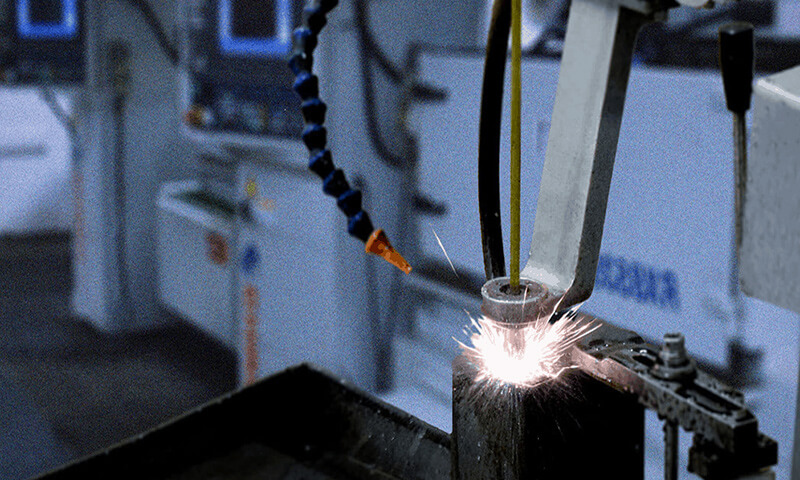
Suðu
- Cast stainless steels are generally suðuhæfur, but attention is needed:
-
- Match filler metal to base alloy or select a more corrosion-resistant filler to avoid galvanic effects.
- Preheat and interpass control for some martensitic grades to manage hardness and cracking risk.
- Post-weld solution annealing is often required for austenitic and duplex fillers to restore corrosion resistance and reduce residual stresses.
- Avoid slow cooling that can produce σ-phase.
Vinnsla
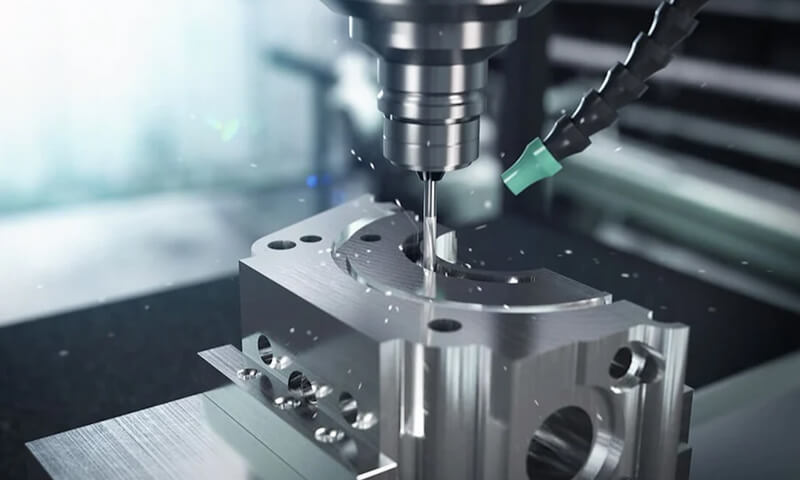
- Machinability varies: austenitic stainless steels work-harden and require sharp tooling and appropriate speeds; duplex grades cut better in some cases due to higher strength. Use appropriate coolant and cutting parameters.
Yfirborðsfrágangur
- Pickling and passivation restore chromium oxide and remove free iron contaminants.
Electrochemical polish or mechanical finishing improves cleanliness, reduces crevice sites and boosts corrosion resistance.
11. Efnahagsleg, lifecycle and sustainability considerations
- Kostnaður: cast stainless steel raw material cost is higher than carbon steel and aluminum, and casting requires higher melting temperatures and refractory costs.
Samt, the life extension and reduced maintenance in corrosive environments can justify the premium. - Lífsferill: long service life in corrosive environments, lower replacement frequency and recyclability (stainless scrap value is high) improve lifecycle economics.
- Sjálfbærni: stainless alloys contain strategically important elements (Cr, In, Mo.); responsible sourcing and recycling are essential.
Energy for initial production is high, but recycling stainless significantly reduces embodied energy.
12. Samanburðargreining: Cast Stainless Steel vs. Competitors
| Eign / Þátt | Cast Stainless Steel (dæmigert) | Steypt ál (A356-T6) | Steypujárn (Grátt / Hertogar) | Cast Nickel Alloys (T.d., Inconel cast grades) |
| Þéttleiki | 7.7–8.1 g·cm⁻³ | 2.65–2.80 g·cm⁻³ | 6.8–7.3 g·cm⁻³ | 8.0–8.9 g·cm⁻³ |
| Typical UTS (eins og steypt) | Austenitic: 350–650 MPa; Tvíhliða: 600–900 MPa | 250–320 MPa | Grátt: 150-300 MPa; Hertogar: 350–600 MPa | 600–1200+ MPa |
| Typical Yield Strength | 150–700 MPa (duplex high) | 180–260 MPa | Gray low; Hertogar: 200–450 MPa | 300–900 MPa |
| Lenging | Austenitic: 20–40%; Tvíhliða: 10–25% | 3–12% | Grátt: 1–10%; Hertogar: 5–18% | 5–40% (málmblöndu háð) |
| Hörku (Hb) | 150–280 HB | 70–110 HB | Grátt: 120–250 HB; Hertogar: 160–300 HB | 200–400 HB |
Hitaleiðni |
10–25 W/m·K | 100–180 W/m·K | 35–55 W/m·K | 10–40 W/m·K |
| Tæringarþol | Framúrskarandi (grade-dependent) | Gott (oxide film; drops in chlorides) | Aumingja (rusts rapidly unless coated) | Framúrskarandi even in extreme chemical or high-temp environments |
| Afköst við háan hita | Gott; depends on alloy (duplex/austenitic vary) | Limited above ~150–200 °C | Miðlungs; some grades tolerate higher temps | Framúrskarandi (hannað fyrir >600–1000 °C service) |
| Castability (margbreytileika, þunnar veggir) | Gott; high melting temp but versatile | Framúrskarandi (yfirburða vökva) | Gott (sand-cast friendly) | Miðlungs; more difficult; high melting temp |
| Porosity / Fatigue Sensitivity | Miðlungs; HIP/HT improves | Miðlungs; porosity varies by process | Gray low fatigue; ductile better | Low when vacuum-cast or HIP’d |
| Vélhæfni | Fair to poor (work-hardening in some grades) | Framúrskarandi | Fair | Aumingja (Erfitt, tool-wear intensive) |
Suðuhæfni / Repairability |
Generally weldable with procedures | Good with proper filler | Ductile weldable; gray needs care | Weldable but costly & procedure-sensitive |
| Dæmigert forrit | Dælur, lokar, Marine, Efni, matur/lyf | Húsnæði, Bifreiðar hlutar, Hitaskipti | Vélar, rör, vélarblokkir, heavy bases | Hverfla, jarðolíukljúfar, extreme corrosion/high-temp parts |
| Relative Material & Processing Cost | High | Miðlungs | Lágt | Mjög hátt |
| Lykilkostir | Excellent corrosion + góður vélrænn styrkur; wide grade range | Létt, good thermal performance, Lágmarkskostnaður | Lágmarkskostnaður, good damping (gray) and good strength (Hertogar) | Extreme corrosion + high-temp capability |
| Helstu takmarkanir | Kostnaður, bráðna hreinleika, requires proper HT | Lower stiffness & Þreytustyrkur; galvanic risk | Þungt; corrodes unless coated | Very expensive; specialty casting processes |
13. Ályktanir
Cast stainless steel occupies a unique and strategically important position among structural and corrosion-resistant casting materials.
A single property does not define its value, but by the synergistic combination of corrosion resistance, vélrænn styrkur, hitaþol, versatility in alloy design, and compatibility with complex casting geometries.
When evaluated across performance, Áreiðanleiki, and lifecycle metrics, cast stainless steel consistently proves to be a high-performance solution for demanding industrial environments.
Á heildina litið, cast stainless steel stands out as a high-integrity, fjölhæfur, and reliable material choice for industries requiring corrosion resistance, mechanical durability, and precision castability.
Algengar spurningar
Is cast stainless as corrosion-resistant as wrought stainless?
Það getur verið, but only if the casting chemistry, microstructure and heat treatment meet the same standards.
Castings have more opportunity for segregation and precipitates; solution anneal and rapid quench are often required to restore full corrosion resistance.
How do I avoid sigma phase in castings?
Avoid long holds between ~600–900 °C; design heat treatments to solution anneal and quench, and select alloys less prone to sigma (T.d., balanced duplex chemistries) for hostile thermal histories.
Which cast stainless should I pick for seawater service?
High-PREN duplex alloys or specific super-austenitics (hærri mo, N) are typically preferred. 316/316L may be inadequate in splash zones or where oxygenated seawater flows at high velocity.
Are cast stainless components weldable on site?
Já, but welding may locally alter metallurgical balance. Post-weld heat treatment or passivation may be needed to restore corrosion resistance near welds.
What casting method gives the best integrity for critical parts?
Miðflótta steypu (for cylindrical parts), investment/precision casting (for small complex parts) and vacuum or controlled-atmosphere mold casting combined with HIP provide the highest integrity and lowest porosity.
Is cast stainless steel suitable for high-temperature applications?
Austenitic einkunnir (CF8, CF3M) are usable up to 870°C; Tvíhliða einkunnir (2205) up to 315°C.
Fyrir hitastig >870° C., use heat-resistant cast stainless steels (T.d., HK40, með 25% Cr, 20% In) or nickel alloys.