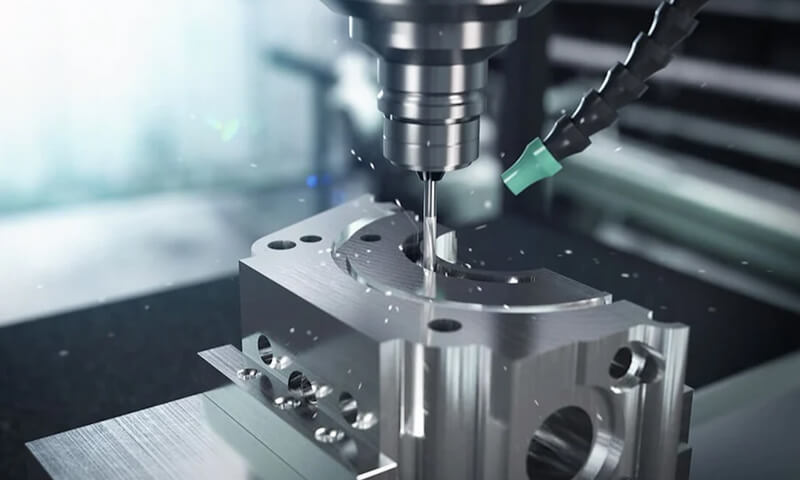
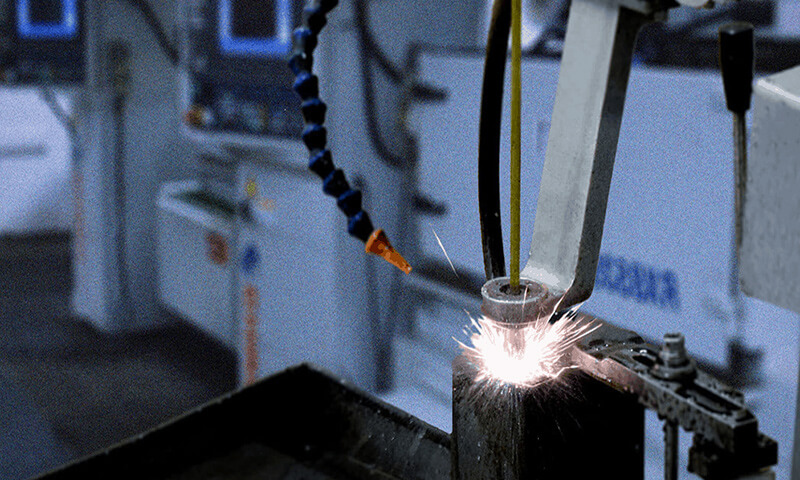
रेत कास्टिंग हेवी-ड्यूटी घटक उत्पादन की रीढ़ है, लगभग असीमित ज्यामितीय स्वतंत्रता के साथ कम टूलींग लागत का संयोजन.
Among cast alloys, कार्बन स्टील (with carbon below 0.30 भार%) stands out for delivering toughness, ताकत, and weldability in parts ranging from small pump housings to multi-ton gearbox cases.
In this comprehensive review, we explore carbon steel sand casting from its metallurgical roots through process steps, design practices, और गुणवत्ता नियंत्रण.
2. What Is Carbon Steel Sand Casting?
में carbon steel sand casting, foundries pour molten carbon steel—defined by 0.05–0.30 wt% carbon—into molds formed from unbonded or bonded sand.
Unlike higher-alloy steels, carbon steel offers a delicate balance का ताकत, बेरहमी, मशीन की, और जुड़ने की योग्यता, all at a lower cost per kilogram.
इसके अतिरिक्त, sand-casting tooling budgets start as low as USD 500 for simple patterns, enabling economical production of prototypes and one-off parts, as well as batch runs into the tens of thousands of units.

3. धातुकर्म नींव
A robust understanding of carbon steel’s metallurgy underpins every successful sand-casting application.
विशेष रूप से, the interplay of कार्बन सामग्री, silicon levels, and minor मिश्रधातु तत्व dictates fluidity, shrinkage behavior,
and the as-cast microstructure, each of which influences mechanical performance and defect propensity.
कार्बन & Steel Classification
कार्बन स्टील्स fall into three broad categories based on their weight-percent carbon:
- Low-Carbon Steels (≤ 0.15 % सी): Yield ultimate tensile strengths (संघ राज्य क्षेत्रों) का 350-450 एमपीए and elongations exceeding 20 %, making them highly ductile and weldable.
- Medium-Carbon Steels (0.15-0.30 % सी): Offer UTS of 450-550 एमपीए with elongations of 10-15 %, balancing strength and toughness.
- उच्च कार्बन स्टील्स (> 0.30 % सी): Exhibit UTS above 600 एमपीए, but their as-cast brittleness limits widespread use in sand casting.
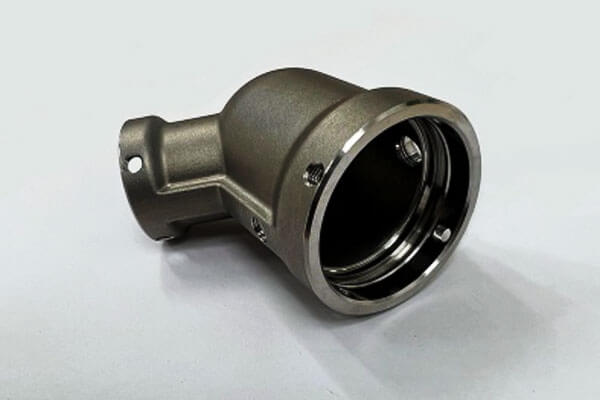
Common cast grades include ASTM A216 WCB (0.24–0.27 % सी, UTS ~ 415 एमपीए), ASTM A27 (0.23–0.29 % सी, UTS ~ 345 एमपीए), and DIN GS-42 (0.38–0.45 % सी, UTS ~ 520 एमपीए).
These grades illustrate how subtle shifts in carbon content translate to distinct strength and ductility profiles.
Silicon’s Role in Fluidity & संकुचन
सिलिकॉन, typically present at 1.8–2.2 %, performs a dual function:
- Fluidity Enhancement: प्रत्येक 0.5 % increase in Si can improve the molten steel’s fluidity by up to 12 %, ensuring more complete mold filling and finer detail reproduction.
- Shrinkage Control: Silicon promotes graphitization during solidification, reducing volumetric shrinkage porosity by approximately 15 % compared to low-Si alloys.
फलस्वरूप, foundries often target silicon levels near the upper range to minimize internal voids and improve surface finish.
Alloying Additions for Specialized Properties
Beyond carbon and silicon, मैंगनीज, क्रोमियम, और मोलिब्डेनम tailor performance for demanding environments:
- मैंगनीज (0.6-1.0 %): डीऑक्सीडाइज़र के रूप में कार्य करता है, refines grain size, and boosts tensile strength by up to 20 % without severely compromising toughness.
- क्रोमियम (≤ 0.5 %): Increases hardenability and wear resistance, especially valuable in components subject to abrasive media.
- मोलिब्डेनम (≤ 0.3 %): Elevates high-temperature strength and creep resistance, making it indispensable in parts like exhaust manifolds and steam-trap bodies.
As-Cast Microstructure
As the molten steel cools in a sand mold, it solidifies into a ferrite–pearlite मैट्रिक्स:
- फेराइट (कोमल, ड्यूक) forms first at temperatures just below the liquidus, providing the foundation for toughness.
- पर्लाइट (lamellar cementite–ferrite) emerges at lower temperatures, imparting hardness and wear resistance.
Typical sand-cast cooling rates (1–5 °C/s) yield a ferrite fraction of 40–60 %, with pearlite comprising the balance.
मोटे वर्गों में, slower cooling can increase pearlite content, raising hardness by up to 15 मॉडिफ़ाइड अमेरिकन प्लान but reducing elongation by 2-3 %.
4. Sand-Casting Process Overview
Sand casting transforms molten carbon steel into complex shapes by using expendable sand molds.
नीचे, we detail each major step—pattern and coremaking, mold construction, pouring and solidification, and shake-out with cleaning—while highlighting data-driven best practices.
Pattern and Coremaking
पहला और महत्वपूर्ण, pattern accuracy dictates as-cast tolerances. Foundries typically use:
पैटर्न सामग्री:
- CNC-machined aluminum रखती है ±0.02 मिमी आयामी सटीकता.
- Wood patterns (for low volumes) प्राप्त करना ±0.2 मिमी.
- 3D-printed resin patterns eliminate lead times on complex shapes.
Core Production:
- Green-sand cores combine 85–90 % सिलिका रेत, 5-7 % बेंटोनाइट मिट्टी, and 2–3 % पानी, then compact under 4–6 bar air pressure.
- No-Bake resin cores use phenolic or furan binders, offering core strengths of 4-6 एमपीए with permeability above 300 Gas m³/m²·min.
Through precise pattern and coremaking, foundries minimize dimensional variation and internal defects.
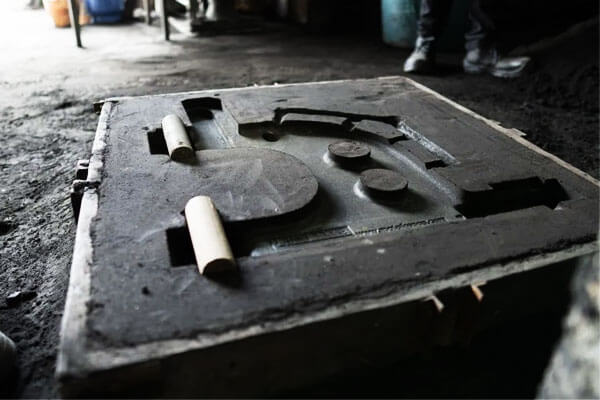
Mold Construction
Mold Composition:
- 90 % सिलिका रेत, 5-7 % मिट्टी, और 2-3 % water for green-sand molds.
- रासायनिक रूप से बंधी रेत (उदा।, furan resin) reduce moisture to < 0.5 %, tightening tolerances to CT9 -CT12.
संघनन & कठोरता:
- लक्ष्य matrix hardness का 60–70 HA (Shore A) ensures mold integrity and consistent shrinkage.
- उचित भेद्यता (≥ 300 Gas m³/m²·min) prevents gas entrapment and porosity.
मोल्ड असेंबली:
- Engineers place cores in the cope and drag, using chaplets or core prints to maintain alignment within ± 0.5 मिमी.
- They apply parting coats (typically 0.1–0.3 mm thickness) to ease pattern release and improve surface finish.
By controlling sand properties and compaction, sand-casting molds consistently meet आईएसओ CT11 -CT14 क्षमताओं.
पपड़ी और जमना
With molds ready, foundries proceed:
Melt Preparation:
- Induction furnaces heat carbon steel to 1450-1550°C, holding for 5–10 minutes to homogenize chemistry.
- Foundry engineers deslag and adjust carbon and silicon to target composition (± 0.02 % सी, ± 0.05 % और).
गेटिंग & Riser Design:
- A well-balanced gate area (दरवाज़ा: runner ratio ~ 1:3) ensures laminar flow.
- रिसर्स sized at 10 % of casting volume feed shrinkage, usually located at the heaviest section to promote directional solidification.
शीतलन दर:
- Thin sections cool at 5–10 °C/s, favoring ferrite formation and finer grain sizes (~ 15 माइक्रोन).
- Thick walls cool at 1–3 °C/s; ठंड लगना (उदा।, copper inserts) accelerate local solidification by up to 50 %, reducing shrink porosity.
By combining precise melt control with optimized gating, foundries achieve sound, dimensionally consistent castings.
हिला दो, सफाई, and Fettling
अंत में, castings emerge from the mold:
हिला दो:
- Automated vibratory systems separate sand from metal within 5–10 minutes per batch.
Desanding & शॉट ब्लास्टिंग:
- High-pressure air or wheel-blast systems remove residual sand, achieving a base finish of रा 6-12 µm.
Fettling Operations:
- Workers grind or machine gate and riser stubs, trim flash, and blend transitions, typically removing 1–3 मिमी of stock to meet final dimensional tolerances.
Pre-Inspection:
- Castings undergo visual checks and dimensional spot-measurements (± 0.5 mm on critical features) before moving to full inspection.
Through systematic shake-out and cleaning, foundries prepare carbon steel castings for rigorous quality assurance and possible post-cast treatments.
5. Design for Sand Casting
Effective cast designs account for:
- मसौदा कोण (1-3°): Prevent pattern damage; tighter angles increase tool wear.
- Machining Stock (1–3 मिमी): Ensures final features fall within CT11–CT12 without rework.
- Contraction Allowance (1.0–1.3 mm/100 mm): Compensates for solidification shrink.
- समान दीवार की मोटाई (±10 mm): Avoids hot spots and internal stresses.
- फ़िललेट्स & त्रिज्या (> 1 मिमी): Curtail stress concentrations and streamline metal flow.
- Gating/Riser Placement: Align risers with thick sections to promote दिशात्मक ठोसकरण, reducing shrink porosity by 30 %.
6. Process Capability & Dimensional Control
Controlling dimensions and achieving repeatable tolerances in carbon steel sand casting remains both a challenge and a benchmark of foundry excellence.
Tolerance Grades in Sand Casting
Dimensional tolerance refers to the permissible limits of variation in a physical dimension of a cast component.
In sand casting, tolerances are most commonly classified under the आईएसओ 8062-3 मानक, which defines Casting Tolerance Grades (सीटी) से CT1 (most precise) को CT16 (least precise).
For carbon steel sand castings, the achievable tolerance grades typically fall within:
| कलाकारों के चुनाव की प्रक्रिया | ISO Tolerance Grade | Linear Dimensional Tolerance Range (मिमी) |
|---|---|---|
| हरी रेत | CT13 – CT14 | ±2.0 – ±3.5 mm (के लिए 100 mm dimension) |
| नॉट-रेत | CT11 – CT13 | ±1.0 – ±2.5 mm |
| शैल साँचा | CT8 – CT10 | ±0.6 – ±1.5 mm |
Key Factors Affecting Dimensional Precision
1. Sand Characteristics
- अनाज की सुन्दरता: Finer grains enhance detail reproduction and surface finish but reduce permeability and may affect mold integrity.
- Moisture & Binder Content: Improper sand mix ratios cause mold distortion or gas-related defects, leading to dimensional inconsistencies.
2. Mold Compaction
- Uniform compaction ensures consistent cavity dimensions. Inadequate ramming or vibration can cause localized wall collapse or variation.
3. पैटर्न सटीकता
- Pattern wear, थर्मल विरूपण, or manual carving can introduce errors. CNC-milled or 3D-printed patterns improve reproducibility.
4. Thermal Shrinkage
- Carbon steel typically contracts by 1.0% को 2.5% during solidification and cooling, depending on composition and geometry.
- Complex geometries may require differential shrinkage allowances.
5. धारा मोटाई
- Thin-walled areas cool faster and contract more uniformly.
- Thick sections may exhibit centerline shrinkage, हॉट स्पॉट, or warping if not properly risered or chilled.
Techniques for Improved Dimensional Control
To enhance casting precision and reduce post-machining requirements, modern foundries employ several strategies:
- Use of Rigid Molding Systems: Chemically bonded sand molds exhibit better dimensional stability than traditional green sand.
- Mold Pre-heating: Heating molds before pouring reduces temperature differentials and warping.
- Chill Placement: Strategically placed metal chills accelerate cooling in hot spots to reduce uneven contraction.
- Simulation Software: Solidification modeling and thermal simulation help predict and compensate for shrinkage and distortion in design.
Surface Finish Expectations
Surface roughness in sand-cast carbon steel is generally measured in आरए (माइक्रोन):
| Molding Process | विशिष्ट सतह खुरदरापन (आरए) |
|---|---|
| हरी रेत | 12 - 25 माइक्रोन |
| नॉट-रेत | 6 - 12 माइक्रोन |
| शैल मोल्डिंग | 3 - 6 माइक्रोन |
7. गुणवत्ता आश्वासन & परीक्षण
यांत्रिक परीक्षण
Foundries validate mechanical performance per:
- एएसटीएम ई8: Tensile strength and elongation.
- एएसटीएम ई23: Charpy V-notch impact toughness.
- रॉकवेल कठोरता (HRC 20–30): Measures surface hardness.
Non-Destructive Evaluation
We use:
- रेडियोग्राफ़: Detects internal porosity ≥ 2 मिमी.
- अल्ट्रासोनिक परीक्षण: Locates volumetric flaws ≥ 1 मिमी.
- चुंबकीय कण का निरीक्षण: Reveals surface cracks ≥ 0.5 मिमी.
सांख्यिकीय प्रक्रिया नियंत्रण
By tracking सीपी और सीपीके, foundries ensure Cpk ≥ 1.33 for critical dimensions.
पहला लेख निरीक्षण (फाई) confirms that initial castings meet DCTG requirements before full production runs.
8. कास्टिंग के बाद के उपचार
While the initial casting process defines the shape and general properties of carbon steel components,
Post-casting treatments play a critical role in enhancing mechanical performance, आयामी सटीकता, सतही गुणवत्ता, और दीर्घकालिक स्थायित्व.
These secondary operations are not merely refinements—they are essential steps that transform raw castings into high-performance industrial components capable of withstanding harsh service conditions.
गर्मी उपचार
Carbon steel castings often undergo a series of गर्मी उपचार to tailor their microstructure and improve mechanical properties.
The choice of treatment depends on the application requirements, desired hardness, लचीलापन, and internal stress state.
सामान्य
- प्रक्रिया: Heating to ~870–950 °C, इसके बाद वायु शीतलन होता है.
- उद्देश्य: अनाज की संरचना को परिष्कृत करता है, आंतरिक तनाव से राहत मिलती है, और मशीनीकरण में सुधार होता है.
- प्रभाव: Promotes a uniform ferrite-pearlite matrix with improved strength and toughness.
ठंडा करना और गर्म करना
- प्रक्रिया: तेजी से ठंडा होना (typically in oil or water) from the austenitizing temperature (~840–900 °C), followed by reheating to ~500–650 °C.
- उद्देश्य: Increases hardness and tensile strength while controlling brittleness.
- विशिष्ट अनुप्रयोग: Wear-resistant components and structural parts subjected to impact.
एनीलिंग
- प्रक्रिया: Slow cooling from ~800–850 °C.
- उद्देश्य: Softens the material for easier machining and improves dimensional stability.
- प्रभाव: Produces a coarse ferritic structure with reduced hardness and strength.
तनाव से राहत
- तापमान की रेंज: 540-650 डिग्री सेल्सियस.
- उद्देश्य: Reduces residual stresses from uneven solidification or machining without significantly altering microstructure.
डेटा प्वाइंट: ASTM A216 WCB castings, a common low-carbon steel grade, typically reach tensile strengths of 485–655 MPa after normalizing and tempering.
Surface Enhancement Methods
Surface quality is crucial in environments exposed to wear, जंग, or friction. Post-casting surface treatments not only improve aesthetics but also significantly extend component life.
Shot Blasting and Shot Peening
- उद्देश्य: Removes residual sand, पैमाना, और ऑक्साइड; improves fatigue life by inducing compressive surface stress.
- सतह खुरदरापन: Reduced to 6–12 µm Ra, depending on media and intensity.
Coatings and चढ़ाना
- ज़िंक की परत (galvanizing): संक्षारण प्रतिरोध को बढ़ाता है, especially for outdoor or marine use.
- Phosphate and Black Oxide Coatings: Provide lubrication and minimal rust protection.
- Chrome or Nickel Plating: Used in specialized applications for enhanced surface hardness or chemical resistance.
चित्रकारी और पाउडर कोटिंग
- Common for non-critical surfaces, providing both corrosion resistance and visual appeal.
- Typically applied after machining to preserve dimensional tolerances.
CNC Machining of Cast Carbon Steel
Due to the casting skin, सूक्ष्म संरचनात्मक विषमता, and potential residual stresses, cast carbon steel requires carefully selected सीएनसी मशीनिंग strategies to maintain tolerance and avoid tool wear.

मशीनिंग संबंधी विचार:
- टूलिंग: Use of carbide or coated tools for improved wear resistance.
- Feeds and Speeds: काटने की गति कम (60–120 m/min) and moderate feeds to reduce chatter and heat generation.
- Coolant Use: Emulsified cutting fluids are recommended for thermal control and chip evacuation.
- भत्ता: Typically 1–3 mm of machining stock is left on cast surfaces for finish machining.
9. Key Industrial Applications
तेल & गैस उद्योग
- वाल्व बॉडीज
- पम्प आवास
- Flanges and Fittings
Heavy Equipment Manufacturing
- Gearbox Housings
- Track Links and Idlers
- प्रतिभार
Infrastructure Development
- मैनहोल कवर और फ्रेम
- Railway Components
- Water and Sewage System Parts
मोटर वाहन और परिवहन
- इंजन घटक
- चेसिस और निलंबन भागों
- Truck and Trailer Parts
विद्युत उत्पादन
- टरबाइन आवरण
- दबाव वाहिकाओं
- Heat Exchanger Components
समुद्री और जहाज निर्माण
- Propeller Shafts and Bearings
- Deck Machinery Components
- Hull Fittings
नवीकरणीय ऊर्जा
- Wind Turbine Hubs and Frames
- Hydroelectric Turbine Components
- Solar Mounting Structures
10. Common Carbon Steel Casting Grades (वैश्विक अवलोकन)
| Standard Body | Standard Number | श्रेणी | विशिष्ट उपयोग का मामला | नोट |
|---|---|---|---|---|
| एएसटीएम (यूएसए) | एएसटीएम ए216 | डब्ल्यूसीए, डब्ल्यूसीबी, डब्ल्यूसीसी | वाल्व निकाय, पंप आवास | Widely used for pressure-containing castings |
| ASTM A27 | 60-30, 65-35, 70-36, 80-50 | General engineering applications | For general-purpose steel castings | |
| एएसटीएम ए148 | 80-50, 90-60, 105-85 | High-strength mechanical parts | Often used in gears, केन्द्रों, and structural uses | |
| एएसटीएम ए352 | एलसीए, एलसीबी, एल सी सी | Low-temp service (क्रायोजेनिक) | Suitable for low-temperature pressure systems | |
| में (यूरोप) | में 10213 | GP240GH, GP280GH | Pressure vessels and fittings | Heat-resistant steel casting grades |
| में 10293 | GS-38, GS-45, GS-52 | Mechanical engineering | General-purpose cast steels | |
| से (जर्मनी) | से 1681 | GS-C25, GS-C35 | Construction and machinery parts | Used in DIN-standard castings |
| जीबी (चीन) | जीबी/टी 11352 | ZG270-500, ZG310-570 | Machinery and industrial components | उच्च शक्ति और कठोरता |
| जीबी/टी 5676 | ZG16Mn, ZG35 | Structural use, हाइड्रोलिक सिस्टम | अच्छी वेल्डेबिलिटी और मशीनेबिलिटी | |
| वह (जापान) | जेआईएस जी5502 | SC410, SC450, SC480, SC520 | ऑटोमोटिव, मैकेनिकल इंजीनियरिंग | Carbon and alloy steel casting grades |
| बी एस (यूके) | बी एस 3100 | ए 1, ए2, ए4 | पुलों, रेलवे, समुद्री अनुप्रयोग | Standardized mechanical steel casting grades |
| गोस्ट (Russia) | गोस्ट 977-88 | 20एल, 25एल, 35एल, 45एल | General cast components | Used in CIS countries for industrial parts |
| है (भारत) | है 1030 | 230-450 डब्ल्यू, 280-520 डब्ल्यू | Engineering castings | Standard for general-purpose carbon steel |
11. यह’s Sand Casting Capabilities
As a trusted name in precision metalcasting, डेज़ फाउंड्री brings decades of experience and innovation to the carbon steel sand casting industry.
Combining advanced facilities, robust engineering practices, and rigorous quality assurance,
यह has established itself as a strategic partner for demanding global clients across the oil & गैस, परिवहन, ऊर्जा, and heavy equipment sectors.
Foundry Infrastructure & तकनीकी
यह operates fully integrated sand casting lines designed for medium to large-scale castings से लेकर 2 kg to over 5,000 कुंठ. Our facilities feature:
- Automated molding lines for high repeatability and consistent dimensional accuracy
- Flexible mold types: हरी रेत, furan no-bake, and resin-bonded systems
- 3डी-मुद्रित पैटर्न and CNC-machined tooling for rapid prototyping and complex geometries
- On-site melting capacity with electric arc and induction furnaces supporting both carbon and low-alloy steels
Carbon Steel Grades Offered
We produce a broad range of carbon steel grades, tailored for both structural and wear-critical applications, शामिल:
- एएसटीएम ए216 डब्ल्यूसीबी – Pressure-retaining components, general-purpose carbon steel
- एएसटीएम ए27 ग्रेड 60-30 / 70-36 – General industrial use, low to medium strength
- एएसटीएम ए148 105-85 – High-strength casting for wear and fatigue resistance
- Customized grades with alloying elements (करोड़, एमओ, एम.एन., में) to meet client specifications
All melt compositions are verified using spectrometric analysis and controlled to within tight tolerances for consistency.
आयामी परिशुद्धता & प्रक्रिया नियंत्रण
यह casts to tolerance grades between CT10 - CT13, with achievable surface finishes of रा 6-12 µm, depending on mold process and part complexity.
Dimensional accuracy is enhanced through:
- Controlled mold compaction and moisture regulation
- Process simulations using मैग्मासॉफ्ट® और प्रोकास्ट गेटिंग के लिए, रिसर, and solidification optimization
- In-process monitoring and सांख्यिकीय प्रक्रिया नियंत्रण (छठे वेतन आयोग) to minimize casting variation
For mission-critical components, CT scanning और सीएमएम निरीक्षण validate geometrical conformance and internal integrity.
Post-Casting Services
To deliver ready-to-assemble components, यह offers a comprehensive suite of finishing and post-processing services:
- Heat treatment in-house: सामान्य, annealing, शमन, और तड़का लगाना
- Machining to tight tolerances with CNC turning, पिसाई, और ड्रिलिंग
- सतह की सुरक्षा: शॉट ब्लास्टिंग, चित्रकारी, galvanizing, and custom coatings
- गैर विनाशकारी परीक्षण (एनडीटी): अल्ट्रासोनिक, रेडियोग्राफिक, और चुंबकीय कण निरीक्षण
12. निष्कर्ष
Carbon steel sand casting delivers unmatched value for heavy-duty, large-volume components.
By integrating sound metallurgical practices, robust process controls, design-for-castability, and rigorous QA, manufacturers can produce durable parts that meet tight functional demands at competitive cost.
यह यदि आपको उच्च गुणवत्ता की आवश्यकता है तो यह आपकी विनिर्माण आवश्यकताओं के लिए एकदम सही विकल्प है carbon steel sand casting services.