
1. Introduction
Forging is one of the oldest and most vital metalworking techniques, integral to creating high-strength,
durable components used across industries such as automotive, aerospace, heavy machinery, and renewable energy.
This manufacturing process transforms raw metal into precisely shaped parts by applying compressive forces, often at high temperatures.
Forging produces superior mechanical properties in the material, making it essential for applications that demand strength, toughness, and reliability.
In this blog, we will explore the different types of forging methods, their advantages, applications,
and how they contribute to the continued evolution of industries focused on performance and sustainability.
2. What is Forging?
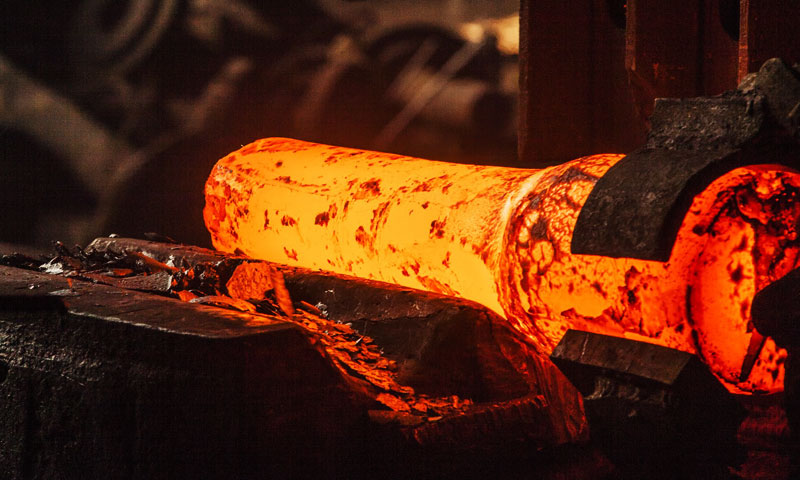
Forging is the process of shaping metal using compressive forces, typically by hammering, pressing, or rolling.
It is distinct from other metalworking processes like casting, welding, or machining in that it improves the internal structure of the material, making it more resistant to stress, wear, and fatigue.
Forged parts typically possess higher strength and durability than their counterparts created using casting or machining methods due to the alignment of the metal’s grain structure during the forging process.

Process Overview:
The forging process begins with the heating of the metal to a specific temperature, where it becomes malleable.
This allows for easier shaping through mechanical forces, often through the use of a hammer, press, or rollers.
Once the metal has been shaped to the desired form, it undergoes cooling, which solidifies the material and locks in the improved mechanical properties.
The process may involve further finishing techniques, such as trimming, grinding, or heat treatment, to achieve the final product.
3. Types of Forging
There are various types of forging methods, each suited for different applications, material properties, and part requirements. Below are the primary forging techniques:
Open Die Forging
Definition: Open die forging, also known as free forging, is one of the simplest and oldest types of forging.
It involves shaping metal between two flat dies that do not completely enclose the material. The metal is repeatedly hammered or pressed to form the desired shape.

Process Overview:
- The workpiece is placed between two dies, one stationary and the other movable.
- The metal is heated to the desired temperature and then subjected to compressive force.
- The material is hammered or pressed, forcing it to flow into the shape dictated by the die.
- Open die forging is often used for large and heavy components where high precision is not as critical.
Applications:
- Large shafts, bars, and billets are used in industries such as aerospace, construction, and heavy machinery.
- Components such as rings, cylinders, and structural parts for manufacturing equipment.
Advantages:
- Highly versatile and adaptable to a wide range of materials.
- Suitable for producing large components that require toughness and strength.
Disadvantages:
- Lower precision and finish compared to closed die forging.
- Not ideal for high-volume, small-parts manufacturing.
Closed Die Forging (Impression Die Forging)
Definition: Closed die forging, also known as impression die forging, involves placing a heated workpiece into a die that completely encloses the material.
The die is then pressed or hammered to shape the part with high precision. This method is typically used for producing complex and high-volume components.

Process Overview:
- The metal is heated and placed inside a cavity (die) that is shaped to the final dimensions.
- The top die is pressed onto the workpiece, causing it to fill the die cavity and take on the desired shape.
- After the forging process, the excess material (flash) is removed.
Applications:
- Automotive components like gears, crankshafts, and connecting rods.
- Aerospace parts like turbine blades, brackets, and housings.
- Industrial components such as pumps, valves, and fasteners.
Advantages:
- High precision and excellent surface finish.
- Ability to produce complex shapes with tight tolerances.
- Suitable for high-volume production of parts.
Disadvantages:
- Higher initial tooling cost due to the need for intricate dies.
- Limited to parts that fit within the die’s constraints, making it unsuitable for larger components.
Ring Rolling
Definition: Ring rolling is a specialized forging method used to manufacture circular parts, such as rings, wheels, and hollow components.
The process uses a rolling technique to form the metal into a ring shape by applying compressive forces to the workpiece as it passes through a pair of rollers.

Process Overview:
- A metal preform is heated and placed between two rollers.
- The rollers apply radial and axial forces to the preform, causing it to expand and form a ring shape.
- The process can be controlled to produce components with specific thicknesses, diameters, and material properties.
Applications:
- Aerospace components like turbine rings, flanges, and seals.
- Automotive parts such as wheel rims and brake components.
- Industrial equipment and machinery require ring-shaped components.
Advantages:
- Efficient for producing hollow, ring-shaped parts with high strength.
- Suitable for high-stress applications like aerospace and heavy-duty machinery.
Disadvantages:
- Limited to producing circular parts, making it unsuitable for more complex geometries.
- Requires specialized equipment and tooling.
Upset Forging
Definition: Upset forging involves compressing a metal workpiece to increase its cross-sectional area.
The process usually involves applying force to both ends of the workpiece to “upset” or enlarge the center, forming a thicker section.
This type of forging is often used to create components with a thickened midsection, like bolts and nuts.

Process Overview:
- The workpiece is heated and positioned between two dies.
- Compressive force is applied to the ends of the workpiece, causing the middle to expand.
- Upset forging is typically used for cylindrical parts with thickened portions.
Applications:
- Fasteners like bolts, nuts, and screws.
- Hydraulic fittings and other connectors require a thickened section for strength.
Advantages:
- Cost-effective for producing parts with thick sections in the middle.
- Suitable for high-volume production with relatively simple shapes.
Disadvantages:
- Limited to certain shapes, typically cylindrical or parts with thickened sections.
- Not suitable for intricate or highly detailed parts.
Precision Forging (Near-Net-Shape Forging)
Definition: Precision forging, also called near-net-shape forging, aims to create parts with near-final dimensions and minimal material waste.
This method uses advanced techniques such as high-pressure presses and precise dies to achieve parts with excellent tolerances, reducing the need for extensive post-processing.
Process Overview:
- The material is heated and placed in a precision die that shapes it to the near-final form.
- The process uses higher pressures and tighter controls to achieve accurate dimensions and surface finish.
- Precision forging minimizes flash and excess material, making it more efficient and eco-friendly.
Applications:
- Aerospace and automotive parts that require high precision, like aircraft turbine components.
- High-performance components in electronics and medical devices.
Advantages:
- Minimizes material waste and reduces the need for additional machining.
- Offers high dimensional accuracy and a better surface finish.
Disadvantages:
- Higher tooling and equipment costs due to precision requirements.
- Limited to parts that can be formed with precision dies.
4. Key Benefits of Forging
The forging process offers numerous advantages, making it the go-to choice for creating high-performance, durable, and reliable parts.
Strength and Durability
Improved Mechanical Properties: One of the primary benefits of forging is its ability to enhance the mechanical properties of metals.
By applying compressive forces during the forging process, the grain structure of the material is aligned in a way that enhances the strength of the final component.
Unlike cast parts, which often have irregular grain structures and weak points, forged parts have a uniform grain flow, providing superior tensile strength, impact resistance, and durability.
This results in parts that can withstand high stress, wear, and extreme conditions, making them ideal for heavy-duty applications.
Applications:
- Automotive components like crankshafts and connecting rods that need to endure high-stress conditions.
- Aerospace parts like turbine blades and gears must handle extreme loads and temperatures.
Uniform Grain Structure
Enhanced Material Integrity: During the forging process, metal undergoes deformation, which results in a refined and uniform grain structure.
This is especially important for components that require high strength and toughness.
The aligned grain flow gives forged parts better resistance to fatigue, fractures, and crack propagation.
In contrast to other methods like casting, which can introduce air pockets or weak points,
forging enhances the integrity of the material, making it much stronger and more reliable in critical applications.
Applications:
- Gears, axles, and shafts, benefit from improved toughness and the ability to withstand repeated loading.
Versatility in Design and Complex Shapes
Adaptable to Different Geometries: Forging offers a high level of flexibility, making it suitable for both simple and complex shapes.
It allows for the production of parts with intricate geometries and specific design features,
such as holes, grooves, and thin sections, that would be difficult or expensive to achieve with other manufacturing methods.
This versatility makes forging a popular choice across a wide range of industries, from automotive to aerospace.
Applications:
- Automotive parts like suspension components, wheel rims, and chassis require both strength and precise geometry.
- Aerospace parts like turbine blades and compressor disks need complex shapes and high strength.
Cost Efficiency in High-Volume Production
Reduced Material Waste: Although forging requires specialized dies and equipment, it can be cost-effective in high-volume production runs.
The material used in forging is typically more efficient than casting or machining, as it requires less waste and scrap.
Additionally, forging minimizes the need for extensive post-processing, such as machining, as the parts come out with near-net shapes.
This makes it an attractive option for manufacturers looking to reduce costs while maintaining high-quality standards.
Applications:
- Fasteners, nuts, and bolts that are mass-produced for industries like automotive, construction, and electronics.
- Structural components in industries like construction and heavy machinery where parts are produced in large quantities.
Improved Fatigue Resistance
Longer Lifespan for Components: Forged parts exhibit superior resistance to fatigue due to their grain structure, which allows them to perform well under cyclic loading.
Fatigue resistance is crucial for components that will experience repeated stress over their operational lifetime, such as gears, shafts, and springs.
By aligning the grain flow in the direction of the stress, forged parts can endure much longer without failure,
reducing the likelihood of catastrophic failure and extending the operational life of machinery and equipment.
Applications:
- Automotive suspension systems that experience repeated stress during driving.
- Aircraft components like landing gears and turbine blades face continuous dynamic loads.
Reduced Need for Post-Processing
Efficient Production with Fewer Steps: Forging processes generally require less post-processing compared to other manufacturing methods.
Since the forging process already provides a high level of precision and a smooth surface finish, the need for additional machining is significantly reduced.
This leads to lower overall production costs and shorter lead times.
The reduction in post-processing also reduces the risk of introducing defects or inconsistencies, ensuring that the parts maintain their desired mechanical properties.
Applications:
- Structural components such as beams, columns, and brackets where only minor finishing steps are needed.
- Aerospace and military parts that require minimal machining and high precision.
Minimal Distortion and Higher Precision
Better Control over Dimensions: The forging process provides tighter control over the dimensions of the final part,
ensuring that parts meet the required specifications with minimal variation.
Compared to other techniques, such as casting, forging reduces the risk of warping, dimensional distortion, or voids in the material.
This high level of precision is crucial for parts used in industries where tolerances are critical, such as aerospace and medical devices.
Applications:
- Precision parts like turbine components and ball bearings are used in high-performance machinery.
- Medical equipment such as surgical instruments require consistent dimensions and high reliability.
5. Common Materials Used in Forging
Forging is a versatile process that can be applied to various materials, each chosen based on the specific requirements of the final product.

Below are some of the most commonly forged materials and the unique advantages they offer:
Steel
Steel is the most commonly used material in forging due to its strength, toughness, and versatility.
It can be alloyed with various elements like carbon, chromium, nickel, and molybdenum to improve its properties, depending on the application.
Steel alloys are used to create components for the automotive, aerospace, and construction industries. Some common types of steel used in forging include:
- Carbon Steel: Known for its excellent strength-to-weight ratio, carbon steel is used in high-stress applications like gears, crankshafts, and connecting rods.
- Alloy Steel: This steel has additional alloying elements to enhance properties such as corrosion resistance, heat resistance, and tensile strength, commonly used in heavy-duty machinery.
- Stainless Steel: With high corrosion resistance, stainless steel is often used for components that will be exposed to harsh environments, such as in marine, food processing, and pharmaceutical industries.
Titanium
Titanium and its alloys are highly valued in applications that demand exceptional strength-to-weight ratios, especially in aerospace, medical, and high-performance automotive applications.
They also offer excellent resistance to corrosion, making them suitable for harsh environments like chemical processing or marine industries.
Forged titanium parts include turbine blades, aircraft frames, and biomedical implants.
Aluminum
Aluminum is lightweight, corrosion-resistant, and relatively easy to forge, making it ideal for applications where weight reduction is essential.
Common applications for forged aluminum include parts for the automotive, aerospace, and transportation industries.
Forged aluminum components, such as wheels, frames, and structural supports, are prized for their combination of strength and low mass.
Copper and Copper Alloys
Copper is an excellent conductor of electricity and heat, making it ideal for applications in electrical components and heat exchangers.
Such as bronze and brass, are used in applications requiring good corrosion resistance, such as marine hardware, valves, and bearings.
Forged copper parts are commonly used in electrical connectors, fittings, and radiators.
Nickel Alloys
Nickel alloys, such as Inconel and Monel, are known for their high strength and resistance to high temperatures, oxidation, and corrosion.
These alloys are often used in extreme environments, such as gas turbines, chemical processing, and oil and gas industries.
Forged nickel alloy components include turbine blades, combustion chambers, and high-pressure valves.
Brass
Brass, an alloy of copper and zinc, is forged for use in a variety of components requiring corrosion resistance, machinability, and aesthetic appeal.
It’s commonly used for electrical connectors, plumbing fittings, locks, and decorative items. Brass forging also finds applications in the automotive and marine industries.
Magnesium Alloys
Magnesium is the lightest structural metal, and its alloys are forged for applications where weight reduction is crucial.
They are used in aerospace, automotive, and military applications to create lightweight components such as transmission cases, wheels, and aircraft frames.
Despite being lighter than aluminum, magnesium alloys maintain high strength and good thermal conductivity.
6. Forging Applications
Automotive Industry:
Forging plays a vital role in the automotive industry, where high-strength components
like crankshafts, gears, connecting rods, and suspension components are crucial for vehicle performance.
Forged parts are essential in ensuring that vehicles perform optimally under extreme conditions, offering durability and reliability in demanding applications.

Aerospace:
In aerospace, the reliability of parts is paramount, and forging is crucial for producing high-performance components such as turbine blades, landing gear, and structural elements.
Forging enhances the material’s resistance to extreme temperatures, stress, and fatigue, making it ideal for critical applications where failure is not an option.
Oil and Gas:
Forged parts in the oil and gas industry, such as valves, pump shafts, and flanges, must withstand extreme pressures and corrosive environments.
Forging ensures that these components are durable and resistant to wear, providing critical performance in harsh conditions.
Heavy Machinery and Construction:
Components used in heavy machinery and construction equipment, such as gears, axles, and bearings, require the strength and durability that only forging can provide.
These components must be able to handle high levels of stress and wear, making forged materials essential for reliable and long-lasting equipment.
Renewable Energy:
Forging is making a significant impact in the renewable energy sector,
where components like turbine shafts, bearings, and fasteners need to withstand constant motion and extreme environmental conditions.
Forged parts ensure the durability and reliability of wind and solar energy infrastructure, helping to improve performance and sustainability.
7. Advanced Forging Techniques
Precision Forging:
Precision forging uses high-tech equipment to create parts with tight tolerances and intricate geometries.
This technique is used for producing complex parts that require high accuracy, such as those used in aerospace and medical devices.
Precision forging minimizes waste and reduces the need for further machining.
Isothermal Forging:
Isothermal forging is an advanced method that allows for the production of high-performance alloys.
This technique involves maintaining a constant temperature during the forging process,
which helps preserve the material’s integrity and properties, making it ideal for applications in the aerospace and automotive industries.
Superplastic Forming:
Superplastic forming is used to shape materials with superior plasticity.
By heating the material to specific temperatures, it becomes extremely malleable, allowing for the creation of complex shapes with minimal tooling.
This technique is widely used in industries requiring intricate designs and lightweight materials, such as aerospace.
8. Environmental Considerations in Forging
Energy Efficiency:
Modern forging methods focus on reducing energy consumption by optimizing furnace operations,
improving heat recovery systems, and adopting more energy-efficient forging techniques.
As energy efficiency becomes increasingly important in industrial processes, forging is evolving to minimize its environmental footprint.
Recycling Metal:
The ability to recycle scrap metal is one of the significant environmental benefits of forging.
Unlike many other manufacturing methods, forging can reuse scrap from previous processes, reducing the need for new raw materials and contributing to sustainability efforts.
Reducing Waste:
Forging is a highly efficient process, with minimal waste generated compared to processes like casting or machining.
The ability to create complex parts with fewer steps and less material loss makes forging an environmentally friendly option.
9. Challenges and Limitations of Forging
Material Limitations:
Not all materials are suitable for forging. High-carbon steels, for example, can be difficult to forge, and some alloys may require specialized techniques.
Understanding the properties of materials before forging is crucial to achieving the desired results.
Tooling Costs:
The cost of tools and dies for forging can be high, particularly for intricate or complex parts.
However, these costs are often offset by the durability and reduced maintenance of the final product.
Size and Weight Restrictions:
While forging can accommodate parts of various sizes, extremely large or heavy components may not be suitable for the process due to equipment limitations.
10. Forging vs. Casting
Two of the most commonly used processes when manufacturing metal components are forging and casting.
While both techniques involve shaping metals to create components, their methods, benefits, and applications differ.
Below, we’ll compare these two processes in terms of their characteristics, advantages, and drawbacks.
| Factor | Forging | Casting |
|---|---|---|
| Process | Compressive forces shape metal at high temperatures. | Molten metal is poured into molds to solidify. |
| Material Properties | Enhances strength, toughness, and uniform grain structure. | May have porosity, weaker material, and inconsistent grain. |
| Strength & Durability | High tensile strength, and better fatigue resistance. | Weaker, especially for parts under high stress or repeated load. |
| Design Complexity | Better for simpler shapes; complex parts may require post-processing. | Excellent for intricate designs and complex shapes. |
| Cost & Production Time | Higher initial setup cost, but cost-effective for high-volume production. | Lower setup cost, but higher post-processing costs. |
| Applications | Automotive, aerospace, heavy machinery, and high-performance parts. | Automotive, industrial equipment, decorative items. |
| Environmental Impact | Less material waste, more durable parts, longer lifespan. | Higher material waste, energy consumption, and shorter lifespan. |
11. Conclusion
Forging is a critical process for producing high-performance components across a wide range of industries.
Its ability to enhance material properties, create durable parts, and contribute to sustainability makes it an essential technique for modern manufacturing.
With technological advancements and a growing focus on sustainability, the forging industry is poised for continued growth and innovation.
If you’re looking for high-quality custom forging products, choosing DEZE is the perfect decision for your manufacturing needs.
12. FAQs
How does forging impact the cost of production?
Forging may involve higher initial tooling costs but provides long-term savings due to the durability of forged parts, reducing the frequency of replacements and repairs.
Can forging be used for small or intricate parts?
Yes, precision forging allows for the production of small, intricate parts with tight tolerances, commonly used in aerospace, automotive, and medical applications.

