1. Introduction
A Flow control valve is the actuated “throttle” of process systems — they regulate volumetric flow or mass flow to meet a process setpoint.
Correct valve selection and engineering (type, trim, materials, actuation, sizing and accessories) determines process stability, product quality, energy use and plant uptime.
2. What Is a Flow Control Valve?
A flow control valve (FCV) is a precision-engineered device designed to regulate the rate and characteristics of fluid flow—whether liquid, gas, or vapor—by dynamically adjusting the flow area between a movable trim (plug, disc, needle, etc.) and a fixed seat.

Unlike on/off valves that only isolate or allow flow, FCVs continuously modulate flow to achieve specific process objectives, such as:
- Maintaining a constant flow rate through pipelines.
- Stabilizing system pressure within safe operating limits.
- Controlling liquid level in tanks and reservoirs.
- Protecting equipment from overload or cavitation damage.
This makes flow control valves indispensable in industries where process stability, safety, and energy efficiency are critical (e.g., oil & gas, chemical processing, power generation, and water treatment).
Core Components
Despite variations in design (globe, ball, butterfly, needle, etc.), all flow control valves share four core components engineered for performance and durability:
| Component | Function | Key Design Features |
| Valve Body | Contains fluid passage; provides mechanical integrity. | Forged or cast steel/bronze/stainless steel; standardized ends (flanged, threaded, welded); ASME B16.34 compliant. |
| Trim Assembly | Movable trim (plug, disc, ball) and fixed seat regulate flow area. | Precision-machined to ±0.01 mm; anti-cavitation cages, hardened seats, erosion-resistant coatings. |
Actuator |
Converts pneumatic, electric, or hydraulic energy into valve motion. | Pneumatic: 3–15 psi signals; Electric: 4–20 mA input; Hydraulic: high-force for large-diameter valves. |
| Positioner (optional) | Aligns actuator position with control signals for accuracy. | Digital positioners (e.g., Emerson Fisher DVC6200) achieve ±0.1% repeatability and enable diagnostics. |
Working Principle
Flow control relies on Bernoulli’s Principle (relating velocity, pressure, and elevation) and continuity equation (mass conservation).
When the actuator moves the trim:
- Flow Area Adjustment: The trim (e.g., globe valve plug) moves toward or away from the seat, increasing or decreasing the gap between them.
A larger gap reduces flow restriction; a smaller gap increases it. - Pressure-Velocity Tradeoff: As flow area decreases, fluid velocity increases, and pressure drops (per Bernoulli’s Principle). This controlled pressure drop modulates flow rate.
- Feedback Loop: Sensors (e.g., magnetic flow meters) monitor the process variable (e.g., flow rate) and send signals to the positioner, which adjusts the actuator to correct deviations from the setpoint.
3. Valve Types and Trim Architectures
Flow control valves come in a wide variety of geometries and internal trims, each optimized for different process conditions, pressure drops, and control requirements.
Globe Valves
- Design:
Globe valves use a linear stem movement where the plug moves perpendicular to the flow path.
The fluid must change direction within the valve body, which creates a tortuous flow path.
Stainless Steel Angle Globe Valves This design provides inherent stability, precise throttling, and predictable flow characteristics. Cage-guided designs reduce vibration and extend life in high-pressure or cavitating services.
- Applications: High-precision control in chemical processing, power plants, and water treatment.
Ball Valves
- Design:
Ball valves operate with a quarter-turn rotation of a spherical ball with a central port.
Flow is regulated by aligning or misaligning the port with the pipeline. In control applications, V-port or segmented balls provide a more predictable flow curve.
Stainless Steel Ball Valve Compared to globe valves, ball valves offer low pressure drop, compact design, and high-capacity flow handling.
- Applications: Pulp and paper (handles slurries), hydrocarbon transfer, general industry flow regulation.
Butterfly Valves
- Design:
Butterfly valves use a circular disc mounted on a shaft, which rotates to open or close the flow path.
The disc remains in the flow even when fully open, creating minimal obstruction.
Lug Butterfly Valve Variants such as double- and triple-offset designs minimize friction during operation and improve sealing.
Their compact size, low weight, and quick operation make them well-suited for large-diameter pipelines. - Trim Options:
-
- Eccentric disc designs: Reduce wear and improve sealing at high pressure.
- Triple-offset trim: Metal-to-metal seal, suitable for high-temperature and corrosive services.
- Applications: HVAC, desalination plants, large-diameter water and gas pipelines.
Needle Valves
- Design:
Needle valves feature a tapered, needle-like stem that moves linearly into a precisely machined seat.
This geometry allows for very fine incremental adjustments of flow, making them ideal for metering low flow rates.
Angle Needle Valve The long, narrow needle and small flow passages ensure precise control but limit capacity, making them unsuitable for high-volume processes.
- Trim Options: Hardened needle tips for wear resistance; micrometer adjustments for calibration.
- Applications: Instrumentation, laboratory equipment, precision sampling, and low-flow metering.
Pinch Valves
- Design:
Pinch valves rely on a flexible elastomer sleeve that is pinched closed by mechanical or pneumatic force.
The fluid is completely contained within the sleeve, preventing metal-to-fluid contact.
This design makes pinch valves highly resistant to abrasive slurries, corrosive chemicals, and sanitary requirements, as only the sleeve material interacts with the fluid. - Trim Options: Replaceable sleeves in natural rubber, EPDM, or PTFE-lined for chemical compatibility.
- Applications: Slurry control in mining, wastewater treatment, food and pharma (no metal-to-fluid contact).
Pressure-Reducing Valves (PRVs)
- Design:
PRVs are self-actuated valves that use a diaphragm, piston, or spring mechanism to automatically adjust the flow area and maintain a set downstream pressure.
Brass Pressure Reducing Valves The valve throttles itself without external actuation, making it simple and robust. Internal passages are designed to ensure stability across a wide range of inlet pressures.
- Trim Options: Balanced piston vs. diaphragm trims for different pressure ranges.
- Applications: Steam distribution, domestic/industrial water supply, compressed air systems.
Flow Regulators (Constant Flow Valves)
- Design:
Flow regulators employ a spring-loaded piston or elastomeric orifice that dynamically adjusts with changes in upstream pressure.
As pressure increases, the orifice reduces its opening to keep flow nearly constant; as pressure decreases, it enlarges.
This design enables autonomous control without external signals, reducing complexity in distributed systems. - Trim Options: Variable orifice inserts for different flow ranges.
- Applications: Cooling water circuits, lubrication systems, irrigation systems where stable flow is critical.
Diaphragm Valves
- Design:
Diaphragm valves use a flexible elastomer or PTFE diaphragm that presses against a weir or seat to regulate flow.
Unlike globe or ball valves, there are no cavities where fluid can accumulate, making them ideal for sterile and clean-in-place (CIP) operations.
Stainless Steel Diaphragm Valve The design provides tight shutoff, smooth flow control, and zero leakage to the environment since the diaphragm also isolates the actuator from the process fluid.
Variants include weir-type (for throttling) and straight-through type (for slurry or viscous fluids). - Applications:
-
- Pharmaceutical & biotech: Sterile processing, fermentation tanks, vaccine production.
- Food & beverage: Hygienic fluid transfer (milk, beer, juice).
4. Common Body Materials for Flow Control Valves
| Material | Key Properties | Typical Applications | Limitations |
| Carbon Steel (WCB, A216 Gr. WCB) | High strength, cost-effective, wide availability. | General oil & gas, water treatment, steam service. | Poor corrosion resistance; not ideal for acids or chlorides. |
| Stainless Steel (304, 316/316L, CF8M) | Excellent corrosion resistance, hygienic, good strength. | Food & beverage, pharmaceuticals, chemical processing, offshore. | More expensive; susceptible to chloride stress cracking at high temps. |
| Alloy Steels (Chrome-Moly, e.g., A217 WC9, C5) | Withstand high temperature and pressure; creep resistant. | Power plants, refineries, high-pressure steam lines. | Require precise heat treatment; susceptible to oxidation. |
| Bronze / Brass | Good machinability, corrosion resistance in seawater, antimicrobial. | Marine service, HVAC, potable water. | Limited pressure/temperature capability; dezincification risk (brass). |
| Duplex / Super Duplex Stainless Steel | Superior resistance to pitting, crevice, and stress corrosion. | Offshore oil & gas, desalination, chemical plants. | Higher cost; welding requires expertise. |
Nickel Alloys (Inconel, Monel, Hastelloy) |
Exceptional resistance to acids, chlorides, and high temperatures. | Chemical processing, aerospace, nuclear. | Very expensive; machining challenges. |
| Cast Iron / Ductile Iron | Low cost, easy casting, vibration damping. | Municipal water, HVAC, irrigation. | Brittle; limited for high-pressure or corrosive fluids. |
| Titanium | High strength-to-weight ratio, superb corrosion resistance (esp. seawater, chlorine). | Desalination, aerospace, chlorine processing. | Extremely high cost; limited machining flexibility. |
| Plastics (PVC, CPVC, PVDF, PTFE, PFA) | Lightweight, corrosion-resistant, non-conductive. | Chemical dosing, ultrapure water, semiconductor, lab. | Limited temperature/pressure; creep under load. |
| Ceramics (Alumina, Zirconia) | Extreme hardness, erosion and cavitation resistance. | Slurry handling, mining, abrasive chemical flows. | Brittle, difficult to repair; costly custom designs. |
5. Actuation, positioners and control interfaces

Actuator types
- Pneumatic diaphragm / piston — typical air supply 3–7 bar; fast, reliable, intrinsic fail-safe options (spring return).
- Electric actuators — precise positioning, programmable, suited where compressed air is unavailable.
Torque ranges: small valves (1–20 N·m), larger valves (100–5,000 N·m) depending on size. - Hydraulic / electro-hydraulic — high force, compact.
Positioners & intelligence
- Analog positioners: I/P converters (4–20 mA to pneumatic).
- Smart digital positioners (HART, FOUNDATION Fieldbus, PROFIBUS): diagnostics (stick-slip detection, valve signature, cycle counts), remote calibration and auto-tuning.
- Feedback signals: 4–20 mA position feedback, limit switches, torque switches.
Control interfaces
- Protocols: 4–20 mA, HART, Modbus, Foundation Fieldbus, PROFIBUS PA/DP.
- Safety integration: SIS (safety instrumented system) requirements often demand hardwired trip signals and certified actuators (SIL levels).
6. Manufacturing Processes of Flow Control Valves
The production of flow control valves requires a combination of precision metallurgy, machining accuracy, and stringent quality assurance.
The choice of manufacturing method depends on valve type, body material, operating pressure class, and end-use application.

Casting
Process: Molten metal (carbon steel, stainless steel, duplex, or alloys) is poured into sand, investment, or shell molds to form valve bodies and bonnets.
Modern foundries use computer-aided solidification modeling to minimize porosity and shrinkage.
- Advantages: Cost-effective for complex geometries; wide size range (DN 15 to DN 1200+).
- Applications: Large globe valves, pressure-reducing valves, power generation and oil & gas service.
Forging
Process: Heated billets of alloy steel or stainless steel are pressed or hammered into near-net shapes under high tonnage presses.
Forged blanks are then CNC-machined into precise valve bodies and trims.
- Advantages: Superior grain structure, high strength, excellent resistance to fatigue and pressure cycling.
- Applications: High-pressure control valves (ANSI 2500+), power plants, petrochemical refineries.
Precision Machining
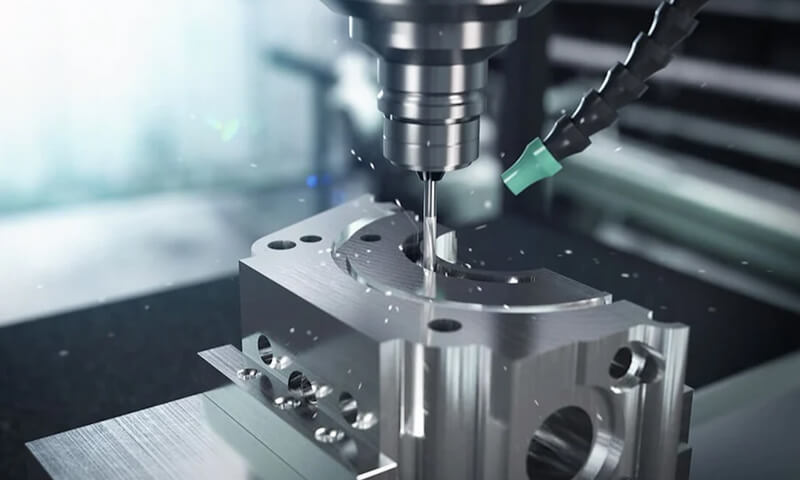
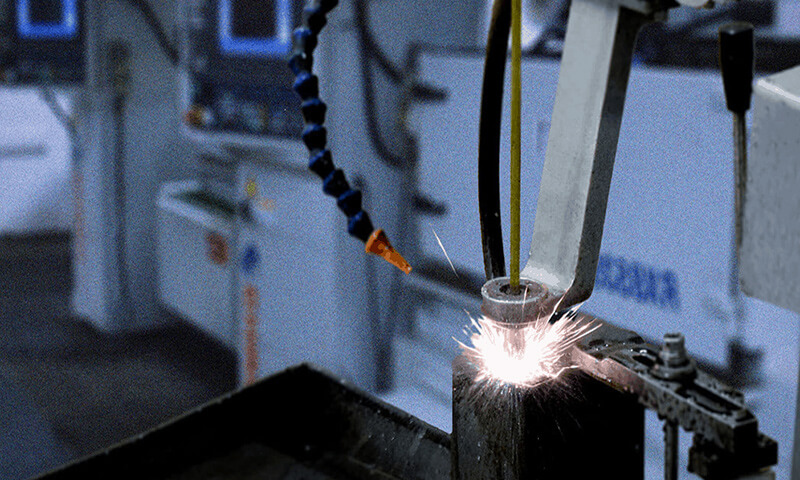
Process: CNC turning, milling, grinding, and EDM (Electrical Discharge Machining) achieve tight tolerances on valve trims, seats, and stems.
Tolerances often reach ±0.01 mm, critical for minimizing leakage and hysteresis.
- Advantages: Precision control over flow characteristics, surface finishes (< Ra 0.2 µm).
- Applications: Needle valves, globe valve plugs, anti-cavitation cages, high-performance trims.
Welding & Fabrication
Process: Fabricated valves use welded plate sections or pipe segments (stainless steel, duplex, or nickel alloys).
Automated TIG/MIG or laser welding ensures structural integrity. Weld overlays (Stellite, Inconel) are applied for erosion resistance.
- Advantages: Customization for large sizes; rapid production for special alloys; repairability.
- Applications: Custom high-alloy valves in chemical plants, large flow regulators, cryogenic service.
Additive Manufacturing (3D Printing)
Process: Selective Laser Melting (SLM) or Electron Beam Melting (EBM) builds valve components layer-by-layer using stainless steel, Inconel, or titanium powders.
Enables intricate geometries such as anti-cavitation channels and optimized flow paths.
- Advantages: Design freedom, reduced material waste, rapid prototyping.
- Applications: Aerospace, medical gases, pharmaceutical flow regulators, digital twin prototyping.
Surface Finishing & Heat Treatment
- Heat Treatment: Normalizing, quenching & tempering improve mechanical strength and toughness.
- Surface Finishing: Lapping, polishing, and honing of seats and plugs achieve bubble-tight sealing (ANSI/FCI 70-2 Class VI).
- Coatings: HVOF-applied tungsten carbide or chromium carbide extend service life in erosive or cavitating flows.
Quality Control & Inspection
Every valve undergoes NDT and dimensional validation to meet ASME, API, and ISO standards:
- Radiographic Testing (RT): Detects internal casting flaws.
- Ultrasonic Testing (UT): Identifies weld or forging defects.
- Hydrostatic & Pneumatic Testing: Verifies pressure integrity and leakage rates.
- Metallurgical Testing: Confirms alloy composition per ASTM / EN standards.
7. Industry Applications of Flow Control Valve
Flow control valves appear across all process sectors. Representative examples and operating contexts:

- Oil & Gas: injection flow control, choke valves, riser flow management — materials: duplex/superduplex; testing per API 6A/6D.
- Refining & Petrochemical: feed metering, reactor dosing — need low leak, accurate Cv and anti-cavitation trims.
- Power generation: feedwater control, cooling circuits — high temp/pressure trims and fast response.
- Water & Wastewater: treatment chemical dosing, plant flow balancing — often large butterfly valves with flow characterization.
- Pharmaceutical / Food: sanitary diaphragm/valve bodies, clean-in-place compatibility, electropolished surfaces (Ra ≤ 0.4 µm).
- HVAC and Building Services: balancing and temperature control using modulating valves with electric actuators.
8. Common failure modes, troubleshooting & mitigation
| Failure mode | Symptom | Cause | Mitigation |
| Seat leakage | Valve cannot hold shutoff | Seat wear, debris, wrong seat material | Replace trim/seat, install upstream filter, ensure correct seat material |
| Stiction / sticking | Hysteresis, hunting, slow response | Contamination, corrosion, poor lubrication | Clean, recoat moving surfaces, use PTFE/DLC coatings, smart positioner diagnostics |
| Cavitation erosion | Pitting on trim, noise, leaks | High local pressure drop below vapor pressure | Anti-cavitation trim, multi-stage reduction, increase downstream pressure |
| Actuator failure | No response, failed trips | Air supply loss, electrical failure | Install redundancy, pressure/air monitors, regular actuator checks |
| Packing leakage | External fluid leak along stem | Worn packing or wrong material | Replace packing, consider bellows or live loading for critical services |
9. Comparison to Competing Valve Types
Flow control valves differ from other valve categories in their ability to continuously modulate flow and pressure, rather than simply permitting or preventing flow.
| Valve Type | Primary Function | Control Capability | Typical Pressure Range | Advantages | Limitations |
| Flow Control Valve | Precisely regulate flow rate, pressure, or level | Continuous (0–100% open) | Low to ultra-high (PN 10–PN 420) | Fine-tuned modulation; integration with PLC/DCS; compatible with smart positioners | More expensive; requires maintenance and calibration |
| Gate Valve | On/Off isolation | Binary (open/closed) | Medium–high | Low pressure drop when open; robust for full isolation | Not suitable for throttling; slow actuation |
| Ball Valve | On/Off isolation (some control variants) | Mostly binary; limited throttling | Medium–high | Compact, quick actuation; tight shut-off | Poor flow control accuracy; seat wear under throttling |
| Globe Valve | Throttling & flow regulation | Continuous, precise | Medium–high | High control accuracy; wide Cv range | Higher pressure drop; larger footprint than ball/gate |
Butterfly Valve |
Isolation and moderate throttling | Continuous, limited accuracy | Low–medium | Lightweight, compact; cost-effective for large diameters | Poor control accuracy at low openings; prone to cavitation |
| Needle Valve | Fine metering of small flows | Continuous, very precise | Low–medium | Excellent precision in small flow systems (lab, instrumentation) | Limited to small sizes; high pressure drop |
| Check Valve | Prevent reverse flow | Passive, non-controllable | Low–high | Simple, automatic operation; protects equipment | No active control; cannot regulate flow |
| Pressure-Reducing Valve | Maintain downstream pressure | Automatic, self-regulating | Low–medium | Independent of external power; stable downstream control | Limited accuracy compared to actuator-driven control valves |
| Pinch Valve | Control of slurries/abrasives | Continuous, moderate | Low–medium | Excellent for corrosive/abrasive fluids; low maintenance | Limited to low-pressure applications; not for high-precision |
10. Future trends and innovations
- Smart valves & diagnostics — embedded sensors (stem torque, position, temperature), predictive maintenance via edge analytics and cloud integration.
- Additive manufacturing — complex anti-cavitation trims, optimized flow paths, reduced parts count, faster prototyping.
- Advanced materials & coatings — DLC, ceramics, nanocomposite coatings for erosion resistance and reduced stiction.
- Electrification & energy recovery — more electric actuators with integrated energy-saving features and local intelligence.
- Digital twins — valve digital replicas to predict performance under changing process conditions and to speed commissioning.
11. Conclusion
Flow control valves are far more than mechanical throttles; they are integrated elements of modern process control and plant economics.
Selecting the right valve requires combining hydraulic calculations (Cv/Kv and valve authority), correct trim and material choices for longevity, appropriate actuation and diagnostics for responsive control, and a procurement discipline that enforces testing and traceability.
When selected and maintained properly, flow control valves stabilize processes, reduce energy consumption, and lower lifecycle cost.
FAQs
What is valve authority and why does it matter?
Valve authority = ΔP_valve / ΔP_system. Authorities between 0.2–0.8 give predictable control; very low authority (<<0.2) means valve has little control over flow and can be unstable.
Cv vs Kv — which one should I ask for?
Ask for both if your engineering team uses mixed units. Kv (m³/h @1 bar) is common in metric systems; Cv (gpm @1 psi) is common in US units. They are related by Cv≈1.156×Kv.
How do I reduce cavitation risk?
Reduce single-stage ΔP across valve, use anti-cavitation trims with staged pressure drops, increase downstream pressure if possible, and select designs that promote gradual energy dissipation.
What diagnostic features are useful in a smart positioner?
Valve travel feedback, torque/current signature (indicating sticking or deposits), cycle counters, valve fit/position hysteresis, built-in loop tuning and remote configuration (HART/fieldbus).
How much safety margin should I use when selecting Cv?
Typical practice is to size for required flow at maximum plant conditions with 10–30% capacity margin to account for fouling, wear, and manufacturing tolerances — and verify control range (turndown).