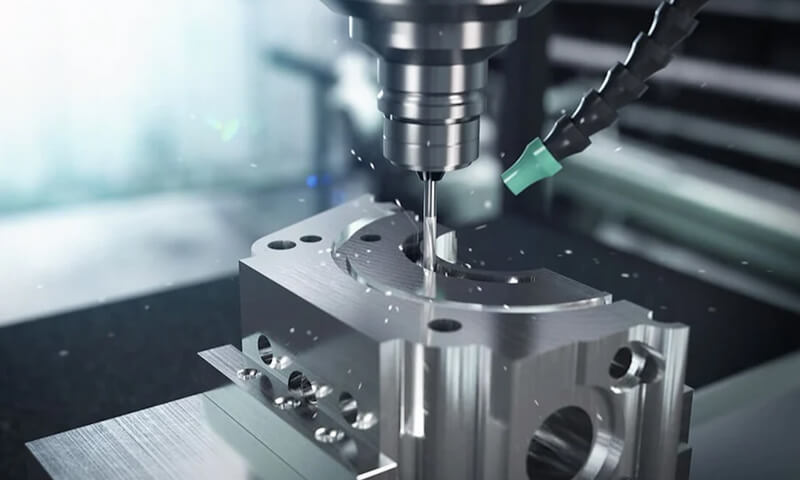
Duplex stainless steels combine the best of austenitic and ferritic grades, delivering high strength and corrosion resistance in a single alloy.
Among them, Duplex Stainless Steel 332C13 stands out for its balanced microstructure, robust mechanical performance, and excellent pitting resistance.
In this article, we explore 332C13’s chemistry, properties, fabrication, and real-world applications to guide engineers in material selection and design.
1. Introduction
Stainless steels fall into four main families:
- Austenitic (e.g. 304, 316) with high nickel and excellent formability
- Ferritic (e.g. 430, 444) with good stress-corrosion cracking resistance
- Martensitic (e.g. 410, 420) offering high hardness after heat treatment
- Duplex combining austenite and ferrite phases roughly 50:50
Duplex grades emerged in the 1970s to address the need for stronger, more corrosion-resistant alloys in aggressive environments.
332C13 (EN 1.4462/UNS S31803 equivalent) enjoys widespread specification under ASTM A240, A789, and A790 for plate, pipe, and tube applications.

We delve into 332C13’s unique attributes to help you apply it effectively in engineering projects.
2. Chemical Composition
Duplex 332C13 achieves its performance through a carefully balanced chemistry:
| Element | Typical Content | Function |
|---|---|---|
| Carbon (C) | ≤ 0.020% | Limits carbide precipitation |
| Chromium (Cr) | 21.5–23.5% | Provides corrosion resistance |
| Nickel (Ni) | 4.5–6.5% | Stabilizes austenite |
| Molybdenum (Mo) | 2.5–3.5% | Enhances pitting and crevice resistance |
| Nitrogen (N) | 0.14–0.20% | Boosts strength and pitting resistance |
| Manganese (Mn) | ≤ 2.00% | Aids deoxidation and hot-working |
| Silicon (Si) | ≤ 1.00% | Improves oxidation resistance at high T |
| Phosphorus (P) | ≤ 0.030% | Restricts embrittlement |
| Sulfur (S) | ≤ 0.020% | Minimizes sulfide inclusions |
The result is a duplex microstructure of approximately 50% ferrite and 50% austenite.
This dual-phase balance delivers both the toughness of austenitic steels and the chloride stress-corrosion cracking resistance of ferritic steels.

By comparison, common duplex grade 2205 (1.4462) shares this chemistry, whereas SAF 2304 trims Mo and N for a “lean” duplex with slightly lower pitting resistance.
3. Mechanical Properties
Duplex 332C13 outperforms most austenitic and ferritic grades in strength:
| Property | Typical Value |
|---|---|
| Yield Strength (0.2% offset) | 450–550 MPa |
| Ultimate Tensile Strength | 650–800 MPa |
| Elongation (A₅₀ mm) | ≥ 25% |
| Hardness (Brinell) | 250–300 HB |
| Modulus of Elasticity | ~210 GPa |
Thanks to its high yield strength—approximately double that of 304/316 stainless—it enables thinner sections and lighter structures under the same load.
Furthermore, the stress-strain curve remains linear to high loads, offering a high strength-to-weight ratio ideal for pressure vessels, structural frames, and pipework.
4. Physical Properties of Duplex Stainless Steel 332C13
By combining a moderate density and high stiffness with excellent thermal conductivity and controlled expansion, Duplex 332C13 offers a robust physical‐property package.
| Property | Typical Value |
|---|---|
| Density | 7.75–7.85 g/cm³ |
| Modulus of Elasticity | 200–210 GPa |
| Poisson’s Ratio | 0.27–0.30 |
| Thermal Conductivity | 15–20 W/m·K at 20 °C |
| Specific Heat Capacity | ~460 J/kg·K at 20 °C |
| Coefficient of Thermal Expansion | 12.5–14 × 10⁻⁶ /°C (20–300 °C) |
| Electrical Resistivity | 0.5–0.7 μΩ·m at 20 °C |
| Magnetic Permeability (μᵣ) | 1.01–1.05 (slightly magnetic) |
5. Corrosion Resistance
Duplex 332C13 excels in aggressive environments:
- Pitting Resistance: Its PREN (Pitting Resistance Equivalent Number) calculates to ≥ 30, which translates to excellent resistance against chloride-induced pitting.
- Crevice Corrosion: Dense ferrite and Mo-enriched phases impede crevice attack in stagnant seawater conditions.
- Stress Corrosion Cracking (SCC): Duplex grades resist SCC at ambient and elevated temperatures (up to ~80 °C) far better than 316L.

In side-by-side tests, 332C13 resists pitting in 6% NaCl at 25 °C to +600 mV vs. Ag/AgCl, while 316L breaks down near +300 mV.
For marine platforms, chemical plants, and chloride-rich atmospheres, 332C13 offers a clear advantage over standard austenitic alloys.
6. Fabrication and Weldability
332C13’s dual-phase structure supports both cold-work and hot-work, but its higher strength demands robust equipment:
- Formability: You can bend, stamp, and roll 332C13, though required forces reach ~1.5× those for 304. Designers should limit reduction per pass to avoid cracking.
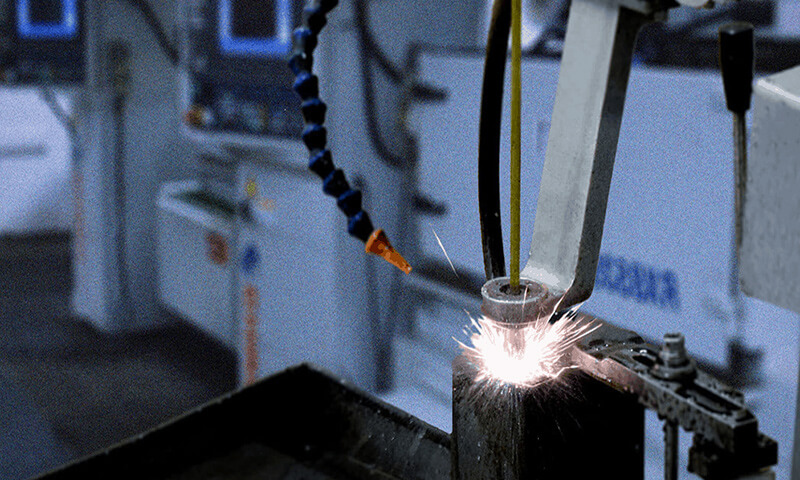
- Weldability: The alloy welds readily with matching duplex filler (e.g. ER2209) without preheating.
However, excessive heat input can create brittle σ-phase in the HAZ, so maintain interpass temperatures below 200 °C and use multi-pass techniques if needed. - Post-Weld Treatment: A solution anneal at 1020–1100 °C, followed by rapid quenching, restores phase balance after heavy welding.
In many cases, however, post-weld annealing is unnecessary for non-critical components.
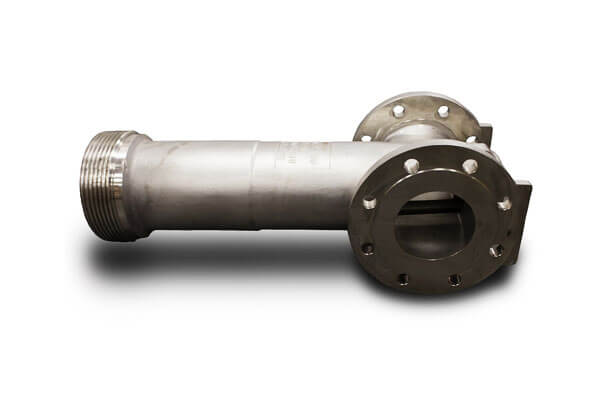
By following controlled welding workflows and using proper filler metals, fabricators can leverage 332C13’s performance without major post-processing.
7. Heat Resistance
Duplex 332C13 maintains mechanical integrity up to 300–350 °C. Beyond this range:
- Ferrite proportion can drop, reducing toughness
- Elevated-temperature creep and phase instability may emerge
Its coefficient of thermal expansion (~13 × 10⁻⁶ /°C) lies between austenitic (~16 × 10⁻⁶ /°C) and ferritic (~10 × 10⁻⁶ /°C) grades, limiting thermal stress in dissimilar-metal joins.
\In moderate-temperature heat exchangers, pressure vessels, and piping with cyclic thermal loads, 332C13 offers stable performance without the cost of super-duplex alloys.
8. Standards and Designations
Duplex 332C13 appears under multiple specifications:
- EN 1.4462 (Europe)
- UNS S31803 / S32205 (USA/ASTM A240, A789, A790)
- ISO 11960 for OCTG pipe
- NORSOK MDS for subsea applications
Producers supply 332C13 in sheet, plate, bar, tube, and forgings, often in sizes up to 15 mm plate or 12 ″ OD pipe.
Certification to EN 10204 3.1 or ASTM A967 ensures traceability and acceptable ferrite levels.
9. Applications of 332C13
Thanks to its balanced properties, 332C13 serves across industries:
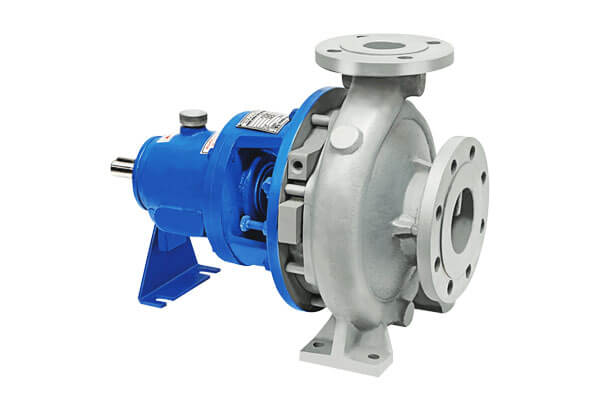
- Marine & Offshore: Mooring hardware, piping, valves, and heat exchanger tubing in seawater service.
- Chemical Processing: Reactors, piping, storage tanks, and pumps handling chlorides, sulfides, and caustics.
- Pulp & Paper: Digesters, bleaching towers, and liquor recirculation lines where chloride and sulfate attack occur.
- Power Generation: Condenser tubing, cooling water systems, and structural support in nuclear and fossil-fired plants.
- Infrastructure: Bridges, architectural supports, and building facades requiring both strength and weathering resistance.
By replacing 316L or even 2205 in these roles, 332C13 often reduces maintenance costs and increases service life.
10. Comparison with Other Duplex Grades
To put 332C13’s performance in context, let’s compare it against three widely used duplex stainless steels—2205, SAF 2304, and super-duplex 2507—across multiple key dimensions:
| Property / Grade | 332C13 (UNS S31803) | 2205 (EN 1.4462) | SAF 2304 (EN 1.4362) | 2507 (EN 1.4410) |
|---|---|---|---|---|
| Chemistry | Cr 21.5–23.5 Ni 4.5–6.5 Mo 2.5–3.5 N 0.14–0.20 |
Cr 22–23 Ni 4.5–6.5 Mo 3.0 N 0.14–0.20 |
Cr 23 Ni 4.5 Mo – N 0.10 |
Cr 25 Ni 7.0 Mo 4.0 N 0.30 |
| PREN | ~31 | ~30–32 | ~25 | ≥40 |
| Yield Strength (MPa) | 450–550 | ~450 | ~350 | ~620 |
| Tensile Strength (MPa) | 650–800 | 620–680 | ~600 | 830–900 |
| Elongation (%) | ≥25 | 25–30 | ≥25 | ≥20 |
| Hardness (HB) | 250–300 | 280–300 | 230–250 | 300–350 |
| Pitting Resistance | Excellent (PREN 31) | Excellent (PREN 30) | Good (PREN 25) | Outstanding (PREN ≥40) |
| SCC Resistance | Very high | Very high | High | Very high |
| Max Service Temp. (°C) | 300–350 | 250–300 | 250–300 | 250–300 |
| Weldability | Good, controlled HAZ | Good, controlled HAZ | Very good | Moderate, σ-phase risk |
| Formability | Moderate | Moderate | Good | Poor |
| Relative Cost | Medium | Medium | Low | High |
| Availability | Widely stocked | Widely stocked | Widely stocked | Less common |
Key Takeaways
- Corrosion vs. Cost: 332C13 and 2205 deliver similar pitting and SCC resistance at comparable cost; SAF 2304 reduces Mo content (and cost) with modest trade-offs in PREN.
Super-duplex 2507 achieves the highest PREN (≥40) but commands a price premium and poses greater welding challenges. - Mechanical Balance: Duplex stainless steel 332C13 and 2205 share high strength (YS ≈450 MPa, UTS ≈650–700 MPa), whereas SAF 2304’s strength sits lower (~350/600 MPa), and 2507 leads the pack (~620/830 MPa).
For structures requiring maximum strength, 2507 excels; for balanced performance and economy, 332C13 or 2205 often suffice. - Fabrication Considerations: SAF 2304 offers the easiest formability, making it suitable for tight bends and deep draws.
In contrast, 2507 requires strict thermal control to avoid σ-phase formation, while 332C13 and 2205 fall in between. - Thermal & Structural Stability: All four grades operate reliably up to ~300 °C.
Designers facing cyclic thermal loads appreciate 332C13’s intermediate coefficient of expansion, minimizing thermal stress in mixed-metal assemblies.
11. Advantages and Limitations
Advantages
- High Strength: Yield ~2× 316L enables lighter, stronger designs.
- Corrosion Resistance: PREN ≥ 30 resists pitting, crevice, and SCC in chloride environments.
- Thermal Stability: Maintains properties to 350 °C with moderate thermal expansion.
- Lifecycle Savings: Longer intervals between maintenance and replacement.
Limitations
- Formability: Requires more force and tighter bend radii than austenitics.
- High-Toughness Loss: Extended exposure >350 °C can embrittle HAZ.
- Welding Complexity: Needs controlled heat input and potential post-weld annealing.
- Availability: Less stocked than 304/316, may incur lead times.
12. Conclusion
Duplex Stainless Steel 332C13 offers a compelling balance of mechanical strength, chloride corrosion resistance, and weldability, making it a go-to choice for demanding marine, chemical, and structural applications.
By understanding its chemistry, processing, and service limits, engineers can specify 332C13 with confidence, achieving durable, cost-effective solutions even in aggressive environments.
As industries continue pushing performance boundaries, duplex grades like 332C13 will play an ever-greater role in advancing reliability and sustainability.
DEZE is the perfect choice for your manufacturing needs if you need high-quality duplex stainless steel castings.