1. Introduction
Carbon steel investment casting merges ancient artistry with modern engineering to produce complex, high-strength steel components.
By using the lost-wax method—where disposable wax patterns become permanent steel parts—this process achieves tolerances and surface finishes unthinkable in conventional sand casting.
Its roots stretch back over 5 000 years to Mesopotamian lost-wax bronzes, but only in the mid-20th century did foundries master steel’s high melting point (1 500–1 600 °C) and narrow solidification range.
Today, industries such as oil & gas, power generation, heavy machinery, and automotive depend on carbon steel investment castings for valve bodies, pump impellers, turbine casings, and structural brackets.
This article explores the fundamentals, alloy selection, tailored process steps, material properties, environmental impact, and competitive positioning of carbon steel investment casting.
2. Fundamentals of Carbon Steel Investment Casting
Casting carbon steel introduces unique challenges. Its high pouring temperature demands refractory shell systems capable of withstanding temperatures above 1 700 °C.
Moreover, carbon steels typically exhibit a narrow crystallization interval—often less than 70 °C—so they shrink rapidly and risk internal porosity.

Compared to sand casting, investment methods deliver dimensional accuracy of ±0.1 mm on small features (versus ±1.5 mm) and surface finishes down to Ra 0.8–3.2 µm (versus 12–50 µm).
Yet forging still yields finer grain flow and superior fatigue life, making investment casting a strategic choice when net-shape geometry outweighs mechanical optimization.
3. Carbon Steel Alloys for Investment Casting
Selecting the right carbon steel grade determines casting success.
Carbon content influences strength, hardenability, and shrinkage, while alloying elements (Mn, Si, Cr) control hardenability, toughness, and wear resistance.
Investment casting accommodates low-, medium-, and high-carbon steels, each offering distinct performance profiles:
- Low-Carbon Steels (< 0.25 %C):
-
- Offer excellent ductility and weldability.
- Require minimal heat treatment to deliver tensile strengths of 400–550 MPa.
- Serve well in valve bodies, flanges, and general-purpose fittings.
- Medium-Carbon Steels (0.25–0.60 %C):
-
- Balance strength and toughness, with tensile strengths of 500–650 MPa.
- Respond well to quench & temper, achieving hardness up to HRC 35–40.
- Commonly cast into pump housings and structural brackets.
- High-Carbon Steels (> 0.60 %C):
-
- Deliver tensile strengths above 900 MPa after heat treatment.
- Develop carbide networks for exceptional wear resistance.
- Ideal for cutting tools, wear plates, and heavily loaded components.
4. Investment Casting Process Tailored to Carbon Steels
Wax Pattern & Gating Design
Engineers design gating systems that feed steel at a controlled rate, minimizing thermal shock.
Wax dies operate at 65–75 °C, and gates enlarge by 20 % relative to aluminum castings to maintain fill velocity.
Ceramic Shell Systems
Foundries alternate zircon and alumina–silicate slurries, building shells of 12–20 mm.
This combination provides refractoriness beyond 1 700 °C and permeability to vent gas expansion.
Dewaxing & Shell Burnout
Autoclave dewaxing at 150 °C removes bulk wax. Next, furnaces ramp at 2 °C/min to 900 °C, holding for 4–6 hours. This slow cycle prevents shell cracking while burning out all organics.
Steel Melting & Pouring
Induction furnaces heat charge to 1 550 ± 10 °C, ensuring 5 % superheat. Foundries use tilt-ladle or vacuum-assist pours to reduce turbulence; small castings fill in 30–60 s, larger in 2–3 min.
Shell Removal & Surface Treatment
After 4–8 hours cooling, crews mechanically shake off shells, then grit-blast surfaces to Ra 1.6–3.2 µm. Automated grinders remove gates.
Heat Treatment
Quench from 900 °C into oil or water, then temper at 600 °C for 2 hours. This cycle yields tensile strengths matching wrought counterparts (400–900 MPa) and adjusts hardness to HRC 20–55.
5. Mechanical & Physical Properties
| Property | Low-C | Med-C | High-C |
|---|---|---|---|
| Tensile Strength (MPa) | 400–550 | 500–650 | ≥900 |
| Yield Strength (MPa) | 250–350 | 300–450 | 700–850 |
| Elongation (%) | 20–25 | 15–20 | 2–5 |
| Hardness (HRC) | 15–20 | 25–35 | 45–55 |
| Impact Toughness (J, Charpy) | 40–60 | 30–50 | 10–20 |
| Thermal Conductivity (W/m·K) | 30–45 | 28–40 | 25–35 |
| Expansion (10⁻⁶/K) | 11–13 | 12–14 | 12–14 |
6. Corrosion Resistance of Carbon Steel Investment Castings
Corrosion Characteristics of Carbon Steels
Carbon steel is prone to oxidation and rusting when exposed to moisture, oxygen, and corrosive agents such as acids, salts, and industrial pollutants.
Typical corrosion rates in atmospheric environments (e.g., urban or marine) for unprotected carbon steel range between 0.02–0.2 mm/year, depending on exposure severity.
Surface Treatments and Protective Coatings
To enhance durability and corrosion resistance, carbon steel castings are often coated or treated. Common methods include:
- Galvanization (Hot-Dip Zinc Coating)
Offers cathodic protection and is widely used in structural and outdoor applications. Zinc corrodes preferentially, shielding the steel substrate. - Phosphate Coatings
Applied as a pretreatment for painting or for wear-resistant applications. Enhances paint adhesion and provides mild corrosion protection. - Powder Coating or Painting
Epoxy or polyurethane coatings are frequently used for industrial equipment and consumer goods to improve aesthetics and barrier protection. - Electroplating (e.g., Zinc, Nickel)
Suitable for small and precision components. Provides smooth, uniform corrosion-resistant surfaces. - Polymer Linings or Rubber Coating
Employed in highly corrosive environments such as chemical processing or water treatment applications.
7. Why Carbon Steel Investment Casting
Choosing carbon steel investment casting delivers unparalleled advantages when applications demand complex geometry, tight tolerances, and robust mechanical performance.
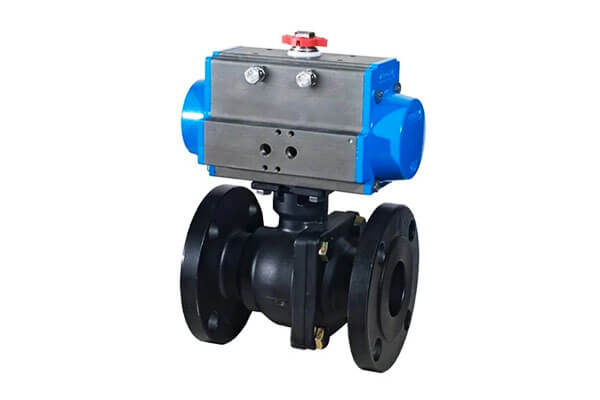
Below, we outline the key reasons engineers and decision-makers favor this process:
Exceptional Detail and Accuracy
Investment casting reproduces fine features—undercuts, thin walls (down to 2 mm), and sharp corners—in a single pour.
Consequently, you achieve dimensional tolerances as tight as ±0.1 mm and surface finishes down to Ra 0.8 µm, cutting secondary machining by up to 60 %.
Alloy Flexibility Across Carbon Ranges
Whether you need low-carbon grades (A216 WCB) for corrosion-resistant valve bodies, medium-carbon steels (A297) for pump housings,
or high-carbon alloys (A11540) for wear-resistant parts, investment casting accommodates them all.
As a result, you maintain consistent process parameters while tailoring mechanical properties—from 400 MPa tensile strength to over 900 MPa.
Complex, Near-Net-Shape Production
By eliminating cores and joins, investment casting consolidates assemblies into single components—reducing welds, fasteners, and leak paths.
For instance, an oil-field valve body that once required four sand-cast pieces now comes out as one seamless casting, slashing assembly labor by 50 % and improving reliability.
High Yield and Material Efficiency
Careful shell design and controlled pour rates minimize shrinkage porosity, driving first-pass yields above 90 %.
Moreover, gating and riser optimization cuts steel usage by 15 % compared to sand casting, reducing raw material costs and scrap.
Cost-Effectiveness for Low to Medium Volumes
Although tooling for wax dies and ceramic shells (USD 15 000–50 000) exceeds that of sand casting, break-even often occurs at 1 000–5 000 parts per year.
By contrast, forging or machining such complex shapes incurs far higher per-part costs and longer lead times.
Strategic Industry Applications
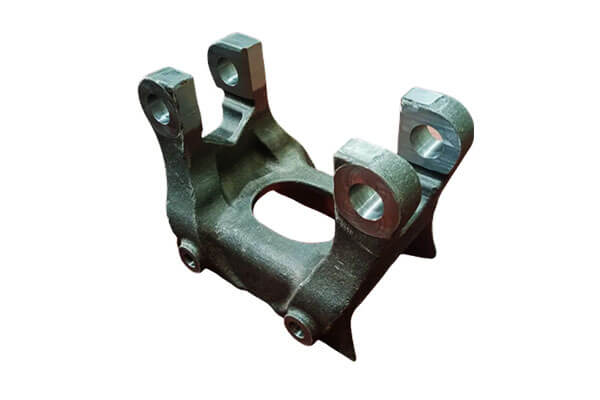
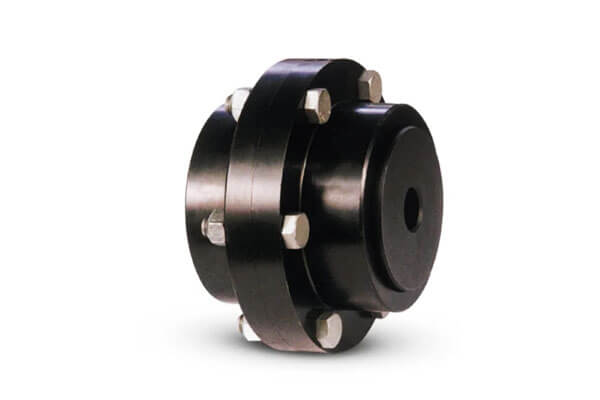
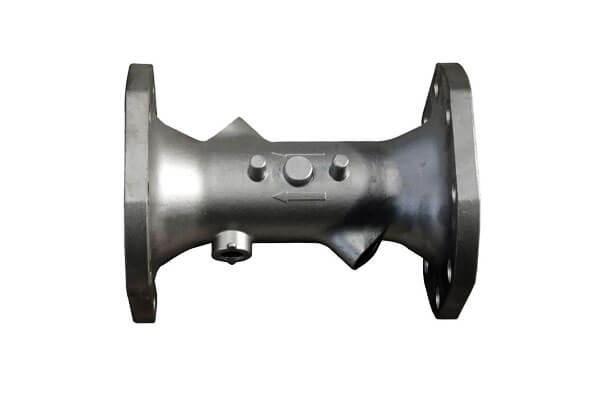
Industries such as oil & gas, power generation, automotive, and heavy equipment rely on carbon steel investment castings for critical components—valve bodies, turbine exhaust elbows, couplings,
because the method balances performance, reliability, and turnaround.
8. Applications of Carbon Steel Castings
Oil & Gas Industry
- Valve bodies and actuators
- Pipe connectors and couplings
- High-pressure pump casings
- Flanges, elbows, and flow control components
Power Generation
- Steam turbine casings
- Pump housings and impellers
- Gearbox components
- Exhaust diffusers
Heavy Machinery and Industrial Equipment
- Gear housings
- Bearing supports
- Chassis connectors and brackets
- Wear-resistant parts
Automotive and Transportation
- Suspension arms and brackets
- Engine mounts
- Steering and linkage components
- Brake system parts
- Couplers and railroad car fittings
Agricultural & Off-Highway Equipment
- Plow brackets
- Hydraulic cylinder components
- Lifting hooks and shackles
- Frame parts
Defense & Military
- Armament housing
- Trigger mechanisms
- Tactical vehicle components
- Structural brackets and mounts
Marine Industry
- Deck fittings
- Engine support structures
- Winch housings
Construction & Structural Hardware
- Crane components
- Bracing connectors
- Elevator brackets
- Rebar couplers
Tooling and Fixtures
- Machining fixtures
- Welding positioners
- Robotic arms and gripping tools
9. Typical Carbon Steel Grades used in Investment Casting
The following is a list of typical carbon steel grades commonly used in precision casting (investment casting),
Covering a variety of international standards, which is convenient for global manufacturing companies to refer to and select:
| Standard & Grade | Carbon Content (C) | Tensile Strength (MPa) | Typical Applications |
|---|---|---|---|
| ASTM A216 WCB | 0.17% max | 415–485 | Valves, pumps, flanges, general pressure applications |
| ASTM A352 LCB | 0.20% max | 485–620 | Low-temperature pressure systems |
| ASTM A105 | 0.35% max | 485–655 | Forged flanges, fittings, pressure vessels |
| ASTM AISI 1020 | 0.18–0.23% | 395–510 | Machine parts, shafts, automotive components |
| ASTM AISI 1030 | 0.28–0.34% | 450–600 | Structural bars, rail plates, crankshafts |
| ASTM AISI 1045 | 0.43–0.50% | 570–750 | Gears, axles, bolts, crankshafts |
| ASTM AISI 1055 | 0.50–0.60% | 610–830 | Sprockets, bushings, hand tools |
| ASTM AISI 1080 | 0.75–0.88% | 720–880 | Springs, blades, wear-resistant parts |
| EN C22 (1.0402) | ~0.22% | 400–500 | Automotive forgings, construction equipment |
| EN C45 (1.0503) | ~0.45% | 570–800 | Shafts, spindles, cams |
| DIN GS-C25 | ~0.25% | 450–600 | General engineering parts |
| JIS S25C | ~0.25% | 440–580 | Forgings, levers, linkages |
| JIS S45C | ~0.45% | 570–800 | Transmission parts, gears |
| GB 25# | ~0.25% | 450–600 | Agricultural machinery, automotive components |
| GB 45# | ~0.45% | 570–750 | High-strength structural parts |
10. Conclusion
Carbon steel investment casting bridges artistry and high-temperature metallurgy, delivering parts that combine complex geometry, tight tolerances, and robust mechanical performance.
While high tooling costs and process sensitivity pose challenges, advances in shell materials and digital monitoring are reducing lead times and defects.
By selecting the right steel grade, optimizing gating and shell systems, and applying appropriate heat treatments,
manufacturers can leverage investment casting to meet the toughest demands in energy, machinery, and transportation.
DEZE Technology is a prominent Chinese manufacturer specializing in carbon steel investment casting, offering comprehensive metal processing solutions tailored to various industrial applications.
With over two decades of experience, DEZE has established itself as a reliable partner for clients seeking high-precision, custom-cast components.
FAQs
What are the typical tolerances achievable with carbon steel investment casting?
Investment casting typically achieves dimensional tolerances of ±0.10 mm for small features and up to ±0.5 mm for larger features, depending on the complexity and size of the component.
How strong are carbon steel investment castings?
Depending on the grade and heat treatment, tensile strengths range from 400 MPa to over 900 MPa. Carbon steels can be quench-hardened to improve wear resistance and fatigue life.
Is heat treatment necessary after casting?
Yes, in most cases. Heat treatments like normalizing, annealing, or quenching and tempering are applied to enhance mechanical properties and relieve internal stresses.
What are the surface finish levels for investment-cast carbon steel?
Investment casting can achieve surface finishes of Ra 3.2–6.3 µm, significantly smoother than sand casting and often acceptable without further machining.
Can complex geometries and internal features be cast?
Yes. Investment casting allows for near-net-shape production of intricate geometries, including undercuts, fine details, and thin walls—often eliminating the need for welding or assembly.