1. Introduction
Die-cast aluminum components (primarily Al–Si alloys produced by high-pressure die casting) deliver excellent cost-to-performance for automotive, telecom, consumer and marine applications,
but their real-world corrosion performance is the net result of alloy chemistry, microstructure, die-casting process, surface treatment and service environment.
Effective corrosion control therefore requires a programmatic approach:
(a) select or develop alloys with reduced cathodic impurities and modifiers to refine silicon, (b) control the HPDC process to minimize porosity and produce fine SDAS/grain structure, and (c) part design and assembly rules that avoid trapped electrolytes and dissimilar-metal galvanic couples.
Recent reviews and experimental work show coatings (PEO, optimized anodizing, conversion coatings and multi-layer paint systems) and microstructure control are the most effective levers to extend service life in aggressive environments.
2. Why corrosion matters for die-cast aluminum components
Aluminum forms a thin, protective Al₂O₃ film spontaneously in air. That film makes bulk aluminum relatively corrosion-resistant — but die-cast Al–Si alloys are microstructurally complex:
coarse unalloyed Si particles, Fe-rich intermetallics, Mg-bearing phases and localized porosity create micro-galvanic cells and sites where the passive film is mechanically or chemically compromised.
In chloride-rich, acidic or pollutant-laden atmospheres these local heterogeneities promote pitting, crevice corrosion and accelerated local attack,
which can degrade mechanical integrity, compromise sealing surfaces, and shorten service life — often unexpectedly if protective measures were assumed sufficient.
Manufacturers and OEMs care because corrosion affects product reliability, warranty costs, safety, and perceived quality — so sound technical choices early in design and procurement pay dividends downstream.
3. Core principles of aluminum die-casting corrosion: mechanisms and classification
Corrosion of aluminum die-castings is fundamentally an electrochemical phenomenon in which the metal and its environment exchange charge through localized anodic and cathodic reactions.
Unlike pure aluminum, commercial die-cast alloys are chemically and structurally heterogeneous (Al–Si base alloys with Fe, Cu, Mg, Mn, etc.), and they invariably contain manufacturing-related defects (porosity, oxide folds, inclusions and segregated intermetallic phases).
Those heterogeneities produce spatial variations in electrochemical potential at the surface and thus establish micro-galvanic cells that concentrate attack at discrete sites.
Electrochemical corrosion mechanism
Aluminum is thermodynamically active (standard electrode potential ≈ −1.66 V versus the standard hydrogen electrode) but forms a very thin, protective oxide in air.
This native alumina/hydroxide film (typically on the order of a few nanometres, ~5–10 nm in atmospheric conditions) provides the initial barrier that slows uniform dissolution and enables apparent “passivity.”
The classical sequence is:
- Passivation: formation of a compact Al₂O₃/Al(OH)₃ surface layer that limits charge transfer and mass loss under mild conditions.
- Local film breach: aggressive species (notably chloride ions), mechanical damage, or chemical exposure (strong acids, alkalis or fluoride ions) disrupt the oxide layer locally.
- Anodic dissolution: when the film is breached, the exposed aluminum oxidizes:
Al → Al³⁺ + 3e⁻
Electrons liberated at anodic sites are consumed at nearby cathodic sites by oxygen or other reducible species, for example:
O₂ + 2H₂O + 4e⁻ → 4OH⁻ - Micro-galvanic coupling: intermetallic particles (Fe-, Cu-rich phases, Mg₂Si, etc.) or noble contaminant phases act as local cathodes, accelerating anodic dissolution of the surrounding α-Al matrix.
The local potential differences and the ratio of cathodic area to anodic area control the severity of the attack. - Local chemistry evolution: in confined sites (pits, crevices) hydrolysis of Al³⁺ and accumulation of aggressive anions produce a strongly acidified and chloride-enriched microenvironment that sustains rapid, autocatalytic dissolution.
Chloride ions, in particular, penetrate and stabilize anodic regions, promoting pit nucleation and growth.
Two practical corollaries follow: (i) corrosion behavior is controlled less by bulk thermodynamics than by local electrochemistry and transport processes at the micro-scale;
and (ii) small changes in microstructure, impurity levels or surface continuity can produce large changes in localized corrosion susceptibility.
Common corrosion types in aluminum die-castings
Although several forms of corrosion can occur, the most relevant and damaging modes for die-cast parts are:
General (uniform) corrosion:
relatively even metal loss across exposed surfaces.
This mode is infrequent for aluminum in neutral atmospheres but can occur in strongly acidic or alkaline media. It reduces dimensions predictably but is less catastrophic than localized forms.
Pitting corrosion:
the principal threat for die-cast Al–Si alloys.
Pits initiate where the passive film is weakest—adjacent to pores, oxide inclusions, unalloyed silicon particles or intermetallics—and propagate under a chloride-rich, acidified microenvironment.
Pitting is highly localized and often invisible until it has penetrated deeply, making it a principal cause of sudden, unexpected failures in load-bearing components.
Intergranular corrosion (IGC):
attack along grain boundaries caused by segregation of alloying elements or precipitation of intermetallics during solidification.
In die-cast alloys, boundary-decorating phases (for example, Fe- and Cu-rich compounds, or precipitates formed from Mg and Si) can render grain boundaries anodic relative to the grain interiors, promoting selective boundary dissolution and embrittlement.
Galvanic corrosion:
occurs when aluminum is electrically coupled to a more noble metal (steel, copper, brass) in a conductive electrolyte.
The potential difference drives anodic dissolution of the aluminum component; the severity depends on the area ratio, contact configuration and electrolyte conductivity.
This is a common problem in assemblies and fastened joints.
Crevice corrosion:
develops where electrolyte becomes stagnant (under seals, inside threaded connections, mating surfaces).
The restricted mass transport inside the crevice leads to oxygen depletion and acidification, producing aggressive local chemistry that attacks aluminum beneath the cooperative protection of adjacent surfaces.
Stress-corrosion cracking (SCC) and corrosion-fatigue:
these are synergistic phenomena in which tensile stress (residual or applied) interacts with a corrosive microenvironment and a pre-existing defect (such as a pit or intermetallic notch) to nucleate and propagate cracks.
SCC is of particular concern for structural die-cast parts that carry sustained loads.
Each of these modes is driven or aggravated by the same root causes: microstructural heterogeneity, discontinuities in surface film continuity (porosity, oxide folds),
aggressive species in the service environment (chlorides, acidic gases), and mechanical or design conditions that promote crevicing or tensile stress.
Consequently, mitigation strategies must address both the electrochemical drivers (through alloy design and surface protection) and the microstructural/process drivers (through casting controls and post-processing).
4. Key influencing factors of aluminum die-casting corrosion resistance
The corrosion performance of aluminum die-castings is governed by a constellation of interacting variables rather than a single dominant parameter.
Alloy chemistry, microstructure, casting practice and the service environment act synergistically to determine whether a component will remain passive or suffer localized attack.
A rigorous understanding of each factor—and how they interact—enables targeted interventions in material selection, process control and corrosion protection.
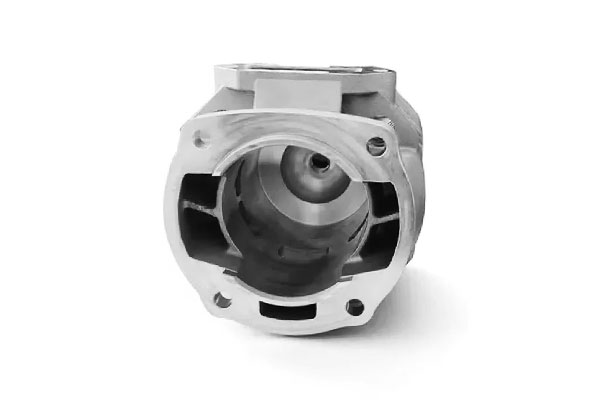
Alloy composition: the fundamental determinant
Al–Si casting alloys (for example ADC12, A380, A383, A356) form the baseline for die-cast components; however, minor and trace alloying additions exert disproportionate influence on electrochemical behaviour.
Silicon (Si, ~7–12 wt% in typical die-casting alloys).
Si improves fluidity and reduces hot-tearing, but it typically precipitates as discrete particles that are essentially electrochemically inert relative to the aluminium matrix.
The morphology and distribution of Si (e.g., fine, uniformly dispersed vs. coarse, clustered) influence local galvanic interactions and affect coating performance (anodizing in particular).
Near-eutectic alloys with a fine eutectic structure tend to be less susceptible to localized attack than alloys with coarse Si segregation.
Copper (Cu, commonly 1–4 wt%).
Cu increases strength and heat-treatability but forms Cu-rich intermetallics (e.g., CuAl₂) that are cathodic relative to α-Al.
These cathodic sites accelerate anodic dissolution of adjacent aluminium, promoting pitting and undermining passive film effectiveness.
Controlling Cu content is therefore critical when corrosion resistance is a design objective.
Magnesium (Mg, roughly 0.1–0.6 wt%).
Mg participates in strengthening precipitates (Mg₂Si) and, in many Al-Si-Mg alloys, contributes to formation of a more stable mixed oxide that can enhance general passivity.
Al-Si-Mg alloys frequently show better anodizing behaviour and overall corrosion resistance compared with Al-Si-Cu alloys.
Impurities and trace elements (Fe, Zn, Sn, etc.).
Even modest concentrations of impurities—often introduced via recycling—can degrade corrosion resistance.
Iron forms hard, cathodic intermetallics that increase the density of local cathodic sites; values of Fe above typical specification limits (for example > ~1.0–1.3 wt% depending on the alloy) correlate with increased pitting.
Zinc and tin traces can also destabilize the passive film and raise pitting susceptibility.
Consequently, feedstock control and specification limits for impurities are essential for corrosion-sensitive applications.
In short: alloy selection is a trade-space between mechanical requirements and electrochemical risk; reducing cathodic alloying/impurity content and using modifiers that refine Si morphology are effective alloy-level strategies to improve durability.
Microstructural characteristics: the internal driver
Microstructure translates composition and process into electrochemical reality. Key microstructural features that control corrosion are:
Grain size / SDAS (secondary dendrite arm spacing).
Finer grain structures and reduced SDAS—typically achieved by high cooling rates—tend to distribute alloying elements and intermetallics more uniformly and raise resistance to pit initiation.
High-pressure die casting usually produces a finer SDAS than slower solidification processes, which is advantageous for corrosion performance.
Intermetallic phase morphology and distribution.
Coarse, clustered Fe- and Cu-rich phases or large Mg₂Si agglomerates create localized cathodic sites that drive micro-galvanic corrosion.
A uniform dispersion of small intermetallics minimizes local galvanic driving forces.
Porosity and oxide defects.
Gas porosity, shrinkage cavities and entrained oxide films disrupt coating continuity and passive films, act as crevice sites, and provide sheltered nuclei for pits; they also concentrate stress.
Minimizing porosity through melt degassing, proper gating, and process control is a primary mitigation for internal and surface-initiated attack.
Residual stresses and microcracking.
As-cast tensile residual stresses or stress concentrators from solidification shrinkage can reduce resistance to stress corrosion cracking and corrosion-fatigue; post-processing heat treatments or stress-relief operations can mitigate these effects.
Microstructure control therefore links metallurgy and processing to electrochemical susceptibility; specification of microstructural metrics (SDAS, porosity fraction, intermetallic size/distribution) is an effective engineering lever.
Die-casting process: the process-control factor
The manufacturing route determines both surface condition and internal quality:
Melt handling and cleanliness.
Proper melt treatment, inclusion and hydrogen control reduce porosity and oxide entrapment. Recycled content should be managed to limit harmful impurities.
HPDC process parameters.
Injection speed, shot profile, die temperature and filling dynamics affect cooling rates and oxide entrainment.
Typical practical windows used to achieve a balance between fillability and microstructure are pouring temperatures in the range of ~640–680 °C and die temperatures around 200–250 °C;
injection pressures commonly lie in the 80–120 MPa range with holding times of several seconds (e.g., 5–10 s), but optimal settings depend on part geometry and alloy.
Well-tuned gating, venting and use of vacuum assist where required reduce porosity and improve surface integrity.
Post-cast treatments.
Heat treatments (T4, T5, T6) modify precipitate distributions, relieve stresses and can refine intermetallics—each of which influences susceptibility to intergranular attack and SCC.
Surface machining, shot peening or blasting must be controlled to avoid embedding contaminants or creating fresh metal that is left unprotected.
Process control is therefore a direct instrument for improving corrosion performance: better process → finer microstructure → fewer defects → enhanced passivity and coating adhesion.
Service environment: the external trigger
Ultimately, the environment dictates which electrochemical mechanisms become active:
Marine environments.
High chloride concentrations (seawater ≈ 3.5 wt% NaCl), high humidity and repeated wet/dry cycles aggressively destabilize passive films and strongly promote pitting, crevice corrosion and SCC.
Industrial atmospheres.
Pollutants such as SO₂ and NOₓ produce mildly acidic deposition and combined with particulates can accelerate both general and localized corrosion.
Automotive service conditions.
Exposure to road salts, de-icing chemicals, splash and variable temperatures subjects exterior and under-body parts to intermittent high-chloride exposure and brine concentration effects that exacerbate pitting.
Enclosure and electronics environments.
Elevated humidity with relatively stable temperatures can foster uniform corrosion and, in the presence of contaminants, localized attack on fine features and contacts.
Because environmental severity varies widely, corrosion protection strategies must be selected and validated against representative exposure; accelerated tests (salt spray, cyclic corrosion tests) and field trials should be matched to the intended service class.
5. Practical corrosion prevention and control technologies for aluminum die castings
This section surveys the practical, field-proven technologies used to prevent and control corrosion of aluminum die-cast components.
For each approach I describe the working principle, typical performance metrics, practical advantages and limitations, and recommendations for specification and QA.
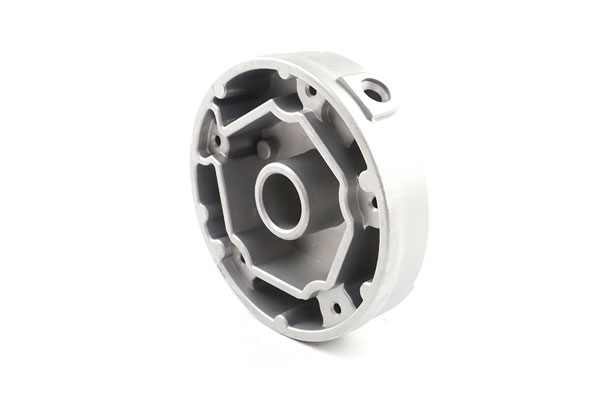
Anodizing (Type II decorative and Type III hard anodizing)
Principle. Electrochemical conversion of the surface aluminum into a compact/porous Al₂O₃ layer that acts as a barrier and accepts dyes or sealants.
Typical performance / data. Decorative sulfuric anodizing (Type II) commonly produces 5–15 µm oxide layers and—when properly sealed—can deliver on the order of 96–300 hours in ASTM B117 salt-spray tests depending on alloy, porosity and seal quality;
hard anodizing (Type III) produces thicker, denser layers (often 20–100+ µm) and can exceed several hundred hours in aggressive testing when sealing and process control are adequate.
Advantages. Good wear and abrasion resistance (Type III), aesthetic finishing options (coloring of Type II), well-understood industrial process, excellent adhesion for some organic topcoats.
Limitations & pitfalls. Die-cast Al–Si alloys pose two specific challenges: (1) discrete Si particles do not anodize, which can cause thin or discontinuous film regions, and (2) porosity or entrained oxides in the substrate lead to local film defects and corrosion initiation if not controlled.
Therefore anodizing is most effective when alloy chemistry, casting porosity and pre-treatment are addressed in the specification.
Specification notes. Require pre-anodize cleaning/etching, specify minimum oxide thickness and sealing method, and include acceptance tests (e.g., salt spray, peel/adhesion, porosity mapping).
Conversion coatings (chromate and non-chromate chemistries)
Principle. Chemical treatment that forms a thin, adherent conversion layer on aluminum to provide both sacrificial protection and a high-adhesion primer for organic coatings.
Typical performance / data. Modern trivalent conversion coatings can produce 200–300 hours of salt-spray resistance as a pretreatment for painted systems in many automotive/electronics applications; performance depends strongly on alloy, coating class and topcoat system.
Advantages. Excellent paint adhesion, thin film (no dimensional change), regulatory compliance (with trivalent or non-chrome options), economical and widely available.
Limitations. Conversion coatings are thin and not sufficient as a stand-alone long-term barrier in aggressive chloride environments; they are best used as part of a multi-layer system (conversion → primer → topcoat).
Specification notes. Require class of conversion treatment (e.g., trivalent chromate class), adhesion and salt-spray acceptance, and compatibility verification with downstream paint/powder systems.
Plasma Electrolytic Oxidation (PEO / micro-arc oxidation)
Principle. High-voltage plasma discharge in an alkaline electrolyte grows a thick, ceramic-like oxide (Al₂O₃/Al–Si oxides) strongly bonded to the substrate.
PEO coatings are typically porous but can be post-sealed or post-treated to improve barrier properties.
Typical performance / data. Peer-reviewed studies on cast Al–Si alloys report large reductions in corrosion rate and dramatic improvements in pitting resistance with PEO coatings;
performance improves with coating thickness (examples: coatings from ~20 µm to >100 µm produced progressively better electrochemical resistance; some studies report corrosion-rate reductions of 50–75% vs uncoated reference).
Advantages. Exceptional combination of corrosion and wear resistance, high hardness, strong adhesion, and good high-temperature stability.
Attractive where combined tribological and anti-corrosion properties are required.
Limitations. Higher process cost, equipment complexity, limited throughput for very large or complex parts, and sensitivity of coating microstructure to substrate Si distribution and Fe impurities (which can create heterogeneous coating growth).
Post-treatments (sealing, polymer impregnation) are often required to close surface porosity and optimize corrosion barrier properties.
Specification notes. Specify electrolyte family, target coating thickness and porosity metrics, required sealing/post-treatment, and electrochemical acceptance tests (EIS, potentiodynamic scans in 3.5% NaCl).
Electroplating (Cu/Ni/Cr stacks and alternatives)
Principle. Metal deposition by electrochemical reduction to build decorative and protective metal layers (commonly Cu underplate → Ni → decorative/chrome).
Advantages. Durable, decorative finish with predictable wear and corrosion performance when properly applied; can provide electrical continuity or EMI shielding where required.
Limitations & pitfalls. Plating adhesion and integrity depend on substrate porosity and pre-treatment; entrapped porosity can produce underfilm corrosion.
Hydrogen uptake during plating must be controlled to prevent embrittlement. Plating over die-cast aluminum often requires robust pre-treatments (zincating or double zincate cycles) to ensure adhesion.
Specification notes. Require controlled zincate cycle, underplate thickness, porosity/leakage testing and hydrogen relief/ baking where applicable.
Organic coatings: e-coat, primers, powder coat and barrier systems
Principle. Multi-layer organic systems (conversion coat → e-coat/primer → primer/topcoat or conversion → powder coat) provide thickness, barrier protection, and UV/weather resistance.
Typical performance / data. High-quality powder and liquid topcoats used over approved pretreatments commonly deliver hundreds of hours in salt-spray testing (typical ranges 200–400 hours for well-formulated systems), though field performance depends on exposure cycles and mechanical damage.
Advantages. Excellent coverage for complex geometry, color/appearance control, repairability, and cost-effectiveness for high-volume parts.
Limitations. Susceptible to underfilm corrosion if pretreatment or coating continuity is compromised; damage or abrasion creates localized anodic sites.
Coating selection must consider thermal expansion mismatch and adhesion to the conversion/anodic layer.
Specification notes. Require conversion or anodize pretreatment, minimum dry film thickness (DFT), cross-cut/peel adhesion tests, and environmental exposure acceptance (CCT, B117, humidity tests).
Cathodic protection, corrosion inhibitors and sacrificial approaches
Cathodic protection. Rare for typical die-cast components but used for structures immersed in seawater or large assemblies;
sacrificial anodes or impressed current systems make sense only in specific, usually large-scale or fixed installations.
Corrosion inhibitors. Volatile corrosion inhibitors (VCIs) or temporary corrosion inhibitor films can protect parts during storage and transport; they are not substitutes for long-term protective coatings in service.
Sacrificial coatings. Zinc or magnesium sacrificial overlays can protect aluminum when appropriately engineered, but galvanic coupling and appearance concerns limit their use for many die-cast consumer parts.
Combined / hybrid strategies
Experience from industry and the literature shows that multi-layer systems deliver the most reliable field performance,
Examples include conversion coating + e-coat + topcoat for painted enclosures, or optimized anodize + sealant + topcoat for decorative trim, or PEO + polymer impregnation + topcoat for wear/corrosion parts.
Hybrid approaches exploit synergy: conversion layers for adhesion, thick ceramic/anodic layers for barrier and wear, and organic topcoats for environmental sealing and appearance.
6. Design, Process, and QA levers
To reduce end-use corrosion risk, prioritize the following (ranked by typical ROI):
- Alloy and chemistry selection: where performance permits, choose alloys with lower Cu, controlled Fe and Mn balancing to offset Fe cathodicity.
Investigate newly developed Al–Si casting alloys with improved corrosion performance (lab data show 20–45% improvement in some cases vs A360/A380 under certain tests). - Control microstructure: optimize HPDC parameters to increase cooling rate (refine SDAS), use modifiers (Sr, mischmetal) to change eutectic Si morphology, and apply melt treatments to reduce entrained oxide films.
- Porosity & die design: review gating and venting to minimize shrinkage and gas pores; use flow simulations and actual porosity mapping to catch hotspots.
- Surface-treatment selection early: select the surface system at the design stage (not at the end).
For anodize use processes tailored to die-cast alloys (proprietary anodizing or CastGuard-type systems where needed); for marine/harsh environments, consider PEO or multi-layer systems (conversion + powder). - Assembly & joining practices: avoid trapping electrolytes (drains, sloping surfaces), isolate dissimilar metals with insulating gaskets or coatings, and specify sacrificial anodes or cathodic protection where needed in marine systems.
- Quality control & acceptance criteria: integrate EIS, pitting potential, salt spray (ASTM B117) plus cyclic corrosion tests and microstructure checks (SDAS, porosity fraction) into supplier QA plans.
7. Industry practices & case studies
- Anodize optimization. Commercial anodize processes adapted to die-cast microstructures have shown markedly improved salt spray performance compared to standard anodize,
by controlling anodize waveform, bath chemistry and pre-treatment to minimize silicon-related thin spots.
Many OEMs use these proprietary treatments for automotive exterior trim where anodize appearance and durability are required. - Multi-layer industrial finishes. Die-casting suppliers often offer a menu of finishes (conversion coatings, chromates, powder and liquid coatings, plating) selected to meet corrosion class requirements.
- PEO for high-duty parts. Increasing adoption of PEO is observed for components requiring wear and corrosion resistance, notably in small-volume, high-value applications (marine, off-road).
The published literature documents strong corrosion improvements versus bare die-cast substrates. - Multi-layer industrial finishes: Major die-casting suppliers present product portfolios combining conversion coatings, primer/powder topcoats, and plating options tailored to end-use class (outdoor, electronic enclosure, decorative trim).
8. Conclusions
Corrosion resistance of die-cast aluminum is not a single-discipline problem.
The most effective strategies combine alloy optimization (reduced Cu, use of modifiers), process control (fast solidification, reduced porosity), and tailored surface engineering (anodize variants tuned to die-cast microstructure, conversion coatings, PEO, and multi-layer organic systems).
Recent reviews summarize the microstructure–corrosion links and emphasize coatings and process as practical mitigation paths; PEO and optimized anodizing show particularly promising results in aggressive environments.
However, gaps remain in standardized, long-term atmospheric exposure studies and in broadly-applicable predictive models that link microstructural metrics (porosity fraction, SDAS, intermetallic distribution) to field lifetime prediction.
Continued collaboration between alloy developers, surface specialists and OEMs will close those gaps.
FAQs
Can I anodize any die-cast aluminum part and expect long life?
Short answer: not reliably. Si particles and porosity in common die-casting alloys make standard anodizing inconsistent.
Use die-cast-specific anodize recipes or pair anodize with sealing and a compatible topcoat when required.
Which alloy family gives the best corrosion resistance for HPDC parts?
Al–Si alloys with lower Cu content and controlled Fe, plus modifiers (Sr/mischmetal), perform better.
Al–Mg series can give superior anodize film formation but have different mechanical trade-offs — choose based on combined mechanical and corrosion needs.
How much does microstructure matter?
A lot. Finer SDAS, uniform intermetallic dispersion and low porosity (achieved by process controls) increase resistance to pitting and raise pitting potentials.
HPDC’s high cooling rates are an advantage compared with slower castings for many alloys.
Is PEO always the best option?
PEO gives exceptional barrier + wear but is more expensive and may not be suitable for large/complex geometry or strict cosmetic requirements. Use it where combined wear/corrosion resistance justifies cost.