1. Introduction
High-speed steels (HSS) are essential materials in the manufacturing of cutting tools that need to withstand extreme temperatures, high-speed operations, and abrasive environments.
AISI M35, a high-performance variant of HSS, stands out due to its exceptional hardness, wear resistance, and heat resistance.
These properties make it ideal for demanding industries such as aerospace, automotive, and precision machining.
In this blog, we will delve into the characteristics of AISI M35, its advantages over other high-speed steels, and its wide range of applications.
We’ll also highlight the challenges that come with using this steel, and how its properties contribute to better tool performance and operational efficiency.
2. What is AISI M35 High-Speed Steel?
AISI M35 is a high-speed steel alloy enriched with cobalt, tungsten, molybdenum, and vanadium, designed to perform under extreme conditions.
It is primarily used for cutting tools that require superior hardness and wear resistance.
Unlike other high-speed steels, AISI M35 has a higher cobalt content, which enhances its performance at elevated temperatures.
Chemical Composition
AISI M35 is made up of the following key elements:
- 5.00% Cobalt: This addition significantly increases the steel’s heat resistance and toughness,
allowing tools to retain their hardness even at temperatures exceeding 600°C (1112°F). - 1.35% Carbon: The carbon content provides excellent hardness after heat treatment, ensuring the tool remains sharp for longer periods.
- 4.00% Molybdenum: Improves wear resistance and red hardness, which is essential for maintaining cutting efficiency at high speeds.
- 5.00% Tungsten: Adds to the steel’s strength and heat resistance, making it suitable for machining hard materials.
- Vanadium: Improves wear resistance and ensures the steel maintains its strength under high-stress conditions.
Distinguishing Features
What sets AISI M35 apart from other high-speed steels is its cobalt content.
This feature not only improves its heat resistance but also enhances toughness and durability, making it a preferred choice for tooling in demanding industrial operations.
The addition of cobalt also ensures maintaining hardness even under sustained high-speed conditions.
Equivalent Grades
American (AISI): M-35
German (DIN W.Nr.): 1.3243
StandardHS6-2-5-5
Japanese (JIS): SKH55
International (ISO): HM35
3. Properties of AISI M35 High-Speed Steel
High Hardness
After undergoing proper heat treatment, AISI M35 achieves a remarkable hardness of up to 66 HRC (Rockwell Hardness).
This allows it to resist wear, maintain sharp cutting edges, and perform effectively even when machining hard materials like stainless steel, tool steels, and superalloys.
Wear Resistance
AISI M35’s excellent wear resistance comes from its carefully balanced chemical composition, including high levels of tungsten and molybdenum.
This makes it a great choice for cutting applications that involve prolonged exposure to abrasives.
For instance, in manufacturing operations involving stainless steel, superalloys, or titanium, M35 tools can outperform conventional tool steels by lasting longer and maintaining cutting performance.
Heat Resistance
One of the most outstanding features of the AISI M35 is its heat resistance. It can function effectively at temperatures up to 600°C (1112°F) without losing its hardness.
This heat stability makes it ideal for high-speed machining, where the temperatures of cutting tools can rise significantly due to friction.
In comparison, steels without cobalt content may soften at these temperatures, causing a loss in cutting efficiency.
Toughness and Durability
While the AISI M35 is extremely hard, it also maintains a balanced toughness. This unique characteristic helps prevent tools from breaking under heavy loads or high-stress conditions.
The material is tough enough to endure shock loading and chipping, which is a common issue when using less durable alloys under extreme conditions.
Cobalt Content
The 5% cobalt content is the key feature that enhances M35’s performance in high-temperature conditions.
Cobalt improves the steel’s ability to maintain its hardness during continuous high-speed operations,
making it an indispensable material for cutting tools that need to perform at optimal levels in industries like aerospace and automotive.
4. AISI M35 vs Other High-Speed Steels
Comparison with AISI M2
Compared to AISI M2, which is widely used in many applications, AISI M35 excels in heat resistance due to its higher cobalt content.
While M2 can be used for general-purpose cutting, M35 is better suited for high-speed and high-heat operations, offering improved performance when dealing with tougher materials.
Comparison with AISI M42
In comparison to AISI M42, a well-known high-cobalt high-speed steel, the M35 offers better toughness while still retaining impressive hardness.
M42 can be harder than M35, making it more suitable for extreme wear resistance applications.
However, M35 strikes a more balanced approach with its performance in both toughness and heat resistance, making it ideal for more varied industrial cutting tasks.
Applications of M35 vs Other Steels
For heavy-duty cutting applications, M35 is more suitable than M2 due to its superior heat and wear resistance.
However, M42 might outperform M35 when maximum hardness is needed, such as in abrasive machining.
M35 tends to be the preferred choice when toughness is also a critical factor, providing a good balance of both hardness and durability.
5. Applications of AISI M35 High-Speed Steel
Cutting Tools
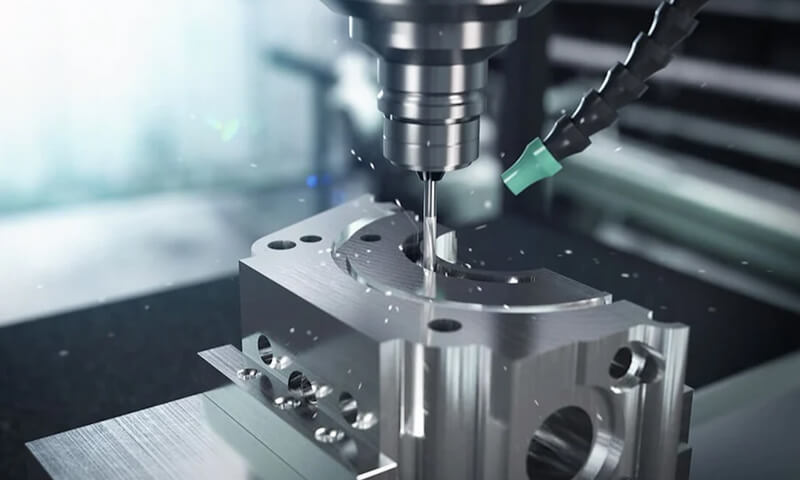
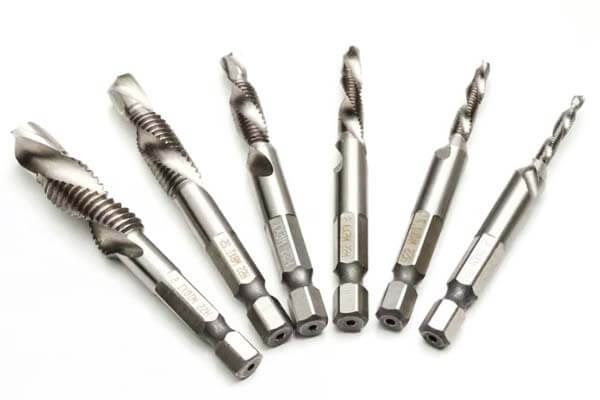
AISI M35 is widely used in the manufacture of cutting tools such as drills, taps, end mills, reamers, and saw blades.
Its high wear resistance ensures that tools last longer, reducing downtime and the need for replacements.
Whether it’s machining tough metals or high-temperature alloys, M35 tools excel at maintaining sharpness under stress.
Precision Machining
In industries like aerospace, automotive, and mold-making, AISI M35 is used for producing precision parts that require consistent performance under high-speed operations.
Its ability to retain hardness and resist deformation makes it a perfect choice for high-precision applications.
Tooling for Harder Materials
M35 is especially beneficial when working with hard-to-machine materials such as stainless steels, superalloys, and titanium.
Its resistance to heat and wear enables it to handle the challenges posed by these difficult materials while maintaining superior cutting performance over time.
Manufacturing Equipment
AISI M35 is used not just in cutting tools but also in the manufacturing of critical components in machinery that demand high wear resistance, such as gear teeth, pumps, and valves.
6. Advantages of AISI M35 High-Speed Steel
Increased Tool Life
One of the key advantages of AISI M35 is its ability to significantly increase tool life.
Thanks to its outstanding wear and heat resistance, tools made from M35 can endure longer in demanding conditions, resulting in fewer replacements and reduced maintenance costs.
Improved Performance at High Speeds
The heat resistance and hardness of M35 provide a clear advantage in high-speed machining operations.
The steel maintains its cutting efficiency even at extreme cutting speeds, improving overall productivity and reducing operational delays.
Cost-Effectiveness for Tough Applications
Although AISI M35 is more expensive than lower-grade high-speed steels like M2, its durability makes it a cost-effective choice in the long term.
The longer lifespan of M35 tools reduces the need for frequent replacements, leading to lower overall maintenance and tool costs in heavy-duty operations.
Versatility
AISI M35 offers a remarkable combination of heat resistance, wear resistance, and toughness, making it a versatile material for a wide range of machining applications.
From high-precision aerospace components to tough manufacturing tools, the M35 can handle a broad spectrum of industries and operations.
7. Challenges and Considerations
Cost
AISI M35 comes at a premium price compared to other high-speed steels like the M2.
This can deter cost-sensitive projects that do not require the full range of benefits that M35 provides.
However, its long-term durability and performance often justify the initial investment.
Heat Treatment Sensitivity
To unlock its full potential, the AISI M35 requires precise heat treatment. Improper quenching or tempering can affect its hardness or toughness, leading to performance issues.
Therefore, manufacturers must invest in the right equipment and processes to ensure proper heat treatment.
Machining and Processing Difficulty
The hardness of M35 can make it more difficult to machine, requiring specialized tools and techniques.
Cutting tools and machining equipment need to be tough enough to handle the demands of working with M35, increasing the complexity and cost of the manufacturing process.
Risk of Brittleness
Despite its toughness, the AISI M35 can still be prone to brittleness under extreme stress, especially if it is improperly heat-treated or used beyond its performance limits.
Proper handling and regular maintenance of tools made from M35 can mitigate this risk.
8. Heat Treatment of AISI M35
The heat treatment process is essential for unlocking the full potential of AISI M35 high-speed steel.
It enhances its hardness, wear resistance, and toughness, ensuring it can perform at peak efficiency under demanding conditions.
Proper heat treatment allows the steel to maintain its cutting-edge performance even in high-speed and high-temperature applications.
Austenitizing
Austenitizing is the first stage of the heat treatment process and is crucial for transforming the steel into an ideal microstructure for hardness and toughness.
- Temperature Range: AISI M35 should be heated to a temperature between 1200°C and 1250°C (2192°F – 2282°F).
- Purpose: At this temperature, the steel transforms into an austenitic phase, where the carbon atoms are dissolved into the iron matrix.
This prepares the steel for rapid quenching, which leads to the formation of martensite, giving the steel its characteristic hardness. - Duration: The steel should be held at this temperature for a sufficient period to ensure uniform heat distribution.
Typically, this is around 30-60 minutes, depending on the size and thickness of the material.
Quenching
Quenching is a critical step in heat treatment, as it significantly affects the steel’s hardness and wear resistance.
It involves rapidly cooling the steel after it has been heated to the austenitizing temperature.
- Cooling Medium: After austenitizing, AISI M35 is usually quenched in oil or air.
Oil quenching is preferred for M35 because it allows for more controlled cooling, preventing cracking and distortion. - Quenching Temperature: The steel is cooled to room temperature as quickly as possible, typically from 1200°C to 50°C (2192°F to 122°F),
ensuring that the transformation to martensite occurs. This rapid cooling increases the steel’s hardness. - Effect: Quenching results in the formation of martensite, a very hard structure.
The hardness of AISI M35 can reach up to 66 HRC (Rockwell Hardness), making it suitable for high-performance cutting tools.
Tempering
Tempering is a subsequent heat treatment process designed to relieve internal stresses and enhance toughness without significantly reducing hardness.
After quenching, the steel is very hard but also quite brittle. Tempering improves the steel’s balance of hardness and toughness.
- Temperature Range: AISI M35 should be tempered at temperatures between 550°C and 650°C (1022°F – 1202°F).
The precise temperature depends on the desired balance between hardness and toughness. - Duration: The steel is held at the tempering temperature for around 1-2 hours to ensure thorough heat penetration and uniformity throughout the material.
- Effect: Tempering reduces brittleness while maintaining a high level of hardness.
The steel becomes more resistant to cracking and chipping, making it better suited for heavy-duty cutting and high-speed machining applications.
Stress Relief Annealing (Optional)
In some cases, especially for large or complex components, a stress relief annealing step is carried out to reduce internal stresses that might lead to distortion during subsequent machining or use.
- Temperature Range: The steel is heated to around 650°C (1202°F), but not high enough to cause any significant transformation of the microstructure.
- Effect: This process allows internal stresses to relax, ensuring that the material is less likely to warp or crack during future operations.
Soft Annealing (Optional)
For situations where further machining is required or the steel needs to be softened for ease of cutting, soft annealing can be applied.
- Temperature Range: The steel is heated to a temperature of around 850°C to 900°C (1562°F – 1652°F).
- Effect: This process makes the steel easier for the machine by reducing its hardness and allowing it to be shaped or sized before undergoing the final hardening processe.
Effect of Heat Treatment on Properties
Proper heat treatment enhances AISI M35’s performance by optimizing its hardness, wear resistance, and toughness for cutting and machining applications.
The key effects of each stage of heat treatment are:
- Austenitizing: Transforms the steel into a structure ready for hardening by dissolving carbon into the steel matrix.
- Quenching: Increases the hardness by forming martensite, which provides the steel with excellent wear resistance for cutting tools.
- Tempering: Relieves internal stresses, improves toughness, and reduces brittleness, ensuring that tools retain their performance without breaking under load.
- Stress Relief Annealing: Reduces residual stresses from the hardening process, which can improve the dimensional stability of the steel.
- Soft Annealing: Softens the steel for easier machining or further processing.
9. Conclusion
AISI M35 high-speed steel is a top-tier material for cutting tools and machining applications that require excellent hardness, wear resistance, and heat stability.
Whether working with tough metals or operating at high cutting speeds, the M35 delivers outstanding performance.
Despite its higher cost and challenges in machining, its long-term benefits in terms of tool life, reliability, and efficiency make it a valuable material for a wide range of industrial operations.
If you’re looking for high-quality AISI M35 products, choosing DEZE is the perfect decision for your manufacturing needs.