
Stainless steel is one of the most widely used materials in the modern world, prized for its durability, corrosion resistance, and versatility.
But as consumers become increasingly health-conscious and concerned about what materials contact their food, water, and bodies, a critical question emerges: Is stainless steel non-toxic?
The short answer is yes—stainless steel is considered non-toxic and safe for food contact, medical use, and drinking water applications.
However, like most things in materials science, the full answer is more nuanced. The safety of stainless steel depends on its grade, the conditions under which it is used, and the quality of the manufacturing process.
1. What Is Stainless Steel?
Stainless steel is a family of corrosion-resistant iron-based alloys, rather than a single type of metal.
Under the commonly used European definition, stainless steel contains at least 10.5% chromium by mass and no more than 1.2% carbon.
Other alloying elements—including nickel, molybdenum, manganese, nitrogen, titanium, or niobium—are added in different combinations to obtain specific mechanical, corrosion-resistant, thermal, or processing properties.
The most important feature separating stainless steel from ordinary carbon steel is its ability to form a highly protective chromium-rich passive film on the surface.
When sufficient chromium is present and the surface is exposed to an oxygen-containing environment, this extremely thin oxide layer forms naturally and acts as a barrier between the underlying alloy and its surroundings.
When damaged under suitable conditions, the passive film can reform through further reaction with oxygen.
This passive behavior explains an important point about stainless steel safety: the bulk chemical composition of an alloy is not the same thing as the composition to which a user is normally exposed.
The surface is controlled by the passive layer, while corrosion resistance determines how effectively that surface remains protective.
2. Is Stainless Steel Non Toxic?
Generally, yes. Properly selected and manufactured stainless steel is considered a safe material for many food-contact, drinking-water, and consumer applications.
However, it is more accurate to describe stainless steel as low-reactivity and low-risk under intended conditions of use rather than absolutely “non-toxic” or completely inert.
Stainless steel is an alloy in which elements such as chromium, nickel, iron, and molybdenum are incorporated into a metallic structure.
Under normal conditions, these elements are not readily released in harmful quantities because the alloy is protected by a stable passive surface film.
Nevertheless, trace amounts of metals can migrate from stainless steel under certain conditions, particularly with acidic or salty media, prolonged contact, elevated temperatures, or localized corrosion.
The actual safety of stainless steel therefore depends on the alloy grade, surface condition, exposure environment, contact time, and intended application.
3. What Makes Stainless Steel Safe?
Several interconnected factors determine why stainless steel is widely regarded as a safe material for demanding applications.
The Passive Chromium-Rich Layer
The passive film is one of the most important reasons stainless steel resists corrosion.
When chromium-containing stainless steel is exposed to oxygen, a very thin chromium-enriched oxide film develops spontaneously on the surface.
The film is typically only a few nanometres thick, yet it can provide highly effective protection against further oxidation and corrosion.
Its main characteristics include:
- Highly protective: It substantially slows the electrochemical reactions responsible for corrosion.
- Thin and adherent: The film remains closely attached to the underlying metal rather than forming a loose, flaky layer.
- Self-repassivating: When the surface is lightly scratched or disturbed, the passive state can reform in the presence of oxygen.
- Environment-dependent: Strong chlorides, reducing environments, severe contamination, or other aggressive conditions can locally damage passivity and cause pitting or crevice corrosion.
Therefore, it is more accurate to say that stainless steel is passive and highly corrosion-resistant under suitable conditions than to describe its surface as an absolutely inert barrier.
Alloying Elements Are Incorporated Into the Metal Matrix
Stainless steel typically contains chromium and may also contain nickel, molybdenum, manganese, nitrogen, and other alloying elements.
These elements are part of the metallic alloy structure rather than simply being present as freely soluble ions. As a result, they are not normally released rapidly under ordinary service conditions.
However, “locked in” should not be interpreted literally. Stainless steel can still undergo corrosion and release small quantities of metallic constituents when environmental conditions are sufficiently aggressive.
For example, nickel and chromium release from stainless-steel cookware has been shown to vary with factors such as food acidity, cooking time, alloy composition, and the condition or history of the cookware.
This is why stainless-steel safety should be evaluated in terms of actual exposure rather than alloy composition alone.
Corrosion Resistance Limits Metal Release
Corrosion resistance is directly relevant to material safety because corrosion involves the deterioration of the metal surface and the potential transfer of metallic species into the surrounding environment.
A highly corrosion-resistant stainless steel surface can remain stable for long periods in many food, beverage, water, and biological environments.
However, stainless steel is corrosion-resistant rather than absolutely corrosion-proof.
Localized corrosion such as pitting or crevice corrosion can occur when the material is exposed to sufficiently aggressive conditions.
Consequently, choosing the appropriate stainless steel grade is an important part of ensuring long-term safety.
Surface Cleanliness and Finish
Stainless steel’s safety also depends on the quality of the finished surface. A smooth, clean surface is easier to sanitize and less likely to retain food residues, deposits, or contaminants.
Manufacturing operations such as welding, grinding, machining, polishing, pickling, and passivation can alter surface characteristics.
In demanding applications, appropriate post-processing is therefore important for restoring or optimizing corrosion resistance after fabrication.
Regulatory and Industry Requirements
Stainless steel is widely used in regulated applications, but it is important not to say that “stainless steel is approved by the FDA” as though one universal approval applies to every grade and product.
In practice, safety depends on the specific material, formulation, manufacturing process, intended use, and applicable regulatory requirements.
| Framework / Organization | Relevant Area | What It Means for Stainless Steel |
| U.S. FDA | Food-contact materials | Food-contact articles and substances must meet applicable safety requirements for their intended conditions of use. |
| European Union | Regulation (EC) No. 1935/2004 | Food-contact materials must not transfer constituents to food at levels that could endanger human health under normal or foreseeable use. |
NSF International |
Food equipment standards such as NSF/ANSI 51 | Provides requirements for materials and construction used in commercial food equipment. |
| Medical Standards and Regulations | Medical devices and implants | Medical stainless steel must meet application-specific material, manufacturing, biocompatibility, and regulatory requirements. |
4. Is Stainless Steel Safe for Cookware?
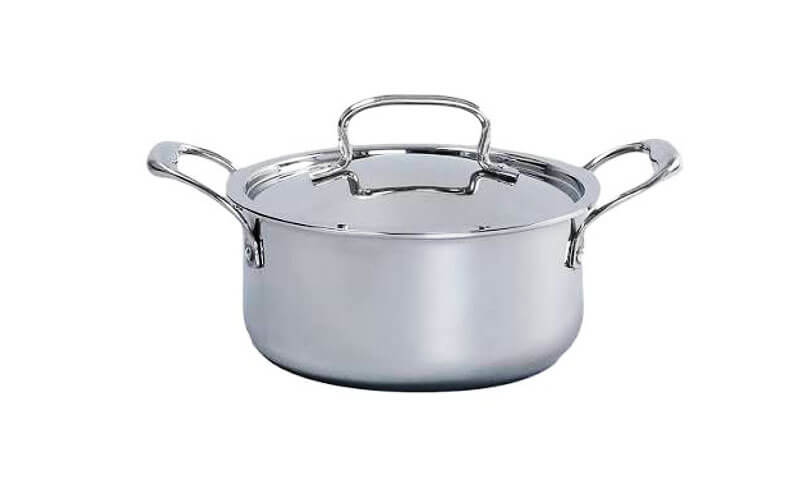
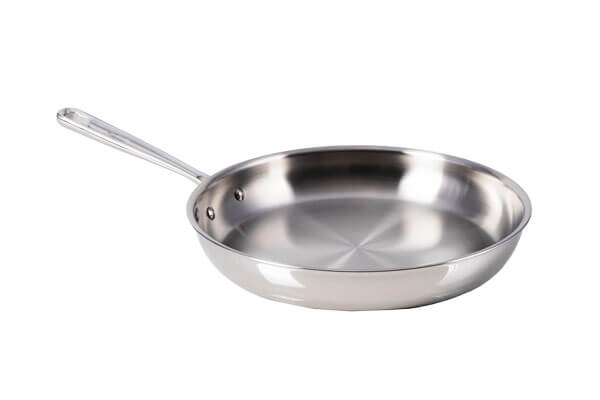
Yes. Properly manufactured and appropriately selected stainless steel is generally considered safe for cookware and food preparation.
Grades such as 304 are widely used because of their corrosion resistance, durability, thermal stability, and cleanability.
However, stainless steel is not completely inert: acidic or salty foods, prolonged cooking, high temperatures, and surface damage can increase the release of trace metals such as nickel and chromium.
For most users, this migration remains low, but people with known nickel sensitivity may need to consider the specific grade and product construction.
Proper cleaning, avoiding prolonged storage of highly acidic foods, and replacing severely pitted or corroded cookware can further reduce potential concerns.
5. Is Stainless Steel Safe for Food and Beverage Containers?
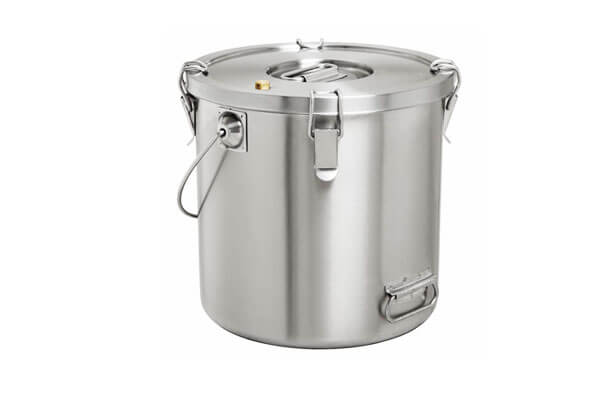
Yes. Stainless steel is widely used for food and beverage containers because its passive chromium-rich surface provides strong corrosion resistance while its smooth, durable structure supports hygienic cleaning.
Common grades such as 304 are suitable for many general food-contact applications, while 316 or 316L may be preferred in environments with higher chloride exposure because of their enhanced corrosion resistance.
Although trace amounts of alloying elements can migrate under certain conditions, the level depends on the grade, surface condition, temperature, contact time, and characteristics of the food or beverage.
For commercial and industrial applications, the material should be supported by appropriate food-contact compliance and traceability documentation.
6. Is Stainless Steel Safe for Medical Applications?
Certain stainless-steel grades are widely used in medical devices because they combine corrosion resistance, mechanical strength, fabricability, and suitable biological performance.
316L stainless steel, for example, has been used in surgical instruments and selected implant applications because its low-carbon composition helps improve resistance to sensitization after welding.
However, “medical grade” does not mean that stainless steel is completely biologically inert.
Corrosion, surface condition, metal-ion release, sterilization, mechanical loading, and duration of exposure must all be considered.
Medical applications therefore require specific material grades, controlled manufacturing processes, surface treatment, and compliance with applicable biocompatibility and medical-device requirements.
7. Is Stainless Steel Safe for Drinking Water?
Yes. Properly selected stainless steel is widely used for drinking-water bottles, tanks, pipes, fittings, and water-processing equipment because of its corrosion resistance, durability, and hygienic surface.
However, drinking-water safety depends on the specific grade and water chemistry.
Chloride concentration, pH, temperature, stagnant conditions, and surface condition can influence corrosion and the release of metallic constituents such as nickel and chromium.
For demanding potable-water applications, the material should therefore be selected according to the expected water environment and supported by appropriate compliance or certification.
A stainless-steel product should not be considered safe simply because it is labeled “stainless steel”; its composition, manufacturing quality, surface condition, and intended service conditions all need to be considered.
8. When Can Stainless Steel Become a Health Concern?
Stainless steel is generally safe in appropriate applications, but no stainless steel grade is completely immune to corrosion or metal release under every condition.
Health concerns become more relevant when the material is poorly selected, severely corroded, contaminated, or used in an environment outside its intended design conditions.
Potentially important situations include:
Aggressive Chemical Exposure
Strong acids, high concentrations of chlorides, and certain cleaning chemicals can destabilize the passive film and promote corrosion.
Localized corrosion, particularly pitting and crevice corrosion, can result in increased metal release.
Prolonged Contact With Acidic or Salty Foods
Acidic and salt-rich foods can be more aggressive toward stainless steel than neutral foods.
Repeated or prolonged exposure may increase the migration of elements such as nickel and chromium, especially when the surface is new, damaged, or exposed to unfavorable conditions.
Poor-Quality or Incorrectly Specified Stainless Steel
Using an inappropriate grade can significantly reduce corrosion resistance. For example, a lower-alloy grade may not be suitable for an environment containing high chloride concentrations.
Surface Contamination
Carbon-steel particles, machining residues, iron contamination, and inappropriate fabrication practices can introduce corrosion sites onto a stainless steel surface.
These contaminants can cause discoloration or localized rust-like corrosion even when the underlying stainless steel has good corrosion resistance.
Severe Surface Damage
Deep scratches, grinding damage, deposits, or damaged weld areas can interfere with the formation or maintenance of the passive surface.
Surface treatment such as appropriate cleaning, pickling, or passivation may be necessary after fabrication for demanding applications.
9. Does Rusty Stainless Steel Become Toxic?
No. The presence of rust does not automatically make stainless steel toxic.
Rust or brown surface discoloration generally indicates oxidation or corrosion and does not mean that the entire stainless steel product has suddenly become a poisonous material.
Stainless steel can develop rust-like deposits for several reasons. Iron contamination from carbon-steel tools or particles, surface deposits, chloride exposure, inadequate cleaning, or localized corrosion can all produce discoloration.
However, visible corrosion should not simply be ignored, particularly when stainless steel is used for food, drinking water, medical, or pharmaceutical applications.
Corrosion can indicate that the passive surface has been compromised and may increase the release of metallic constituents.
| Condition | Safety Implication |
| Minor surface discoloration | Usually does not mean the material has become toxic; investigate and clean appropriately. |
| Iron contamination | Can create rust-colored deposits without necessarily indicating bulk stainless steel corrosion. |
| Pitting corrosion | More significant because localized metal dissolution can occur. |
| Deep corrosion or surface degradation | Indicates loss of material integrity and requires evaluation. |
| Corrosion on food/water-contact equipment | Should be addressed promptly because migration and hygiene requirements become more important. |
The correct response to rusty stainless steel is therefore inspection and remediation rather than assuming toxicity.
Depending on the cause and severity, cleaning, removal of contamination, surface restoration, passivation, or replacement may be appropriate.
10. How to Choose Safe Stainless Steel Products
Choosing a safe stainless steel product starts with matching the material to the intended application rather than relying solely on the generic label “stainless steel.”
Identify the Stainless Steel Grade
Whenever possible, verify the actual grade. For common consumer and food-contact applications, 304 is widely used, while 316 may be preferable where greater resistance to chlorides or aggressive environments is required.
Consider the Intended Environment
Evaluate what the product will contact and under what conditions. Important factors include:
- Acidity and alkalinity
- Chloride or salt concentration
- Operating temperature
- Contact duration
- Cleaning and sterilization chemicals
- Humidity and exposure to water
Check Surface Quality
Look for a smooth, clean, uniform surface without deep scratches, persistent rust, pitting, cracks, or obvious fabrication defects.
For sanitary applications, surface finish can be particularly important because rough or damaged areas can retain contaminants and become more difficult to clean.
Verify Applicable Compliance
For food, drinking-water, and medical products, check whether the finished product meets the relevant standards or regulatory requirements for its intended use.
A material designation alone does not establish compliance with every application-specific regulation.
Choose Reputable Manufacturers
The manufacturer is an important part of stainless steel product safety, particularly for components used in food processing, drinking-water systems, medical equipment, and other hygiene-critical applications.
A reputable manufacturer should have effective control over material selection, machining or forming, welding, surface finishing, cleaning, inspection, and traceability.
DEZE Tech provides custom stainless steel manufacturing and precision component solutions with an emphasis on material quality, dimensional accuracy, and controlled production.
Our capabilities can support stainless steel components manufactured through processes such as precision casting, CNC machining, and related secondary operations, allowing material selection and part geometry to be considered together during production.
11. The Science Behind “Non-Toxic”: A Better Way to Evaluate Materials
The term “non-toxic” is not an absolute scientific classification. Almost any material can present a risk under sufficiently high exposure or inappropriate conditions.
A more rigorous assessment asks four questions: What substances are present? Can they be released? How much can be released? And how is a person exposed to them?
For stainless steel, this approach is particularly important because the alloy contains elements such as chromium and, in many grades, nickel.
Their presence in the alloy does not by itself indicate that a finished product is hazardous.
A Practical Framework for Material Safety
| Evaluation Factor | Key Question | Why It Matters |
| Composition | Which elements and compounds are present? | Different stainless steel grades have different alloy chemistries. |
| Release / Migration | Can constituents migrate from the surface? | The bulk composition does not equal actual human exposure. |
| Exposure Level | How much of the substance can reach the user? | Toxicological risk depends strongly on dose and exposure duration. |
| Exposure Route | Is exposure through food, water, skin, inhalation, or implantation? | Different exposure routes have different biological implications. |
Service Conditions |
What are the temperature, pH, chloride level, and contact time? | Aggressive conditions can increase corrosion and constituent release. |
| Material Stability | Does the surface remain chemically stable? | A stable passive surface generally limits corrosion and migration. |
| Application Requirements | Is the product intended for food, water, medical, or general use? | Safety and compliance requirements vary by application. |
This framework explains why simply asking whether stainless steel contains nickel or chromium is insufficient.
A risk assessment must consider the relationship between hazard and exposure.
An element may have hazardous properties in a particular chemical form or at a sufficiently high dose, while the same element incorporated into a corrosion-resistant alloy may result in very different exposure characteristics.
For stainless steel, surface stability is therefore central to the safety assessment.
Chromium enables passivation, while the alloy’s corrosion resistance helps limit the dissolution of metallic constituents.
Grade selection, surface finishing, manufacturing quality, and service environment all influence this behavior.
In practical terms, a better question than “Is stainless steel non-toxic?” is:
Does this specific stainless steel product release hazardous constituents at levels of concern under its intended conditions of use?
That is a much more meaningful engineering and health-safety question.
12. Final Verdict: Is Stainless Steel Non Toxic?
The most defensible answer to “Is stainless steel non toxic?” is therefore:
Stainless steel is generally safe for its intended applications and is considered a low-risk material in many food, water, consumer, and engineering environments. Nevertheless, its safety is application-dependent rather than absolute.
The critical factors are:
Correct grade + stable passive surface + proper manufacturing + appropriate application + controlled exposure
When these factors are properly managed, stainless steel offers an unusually strong combination of durability, corrosion resistance, hygiene, and low constituent release.
The goal should not be to find a material that never interacts with its environment—few real-world materials meet that definition.
The goal is to select a material whose behavior, exposure level, and biological risk remain within acceptable limits throughout its intended service life.
FAQs
Is stainless steel non-toxic for everyday use?
Generally, yes. Properly manufactured stainless steel is widely used in consumer products and is normally considered a low-risk material when used for its intended purpose.
Its safety depends on the specific grade, surface condition, and exposure environment.
Is stainless steel safe for people with nickel allergies?
Many people with nickel sensitivity can use some stainless-steel products without significant problems, but sensitivity varies.
Because many common austenitic stainless steels contain nickel, people with a confirmed allergy may wish to consider the specific grade, contact conditions, and products designed to minimize nickel exposure.
Does stainless steel become toxic when heated?
Ordinary cooking temperatures do not automatically make stainless steel toxic.
Extremely high-temperature industrial processes are different because activities such as welding can generate metal-containing fumes that require appropriate occupational controls.
Is stainless steel safer than aluminum?
Neither material is universally safer in every application. Both stainless steel and aluminum can be suitable for food-contact products when the appropriate material and manufacturing controls are used.
Corrosion resistance, food chemistry, temperature, weight, cost, and intended service conditions should all be considered.
Is “food-grade stainless steel” enough to guarantee safety?
Not by itself. “Food grade” is a useful description, but it should ideally be supported by a defined material grade, appropriate manufacturing controls, and evidence that the finished product meets the requirements of its intended food-contact application.
Can stainless steel release chromium into food?
Trace chromium migration can occur under certain conditions. The amount depends on the alloy, surface condition, food chemistry, temperature, and contact time.
Detectable chromium release does not automatically indicate a harmful exposure.

