
1. Introduction
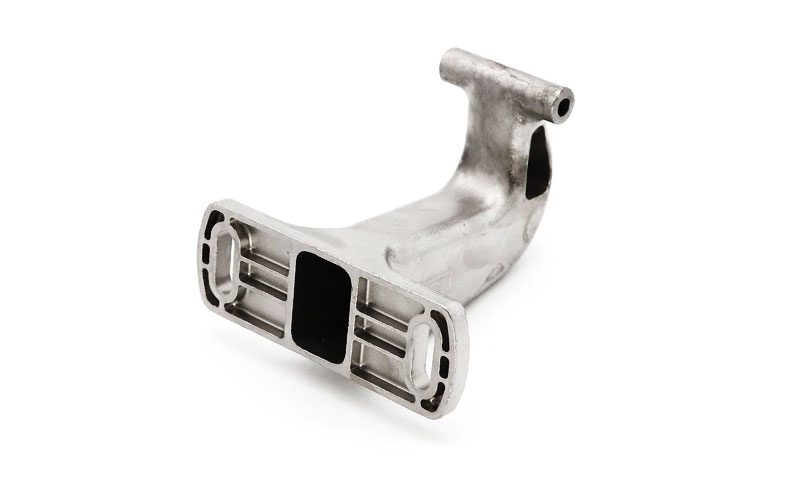
Cast stainless steel combines intrinsic corrosion resistance with the geometric freedom of casting.
The result is components that integrate complex features (passages, bosses, ribs), resist aggressive environments (chlorides, chemicals, elevated temperatures), and deliver long service life with relatively low maintenance.
This article examines those advantages from metallurgy, manufacturing, performance, economic and sustainability perspectives and gives practical guidance for engineers and purchasers.
2. What “cast stainless steel” means
“Cast stainless steel” describes stainless-grade, chromium-bearing Fe-based alloys produced by conventional casting processes (sand, investment, centrifugal, shell, vacuum) and then subjected to any required post-casting processing (solution anneal, machining, passivation, NDT).
Families include austenitic (cast equivalents of 304/316), duplex (2205-type), ferritic, martensitic and specialty high-alloy cast grades.
3. Materials-science advantages
Intrinsic passivity: chromium-based corrosion protection
- Chromium in stainless steel forms a protective chromium-oxide film (Cr₂O₃) that is self-healing in the presence of oxygen.
This passive film delivers low uniform corrosion rates and—when alloyed with Mo and N—substantial resistance to localized attack (pitting/crevice). - Quantitative indicator: PREN (Pitting Resistance Equivalent Number) — e.g., 304 ≈ ~19, 316 ≈ ~24, duplex 2205 ≈ ~30–35. Higher PREN correlates with better chloride resistance.
Alloy tailoring for service
- Cast stainless chemistries can be adjusted (Cr, Ni, Mo, N, Cu, etc.) to match environmental and mechanical demands.
Duplex cast grades provide higher yield strength and superior chloride resistance because they exploit a controlled two-phase (ferrite + austenite) microstructure.
High-temperature stability and mechanical versatility
- Many stainless cast grades retain mechanical integrity at elevated temperatures and resist scaling/oxidation better than carbon steels and many aluminums.
Martensitic and precipitation-hardening cast grades deliver hardness and wear resistance where needed.
4. Manufacturing and design advantages
Complex geometry and near-net shape
- Casting allows internal passages, integrated ribs, bosses and thin walls to be produced in one piece—reducing assembly count, leak paths and post-machining.
This reduces part count, lowers assembly labour and delivers performance advantages (integrated cooling, stiffening).
Size and process flexibility
- Sand casting, investment casting and centrifugal casting cover a very wide part size range and production volumes from prototype to large series.
Investment casting and shell molds provide tight tolerances and excellent surface finish for critical components.
Consolidation of functions
- Cast stainless parts can combine structural, sealing and flow-through features that would otherwise require multiple wrought parts and fasteners—this improves reliability and reduces points of failure.
Post-cast process compatibility
- Cast stainless steels accept conventional downstream processes (machining, welding, surface finishing, passivation).
Where high integrity is needed, hot-isostatic pressing (HIP) and solution anneal restore and improve properties.
5. Performance advantages (data and typical ranges)
Corrosion resistance (practical advantage)
- General corrosion: Typically negligible in many atmospheres; stainless castings perform far better than carbon steel without coatings.
- Localized attack resistance: Duplex and Mo-bearing cast grades resist chloride pitting far better than plain austenitic cast equivalents.
Use PREN as a selection guide: 304 (≈19) → 316 (≈24) → duplex (≈30–38).
Mechanical properties (typical, as-cast ranges)
- Density: ~7.7–8.1 g·cm⁻³.
- Ultimate tensile strength (UTS): austenitic castings ~350–650 MPa, duplex ~600–900 MPa.
- Yield strength: austenitic ~150–350 MPa; duplex ~350–550 MPa.
- Hardness: typical breadth ~150–280 HB depending on family and condition.
(Actual values depend on alloy, section thickness, casting route and heat treatment—use supplier data for design.)
Elevated temperature and creep resistance
- Many stainless cast grades maintain strength and oxidation resistance at temperatures where aluminum and many irons would fail or require protective coatings.
Nickel-base cast alloys extend this advantage into extreme environments.
Wear and abrasion resistance
For sliding, erosive or abrasive service, martensitic or precipitation-hardening cast stainless grades can achieve high hardness and wear resistance while still providing corrosion resistance superior to many ferrous alloys.
Structural integrity, leak-tightness and fatigue life
Cast stainless parts can provide excellent leak integrity and acceptable fatigue life if casting quality (low porosity, clean melt) and post-processing are controlled.
Hygiene, cleanability and aesthetic stability
Stainless surfaces are easily cleaned, tolerate sanitization, and resist staining—advantages for food, pharma and sanitary equipment.
Electropolishing further enhances cleanability and reduces bacterial adhesion.
6. Durability, maintenance and lifecycle economics
Reduced maintenance and downtime
- Because stainless castings resist corrosion and require less surface protection, maintenance cycles are longer and downtime for recoating or replacement is reduced.
This is a significant operational advantage for pumps, valves and offshore equipment.
Whole-life cost advantage
- Initial material cost is higher than carbon steel, but total cost of ownership often favors stainless in corrosive applications due to lower maintenance, fewer failures, and longer intervals between replacements.
Recyclability and circularity
- Stainless steel is highly recyclable; scrap recapture and high scrap value improve lifecycle sustainability and can offset embodied energy over long service lives.
7. Application and industry perspectives — where cast stainless wins
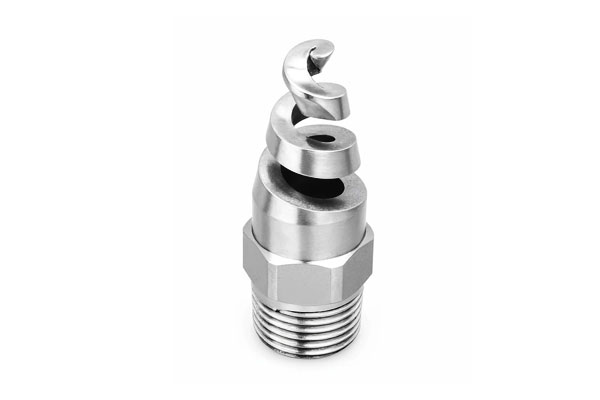
- Oil & Gas / Offshore: pumps, valves and manifolds exposed to seawater, brines and corrosive process streams (duplex cast grades commonly used).
- Chemical Process: corrosion-resistant reactor components, agitators and containment where alloyed castings avoid expensive linings.
- Marine & desalination: seawater service components (duplex and super-austenitic where required).
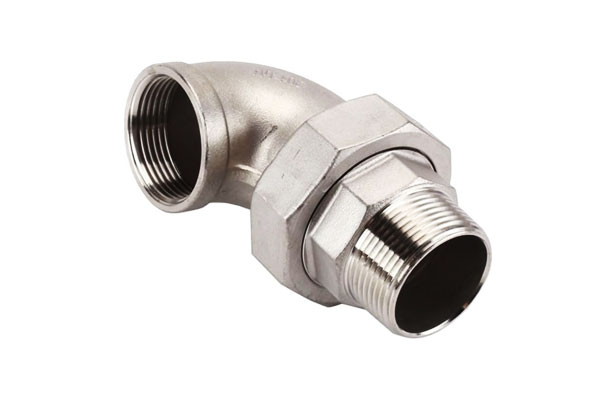
- Food, Pharma & Sanitary: cast pump housings, valves and fittings that need cleanability and corrosion resistance with integrated internal geometry.
- Power generation & high-temperature services: heat-resistant castings and corrosion-resistant components for steam and exhaust systems.
- Water treatment & municipal infrastructure: long-lived, low-maintenance assets (valves, fittings, pump casings).
8. Limitations and how to mitigate them
Higher upfront material and processing costs
- Mitigation: perform lifecycle cost analysis—stainless often wins over decades in corrosive services.
Consider selective use (stainless wetted surfaces; carbon steel non-wetting structures).
Casting defects (porosity, inclusions) that can affect fatigue and pressure integrity
- Mitigation: use appropriate casting process (centrifugal/investment/HIP for critical parts), melt cleanliness, filtration, directional solidification and NDT (radiography, CT, ultrasonic). Specify acceptance criteria.
Sigma phase and carbide precipitation risk
- Mitigation: control alloy selection and heat treatment (solution anneal + rapid quench), avoid long holds in 600–900 °C range, and specify post-weld heat treatment or low-C variants where necessary.
Heavier than aluminum and magnesium (density tradeoff)
- Mitigation: design topology for stiffness (ribbing, thin-wall sections achievable by casting) and evaluate specific strength (strength/density) not just absolute weight.
9. Comparative Advantage: Cast Stainless Steel vs. Alternatives
| Material | Density (g/cm³) | Corrosion Resistance | Mechanical Strength | Fabrication / Design Flexibility | Typical Applications / Notes |
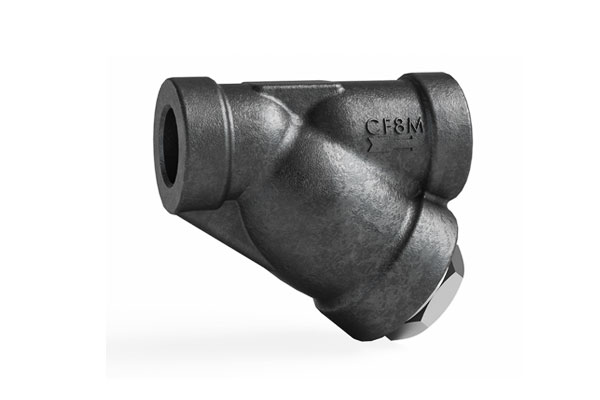
| Cast Stainless Steel (CF8, CF8M, Duplex) | 7.7–8.1 | Excellent general corrosion; moderate to high localized (depends on grade) | UTS 350–900 MPa; Yield 150–550 MPa | Excellent casting freedom for complex shapes; integrates passages, ribs, bosses | Pumps, valves, chemical processing, offshore, marine, food/pharma equipment |
| Cast Carbon Steel | 7.85 | Poor in most wet/chemical environments without coating | UTS 350–600 MPa; Yield 250–400 MPa | Good casting freedom; requires protective coating for corrosion | Structural components in dry conditions; coated piping; low-corrosion process tanks |
Cast Aluminum |
2.7 | Moderate (oxidizes to Al₂O₃; poor in chlorides unless coated) | UTS 150–350 MPa; Yield 80–250 MPa | Excellent for lightweight complex parts; easy machining | Lightweight housings, automotive components; heat-sensitive service |
| Cast Bronze / Cu alloys | 8.4–8.9 | Excellent in seawater and mild chemicals | UTS 200–500 MPa; Yield 100–300 MPa | Limited mechanical strength vs. stainless; good casting for wear parts | Marine fittings, bearings, pump impellers; seawater-exposed components |
10. Practical selection checklist & specification tips
- Define environment (chloride concentration, temperature, flow, erosive particles).
- Select family & PREN: 304/CF8 (general), 316/CF8M (moderate chloride), duplex (2205/CD3MN) for severe chloride and high strength, super-austenitics/ nickel-base for extreme environments.
- Choose casting route per part criticality: investment/centrifugal/HIP for pressure/fatigue parts; sand for large, lower-stress parts.
- Specify post-casting treatment: solution anneal, quench, passivation, and any HIP if required.
- Define NDT & acceptance criteria: radiography/CT for pressure parts; UT for thickness; dye-penetrant for surface cracks.
- Surface finish & passivation: electropolish or citric/nitric passivation for hygiene/critical corrosion resistance.
- Design for maintainability: avoid crevices, allow drainage, plan access for inspection and repair.
- Procurement clause example: list grade (ASTM/EN), casting process, heat-treatment, required NDT, passivation standard (e.g., ASTM A967), and certificate type (EN 10204).
11. Conclusions
Cast stainless steel uniquely combines corrosion resistance and casting flexibility.
For components that must survive corrosive fluids, aggressive environments, or require integrated internal geometries, cast stainless commonly provides the best balance of reliability, manufacturability and lifecycle cost.
Appropriate alloy selection, sound foundry practice and defined post-cast treatments convert material potential into dependable field performance.
FAQs
Is cast stainless always the best choice for corrosive service?
Not always. For light-duty or cost-sensitive applications carbon steel with coating may be preferred.
But for persistent chloride, chemical or high-temperature environments, cast stainless often has lower total ownership cost.
Which cast stainless gives the best chloride resistance?
Duplex grades (e.g., 2205 equivalents) and super-austenitic grades (high Mo + N) offer the best pitting/crevice resistance; use PREN as a guide.
How to manage fatigue risk in cast stainless parts?
Minimize porosity through process choice (HIP, vacuum casting), control melt hygiene, specify radiographic acceptance and design to reduce stress concentrations.
Are cast stainless parts recyclable?
Yes—stainless scrap is highly recyclable and often recovered at high value, supporting circularity.
Can cast stainless steel be welded?
Yes—most grades (CF8, CF3M, CD4MCuN) are weldable via GTAW (TIG) or GMAW (MIG) using matching fillers (e.g., ER316LMo for CF3M).
Post-weld solution annealing (1010–1120°C, water quenching) eliminates intergranular corrosion risk.
Is cast stainless steel magnetic?
Austenitic grades (CF8, CF3M) are non-magnetic (relative permeability ≤1.005), making them suitable for MRI equipment.
Ferritic (CB30) and martensitic (CA15) grades are ferromagnetic, limiting their use in magnetic-sensitive environments.

