

1. Introduction
1.4408 stainless steel, also designated as GX5CrNiMo19-11-2 under EN/ISO standards, is a cast austenitic stainless steel renowned for its superior resistance to corrosion and high mechanical strength.
Engineered with precise proportions of chromium, nickel, and molybdenum, it performs exceptionally well in chemically aggressive and high-moisture environments.
Thanks to its durability and excellent resistance to pitting and crevice corrosion, 1.4408 is widely used in marine components, chemical reactors, valve housings, and heat exchangers.
Its versatility makes it a preferred material in industries where exposure to chlorides and acidic media is routine.
This article delves into the technical profile of 1.4408 stainless steel, examining its chemical composition, microstructure, mechanical properties, fabrication techniques, industrial applications, benefits, and the future trajectory of its development.
2. Background and Standard Overview
Historical Development
1.4408 is part of the 300-series family of stainless steels developed in the 20th century to meet industrial needs for higher corrosion resistance.
The addition of molybdenum to traditional Cr-Ni austenitic grades marked a turning point,
enabling these alloys to perform in aggressive environments such as saltwater and acid-processing facilities.
Standards and Specifications
1.4408 is governed by several European and international standards:
- EN 10213-5: Specifies the chemical composition and mechanical properties of steel castings for pressure purposes.
- EN 10088: Provides guidance on the physical properties, corrosion resistance, and application environments.
3. Chemical Composition and Microstructure
Chemical Composition
| Element | Typical Range (% by weight) | Function |
|---|---|---|
| Chromium (Cr) | 19.0–21.0% | Forms a passive oxide layer for corrosion resistance |
| Nickel (Ni) | 11.0–12.5% | Enhances toughness and improves chemical resistance |
| Molybdenum (Mo) | 2.0–2.5% | Improves pitting and crevice corrosion resistance |
| Carbon (C) | ≤0.07% | Minimizes carbide precipitation |
| Manganese (Mn) | ≤1.5% | Acts as a deoxidizer and improves hot workability |
| Silicon (Si) | ≤1.0% | Aids in casting fluidity |
| Iron (Fe) | Balance | Base metal |
Microstructural Characteristics
Austenitic Matrix
1.4408 features a fully austenitic structure with a face-centered cubic (FCC) lattice, providing excellent ductility and resistance to stress corrosion cracking.
Phase Distribution
Due to controlled alloying and casting processes, the formation of unwanted ferrite or sigma phases is minimized, which maintains toughness and corrosion resistance.
Heat Treatment Influence
Solution annealing followed by rapid quenching ensures a homogeneous microstructure, dissolving any residual carbides and preventing intergranular corrosion.
4. Physical and Mechanical Properties
1.4408 stainless steel stands out for its balanced mechanical performance and stable physical behavior under extreme conditions.
These properties make it an ideal choice for components exposed to high mechanical loads, fluctuating temperatures, and corrosive media.
Strength and Hardness
1.4408 delivers robust mechanical strength, essential for maintaining integrity under dynamic and static loading.
According to standardized tests, the tensile strength of 1.4408 typically falls between 450 and 650 MPa, while its yield strength (Rp0.2) starts at around 220 MPa.
These figures position it competitively among high-performance cast austenitic stainless steels.
In terms of hardness, Brinell Hardness (HB) values generally range from 160 to 190, depending on the specific heat treatment and casting process used.
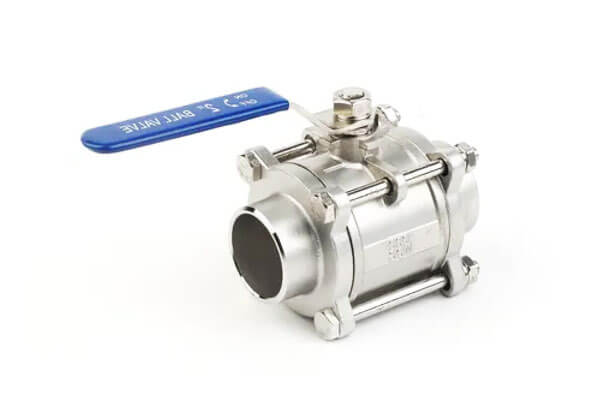
This hardness ensures strong wear resistance, which is particularly valuable in valve bodies and pump components.
Ductility and Toughness
Despite its strength, 1.4408 retains excellent ductility. It offers an elongation at break of ≥30%, enabling it to deform plastically without fracturing under tensile loads.
This characteristic is critical for resisting brittle failure during mechanical shock or sudden pressure changes.
Its impact toughness also deserves attention. In Charpy V-notch impact tests at room temperature,
1.4408 demonstrates values often exceeding 100 J, illustrating its ability to absorb energy and resist cracking under repeated stress cycles or cold conditions.
Corrosion and Oxidation Resistance
Engineered for resilience, 1.4408 exhibits outstanding resistance to a wide range of corrosive agents.
The addition of 2–2.5% molybdenum significantly enhances its defense against chloride-induced pitting and crevice corrosion—a major concern in seawater and chemical plant environments.
According to ASTM B117 salt spray tests, components made from 1.4408 can withstand over 1000 hours of exposure without significant degradation, far outperforming many standard grades.
Its oxidation resistance at elevated temperatures up to 850°C makes it suitable for use in flue gas systems and heat exchangers exposed to hot, oxidizing gases.
Thermal Properties
From a thermal performance perspective, 1.4408 maintains dimensional stability across a broad temperature range.
Its thermal conductivity averages 15 W/m·K, which supports efficient heat transfer in heat exchangers.
Meanwhile, its coefficient of thermal expansion lies between 16–17 × 10⁻⁶ /K, consistent with austenitic stainless steels, allowing for predictable thermal movement during heating and cooling cycles.
| Property | Typical Value |
|---|---|
| Tensile Strength | 450–650 MPa |
| Yield Strength (Rp0.2) | ≥ 220 MPa |
| Elongation | ≥ 30% |
| Hardness (Brinell) | 160–190 HB |
| Impact Toughness | > 100 J (at room temperature) |
| Density | 7.9 g/cm³ |
| Thermal Conductivity | ~15 W/m·K |
| Coefficient of Thermal Expansion | 16–17 × 10⁻⁶ /K |
5. Processing and Fabrication Techniques of 1.4408 Stainless Steel
Processing and fabricating 1.4408 stainless steel requires a thorough understanding of its unique properties and the appropriate methods to achieve optimal results.
This section explores the various techniques involved in casting, heat treatment, machining, welding, and surface finishing.
Casting and Foundry Techniques
Casting is one of the primary methods for producing components from 1.4408 stainless steel.
The selection of the casting method depends on the complexity of the part, the required dimensional accuracy, and production volume.
- Sand Casting: Ideal for large, less precise parts. It involves creating molds from sand mixed with a binder around patterns of the desired component.
- Investment Casting: Offers higher precision and smoother surfaces compared to sand casting.
It uses wax patterns coated with ceramic slurry, which are then melted out to form a mold. - Permanent Mold Casting: Utilizes reusable metal molds, providing better mechanical properties and dimensional accuracy than sand casting, but is limited to simpler shapes.
Heat Treatment:
After casting, heat treatment is crucial for optimizing the material’s microstructure and mechanical properties.
Solution annealing at temperatures between 1000°C and 1100°C, followed by rapid cooling (quenching),
helps dissolve carbides and intermetallic phases into the austenitic matrix, improving corrosion resistance and toughness.
Quality Assurance:
Ensuring consistency and minimizing defects is vital. Advanced simulation tools and non-destructive testing (NDT) methods
such as ultrasonic testing (UT), radiographic testing (RT), and magnetic particle inspection (MPI) are employed to verify the integrity of cast components.
Machining and Welding
Machining Considerations:
Due to its high alloy content, 1.4408 stainless steel can be challenging to machine.
Its tendency to work harden quickly necessitates careful selection of cutting speeds, feeds, and coolants to prevent tool wear and maintain surface finish quality.
- Tool Selection: Carbide tools are generally preferred due to their hardness and wear resistance,
though ceramic or cubic boron nitride (CBN) inserts may be necessary for more demanding operations. - Coolant Systems: Adequate cooling during machining reduces heat buildup, preventing thermal deformation and extending tool life.
Welding Techniques:
Proper welding practices are essential to avoid issues like hot cracking, porosity, and intergranular corrosion.
- Preferred Methods: Tungsten Inert Gas (TIG) and Metal Inert Gas (MIG) welding are commonly used due to their ability to provide clean, controlled welds with minimal heat input.
- Pre-Weld Heating and Post-Weld Heat Treatment: Preheating the base metal before welding can reduce thermal stresses,
Post-weld heat treatment helps relieve residual stresses and restores corrosion resistance by re-dissolving carbides that may have precipitated during welding.
Surface Finishing:
Post-processing methods enhance the performance and appearance of finished products.
- Electropolishing: Removes a thin layer of surface material, improving corrosion resistance and creating a smooth, bright finish.
- Passivation: A chemical treatment that enhances the passive oxide layer on the surface, further increasing corrosion resistance.
6. Applications of 1.4408 Stainless Steel
| Industry | Application |
|---|---|
| Chemical Processing | Heat exchangers, reactors, pipelines |
| Marine Engineering | Pump housings, deck fittings, flanges |
| Oil & Gas | Valve bodies, manifolds, offshore risers |
| Power Generation | Condensers, pressure vessels |
| General Industry | Food processing equipment, pumps |
7. Advantages of 1.4408 Stainless Steel
1.4408 stainless steel continues to gain traction across demanding industries due to its exceptional combination of chemical stability, mechanical strength, and thermal resilience.
Compared to standard austenitic grades, it offers several key advantages that position it as a premium material solution in corrosive and high-stress environments.
Superior Corrosion Resistance in Aggressive Media
One of the most notable strengths of 1.4408 is its excellent corrosion resistance, especially in environments laden with chlorides, acids, and seawater.
Thanks to its 19–21% chromium, 11–12% nickel, and 2–2.5% molybdenum, this alloy forms a highly stable passive layer on its surface that prevents localized attack.
- In salt spray tests (ASTM B117), 1.4408 components regularly exceed 1000+ hours of exposure without measurable corrosion, outperforming 304 and even 316L in similar conditions.
- It also resists pitting corrosion and crevice corrosion, common failure modes in offshore platforms and chemical reactors.
Robust Mechanical Properties under Load
1.4408 delivers mechanical reliability across a broad range of conditions. With a tensile strength of 450–650 MPa and yield strength around 220 MPa, it maintains structural integrity under high stress.
Furthermore, its elongation ≥30% ensures superior ductility, making it resistant to brittle fracture or sudden mechanical failure.
This combination of strength and flexibility is essential in industries such as oil and gas, where components are routinely exposed to vibration, pressure fluctuations, and mechanical shock.
Excellent Thermal Stability and Oxidation Resistance
1.4408 performs reliably at elevated temperatures, withstanding continuous service up to 850°C without significant degradation.
Its coefficient of thermal expansion (CTE) of ~16.5 × 10⁻⁶/K and thermal conductivity of ~15 W/m·K allow it to handle thermal cycling effectively.
Applications such as heat exchangers, combustion chambers, and flue gas systems benefit significantly from this thermal resilience, which reduces the risk of scaling and material fatigue over time.
Versatility in Casting and Fabrication
Another compelling advantage is its suitability for precision casting techniques
such as investment casting and sand casting, enabling the production of complex geometries with tight dimensional tolerances.
Its consistent flow characteristics during casting make it ideal for manufacturing valve bodies, pump housings, and turbine components with intricate internal passages.
Additionally, 1.4408 can be machined and welded using standard practices adapted for austenitic stainless steels.
With proper parameter control and filler material selection, it offers excellent weldability, minimizing the risk of intergranular corrosion in the heat-affected zone.
Long-Term Cost Efficiency
While the initial cost of 1.4408 is higher than that of standard stainless steels due to its elevated alloying content, the total lifecycle cost is often lower. This is attributed to:
- Extended service life in corrosive or thermally challenging environments
- Lower maintenance and inspection frequency
- Reduced downtime and part replacement costs
As industries increasingly prioritize total ownership cost over up-front material savings, 1.4408 emerges as a sustainable and economically justifiable material choice.
Sustainability and Recyclability
In alignment with modern sustainability goals, 1.4408 is 100% recyclable and supports circular manufacturing practices. Its corrosion resistance reduces the need for chemical coatings or treatments, further enhancing its environmental credentials.
8. Challenges and Limitations of 1.4408 Stainless Steel
Despite its superior properties and widespread use, 1.4408 stainless steel is not without challenges and limitations.
These factors must be carefully considered during material selection, processing, and application to ensure optimal performance and cost-effectiveness.
Processing Complexity
The production of high-quality components from 1.4408 requires precise control over casting and heat treatment processes.
- Porosity and Hot Cracking: During casting, improper cooling rates or uneven solidification can lead to defects
such as porosity or hot cracking, compromising the structural integrity of the final product. - Heat Treatment Sensitivity: Achieving the desired microstructure and mechanical properties depends heavily on accurate temperature control during solution annealing and quenching.
Deviations can result in carbide precipitation, reducing corrosion resistance.
Machining and Welding Sensitivity
The high alloy content of 1.4408 makes it challenging to machine and weld effectively.
- Machining Difficultities: The material’s tendency to work harden quickly necessitates specialized tooling, optimized cutting speeds, and advanced coolant systems.
Failure to address these challenges can lead to excessive tool wear, poor surface finishes, and dimensional inaccuracies. - Welding Challenges: While welding techniques like TIG and MIG are preferred,
1.4408 is prone to issues such as intergranular corrosion and heat-affected zone (HAZ) cracking if proper procedures are not followed.
Preheating and post-weld heat treatments are often required to mitigate these risks.
Higher Material Cost
1.4408 stainless steel is more expensive than standard austenitic stainless steels due to its higher alloy content, particularly nickel and molybdenum.
- Initial Investment: The upfront cost of raw materials and components made from 1.4408 can be a significant barrier, especially for budget-constrained projects.
- Cost-Benefit Analysis: Although the material offers long-term benefits through reduced maintenance and extended service life, the initial expense may deter some industries from adopting it.
Variability in Microstructure
Inconsistent processing parameters during casting or heat treatment can lead to variations in the microstructure, which directly impact mechanical and corrosion-resistant properties.
- Carbide Precipitation: Improper cooling can cause chromium carbides to precipitate at grain boundaries, increasing susceptibility to intergranular corrosion.
- Mechanical Property Fluctuations: Variations in grain size and phase distribution can result in inconsistent strength, toughness, and ductility across different batches or components.
Environmental Concerns
While 1.4408 is highly durable, its production involves energy-intensive processes and the use of scarce alloying elements like nickel and molybdenum.
- Resource Dependency: The reliance on critical raw materials raises concerns about supply chain stability and environmental sustainability.
- Carbon Footprint: Traditional manufacturing methods contribute to greenhouse gas emissions, prompting calls for more sustainable production practices.
Limitations in Extreme Environments
Although 1.4408 performs exceptionally well in many aggressive environments, it has limitations in certain extreme conditions.
- High-Temperature Oxidation: While it maintains good thermal stability, prolonged exposure to temperatures exceeding 300°C can lead to oxidation and reduced mechanical performance.
- Severe Acidic Conditions: In highly concentrated acids (e.g., hydrochloric acid), even 1.4408 may experience accelerated corrosion, necessitating alternative materials like nickel-based alloys.
9. Future Trends and Innovations – 1.4408 Stainless Steel
As global industries evolve toward higher performance, sustainability, and digitalization, 1.4408 stainless steel (GX5CrNiMo19-11-2) remains highly relevant.
This austenitic casting-grade stainless steel continues to benefit from technological advances and shifting market dynamics.
The following emerging trends and innovations are shaping its future trajectory:
Alloy Optimization through Microalloying
Researchers are exploring microalloying techniques to further refine the performance of 1.4408.
Adding trace elements such as nitrogen, niobium, and rare earth metals is being studied to improve grain refinement.
increase pitting corrosion resistance, and reduce carbide precipitation at grain boundaries. These enhancements could:
- Improve yield strength by up to 15%
- Increase resistance to intergranular corrosion and SCC (Stress Corrosion Cracking)
- Extend service life in chloride-rich or acidic environments
Smart and Connected Manufacturing
Digital transformation in the steel casting sector is gaining momentum. Industry 4.0 technologies—such as IoT sensors, machine learning algorithms, and real-time process monitoring—are enabling:
- Tighter control over casting variables like mold temperature, cooling rates, and alloy composition
- Faster defect detection using digital twins and NDT analytics
- Up to 25% improvement in production efficiency through data-driven optimization
For 1.4408, these technologies result in more consistent microstructure, reduced porosity, and minimized hot cracking—key factors in high-performance components.
Sustainable Production Methods
With increasing pressure for low-emission manufacturing, the stainless steel industry is actively adopting:
- Electric induction melting powered by renewable energy
- Closed-loop water and material recycling
- Eco-friendly fluxes to reduce emissions during casting
Early adopters report up to 20% reductions in energy consumption and 30–40% lower carbon emissions, positioning 1.4408 as a material of choice in green manufacturing initiatives.
Surface Innovation and Functionality Enhancement
Surface engineering is evolving rapidly. Novel electropolishing techniques, nanocoatings, and hybrid surface treatments are being developed to:
- Improve corrosion resistance in biofouling and marine environments
- Reduce surface friction in fluid-handling systems
- Enable anti-bacterial properties for food and pharmaceutical applications
These advancements increase the versatility of 1.4408 for mission-critical applications while reducing maintenance costs and surface degradation.
Expanding Applications in Emerging Markets
The demand for corrosion-resistant and thermally stable materials like 1.4408 is rising across several growth sectors:
- Renewable energy (e.g., solar thermal plants, geothermal systems)
- Hydrogen infrastructure (storage vessels, pipelines)
- Electric vehicles (thermal exchangers and high-strength brackets)
- Desalination and water treatment facilities
According to market data, the global stainless steel casting market is expected to grow at a CAGR of 4.6% over the next decade,
1.4408 plays a vital role due to its performance in corrosive and high-temperature conditions.
Integration with Additive Manufacturing (AM)
Though primarily cast, 1.4408’s chemical composition makes it a candidate for metal 3D printing,
particularly binder jetting and selective laser melting (SLM). Current R&D efforts are focused on:
- Developing printable powders with tailored grain morphology
- Ensuring microstructural homogeneity post-print
- Reducing porosity and residual stress through optimized post-treatment
This opens new possibilities for complex geometries, lighter components, and rapid prototyping in critical industries.
10. Comparative Analysis – 1.4408 Stainless Steel vs Other Materials
To understand the unique positioning of 1.4408 stainless steel (GX5CrNiMo19-11-2), it is essential to compare it with other common engineering materials.
Comparative Table
| Property | 1.4408 (GX5CrNiMo19-11-2) | 316L (X2CrNiMo17-12-2) | 1.4462 (Duplex) | Alloy 625 (Nickel-Based) |
|---|---|---|---|---|
| Corrosion Resistance | Excellent (pitting, chloride) | Very Good | Excellent (chlorides + SCC) | Outstanding (chloride, acid, alkali) |
| Tensile Strength (MPa) | 500–700 | 480–620 | 650–900 | 760–1035 |
| Yield Strength (MPa) | ~250 | ~220 | 450–600 | ~450 |
| Ductility (Elongation%) | 25–35% | 40–50% | 20–30% | 30–40% |
| Thermal Resistance | Up to 550°C | Up to 450°C | Up to 300–350°C | Up to 980°C |
Weldability |
Excellent with precautions | Excellent | Moderate (phase balance issue) | Good (requires expertise) |
| Fabrication | Good (requires alloy-specific tools) | Very good | Moderate (harder to machine) | Difficult (hard alloys) |
| Relative Cost | Moderate–High | Moderate | Moderate | High |
| Application Fit | Marine, chemical, heat exchangers | Food, pharma, piping | Offshore, pressure vessels | Aerospace, nuclear, chemical reactors |
11. Conclusion
1.4408 stainless steel remains a cornerstone of high-performance engineering alloys.
Its remarkable corrosion resistance, coupled with mechanical robustness and thermal stability, has earned it a solid reputation in demanding industrial applications.
As advancements in alloy design and manufacturing continue, 1.4408 will remain integral to industries seeking safety, reliability, and long service life, especially where environmental exposure and mechanical stress are prevalent.
DEZE is the perfect choice for your manufacturing needs if you need high-quality stainless steel products.

