

1. Introduction
Ductile iron, also known as nodular or spheroidal graphite iron, is a cast iron renowned for its excellent strength, ductility, and fatigue resistance, owing to its graphite nodules.
Within the ASTM A536 standard, 65‑45‑12 denotes a grade with 65 ksi tensile strength, 45 ksi yield strength, and ≥12 % elongation—an ideal balance for many engineering applications.
This versatile material is extensively used in structural components, automotive systems, pumps, and industrial equipment due to its robust mechanical performance and cost-effectiveness.
2. What is 65-45-12 Ductile Iron?
65-45-12 ductile iron is a ferritic-grade nodular cast iron defined by the ASTM A536 specification.
The numbers in the designation refer to its minimum tensile strength (65 ksi or 448 MPa), yield strength (45 ksi or 310 MPa), and elongation (12%), representing a well-balanced combination of strength, ductility, and machinability.

Unlike gray iron, which contains flake graphite that weakens the metal’s structure, 65-45-12 ductile iron features spheroidal (nodular) graphite embedded in a predominantly ferritic matrix.
This microstructure dramatically improves impact resistance, toughness, and fatigue performance, making it suitable for components that must endure mechanical loads and vibration.
Ductile iron 65-45-12 is widely used in industries such as automotive, hydraulics, agriculture, and municipal infrastructure, where a balance of mechanical durability and castability is required.
It is often favored over gray iron for safety-critical or structurally loaded components, and it serves as a cost-effective alternative to cast steel in many medium-strength applications.
3. Chemical Composition of 65-45-12 Ductile Iron
The chemical composition of 65-45-12 ductile iron is engineered to promote the formation of nodular graphite within a predominantly ferritic matrix, which gives this material its characteristic combination of strength, ductility, and machinability.
Typical Chemical Composition
| Element | Typical Range (%) | Function |
| Carbon (C) | 3.40 – 3.80 | Promotes graphite formation and influences strength and machinability |
| Silicon (Si) | 2.20 – 2.80 | Enhances ferrite stability, supports graphite nodule formation |
| Manganese (Mn) | ≤ 0.50 | Strengthens ferrite but excessive Mn can reduce ductility |
| Magnesium (Mg) | 0.03 – 0.06 | Crucial for graphite spheroidization (nodular structure) |
| Phosphorus (P) | ≤ 0.05 | Impurity; excess reduces ductility and toughness |
| Sulfur (S) | ≤ 0.02 | Impurity; counters magnesium’s nodularizing effect if too high |
| Copper (Cu)(optional) | 0.1 – 0.5 | Sometimes added to increase strength or improve machinability |
4. Mechanical Properties of 65-45-12 Ductile Iron
ASTM A536 Grade 65-45-12 ductile iron is defined by its balance of strength, ductility, and toughness.
These properties make it a versatile engineering material suitable for both static and dynamic load-bearing applications.

Typical Mechanical Properties
| Property | Value | Units |
| Tensile Strength (UTS) | ≥ 65 ksi (typically 450–550) | ksi (MPa) |
| Yield Strength (0.2% offset) | ≥ 45 ksi (typically 310–360) | ksi (MPa) |
| Elongation (in 2″) | ≥ 12 (can reach 15–18%) | % |
| Brinell Hardness | 170 – 210 | HBW |
| Modulus of Elasticity | ~24 × 10³ | ksi (165 GPa) |
| Fatigue Strength (rotating beam, 10⁷ cycles) | ~30 ksi | ksi (207 MPa) |
5. Physical Properties of 65-45-12 Ductile Iron
The physical properties of ASTM A536 Grade 65-45-12 ductile iron provide a strong foundation for its mechanical performance and usability in industrial applications.
Typical Physical Properties
| Property | Typical Value & Units | Engineering Implications |
| Density | 7.0–7.3 g/cm³ | High strength-to-weight ratio; slightly lighter than carbon steel for weight-sensitive parts. |
| Melting Point | ~1150–1200 °C | Suitable for casting with relatively low melting energy requirements. |
| Modulus of Elasticity (E) | 160–170 GPa | Offers high stiffness for structural integrity in load-bearing applications. |
| Poisson’s Ratio | 0.27–0.30 | Standard range for metallic materials; impacts stress-strain behavior. |
| Thermal Conductivity | 36–46 W/m·K | Supports heat dissipation in engine blocks, pump housings, and rotating parts. |
| Thermal Expansion Coefficient | 10.8–12.0 µm/m·°C | Low thermal growth ensures dimensional stability under thermal cycling. |
| Electrical Resistivity | ~0.7–0.8 µΩ·m | Sufficient for structural parts; not suitable for electrical conduction. |
| Specific Heat Capacity | ~460 J/kg·K | Provides thermal buffering in temperature-sensitive equipment. |
6. Microstructure and Metallurgical Characteristics
65-45-12 ductile iron’s performance hinges on its microstructure:
- Matrix: 90+% ferrite (soft, ductile) with <10% pearlite (hard, lamellar), ensuring high elongation.
- Graphite Nodules: Spherical particles (10–30 μm diameter) with >80% nodularity (per ASTM A536).
Nodule count ranges from 100–200 nodules/mm²—higher counts improve toughness. - Nodularity: Critical for ductility: 80–90% nodularity ensures 12+% elongation; <70% nodularity reduces elongation to <8%.
Heat Treatment Options
- Annealing: 800–850°C for 2 hours, slow-cooled to 600°C, then air-cooled. Reduces pearlite to <5%, increasing elongation to 16–18% but lowering tensile strength by 5–10%.
- Normalizing: 900–950°C for 1 hour, air-cooled. Increases pearlite to 15–20%, boosting tensile strength to 75 ksi but reducing elongation to 10–12%.
7. Casting Characteristics of 65-45-12 Ductile Iron
65-45-12 ductile iron is highly regarded in the foundry industry for its excellent casting behavior, offering a reliable balance between fluidity, dimensional stability, and low defect rates.
Its graphite nodule structure enhances casting performance while maintaining mechanical integrity.
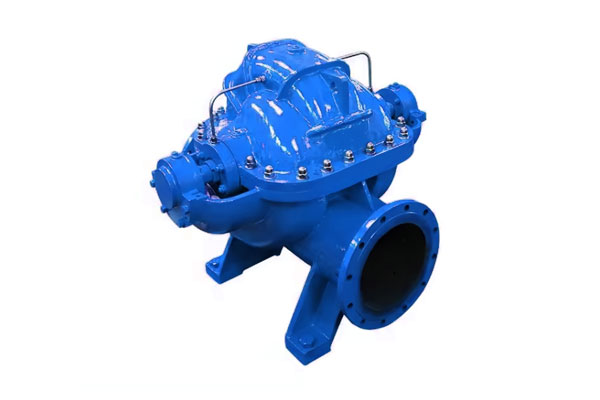
Key Casting Characteristics
| Characteristic | Description |
| Castability | Excellent; the alloy flows well into complex molds, supporting intricate geometries and thin-wall sections. |
| Shrinkage Rate | Low; minimizes internal stresses and dimensional variation during solidification. |
| Fluidity | Good; accommodates various mold types such as sand, shell, and lost foam casting with consistent results. |
| Hot Tearing Resistance | High; the ferritic matrix and rounded graphite nodules reduce internal strain and hot cracking tendencies. |
| Porosity Tendency | Low when process-controlled; magnesium treatment and degassing help eliminate gas-related defects. |
| Chill Sensitivity | Moderate; excessive cooling can lead to carbide formation or pearlitic structures—controlled cooling is necessary to maintain ductility. |
| Wall Thickness Impact | Mechanical properties can vary with wall thickness; thicker sections cool slower, favoring ferritic structures, while thinner areas may harden. |
| Dimensional Stability | Good. Maintains accuracy in larger parts due to uniform solidification and low residual stress. |
| Casting Methods | Compatible with sand casting, shell molding, lost wax casting, lost foam casting, and permanent mold casting. |
8. Machinability and Fabrication
65-45-12 ductile iron’s machinability balances efficiency and tool life:
- Machinability Rating: 70–80% (vs. 100% for free-cutting brass), superior to cast steel (50–60%).
- Tool Selection: Carbide inserts (TiAlN-coated) last 20–30% longer than on steel, with cutting speeds of 150–200 m/min for turning.
- Typical Operations:
-
- Turning/milling: Achieves Ra 1.6–3.2 μm finishes, suitable for hydraulic components.
- Drilling/tapping: Forms clean threads without chip welding, critical for pipe fittings.
- Weldability: Limited but possible with preheat (200–300°C) and low-hydrogen electrodes.
Welded joints retain ~70% of base metal strength but are rarely used—mechanical fastening is preferred.
9. Corrosion Resistance and Surface Treatment of 65-45-12 Ductile Iron
Although 65-45-12 ductile iron offers excellent mechanical and casting properties, it is not inherently corrosion-resistant.
Unlike stainless steel or specially alloyed irons, its surface is prone to oxidation and environmental degradation—especially in moist, acidic, or salt-laden environments.
As a result, appropriate surface treatments and coatings are essential to extend service life and ensure performance in demanding applications.

Corrosion Resistance Characteristics
| Aspect | Performance of 65-45-12 |
| In Atmospheric Conditions | Moderate resistance; develops a stable oxide layer in dry environments |
| In Water or Soil | Limited; prone to rust without protection, especially in acidic or oxygen-depleted conditions |
| In Marine/Chloride Environments | Poor resistance without coating; rapid pitting and general corrosion expected |
| Galvanic Corrosion Risk | High when in contact with dissimilar metals in conductive environments |
Common Surface Treatments
| Treatment Type | Purpose | Typical Applications |
| Painting / Powder Coating | Barrier protection against moisture and chemicals | Machinery housings, construction parts |
| Epoxy Coating | Excellent chemical and moisture resistance | Valves, piping, waterworks |
| Galvanization (Hot-Dip Zinc) | Sacrificial layer for corrosion resistance, especially in outdoor or marine environments | Municipal infrastructure, hardware components |
| Phosphate Coating | Improves paint adhesion, provides light corrosion resistance | Automotive and hydraulic components |
| Passivation (less common) | Removes surface contaminants, though limited effectiveness on ductile iron | Occasionally used prior to coating |
| Induction/Nitriding (Surface Hardening) | Increases wear and surface hardness; secondary corrosion benefit | Gears, bushings, wear plates |
10. Applications of 65-45-12 Ductile Iron
Due to its excellent combination of strength, ductility, toughness, castability, and cost-efficiency, 65-45-12 ductile iron (as defined by ASTM A536) is widely used across multiple industrial sectors.

Key Industrial Applications by Sector
| Industry Sector | Typical Applications |
| Automotive | Suspension components, control arms, steering knuckles, hubs, differential housings |
| Municipal & Waterworks | Pipe fittings, valves, hydrant bodies, pump casings, manhole covers |
| Agriculture & Farming | Gearbox housings, implement brackets, wheel hubs, tillage tool frames |
| Industrial Equipment | Compressor bodies, hydraulic components, motor housings, bearing supports |
| Construction Machinery | Counterweights, frames, brackets, base plates, loader arms |
| Energy & Power | Wind turbine brackets, transformer housings, gas compressor parts |
| Rail & Transit | Brake components, couplings, suspension parts |
| General Machinery | Clamps, levers, gear blanks, mounts, connecting arms |
11. Advantages of 65-45-12 Ductile Iron

- High Tensile Strength: Provides structural integrity comparable to many steels (65 ksi / 448 MPa).
- Good Ductility: Minimum elongation of 12% ensures better toughness and resistance to cracking than gray iron.
- Excellent Fatigue Resistance: Suitable for cyclic and impact loading applications.
- Cost-Effective: Lower production and raw material costs compared to steel, while offering similar mechanical performance.
- Superior Castability: Allows complex shapes and near-net-shape components with low shrinkage and defects.
- Machinability: Easier to machine than many steels, reducing tooling wear and manufacturing time.
- Wear Resistance: Suitable for parts requiring moderate abrasion resistance without heavy surface treatments.
- Vibration Damping: Graphite nodules help absorb vibration, improving component lifespan and noise reduction.
- Versatility: Compatible with multiple casting methods and heat treatments to tailor properties.
- Environmentally Friendly: Recyclable and often produced with less energy compared to steel.
12. Limitations of 65-45-12 Ductile Iron
- Corrosion Vulnerability: Requires coating for outdoor/marine use—adds 10–15% to component cost.
- Strength Cap: Lower tensile strength than pearlitic ductile irons (e.g., 80-55-06 at 80 ksi) or high-strength steel.
- Geometry Sensitivity: Thick sections (>50 mm) may have lower nodule count, reducing ductility to <10%.
- Weld Constraints: Preheat/post-heat requirements make welding costly—mechanical fastening preferred.
13. Comparison with Other Ductile Iron Grades
| Property / Grade | 65-45-12 | 80-55-06 | 60-40-18 | 65-40-12 | 70-50-05 |
| Tensile Strength (ksi / MPa) | 65 / 448 | 80 / 552 | 60 / 414 | 65 / 448 | 70 / 483 |
| Elongation (%) | ≥ 12 | ≥ 6 | ≥ 18 | ≥ 12 | ≥ 5 |
| Hardness (HB) | 170–210 | 230–280 | 160–200 | 170–210 | 210–250 |
| Typical Applications | Automotive parts, pump housings, valves | Heavy-duty components, high-stress parts | Applications needing higher ductility | General engineering, structural parts | Wear-resistant and impact parts |
| Key Differences | Balanced strength and ductility, versatile | Higher strength, lower ductility, harder | Greater elongation, lower strength | Similar strength, slightly lower yield | Higher hardness, reduced elongation |
14. Standards and Specifications
- ASTM A536: Specifies mechanical and microstructural limits for grade 65-45-12.
- ISO 1083 – 400‑12: Global equivalent.
- SAE J434C D50006: Common automotive spec.
- Foundries usually define nodularity, hardness, and chemical composition criteria.
15. Conclusion
65-45-12 ductile iron stands as a versatile engineering material, offering a rare blend of ductility, strength, and castability.
Its ferritic-spheroidal microstructure enables applications from automotive suspension parts to municipal valves, where deformation before failure and cost-effectiveness are critical.
While limited by corrosion vulnerability, its advantages—including superior fatigue resistance and low production costs—ensure its continued role as a staple in industrial design.
FAQs
Is 65-45-12 ductile iron weldable?
Yes, but not commonly welded. It requires preheating to 200–300°C and post-weld annealing to avoid cracking, making mechanical fastening more economical.
How does 65-45-12 compare to steel?
65-45-12 matches low-carbon steel’s tensile strength at 30% lower cost but has lower corrosion resistance and elongation. Steel is preferred for high-heat or highly corrosive applications.
Can 65-45-12 be used for pressure applications?
Yes, up to 1000 psi (69 bar) in fluid handling (e.g., water pipes) when properly designed with pressure ratings per ASME B16.42.
Is heat treatment required for 65-45-12?
No—its as-cast properties meet ASTM A536 requirements. Annealing can improve ductility, while normalizing boosts strength, but both add cost.

