1. Introduction
1.4581 stainless steel (EN designation: GX2CrNiN23-4) stands as a cutting-edge, high-performance cast and forged austenitic stainless steel.
Engineered with a carefully balanced composition and advanced low-carbon technology, it delivers exceptional corrosion resistance, robust mechanical properties, and high-temperature stability.
These attributes render it indispensable in aggressive environments, particularly within chemical processing, marine engineering, oil & gas, and heat exchanger applications.
This article offers a comprehensive analysis of 1.4581 stainless steel by exploring its composition and microstructure, physical and mechanical properties, processing techniques, industrial applications, advantages, challenges, and future innovations.
2. Material Evolution and Standards
Historical Development
1.4581 stainless steel represents a significant evolution in austenitic stainless steels.
As a second-generation stainless material, it emerged from efforts to overcome the limitations of its predecessor, 1.4401 (316 stainless steel).
By reducing carbon content from 0.08% to below 0.03% and incorporating strategic alloying elements such as titanium, manufacturers successfully enhanced resistance to intergranular corrosion and sensitization.
This breakthrough marked a pivotal milestone in the development of low-carbon, high-alloy stainless steels.
Standards and Specifications
1.4581 adheres to strict European and international standards, including EN 10088 and EN 10213-5, as well as ASTM A240 requirements.
These standards define their precise chemical composition, processing methods, and performance benchmarks, ensuring consistency and reliability across industries.
The standardization enables uniform quality control and facilitates global trade, positioning 1.4581 as a dependable material for safety-critical applications.

Industrial Impact
The rigorous specifications and enhanced performance of 1.4581 make it a cornerstone material for industries operating in corrosive and high-temperature environments.
Its superior properties address the critical challenges of corrosion, thermal degradation, and mechanical stress, offering long-term reliability in sectors such as chemical processing, marine applications, and oil & gas.
As market dynamics push for materials with extended service life and lower maintenance costs, 1.4581 continues to gain prominence as a high-value engineering solution.
3. Chemical Composition and Microstructure
1.4581 stainless steel (EN grade: GX2CrNiN23-4) is crafted using a precise alloy formulation to balance corrosion resistance, mechanical strength, and thermal stability.
The following is a detailed breakdown of its composition and functional roles.
Chemical Composition
Key Alloying Elements
| Element | Percentage Range | Function |
|---|---|---|
| Chromium (Cr) | 17–19% | Forms a passive Cr₂O₃ oxide layer, enhancing oxidation and general corrosion resistance. |
| Nickel (Ni) | 9–12% | Stabilizes the austenitic (FCC) structure, improving ductility and low-temperature toughness. |
| Molybdenum (Mo) | 2.0–2.5% | Enhances resistance to pitting and crevice corrosion in chloride-rich environments (e.g., seawater). |
| Carbon (C) | ≤0.07% | Minimizes carbide precipitation (e.g., Cr₂₃C₆) during welding or high-temperature exposure, preventing sensitization. |
Supporting Elements
| Element | Percentage Range | Function |
|---|---|---|
| Titanium (Ti) | ≥5×C content | Combines with carbon to form TiC, preventing sensitization and intergranular corrosion. |
| Manganese (Mn) | 1.0–2.0% | Improves hot workability and deoxidizes the melt during casting. |
| Silicon (Si) | ≤1.0% | Improves castability and acts as a deoxidizer. |
| Nitrogen (N) | 0.10–0.20% | Strengthens the austenitic phase and enhances pitting resistance (contributes to PREN). |
Design Philosophy
- Ti/C ratio ≥ 5: Ensures stable prevention of carbide formation, while low carbon content (<0.07%) reduces the risk of sensitization in welded structures.
- PREN (Pitting Resistance Equivalent): A key measure of the alloy’s resistance to pitting corrosion: PREN = %Cr + 3.3×%Mo + 16×%N.
Microstructural Characteristics
The microstructure of 1.4581 stainless steel is meticulously designed to provide excellent mechanical performance and corrosion resistance. Below are the key features of its microstructure:
Austenitic Matrix
- Primary Phase: The dominant microstructure is austenite (face-centered cubic, FCC), which provides over 40% elongation and excellent impact toughness even at low temperatures (e.g., -196°C).
- Grain Structure: Following solution annealing (1,050–1,150°C) and rapid quenching, the grain size is refined to ASTM 4–5, optimizing mechanical properties.
Phase Control
- δ-Ferrite: The ferrite content is controlled to remain below 5% to avoid embrittlement and maintain weldability.
Excessive δ-ferrite promotes the formation of σ-phase between 600–900°C, which can degrade material properties. - Avoidance of σ-Phase: Critical for high-temperature applications (>550°C), as prolonged exposure leads to brittle σ-phase (FeCr intermetallic compounds) that can reduce ductility by up to 70%.
Impact of Heat Treatment
- Solution Annealing: Dissolves second-phase precipitates (e.g., carbides) into the matrix, ensuring uniformity.
- Quenching Speed: Rapid quenching (water quenching) preserves the austenitic structure, while slow cooling may risk the re-precipitation of carbides.
International Standard Benchmark
| Property | EN 1.4581 | ASTM 316Ti | UNS S31635 |
|---|---|---|---|
| Cr Range | 17–19% | 16–18% | 16–18% |
| Ti Requirement | ≥5×C | ≥5×C | ≥5×C |
| PREN | 26.8 | 25.5 | 25.5 |
| Key Applications | Marine valves | Chemical tanks | Heat exchangers |
4. Physical and Mechanical Properties
1.4581 stainless steel exhibits a balanced mix of mechanical strength, ductility, and corrosion resistance that makes it ideal for extreme service conditions:
- Strength and Hardness:
Standard testing (ASTM A240) shows tensile strength values of ≥520 MPa and yield strength of ≥205 MPa.
Hardness typically ranges from 160–190 HB, ensuring that the material can sustain heavy loads and abrasive conditions. - Ductility and Toughness:
The alloy achieves elongation levels of ≥40%, enabling it to absorb significant energy and resist brittle fracture under dynamic or cyclic loading.
Its high impact toughness, vital for earthquake or shock-resistant designs, further underscores its reliability in safety-critical applications. - Corrosion and Oxidation Resistance:
1.4581 excels in environments laden with chlorides and acids. In pitting tests, its PREN (Pitting Resistance Equivalent Number) consistently exceeds 26,
and its critical pitting temperature (CPT) in aggressive chloride solutions exceeds that of standard 316L, making it indispensable in marine and chemical sectors.
Angled poppet valve - Thermal Properties:
With a thermal conductivity of around 15 W/m·K and a coefficient of thermal expansion in the range of 16–17 × 10⁻⁶/K,
1.4581 maintains dimensional stability under thermal cycling, which is essential for components operating in high-temperature and fluctuating thermal environments. - Comparative Analysis:
In direct comparisons, 1.4581 surpasses 316L and approaches the performance of 1.4408 in key areas such as weldability and corrosion resistance while offering additional benefits through titanium stabilization.
5. Processing and Fabrication Techniques
Casting and Forming
1.4581 stainless steel is produced using advanced casting techniques tailored to its unique composition:
- Casting Methods:
Manufacturers deploy investment, sand, or permanent mold casting to achieve complex geometries and fine surface finishes.
These methods leverage the alloy’s excellent fluidity, ensuring precise mold filling and minimal porosity.
Stainless steel 1.4581 investment casting quick couplings - Hot Forming:
Optimal forming temperatures range from 1,100°C to 1,250°C. Rapid quenching immediately after forming (cooling rates >55°C/s) prevents carbide precipitation in the heat-affected zone (HAZ) and reduces intergranular corrosion risk.
However, hot rolling can introduce thickness deviations of 5–8%, which necessitates subsequent grinding with a removal of at least 0.2 mm.
Machining and Welding
- CNC Machining Considerations:
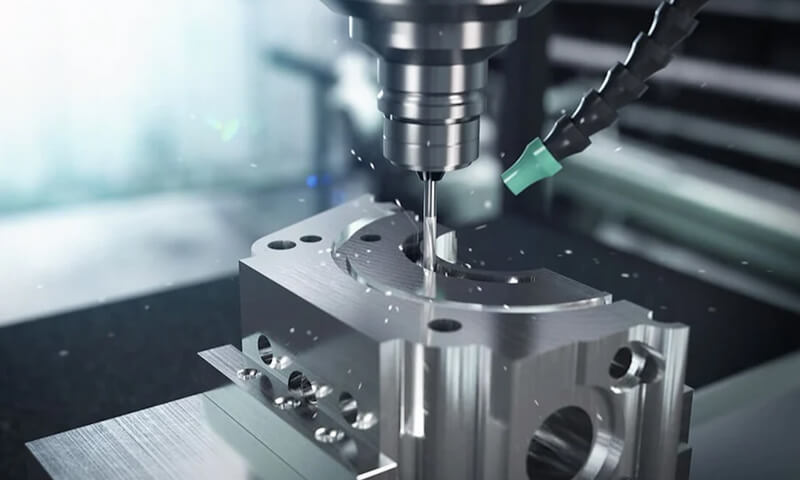
High-alloy content and work-hardening tendencies require the use of carbide or ceramic tooling, with cutting speeds maintained within 50–70 m/min to control heat buildup.
High-pressure coolant systems further optimize tool life and ensure precision surface finishes. - Welding Techniques:
Thanks to its low carbon content and titanium stabilization, 1.4581 welds well using TIG or MIG welding. However, careful heat control is critical to avoid sensitization.
For instance, excessive heat input (>1.5 kJ/mm) can induce chromium carbide precipitation, compromising weld integrity.
Post-weld pickling or electropolishing is typically employed to restore the protective passive film.
Post-Processing and Surface Finishing
To enhance performance, various post-processing techniques are applied:
- Electropolishing and Passivation:
These processes improve the surface finish (reducing Ra values to below 0.8 μm) and boost the Cr/Fe ratio, further elevating corrosion resistance. - Heat Treatment:
Solution annealing at 1,050–1,100°C, followed by stress-relief treatments, fine-tunes the microstructure, achieving optimal grain sizes (ASTM No. 4–5) and reducing residual stress by up to 85–92%.
6. Applications and Industrial Uses
1.4581 stainless steel finds a critical role in various high-demand industrial applications, thanks to its robust performance and durability:
- Chemical Processing and Petrochemicals:
Its superior corrosion resistance makes 1.4581 ideal for reactor linings, heat exchangers, and pipelines that operate in aggressive acidic or chloride environments. - Marine and Offshore Applications:
The alloy’s ability to withstand seawater corrosion, along with high mechanical strength, renders it suitable for pump housings, valves, and structural components in offshore platforms.
Stainless steel valve castings - Oil and Gas:
1.4581 performs reliably in high-pressure, chemically aggressive environments, finding use in flanges, manifolds, and pressure vessels. - General Industrial Machinery:
Its balance of strength, ductility, and corrosion resistance makes it a popular choice for heavy equipment components, automotive parts, and construction materials. - Medical and Food Industries:
The alloy is also employed in high-hygiene applications, such as in surgical implants and food processing equipment, where superior biocompatibility and a fine, electropolished finish are mandatory.
7. Advantages of 1.4581 Stainless Steel
1.4581 stainless steel distinguishes itself with several key advantages:
- Enhanced Corrosion Resistance:
Optimized alloying and controlled microstructure provide outstanding resistance to pitting, crevice, and intergranular corrosion, particularly in chloride and acidic environments. - Robust Mechanical Performance:
With high tensile and yield strengths (≥520 MPa and ≥205 MPa, respectively) combined with an elongation of ≥40%, 1.4581 withstands heavy loads and cyclic stresses while remaining ductile. - High-Temperature Stability:
The material retains excellent strength and oxidation resistance at elevated temperatures, making it suitable for heat exchangers and industrial components exposed to thermal cycling. - Superior Weldability:
Low carbon content and titanium stabilization reduce sensitization and carbide precipitation during welding, resulting in high-quality joints with minimal defect formation. - Versatile Processing:
Its compatibility with various casting, machining, and finishing processes allows for the production of complex, high-precision components. - Lifecycle Cost Efficiency:
Despite higher initial costs, its long service life and reduced maintenance requirements yield lower total lifecycle costs, especially in aggressive operational settings.
8. Challenges and Limitations
Although 1.4581 offers significant technical advantages, several challenges persist:
- Corrosion Boundaries:
In chloride-rich environments above 60°C, the risk of stress corrosion cracking (SCC) increases, with H₂S exposure (pH < 4) further exacerbating the potential for SCC.
This necessitates additional post-weld heat treatments (PWHT) for critical components. - Welding Constraints:
Extended heat input during welding (>1.5 kJ/mm) can trigger chromium carbide precipitation, reducing intergranular corrosion resistance.
Weld repairs typically exhibit an 18% reduction in ductility compared to the base material. - Machining Difficulties:
High work-hardening during machining can increase tool wear by up to 50% compared to common grades like 304 stainless steel, and intricate geometries may require 20–25% longer machining times due to chip control challenges. - High-Temperature Performance Limitations:
Exposure for over 100 hours at 550–850°C accelerates sigma-phase formation, reducing impact toughness by 40% and limiting continuous service temperature to 450°C. - Cost and Availability:
The inclusion of expensive elements such as molybdenum increases material costs by about 35% relative to standard 304 stainless steel, and price fluctuations of 15–20% reflect global market volatility. - Dissimilar Metal Joining:
When joined with carbon steel (e.g., S235) in marine environments, galvanic corrosion can triple, and low-cycle fatigue (Δε = 0.6%) performance in dissimilar joints may decrease by 30–45%. - Surface Treatment Challenges:
Conventional nitric acid passivation cannot effectively remove iron inclusions smaller than 5 μm, necessitating additional electropolishing to meet medical-grade surface cleanliness standards.
9. Future Trends and Innovations
Technological advancements promise to address existing challenges and further enhance the performance of 1.4581 stainless steel:
- Advanced Alloy Modifications:
Emerging research into microalloying and nano-additives, such as the controlled addition of nitrogen and rare earth elements, could improve yield strength by up to 10% and enhance corrosion resistance. - Digital and Smart Manufacturing:
Integration of IoT sensors, real-time monitoring, and digital twin simulation (e.g., ProCAST-based solidification modeling) can optimize casting and heat treatment processes, potentially increasing yield rates by 20–30%. - Sustainable Production Practices:
Energy-efficient melting techniques and closed-loop recycling systems are reducing overall carbon footprints by up to 15%, aligning with global sustainability goals. - Surface Engineering Innovations:
Novel surface treatments—including laser-induced nanostructuring, graphene-enhanced PVD coatings, and intelligent, self-healing passivation—can reduce friction by 60% and extend service life in harsh environments. - Hybrid and Additive Manufacturing:
Combining laser-arc hybrid welding techniques with additive manufacturing, followed by HIP and solution annealing, can reduce residual stresses from 450 MPa to 80 MPa,
enabling the production of complex components for deep-sea and hydrogen energy applications. - Market Growth Outlook:
With increasing demand from sectors like hydrogen energy, offshore engineering,
and high-purity medical devices, the global market for 1.4581 stainless steel may grow at a CAGR of approximately 6–7% through 2030.
10. Comparative Analysis with Other Materials
Below is a detailed comparison of 1.4581 against standard austenitic stainless steels, duplex grades, and nickel-based superalloys, highlighting its advantages and trade-offs.
Comparative Table
| Property / Feature | 1.4581 (GX2CrNiN23-4) | 1.4404 (316L) | 1.4462 (Duplex 2205) | Alloy 625 (Nickel-Based) |
|---|---|---|---|---|
| Microstructure | Austenitic (Ti-stabilized) | Austenitic (low-carbon) | Duplex (Austenite + Ferrite) | Ni-based Austenitic |
| Corrosion Resistance (PREN) | 26.8 | ~24 | 35–40 | >45 |
| Resistance to Intergranular Attack | Excellent (Ti prevents sensitization) | Good (low C, but not stabilized) | Excellent | Excellent |
| Weldability | Very Good | Excellent | Moderate (risk of phase imbalance) | Good (requires precise control) |
| High-Temperature Stability | Up to 450°C (limited by σ-phase) | Slightly lower | Fair (limited ferrite stability) | Excellent (>1,000°C) |
| Mechanical Strength (Yield / MPa) | ≥205 | ≥200 | ≥450 | ≥400 |
| Ductility (Elongation%) | ≥40% | ≥40% | 25–30% | ≥30% |
| Creep Resistance | Moderate | Low | Low | High |
| Cost (Relative to 304) | ~1.35× | ~1.2× | ~1.5× | ~4× |
| Machinability | Fair (work-hardens) | Good | Difficult | Poor (gummy behavior) |
| Key Applications | Valves, heat exchangers, reactors | Pharma, food equipment, tanks | Oil & gas, desalination, pressure vessels | Aerospace, marine, chemical reactors |
11. Conclusion
1.4581 stainless steel represents a significant advancement in the evolution of austenitic stainless steels.
Its optimized low-carbon design and strategic titanium microalloying confer superior corrosion resistance, mechanical robustness, and thermal stability.
Continuous innovations in alloy modification, digital manufacturing, and surface engineering promise to further enhance its performance and broaden its application spectrum.
With global demand for high-performance materials poised to expand, 1.4581 stainless steel remains a strategic, future-oriented solution that will play a pivotal role in next-generation industrial applications.
DEZE is the perfect choice for your manufacturing needs if you need high-quality stainless steel products.