
1. Introduction
Titanium is valued not because it is the lightest metal available, but because it combines a moderate density with an unusually favorable balance of strength, corrosion resistance, thermal stability, and biocompatibility.
In aerospace, chemical processing, marine engineering, medical implants, and high-performance manufacturing, titanium occupies a strategic position precisely because its density supports efficient design without sacrificing durability.
To understand why titanium is so widely used, one must begin with its density. Density is a deceptively simple property: it is mass per unit volume.
Yet in materials science, it governs weight, inertia, transport efficiency, packaging efficiency, and often the total cost-performance equation of a component or system.
For titanium, density is not merely a physical constant; it is a defining part of its engineering identity.
2. What is the Density of Titanium?
Density is the mass of a material per unit volume, typically expressed in g/cm³ or kg/m³.
As a fundamental physical property, it is closely tied to atomic mass, crystal structure, and atomic packing efficiency.
In the case of titanium, density is not a perfectly fixed number in every circumstance; rather, it varies slightly according to whether the material is commercially pure or alloyed, which phase it occupies, and how it has been processed.
Even so, titanium consistently falls within a narrow range that clearly distinguishes it from other engineering metals.
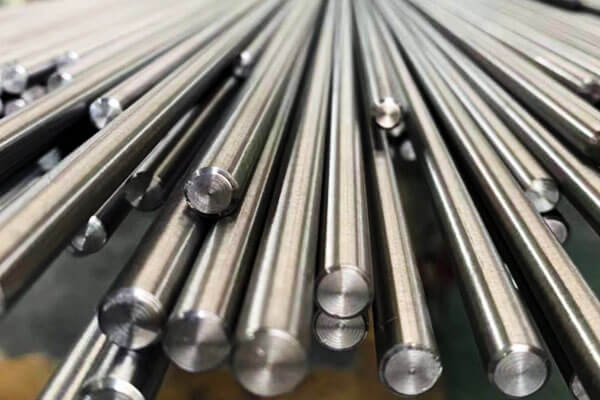
At room temperature (20°C, 293 K), commercially pure titanium (CP-Ti)—the most common unalloyed form of titanium—is generally taken to have a density of approximately 4.51 g/cm³, or 4,510 kg/m³.
This value is widely accepted in engineering practice and is supported by standards and specification systems issued by organizations such as ASTM and ISO.
In practical terms, CP-Ti is usually classified into grades, from Grade 1 to Grade 4, based mainly on impurity content, which can cause slight but measurable differences in density and performance.
It is important to distinguish between theoretical density and actual density:
- Theoretical density refers to the ideal value calculated from titanium’s atomic mass (47.867 g/mol) and crystal lattice parameters, assuming a perfect, defect-free crystal with no pores, impurities, or structural irregularities.
For pure titanium, this value is 4.506 g/cm³. - Actual density refers to the density measured in real materials. Because real titanium is never perfectly ideal, its measured density may deviate slightly from the theoretical value, typically by about ±1–2%.
Such deviations may arise from porosity, shrinkage defects, trace interstitial elements such as oxygen, nitrogen, and carbon, or microstructural changes introduced during processing.
3. Factors Influencing Density
Titanium’s density is often quoted as a single value, but in real materials it is influenced by several interrelated factors.

Chemical Composition
The most direct factor affecting density is composition. Pure titanium has one density, but titanium alloys do not.
When alloying elements are added, the density changes according to the atomic mass and concentration of those elements.
Lightweight additions such as aluminum may reduce density slightly, whereas heavier elements such as vanadium, molybdenum, iron, or nickel can increase it.
In practice, the effect is usually modest, but it is not negligible in precision engineering. For this reason, even closely related titanium grades may show small density differences.
Commercially pure titanium also contains trace interstitial elements such as oxygen, nitrogen, carbon, and hydrogen, which can alter density marginally while influencing strength and ductility more strongly.
Crystal Structure and Phase State
Titanium exhibits phase-dependent behavior. At room temperature, it is in the alpha phase (hcp), while at elevated temperatures it transforms to the beta phase (bcc).
Because density depends on atomic packing and lattice spacing, a phase transition can change the density slightly.
Temperature also matters because thermal expansion increases interatomic spacing. As titanium is heated, its volume expands while mass remains constant, so density decreases.
Thus, density is not strictly fixed across all temperatures; it is stable only within a defined thermal condition.
Porosity and Internal Defects
For real manufactured parts, porosity is one of the most important factors influencing actual density.
Voids, microcracks, shrinkage cavities, and incomplete fusion zones reduce the effective density of a component because some of its apparent volume contains no solid material.
This issue is especially relevant in:
- powder metallurgy,
- additive manufacturing,
- cast products,
- and sintered titanium parts.
A component may be chemically titanium but still exhibit a lower bulk density than the theoretical value because of internal voids.
Processes such as hot isostatic pressing (HIP) are often used to reduce porosity and move the measured density closer to the ideal density of fully consolidated titanium.
Processing History
Manufacturing route has a meaningful impact on measured density. Forging, rolling, extrusion, heat treatment, and additive manufacturing all influence microstructure and defect distribution.
While these processes do not fundamentally change the intrinsic atomic density of titanium, they can affect the effective density of the finished product by altering its porosity, phase balance, and homogeneity.
For example:
- wrought titanium usually exhibits very uniform density,
- cast titanium may contain shrinkage-related voids,
- and 3D-printed titanium may retain residual microporosity unless post-processed.
Measurement Conditions
Finally, reported density depends on the conditions under which it is measured.
Temperature, pressure, specimen geometry, and measurement method all matter.
A density value measured at room temperature using a fully dense sample will differ slightly from one obtained on a porous part or at elevated temperature.
For this reason, density should always be interpreted together with its testing context.
4. Density of Pure Titanium vs. Titanium Alloys
Pure titanium and titanium alloys differ mainly in composition, which in turn affects density.
Commercially pure titanium has the baseline density most often cited in engineering references, while alloying elements shift that value slightly upward or downward depending on their atomic mass and concentration.
| Material | Common Grade / Designation | Density (g/cm³) | kg/m³ | lb/in³ | Notes |
| Commercially Pure Titanium | Grade 1 | 4.51 | 4,510 | 0.163 | Highest purity CP titanium, excellent formability |
| Commercially Pure Titanium | Grade 2 | 4.51 | 4,510 | 0.163 | Most widely used CP titanium grade |
| Commercially Pure Titanium | Grade 3 | 4.51 | 4,510 | 0.163 | Higher strength than Grade 2 |
| Commercially Pure Titanium | Grade 4 | 4.51 | 4,510 | 0.163 | Strongest CP titanium grade |
| Titanium Alloy | Grade 5 / Ti-6Al-4V | 4.43 | 4,430 | 0.160 | Most common titanium alloy; aerospace standard |
| Titanium Alloy | Grade 6 / Ti-5Al-2.5Sn | 4.48 | 4,480 | 0.162 | Good elevated-temperature performance |
| Titanium Alloy | Grade 7 / Ti-0.15Pd | 4.51 | 4,510 | 0.163 | Enhanced corrosion resistance |
Titanium Alloy |
Grade 9 / Ti-3Al-2.5V | 4.48 | 4,480 | 0.162 | Common in tubing and lightweight structures |
| Titanium Alloy | Grade 10 / Ti-5Al-5V-5Mo-3Cr | 4.70 | 4,700 | 0.170 | High-strength beta alloy |
| Titanium Alloy | Grade 11 / Ti-0.15Pd | 4.51 | 4,510 | 0.163 | Similar density to CP titanium, improved corrosion resistance |
| Titanium Alloy | Grade 12 / Ti-0.3Mo-0.8Ni | 4.50 | 4,500 | 0.163 | Good corrosion resistance, widely used in chemical service |
| Titanium Alloy | Grade 13 / Ti-3Al-0.2V-0.1Ni | 4.48 | 4,480 | 0.162 | Used in aerospace and pressure applications |
| Titanium Alloy | Grade 14 / Ti-6Al-4V-0.5Fe-0.5Cu | 4.45 | 4,450 | 0.161 | Strengthened variant of Ti-6Al-4V |
| Titanium Alloy | Grade 15 / Ti-0.2Pd | 4.51 | 4,510 | 0.163 | Palladium-containing corrosion-resistant alloy |
Titanium Alloy |
Grade 16 / Ti-0.04Pd | 4.51 | 4,510 | 0.163 | Lower Pd content, corrosion resistant |
| Titanium Alloy | Grade 17 / Ti-0.06Pd | 4.51 | 4,510 | 0.163 | Corrosion-resistant alloy for aggressive environments |
| Titanium Alloy | Grade 18 / Ti-3Al-2.5V-0.05Pd | 4.47 | 4,470 | 0.161 | Improved corrosion resistance and tubing use |
| Titanium Alloy | Grade 19 / Ti-3Al-8V-6Cr-4Mo-4Zr | 4.78 | 4,780 | 0.173 | Ultra-high-strength beta alloy |
| Titanium Alloy | Grade 20 / Ti-6Al-2Sn-4Zr-2Mo-0.1Si | 4.56 | 4,560 | 0.165 | High-temperature aerospace alloy |
| Titanium Alloy | Grade 21 / Ti-7Al-2Sn-2Zr-2Mo-0.2Si | 4.53 | 4,530 | 0.164 | Advanced high-temperature alloy |
| Titanium Alloy | Grade 23 / Ti-6Al-4V ELI | 4.43 | 4,430 | 0.160 | Extra-low interstitial version for medical implants |
Titanium Alloy |
Beta C / Ti-3Al-8V-6Cr-4Mo-4Zr | 4.78 | 4,780 | 0.173 | Same density family as Grade 19 |
| Titanium Alloy | Ti-6Al-2Nb-1Ta-0.8Mo | 4.60 | 4,600 | 0.166 | High-performance aerospace alloy |
| Titanium Alloy | Ti-10V-2Fe-3Al | 4.66 | 4,660 | 0.168 | High-strength near-beta alloy |
| Titanium Alloy | Ti-15V-3Cr-3Sn-3Al | 4.79 | 4,790 | 0.173 | Formable beta alloy with higher density |
| Titanium Alloy | Ti-5Al-5Mo-5V-3Cr | 4.73 | 4,730 | 0.171 | High-strength beta alloy |
| Titanium Alloy | Ti-6Al-6V-2Sn | 4.60 | 4,600 | 0.166 | Aerospace-oriented alpha-beta alloy |
5. The Practical Significance of Titanium’s Density in Industrial Applications
Titanium’s density is not merely a numerical property listed in materials handbooks; it is one of the core reasons the metal has become indispensable in high-value industries.

Aerospace: Weight Reduction with High Structural Integrity
Aerospace engineering is perhaps the clearest demonstration of why titanium’s density matters.
In aircraft and spacecraft, every kilogram has consequences for fuel consumption, payload capacity, flight performance, and operating cost.
Titanium offers a compelling compromise: it is far lighter than steel, but strong enough to withstand demanding mechanical loads and temperature fluctuations.
For this reason, titanium and its alloys are widely used in:
- airframe components,
- engine structures,
- compressor blades and casings,
- fasteners,
- landing gear parts,
- and structural brackets.
In aerospace design, the value of titanium lies not simply in being “light,” but in offering a high strength-to-weight ratio.
Its density supports aggressive weight optimization while maintaining the safety margins required in flight-critical systems.
Marine and Offshore Engineering: A Weight-Tolerant but Corrosion-Critical Environment
In marine and offshore environments, corrosion resistance is often more important than absolute lightness.
Seawater, chlorides, and humid atmospheres can rapidly degrade conventional steels and many other metals.
Titanium’s passive oxide film gives it exceptional resistance to corrosion, making it a preferred material for heat exchangers, seawater piping, desalination systems, subsea hardware, and offshore equipment.
Here, titanium’s moderate density contributes additional value by reducing structural load.
Although weight reduction is not always the primary design driver in marine systems, a lighter corrosion-resistant material can simplify installation, reduce support requirements, and improve long-term reliability.
Chemical Processing: Durable Structures in Aggressive Media
Chemical plants often operate in highly aggressive environments involving acids, chlorides, oxidizers, and elevated temperatures.
In such settings, titanium is used because it resists corrosion far better than many alternative metals.
Density becomes important because tanks, vessels, piping, and heat-exchange equipment can be designed with lower mass than comparable steel systems, especially when corrosion allowances are taken into account.
Biomedical Applications: Strength, Comfort, and Compatibility
Titanium is a dominant material in orthopedic implants, dental implants, prosthetic components, and surgical hardware.
In medical use, density affects both mechanical behavior and patient experience. A material that is too dense can feel unnecessarily heavy or cumbersome, while one that is too light may lack the robustness required for load-bearing applications.
Titanium offers a favorable middle ground. Its density is sufficient to provide durable mechanical support, yet low enough to avoid excessive mass in implanted or external devices.
Combined with biocompatibility and corrosion resistance, this makes titanium especially valuable in load-bearing medical systems such as:
- hip stems,
- bone plates,
- spinal fixation devices,
- dental roots and abutments,
- and prosthetic connectors.
High-Performance Transportation and Mobility
Outside aerospace, titanium is increasingly used in high-performance transportation systems, including racing vehicles, bicycles, and premium automotive parts.
In these fields, density directly influences acceleration, handling, vibration response, and component fatigue life.
Titanium is selected for items such as:
- exhaust systems,
- suspension components,
- connecting hardware,
- valves and springs,
- and lightweight structural fittings.
Although titanium is more expensive than aluminum or steel, its density makes it particularly attractive where mass reduction must be paired with high mechanical reliability and thermal resilience.
Industrial Design and Premium Consumer Products
Titanium’s density also has commercial and experiential value in consumer products.
Watches, eyeglass frames, sports equipment, and high-end hardware often use titanium because it feels solid without being heavy.
This tactile quality matters: a component that is too light may seem cheap or fragile, while a component that is too heavy may feel burdensome.
In this context, titanium’s moderate density contributes to a perception of precision, durability, and quality.
That is one reason titanium has become associated not only with performance, but also with premium design.
The Broader Engineering Meaning of Titanium’s Density
The practical significance of titanium’s density is best understood through the concept of specific performance. Engineers rarely evaluate density in isolation.
Instead, they ask how much strength, stiffness, corrosion resistance, and durability can be obtained per unit mass. Titanium performs exceptionally well in that framework.
Its density is high enough to provide structural substance, but low enough to offer substantial weight savings over steel and nickel alloys.
That balance creates a favorable design window in which titanium can deliver high reliability without imposing excessive mass penalties.
6. Comparative Analysis: Titanium vs. Other Common Metals
The table below compares titanium with several widely used metals using typical room-temperature density values.
The conversions follow the standard relationship 1 g/cm³ = 1000 kg/m³ = 0.03613 lb/in³.
| Material | Density (g/cm³) | Density (kg/m³) | Density (lb/in³) |
| Titanium | 4.51 | 4,510 | 0.163 |
| Aluminum | 2.70 | 2,700 | 0.098 |
| Magnesium | 1.74 | 1,740 | 0.063 |
| Carbon Steel | 7.85 | 7,850 | 0.284 |
| Stainless Steel | 7.48–8.00 | 7,480–8,000 | 0.270–0.289 |
| Copper | 8.79 | 8,790 | 0.317 |
| Nickel | 8.90 | 8,900 | 0.322 |
| Zinc | 7.12 | 7,120 | 0.257 |
| Lead | 11.35 | 11,350 | 0.410 |
7. Conclusion
Titanium’s density, typically cited as 4.51 g/cm³, is one of the most consequential properties behind its broad industrial value.
On its own, the number is only moderately low compared with common structural metals; however, its true importance emerges when viewed in context.
Titanium combines this favorable density with high strength, strong corrosion resistance, excellent fatigue performance, and reliable service in demanding environments.
That combination makes it uniquely effective in applications where weight reduction must not compromise durability or safety.
Titanium is therefore best understood not as a “light metal” in the absolute sense, but as a high-performance metal with an exceptionally useful balance of mass and capability. Its density is moderate; its value is exceptional.
FAQs
What is the density of titanium?
The density of pure titanium at room temperature is approximately 4.51 g/cm³, or 4,510 kg/m³, which is equivalent to 0.163 lb/in³
Is titanium lighter than steel?
Yes. Titanium is significantly lighter than steel. Typical steel has a density of about 7.85 g/cm³, while titanium is about 4.51 g/cm³
Is titanium lighter than aluminum?
No. Aluminum is lighter than titanium. Aluminum’s density is about 2.70 g/cm³, compared with titanium’s 4.51 g/cm³
Why is titanium considered a lightweight metal if it is denser than aluminum?
Titanium is considered lightweight in comparison with stronger structural metals such as steel, nickel, and copper. Its value lies in its strength-to-weight ratio
Does titanium density change with temperature?
Yes. As temperature increases, titanium expands and its density decreases slightly.
Titanium also undergoes a phase transformation at elevated temperature, which further affects its structure and density.
Is titanium denser than magnesium?
Yes. Titanium is much denser than magnesium. Magnesium has a density of about 1.74 g/cm³, while titanium is about 4.51 g/cm³

