
Introduction
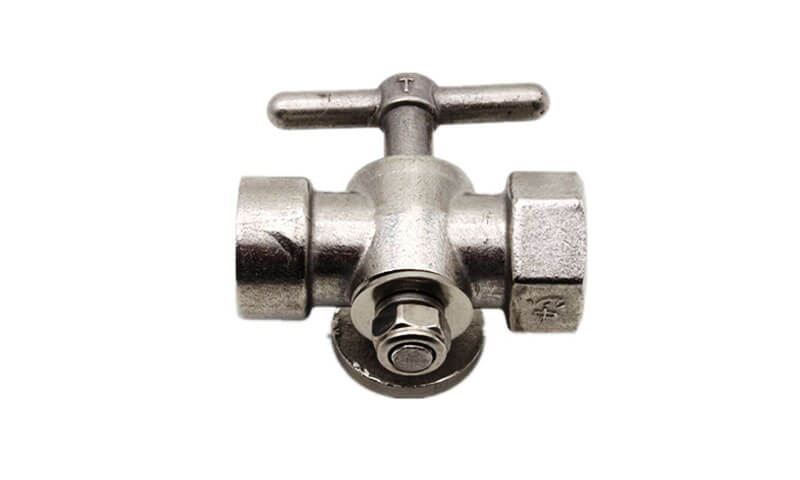
High-temperature resistant stainless steel boiler parts sit in one of the most demanding zones of industrial thermal engineering.
Boiler hardware is exposed to sustained high temperature, cyclic thermal loading, combustion by-products, oxidation, and in some cases creep-driven deformation.
High-temperature stainless steel is explicitly designed for service above about 550°C / 1020°F, which is the regime where creep strength becomes a major design factor and high-temperature corrosion starts to dominate material choice.
Silica sol investment casting is especially relevant here because boiler parts often combine complex geometry, tight dimensional requirements, and the need for smooth, defect-controlled surfaces.
Lost-wax investment casting is widely recognized for excellent dimensional accuracy, smooth surfaces, and the ability to reproduce intricate shapes, while silica-gel-based shell systems commonly use fine zircon and granular mullite layers to build a precision ceramic mold.
1. What Are High-Temperature Resistant Stainless Steel Boiler Parts
High-temperature resistant stainless steel boiler parts are structural and functional metal components designed to operate inside the thermal core of boiler systems,
where they must withstand sustained heat exposure, thermal cycling, oxidizing flue gas, corrosive ash species, and mechanical loading at the same time.
They are not ordinary stainless parts used in room-temperature equipment; they are engineered for service in a zone where material failure is driven by creep, oxidation, thermal fatigue, and corrosion synergy.
Typical component categories
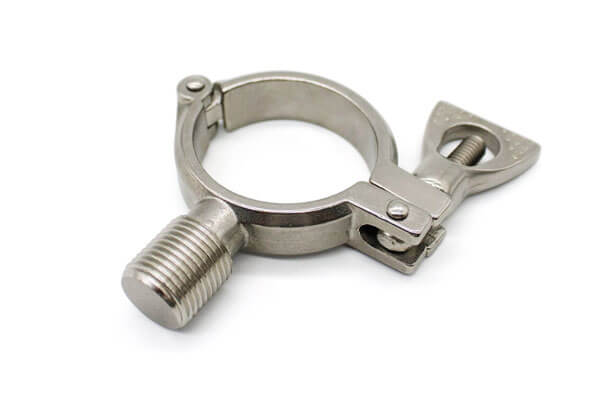
In boiler systems, these parts usually fall into three broad groups:
Core load-bearing parts
These include superheater supports, tube hangers, furnace frames, brackets, and suspension hardware.
Their main role is mechanical: they must carry static load over long periods while maintaining dimensional stability under high temperature.
In these positions, the part may be exposed to continuous thermal stress and slow deformation forces.
Fluid- and combustion-exposed parts
These include burner nozzles, air caps, grate bars, flame-guiding parts, and heat-exposed fittings.
Their working environment is usually more severe because the components are directly subjected to high-temperature flame, fast-moving flue gas, erosive particles, and corrosive combustion by-products.
Flue-gas pathway parts
These include flue deflectors, High-temperature resistant liners, baffles, and channel-guiding elements.
Their main challenge is not only heat, but also repeated temperature fluctuation, condensation risk in cooler zones, and long-term exposure to corrosive gases and ash deposits.
Boiler environments are not uniform
Boiler parts must be selected according to the type of boiler and the zone inside the boiler:
- Coal-fired boilers face sulfide corrosion, ash erosion, and particle scouring.
- Gas-fired boilers are dominated by high-temperature oxidation and thermal cycling.
- Biomass and waste-incineration boilers are often much harsher because of alkali-metal and chloride attack.
- Waste-heat boilers may involve repeated thermal shocks and fluctuating gas composition.
That is why a boiler part is not simply “high-temperature stainless steel.”
It is a location-specific high-temperature component with a material choice driven by the exact chemical and thermal profile of the service zone.
2. Why High-Temperature Resistant Stainless Steels Are Used in Boiler Service
High-temperature resistant stainless steels are used in boiler service because they combine oxidation resistance, corrosion resistance, creep resistance, thermal fatigue tolerance, and weldability in one alloy system.
Ordinary structural steels can carry load at room temperature, but they usually cannot maintain the same stability when exposed to prolonged high-temperature boiler operation.

High-temperature oxidation resistance
At elevated temperature, many steels rapidly form scale and lose section thickness.
High-temperature stainless steels resist this by forming a dense and stable chromium-rich oxide film that slows down oxidation and protects the matrix underneath.
This is especially important in boiler zones where:
- the surface is continuously heated,
- gas velocity is high,
- and oxide loss can become progressive rather than superficial.
In practice, oxidation resistance is the first gatekeeper property for boiler hardware.
If a part cannot preserve its surface integrity, it cannot preserve its mechanical integrity for long.
Corrosion resistance across multiple boiler chemistries
Boiler environments are chemically different depending on fuel type.
- In coal-fired systems, sulfur-bearing species and ash erosion are major threats.
- In gas-fired systems, oxidation is more dominant.
- In biomass and waste-incineration systems, alkali metals and chlorides can be extremely aggressive.
High-temperature resistant stainless steels are used because they can be matched to these different corrosion mechanisms better than carbon steel.
The material family is not immune to corrosion, but it offers a much stronger resistance envelope for high-temperature boiler conditions.
Creep resistance under long-term load
Many boiler parts do not fail by sudden fracture. They fail by creep, meaning slow deformation under sustained load at high temperature.
This is especially relevant for supports, hangers, and structural frames that must carry both their own mass and service load over long periods.
High-temperature resistant stainless steels are used because they preserve shape and load-bearing capacity much longer than ordinary steels in the same temperature range.
That is a core requirement for boiler hardware, not an optional advantage.
Thermal fatigue resistance
Boilers operate through repeated heating and cooling cycles.
These thermal cycles generate expansion, contraction, and internal stress. If the material cannot tolerate that repeated movement, cracks form over time.
High-temperature stainless steels are chosen because they offer better resistance to:
- thermal shock,
- cyclic stress accumulation,
- crack propagation,
- and long-term distortion.
This is why the material is frequently selected for components that undergo frequent start-stop operation or irregular load cycling.
Dimensional stability in service
For a boiler part, dimensional stability is not just a manufacturing issue. It is a service requirement.
If the part warps, bends, or drifts out of position under thermal cycling, assembly accuracy and operational reliability are reduced.
High-temperature resistant stainless steels help maintain the geometry required for:
- seals,
- supports,
- fit-up,
- and gas-flow guidance.
Dense structure and service durability
A compact internal structure and a smooth, stable surface are highly valuable in boiler service because they reduce:
- defect growth,
- ash accumulation,
- erosion loss,
- and local hot spot formation.
That is why high-temperature stainless steel is often selected not only for its chemistry, but also for the type of casting quality and post-processing it can support.
3. Representative Grades and Typical Boiler-Part Roles
| Grade | Microstructural family | High-temperature positioning | Typical boiler-part roles |
| 304H | Austenitic | Higher carbon version of 304; recommended for pressure-vessel service above about 525°C, and suitable where elevated-temperature strength is needed. | Pressure-retaining boiler sections, hot steam piping, vessel-style boiler hardware, elevated-temperature flanges and fittings. |
| 321H | Titanium-stabilized austenitic | Grade 321/321H is used in the high-temperature range up to about 900°C; 321H has higher hot strength and is intended for high-temperature structural applications. | Superheater supports, welded hot-zone brackets, steam-side structural parts, flanges, and high-temperature attachments. |
| 347H | Niobium-stabilized austenitic | A high-temperature grade with excellent resistance to sensitization and strong elevated-temperature capability; commonly used in hot-service equipment and pressure components. | Radiant superheaters, boiler tubes, high-pressure steam pipe, superheater headers, furnace parts, steam piping, and related hot boiler assemblies. |
309S / 309H |
Austenitic | 309S/309H are designed for service above 550°C and are used where high-temperature corrosion and creep are major concerns. | Furnace equipment, baffle plates, salt pots, valves, flanges, and boiler-side hot hardware. |
| 310S | Austenitic | Very good oxidation resistance, good performance in mildly cyclic conditions, and best employed up to about 1050°C. | Steam boilers, thermowells, valves, flanges, furnace hardware, and other high-heat boiler-zone parts. |
253MA |
Micro-alloyed austenitic | Excellent oxidation and creep resistance in cyclic conditions, best employed up to about 1150°C. | Radiant tubes, tube shields, valves, flanges, expansion-bellows zones, and other severe hot-zone boiler or furnace components. |
| Therma 4724 / related ferritic high-temperature grades | Ferritic | Ferritic high-temperature steels are used mainly in sulfur-containing hot gases and lower tensile-load service. | Thermal boiler components, burner nozzles, thermowells, grids, and furnace-adjacent hardware in sulfurous atmospheres. |
4. Silica Sol Investment Casting: Fundamental Mechanism and Full-Process Specialized Control
Silica sol is a water-based binder composed of nano-scale silicon dioxide colloidal particles.
Different from water glass and ethyl silicate binders, it cures naturally at room temperature without introducing harmful chemical impurities.
After high-temperature roasting, the ceramic shell maintains excellent fire resistance, thermal shock resistance and chemical inertness,
which perfectly matches the high pouring temperature and strict purity requirements of High-temperature resistant stainless steel.
The entire production process is divided into seven core procedures, with targeted control for boiler component characteristics.
4.1 Wax Pattern Fabrication and Modular Assembly
Medium-temperature wax is selected for wax patterns due to its superior dimensional stability.
Considering the large linear shrinkage of High-temperature resistant stainless steel, targeted shrinkage allowance is reserved in mold design.
For complex structures such as multi-hole air caps and streamlined nozzles, integrated wax patterns are adopted to eliminate assembly gaps.
All wax patterns undergo full inspection to remove internal bubbles, which is the first line of defense against casting porosity.
After wax pattern grouping, the gating system is professionally designed:
Given the poor fluidity of molten high-temperature resistant stainless steel, bottom pouring and stepped runners are adopted, matched with insulated risers and slag traps to realize sequential solidification, ensure smooth mold filling, and separate slag and gas effectively.
This design avoids shrinkage cavities, porosity and slag inclusions that are fatal to boiler safety parts.
4.2 Ceramic Shell Making (Core Process)
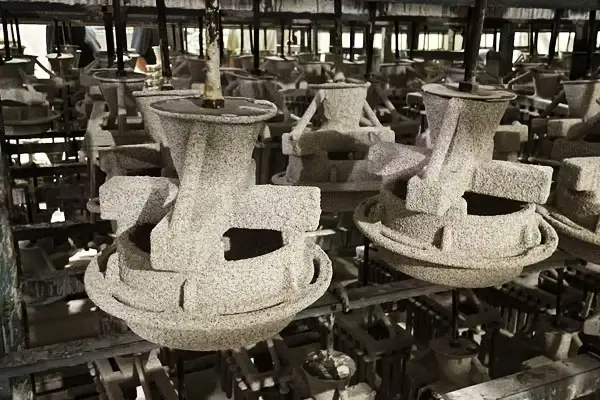
Shell making is the key to determining casting surface quality and dimensional accuracy. The shell is built in layered structure with differentiated refractory materials:
- Face coat: High-purity zircon powder + silica sol slurry, paired with 80–100 mesh zircon sand.
Zircon material with ultra-high refractoriness prevents metal penetration and surface sand sticking during high-temperature pouring. - Transition layer: Enhances bonding strength between layers to avoid shell delamination.
- Backup layer: Uses low-cost quartz sand to reduce overall material cost while ensuring structural strength.
The total number of shell layers is 8–12; large thick-walled boiler components require more than 12 layers.
The drying environment is strictly controlled at 18–25 °C with relative humidity of 40%–60%.
Uniform slow drying prevents internal stress concentration, shell cracking and bulging defects.
The whole process relies on natural air drying of silica sol, with no residual alkaline substances, so as not to induce intergranular corrosion of high-temperature resistant stainless steel at high temperature.
4.3 Dewaxing, Shell Roasting and Preheating
- Dewaxing: High-pressure steam dewaxing (150–170 °C steam kettle) is adopted, and open-flame dewaxing is strictly prohibited.
Residual wax will cause carbon pickup on the casting surface, which sharply reduces the high-temperature toughness and corrosion resistance of high-temperature resistant steel.
After dewaxing, residual wax inside the shell is thoroughly cleaned. - High-temperature roasting: The shell is roasted at 850–950 °C for a long time to completely remove organic matter and moisture, sinter the ceramic structure, and improve shell air permeability and high-temperature strength.
- Preheating before pouring: The shell is preheated to 300–600 °C to narrow the temperature difference between molten steel and the shell.
This measure prevents cold shut and misrun of thin-walled parts, and reduces thermal shock to avoid shell rupture.
4.4 Melting and Pouring
Molten steel is smelted by a medium-frequency induction furnace.
Compound deoxidation and degassing processes are implemented to control hydrogen content below 2 ppm, eliminating hydrogen-induced porosity.
The pouring temperature of austenitic high-temperature resistant stainless steel is controlled at 1580–1640 °C, much higher than that of ordinary stainless steel.
Gravity pouring is the mainstream method; ultra-thin-wall complex parts adopt vacuum pouring to further reduce gas entrapment.
The pouring speed is kept stable to avoid rolling slag and air entrainment.
4.5 Cooling, Shell Removal and Post-Processing
Castings are cooled naturally at a slow rate; rapid cooling is forbidden, as it will generate huge residual stress and trigger thermal cracks.
After cooling to room temperature, mechanical shell removal and sand cleaning are carried out.
Follow-up procedures include riser cutting, surface grinding, integral heat treatment, nondestructive testing, precision machining of matching surfaces, shot blasting and chemical passivation.
Among them, heat treatment is the decisive process to optimize the final high-temperature performance of castings.
5. Why Silica Sol Investment Casting Fits Boiler Hardware
Silica sol investment casting is a strong match for boiler hardware because it can produce complex, high-accuracy, smooth-surface parts that are well suited to high-temperature stainless steels.
Boiler components often have geometric features that are difficult to make efficiently by conventional machining, and the silica sol route helps solve that problem.

Near-net-shape precision for complex boiler geometry
Silica sol investment casting is especially valuable when the part has complex geometry, thin walls, ribs, flanges, support zones, or interface features that would be expensive to machine from solid stock.
The process can reproduce detailed shape directly, which reduces machining stock, material waste, and the number of secondary operations.
Better surface finish for high-temperature service
Boiler parts benefit from a smoother surface because roughness can accelerate ash retention, erosive wear, and stress concentration.
The silica sol route provides a finer starting surface than rougher mold processes, which gives the casting a more durable service foundation and a better machining base where finishing is still needed.
Strong match with High-temperature resistant stainless metallurgy
High-temperature stainless grades are not all identical, but they share a need for stable geometry and controlled processing.
Silica sol casting is well suited to this because it can preserve the alloy’s detailed form while supporting the accurate solidification needed for critical boiler components.
The process is therefore not simply a casting method; it is a way to preserve the engineering intent of the alloy.
Reduced machining burden
For boiler hardware, machining can be costly because the parts are often large, complex, and made from high-temperature-resistant stainless steels that are not always the easiest materials to cut.
Near-net investment casting reduces the amount of stock removal required and shortens the path from casting blank to finished component.
That is especially valuable for parts with multiple sealing faces or support interfaces.
Good fit for custom and medium-volume production
Boiler equipment is frequently customized. Different plant layouts, different thermal zones, and different fuels often require different part geometries.
Silica sol investment casting is a strong fit for this kind of production because it supports tailored parts without forcing large-scale tooling or excessive manual fabrication.
Better consistency for critical interfaces
Many boiler castings are not standalone parts; they must mate with tubes, frames, flanges, liners, or support structures.
The precision of silica sol casting helps maintain the interface consistency needed for reliable assembly.
This is particularly important when the part sits in a hot zone where any fit error can become more serious as temperature rises.
Lower risk of geometry-driven rework
Because the process can reproduce the design more faithfully, there is less need for corrective grinding, welding, or reshaping after casting.
That reduces rework risk, preserves material integrity, and helps keep dimensional variation under control.
6. Key Technical Requirements
High-temperature oxidation resistance
For boiler hardware, the first technical threshold is not strength alone but the ability to keep a stable surface under prolonged heat exposure.
The alloy must form and retain a dense, adherent oxide scale that slows further oxidation, scaling, and section loss.
In boiler duty, a material that oxidizes too quickly will lose thickness, lose fit, and eventually lose function even if its room-temperature strength looks acceptable.
Creep resistance under sustained load
Many boiler parts are not exposed to short bursts of heat; they work for long periods under hot, static load. This makes creep resistance a decisive requirement.
Supports, hangers, brackets, frames, and load-bearing fittings must resist slow plastic deformation so that alignment, support geometry, and sealing positions remain stable over time.
If creep is not controlled, the part may not fracture immediately, but it will gradually drift out of tolerance and compromise the system.
Thermal fatigue resistance
Boilers operate through repeated heating and cooling cycles, and those cycles generate alternating stress in the part body and at geometric transitions.
The casting must therefore tolerate thermal expansion and contraction without cracking at ribs, bosses, fillets, or section changes.
This requirement is especially important for parts in cyclic service, where the failure mode is often not one large thermal event but the accumulation of many smaller ones.
Multi-media corrosion resistance
Boiler environments are chemically different depending on fuel and operating regime.
Coal-fired service brings sulfur-bearing species and ash erosion, gas-fired service is dominated by high-temperature oxidation, and biomass or waste-incineration systems may include alkali and chloride attack.
The material must be selected for the actual chemical regime, not for a generic “hot service” label.
A boiler alloy that survives oxidation may still be vulnerable to chlorides or alkali-rich ash if the wrong grade is used.
Dimensional stability at operating temperature
The casting must maintain its geometry under thermal cycling. Dimensional stability is not only a manufacturing target; it is a service requirement.
A distorted flange, warped support, or shifted locating feature can reduce assembly accuracy, worsen flow behavior, or create local stress concentration.
The alloy and casting process therefore need to support a stable microstructure and low distortion tendency.
Dense internal soundness and low surface roughness
A boiler part should be as free as possible from internal porosity, shrinkage concentration, and surface roughness that can trap ash or accelerate erosion.
Dense internal structure improves load capacity and crack resistance, while a smoother surface reduces ash adhesion and lowers the tendency for local flow scouring.
In high-temperature service, surface quality is not cosmetic; it directly affects durability.
Weldability and repairability
Many boiler components are integrated into welded assemblies or require field repair.
That means the alloy must not only perform in service, but also remain practical for fabrication, joining, and maintenance.
A high-temperature resistant stainless grade that is strong but unmanageable in fabrication is usually a poor system choice, even if its thermal properties are attractive.
7. Typical Casting Defects: Root Causes and Targeted Preventive Measures
Restricted by the physical properties of high-temperature resistant stainless steel (high shrinkage, poor fluidity) and the characteristics of silica sol shell, several typical defects may occur in production.
Combined with boiler operation safety requirements, the causes and solutions are sorted as follows:
Porosity and Blowholes
Phenomenon: Smooth round holes on the surface or inside castings.
Causes: Insufficient shell roasting, incomplete molten steel degassing, air entrainment during pouring.
Solutions: Extend shell roasting holding time, add exhaust holes at key positions, and adopt vacuum refining for molten steel.
Shrinkage Cavity and Micro-Porosity
Phenomenon: Loose cavities inside thick-walled parts.
Causes: Unreasonable solidification sequence, insufficient riser capacity, excessive pouring temperature.
Solutions: Optimize gating and riser system to realize sequential solidification, use insulated risers, and strictly control pouring temperature.
Cold Shut and Misrun
Phenomenon: Incomplete filling and poor fusion at thin-wall positions.
Causes: Poor fluidity of molten steel, insufficient shell preheating temperature.
Solutions: Raise shell preheating temperature appropriately and optimize runner structure to accelerate mold filling.
Metal Penetration (Sand Sticking)
Phenomenon: Hard sand layer adhered to casting surface.
Causes: Low refractoriness of surface refractory materials and insufficient face coat layers.
Solutions: Use full zircon powder for face coat and increase the number of face coat layers.
Hot Cracks and Intergranular Cracks
Phenomenon: Linear cracks along grain boundaries.
Causes: Large shrinkage stress of High-temperature resistant steel, excessive sulfur and phosphorus impurities, rapid cooling of castings.
Solutions: Strictly control impurity content, reserve shrinkage allowance in mold design, and implement slow cooling after pouring.
Carbon Pickup
Phenomenon: Excess carbon content in the matrix, reduced toughness.
Causes: Incomplete dewaxing and residual organic matter in the shell.
Solutions: Strengthen steam dewaxing process and enhance high-temperature shell roasting.
Shell Cracking and Delamination
Phenomenon: Shell damage during roasting or pouring.
Causes: Uneven drying and unbalanced internal stress.
Solutions: Adopt automatic constant temperature and humidity drying lines to stabilize shell quality.
8. Comparative Advantages Over Traditional Boiler Component Manufacturing Processes
Silica sol investment casting stands out in boiler-component manufacturing because it combines high dimensional precision, excellent surface quality, superior metallurgical cleanliness, and strong shape-forming capability.
| Evaluation dimension | Silica Sol Investment Casting | Water Glass Investment Casting | Resin Sand Casting |
| Dimensional accuracy | CT4–CT6, high precision | CT7–CT8, wider tolerance | Low precision, wall thickness often uneven |
| Surface roughness | Ra 3.2–6.3 μm, smooth surface | Ra 12.5 μm or above, relatively rough | Severe sand sticking and coarse surface |
| Shell / mold chemical behavior | Chemically stable and low contamination risk | Residual sodium salts may affect corrosion resistance | Resin decomposition can generate harmful gas |
| Complex structure forming | Excellent for thin-wall, multi-hole, and streamlined parts | Limited for ultra-thin or highly intricate structures | Difficult for complex internal cavities |
Internal defect tendency |
Low defect rate, dense structure | Higher shrinkage and porosity tendency | Strong tendency toward shrinkage and porosity |
| Post-processing workload | Near-net shape, minimal grinding and machining | Heavy grinding often required | Large machining allowance needed |
| Fit with High-temperature resistant stainless steel | Best match; preserves alloy performance well | Can reduce high-temperature corrosion resistance if the shell chemistry is not well controlled | Poorer compatibility with precision High-temperature resistant parts |
9. Conclusion
Heat-resistant stainless steel boiler parts made via silica sol investment casting occupy a technically important niche: they are the precision hardware that must survive the boiler’s most punishing thermal zones.
The material family is chosen because high-temperature service above about 550°C shifts the governing failure modes toward creep, oxidation, and thermal fatigue,
while the silica-sol casting route is chosen because it can produce complex, smooth, near-net-shape parts with good dimensional control.
The key to success is integration. The right High-temperature resistant stainless grade, the right shell system, the right casting design, and the right inspection plan must all point in the same direction.
With the continuous development of the boiler industry towards large capacity, high parameters and low energy consumption,
coupled with the progress of casting intelligence and alloy material modification technology, the application scope of silica sol investment cast high-temperature resistant stainless steel components will be further expanded.
The industry needs to continuously break through the bottlenecks of production cost, large-component manufacturing and production cycle,
so as to drive the overall upgrading of boiler supporting part manufacturing technology and contribute to the safe and efficient operation of energy equipment.
DEZE is a foundry that manufactures high-temperature-resistant stainless steel boiler parts
DEZE delivers precision-engineered boiler components for demanding high-temperature service, combining advanced silica sol investment casting with rigorous metallurgical control and production expertise.
With strong capabilities in material selection, pattern development, shell building, precision casting, heat treatment, machining, and surface finishing,
DEZE produces stainless steel boiler parts with excellent dimensional accuracy, dense internal structure, smooth surface quality, and stable performance under elevated-temperature and corrosive operating conditions.
From prototype development to small-batch customization and large-scale production, DEZE supports complex geometries, reliable repeatability, fast turnaround, and consistent quality for critical boiler applications.
FAQs
Why use silica sol investment casting for boiler parts?
Because it offers high dimensional accuracy, smooth surfaces, and the ability to reproduce intricate shapes that boiler hardware often requires.
Which stainless grades are most relevant for High-temperature resistant boiler parts?
Common high-temperature choices include 304H, 321H, 347H, 310S, and 253MA, depending on the service temperature and cyclic severity.
What boiler parts are commonly cast this way?
Common examples include boiler casings, valves, flanges, fittings, thermowells, baffle plates, and support hardware in high-temperature zones.
Is 310S always better than 347H?
No. 310S is better for more severe oxidation and higher temperature exposure, while 347H is often a better fit for long-term creep resistance in the 550–600°C range.

