

1. Pengenalan
Pemutus acuan shell besi mulur mewakili teknik tuangan ketepatan yang menggabungkan sifat mekanikal unggul besi mulur dengan ketepatan dimensi dan kualiti permukaan teknologi pengacuan cangkerang.
Memandangkan industri semakin menuntut geometri yang kompleks, toleransi yang lebih ketat, dan kaedah pengeluaran kos efektif, proses ini telah mendapat perhatian dalam sektor seperti automotif, Hidraulik, jentera, dan peralatan elektrik.
2. What Is Ductile Iron?
Komposisi dan mikrostruktur
Besi mulur ialah aloi besi, Karbon, dan silikon, dengan kandungan karbon biasanya dari 3.0% ke 4.0% dan silikon di sekelilingnya 1.8% ke 3.0%.
Ciri yang menentukan bagi besi mulur ialah struktur grafit sferoidnya.
Semasa proses pemutus, sedikit magnesium (biasanya 0.03% - 0.06%) atau serium ditambah kepada besi cair.
Unsur-unsur ini mengubah kepingan grafit, ciri besi kelabu, menjadi nodul sfera. Perubahan dalam morfologi grafit ini mempunyai kesan yang mendalam terhadap sifat bahan.
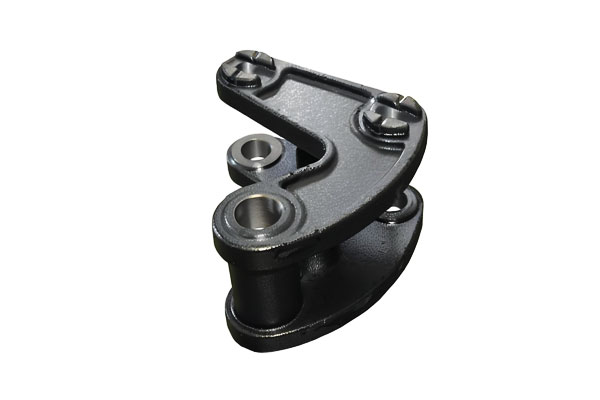
Sifat mekanikal utama
- Kekuatan tinggi: Ductile iron can achieve tensile strengths ranging from 400 MPA (for grades like ASTM A536 60-40-18) ke atas 800 MPA (such as ASTM A536 120-90-02).
This strength makes it suitable for applications where structural integrity under heavy loads is crucial. - Kemuluran: It exhibits significant ductility, with elongation values that can reach up to 18% in some grades.
This allows ductile iron components to deform under stress without fracturing, enhancing their reliability in dynamic loading conditions. - Rintangan kesan: The nodular graphite structure acts as tiny shock absorbers within the matrix. Akibatnya, ductile iron has good impact resistance, far superior to gray iron.
This property is vital for applications where components may be subject to sudden impacts or vibrations.
Common Standards
- ASTM A536: Widely used in North America, this standard specifies the requirements for different grades of ductile iron.
Contohnya, gred 60-40-18 menunjukkan kekuatan tegangan minimum 60 ksi (414 MPA), kekuatan hasil minimum sebanyak 40 ksi (276 MPA), dan pemanjangan minimum 18%. - EN-GJS: Di Eropah, siri piawaian EN-GJS mentakrifkan sifat dan ciri besi mulur.
Setiap gred dalam piawaian ini juga ditentukan oleh keperluan sifat mekanikalnya, memastikan kualiti yang konsisten di seluruh industri. - ISO 1083 – Penamaan global untuk besi grafit sferoid
3. What is shell mold casting?
Fundamentals of Shell Mold Casting
Tuangan acuan cangkerang ialah proses tuangan acuan yang boleh dibelanjakan yang menggunakan pasir bersalut resin untuk membentuk acuan. Proses ini bermula dengan corak logam yang dipanaskan, biasanya diperbuat daripada aluminium atau besi tuang.
Corak dipanaskan pada suhu dalam julat 200 – 300°C. Pasir bersalut resin, biasanya campuran pasir silika halus dan resin fenolik termoset, kemudiannya diperkenalkan kepada corak yang dipanaskan.
Haba daripada corak menyebabkan resin mencairkan dan mengikat zarah pasir bersama-sama, membentuk keras, cangkerang nipis di sekeliling corak. Apabila cangkerang telah mengeras, ia dikeluarkan daripada corak.
Acuan biasanya terdiri daripada dua bahagian, dikenali sebagai cope and the drag, yang dipasang untuk mencipta rongga di mana logam cair akan dituangkan.

Step-by-step process flow of ductile iron shell mold casting
Pattern Preparation:
Corak logam direka dengan ketepatan untuk memadankan bentuk tuangan akhir yang dikehendaki.
Elaun pengecutan, biasanya di sekitar 1.5% - 2.5% untuk besi mulur, dimasukkan ke dalam reka bentuk corak untuk mengambil kira pengecutan logam semasa pemejalan.
Draf sudut, biasanya dalam julat 0.5° – 1°, ditambahkan untuk memastikan penyingkiran mudah cangkerang daripada corak.
Pembentukan Shell:
The preheated pattern is placed in a machine where resin-coated sand is applied.
This can be done through methods such as dipping the pattern into a hopper of sand or using a sand-blasting technique to spray the sand onto the pattern.
The heat from the pattern cures the resin within 10 - 30 saat, forming a shell with a thickness typically between 3 - 10 mm.
Perhimpunan acuan:
The two shell halves (Cope dan seret) are carefully aligned and joined together. This can be achieved using adhesives, mechanical fasteners, or by clamping.
Untuk bahagian yang kompleks, additional cores made of the same resin-coated sand are inserted into the mold to create internal cavities or features.
Metal mencurahkan:
Besi mulur cair, heated to a temperature of around 1320 – 1380°C, is poured into the assembled mold.
The smooth inner surface of the shell mold allows for efficient filling of the cavity, minimizing turbulence and the formation of defects such as porosity or inclusions.
Cooling and Finishing:
Selepas menuangkan, the casting is allowed to cool within the mold.
The high thermal conductivity of the shell mold (sekitar 1 - 2 W/m · k) accelerates the cooling process, which can take anywhere from 5 - 15 minit untuk bahagian kecil.
Sekali disejukkan, the brittle shell is removed, often by vibration or air blasting. The casting may then undergo post-casting treatment.
Post-casting Treatment:
This can include operations such as heat treatment, pemesinan, dan penamat permukaan.
Rawatan haba, such as annealing at 600 – 650°C, can further enhance the mechanical properties of the ductile iron.
Machining may be required to achieve the final dimensions and surface finish, although the need for machining is significantly reduced compared to other casting methods.
Characteristics of Shell Mold Casting
| Ciri | Nilai / Julat |
| Ketebalan shell | 3-10 mm |
| Toleransi Dimensi | ±0.2 to ±0.5 mm |
| Kemasan permukaan (Ra) | 3.2-6.3 μm |
| Suhu acuan | 200-300 ° C. (corak) |
| Menuangkan suhu | 1320-1380 ° C. (besi mulur) |
| Cooling Time | 5-15 minit (bergantung pada saiz bahagian) |
| Max Typical Part Weight | ≤30–50 kg (larger possible with custom setups) |
4. Why Use Shell Mold Casting for Ductile Iron?
Shell mold casting offers significant advantages when producing ductile iron components that demand high dimensional precision, Kemasan permukaan yang sangat baik, and superior mechanical integrity.
This process bridges the gap between traditional sand casting and investment casting—delivering near-net-shape results with higher efficiency and consistency.
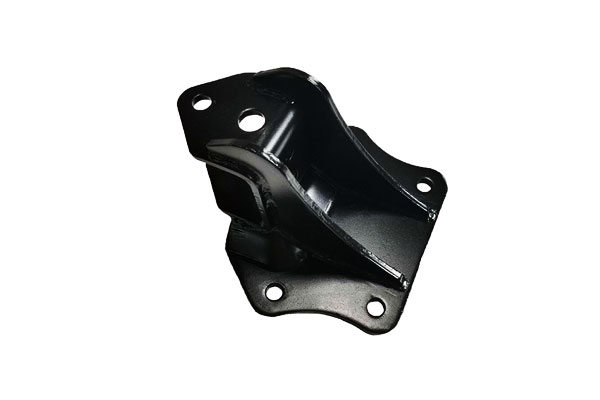
Dimensional Accuracy and Precision
Shell mold casting delivers tight dimensional tolerances, typically in the range of ±0.2 to ±0.5 mm, which is substantially better than conventional green sand casting (±1.0–2.0 mm).
This level of precision reduces the need for secondary machining, especially on critical features like mounting holes, permukaan pengedap, and complex mating geometries.
Kemasan permukaan unggul
Shell molds provide a smooth cavity surface that imparts a fine finish to castings, biasanya RA 3.2-6.3 μm.
Ini mengurangkan atau menghapuskan keperluan untuk mengisar atau menggilap permukaan, yang boleh menjadi intensif buruh dan mahal dalam pembuatan volum tinggi.
Complex Geometry and Thin Walls
Disebabkan ketegaran dan saiz butiran pasir halus cangkerang, proses ini sangat sesuai untuk tuangan bentuk rumit, Dinding nipis (turun kepada 2.5–4 mm), dan ciri dalaman yang tajam.
Dimensional Stability During Solidification
Acuan cangkerang tegar menahan ubah bentuk semasa penuangan dan pemejalan logam, mengurangkan kecacatan biasa seperti meleding, bengkak, atau anjakan acuan.
Process Efficiency and Waste Reduction
Tuangan acuan shell sangat serasi dengannya Automasi dan pengeluaran besar -besaran, terutamanya untuk bahagian yang menimbang ≤30–50 kg.
5. Limitations and Challenges of Ductile Iron Shell Mold Casting

Sekatan saiz dan berat badan
Acuan cangkerang biasanya terhad kepada bahagian yang ditimbang sehingga 30-50 kg disebabkan oleh struktur cangkerang yang agak nipis dan kekuatan mekanikal acuan itu sendiri.
Komponen yang lebih besar atau lebih berat berisiko kerosakan acuan semasa pengendalian atau penuangan logam.
Higher Initial Tooling and Pattern Costs
Compared to traditional sand casting, shell mold casting requires precision-machined metal patterns that must withstand repeated heating cycles (200-300 ° C.).
The use of resin-coated sand and automated equipment also increases upfront capital expenditure.
Thermal Limitations and Hot Spot Formation
The thin shell mold has limited thermal mass, which can lead to uneven cooling rates and localized hot spots, especially in thick sections of the casting. This may cause defects such as:
- Panas merobek
- Incomplete solidification
- Increased internal stresses
- Kesan: Challenges in casting complex parts with variable wall thickness.
- Pengurangan: Advanced mold design, penyejukan terkawal, and gating optimization are essential.
Shell Thickness Control
Too thin (≤3 mm) and the shell may crack during pouring; too thick (≥10 mm) and cooling slows, coarsening nodules.
Penyelesaian: Optimize resin content (3-4%) and pattern heating time (60-90 saat) to achieve uniform 5-8 mm shells.
Limited Mold Reusability
Shell molds are single-use and must be broken away after casting.
Although the resin-coated sand can often be reclaimed and recycled, mold components cannot be reused, increasing the consumption of materials.
6. Material Behavior in Shell Mold Casting

Metallurgical considerations
- Nodule count and shape control: The rapid cooling in shell mold casting can affect the nodule count and shape in ductile iron.
To ensure a sufficient number of well-formed nodules (aiming for 15 - 25 nodules/mm²),
careful control of the inoculation process is necessary. Inokulan, such as ferrosilicon, are added to the molten iron to promote the formation of graphite nodules.
The amount and timing of inoculant addition need to be optimized to account for the faster cooling rate in shell mold casting. - Avoiding carbide formation: Dalam beberapa kes, the high cooling rates can cause the formation of carbides in the ductile iron matrix.
Carbides are hard and brittle phases that can reduce the ductility of the material. To prevent carbide formation, alloying elements such as nickel may be added to the molten iron.
Nickel helps to stabilize the austenite phase during cooling, reducing the likelihood of carbide precipitation. - Ensuring proper inoculation and magnesium treatment: The addition of magnesium is critical for nodularizing the graphite in ductile iron.
In shell mold casting, the magnesium treatment needs to be carefully controlled to ensure that the correct amount of magnesium is present in the molten iron.
Too little magnesium may result in incomplete nodularization, while too much can lead to other defects.
Begitu juga, proper inoculation is essential to promote the formation of a fine, uniform distribution of graphite nodules.
Solidification behavior in thin shells
The thin shell mold affects the solidification behavior of ductile iron. The high thermal conductivity of the shell causes the molten metal to solidify rapidly from the surface towards the center.
This can lead to a finer grain structure near the surface of the casting. The solidification rate also impacts the formation of the ferrite-pearlite matrix in the ductile iron.
Faster cooling rates tend to promote the formation of more pearlite, which can increase the strength of the material but may slightly reduce its ductility.
Heat transfer dynamics and impact on grain structure
The heat transfer from the molten ductile iron to the shell mold plays a crucial role in determining the grain structure of the casting.
Pemindahan haba yang cepat dalam tuangan acuan cengkerang menghasilkan kecerunan suhu yang curam antara logam cair dan acuan.
Kecerunan ini menyebabkan pembentukan struktur butiran kolumnar berhampiran permukaan tuangan, di mana bijirin tumbuh berserenjang dengan permukaan acuan.
Apabila jarak dari permukaan bertambah, struktur butir menjadi lebih equiaxed.
Struktur bijian mempunyai kesan yang ketara ke atas sifat mekanikal besi mulur, dengan butiran yang lebih halus secara amnya membawa kepada peningkatan kekuatan dan keliatan.
7. Applications of Ductile Iron Shell Mold Castings
Tuangan acuan cangkang besi mulur menggabungkan sifat mekanikal unggul besi mulur dengan ketepatan dimensi dan kemasan permukaan teknologi acuan cangkerang.
Sinergi ini menjadikannya sesuai untuk aplikasi yang memerlukan toleransi yang ketat, geometri rumit,
and high performance under mechanical stress or thermal cycling.

Industri automotif
- Kurungan & Mounts: Suspension brackets, Knuckles stereng, and alternator mounts require strength,
Rintangan Keletihan, and precision—qualities delivered by ductile iron shell mold castings. - Penularan & Drivetrain Housings: Castings with complex geometries and internal passages benefit from the excellent surface finish and dimensional accuracy of shell molds.
- Manifold Ekzos (in high-nickel ductile iron): Withstands thermal cycling up to 600°C in turbocharged engine systems.
Kelebihan: Lightweighting through near-net-shape design, reduced post-machining, and improved fuel efficiency due to precise tolerances.
Hydraulic and Fluid Power Systems
- Badan injap & Perumahan: Critical for controlling fluid flow in high-pressure environments (Mis., 3000+ psi hydraulic systems).
- Komponen pam: Pendesak, Skrol, and gear pump housings benefit from excellent internal surface finish and dimensional repeatability.
Kelebihan: Leak-tight fitment, smooth flow paths, high pressure tolerance, and minimized casting porosity.
Industrial and Agricultural Machinery
- Wear Parts & Pelapik: Shell castings with wear-resistant ductile iron grades are used in abrasive environments like soil tillage, perlombongan, dan pembinaan.
- Precision Gear Blanks & Pulleys: Require concentricity and balance for rotational stability—achieved with shell mold tolerances (typically ±0.3 mm or better).
Kelebihan: Hayat perkhidmatan yang panjang, consistent geometry, and suitability for high-load, high-wear conditions.
Electrical and Power Equipment
- Motor & Generator Housings: Require both electromagnetic compatibility (EMC shielding) and mechanical robustness.
- Switchgear Frames & Busbar Supports: Complex components cast with minimal need for secondary machining.
Kelebihan: Tidak memercik, thermally stable, dan tahan kakisan (with appropriate coatings or alloy variants).
8. Quality Control and Testing of Ductile Iron Shell Mold Casting
Ujian tidak merosakkan (Ndt)
- Ujian Radiografi: This method uses X-rays or gamma rays to penetrate the casting and detect internal defects such as porosity, retak, atau kemasukan.
By analyzing the radiograph, any flaws within the casting can be identified and evaluated. - Ujian ultrasonik: Ultrasonic waves are transmitted through the casting, and the reflections are analyzed to detect defects.
This technique is particularly useful for detecting internal flaws in thick sections of the casting. - Ujian penembus pewarna: A colored dye is applied to the surface of the casting. If there are any surface-breaking defects, the dye will seep into the cracks.
After removing the excess dye, the presence of defects is revealed by the dye remaining in the cracks.
Pemeriksaan dimensi
- Menyelaras mesin pengukur (Cmm): CMMs are used to precisely measure the dimensions of the casting.
By comparing the measured dimensions to the design specifications, any deviations can be identified.
CMMs can achieve accuracies in the range of ±0.01 mm, ensuring that the castings meet the tight tolerances required in many applications. - Optical Scanning: This technique uses lasers or structured light to create a 3D model of the casting.
The 3D model can then be compared to the CAD model of the part to detect any dimensional variations. Optical scanning is a fast and efficient way to inspect complex geometries.
Analisis metalurgi
- Microstructure Examination: Samples of the casting are polished and etched to reveal the microstructure.
By examining the microstructure under a microscope, the nodule count, nodule shape, and the proportion of ferrite and pearlite in the matrix can be determined.
This information helps to assess the quality of the ductile iron and its compliance with the required standards. - Ujian kekerasan: Hardness tests, such as the Brinell, Rockwell, or Vickers tests, are used to measure the hardness of the casting.
The hardness is related to the mechanical properties of the material, and deviations from the expected hardness values may indicate problems such as incorrect heat treatment or improper alloy composition. - Tensile Tests: Tensile specimens are machined from the casting and tested to determine the tensile strength, kekuatan hasil, and elongation of the material.
These mechanical properties are crucial for ensuring that the casting can withstand the intended loads in its application.
Casting defect prevention and resolution strategies
To prevent casting defects, strict control of the process parameters is essential. This includes careful monitoring of the temperature during shell formation, mencurahkan, dan penyejukan.
The quality of the resin-coated sand and the metal used in casting also needs to be closely controlled.
If defects are detected, strategies such as re-melting and recasting, atau melakukan pembaikan setempat menggunakan teknik seperti kimpalan, boleh diambil bekerja.
Walau bagaimanapun, pencegahan sentiasa diutamakan daripada pembaikan untuk memastikan tuangan berkualiti tinggi.
9. Shell Mold vs. Kaedah pemutus lain (for Ductile Iron)
| Aspek | Casting acuan shell | Pemutus pasir hijau | Pelaburan Pelaburan |
| Ketepatan dimensi | ★★★★ ☆ (± 0.3-0.5 mm) | ★★ ☆☆☆ (±1.0–2.5 mm) | ★★★★ ☆ (± 0.3-0.8 mm) |
| Kemasan permukaan (RA μm) | 3.2 - 6.3 | 6.3 - 25 | 1.6 - 6.3 |
| Kerumitan Casting | ★★★★☆ – Menyokong ciri yang rumit, Dinding nipis | ★★☆☆☆ – Terhad oleh kekuatan acuan | ★★★★☆ – Bahagian yang sangat kompleks mungkin |
| Kos perkakas | Medium | Rendah | Tinggi |
| Kesesuaian jumlah pengeluaran | Sederhana hingga Tinggi | Rendah ke Tinggi | Rendah hingga sederhana |
| Julat berat | 0.1 - 30 kg | 0.1 - >5000 kg | < 10 kg |
| Kecekapan bahan | Baik - Kurang pembaziran, bahagian nipis boleh dicapai | Sederhana – Sistem gating/riser yang lebih besar diperlukan | Adil – Kehilangan lilin dan penggunaan bahan yang lebih tinggi |
| Sifat mekanikal (as-cast) | Cemerlang - Struktur mikro yang halus, keliangan rendah | Baik - Struktur lebih kasar, kualiti berubah-ubah | Sangat Baik – Boleh disesuaikan dengan aloi |
| Kadar penyejukan / Mikrostruktur | Cepat – Bijirin yang lebih halus, kawalan bentuk nodul yang lebih baik | Perlahan – Butiran lebih kasar, less uniform nodularity | Moderate – Controlled solidification |
| Keperluan pasca-machining | Minimal – Tight tolerances reduce machining | Extensive – Large allowances needed | Moderate – Often requires finishing |
| Aplikasi biasa | Precision housings, badan pam, bahagian hidraulik | Blok enjin, bingkai besar, municipal castings | Aeroangkasa, perubatan, detailed precision parts |
10. What is the maximum part size for ductile iron shell mold casting?
The maximum part size untuk ductile iron shell mold casting typically depends on the capabilities of the foundry, but in general:
- Weight range: Hingga 20-30 kg (44–66 lbs) is common for shell molding.
- Dimensi: Parts are generally limited to small-to-medium sizes, typically with maximum dimensions around 500 mm (20 inci) per side, though some foundries may handle slightly larger parts.
- Ketebalan dinding: Shell molding excels at producing parts with thin walls and fine detail, biasanya 2.5 mm ke 6 mm tebal.
Why this limitation?
Shell mold casting uses resin-coated sand molds that are baked onto heated metal patterns.
Proses ini menawarkan ketepatan dimensi tinggi dan kemasan permukaan tetapi mempunyai had dalam mengendalikan sejumlah besar besi mulur cair disebabkan oleh:
- Kekuatan acuan: Acuan cangkang nipis boleh retak atau berubah bentuk di bawah berat tuangan yang sangat besar.
- Tekanan terma: Bahagian yang lebih besar menghasilkan lebih banyak haba, meningkatkan risiko kecacatan seperti air mata panas atau kemasukan.
- Pengendalian & mencurah logistik: Peralatan acuan shell dioptimumkan untuk komponen yang lebih kecil.
11. Kesimpulan
Tuangan acuan cangkang besi mulur merapatkan jurang antara ketepatan dan kekuatan.
Ia sesuai untuk pengeluaran volum sederhana hingga tinggi bagi komponen kompleks geometri yang memerlukan ketepatan tinggi dan kualiti yang konsisten.
Sedangkan kos perkakas lebih tinggi, penjimatan jangka panjang dalam pemesinan, penggunaan bahan, dan jaminan kualiti menjadikannya penyelesaian yang kos efektif dalam konteks yang betul.
Ini menawarkan perkhidmatan pemutus besi mulur
Pada Ini, Kami mengkhususkan diri dalam menyampaikan casting besi mulur berprestasi tinggi menggunakan spektrum penuh teknologi pemutus maju.
Sama ada projek anda menuntut fleksibiliti Pemutus pasir hijau, ketepatan acuan shell atau Pelaburan Pelaburan, kekuatan dan konsistensi acuan logam (acuan kekal) Casting, atau ketumpatan dan kesucian yang disediakan oleh Centrifugal dan Lost Foam Casting,
Ini Adakah kepakaran kejuruteraan dan keupayaan pengeluaran untuk memenuhi spesifikasi tepat anda.
Kemudahan kami dilengkapi untuk mengendalikan segala-galanya dari pembangunan prototaip ke pembuatan volum tinggi, disokong oleh ketat kawalan kualiti, kebolehpercayaan bahan, dan analisis metalurgi.
Dari sektor automotif dan tenaga ke infrastruktur dan jentera berat,
Ini Menyampaikan penyelesaian pemutus tersuai yang menggabungkan kecemerlangan metalurgi, ketepatan dimensi, dan prestasi jangka panjang.
Soalan Lazim
How does shell mold casting affect the cost of ductile iron components?
Tuangan acuan shell mempunyai kos perkakas pendahuluan yang lebih tinggi ($5,000–20,000) daripada tuangan pasir tetapi mengurangkan kos pemesinan sebanyak 50–70% disebabkan kemasan permukaan dan toleransi yang lebih baik.
Untuk jilid >10,000 bahagian, jumlah kos kitaran hayat biasanya 10–15% lebih rendah daripada tuangan pasir.
Can shell mold cast ductile iron be heat-treated?
Ya. Rawatan haba biasa termasuk penyepuhlindapan (600-650 ° C.) untuk kemuluran yang lebih baik dan austempering (320–380°C) untuk menghasilkan ADI berkekuatan tinggi (AUSTEMPERED IRON ARUSTEMPERED) dengan kekuatan tegangan sehingga 1,200 MPA.
What causes cold shuts in shell mold castings, and how are they prevented?
Penutupan sejuk berlaku apabila logam cair mengalir dalam aliran berasingan dan gagal bercantum, selalunya disebabkan oleh suhu tuang yang rendah atau gating yang tidak mencukupi.
Pencegahan melibatkan mengekalkan suhu penuangan 1,320–1,380°C dan mereka bentuk sistem gating dengan pergolakan minimum (halaju <1.5 m/s).
Is shell mold casting suitable for corrosion-resistant ductile iron parts?
Ya, tetapi rintangan kakisan bergantung kepada aloi, bukan kaedah pemutus.
Menambah 1–3% nikel kepada besi mulur meningkatkan ketahanan kakisan dalam air tawar, while coating (Mis., epoksi) is required for marine environments.
How does shell mold casting impact the fatigue life of ductile iron components?
Rapid cooling in shell molds refines graphite nodules (5-10 μm) and reduces porosity, increasing fatigue strength by 10–15% compared to sand casting.
Shell mold cast parts typically achieve 250–350 MPa fatigue strength at 10⁷ cycles, suitable for dynamic applications like gears.

