

1. Introduction
Bronze is not a pure metal; it is a family of copper-based alloys, traditionally associated with copper and tin, though modern bronze may include other alloying elements as well.
Because bronze is an alloy, it generally does not melt at one exact temperature.
Instead, it melts over a range between the solidus and liquidus temperatures: below the solidus it is fully solid, above the liquidus it is fully liquid, and between the two it exists in a partially molten state.
This distinction is fundamental in metallurgy, casting, and welding.
2. What is Bronze Actually?
In technical use, “bronze” is a broader term than many people assume.
The most familiar bronze is tin bronze, but industrial bronze alloys also include leaded tin bronzes, aluminum bronzes, silicon bronzes, and other copper-based variants.
These bronze families differ in strength, wear behavior, corrosion resistance, machinability, and thermal behavior.
That is why asking for “the melting point of bronze” is a little like asking for the boiling point of “oil.” The answer depends on which bronze you mean.
Different alloying additions move the melting range in different directions, so the relevant data should always come from the exact grade or specification rather than from a generic bronze label.
This is an inference supported by the large spread in datasheet values for common bronze alloys.
3. Melting Range vs. Melting Point
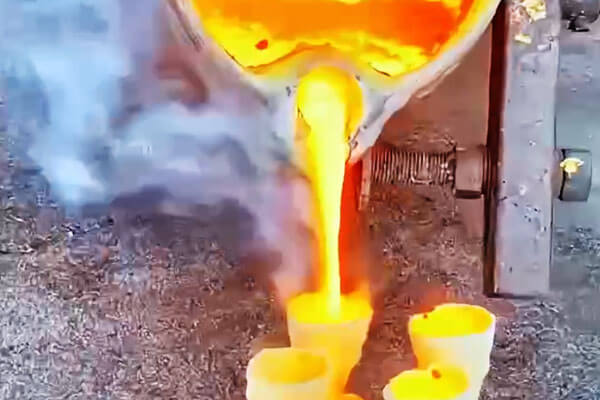
For pure metals, “melting point” usually means a single temperature. For alloys like bronze, the more accurate term is melting range.
The difference between solidus and liquidus is not just theoretical: it affects how bronze behaves in furnaces, molds, and high-temperature service.
In the semi-solid interval, the alloy can be mushy, and its flow behavior changes significantly.
This is especially important in casting. The temperature at which an alloy starts to melt determines the onset of partial liquefaction, while the liquidus marks complete melting.
Understanding that interval helps explain why bronze can be easier or harder to cast depending on composition, grain structure, and process control.
4. Typical Melting Ranges of Common Bronze Families
Below is a source-checked table of representative bronze grades. Because bronze is an alloy family, the correct engineering term is melting range, not one universal melting point.
| Bronze family | Representative grade | Melting range |
| Tin bronze | C91300 | 818.3°C to 888.9°C; 1505°F to 1632°F; 1091.45 K to 1162.05 K |
| High-leaded tin bronze | C93200 | 854.4°C to 976.7°C; 1570°F to 1790°F; 1127.59 K to 1249.82 K |
| Low-silicon bronze B | C65100 | 1030°C to 1060°C; 1890°F to 1940°F; 1303.15 K to 1333.15 K |
| High-silicon bronze A | C65500 | 970°C to 1025°C; 1778°F to 1877°F; 1243.15 K to 1298.15 K |
| Nickel-aluminum bronze | C63000 | 1035.0°C to 1054.4°C; 1895°F to 1930°F; 1308.15 K to 1327.59 K |
| Manganese bronze | C86100 | 900°C to 940°C; 1652°F to 1724°F; 1173.15 K to 1213.15 K |
| Manganese bronze | C86300 | 885°C to 923°C; 1625°F to 1693°F; 1158.15 K to 1196.15 K |
| Aluminum bronze | C95400 | 1025°C to 1040°C; 1877°F to 1904°F; 1298.15 K to 1313.15 K |
| Nickel aluminum bronze | C95500 | 1037.8°C to 1054.4°C; 1900°F to 1930°F; 1310.93 K to 1327.59 K |
| Aluminum-silicon bronze | C95600 | 982.2°C to 1004.4°C; 1800°F to 1840°F; 1255.37 K to 1277.59 K |
| Nickel aluminum bronze | C95800 | 1043.3°C to 1060°C; 1910°F to 1940°F; 1316.48 K to 1333.15 K |
A rigorous reading of the table is that common industrial bronzes span roughly 818°C to 1060°C, with the lower end typically represented by tin bronzes and the higher end by silicon, aluminum, and nickel-aluminum bronzes.
Small differences of 1–3 degrees between datasheets are normal and usually reflect rounding rather than a real materials discrepancy.
5. Core Factors Affecting the Melting Point of Bronze
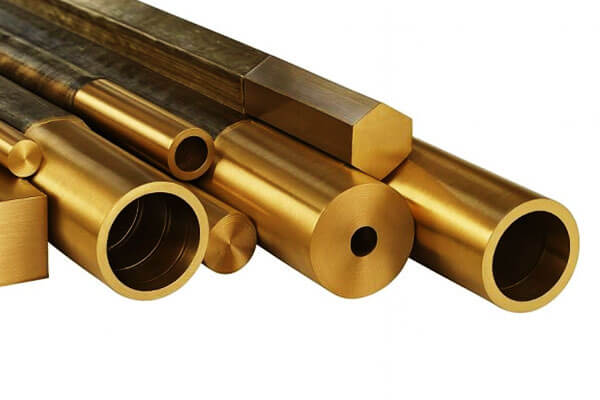
Bronze does not possess a single, universal melting point. As a copper-based alloy family, its melting behavior is governed by composition, impurity level, external pressure, and even physical form.
In practical metallurgy, these variables determine not only the melting range itself, but also the stability of the alloy during heating, casting, and solidification.
Alloy Composition and Element Proportion
Among all influencing variables, alloy composition is the most decisive. In traditional bronze systems, tin is the key element that most strongly affects thermal behavior.
As tin content increases, the melting range generally shifts downward, especially on the liquidus side.
In practical terms, a modest increase in tin can noticeably reduce the temperature required for complete melting.
Other alloying elements also play an important role.
Elements such as aluminum, iron, and nickel tend to increase thermal stability and can raise the melting range, while elements such as lead, zinc, and bismuth usually lower the solidus temperature.
This is not simply a matter of individual element behavior; the interaction between alloying elements can lead to the formation of intermetallic compounds, which alter phase transitions and may produce a broader or more complex melting interval.
For this reason, bronze should never be treated as a single material with one fixed melting point.
A small change in chemistry can produce a measurable change in melting performance, casting behavior, and high-temperature stability.
Impurity Content and Metallurgical Cleanliness
The purity of the bronze has a direct impact on its melting characteristics.
Industrial bronze often contains trace impurities such as iron, sulfur, and antimony, especially when recycled material is involved.
Even when present in small quantities, these impurities can alter the alloy’s phase structure.
In particular, sulfur and antimony may form low-melting eutectic compounds.
These compounds often concentrate at grain boundaries, where they weaken thermal uniformity and reduce the solidus temperature.
As a result, the alloy may begin to soften or partially melt earlier than expected.
In some cases, the melting range can shift downward enough to affect foundry temperature control and product quality.
By contrast, high-purity, well-deoxidized bronze generally exhibits a more stable and predictable melting range.
This is one reason why high-grade bronze made from controlled primary material often performs more reliably than bronze produced from mixed or heavily recycled feedstock.
In precision casting and high-performance applications, metallurgical cleanliness is therefore just as important as nominal alloy designation.
External Pressure and Melting Conditions
The surrounding pressure also influences how bronze behaves during melting, although this effect is usually secondary in ordinary industrial production.
In general, melting temperature and pressure are related, and changes in pressure can shift the temperature at which phase transformation occurs.
Under vacuum smelting conditions, the liquidus temperature of bronze may decrease slightly.
This is partly why vacuum processes are widely used in precision casting and controlled metallurgy: they help reduce oxidation, improve melt quality, and may lower the energy required for melting.
In practice, vacuum environments can also improve the cleanliness of the molten metal, which is often more important than the small thermal shift itself.
Under high-pressure conditions, the opposite tendency is observed: the melting point may rise modestly.
However, in conventional industrial manufacturing, this effect is usually small and does not dominate process design.
For most bronze foundry operations, composition and impurity control remain far more important than pressure alone.
Physical Form of the Material
Bronze does not behave identically in every physical state. Its thermal response changes when it is processed as powder, thin foil, or bulk material.
Bronze powder typically melts more easily than bulk bronze because the particles have a much larger surface-to-volume ratio and higher surface energy.
This can lower the apparent melting temperature and accelerate thermal transformation.
For that reason, powder metallurgy and sintering processes often rely on different thermal assumptions than conventional casting.
Bronze thin foil may also show altered melting behavior. At very small thicknesses, microstructural stress, surface effects, and reduced thermal mass can influence phase transition characteristics.
In some cases, the alloy appears to soften or melt at a lower effective temperature than the same bronze in bulk form.
These differences are highly relevant in advanced manufacturing.
A bronze grade that performs predictably in a cast ingot may behave differently in powder processing, sintering, or micro-scale thermal applications.
The physical form of the material is therefore not just a packaging detail; it is a real part of the thermal equation.
Engineering Implications
From an engineering perspective, the melting behavior of bronze should be treated as a system property, not a fixed number.
Alloy chemistry defines the baseline. Impurities modify the phase behavior. Pressure affects the thermal transition under special conditions. Physical form changes how heat is absorbed and distributed.
That is why foundries, precision casting shops, and materials engineers must always evaluate bronze in its actual service or processing state.
The same nominal “bronze” can show meaningful differences in melting range depending on whether it is a clean primary alloy, a recycled feedstock, a powder, or a thin-section component.
Accurate temperature control therefore depends on a full understanding of both composition and processing context.
6. Why the Melting Range Matters in Casting and Manufacturing
In casting, the solidus-liquidus interval affects how the alloy fills the mold, how it shrinks during solidification, and how susceptible it is to defects such as porosity or incomplete fill.
The solid-liquid transition is therefore central to process design, not just to material science theory.
For foundry work, knowing the exact bronze grade is essential because two alloys both called “bronze” can behave very differently in the melt.
A low-tin bronze may begin melting well below 900°C, while an aluminum bronze may remain partly solid until above 1000°C.
That difference changes furnace settings, mold strategy, and quality control requirements.
This is also why bronze is not a material to generalize casually in engineering documentation. If a process sheet simply says “bronze,” it is incomplete.
A proper specification should identify the alloy designation, because the thermal range, mechanical response, and service behavior all depend on that exact grade.
This is an engineering inference supported by the range of cited datasheet values.
7. Practical Selection Guidance
If your concern is casting, the most important step is to consult the alloy-specific solidus and liquidus values rather than rely on a generic “bronze melting point.”
The bronze family includes several common alloy systems, and they do not share one universal thermal number.
If your concern is performance in service, note that bronze is widely used because many bronze alloys combine corrosion resistance, wear resistance, low friction, and good ductility.
Those benefits explain why bronzes are common in bearings, gears, piston rings, valves, and fittings.
If your concern is materials comparison, bronze generally melts at a lower temperature than steel, which is one reason copper alloys are easier to cast in many industrial settings.
At the same time, the exact bronze grade still matters greatly, because the thermal spread across bronze families is wide enough to influence process design.
8. Conclusion
The melting point of bronze should be understood as a melting range, not a single temperature.
Bronze is a copper-based alloy family, and its solidus and liquidus temperatures vary significantly with composition.
Representative industrial bronzes can begin melting below 850°C and fully liquefy well above 1000°C, depending on whether the alloy is tin bronze, aluminum bronze, silicon bronze, or another bronze family.
For engineering work, the right question is not “What is the melting point of bronze?” but “Which bronze alloy are we using, and what are its solidus and liquidus temperatures?”
That is the level of precision needed for casting, heat treatment, and high-temperature design.

