

1. INNGANGUR
A full port ball valve features a ball with a port diameter equal to the internal pipeline diameter.
That design eliminates a flow restriction at the valve, minimizing pressure drop, reducing erosion, and allowing pigging in pipeline service.
Because of these advantages they are widely used in oil & bensín, jarðolíu, Vatn, pharmaceutical and high-purity systems.
The trade-offs are slightly larger size and weight, and higher cost compared with reduced-port valves — but in many industrial applications the operational benefits outweigh the incremental cost.
This article analyses full port ball valves from technical, Framleiðsla, operational and procurement perspectives and includes data-driven guidance for selection and specification.
2. What is a Full-Port Ball Valve?
A. Fullt port (aka fullur) kúluventill is a quarter-turn valve whose ball bore (the opening through the ball) is the same nominal diameter as the piping it is installed in.
Með öðrum orðum, the valve introduces no intentional restriction to the pipe flow area when fully open.
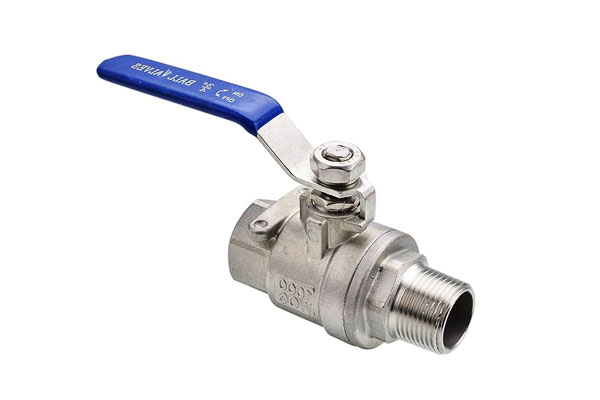
Key technical points
- Bore equality: For a correctly specified full-port valve the ball orifice ≈ the pipe internal diameter (auðkenni).
This contrasts with a minni-höfn (or reduced-bore) ball valve whose bore is smaller than the pipeline ID. - Hydraulic consequence: Because the flow area is not reduced, a full-port valve has lágmarks þrýstingsfall and a Cv very close to the straight pipe Cv for the same nominal size.
- Synonyms: full port = full bore; sometimes manufacturers use “full port” even when the bore is fractionally smaller — always confirm actual internal diameter or Cv curve.
3. Hönnun & Internal Components of Full Port Ball Valve
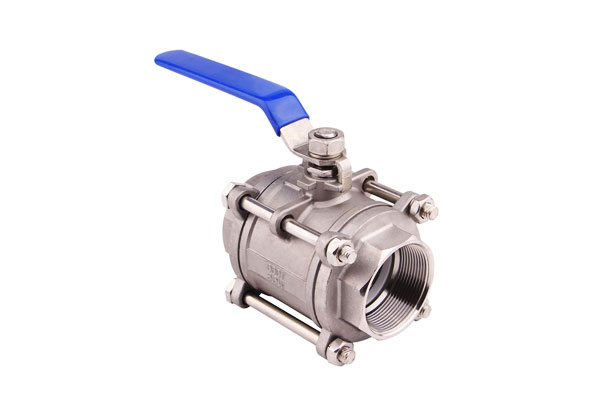
Typical full port ball valve components:
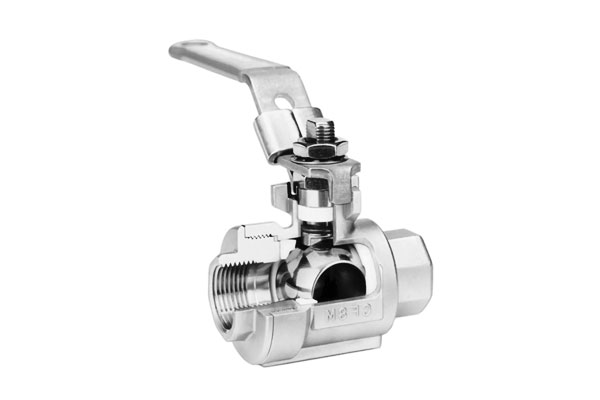
- Líkami / bonnets: Eitt stykki, tveggja stykki, three-piece or split-body designs.
Tveir- and three-piece designs facilitate maintenance and replacement of internals without removing the valve from line. - Bolti (spherical closure element): Full-bore sphere; precision lapped to seat. Surface finish and hardfacing (T.d., chromium plating, StelliTe) used for abrasion resistance.
- Sæti: Seal the ball; materials range from PTFE and PEEK to metallic seat designs for high temperature or abrasive service.
- Stilkur: Transmits actuation torque; contains packing to prevent leakage.
- Innsigli & pökkun: O-hringir, styrkt PTFE, graphite or metal seals depending on temp/chemistry.
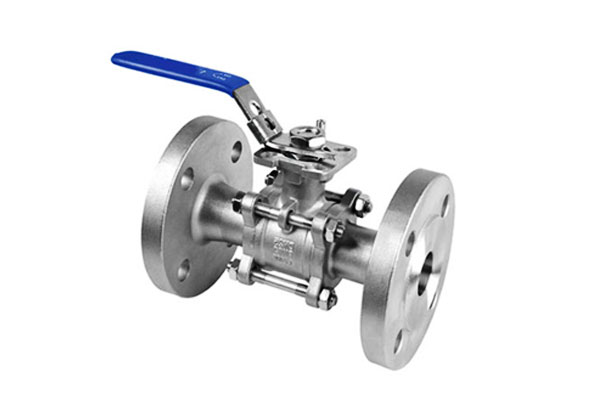
- End connectors: Flansar (ANSI/ASME, Frá), rassuða, fals-suðu, snittari (NPT, BSP), socket or sanitary tri-clamp.
- Actuator interface: ISO 5211 mounting pad for direct actuation (lyftistöng, gírkassi, Pneumatic, Rafmagns, vökvakerfi).
4. Efni, Málmvinnsla, and Trims of Full Port Ball Valve
Material and trim choices determine whether a full-port ball valve will survive a decade in service or require replacement every few months.
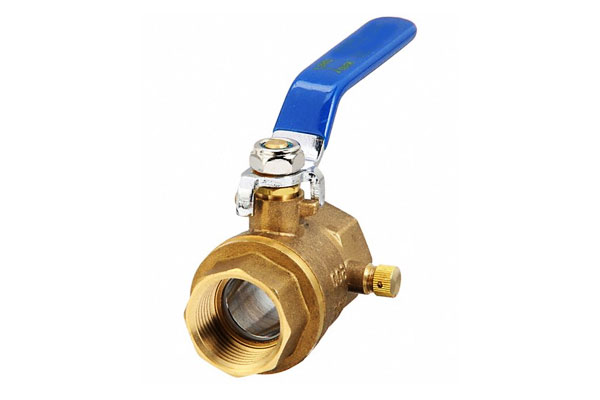
Typical Valve Body & Structural Materials
| Efni (common spec) | Dæmigert notkun | Typical tensile (MPA) dæmigerð svið | Typical service temp range | Key pros / cons |
| Kolefnisstál (A216 WCB) | Almenn þjónusta, low-cost bodies | ~380–550 | −29 °C → ~425 °C (application dependent) | Hagkvæmt, sterkur; poor corrosion without coating; beware galvanic with stainless internals |
| Ryðfríu stáli 304 / 316L (CF8 / CF8M) | Corrosion-resist, hreinlætis | 316L ≈ ~480–550 | Cryogenic → ~350–400 °C (316L) | Framúrskarandi tæringarþol; widely used trim; 316L preferred for chloride and sanitary service |
| Tvíhliða ryðfrítt (2205) | Sjó, chloride-prone service | ~620–800 | −50 → ~300 °C | Mikill styrkur & Klóríðviðnám; dýrari; careful welding required |
| Álfelgur (A182 F11/F22 / 1.25Cr–0.5Mo, 2.25Cr–1Mo) | High-temp steam service | ~500–700 | Up to ~540–595 °C (fer eftir bekk) | Good creep strength; needs heat treatment and PWHT |
Monel (Ál 400) |
Marine / Sjó | ~450–700 | −200 → ~400 °C | Excellent seawater resistance; nickel-based cost/availability issues |
| Hastelloy / Inconel (Ni-alloys) | Strong acid / extreme temp | 700-1000+ | Up to 700–1,000 °C depending on alloy | Outstanding corrosion/oxidation; very costly |
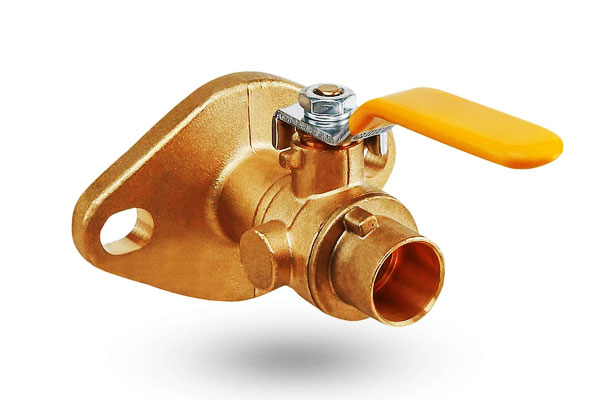
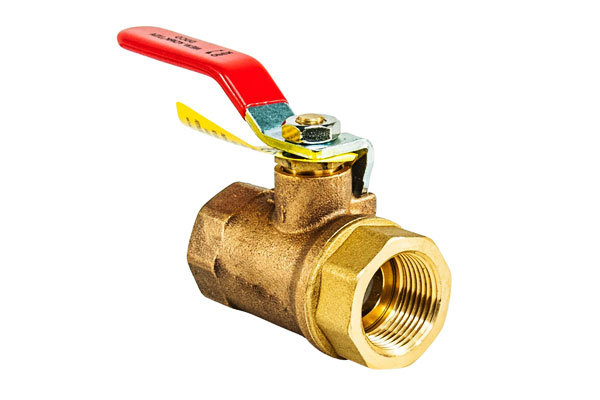
| Brons / Eir | General low-pressure (hreinlætis, HVAC) | ~200–400 | −50 → ~150–200 °C | Góð vélvirkni; dezincification risk in chlorinated/acid media |
| Sveigjanlegt járn / steypujárn | Water utilities, ekki ætandi þjónusta | ~350–550 | −20 → ~300 °C (takmörkuð) | Economical for large sizes; corrosion/fragility issues |
Ball materials & Yfirborðsáferð
The ball is the main sealing and flow surface — its metallurgy, hardness and finish determine sealing life.
Common ball materials:
- 316L ryðfrítt (fáður) — default for most chemical/petro, hreinlætisforrit. Surface finish Ra ≤ 0.4 µm dæmigert; Ra ≤ 0.2 µm for high-purity.
- Hert / hardfaced stainless (Stellite overlay / chromium carbide HVOF) — for erosive / slurry services.
- Nikkel málmblöndur (Monel, Hastelloy) — for aggressive chloride/acid services.
- Chrome-plated carbon steel — used where hardness needed and corrosion is controlled (not for food).
- PTFE húðuð / PTFE encapsulated balls — for special non-stick needs (careful with temp).
Yfirborðsfrágangur:
- Standard industrial finish is electro-polished or mechanically polished to Ra 0.2–0.8 µm.
- For sanitary/biotech, electropolish to Ra ≤ 0.5 µm, passivation to remove free iron.
- In abrasive service, ball surfaces are often hardfaced (StelliTe) eða HVOF WC-Co coatings to increase wear life.
Sæti efni (most critical trim choice)
Seat function: provide leak-tight contact with the ball while accommodating pressure, temperature and chemical exposure.
Mjúk sæti (algengt)
- PTFE (polytetrafluoroethylene) — chem. resistance excellent, Lítill núningur. Temp limit ≈ 200 ° C. (samfellt); short excursions to ~260 °C risky.
- RPTFE / fyllt PTFE (Gler, kolefni, bronze filled) — better wear & skríða mótspyrna; service up to ~240–260 °C.
- Kíktu — high mechanical strength and thermal limit (~250–260 °C), good for hydrocarbon and many chemicals.
- UHMW-PE / Pólýetýlen — low temp (kryógenískt) nota; low friction but poor high-T.
Háhitastig / sæti úr málmi
- StelliTe / hard stainless metal seats (málmur við málm) — for superheated steam or >250–300 °C and abrasive streams.
- Málmsæti + soft insert — hybrid: metal seat for structure, soft PTFE insert for sealing when cold.
Graphite seals / carbon seats
- For extreme temps (>350 ° C.) nota metal seats with graphite seals or graphite seat stack.
Graphite provides high temp sealing but is porous and can allow leakage of small amounts; often used with secondary metal seating.
Stilkur, Pökkun & Secondary Seals
Stem material
- Venjulega 316 / 17-4PH / Tvíhliða / ál depending on corrosion and strength needs. Stem must resist galling and have adequate shear strength for actuation torque.
Pökkun & live loading
- PTFE / Grafít / PTFE-graphite blends for stem packing.
- Lifandi hlaðin pökkun (spring washers) maintain seal over thermal cycles and minimize fugitive emissions.
- For fugitive emissions (lofttegundir, VOCS) require ISO 15848-qualified packings (T.d., PTFE/graphite stacks with metallic springs).
5. Tegundir, End-Connections and Actuation Options
A professional, engineer-oriented survey of the available full-port ball valve variants, how they connect into piping systems, and the actuation choices you should consider when specifying for industrial service.
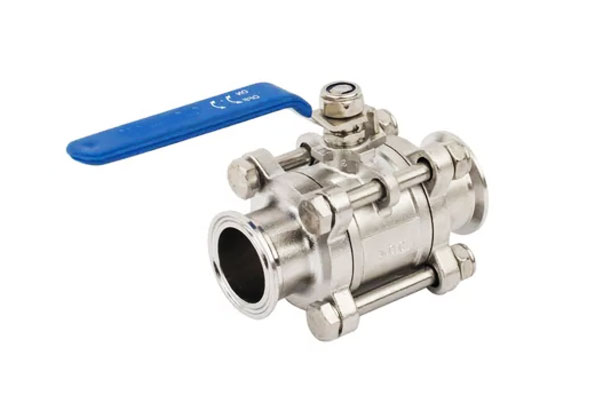
Valve Types
(Use these categories to match operational needs — maintenance, þrýstingur, Stærð, piggability, actuation torque and safety.)
| Variant | Helstu einkenni | Kostir | Takmarkanir | Dæmigert notkunartilvik | Ábendingar um val |
| Eitt stykki (monoblock) | Single body casting/machining, smallest envelope | Lowest cost, samningur, few leak paths | Not serviceable in-line; limited sizes | Small general-service lines | Use where replacement is acceptable and service non-critical |
| Two-piece (split-body) | Bolted two halves, removable end for internals | Easier repair than 1-pc; öflugur | Requires partial pipeline disassembly | Almenn iðnaðarþjónusta | Good balance of cost and maintainability |
| Three-piece | Center module removable with ends in place | In-line maintenance, fast seat/packing change | Higher CAPEX and weight | Critical lines needing frequent service | Preferred for process plants with uptime constraints |
| Top-entry | Top bonnet removable for internal access | Service large valves without pipe removal | Complex bonnet sealing; Hærri kostnaður | Very large valves, refinery/turbine service | Use when valve removal is impractical |
| Floating-ball | Ball free to shift, seats load ball | Einfalt, low cost for small/med sizes | Seat load increases with pressure → higher torque | Low-to-moderate pressure systems | Suitable up to moderate sizes; not ideal at very high ΔP |
| Tennur festur | Ball supported by trunnions/top & bottom | Low operating torque at high pressure; stable sealing | More complex internals; Hærri kostnaður | Large diameters, háþrýstingsleiðslur | Required for >6″/ high-pressure applications |
V-port / V-ball |
V-shaped ball or seat for control | Good coarse-throttling, linear rangeability | Lower tight-shutoff vs full seats; sérhæfður | Stjórna, mælingu, blöndun | Use where isolation + some flow control needed |
| Double-Block-and-Bleed (DBB) | Two independent seats + cavity vent | Positive isolation for maintenance, safe bleed | Flóknara, hærra tog & Kostnaður | Pipelines requiring absolute isolation | Specify for safety-critical isolation tasks |
| Cavity-filled / pressurized | Cavity filled with compatible fluid or vented | Protects seats in high temp/thermal cycles | Needs maintenance of buffer system | Hot hydrocarbons, steam with seat protection need | Use when fluid exposure would damage seats |
| Fire-safe design | Soft seat backed by metal seat per API 607 | Maintains isolation after fire exposure | Hærri kostnaður; more complex sealing | Hydrocarbon service, FPSO, hreinsunarstöð | Mandatory where fire code requires it |
| Cryogenic design | Low-temp materials, extended stems, special seats | Reliable sealing at very low T | Specialized materials & próf | Lng, cryogenic tanks, low-temp gas lines | Select low-temperature seat materials & stöngulpakkning |
| Piggable / hreinlætis / slurry variants | Internal contours & seats optimized for specific function | Enables pigging / Cip / Slípun mótspyrna | May require custom geometry / harðgerð | Pípulagnir, pharma CIP, flutningur á gjósku | Confirm pig OD clearance / FDA finishes / HVOF coatings |
End-Connection Types (how the valve joins the piping)
(Select per pressure class, maintenance strategy, and plant standards.)
| Connection | Helsti kostur | Dæmigert notkun |
| Flangað (RF/FF) | Easy assembly/disassembly | General process plants |
| Butt-weld (BW) | Smooth bore, piggable, high integrity | Trunk pipelines, high-T/P service |
| Socket-weld (SW) | Lítið fyrir litlar stærðir | Small high-pressure lines |
| Snittari (NPT/BSP) | Fljótur, low cost for small valves | Tækjabúnaður, temporary lines |
| Wafer / Lug | Fyrirferðarlítill; lug allows blind flange removal | HVAC, pump stations |
| Tri-clamp / hreinlætis | Hratt, crevice-free, CIP vingjarnlegur | Matur, Pharma, líftækni |
Valkostir á virkni
| Virkjun | Helsti kostur | Dæmigert notkun |
| Handvirk stöng | Mjög einfalt, Lágmarkskostnaður | Litlir lokar, sjaldgæf aðgerð |
| Gírkassi / handwheel | Mechanical advantage for manual use | Large valves without power |
| Pneumatic (double-acting) | Hratt, forceful, áreiðanlegt | On/off control in process plants |
| Pneumatic (spring-return) | Built-in fail-safe position | ESD / safety shutdowns |
| Electric rotary | Precise remote control, modulating | DCS integration, remote sites |
| Vökvakerfi / rafvökva | Very high torque | Very large valves, subsea/offshore |
| Smart actuator + positioner | Accurate modulating + greiningar | Control valves, automation systems |
6. Key manufacturing process — full-port ball valves
Primary forming: casting/forging / bar-stock
- Method per design: leikarar (sand/Fjárfesting steypu) for complex, stórir líkamar; forged or bar stock for smaller or high-integrity parts.
- Critical controls for castings: controlled melting (EAF/Induction + LF/VD), keramik síun, argon degas, directional gating & risar, chills for thick sections. Target dissolved H₂ < 5 ppm.
- Pouring temp typical: 1,550–1,600 °C for Cr-Mo alloys (adjust to alloy); limit superheat to avoid coarse grain.
Skoðun: RT/UT on pressure parts (100% þar sem þess er krafist), visual for hot tears, dimensional check of core bores.
Rough machining & stabilization
- Rough turn/mill to remove skin, riser remnants and allow for heat treatment.
- Maintain datum references for concentricity and bore alignment. Use CMM first-piece inspection.
- Typical roughing allowance: 1–4 mm depending on castness and coating allowance.
Hitameðferð (þar sem þess er krafist)
- Apply qualified cycles per material: T.d., normalize/anneal → quench/air cool → temper for alloy steels. PWHT per alloy (for welded bodies or alloy steels) must be recorded.
- Record furnace charts for each load (T vs time) and mark parts with heat IDs.
Finish machining — critical geometry & vikmörk
- CNC finish all critical features: ball seat bore, ball bore, stem bores, flange faces, face-to-face.
- Target tolerances (dæmigert):
-
- Bore concentricity: ≤ 0.05 mm to ball axis for small/med valves; ≤ 0,1–0,2 mm for very large.
- Augliti til auglitis: per ASME B16.10 tolerance ±1–3 mm depending on size/class.
- Valve ball runout / sphericity: ≤ 0.02–0.05 mm.
- Yfirborðsfrágangur (wetted): general ≤ RA 0.4 µm; sanitary ≤ RA 0.25 µm; high-purity ≤ RA 0.2 µm.
- Hardfacing/HVOF overlay: apply and machine to nominal thickness. Typical overlay thickness: 0.3–1,0 mm (stjörnur) eða 100–300 µm for HVOF coatings. Verify bond and cracking absence.
Skoðun: CMM report, surface-finish measurements, hörkukortlagningu, lagþykkt & adhesion tests.
Undirsamsetning & trim lapping
- Ball/seat lapping/lapping fixtures to create contact pattern and ensure seat sealing. Measure seat contact band and ensure uniformity.
- Install seat springs, backseat, anti-static pins, pressure relief/exhaust fittings as required. Live-load packings pre-set if specified.
Targets: bubble-tight for liquid services on new soft seats (verify per seat test spec).
Final assembly & torque verification
- Assemble complete valve, apply specified torque preloads on gland, follow controlled fastener tightening sequence (torque multiplier or hydraulic torque).
Torque procedures and fastener torque values recorded. - Install actuators (if part of supply) and check ISO 5211 fitment.
Próf
- Hydrostatic shell test: 1.5× maximum working pressure (or per PO); document pressure, temp, duration and observable leakage. 100% tested.
- Seat leakage test: fyrir API 598 / ISO 5208 numeric limit (specify liquid/gas pressure and allowed ml/min or bubble class). 100% tested.
- Functional cycling: lágmarki 5 cycles under pressure or as specified; record torque at open/close and observe seat/packing behavior.
- Torque curve & CV (sampled or 100% per criticality): measure breakaway and running torque at ΔP=0 and rated ΔP; vendor to supply torque vs pressure curve. Cv must be provided with test conditions.
- Fugitive emissions (ef þess er krafist): ISO 15848 testing for stem packing / actuation package.
- NDE records: RT/UT/MPI/LPI as required for castings/welds.
7. Staðlar, Próf, og vottanir
Key standards and tests to specify:
- Hönnun & Framleiðsla: ASME B16.34, API 6D (pipeline valves), In 12516
- Augliti til auglitis / enda tengingar: ASME B16.10, B16.5 (Flansar)
- Flange drilling: ASME B16.5 / EN1092
- Pressure testing: API 598, ISO 5208 (shell and seat tests)
- Fire test: API 607, ISO 10497
- Material traceability: In 10204/3.1 certificate (eða 3.2) – chemical and mechanical test reports
- Fugitive emissions: ISO 15848-1/2 for stem seals
- NDE: Röntgenmyndataka / ultrasonics on critical castings/welds; PMI for material verification
- Yfirborðsfrágangur / hreinlætis: 3A., EHEDG, Ra ≤ 0.8 µm for food/pharma
8. Algengar bilunarstillingar, Úrræðaleit, og mótvægisaðgerðir
| Bilunarhamur | Orsök | Einkenni | Mótvægi |
| Leki í sæti | Slit í sætum, extrusion, rusl | Through-seat leak | Filter upstream (≤ 1/3 op), replace seats, use metal seats if needed |
| Stem leakage | Pökkunarslit, incorrect compression | Leakage at stem | Re-torque gland, replace packing, consider live-loading springs |
| Ball erosion/pitting | Abrasive service, Cavitation | Ójöfnur á yfirborði, leka | Harden ball or hardface, install flow conditioning, use full port to reduce velocity spikes |
| Bilun í stýrisbúnaði | Lofttap, electrical fault | Valve stuck | Redundant controls, maintenance schedule, manual override |
| Seizure | Tæring, cold welding | Stiff operation | Choose appropriate coatings (electroless Ni), apply grease, periodic exercise |
| Body leak | Casting porosity, gasket failure | External leak | NDE at manufacturing, replace gasket, retorque |
9. Key Application of Full Port Ball Valve
- Olía & Bensín (leiðslur / export lines): piggable butt-weld valves, trunnion for large sizes, hardfaced trims for sand/solids.
- Petrochemical / Hreinsun: high-T process lines and purge loops—alloy bodies and metal seats; PWHT where required.
- Orkuvinnsla: fóðurvatn, headers and auxiliary trunk lines—use alloy bodies and metal seats for superheated steam.
- Efnavinnsla: multiphase and corrosive streams—select corrosion-resistant alloys (316L, Hastelloy, Tvíhliða) and appropriate seats (PTFE/PEEK or metal).
- Vatn & Veitur: pump stations and metering runs—ductile iron or stainless, flanged or lug ends.
- Slurry / Námuvinnsla: abrasive service uses hardfaced balls and replaceable metal/ceramic seat rings.
- Hreinlætismál / Pharma: þríklemma, electropolished 316L, 3-piece designs for CIP and easy maintenance.
- Cryogenics / Lng: low-temp materials and special seat/packing (PCTFE/UHMW-PE); extended stems.
10. Comparison with Competing Valve Types
| Lögun / Viðmið | Fullur hafnarkúluloki | Standard (Minnkað) Port Ball Valve | Hliðarventill | Globe loki | Butterfly loki |
| Rennslisleið | Ótakmarkað (≈ pipe ID); minimal ΔP | Restricted bore → higher ΔP | Straight bore; lágt ΔP | Tortuous path → high ΔP | Disc obstructs flow; moderate ΔP |
| CV (Rennslistuðull) | Hæst; near pipe capacity | ~70–80% of full port | High | Miðlungs | Í meðallagi – hátt (size dependent) |
| Lokunargeta | Kúluþétt (mjúk sæti) or Class V–VI (Málmur) | Same as full port | Gott, but seat wear possible | Excellent sealing | Miðlungs; depends on elastomer |
| Pigging / Hreinsun | Já, fully piggable | Nei | Já | Nei | Nei |
| Actuation Torque | Lágt-í meðallagi; compact actuators | Lágt | High (rising stem) | High | Mjög lágt |
| Cycle Speed | Fast quarter-turn (90°) | Fast quarter-turn (90°) | Hægur (fjölbeygja) | Hægur (fjölbeygja) | Fast quarter-turn |
| Stærðarsvið | ½” – 48″+ | ½” – 24″ | 2″ – 72″+ | ½” – 24″ | 2″ – 120″+ |
| Pressure/Temperature Range | Breiður: up to ASME 2500#, cryogenic to 600°C+ (Málmsæti) | Same as full port but less flow | Excellent for high P/T | Excellent control at high T | Miðlungs; limited by seat material |
| Flæðisstýring / Inngjöf | Aumingja (ekki mælt með; seat erosion risk) | Aumingja | Fair | Framúrskarandi (nákvæm stjórn) | Fair (approximate control) |
| Viðhald | Seats/packing replaceable; 3-piece design serviceable inline | Same | Wedge/seat replacement difficult | Seat replacement difficult | Einfalt; elastomer disc replaceable |
| Þyngd / Rými | Fyrirferðarlítill; lighter than gate/globe | Fyrirferðarlítill | Þungt, long face-to-face | Þungt, long | Lightest; short face-to-face |
| Dæmigert forrit | Leiðslur, grísarhæfar línur, Lng, hreinlætis, high-Cv service | General utility, non-piggable service | Isolation in pipelines, high-P/T | Rennslisstjórnun, inngjöf | HVAC, kælivatn, large-diameter isolation |
11. Future Innovations: Smart and Sustainable Full Port Valves
The evolution of full port ball valves is driven by two trends: industrial IoT (IIoT) integration and sustainability—both aimed at improving efficiency and reducing environmental impact.
Smart Valve Technology
- Innbyggðir skynjarar: Full port valves with pressure, hitastig, and flow sensors (T.d., Rusco Smart Ball Valve) transmit real-time data to a central controller.
This enables predictive maintenance—alerting operators to seat wear or clogging before performance degrades.
Í vatnshreinsistöð, smart full port valves reduced unplanned downtime by 40%. - Stafrænir tvíburar: Virtual replicas of full port valves (T.d., ABB Ability™ platform) simulate performance under varying conditions (rennslishraði, þrýstingur).
ExxonMobil uses digital twins to optimize full port valve operation in oil pipelines, draga úr orkunotkun um 12%. - Rafmagnsvirkjun 2.0: Next-generation electric actuators (T.d., Emerson Bettis™) offer 0.1° position accuracy and energy efficiency 50% higher than pneumatic systems.
Paired with V-notched full port valves, they enable precise throttling for high-flow processes.
Sustainable Design
- Endurvinnanlegt efni: Full port valves made with 30% recycled stainless steel (T.d., Kitz Corporation) reduce carbon footprint by 15% vs. virgin steel, meeting EU CSRD (Corporate Sustainability Reporting Directive) kröfur.
- Low-Leakage Seals: New PTFE-silicone composite seats reduce leakage to <0.0001 std cm³/s (exceeding ISO 5208 Flokkur VI), minimizing environmental impact from toxic fluids.
- Modular Construction: 3D-printed full port valve cores (T.d., using SLM technology) enable custom bore sizes for niche applications, draga úr efnisúrgangi um 30% vs. traditional machining.
12. Niðurstaða
Full port ball lokar are more than just flow control devices; they are efficiency enablers that reduce energy costs, lágmarka niður í miðbæ, and ensure reliable operation in critical industrial processes.
Their unique full bore design eliminates flow restrictions, while advanced materials and construction variants tailor them to corrosive, háhita, and high-pressure environments.
As industries demand higher sustainability and smarter operations, full port ball valves will continue to evolve—integrating IoT sensors, recyclable materials, and precision actuation.
For engineers, procurement teams, and plant operators, understanding the technical nuances of full port ball valves—from material selection to maintenance—is a strategic imperative to optimize performance, draga úr kostnaði, and meet environmental goals.
Algengar spurningar
When should I choose a full port ball valve over a reduced-port valve?
Choose full port if: (1) flow rate is high (>100 gpm) and pressure drop must be minimized; (2) media contains solids (slurries, skólp) or is high-viscosity (crude oil, síróp);
(3) pipeline pigging/cleaning is required. Reduced-port is better for low-flow, cost-sensitive applications.
What material is best for a full port ball valve in seawater?
Tvíhliða 2205 or super duplex 2507.
These alloys have a PREN (PITING RESISTENT Jafngilt tala) of 32–45, resisting chloride corrosion (>200 ppm Cl⁻) better than 316L (Viður 24–26). A. 2205 full port valve in seawater lasts 15–20 years vs. 5–7 years for 316L.
Can full port ball valves be used for throttling?
Standard full port valves are poor for throttling (they cause cavitation at partial openings).
For throttling high-flow processes, use V-notched full port valves (15°–90° V-cut), which achieve flow turndown ratios up to 50:1 and minimize cavitation.
What is the typical service life of a full port ball valve?
10-25 ára, depending on material and maintenance.
Til dæmis: (1) 316L full port in chemical service (annual maintenance) lasts 15–20 years;
(2) 2205 duplex with tungsten coating in slurry service (6-month maintenance) lasts 20–25 years.
How do I test a full port ball valve for leakage?
Framkvæma API 598 sætispróf: (1) Settu 1,1× vinnuþrýsting á inntakið; (2) Block the outlet and submerge the valve in water;
(3) Check for bubbles—no bubbles indicate ISO 5208 Flokkur VI samræmi. Fyrir stóra ventla, use a bubble counter to measure leakage (<0.1 std cm³/s).

