
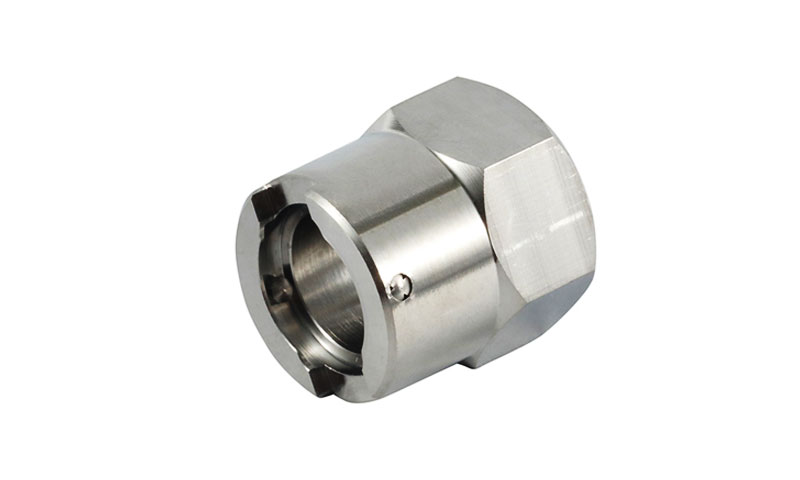
1. Framkvæmdayfirlit
316Ti is an austenitic stainless steel based on the 300-series (316) chemistry with a deliberate addition of Títan to stabilize carbon.
The titanium ties up carbon as stable titanium carbides, preventing chromium-carbide precipitation at grain boundaries when the alloy is exposed to temperatures in the sensitization range.
The result is an alloy with the corrosion resistance of 316 plus improved resistance to intergranular corrosion after high-temperature exposure.
316Ti is commonly specified for components that must operate or are fabricated in the ~425–900 °C temperature window (welded assemblies, heat-exposed plant components) where low-carbon grades alone may be insufficient.
2. Hvað er 316Ti Stainless Steel?
316Ti is a titanium-stabilized, molybdenum-bearing austenitic ryðfríu stáli developed to enhance resistance to intergranular corrosion after welding or prolonged exposure to elevated temperatures.
By adding titanium in controlled proportions, carbon is preferentially tied up as stable titanium carbides rather than chromium carbides.
This stabilization mechanism preserves chromium at grain boundaries and significantly reduces sensitization risks in the temperature range of approximately 425–850 °C (800–1560 °F).
Fyrir vikið, 316Ti is particularly suitable for components that will be welded and placed into service without post-weld solution annealing, or for applications involving cyclic or sustained thermal exposure.
It combines the chloride corrosion resistance of conventional 316 stainless steel with improved structural stability at elevated temperatures. Common international identifiers include US S31635 Og In 1.4571.
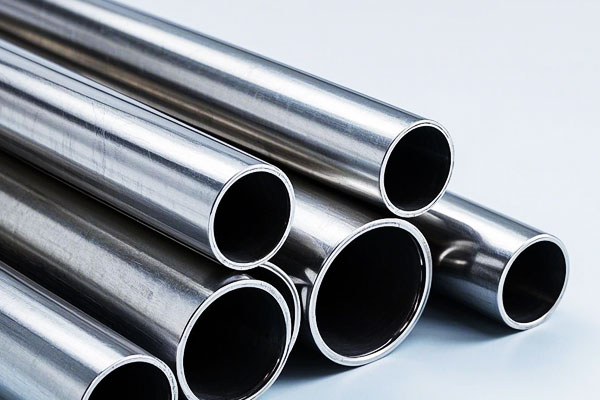
Standard Designations & Alþjóðleg jafngildi
| Svæði / Standard System | Equivalent Designation |
| BNA (Bandaríkin) | S31635 |
| In / Frá (Evrópa) | 1.4571 |
| DIN Material Name | X6crnimoti17-12-2 |
| ASTM / Aisi | 316Af |
| Hann er (Japan) | SUS316Ti |
| GB (Kína) | 06Cr17Ni12Mo2Ti |
| ISO / Alþjóðlegt | Typically referenced to In 1.4571 fjölskyldu |
| Werkstoffnummer | W.Nr. 1.4571 |
Key Variants and Related Grades
- 316Af (US S31635 / In 1.4571)
The titanium-stabilized form of 316 ryðfríu stáli, intended for welded structures or components exposed to intermediate and elevated temperatures where sensitization resistance is critical. - 316 (US S31600 / In 1.4401)
The base molybdenum-alloyed grade without stabilization. Suitable when post-weld heat treatment is feasible or when thermal exposure is limited. - 316L (US S31603 / In 1.4404)
A low-carbon alternative to reduce sensitization risk through carbon control rather than stabilization. Commonly used in pressure vessels, Piping, and pharmaceutical equipment. - 321 (In 1.4541)
A titanium-stabilized alloy based on the 304 stainless steel chemistry. Used when molybdenum is not required but stabilization is still necessary. - 347 (Nb-stabilized stainless steel)
Uses niobium instead of titanium for carbide stabilization. Offers similar intergranular corrosion resistance, often preferred in certain high-temperature pressure equipment codes. - 316H / 316Ln
Variants optimized for higher-temperature strength (316H) or increased nitrogen content (316Ln). These grades improve mechanical performance but do not replace titanium stabilization.
3. Typical Chemical Composition of 316Ti Stainless Steel
Values are representative engineering ranges for wrought, solution-annealed material (US S31635 / In 1.4571 fjölskyldu).
| Element | Dæmigert svið (vigt.%) — representative | Metallurgical / functional role |
| C. (Kolefni) | 0.02 - 0.08 (max ~0.08) | Strength contribution; higher C increases tendency to form chromium carbides (næmingu). In 316Ti, C is intentionally present but controlled so Ti can form stable TiC. |
| Cr (Króm) | 16.0 - 18.5 | Primary passive-film former (Cr₂O₃) — key to general corrosion resistance and oxidation protection. |
| In (Nikkel) | 10.0 - 14.0 | Austenite stabilizer — provides toughness, ductility and corrosion resistance; helps solubility of Mo and Cr. |
Mo. (Molybden) |
2.0 - 3.0 | Enhances resistance to pitting and crevice corrosion in chloride-containing environments (boosts localized corrosion resistance). |
| Af (Títan) | 0.30 - 0.80 (typical ≈ 0.4–0.7) | Stabilizer — ties up carbon as TiC/Ti(C.,N), preventing chromium-carbide precipitation at grain boundaries during thermal exposure (prevents sensitization / Tæringu milligraníu). |
| Mn (Mangan) | 0.5 - 2.0 | Deoxidizer and minor austenite stabilizer; helps control hot-workability and deoxidation practice. |
| Og (Kísil) | 0.1 - 1.0 | Afoxunarefni; small amounts improve strength and oxidation resistance but are kept low to avoid deleterious phases. |
P. (Fosfór) |
≤ 0.04 - 0.045 (trace) | Óhreinindi; kept low because P reduces toughness and corrosion resistance. |
| S (Brennisteinn) | ≤ 0.02 - 0.03 (trace) | Óhreinindi; low levels preferred (higher S improves free-machining but hurts corrosion/ductility). |
| N (Köfnunarefni) | trace – 0.11 (often ≤0.11) | Strengthener and minor contribution to pitting resistance when present; excess N may affect weldability. |
| Fe (Járn) | Jafnvægi (~remainder) | Matrix element; carries the austenitic structure in combination with Ni. |
4. Microstructure and metallurgical behaviour
- Austenitic matrix (γ-Fe): stable at room temperature due to Ni. Microstructure is ductile, ekki segulmagnaðir (in annealed state) and work-hardening.
- Stabilization mechanism: Ti reacts to form titanium carbides (Tic) or carbonitrides which remove C from matrix and prevent Cr₂₃C₆ precipitation at grain boundaries during exposure in ~425–900 °C.
- Sensitization window and limits: even with Ti, extremely long exposure in the sensitization range or improper Ti:C ratio can still permit chromium carbide formation or other intermetallics. Proper melt practice and heat treatment control are essential.
- Intermetallic phases: prolonged exposure in certain intermediate ranges (especially 600–900 °C) can encourage sigma (A.) or chi (h) phase formation in austenitic grades enriched in Mo/Cr;
316Ti is not immune—designers must avoid prolonged dwell in these ranges or specify stabilised steels with controlled composition and thermomechanical history. - Precipitation after service: Ti-stabilized alloys may show fine Ti-rich precipitates; these are benign or beneficial compared with Cr carbides as they do not deplete Cr at grain boundaries.
5. Mechanical properties — 316Ti stainless steel
The figures below are fulltrúi values for wrought 316Ti supplied in the lausnargræðsla / annealed ástand.
Actual values depend on product form (blak, diskur, pípa, bar), þykkt, supplier processing and heat lot.
| Eign | Representative value (lausnargræðsla) | Hagnýtar athugasemdir |
| 0.2% sönnun (Ávöxtun) styrkur, RP0.2 | ~170 – 260 MPA (≈ 25 - 38 KSI) | Typical thin sheet toward lower end (≈170–200 MPa); heavier sections may trend higher. Use MTR value for design. |
| Togstyrkur (Rm / Uts) | ~480 – 650 MPA (≈ 70 - 94 KSI) | Product-dependent; cold work increases UTS substantially. |
| Lenging í broti (A., %) — standard specimen | ≈ 40 - 60 % | High ductility in annealed condition; elongation falls with cold work. |
| Hörku (Brinell / Rockwell B) | ~120 – 220 Hb (≈ ~60 – 95 HRB) | Typical annealed hardness ~120–160 HB; cold-worked/hardened material can be considerably harder. |
| Modulus of elasticity, E | ≈ 193 - 200 GPA (≈ 28,000 - 29,000 KSI) | Nota 193 GPa for stiffness calculations unless supplier data indicate otherwise. |
Shear modulus, G |
≈ 74 - 79 GPA | Use ~77 GPa for torsion calculations. |
| Poisson’s ratio, ν | ≈ 0.27 - 0.30 | Nota 0.29 as a convenient design value. |
| Þéttleiki | ≈ 7.98 - 8.05 g·cm⁻³ (≈ 7,980 - 8,050 kg·m⁻³) | Use for mass and inertia computations. |
| Charpy impact (room T) | Góð hörku; typical CVN ≥ 20–40 J | Austenitic structure retains toughness at low temperature; specify CVN if fracture-critical. |
| Þreyta (S–N guidance) | Endurance for Slétt specimens ≈ 0.3–0.5 × Rm (very dependent on surface, mean stress, welds) | For components use component-level S–N curves or supplier fatigue data; weld toes and surface defects dominate life. |
6. Líkamlegt & thermal properties and high-temperature behaviour
- Varmaleiðni: relatively low (≈ 14–16 W·m⁻¹·K⁻¹ at 20 ° C.).
- Varmaþenslustuðull: ~16–17 ×10⁻⁶ K⁻¹ (20–100 ° C.) — higher than ferritic steels.
- Bræðslusvið: svipað og 316 (solidus ~1375 °C).
- Service temperature window: 316Ti is selected specifically for intermediate temperature exposure (u.þ.b.. 400–900 °C) where stabilization prevents intergranular attack.
Samt, prolonged exposure in the 600–900 °C window can risk sigma-phase formation and reduction in toughness — avoid continuous exposure to those temperatures unless metallurgical data confirm safety. - Skriður: for sustained loads at high temperature, 316Ti is not a creep-resistant alloy; use high-temperature grades (T.d., 316H, 309/310, eða nikkelblendi).
7. Corrosion behaviour — strengths and limitations
Styrkur
- Resistance to intergranular corrosion after thermal exposure in the sensitization range, provided Ti:C and Ti:available C ratios and heat treatment are correct.
- Good general corrosion resistance in oxidizing and many reducing media; Mo contributes pitting/crevice resistance similar to 316.
- Preferred for welded structures that will see intermittent high-temperature service or where post-weld solution anneal is impractical.
Takmarkanir
- Pitting & crevice corrosion in high-chloride environments: 316Ti has similar pitting resistance to 316; for severe seawater or warm chloride service consider duplex or higher-PREN alloys.
- Klóríð SCC: not immune—SCC can occur in chloride + togstreita + temperature environments; duplex alloys or super-austenitics may be required where SCC risk is high.
- Sigma phase and intermetallics: long dwell at certain high temperatures can cause embrittling phases independent of Ti stabilization—design to avoid those thermal histories or test.
- Industrial contaminants: like all stainless steels, árásargjarn efni (sterkar sýrur, chlorinated solvents at high T) may attack; perform compatibility checks.
8. Vinnsla & Manufacturing Characteristics
316Ti’s austenitic microstructure + TiC precipitates enable excellent processability, with minor adjustments needed for titanium’s effects:
Welding Performance (Lykilforskot)
316Ti retains superior weldability, compatible with GMAW (Ég), Gtaw (Tig), Smaw (stick), and FCAW – with the critical advantage of no post-weld heat treatment (PWHT) required for IGC resistance:
- Forhitun: Not required for sections ≤25 mm thick; köflum >25 mm may preheat to 80–150°C to reduce HAZ cracking risk.
- Welding consumables: Use ER316Ti (GTAW/GMAW) or E316Ti-16 (Smaw) to match titanium content and ensure stabilization in the weld metal.
- PWHT: Optional stress relief annealing (600–650°C for 1–2 hours) for thick-walled components, but not mandatory for corrosion resistance (unlike 316, which requires PWHT for IGC protection after welding).
- Welded joint performance: Tensile strength ≥460 MPa, elongation ≥35%, and passes ASTM A262 IGC test – weld metal corrosion resistance equivalent to base metal.
Myndast & Framleiðsla
- Cold forming: Excellent ductility allows deep drawing, beygja, og rúllandi. Minimum bend radius: 1× thickness for cold bending (≤12 mm thick), same as 316L – TiC precipitates do not impair formability.
- Hot forming: Performed at 1100–1250°C, followed by water quenching to retain austenitic microstructure and TiC distribution. Avoids the 450–900°C range during cooling to prevent accidental sensitization.
- Vinnsla: Moderate machinability (rated 55–60% vs. Aisi 1018 stál) – TiC precipitates are harder than austenite, causing slightly more tool wear than 316L.
Recommended cutting speed: 90–140 m/min (karbítverkfæri) with cutting fluid to reduce heat buildup.
Hitameðferð
- Lausn annealing: Primary heat treatment (1050–1150°C, hold 30–60 minutes, vatns slökkt) – dissolves residual carbides (if any), refines grains, and ensures uniform TiC distribution. Critical for maximizing corrosion resistance and toughness.
- Stress relief annealing: 600–650°C for 1–2 hours, air cooling – reduces residual stress by 60–70% without affecting TiC stability or corrosion resistance.
- Avoid over-annealing: Temperatures >1200°C may cause TiC coarsening and grain growth, reducing high-temperature strength – limit solution annealing temperature to ≤1150°C.
Yfirborðsmeðferð
- Súrsun & passivation: Post-fabrication treatment (ASTM A380) to remove oxide scale and restore the Cr₂O₃ passive film – TiC precipitates do not interfere with passivation.
- Fægja: Achieves surface finishes ranging from Ra 0.02–6.3 μm. Mechanical or electropolishing improves hygiene and corrosion resistance, suitable for medical and food applications.
- Húðun: Rarely required due to inherent corrosion resistance; galvanizing or epoxy coating may be used for extreme high-chloride environments (T.d., marine offshore platforms).
9. Typical Applications of 316Ti Stainless Steel
316Ti’s unique combination of high-temperature stability, IGC resistance, and corrosion resistance makes it ideal for demanding environments where 316L or 316 may fail:

Efni & Petrochemical iðnaður (35% of Demand)
- Core applications: High-temperature chemical reactors, hitaskipti, eimingarsúlur, and piping for handling chlorides, sýrur, and organic solvents.
- Key advantage: Resists IGC during repeated welding (T.d., maintenance repairs) and high-temperature operation (up to 850°C) – used in ethylene crackers and sulfuric acid plants.
Aerospace
- Core applications: Aircraft exhaust systems, túrbínuhlutar, and rocket engine parts.
- Key advantage: High-temperature oxidation resistance (≤900°C) and non-magnetic properties – compatible with avionics and radar systems.
Nuclear Energy
- Core applications: Nuclear reactor cooling system components, steam generators, and fuel cladding (non-radioactive structural parts).
- Key advantage: IGC resistance in high-temperature, high-pressure water (280° C., 15 MPA) and compliance with nuclear safety standards (T.d., ASME Section III).
High-Temperature Furnace Manufacturing
- Core applications: Furnace liners, geislandi rör, and heating elements for industrial furnaces (hitameðferð, sintrun).
- Key advantage: Retains strength and corrosion resistance at 800–900°C, with a service life 2–3 times longer than 316L in continuous high-temperature operation.
Læknisfræðilegt & Lyfjaiðnaður
- Core applications: Sterilizable medical devices, búnað til lyfjavinnslu, and cleanroom components.
- Key advantage: IGC resistance after repeated autoclaving (121° C., 15 psi) and compliance with FDA 21 CFR hluti 177 – no risk of corrosion-induced contamination.
Marine & Offshore Industry
- Core applications: Offshore platform piping, seawater desalination plants, and subsea components.
- Key advantage: Resists seawater corrosion and SCC, with NACE MR0175 compliance for sour service (H₂S-containing well fluids).
10. Kostir & Takmarkanir
Core Advantages of 316Ti Stainless Steel
- Superior IGC resistance: Titanium stabilization eliminates Cr₂₃C₆ precipitation, making it ideal for high-temperature or repeated welding scenarios – outperforming 316L/316H.
- Enhanced high-temperature performance: Retains strength, hörku, and oxidation resistance up to 900°C, 50–100°C higher than 316L.
- Framúrskarandi suðuhæfni: No mandatory PWHT for corrosion resistance, reducing manufacturing costs and lead time.
- Breið tæringarþol: Inherits 316’s resistance to chlorides, sýrur, and sour service, with extended temperature limits for NACE compliance.
- Kornhreinsun: TiC precipitates inhibit grain growth, improving mechanical properties and dimensional stability.
Key Limitations of 316Ti Stainless Steel
- Hærri kostnaður: 15–20% more expensive than 316L (due to titanium addition), increasing material costs for large-scale non-critical applications.
- Reduced machinability: TiC precipitates cause more tool wear than 316L, requiring specialized tools or slower cutting speeds – increasing machining costs by ~10–15%.
- TiC coarsening risk: Prolonged exposure to >900°C causes TiC coarsening, reducing high-temperature strength and toughness.
- Limited super-high-temperature resistance: Not suitable for continuous service above 900°C – use super austenitic stainless steels (T.d., 254 VIÐ ERUM) or nickel-based alloys (T.d., Inconel 600) í staðinn.
- Lower strength than duplex stainless steels: Togstyrkur (485–590 MPa) is lower than duplex grades (T.d., 2205: 600–800 MPa), requiring thicker sections for structural loads.
11. Comparative analysis — 316Ti vs 316L vs 321 vs Duplex 2205
| Þátt | 316Af (stabilized) | 316L (lág kolefnis) | 321 (Stöðug, 304 fjölskyldu) | Tvíhliða 2205 (ferritic-austenitic) |
| Primary purpose | Titanium stabilization to prevent intergranular corrosion after thermal exposure or welding | Low carbon to avoid sensitization without stabilization | Titanium stabilization for 304 chemistry — prevents sensitization in heat-exposed welded assemblies | Meiri styrkur + superior localized corrosion resistance (pitting/SCC) |
| Dæmigert hápunktur samsetningar | Cr ~16–18%; Ni ~10–14%; Mo ~2–3%; Ti ~0.3–0.8%; C up to ~0.08% | Cr ~16–18%; Ni ~10–14%; Mo ~2–3%; C ≤ 0.03% | Cr ~17–19%; Ni ~9–12%; Ti added ~0.3–0.7%; no Mo (or trace) | Cr ~21–23%; Ni ~4–6.5%; Mo ~3%; N ≈0.08–0.20% |
| Stabilization strategy | Ti ties C as TiC → prevents Cr-carbide at grain boundaries | Reduce C to minimize carbide precipitation | Ti ties C as TiC in a 304 fylki | Different metallurgy — no carbide stabilization required (Tvíhliða smásjá) |
Viður (u.þ.b.. pitting resistance equiv.) |
~24–27 (depends on Mo, N) | ~24–27 | ~18–20 (lower — no Mo) | ~35–40 (significantly higher) |
| Representative 0.2% sönnun (RP0.2) | ~170–260 MPa | ~170–220 MPa | ~170–240 MPa | ~400–520 MPa |
| Representative UTS (Rm) | ~480–650 MPa | ~485–620 MPa | ~480–620 MPa | ~620–880 MPa |
| Sveigjanleika / hörku | High (annealed ~40–60% elongation) | High (annealed) | High (góð hörku) | Good toughness but lower elongation than austenitics |
| Suðuhæfni | Mjög gott; stabilization reduces need for post-weld solution anneal in many cases | Framúrskarandi; low C commonly used for welded assemblies | Mjög gott; designed for applications where welding and heat exposure occur | Weldable but requires qualified procedures to control ferrite/austenite balance and avoid embrittling phases |
Resistance to intergranular corrosion after welding |
Excellent when Ti:C balance and heat treatment correct | Framúrskarandi (Lágt c), but can be marginal if carbon contamination or improper filler occurs | Framúrskarandi (Ti stöðugleika) | Á ekki við (different failure modes) |
| Pitting / crevice resistance in chlorides | Gott (Mo provides localized resistance similar to 316) | Gott (similar to 316Ti) | Miðlungs (lower — typically less suitable in chloride-rich service) | Framúrskarandi (best suited for seawater/brackish and aggressive chloride service) |
| Susceptibility to chloride SCC | Lower than unstabilized 316; still possible under high stress + hitastig + Klóríð | Lower than 304; can still SCC under adverse conditions | Svipað og 304 (stabilization addresses intergranular corrosion, not SCC) | Very low — duplex is much more resistant to chloride SCC |
Háhitastig / thermal cycling use |
Preferred where parts see intermediate thermal cycles and cannot be solution-annealed | Good for many welded assemblies if annealing control exists | Preferred for 304-based parts exposed to heat cycles | Limited for prolonged high-T creep — used more for strength and corrosion than for high-T creep service |
| Dæmigert forrit | Welded plant items exposed to thermal cycles, ofnhlutar, some pressure parts | Pressure vessels, Piping, matvæla-/lyfjabúnað, general fabrication | Aircraft exhaust, heat-exposed parts in 304 kerfi | Offshore hardware, sjókerfi, chemical plants needing high strength and chloride resistance |
| Hlutfallslegur kostnaður & framboð | Miðlungs; common in many markets | Miðlungs; most widely stocked variant | Miðlungs; common for 304 family uses | Hærri kostnaður; specialty stock and fabrication expertise required |
12. Niðurstaða
316Ti is a pragmatic stabilized variant of the 316 fjölskyldu, engineered to preserve austenitic stainless steel corrosion resistance in welded and heat-exposed components.
When titanium content and heat-treatment are properly controlled, 316Ti prevents intergranular chromium depletion and is a robust choice for welded plant components, heat-exposed assemblies and moderate chloride environments where post-weld annealing cannot be guaranteed.
Proper procurement, MTR verification, welding procedure control and periodic inspection are essential to realize the alloy’s advantages.
Algengar spurningar
What is the difference between 316Ti and 316L?
316Ti is titanium-stabilized (Ti added to form TiC), while 316L is low-carbon (L = low C).
Both routes reduce sensitization risk; 316Ti is specifically selected when components will see intermediate-temperature exposure and post-weld anneal is impractical.
Does titanium make 316Ti more corrosion resistant than 316L?
Titanium’s role is to prevent intergranular corrosion after thermal exposure; 316Ti’s bulk pitting resistance is similar to 316/316L (Mo in all gives comparable localized corrosion resistance).
For harsher chloride environments, duplex or higher-PREN alloys are preferred.
Do I need different filler metals to weld 316Ti?
Not necessarily—matching filler alloys (T.d., ER316L/ER316Ti where available) are used.
Ensure filler chemistry and welding procedure maintain stabilization in the HAZ and weld metal; consult welding codes and metallurgical guidance for critical parts.

