1. कार्यकारी सारांश
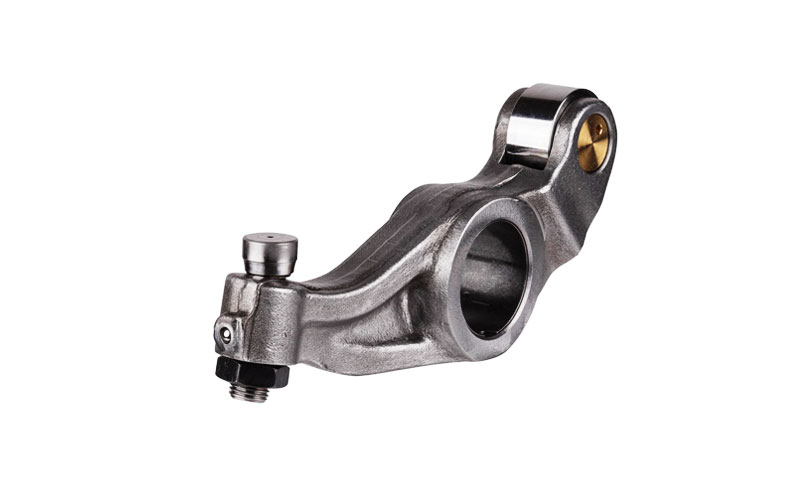
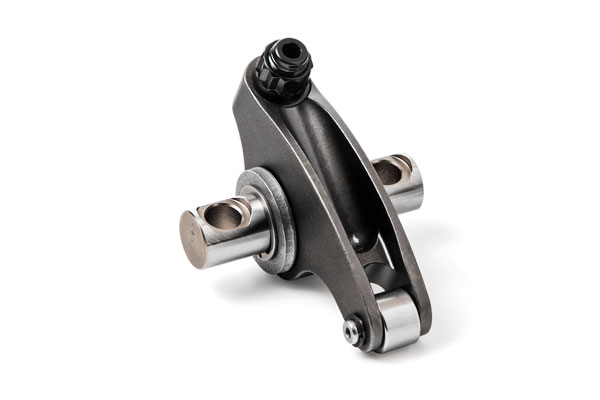
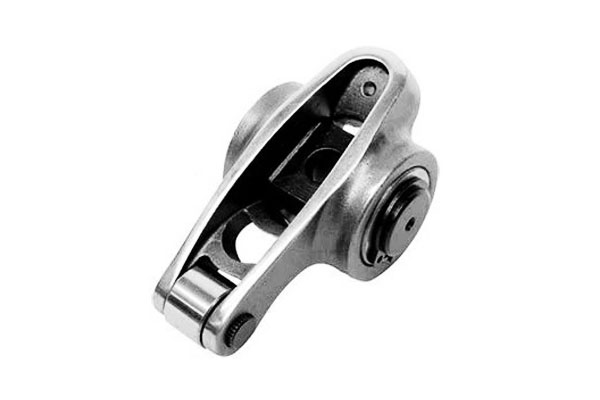
A rocker arm is a small, highly stressed engine component that translates camshaft motion to valve motion (or to hydraulic lifters, pushrods, वगैरह।).
धातु - स्वरूपण तकनीक (पिघला हुआ मोम) of alloy steels enables near-net-shape manufacture of complex rocker geometries — integrating oil passages, पतली दीवारें, fillets and lightweighting features — while achieving the mechanical and fatigue performance demanded in service.
Success depends on choosing the right alloy family, controlling melting and shelling steps for cleanliness, designing for predictable solidification, applying appropriate heat treatment and finishing, and running a rigorous inspection and testing regimen.
This article analyzes those elements in depth and provides actionable guidance for materials engineers, casting designers and purchasing teams.
2. What is a rocker arm and why choose investment casting?
समारोह & stresses. A rocker arm transfers cyclic loads and contact stresses; it is subject to bending, contact (rolling/sliding) wear at the cam and valve tip, local tensile/compressive peaks, and high-cycle fatigue.
Geometry and mass are critical for dynamic response and efficiency.
निवेश कास्टिंग क्यों?
- Complex near-net shapes: internal oil passages, thin webs, and compound curves are easy to realize.
- Tight dimensional tolerance & repeatability: investment casting provides good surface finish and reduced machining.
- हल्का वजन & सामग्री दक्षता: complex hollow sections and topology-optimized shapes reduce inertia.
- छोटा- to medium-volume economics: tooling costs for the wax dies are moderate and amortize well for many automotive and industrial runs.
Investment casting is chosen where geometry and precision outweigh the absolute highest possible strength available from forged components — and where modern alloy-steel processing can deliver the required fatigue and wear performance.
3. Typical alloy-steel candidates
के लिए alloy-steel रॉकर आर्म, the material choice is dominated by requirements for toughness, थकान प्रतिरोध, wear resistance at contact surfaces, and heat-treat response.
| Alloy group | Typical grade / उदाहरण | प्रमुख विशेषताएँ (यांत्रिक / metallurgical) | Typical heat-treat / surface hardening routes | Why chosen for rocker arm | Main limitations / टिप्पणियाँ |
| Cr–Mo through-hardening steels | 4140, 42CrMo4 (or cast-steel equivalents) | Good bulk strength and toughness after quench & गुस्सा; अच्छा थकान प्रतिरोध | Normalize → quench (oil/water based on section) → temper; temper to required toughness | Balanced strength and toughness for medium-duty rocker arms where through-hardening is acceptable | Requires careful control of hardenability and distortion; moderate wear resistance (may need local surface hardening) |
| Ni–Cr–Mo high-strength steels | 4340 (or equivalent vacuum-melt cast grades) | Very high tensile strength and excellent fracture toughness when properly treated; good fatigue life | Normalize/solution treat → quench → temper to target strength; can be air/martensitic quenched depending on chemistry | Used for high-performance / heavy-duty engines needing high dynamic strength with retained toughness | अधिक लागत; more stringent melting (VIM/VAR advisable) and distortion control required |
Case-hardening / carburizing steels |
8620, 20MnCr5 (or carburizable cast equivalents) | कठिन, ductile core with controllable hard wear-resistant case; ideal for contact faces | Carburize (pack/gas) → quench → temper (or induction harden local zones) | Preferred when cam/valve contact wear is dominant — hard case resists wear while core resists impact/fatigue | Requires strict control of case depth, carbon profile and post-carburize distortion; carburizing pits/high-temp exposure management needed |
| Alloyed cast steels (vacuum-melt, proprietary) | Proprietary cast-steel chemistries (tailored Cr/Mo/Ni additions) | Balanced castability and mechanical targets; designed for good cleanliness and predictable heat-treat response | Often normalized then quenched & टेम्पर्ड; may be produced and certified after VAR/ESR; HIP sometimes used | When foundry provides cast-specific steels optimized for near-net geometry and cleanliness; reduces rejection risk | Must review foundry’s metallurgy/traceability; mechanical spread may be wider than wrought steels unless remelted/HIP’d |
martensitic / precipitation-hardening stainless |
17-4शारीरिक रूप से विकलांग (where corrosion or stainless surface is needed) | Good strength after aging; corrosion resistance compared with carbon steels; reasonable hardness | Solution treat → age (pre-cipitation) to desired hardness; limited case hardening applicability | Selected for corrosive environments or where stainless surface and reasonable strength are required | Different wear behavior; aging embrittlement concerns; stainless also more expensive and may require different finishing |
| Induction-hardened local zones (on moderate alloy core) | Any moderate-alloy core material with local induction hardening | Combines ductile core with very hard contact surface; minimal global distortion if controlled | Bulk HT for core (यदि ज़रूरत हो तो) then localized induction hardening/laser hardening on cam face / tip | Good compromise: cast part presents a tough core while contact faces are hardened in place for wear resistance | Process control critical to avoid cracking or excessive residual tensile stresses at the hardened zone |
Special high-fatigue steels (aircraft/competition) |
300एम, modified Ni-Cr-Mo steels (rare for cast) | Extremely high strength and very high fatigue resistance where weight saving is critical | Sophisticated HT cycles; often produced only via wrought + heat treat — cast options are niche | दुर्लभ, used in ultra-high performance applications that demand minimum mass and maximum fatigue life | Very expensive and typically not used for cast parts; foundry capability and remelt requirements are demanding |
Short selection guidance
- If wear at cam/valve contact is the primary failure mode → choose a carburizing/case-hardening route (8620 / 20MnCr family) or plan for reliable local induction hardening.
- If bulk fatigue strength / toughness is paramount (high-duty or performance engines) → select Ni–Cr–Mo through-hardening alloys (उदा।, 4340) or high-cleanliness cast steels with VIM/VAR + कूल्हा.
- If corrosion resistance is required (special environments) → consider 17-4PH or stainless solutions but validate wear behavior and cost.
- Always match alloy choice to foundry capability — for critical parts specify melt route (VIM/VAR/ESR), post-casting HIP (यदि आवश्यक हुआ), and explicit acceptance criteria (सरंध्रता, mechanicals, एनडीटी).
4. Investment casting process steps specific to alloy steels
Investment casting for alloy steel rocker arms follows the standard lost-wax flow but with process modifications to handle steel’s higher melting temperature and sensitivity to contamination:
- नमूना & गेटिंग डिज़ाइन: Wax patterns produced from metal dies; gating and risering engineered for steel solidification characteristics.
- विधानसभा & शैल भवन: Multiple thin ceramic shell layers are applied and dried; shell thickness is greater for steel to withstand higher pour temperatures and thermal shock.
- डीवैक्सिंग: Controlled autoclave or steam dewax, then drying and preheating the shell.
- पहले से गरम कर लें & डालने का कार्य: Shells are preheated to high temperatures to reduce thermal gradients; pour steels using controlled pouring temperature regimes. For critical parts, vacuum or controlled atmosphere pour is used.
- शीतलक & knockout: Controlled cooling to minimize thermal stresses; shell removal and gating cut-off.
- उष्मा उपचार & मशीनिंग: सामान्य, बुझाना & गुस्सा, or carburizing cycles as specified. Final machining to critical dims, surface finishing and assembly.
Key differences vs non-ferrous casting: ceramic shell composition and thickness, higher preheat and pour temperature, and more aggressive metal-cleanliness and deoxidation practices.
5. गलन, de-gas and melt-cleanliness practices for steels
Steel rocker arms demand high internal cleanliness to avoid shrinkage porosity, inclusions and heterogeneities that become fatigue initiation sites. Recommended melt practices:
- Melting routes: वैक्यूम इंडक्शन मेल्टिंग (विम) for alloy control; followed by Vacuum Arc Remelting (हमारा) or Electro-Slag Remelting (ईएसआर) for cleanliness and reduced macrosegregation in critical runs.
For less critical components, high-quality induction melting with proper fluxing and control may suffice. - डीगैसिंग & विजारण: Proper deoxidation strategy to avoid entrapped slag/welding-type inclusions; use of vacuum degassing or inert argon stirring helps remove dissolved gases.
- Inclusion control: Low sulfur, controlled manganese and appropriate fluxing reduce sulfide inclusion formation.
- Alloy additions & chemistry control: Additions should be made in controlled sequences to avoid reactions that form harmful inclusions. Strict charge control and spectrometric verification are essential.
- Pouring environment: Vacuum or inert-atmosphere pouring minimizes re-oxidation and gas pick-up; specially for carburizing steels, limit oxygen exposure pre-carburizing.
Clean melts reduce casting defects and significantly improve fatigue life.
6. नमूना, tooling and ceramic shell considerations (design for casting)
Design for investment casting (DFIC) for rocker arms must balance geometry with robust casting practice:
- दीवार की मोटाई: Aim for uniform wall thickness where possible; avoid abrupt section changes that concentrate shrinkage or create hot spots. Where thickness transitions are required, use generous radii and fillets.
- फ़िललेट्स & radii: Large fillets at load-bearing junctions reduce stress concentrations. Casts with sharp corners are prone to micro-shrinkage and cracking; radiused transitions also ease wax flow.
- गेटिंग & बढ़ रहा है: Place gates to promote directional solidification from critical faces toward risers; minimize gate size to reduce rework but ensure adequate feed metal. Use exothermic risers or insulating sleeves where needed.
- Core prints & आंतरिक मार्ग: Provide stable core locations and adequate core prints. Cores must be robust for handling and survive preheat.
- मसौदा & जुदाई: Investment casting wax patterns often require minimal draft, but tooling should facilitate easy wax removal and low distortion.
- सतह खत्म & सहिष्णुता: Investment casting provides good surface finish; specify tolerances for critical interfacing surfaces to allow minimal machining.
For contact faces (cam/contact surfaces), specify surface finish targets and allowances for subsequent hardening/finishing.
7. ठोस बनाना, feeding and porosity control strategies
Porosity is the primary enemy for fatigue components. Key strategies:
- दिशात्मक ठोसकरण: Design gating and riser systems so molten metal feeds the last-to-solidify regions. Use chills, exothermic riser sleeves, or insulated risers strategically.
- Control of solidification rate: Avoid excessively fast cooling which can trap gases; also avoid hot spots that produce shrink cavities. Preheating the shell and controlled cooling schedules help.
- Hydrogen/ gas control: Melt and pouring control to reduce dissolved hydrogen and oxygen content. Use vacuum degassing and inert gas pouring where possible.
- Hot isostatic pressing (कूल्हा): For high-integrity runs, HIP after casting can close internal shrinkage porosity and improve fatigue life by homogenizing microstructure. HIP is particularly valuable for safety-critical engine components.
- Riser placement & आकार: Oversized risers increase feedability but add machining rework; optimize with simulation.
Use casting simulation tools (CFD/solidification modeling) to predict shrink and refine gating.
Implementing these strategies reduces defect rates and improves mechanical reliability.
8. उष्मा उपचार, surface hardening and mechanical property tailoring
Heat treatment and surface hardening are the primary levers for tailoring the performance of investment-cast alloy-steel rocker arms.
While casting defines geometry, it is thermal processing that determines strength, बेरहमी, थकान प्रतिरोध, wear behavior, और आयामी स्थिरता.
Because rocker arms operate under cyclic loading and high contact stress, heat treatment must be specified and controlled with precision.
- सामान्य: Relieves casting stresses and refines grain structure where required.
- बुझाना & गुस्सा (for through-hardening steels): Achieves high strength and toughness; tempering temperature is selected to balance toughness and hardness.
- carburizing / मामला सख्त होना (for wear surfaces): For carburizable grades, controlled carburizing followed by quench and temper produces a hard case and tough core.
Critical for cam lobe contact faces. प्रक्रिया नियंत्रण: case depth, carbon profile, and residual stress management are essential. - Induction hardening or local surface treatments: Quickly hardens lobe or tip surfaces with minimal distortion; often used when only the contact surface requires wear resistance.
- nitriding / nitrocarburizing: Alternative surface hardening offering wear resistance with lower distortion; depends on alloy compatibility.
- तनाव से राहत & final temper: After machining and assembly, stress relief reduces residual stresses introduced by machining or localized hardening.
Specifying post-casting thermal cycles and process windows (तापमान, शीतलन दर, quench media) is essential to guarantee the alloy’s performance.
9. मशीनिंग, परिष्करण, assembly and surface treatments
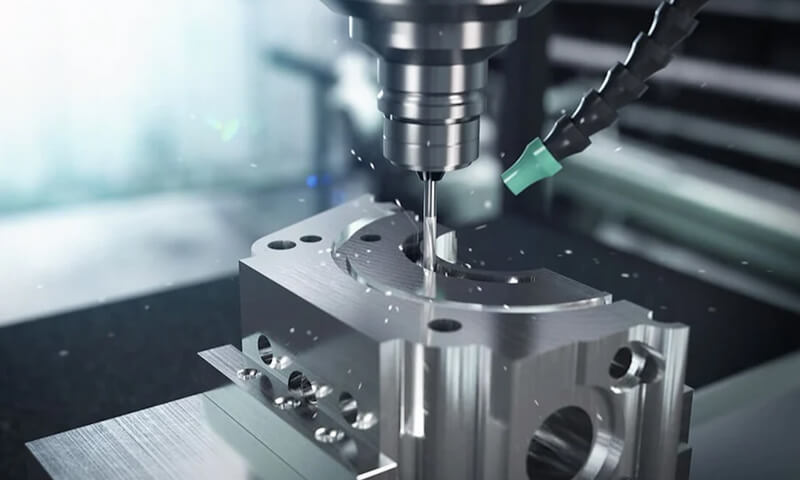
Even near-net investment castings typically require machining at bearing surfaces, bolt holes and sealing faces.
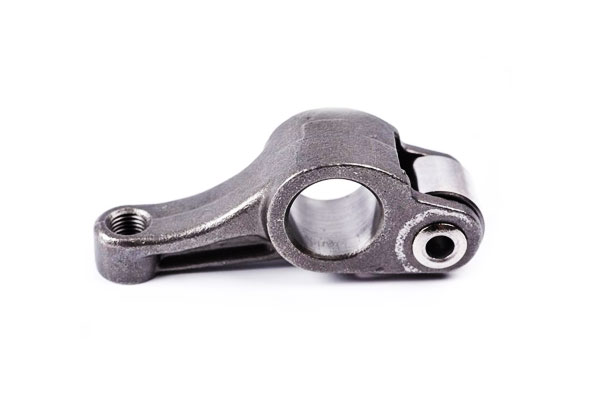
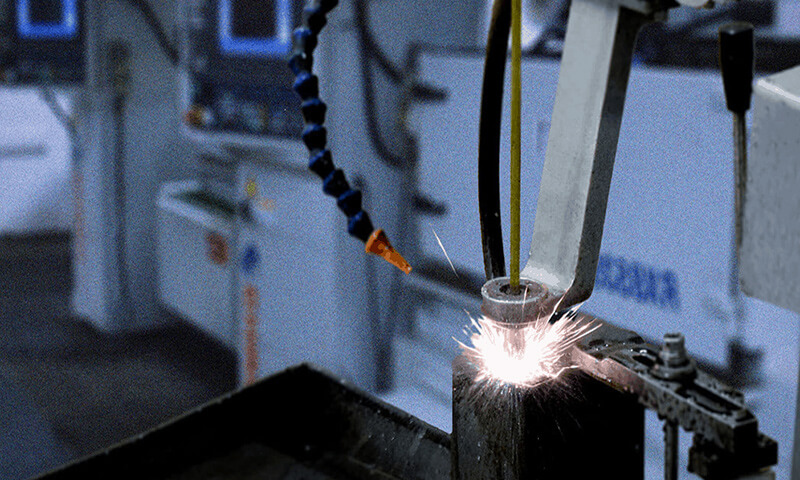
- मशीन की: Alloy steel castings are machinable but may require tougher tooling and lower speeds for certain microstructures. Carbide tooling and coolant strategies are often used.
- Critical surface finishing: Cam contact surfaces and pivot faces require fine finish and accurate geometry; पिसाई, लैपिंग, or shot peening may be applied.
- गोली मारना: Induces beneficial compressive residual stress to improve fatigue life at critical surfaces. Must be controlled to avoid overpeening or distortion.
- Assembly fits & heat treatment sequencing: आम तौर पर, bulk heat treatment precedes final grinding and machining of critical surfaces; some localized hardening may be performed after rough machining.
Coordinate assembly tolerances with heat-treatment distortion allowances. - Coatings and lubrication: Where corrosion or friction is a concern, apply appropriate coatings (फास्फेट, पीवीडी, thin hard coatings) and specify lubrication regimes for service.
A well-planned manufacturing flow minimizes rework and assures in-service durability.
10. लागत, lead time and supply-chain considerations vs forging and machining
- Cost structure: Investment casting tooling (मोम मर जाता है) has moderate upfront costs but lower per-part finish machining compared with forging + machining for complex shapes.
For very high volumes, forging may become more economical due to lower unit material cost and higher mechanical properties. - Lead time: Tooling for investment casting can be faster than forging dies; तथापि, shelling, pouring and heat treatment cycles add process time.
For low to medium volumes and frequent design changes, investment casting is often preferred. - Supply chain: Select foundries with demonstrated steel casting capability (VIM/VAR/HIP) and experience with engine parts. Specify traceability and dual sourcing when volume/risk requires.
- वहनीयता & scrap: Investment casting yields less chip scrap but shell waste and ceramic disposal must be managed; steel scrap is highly recyclable.
Lifecycle cost analysis including fuel efficiency gains from lighter rocker arms often favors the casting route for certain designs.
11. निष्कर्ष
Investment casting alloy-steel rocker arms represent a mature yet continually optimized manufacturing solution for modern engines and mechanical systems.
By combining the geometric freedom of the lost-wax process with carefully selected alloy steels and tightly controlled metallurgical practices, manufacturers can produce rocker arms that meet demanding requirements for strength, थका हुआ जीवन, प्रतिरोध पहन, और आयामी सटीकता.
From a technical standpoint, performance is governed not by casting alone, but by the entire process chain: मिश्रधातु का चयन, सफाई पिघलाओ, shell and gating design, solidification control, उष्मा उपचार, सतह का सख्त होना, मशीनिंग, और निरीक्षण.
When these elements are properly integrated, investment-cast alloy-steel rocker arms can achieve reliability comparable to forged parts while offering advantages in design flexibility, weight optimization, and cost efficiency for complex geometries.
पूछे जाने वाले प्रश्न
Why use investment casting instead of forging for rocker arms?
Investment casting is preferred when जटिल ज्यामिति, एकीकृत सुविधाएँ, and near-net shape ज़रूरत है.
It reduces machining, enables lightweight designs, and is cost-effective for small to medium production volumes. Forging is still favored for very high volumes or when maximum directional grain flow is required.
Are investment-cast rocker arms strong enough for high-load engines?
Yes—when the correct alloy, पिघल अभ्यास, उष्मा उपचार, and inspection regime are used.
साथ Ni-Cr-Mo or carburized alloy steels, and optional HIP, cast rocker arms can meet high fatigue and strength requirements.
What is the most common failure mode in cast alloy-steel rocker arms?
The most common failure is fatigue cracking initiated at internal porosity or surface stress concentrators.
This is mitigated by melt cleanliness, solidification control, कूल्हा, generous fillets, and surface treatments such as shot peening.
Which alloy steel is best for wear resistance at the cam or valve contact?
Carburizing steels (उदा।, 8620-type alloys) or locally induction-hardened steels are preferred. They provide a hard, wear-resistant surface while maintaining a tough core.
Is HIP always required for investment-cast rocker arms?
नहीं. HIP is recommended for high-performance or safety-critical applications where maximum fatigue life is required. For many standard applications, proper gating, पिघलने की गुणवत्ता, and NDT are sufficient without HIP.
How does heat treatment affect rocker arm performance?
Heat treatment controls ताकत, बेरहमी, थकान प्रतिरोध, and wear behavior.
Incorrect quench, गुस्सा, or carburizing cycles can lead to distortion, भंगुरता, या समय से पहले विफलता, making process control essential.