1. Introduction
A Flanged butterfly valve (FBV) is a quarter-turn valve widely recognized as the workhorse of high-pressure and permanent fluid control systems.
Characterized by their integral flanges that bolt directly to pipeline flanges, they provide a rigid, leak-proof, and structurally stable connection,
a critical advantage over wafer-style valves (space-saving but suited for low-pressure duties) and lug-style valves (moderate pressure, often for non-critical service).
Engineered for medium to large-diameter pipelines, flanged butterfly valves combine tight shutoff, structural reliability, and ease of maintenance.
At the same time, their versatility makes them indispensable in water treatment, HVAC networks, and general industrial processing, where their compact design, cost-efficiency, and adaptability across pressure and temperature ranges deliver long-term operational value.
2. What is a Flanged Butterfly Valve?
Core Definition and Working Principle
A flanged butterfly valve (FBV) is a quarter-turn rotary valve designed for regulating or isolating flow in pipelines.
Its defining feature is the integral flanges, which bolt directly to pipe flanges (per ANSI B16.5 or ISO 7005), creating a rigid, leak-tight, and permanent connection suitable for high-pressure service.
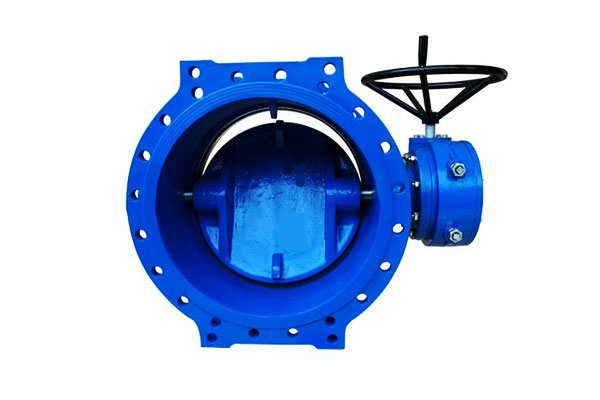
The valve operates on a simple principle:
- Fully Open (0°): The disc lies parallel to flow, minimizing pressure loss (typically 1–3 psi for a 6-inch valve at nominal flow).
- Throttling (10–80°): Partial rotation restricts flow; eccentric disc designs provide more linear flow control than concentric types.
- Fully Closed (90°): The disc presses firmly against the seat, achieving tight shutoff. FBVs are bidirectional, handling forward and reverse flows effectively.
Anatomy of a Flanged Butterfly Valve
A flanged butterfly valve is engineered for durability and precision control, typically comprising six core components:
| Component | Design Features | Primary Role |
| Body (with Flanges) | Cast/forged with integral flanges; bolt holes align to pipeline flanges. | Provides pressure boundary and permanent mounting. |
| Disc | Circular plate (flat or eccentric profile). | Rotates to open/close or throttle flow. |
| Stem (Shaft) | Solid rod, sealed by packing/O-rings. | Transmits torque from actuator to disc. |
| Seat | Resilient (EPDM/PTFE) or metal (Stellite, SS). | Ensures leak-tight sealing against the disc. |
| Flange Gasket | Compressible sealing material between flanges. | Prevents external leakage. |
| Actuator | Manual, electric, pneumatic, or hydraulic. | Provides quarter-turn control for isolation or modulation. |
Flanged vs. Wafer vs. Lug Butterfly Valves
The integral flange design sets FBVs apart from wafer and lug types, offering unique advantages for high-demand applications:
| Feature | Flanged Butterfly Valve | Wafer Butterfly Valve | Lug Butterfly Valve |
| Mounting | Bolted via integral flanges | Clamped between flanges | Bolted via threaded body lugs |
| Pressure Rating | ANSI 150–900 (28–210 bar) | ANSI 150–300 (28–70 bar) | ANSI 150–600 (28–140 bar) |
| Weight (6-inch, SS) | ~12 kg | ~5.6 kg | ~8 kg |
| Pipeline Disassembly | Requires unbolting flanges | Requires removing flange pair | Valve-only removal possible |
| Relative Cost | Higher (1.5×) | Lower (0.7×) | Medium (1.0×) |
| Best For | High-pressure, permanent service (oil, gas, steam, chemicals) | Low-pressure, compact systems | Medium-pressure, flexible maintenance needs |
3. Design Variations: Concentric vs. Eccentric Flanged Butterfly Valves
Flanged butterfly valves are classified primarily by disc and stem alignment, a critical factor influencing pressure rating, sealing performance, torque requirements, and application suitability.
Concentric Flanged Butterfly Valves (Standard Design)
Geometry: The disc and stem axes align with the valve’s bore center, making the design concentric. During operation, the seat maintains contact across the entire disc surface.
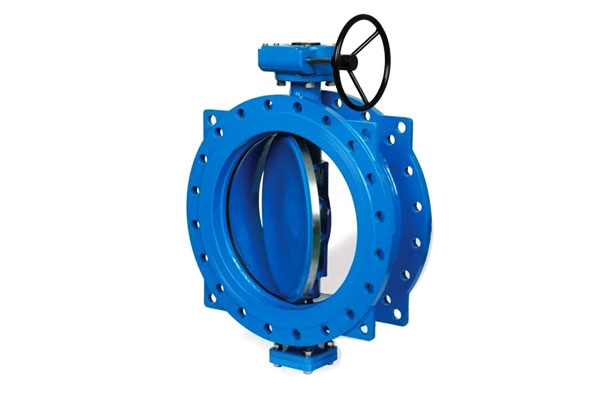
Performance Metrics:
- Pressure Rating: ANSI Class 150–300 (28–70 bar at 20°C)
- Leakage Class: API 609 Class IV (≤0.01% of nominal flow for liquids)
- Torque Requirement: 60–100 N·m (6-inch valve, EPDM seat)
- Cycle Life: 10,000–20,000 cycles (resilient seat limits lifespan)
Advantages:
- Simple, cost-effective design
- Easy maintenance and seat replacement
- Suitable for moderate temperature and pressure fluids
Limitations:
- High disc-seat friction reduces efficiency
- Not suitable for gas service or high-pressure applications
- Limited durability under abrasive or high-temperature fluids
Typical Applications:
- HVAC chilled water systems
- Municipal water distribution
- Low-pressure, non-critical industrial services
Eccentric Flanged Butterfly Valves (High-Performance Design)
Overview: Eccentric designs offset the disc or stem, reducing disc-to-seat friction and enhancing sealing performance.
These designs are ideal for high-pressure, high-temperature, and gas applications.
Single Eccentric (Offset Disc) Flanged Butterfly Valve
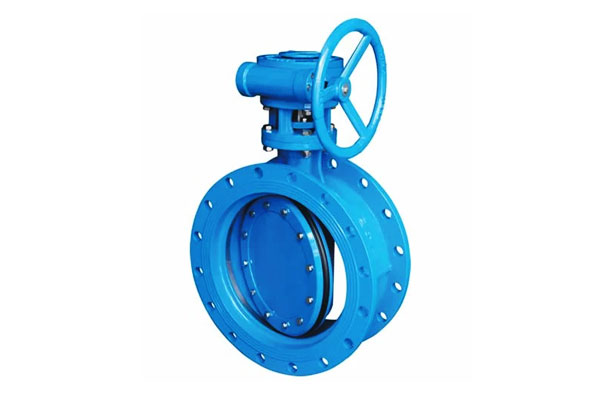
Design: The disc center is offset from the stem axis, which minimizes contact with the seat during rotation, reducing friction.
Performance Metrics:
- Pressure Rating: ANSI Class 300–600 (70–140 bar)
- Leakage Class: API 609 Class V (≤0.001% of nominal flow)
- Torque Requirement: 40–70 N·m (6-inch valve, PTFE seat)—~30% lower than concentric valves
Applications:
- Industrial water treatment
- Low-pressure oil lines
- Applications requiring moderate flow control with improved efficiency
Double Eccentric (Offset Disc + Stem) Flanged Butterfly Valve
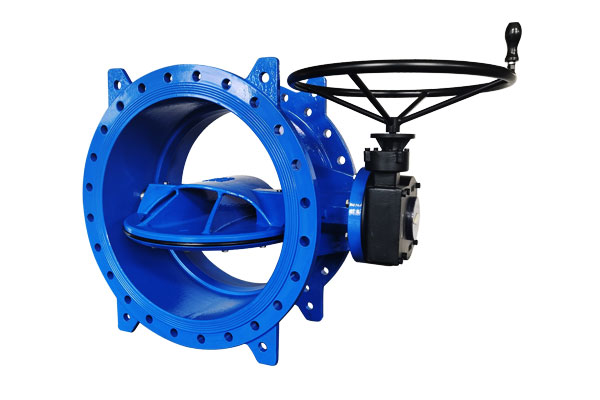
Design: Both the disc center and stem axis are offset from the bore center. This eliminates disc-seat contact until 80–85% of closure, significantly reducing friction and wear.
Performance Metrics:
- Pressure Rating: ANSI Class 600 (140 bar at 20°C); up to Class 900 with metal seats
- Leakage Class: API 609 Class VI (≤0.00001% of nominal flow) — suitable for gas service, including natural gas pipelines
- Temperature Range: -29°C to 482°C (metal seats)
Applications:
- Chemical processing
- Oil & gas pipelines
- Steam systems
- High-pressure industrial fluids requiring tight shutoff
Triple Eccentric (Offset + Tapered Disc) Flanged Butterfly Valve
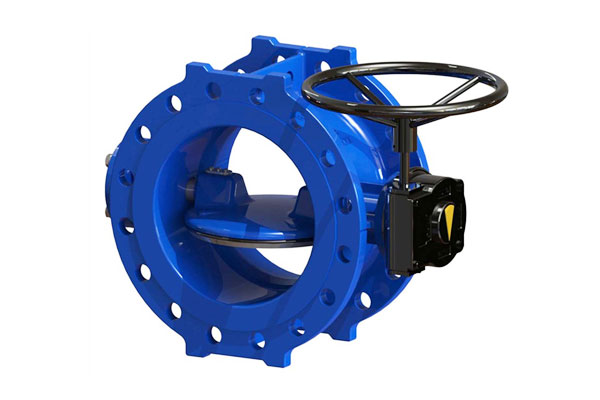
Design: Adds a third offset by introducing a conical/tapered disc geometry, achieving a metal-to-metal seal without the need for an elastic seat.
This design enables operation under extreme temperatures and pressures.
Performance Metrics:
- Pressure Rating: ANSI Class 900 (210 bar at 20°C)
- Temperature Range: -29°C to 650°C (Stellite® or hard metal seats)
- Cycle Life: 50,000–100,000 cycles (metal seat durability)
Applications:
- Hypersonic vehicle cooling systems
- Power plant superheated steam lines
- Refinery catalytic crackers and petrochemical processing
- Extreme industrial environments requiring zero-leakage and long life
Summary:
| Feature | Concentric | Single Eccentric | Double Eccentric | Triple Eccentric |
| Disc-Stem Alignment | Centerline | Disc offset | Disc + stem offset | Disc + stem + conical offset |
| Pressure Rating | 28–70 bar | 70–140 bar | 140–210 bar | 210 bar |
| Leakage Class | IV | V | VI | VI (metal) |
| Torque Requirement | Moderate | Lower than concentric | Higher | High (requires actuator) |
| Temperature Range | – | Moderate | -29°C to 482°C | -29°C to 650°C |
| Typical Use | Low-pressure water/HVAC | Moderate industrial fluids | High-pressure fluids/gases | Extreme industrial/petrochemical |
4. Materials & Seals of Flanged Butterfly Valve
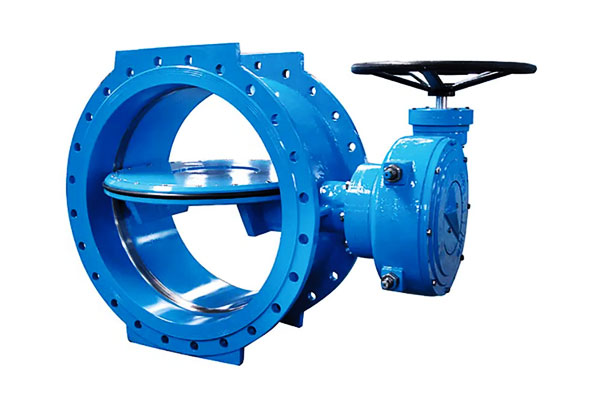
The performance, reliability, and longevity of double flanged butterfly valves (FBVs) are strongly influenced by material selection for the body, disc, stem, and sealing elements.
Proper materials ensure compatibility with the fluid, resistance to corrosion, high-pressure handling, and suitability for temperature extremes.
Body Materials
The valve body is the primary pressure boundary and must withstand mechanical stress, internal pressure, and environmental corrosion. Common body materials include:
| Material | Features | Typical Applications |
| Carbon Steel (A216 WCB) | High strength, moderate corrosion resistance, cost-effective | Water, steam, low-corrosive chemicals |
| Stainless Steel (316/316L, A351 CF8M) | Excellent corrosion resistance, hygienic, moderate high-temperature resistance | Chemical processing, food & beverage, marine environments |
| Ductile Iron (EN-GJS-400-15, ASTM A536) | Good strength, cost-effective, corrosion-resistant when coated | Water distribution, wastewater, HVAC |
| Alloy Steel (Hastelloy C276, Duplex 2205) | Superior chemical and temperature resistance | Petrochemical, acids, aggressive industrial fluids |
Disc Materials
The disc is directly exposed to flow and often handles abrasive, erosive, or corrosive fluids. Selection is based on mechanical strength, corrosion resistance, and sealing compatibility:
- 316 Stainless Steel: Widely used for general-purpose chemical, water, and steam applications.
- Hastelloy C276: Resistant to oxidizing and reducing chemicals; suitable for aggressive acids.
- Ductile Iron with PTFE Coating: Low-friction, corrosion-resistant option for water and mild chemicals.
- Stellite®-Clad Discs: High-temperature and high-wear applications, including superheated steam and petrochemicals.
Design Note: The disc may be concentric, eccentric, or triple-offset, with metal or resilient coating to improve sealing and reduce wear.
Stem Materials
The stem transmits torque from the actuator or handwheel to the disc and is exposed to mechanical stress, pressure, and fluid contact. Common materials:
| Material | Features | Applications |
| 416 Stainless Steel | High strength, good corrosion resistance, cost-effective | Water, HVAC, general industry |
| 316/316L Stainless Steel | Excellent corrosion resistance, moderate high-temperature resistance | Chemical, marine, food & beverage |
| Hastelloy C276 / Duplex Steel | Extreme corrosion and temperature resistance | Aggressive chemicals, high-pressure petrochemical |
Seat Materials and Seal Types
The seat forms the critical sealing interface with the disc, determining leakage class, torque requirement, and service life. Selection depends on fluid type, pressure, and temperature.
| Seat Type | Material | Leakage Class | Temperature Range | Notes |
| Resilient Seat | EPDM, NBR, FKM, PTFE | API 609 Class IV–V | -50°C to 200°C | Excellent sealing for liquids; low torque; not for high-temp steam |
| Metal Seat | Stainless Steel, Stellite® | API 609 Class VI | -29°C to 650°C | High durability; suitable for gases, high-pressure, and high-temperature applications |
| PTFE-Lined | Pure PTFE or filled PTFE | API 609 Class V | -50°C to 200°C | Chemically resistant; low friction; may creep under high pressure |
| Elastomer + Metal Hybrid | EPDM/Metal or PTFE/Metal | API 609 Class V–VI | -29°C to 482°C | Combines leak-tightness with wear resistance; common in double-eccentric designs |
Gaskets and Actuator Interfaces
- Flange Gaskets: Graphite, PTFE, or nitrile gaskets ensure leak-proof flange connections between the valve and pipeline.
- Actuator Seals: O-rings or PTFE bushings prevent fluid leakage along the stem while enabling smooth torque transfer.
5. Manufacturing & Foundry Methods of Flanged Butterfly Valves
The production of flanged butterfly valves (FBVs) requires high precision, robust materials, and strict adherence to international standards such as API 609, ISO 5752, and ANSI B16.5.
Valves designed for high-pressure and high-performance applications—like oil & gas pipelines, chemical plants, and power generation—must exhibit dimensional accuracy, structural integrity, and leak-tight performance.
Casting Butterfly Valve Components
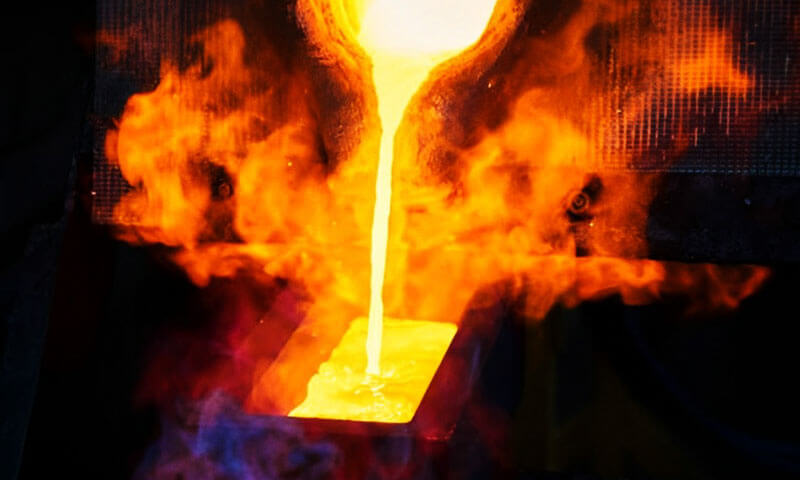
Casting is the primary method for shaping valve bodies and discs, allowing complex geometries and cost-effective production. For large valves (typically over 12 inches), sand casting is widely used.
In this process, molten metal (1450–1550°C) is poured into resin-bonded sand molds.
Sand casting offers tolerances around ±0.5 mm, making it suitable for carbon steel or ductile iron valves used in municipal water or low-pressure industrial pipelines.
For small-to-medium valves (2–12 inches) requiring high dimensional precision and corrosion resistance, investment casting (lost wax method) is employed. Wax patterns are coated with ceramic shells, melted out, and replaced with molten metal.
This method achieves tight tolerances (±0.1 mm) and smooth surfaces, enabling precise features such as double eccentric disc hubs.
Investment casting is ideal for 316L stainless steel, Hastelloy, or other corrosion-resistant alloys.
Forging: High-Strength Components
Forging is the preferred method for critical, high-pressure components such as bodies, flanges, and stems, because it produces superior grain structure and higher tensile strength.
Heated metal (1100–1200°C) is shaped under hydraulic presses or dies, resulting in 20–30% stronger parts than equivalent castings.
Forged components are typically used in ANSI Class 600 or higher valves for oil & gas pipelines, power plants, and other demanding industrial applications.
Forging methods include open-die forging for large custom parts, closed-die forging for medium-sized components with precise dimensions, and upset forging to reinforce critical junctions like disc hubs.
Machining: Precision Finishing
After casting or forging, CNC machining ensures high dimensional accuracy, surface finish, and proper alignment:
- Flange faces are milled to achieve flatness within 0.1 mm and bolt hole alignment per ANSI B16.5 standards, ensuring leak-free connections.
- Seat bores are honed or machined to Ra 1.6–3.2 μm to allow proper seat bonding and effective sealing.
- Discs and hubs, especially eccentric designs, are finished with 5-axis CNC milling to maintain flatness within 0.05 mm for tight shutoff.
- Stems and bearings are turned and milled with precision to guarantee smooth rotation and correct torque transfer.
Heat Treatment: Mechanical and Corrosion Properties
Heat treatment improves strength, hardness, and corrosion resistance depending on the material used:
- Carbon steel (WCB): Quenched at 850°C and tempered at 650°C to achieve tensile strength ≥485 MPa.
- 316L stainless steel: Solution-annealed at 1050–1100°C followed by water quenching to restore corrosion resistance and homogenize microstructure.
- Duplex 2205: Solution-annealed at 1020–1080°C to achieve a balanced austenite/ferrite ratio (50:50), optimizing both strength and corrosion resistance.
Surface Treatment: Longevity & Corrosion Resistance
Surface finishing ensures durability in harsh environments:
- Passivation for 316L stainless steel enhances the natural chromium oxide layer, improving corrosion resistance by up to 20%.
- Epoxy coatings of 100–150 μm protect carbon steel bodies in oil & gas pipelines from soil and atmospheric corrosion.
- Electropolishing is used in sanitary applications (food, beverage, pharmaceuticals) to achieve Ra ≤0.8 μm, eliminating microscopic crevices and bacterial dead zones.
Assembly & Quality Assurance
After machining and surface treatment, valves undergo assembly and rigorous quality control:
- Seat and disc integration: Seats are bonded or pressed, and eccentric discs are carefully aligned for precise shutoff.
- Stem installation: Bearings, packing, and O-rings are fitted, and torque is verified.
- Hydrostatic or pneumatic testing: Confirms leak-tight performance under design pressure.
- Non-destructive testing (NDT): Methods such as X-ray, ultrasonic, or dye penetrant inspections detect internal defects.
- Actuator calibration: Manual, electric, pneumatic, or hydraulic actuators are tested for torque and stroke accuracy.
6. Pressure Ratings, Sizes & Standards
Flanged butterfly valves (FBVs) are designed for reliability across a wide range of pressures, sizes, and industrial standards.
Proper selection ensures safety, long-term performance, and compatibility with pipeline systems.
Pressure Ratings
| Pressure Class | Max Working Pressure (20°C) | Typical Seat Material | Notes / Applications |
| ANSI Class 150 | 19 bar | EPDM, PTFE | Low-pressure water and HVAC systems |
| ANSI Class 300 | 51 bar | EPDM, PTFE | Municipal water, low-pressure industrial pipelines |
| ANSI Class 600 | 102 bar | Metal, Composite | Oil & gas, chemical processing |
| ANSI Class 900 | 155 bar | Metal | High-pressure steam, refinery, extreme temperature service |
Standard Sizes
| Nominal Diameter (DN) | Inch Size | Typical Applications | Notes |
| DN 50–150 | 2–6 | Laboratory systems, HVAC, small water pipelines | Compact, easy to install |
| DN 200–600 | 8–24 | Municipal water, chemical processing, industrial pipelines | Standard industrial range |
| DN 700–1200 | 28–48 | Large-scale oil & gas, wastewater treatment, power plants | High-flow, high-pressure service |
| DN 1400–2000+ | 56–80+ | Heavy industrial, refineries, hydroelectric | Custom manufacturing often required |
Face-to-Face Dimensions: Usually conform to ISO 5752 Series 10 or API 609 for easy interchangeability.
Key Standards & Certifications
| Standard / Certification | Scope | Application / Relevance |
| API 609 | Design & testing of industrial butterfly valves | General industrial service |
| ISO 5752 | Face-to-face & flange dimensions | Ensures interchangeability |
| ASME B16.34 | Pressure-temperature ratings for metallic valves | Structural integrity & safety |
| MSS SP-67 | Sizing & flow coefficient standardization | Accurate flow control |
| ASTM A216 / A351 | Carbon steel & stainless steel castings | Material quality for pressure service |
| ASME B16.5 | Flange dimensions & bolt patterns | Compatibility with pipelines |
| API 598 / ISO 5208 | Shell & seat leakage testing | Ensures leak-tight performance |
| NACE MR0175 / ISO 15156 | Corrosion resistance for sour oil & gas service | Long-term reliability in aggressive environments |
| PED 2014/68/EU | Pressure equipment compliance (Europe) | Legal & safety compliance for EU installations |
7. Actuation & Control Systems
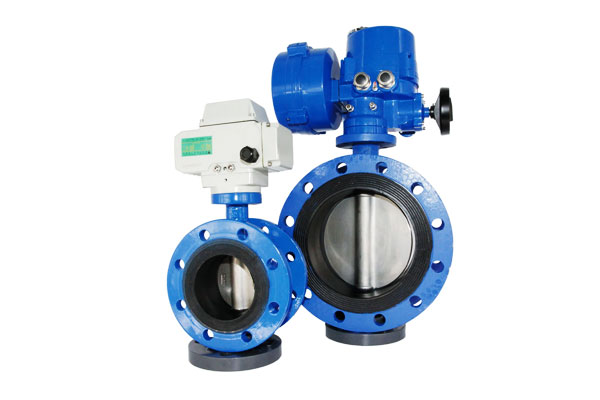
Flanged butterfly valves are quarter-turn devices requiring actuators capable of 90° rotation.
Actuator selection depends on valve size, torque requirement, fluid type, and control sophistication.
Common Actuator Types and Specifications
| Actuator Type | Typical Valve Size (Inches) | Torque Range (N·m) | Power / Energy Source | Response Time | Control Capability | Fail-Safe Option |
| Manual Handwheel | 2–6 | 10–50 | Human operation | <5 s | On/Off | N/A |
| Gear Operator | 8–24 | 80–300 | Manual with mechanical advantage | 30–60 s | On/Off | N/A |
| Electric Actuator | 2–36 | 50–1000 | AC 110/220V, DC 24V | 5–30 s | Modulating /On/Off | Battery backup |
| Pneumatic Actuator | 2–36 | 50–500 | 6–8 bar compressed air | 0.5–5 s | Modulating /On/Off | Spring return |
| Hydraulic Actuator | 12–48 | 500–2000 | 10–30 MPa hydraulic fluid | 1–10 s | On/Off | Pressure reserve |
Key Accessories for Enhanced Control
- Positioners: Provide precise modulating control (±0.5% accuracy), crucial for applications like HVAC chilled water, chemical dosing, or industrial process lines.
- Torque Switches: Protect the disc and seat from over-torquing, preventing premature wear or damage.
- Limit Switches: Deliver open/closed position feedback to SCADA or DCS systems for remote monitoring and automated safety protocols.
- Solenoid Valves & Air Filters (for pneumatic actuators): Ensure rapid, reliable actuation while protecting internal actuator components from contaminants.
8. Flanged End Geometry & Interface
The flanged end design is the defining characteristic of butterfly flange valves, ensuring a rigid, secure, and leak-tight connection to pipeline systems.
The geometry is standardized globally to allow full interchangeability across manufacturers.
Flange Standards & Compatibility
Flanged butterfly valves are machined to match pipeline flanges in dimensions, bolt-hole patterns, and pressure ratings. The most common standards include:
| Standard | Region / Application | Pressure Classes | Notes |
| ASME B16.5 | North America / Global | Class 150–900 | Widely used in oil, gas, chemical, and power sectors |
| ISO 7005 | International | PN 6–PN 160 | Metric system equivalent to ASME |
| EN 1092-1 | Europe | PN 10–PN 160 | Used across EU pipelines and process industries |
| JIS B2220 | Japan / Asia | 5K–40K | Common in Asian industrial networks |
Dimensional Geometry
The flanged end geometry typically includes:
- Raised Face (RF): Standard sealing surface, 2–6 mm raised area around the bore, ensures even gasket compression.
- Flat Face (FF): Used with cast iron pipelines to avoid overstressing flanges.
- Ring-Type Joint (RTJ): Machined grooves for metal gaskets, suited for high-pressure/high-temperature services (up to 210 bar, 650°C).
| Geometry Type | Pressure Range | Typical Applications |
| Flat Face (FF) | Low (PN 6–PN 16) | Water distribution, HVAC |
| Raised Face (RF) | Medium (PN 10–PN 100) | Oil & gas, chemical plants |
| RTJ | High (PN 100–PN 160, Class 600–900) | Offshore, refining, steam lines |
9. Industrial Applications of Flanged Butterfly Valves
Flanged butterfly valves are versatile, high-performance quarter-turn valves widely used across industrial sectors due to their reliability, compact design, and adaptability to a broad range of pressures, temperatures, and fluids.
Water and Wastewater Treatment
- Application: Flow isolation, chemical dosing, and backwashing systems.
- Advantages: Tight shutoff, low-pressure drop, corrosion-resistant seats for treated water or chemical additives.
- Example: Municipal water distribution networks employ butterfly flange valves for diameters exceeding 12 inches, ensuring maintenance-friendly operation.
Oil and Gas Industry
- Application: Crude oil pipelines, refined products, gas distribution, and offshore platforms.
- Advantages: High-pressure tolerance (ANSI Class 600 and above), bidirectional flow capability, compatibility with hydrocarbons and corrosive fluids.
- Example: Double or triple eccentric flanged butterfly valves control oil and gas pipelines where minimal leakage and high reliability are mandatory.
Power Generation
- Application: Steam, cooling water, and feedwater systems in thermal and nuclear plants.
- Advantages: High-temperature tolerance, tight sealing for steam lines, rapid quarter-turn actuation for safety.
- Example: Triple eccentric butterfly flange valves handle superheated steam at 482°C in power plant feedwater lines.
Chemical and Petrochemical Processing
- Application: Aggressive chemicals, acids, and high-temperature processes.
- Advantages: Material versatility (316L, Hastelloy, Duplex 2205), precise throttling, minimal friction for controlled flow.
- Example: Eccentric flanged butterfly valves with metal seats prevent leakage in sulfuric acid or caustic soda lines.
Heating, Ventilation, and Air Conditioning (HVAC) and Industrial Chilled/Hot Water Systems
- Application: Flow regulation in chilled water loops, cooling towers, and heating systems.
- Advantages: Cost-effective, lightweight, low-pressure rating suitable for non-critical applications, easy maintenance.
- Example: Concentric butterfly flange valves regulate building-wide chilled water distribution efficiently.
Food, Beverage, and Pharmaceutical Industries
- Application: Sanitary processing lines, CIP (Clean-in-Place) systems.
- Advantages: Electropolished stainless steel, FDA-approved seats, smooth surfaces eliminate bacterial growth zones.
- Example: Flanged butterfly valves with EPDM or PTFE seals ensure hygienic flow control in beverage bottling plants.
Mining and Slurry Handling
- Application: Tailings pipelines, slurry transport, and water control.
- Advantages: Robust construction, abrasion-resistant discs and seats, compatibility with viscous or particle-laden fluids.
- Example: Carbon steel double flanged butterfly valve with hardened seats handle mineral slurries without rapid wear.
10. Comparison with Other Valves
| Feature / Valve Type | Flanged Butterfly Valve | Gate Valve | Globe Valve | Ball Valve | Plug Valve |
| Operation | Quarter-turn (90°) | Linear (rising/non-rising stem) | Linear (throttle/open/close) | Quarter-turn (90°) | Quarter-turn (90°) |
| Shutoff Capability | Moderate to tight (Class IV–VI) | Excellent (metal-to-metal) | Excellent (metal-to-metal) | Excellent (bubble-tight) | Good to excellent |
| Pressure Rating | ANSI Class 150–900 (28–210 bar) | ANSI Class 150–2500 | ANSI Class 150–600 | ANSI Class 150–900 | ANSI Class 150–600 |
| Flow Control / Throttling | Moderate precision; eccentric design improves | Poor; mainly on/off | Excellent; designed for throttling | Limited; mostly on/off | Moderate |
| Size Range | 2–48 inches (DN50–1200) | 0.5–120 inches | 0.5–48 inches | 0.5–48 inches | 0.5–24 inches |
| Weight | Light to moderate | Heavy | Moderate | Light | Moderate |
| Maintenance | Easy (flanged connection; seat replacement) | Difficult (disassembly, heavy components) | Moderate (stem packing, seat wear) | Easy (ball removal, minimal parts) | Moderate |
| Cost | Moderate | High | High | High | Moderate |
| Installation Space | Compact | Large | Moderate | Compact | Moderate |
| Best Applications | Water, wastewater, HVAC, chemical, oil & gas pipelines | High-pressure isolation | Flow regulation and throttling | On/off control, corrosive fluids, high-pressure | Slurries, oil, gas, corrosive liquids |
| Bidirectional Flow | Yes | Yes | Usually | Yes | Usually |
| Response Time | Fast (quarter-turn) | Slow (linear travel) | Slow | Fast (quarter-turn) | Fast (quarter-turn) |
11. Conclusion
The flanged butterfly valve is a versatile and cost-efficient solution for fluid control, offering a balance of compact design, high flow capacity, and reliable sealing.
Its adaptability to different materials, pressure classes, and actuation methods makes it indispensable across industries ranging from municipal water to petrochemicals.
For engineers and procurement teams, selecting the right FBV involves evaluating media compatibility, operating conditions, performance metrics, and lifecycle costs.
With ongoing advances in materials and automation, flanged butterfly valves will remain a cornerstone of industrial flow control.
Custom Valves from DEZE Foundry
From water treatment plants and HVAC systems to oil & gas pipelines, chemical reactors, and power generation networks, flanged butterfly valves deliver precise flow regulation and tight shutoff under demanding conditions.
Their quarter-turn operation, compact structure, and wide material options enable customization for specific fluids, pressures, and temperatures.
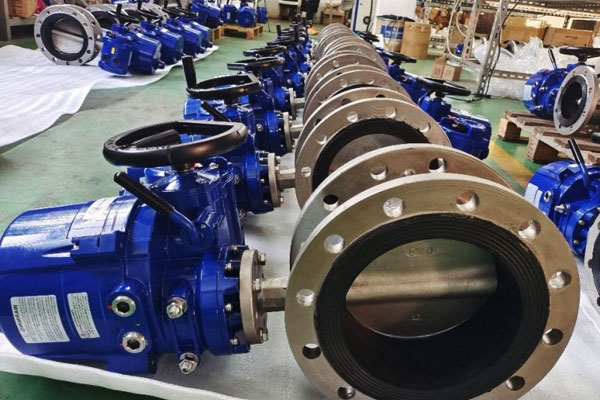
As a professional valve foundry and supplier, we provide custom-engineered flanged butterfly valves and precision-cast components, meeting international standards (API, ISO, ANSI) while ensuring cost-effective performance.
Whether your project requires large-diameter high-pressure service, corrosion-resistant alloys, or optimized designs for maintenance efficiency, our manufacturing expertise ensures reliable solutions tailored to your industry.
Contact Us now!
FAQs
Can flanged butterfly valves handle high-pressure gas service?
Yes—double/triple eccentric flanged valves with metal seats (API 609 Class VI leakage) and ANSI Class 300–900 ratings are suitable for high-pressure gas (e.g., natural gas, nitrogen).
Ensure compliance with ISO 15848-1 Class AH for low fugitive emissions.
What is the maximum size of a flanged butterfly valve?
Most manufacturers offer flanged butterfly valves up to 48 inches (1200 mm) in diameter, suitable for large water treatment plants and oil & gas pipelines.
Custom designs can reach 60 inches (1500 mm) for specialized applications.
How do I prevent flange gasket leakage?
Use gaskets compatible with fluid/temperature (e.g., graphite for steam, PTFE for chemicals); tighten bolts in a crisscross pattern (per ASME PCC-1) to uniform torque (e.g., 70 N·m for 6-inch ANSI 300 flanges); replace gaskets annually.
Are flanged butterfly valves suitable for sanitary service?
Yes—select 316L bodies with electropolished surfaces (Ra ≤0.8 μm), PTFE seats, and tri-clamp flanges (3-A/EHEDG compliant).
These valves are used in dairy, beverage, and pharmaceutical manufacturing.
What is the difference between ANSI Class 300 and 600 flanged valves?
ANSI Class 300 valves handle up to 70 bar (20°C), while Class 600 handles up to 140 bar (20°C).
Class 600 valves have thicker bodies (20–30 mm vs. 15–20 mm for Class 300) and stronger flanges, making them suitable for high-pressure applications like refineries and offshore pipelines.