1. Introduction
Brass is one of the most important and widely used copper-based alloys in modern industry.
It appears in electrical fittings, plumbing hardware, musical instruments, decorative objects, precision-machined components, valves, fasteners, marine parts, and countless consumer products.
Among its many material properties, density is especially significant because it affects mass, handling, buoyancy, acoustic response, machining behavior, and cost estimation.
At first glance, the density of brass may seem like a single fixed number.
In reality, brass is not a pure substance but an alloy whose density depends on composition, processing history, and temperature.
A technically sound discussion therefore requires more than a memorized value. It requires an understanding of what brass is, why its density varies, and how that variation matters in scientific and industrial contexts.
2. What Determines the Density of Brass
The density of brass is governed by a small set of interrelated factors, the most important of which is composition.
Brass is primarily an alloy of copper (Cu) and zinc (Zn). Copper is relatively dense, while zinc is less dense. As the zinc fraction increases, the density of the alloy typically decreases.
The relationship, however, is not strictly linear in a structural sense.
Brass is a solid solution or multiphase alloy depending on composition and processing conditions, so density is influenced not only by the atomic masses of the elements involved, but also by how those atoms are arranged in the crystal lattice.

Several variables shape the final value:
- Chemical composition: Higher copper content generally means higher density.
- Phase structure: Alpha brass, beta brass, and mixed-phase brasses may differ slightly in density.
- Minor alloying elements: Lead, tin, aluminum, nickel, manganese, or silicon can raise or lower density depending on the element and concentration.
- Temperature: Thermal expansion increases volume and therefore reduces density.
- Porosity and defects: Cast parts may show lower effective density than fully dense wrought material.
The key point is that brass density is an emergent property. It is not determined by one ingredient alone, but by the entire metallurgical state of the alloy.
3. Standard Density Values for Common Brass Grades
For engineering and reference purposes, brass is commonly assigned a density in the range of 8.4 to 8.7 g/cm³ (that is, 8,400 to 8,700 kg/m³).
A practical shorthand value of 8.5 g/cm³ or 8,500 kg/m³ is often used for preliminary calculations.
Values are approximate: actual density can vary by standard, supplier, temperature, and whether the product is cast, wrought, or porous.
| Brass type | Grade | Approximate density (g/cm³) | Approximate density (kg/m³) | Notes |
| General commercial brass | Common commercial brass | 8.4–8.5 | 8400–8500 | Useful nominal value for broad calculations |
| Cartridge brass | C26000 | 8.53 | 8530 | Very common deep-drawing alloy |
| Yellow brass | C26800 / C27000 | 8.45–8.50 | 8450–8500 | Higher zinc content; slightly lighter |
| Red brass | C23000 | 8.70–8.75 | 8700–8750 | Higher copper content; denser than yellow brass |
| Free-cutting brass | C36000 | 8.40–8.50 | 8400–8500 | Contains lead for machinability |
| High-leaded brass | C38500 | 8.45–8.55 | 8450–8550 | Good machinability; used in fittings |
| Naval brass | C46400 | 8.35–8.45 | 8350–8450 | Tin-added brass for marine service |
Admiralty brass |
C44300 | 8.45–8.55 | 8450–8550 | Corrosion-resistant, often used in heat exchangers |
| Muntz metal (yellow brass family) | C28000 | 8.40–8.50 | 8400–8500 | Hot-working alloy with higher zinc content |
| Cartridge brass (alternative common designation) | C26800 | 8.50–8.55 | 8500–8550 | Closely related to C26000 |
| Leaded red brass | C83600 | 8.70–8.90 | 8700–8900 | Often used in plumbing castings |
| Silicon brass | C69400 / similar | 8.25–8.45 | 8250–8450 | Technically a brass variant with silicon addition |
| Aluminum brass | C68700 | 7.80–8.20 | 7800–8200 | Lower density due to aluminum addition; common in seawater service |
4. Why Brass Density Varies
Brass density varies for several scientifically meaningful reasons.
Composition
This is the dominant factor. Copper has a density of about 8.96 g/cm³, while zinc is about 7.14 g/cm³. Because zinc is lighter, increasing zinc content lowers the overall density of the alloy.
This is why yellow brasses, which generally contain more zinc, tend to be slightly less dense than red or high-copper brasses.
Crystal structure and phase composition
At lower zinc contents, brass is often dominated by the alpha phase, which retains a crystal structure similar to copper.
As zinc content rises, beta phase or mixed alpha-beta structures can appear. These structural changes affect how efficiently atoms pack in the solid, and that affects bulk density.
Minor alloying additions
Small amounts of lead, tin, aluminum, nickel, manganese, or silicon may be added for specialized applications. These additions can modify density slightly.
For example, lead is much denser than copper or zinc, so leaded brass can be marginally denser than a comparable lead-free brass, even if the difference is not huge in everyday use.
Thermal expansion
When brass is heated, it expands. Since density is mass divided by volume, an increase in volume reduces density.
This effect is modest at ordinary temperatures but becomes relevant in precision work, high-temperature environments, or metrology.
Processing history
Casting, extrusion, drawing, rolling, annealing, and machining do not change the intrinsic atomic masses of the alloy, but they can affect porosity, internal stress, and microstructural uniformity.
A porous casting can have a lower effective density than a fully dense wrought brass product.
Density therefore reflects both chemistry and manufacturing reality.
5. How Density of Brass Is Measured
Several methods are used in practice.
Direct Mass and Volume Measurement
If a brass sample has a regular shape, its dimensions can be measured and used to calculate volume. Density is then mass divided by volume.
This method is simple but sensitive to dimensional error.
Archimedes’ Principle
For irregular brass pieces, buoyancy-based measurement is often more accurate. The sample is weighed in air and then in a fluid, commonly water.
The difference in apparent weight corresponds to the displaced fluid, allowing volume to be determined.
Industrial and Laboratory Methods
High-precision laboratories may use calibrated densitometers or pycnometers. These methods are useful when exact alloy characterization is needed.
Sources of Error
Several factors can distort density measurements:
- surface contamination
- trapped air bubbles
- porosity
- temperature variation
- inaccurate fluid density
- dimensional measurement errors
For a polished, solid brass sample, well-executed measurements should align closely with standard density ranges. For castings or composite parts, the effective density can deviate noticeably.
6. The Role of Density in Brass Processing and Performance
Density is not a passive descriptor. It influences how brass behaves during fabrication, service, and design.
Weight estimation and material yield
In manufacturing and procurement, density is essential for estimating part mass from volume, or vice versa.
This supports quotation, shipping, inventory planning, and cost analysis. Even a small discrepancy in density can matter when a product is produced in large quantities.
Machining and handling
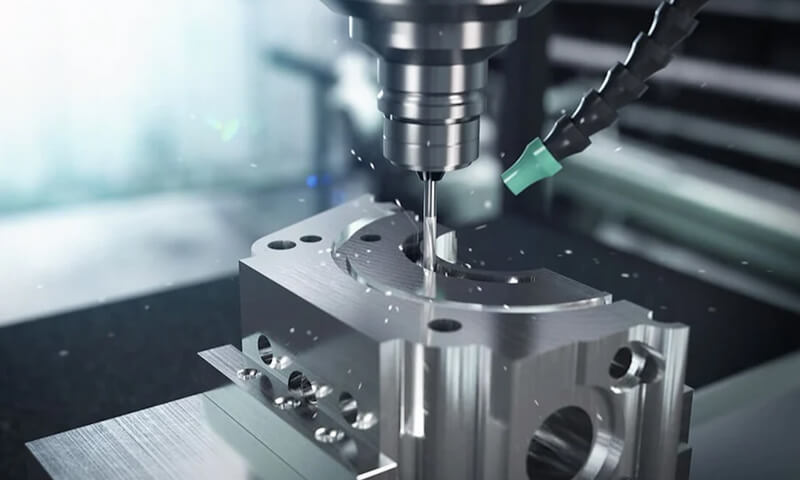
Brass is widely known for machinability. Density affects how a workpiece feels and how much inertial load it imposes during handling, clamping, and fixturing.
Dense materials require more robust support and can influence tool-path planning in automated machining.
Acoustic behavior
In musical applications, density contributes to vibrational response. Brass instruments are not defined by density alone, but mass distribution influences resonance, damping, and tonal behavior.
The “feel” of a brass instrument is partly a function of its density and wall thickness.
Mechanical dynamics
In moving assemblies, density affects inertia. This matters in rotary components, valves, fittings, and precision hardware where vibration and dynamic response are relevant.
A denser alloy may damp certain motion differently than a lighter alternative.
Corrosion-resistant design
Density does not directly determine corrosion resistance, but it is often considered together with alloy grade selection.
In marine and plumbing systems, engineers may choose a particular brass not only for its corrosion performance but also for its mass, especially when weight or vibration is a design constraint.
7. Density Compared with Related Metals and Alloys
Brass becomes easier to understand when placed alongside other common engineering metals and alloys.
| Material | Approximate density (g/cm³) | Approximate density (kg/m³) | Relative comment |
| Magnesium | 1.7–1.8 | 1700–1800 | Extremely light |
| Aluminum | 2.7 | 2700 | Much lighter than brass |
| Titanium | 4.4–4.5 | 4400–4500 | Light but strong |
| Steel | 7.8–8.0 | 7800–8000 | Often slightly lighter than brass |
| Zinc | 7.14 | 7140 | Lighter than brass; one of brass’s main constituents |
Brass |
8.4–8.7 | 8400–8700 | Intermediate to high density |
| Bronze | 8.7–8.9 | 8700–8900 | Often similar to or slightly denser than brass |
| Copper | 8.96 | 8960 | Usually denser than brass |
| Lead | 11.34 | 11340 | Much denser than brass |
8. Industrial Applications: How Brass Density Drives Usage
Density influences the decision to use brass in industry more than many people realize.

Plumbing and valve components
Brass is common in valves, couplings, fittings, and connectors. Density contributes to the tactile solidity of these components and can improve resistance to vibration and handling damage.
In pressurized systems, the balance of weight, machinability, and durability is often ideal.
Electrical and precision hardware
Many electrical terminals, connectors, and threaded inserts are made from brass or brass-like alloys.
Density supports dimensional stability and a durable feel, while the alloy’s conductivity and corrosion performance provide additional functional value.
Musical instruments
Trumpets, trombones, tubas, horns, and related instruments often use brass alloys because the combination of density, workability, and acoustic characteristics is favorable.
Wall thickness, geometry, and alloy composition work together to shape tone and response.
Decorative and architectural uses
Brass is frequently selected for handles, trims, plaques, fittings, and ornamental hardware.
Density gives these components a premium tactile quality. In architecture, that sense of solidity is often part of the aesthetic itself.
Marine and industrial fittings
Certain brasses, including naval brass, are selected for improved resistance to specific service environments.
Density is not the main selection criterion here, but it is part of the broader material profile that affects installation, stability, and lifecycle performance.
Machined parts and fasteners
For precision-machined components, brass density helps with predictable mass distribution and easy machinability.
The material’s weight is often helpful in small mechanisms where stable, repeatable part behavior is desired.
9. Conclusion
The density of brass is best understood not as a single immutable number, but as a material property shaped by alloy composition, crystal structure, temperature, and fabrication history.
In typical commercial brasses, density falls around 8.4–8.7 g/cm³, with 8.5 g/cm³ serving as a useful general reference value.
That range positions brass between copper and zinc and near or slightly above common steels.
From the perspective of materials science, brass density reflects atomic mass and lattice packing.
The perspective of engineering, it supports weight estimation, design decisions, and performance evaluation.
From the perspective of manufacturing, it helps distinguish between ideal alloy behavior and real-world part quality.
For all these reasons, density is not a minor specification in brass—it is a central property that connects chemistry, structure, and function.