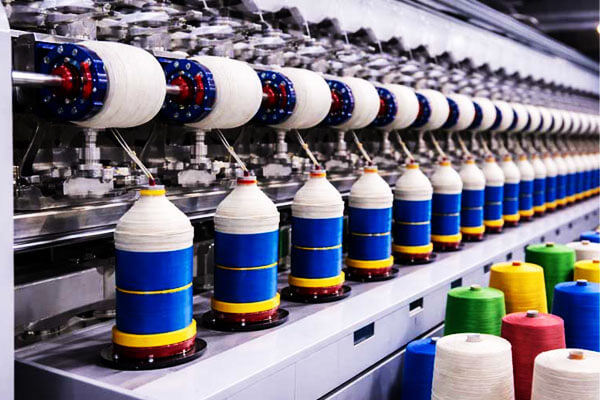
Textile machinery operates under demanding conditions. Components may be exposed to continuous reciprocating motion, high rotational speeds, vibration, friction, repeated loading, dust, fibers, lubricants, and frequent production cycles.
Even a relatively small mechanical component can therefore have a significant effect on machine accuracy, operating stability, and production efficiency.
When an original component becomes unavailable, reaches the end of its service life, or requires modification for a new machine design, a standard replacement part is not always sufficient.
Textile equipment manufacturers, maintenance companies, and machinery integrators often require custom textile machinery spare parts manufactured to specific drawings, samples, materials, tolerances, and performance requirements.
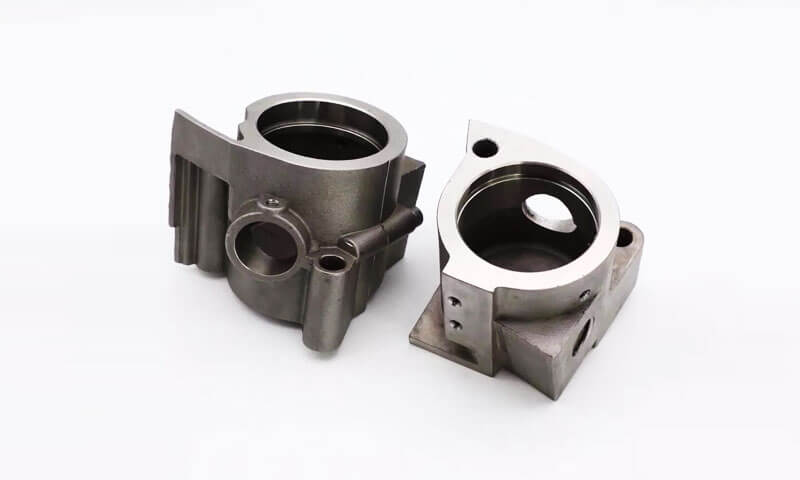
For complex metal components, combining precision casting and CNC machining provides an effective way to balance geometric complexity, dimensional accuracy, material performance, and production cost.
This integrated approach is particularly suitable for components such as brackets, housings, holders, bearing supports, machine bases, cams, levers, frames, and other custom textile machinery components.
1. What Are Textile Machinery Spare Parts?
Textile machinery spare parts are precision-engineered components used to replace worn, damaged, obsolete, or redesigned parts in textile production equipment.
They are essential for maintaining machine performance, production continuity, dimensional accuracy, and long-term operational reliability.
Unlike generic industrial components, textile machinery spare parts are designed around the specific mechanical systems and operating conditions of textile equipment.
Depending on the application, they may be subjected to continuous reciprocating motion, high-speed rotation, vibration, friction, impact, repeated loading, textile fibers, dust, lubricants, and temperature fluctuations.
Even a relatively small component can therefore have a direct influence on machine synchronization, fabric quality, production efficiency, and equipment service life.
For this reason, a textile machinery spare part is not simply a replacement metal component.
It must reproduce the critical dimensions, mechanical interfaces, material characteristics, and functional geometry required by the original machine.
What Functions Do Textile Machinery Spare Parts Perform?
Textile machinery consists of numerous interconnected mechanical systems, and each spare part performs a specific function within the overall machine.
Some components provide structural support, while others transmit motion, maintain alignment, guide yarn or fabric, or control repetitive mechanical movements.
Common functions include:
- Structural support: Machine bases, brackets, frames, mounting plates, and support components provide rigidity and maintain the position of mechanical assemblies.
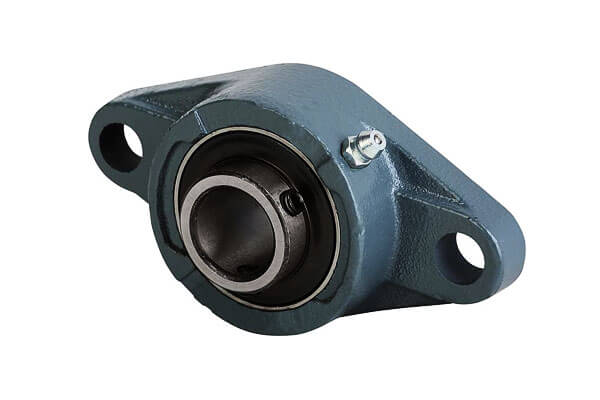
- Rotational support: Bearing housings, bearing seats, and related components support shafts and maintain accurate rotational alignment.
- Power transmission: Gear housings, cams, levers, shafts, pulleys, and connecting components transfer or transform mechanical motion.
- Material guidance: Rollers, guides, presser feet, holders, and similar components control the movement of yarn, thread, or fabric.
- Motion control: Cams, rocker arms, linkages, and other mechanical components coordinate repetitive movements.
- Protection and enclosure: Housings, covers, end plates, and protective structures shield internal mechanisms from contamination and mechanical damage.
- Positioning and assembly: Mounting brackets, locating components, supports, and bases ensure accurate installation and alignment.
Because these functions differ substantially, textile machinery spare parts can range from relatively small precision components to large structural castings.
Common Types of Textile Machinery Spare Parts
The specific components required depend on the type, model, and mechanical configuration of the textile equipment.
| Textile Machinery | Typical Spare Parts |
| Industrial Sewing Machines | Presser feet, presser foot holders, brackets, levers, guides, supports, housings |
| Spinning Machines | Spindle supports, bearing housings, brackets, drive components, machine bases |
| Weaving Machines | Cams, rocker arms, bearing housings, brackets, guide components, supports |
| Knitting Machines | Housings, brackets, guides, mounting components, mechanical linkages |
Winding Machines |
Rollers, bearing supports, brackets, shafts, housings |
| Warping Machines | Guide components, rollers, supports, mounting brackets, drive components |
| Dyeing Machinery | Shafts, housings, brackets, covers, supports, mounting components |
| Textile Finishing Machinery | Tension rollers, roller supports, bearing housings, frames, brackets |
Among these components, bearing housings, brackets, machine bases, housings, supports, cams, holders, and structural components are particularly suitable for custom casting followed by CNC machining because they often combine complex geometries with precision-machined functional surfaces.
2. Materials for Custom Textile Machinery Spare Parts
Material selection is a fundamental part of designing and manufacturing reliable textile machinery spare parts.
Textile equipment often operates continuously at high speed, with components exposed to friction, vibration, cyclic loading, impact, moisture, chemicals, and fiber contamination.
Therefore, the material must be selected according to the actual operating conditions and functional requirements of the component, rather than based solely on cost or nominal strength.

For custom textile machinery spare parts, DEZE can evaluate different engineering materials according to component geometry, casting requirements, machining requirements, load conditions, wear mechanisms, corrosion exposure, and expected service life.
| Material | Key Properties | Typical Applications |
| Stainless Steel (304, 316, 316L) | Excellent corrosion resistance; good strength. | Rollers, guides, pumps, valves, dyeing machinery. |
| Stainless Steel (17-4PH) | High strength; heat-treatable; good corrosion resistance. | High-load components, gears, shafts. |
| Carbon Steel (AISI 1045, 4140) | Good strength; hardenable. | Gears, shafts, spindles, structural parts. |
| Alloy Steel (4140, 4340) | High strength; excellent toughness; hardenable. | Heavy-duty gears, shafts, cam followers. |
| Tool Steel (D2, O1, S7) | High hardness; wear-resistant. | Cutting tools, dies, forming tools. |
Bronze (C90500, C93200) |
Good wear resistance; low friction; corrosion-resistant. | Bushings, bearings, guides. |
| Brass (C36000, C26000) | Good machinability; corrosion-resistant. | Fittings, valves, small hardware. |
| Cast Iron (Gray, Ductile) | Good damping capacity; wear-resistant. | Machine bases, housings, large gears. |
| Aluminum (6061-T6) | Lightweight; good machinability. | Lightweight components, housings. |
| Engineering Plastics (PEEK, Nylon, PTFE) | Low friction; chemical resistance; lightweight. | Bearings, seals, guides, non-metallic components. |
3. Precision Casting for Textile Machinery Spare Parts
Precision casting is an important manufacturing route for textile machinery spare parts that combine complex geometry, demanding material requirements, and relatively tight dimensional specifications.
Among precision casting technologies, investment casting is particularly valuable because it can reproduce intricate geometries with relatively small machining allowances while accommodating a broad range of engineering alloys.
Why Precision Casting Is Ideal for Textile Machinery Components
Investment casting offers an effective balance between geometric freedom, material flexibility, dimensional control, and production efficiency.
| Advantage | Engineering Significance for Textile Machinery |
| Complex geometries | Enables intricate contours, ribs, bosses, recesses, thin sections, and selected internal passages to be produced as a near-net shape. |
| Near-net-shape production | Reduces the amount of material removed during subsequent CNC machining, particularly for complex or irregular components. |
| Good surface quality | Investment casting can provide relatively smooth as-cast surfaces, reducing finishing requirements and providing a good foundation for precision machining. |
Dimensional accuracy |
Properly designed investment-casting processes can achieve tighter dimensional control than many conventional sand-casting processes, although actual tolerances depend on alloy, geometry, tooling, and process control. |
| Broad alloy compatibility | Suitable for many stainless steels, carbon and alloy steels, tool steels, and copper-based alloys, subject to the selected process and foundry capability. |
| Reduced material waste | Near-net-shape production can substantially reduce machining stock and raw-material consumption compared with machining a complex part from billet or bar stock. |
Integrated functional features |
Features such as bosses, mounting lugs, reinforcing ribs, and complex external profiles can often be incorporated directly into the casting. |
| Production flexibility | Particularly attractive for prototypes, replacement components, and small-to-medium production runs where dedicated high-volume tooling is not justified. |
| Good foundation for CNC machining | Machining allowances can be strategically placed on bearing seats, bores, mounting faces, threads, and other critical functional surfaces. |
It is important to distinguish precision casting capability from guaranteed final-part tolerance. Investment casting can provide excellent dimensional consistency,
but the actual result is influenced by wax pattern accuracy, ceramic-shell behavior, alloy shrinkage, thermal gradients, casting geometry, heat treatment, and subsequent machining.
Critical dimensions should therefore normally be achieved through a combination of controlled casting allowances and CNC finishing.
Why Near-Net-Shape Casting Matters for Textile Machinery
A textile machinery component may have a relatively large overall volume but only a small number of surfaces that actually require precision machining.
Machining the entire component from a solid billet can therefore be inefficient.
For example, consider a customized housing with multiple reinforcing ribs, mounting bosses, curved external surfaces, and several precision bores.
Producing the complete geometry from a solid block would require substantial material removal and lengthy machining cycles.
Investment casting changes the manufacturing strategy:
Raw alloy → Near-net-shape casting → Heat treatment → CNC machining of critical areas → Finished component
This can reduce machining time, tooling wear, material consumption, and manufacturing complexity.
The advantage becomes more significant when the component has a complex three-dimensional profile or when production is repeated over multiple batches.
Investment Casting Process for Textile Machinery Spare Parts
The investment-casting process begins with the creation of a highly accurate pattern and ends with inspection of the finished casting.
Each stage influences the dimensional and metallurgical quality of the final component.
| Stage | Process | Key Engineering Consideration |
| 1 | Pattern production | Wax or polymer pattern is produced using precision tooling according to the component geometry. |
| 2 | Core preparation and assembly | Ceramic or soluble cores may be introduced where internal cavities or passages are required. |
| 3 | Tree assembly | Individual patterns are attached to a runner and gating system to form a casting tree. |
| 4 | Ceramic shell building | Repeated slurry coating and stucco application create a refractory shell around the pattern. |
5 |
Dewaxing | Wax is removed, leaving the negative cavity of the component inside the ceramic shell. |
| 6 | Shell firing | The shell is heated to develop strength and remove residual pattern material. |
| 7 | Alloy melting | The selected alloy is melted under controlled metallurgical conditions. |
| 8 | Pouring | Molten metal is introduced into the preheated ceramic shell under controlled pouring conditions. |
9 |
Solidification and cooling | Controlled solidification helps minimize defects and maintain dimensional stability. |
| 10 | Knockout | The ceramic shell is removed after cooling. |
| 11 | Cut-off and finishing | Gates and runners are removed; surfaces may be ground or blasted. |
| 12 | Heat treatment | The casting receives the specified thermal treatment to obtain the required mechanical and metallurgical properties. |
| 13 | Inspection | Dimensional, visual, metallurgical, and non-destructive examinations are performed as required. |
The precise temperatures, shell structure, pouring conditions, and heat-treatment cycles are alloy- and geometry-dependent.
They should therefore be established according to the specific material specification rather than applying one universal temperature range to every project.
4. CNC Machining for Textile Machinery Components
While precision casting provides the basic geometry, CNC machining establishes the precision required for functional surfaces and interfaces.
Textile machinery frequently contains rotating shafts, bearings, rollers, gears, guides, housings, couplings, and other components that must operate with controlled clearances and alignment.
Even relatively small dimensional deviations can affect vibration, friction, bearing life, yarn handling, or machine stability.
CNC machining therefore serves as the critical precision-finishing stage of the manufacturing process.

Why CNC Machining Is Essential
Modern CNC machining provides high repeatability and controlled dimensional accuracy across complex component geometries.
| CNC Machining Advantage | Importance for Textile Machinery |
| High dimensional accuracy | Enables critical bores, shafts, bearing seats, and mounting interfaces to meet specified tolerances. |
| Excellent repeatability | Helps maintain consistent dimensions across production batches and replacement-part programs. |
| Controlled surface finish | Appropriate machining can reduce friction, improve sealing, and protect sensitive contacting surfaces. |
| Complex geometry capability | Multi-axis machining can produce three-dimensional contours, angled surfaces, slots, pockets, and compound features. |
Material flexibility |
CNC equipment can process a broad range of steels, stainless steels, cast irons, aluminum alloys, copper alloys, and engineering plastics. |
| Efficient customization | CNC programs can be modified for different dimensions and configurations without completely redesigning the manufacturing process. |
| Prototype suitability | CNC machining can support rapid development and dimensional validation before larger production runs. |
| Integration with casting | Near-net-shape castings can be machined only where precision is functionally necessary. |
The exact achievable tolerance is determined by the machine tool, cutting tool, workholding, material condition, component geometry, thermal stability, measurement system, and drawing requirements.
Therefore, values such as ±0.005 mm should be treated as project-specific capabilities rather than universal guarantees.
Common CNC Machining Operations for Textile Machinery Components
Different textile machinery components require different CNC processes depending on their geometry, dimensional tolerances, surface-finish requirements, and functional interfaces.
| CNC Machining Process | Primary Machined Features | Key Quality Requirements | Typical Capability / Consideration |
| CNC Turning | External diameters, internal bores, shoulders, grooves, tapers, threads, end faces | Diameter tolerance, concentricity, cylindricity, runout, surface roughness | Typically suitable for high-accuracy cylindrical features; final tolerance depends on machine, material, geometry, tooling, and inspection |
| CNC Milling | Flat surfaces, pockets, slots, ribs, contours, mounting faces, keyways | Flatness, perpendicularity, positional accuracy, profile accuracy, surface finish | Suitable for prismatic and complex-profile components; multi-axis machining can reduce setup errors |
| Precision Boring / Reaming | Bearing bores, alignment holes, locating bores, precision internal diameters | Bore diameter, roundness, cylindricity, coaxiality, positional accuracy | Particularly important where bearings, shafts, or mating components must maintain accurate alignment |
CNC Drilling |
Fastener holes, locating holes, lubrication passages, fluid passages | Hole diameter, positional tolerance, depth, perpendicularity, hole quality | Drilling may be followed by boring, reaming, tapping, or chamfering where higher accuracy is required |
| Thread Machining | Internal and external threads, connection interfaces, threaded holes | Pitch accuracy, major/minor diameter, thread profile, concentricity, engagement quality | CNC tapping, thread milling, or turning can be selected according to material, thread size, precision, and production volume |
| CNC Grinding | Bearing seats, journals, precision diameters, sealing surfaces | Tight dimensional tolerance, roundness, cylindricity, surface roughness, runout | Used after turning or heat treatment when higher dimensional and surface requirements cannot be economically achieved by conventional machining |
Multi-Axis CNC Machining |
Compound contours, angled holes, complex surfaces, deep cavities, multiple spatial features | Profile accuracy, positional relationship between features, surface finish, setup consistency | Reduces the number of setups and can improve geometric consistency for complex components |
| Keyway / Slot Machining | Keyways, axial slots, drive grooves | Width, depth, position, parallelism, fit with mating key | Critical for reliable torque transmission and accurate component assembly |
| Surface Finishing / Fine Machining | Functional contact surfaces and selected external surfaces | Surface roughness, burr removal, edge condition, dimensional stability | Finish should be specified according to the actual friction, wear, sealing, or yarn-contact requirements rather than uniformly maximizing smoothness |
5. From Casting to Finished Part: Our Manufacturing Process
Manufacturing a reliable textile machinery spare part requires more than producing a component that matches the dimensions of an original sample.
The complete process must establish a controlled relationship between design, material, casting, heat treatment, machining, surface condition, and final inspection.
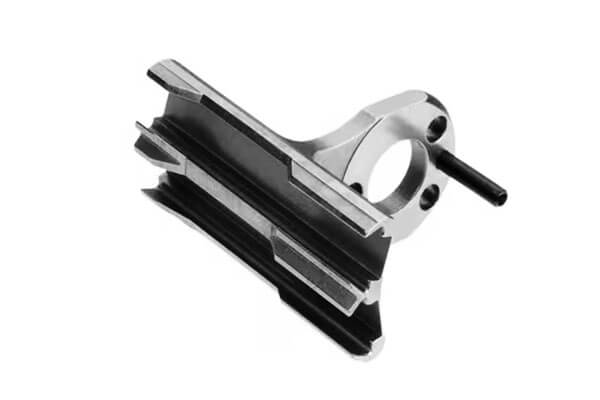
For custom textile machinery components, DEZE can integrate precision casting and CNC machining into a single manufacturing workflow.
This approach allows the casting process to be optimized for geometry and material performance while reserving CNC machining for surfaces where dimensional accuracy and functional tolerances are essential.
The typical workflow can be summarized as:
Technical Review → DFM Analysis → Material Selection → Pattern & Tooling → Precision Casting → Heat Treatment → CNC Machining → Surface Finishing → Inspection → Packaging
Process Flow Overview
| Stage | Step | Purpose | Critical Controls |
| Design & Engineering | 1. Customer specification | Define part geometry, material, tolerances, and quantity. | Accurate requirements capture. |
| 2. DFM analysis | Optimize design for manufacturing. | Reduce defects; minimize cost. | |
| 3. CAD modelling | 3D model of the part. | Design for castability and machinability. | |
| Casting | 4. Pattern production | Wax injection into precision die. | Dimensional accuracy. |
| 5. Shell building | 6–10 layers of ceramic slurry. | Shell strength; permeability. | |
| 6. Pouring | Molten metal into shell. | Temperature; speed; cooling. | |
| 7. Heat treatment | Solution anneal, normalise, stress relief. | Mechanical properties. | |
Machining |
8. CNC machining | Turning, milling, drilling, grinding. | Tolerances; surface finish. |
| 9. Deburring | Remove sharp edges and burrs. | Safety; functionality. | |
| Finishing | 10. Surface treatment | Passivation, polishing, coating, plating. | Corrosion resistance; aesthetics. |
| Inspection | 11. Quality inspection | CMM, NDT, hardness, dimensional inspection. | Ensure compliance. |
| 12. Packaging | Protect finished parts. | Damage prevention. |
6. Engineering Considerations for Textile Machinery Spare Parts
| Consideration | Importance | Design/Manufacturing Action |
| Wear resistance | Critical for parts in contact with moving yarns, fabrics, or media. | Select hard alloys (tool steel, 17-4PH); surface hardening; carbide coatings. |
| Corrosion resistance | Dyeing and finishing processes use aggressive chemicals. | Use stainless steel (316L) or special alloys; passivation; electropolishing. |
| Heat resistance | Heat-setting, drying, and calendering processes. | Select alloys with good high-temperature strength (duplex, Inconel). |
Dimensional stability |
Parts must maintain dimensions under thermal and mechanical stress. | Heat treatment; stress relief; stable alloys. |
| Surface finish | Smooth surfaces reduce friction and prevent yarn breakage. | CNC finishing; polishing; electropolishing. |
| Fatigue resistance | Cyclic loading in high-speed machinery. | Design for fatigue; select tough alloys; shot peening. |
| Interchangeability | Parts must fit existing machinery. | Precision tolerances; quality control. |
7. Quality Control and Inspection
Quality Standards
| Standard | Scope | Requirements |
| ISO 9001 | Quality management system. | Process control; traceability. |
| ISO 9001:2015 | General quality. | Continuous improvement; customer focus. |
| ASTM Standards | Material specifications. | Chemical composition; mechanical properties. |
| EN Standards | European quality. | Dimensional; mechanical. |
Inspection Methods
| Method | Purpose | Typical Acceptance Criteria |
| CMM (Coordinate Measuring Machine) | Dimensional inspection. | ±0.01–0.05 mm (as specified). |
| Visual inspection | Surface defects. | No visible scratches, pits, or cracks. |
| Dye penetrant (PT) | Surface cracks. | No cracks or porosity. |
| Radiography (X-ray) | Internal defects. | No voids, inclusions, or porosity. |
| Hardness testing | Mechanical property verification. | As per material specification. |
| Tensile testing | Mechanical property verification. | As per material specification. |
| Surface roughness | Surface finish measurement. | Ra ≤1.6 µm (or as specified). |
8. Why Combine Precision Casting with CNC Machining?
For custom textile machinery spare parts, the real manufacturing challenge is rarely just “Can this part be cast?” or “Can this part be machined?”
The more important question is:
Which manufacturing process should create each feature of the component to achieve the best combination of performance, precision, material efficiency, and total cost?
This is where the combination of precision casting and CNC machining becomes particularly powerful.
Precision casting is highly efficient at creating complex three-dimensional geometry and near-net-shape structures.
CNC machining, by contrast, excels at establishing critical dimensions, geometric tolerances, threads, bearing fits, bores, and functional surface finishes.
Rather than using either technology independently, an integrated approach assigns each process the work it does best:
Precision casting creates the structural geometry → heat treatment develops material properties → CNC machining establishes functional precision → inspection verifies the finished component.
This is not simply a two-step production method. It is a design-to-manufacturing strategy that can significantly improve the efficiency and reliability of customized textile machinery components.
The Core Principle: “Cast the Shape, Machine the Function”
The fundamental advantage of combining the two technologies can be summarized in one principle:
Cast what is geometrically complex; machine what is functionally critical.
A textile machinery housing, for example, may contain ribs, bosses, curved walls, reinforcing structures, and irregular external contours.
Producing all of these features from a solid billet through CNC machining would require substantial material removal and multiple machining operations.
Investment casting can produce most of this geometry directly.
The CNC process can then concentrate on the surfaces that actually determine machine performance:
- Bearing bores
- Shaft seats
- Mounting faces
- Precision holes
- Threads
- Sealing surfaces
- Alignment datums
- Gear and coupling interfaces
This division of manufacturing responsibility avoids forcing one technology to perform a task for which another technology is better suited.
Three Manufacturing Strategies Compared
The difference becomes clearer when comparing three approaches.
| Criterion | Precision Casting Only | CNC Machining Only | Precision Casting + CNC Machining |
| Complex geometry | Excellent | Good–Excellent | Excellent |
| Typical dimensional control | Approx. ±0.1–0.3 mm* | Approx. ±0.005–0.01 mm* | Approx. ±0.005–0.01 mm on machined features* |
| Typical achievable surface finish | Approx. Ra 1.6–6.3 µm* | Approx. Ra 0.4–1.6 µm* | Approx. Ra 0.4–1.6 µm on finished surfaces* |
| Material utilization | High | Low–Moderate | High |
| Material waste | Low | High | Low |
| Complex cast features | Excellent | Costly to produce | Excellent |
| Precision functional interfaces | Limited | Excellent | Excellent |
| Low-volume suitability | Tooling-dependent | Good | Good |
| Medium-volume suitability | Good | Often less economical for complex parts | Excellent |
| High-volume suitability | Excellent | Often expensive for complex geometries | Excellent |
| Alloy flexibility | Broad | Broad | Broad |
| Overall manufacturing flexibility | High | High | Very high |
*Actual tolerances and surface finishes depend on alloy, geometry, casting method, machine capability, tooling, heat treatment, inspection requirements, and production conditions.
These figures should therefore be treated as indicative rather than universal specifications.
The key observation is that the combined process does not simply add the advantages of casting and machining.
It allows the limitations of each process to be compensated for by the other.
Precision Casting Solves the Geometry Problem
One of the greatest strengths of investment casting is its ability to reproduce complicated geometries without requiring the same amount of subtractive machining that would be necessary when starting from billet.
This is especially valuable for textile machinery components containing:
- Integrated ribs
- Curved surfaces
- Mounting bosses
- Irregular contours
- Recesses
- Complex transitions
- Internal cavities
- Multiple structural features
Instead of starting with a large block of metal and progressively removing material, casting begins much closer to the required final geometry.
This creates a near-net-shape manufacturing advantage.
The consequence is not merely a shorter machining cycle.
It can also reduce raw-material consumption, cutting-tool wear, machine occupancy, and the number of machining operations required.
CNC Machining Solves the Precision Problem
Casting alone cannot economically deliver the tight dimensional control required for every functional interface.
Textile machinery often contains precision relationships that directly influence machine operation.
Examples include:
Bearing seat → shaft diameter → concentricity → runout → alignment
A small deviation in one of these parameters can influence vibration, bearing loading, friction, and service life.
CNC machining provides the ability to selectively refine these critical features.
Instead of imposing extremely tight tolerances on the entire casting—which would increase manufacturing complexity—the process focuses precision where it creates real functional value.
This leads to an important engineering principle:
Precision should be concentrated where function requires it, not distributed unnecessarily across the entire component.
The Core Takeaway
Precision casting and CNC machining are not competing technologies—they are complementary stages of precision manufacturing.
Precision casting provides shape, structural complexity, material efficiency, and near-net-shape production.
CNC machining provides dimensional accuracy, geometric control, fine surface finish, and functional interfaces.
When the two are engineered together, the result is a manufacturing solution that can achieve:
Complex geometry + precision interfaces + efficient material utilization + controlled quality + competitive total cost.
For custom textile machinery spare parts, that combination is often the most practical path from a drawing—or even an obsolete physical sample—to a production-ready, dimensionally consistent, functionally reliable finished component.
9. Custom Textile Machinery Spare Parts Solutions from DEZE
DEZE Foundry specialises in custom textile machinery spare parts, offering integrated solutions from precision casting to CNC machining and finishing.
| Capability | Details |
| Materials | Stainless steel (304, 316, 316L, 17-4PH), carbon steel, alloy steel, bronze, brass, aluminum, tool steel. |
| Casting | Investment casting (lost wax); sand casting. |
| CNC Machining | 3‑, 4‑, and 5‑axis CNC milling; CNC turning; grinding; drilling; threading. |
| Tolerances | ±0.005 mm (machining); ±0.1 mm (casting). |
| Surface finishes | As‑cast, machined, polished, electropolished, passivated, powder coated, plated. |
| Part weight | 0.01 kg to 1000 kg. |
| Part dimensions | Up to 6000 mm. |
| Quality | ISO 9001:2015 certified; 100% inspection. |
| Lead time | 4–8 weeks for casting; 1–3 weeks for machining (depending on complexity). |
10. Conclusion
Custom textile machinery spare parts require a manufacturing strategy that balances dimensional precision, material performance, geometric complexity, service reliability, and cost efficiency.
Precision casting provides the ability to create complex near-net-shape geometries while reducing material waste and machining requirements.
CNC machining establishes the dimensional accuracy, geometric tolerances, threads, bores, bearing fits, sealing surfaces, and other functional features required for reliable machine operation.
The combination creates a manufacturing philosophy that can be summarized as:
Cast the complexity. Machine the precision. Inspect the function.
For textile machinery manufacturers and maintenance teams, this approach offers more than a replacement part.
It provides a pathway to repeatable, application-specific components designed around the actual requirements of the machine.
Whether the requirement is a single obsolete component, a customized OEM part, or a long-term production program, the combination of precision casting,
CNC machining, engineering analysis, and quality control provides a strong foundation for reliable textile machinery spare-part manufacturing.
FAQs
Can you manufacture obsolete textile machinery spare parts?
Yes. Obsolete components can potentially be reproduced from an existing sample, drawing, or dimensional data.
A typical process is:
Sample inspection → Reverse engineering → CAD reconstruction → Material selection → Casting/CNC process development → Production → Inspection
This can be particularly useful when the original OEM component is no longer available.
Can you manufacture small quantities?
Yes. Custom manufacturing can support prototype, replacement, and small-batch requirements.
The optimal process depends on component geometry, material, tolerance, quantity, tooling requirements, and expected future demand.
For some low-volume parts, CNC machining may be preferable; for complex components with repeat demand, precision casting followed by CNC machining may provide better long-term economics.
Can the original component be improved during reproduction?
Potentially, yes.
When a component has experienced repeated failures, a custom manufacturing project can evaluate the original material, geometry, tolerances, surface condition, and operating environment.
Where technically appropriate, improvements may include:
- Alternative material selection
- Modified heat treatment
- Improved surface finish
- Revised machining tolerances
- Better fillet geometry
- Enhanced wear resistance
- Improved corrosion resistance
Any modification should, however, be evaluated against the machine’s functional requirements and compatibility with the existing assembly.
How do I start a custom textile machinery spare parts project with DEZE?
The process can begin with a drawing, 3D model, physical sample, or basic component information
The engineering team can then evaluate the component’s geometry, material, manufacturing route, tolerances, and inspection requirements before recommending an appropriate production solution.
For complex components, the preferred route may be:
Technical review → DFM → Precision casting → Heat treatment → CNC machining → Inspection → Delivery
This provides a structured path from an existing textile machinery component to a customized, production-ready spare part.