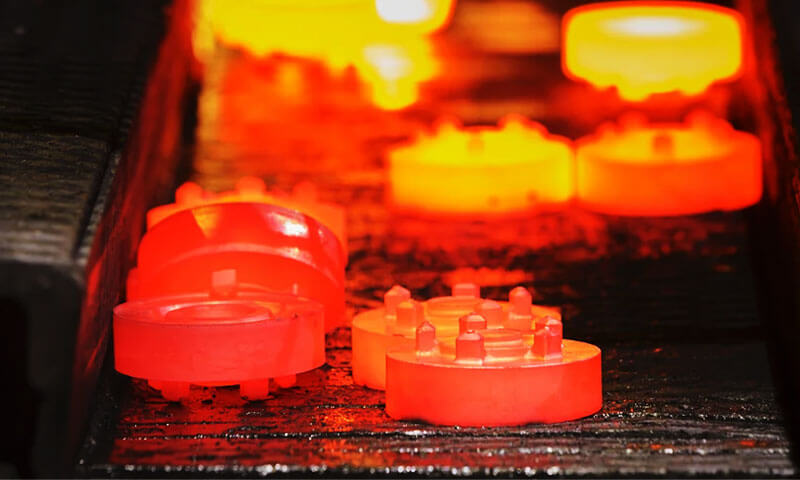

যান্ত্রিক সিস্টেমের দাবিতে, একটি কপিকল একটি সাধারণ খাঁজকাটা চাকার চেয়ে অনেক বেশি.
এটি একটি লোড বহনকারী ট্রান্সমিশন উপাদান যা অবশ্যই দড়ি বা তারের গতিবিধি পরিচালনা করতে হবে, রেডিয়াল বাহিনী, প্রভাব লোড, ঘর্ষণ, এবং বারবার চক্রীয় চাপ.
যখন একটি কপিকল ক্রেনগুলিতে কাজ করে, খনির সরঞ্জাম, সামুদ্রিক যন্ত্রপাতি, ভারী উত্তোলন সিস্টেম, বা অন্যান্য গুরুতর-পরিষেবা পরিবেশ, এর উপাদান এবং উত্পাদন প্রক্রিয়ার গুণমান সরাসরি সরঞ্জাম নির্ভরযোগ্যতা প্রভাবিত করে.
এই যেখানে কাস্টম ঢালাই ইস্পাত pulleys একটি নিষ্পত্তিমূলক প্রকৌশল সুবিধা অফার.
এই নিবন্ধটি কাস্টম ঢালাই ইস্পাত কপিকল উত্পাদন পিছনে প্রযুক্তিগত বিবেচনা অন্বেষণ, ইস্পাত গ্রেড এবং নির্ভুলতা ঢালাই থেকে মেশিনিং পর্যন্ত, তাপ চিকিত্সা, পরিদর্শন, অ্যাপ্লিকেশন, এবং সরবরাহকারী নির্বাচন.
1. একটি কাস্ট ইস্পাত পুলি কি?
ক ঢালাই ইস্পাত কপিকল একটি ঘূর্ণায়মান যান্ত্রিক উপাদান যা ইস্পাতকে ছাঁচে ঢালাই করে এবং পরবর্তীতে প্রয়োজনীয় মাত্রায় গুরুত্বপূর্ণ পৃষ্ঠকে মেশিন করে.
উত্তোলন এবং দড়ি-হ্যান্ডলিং সিস্টেমে, এটি সাধারণত একটি হিসাবেও উল্লেখ করা হয় শেভ.
এর প্রাথমিক কাজ হল গাইড করা, পুনর্নির্দেশ, বা হাব এবং শ্যাফ্ট বা ভারবহন সমাবেশের মাধ্যমে সম্পর্কিত যান্ত্রিক লোড স্থানান্তর করার সময় একটি তারের দড়ি বা অনুরূপ নমনীয় উপাদান সমর্থন করুন.
একটি সাধারণ চাকা থেকে ভিন্ন, একটি কপিকল যত্ন সহকারে কার্যকরী জ্যামিতি ইঞ্জিনিয়ার করেছে. দ্য দড়ি খাঁজ দড়ি কিভাবে শেভের উপর বসে তা নিয়ন্ত্রণ করে, যখন হাব এবং বোর সাপোর্টিং শ্যাফ্ট বা ভারবহন ব্যবস্থায় লোড প্রেরণ করে.
ফ্ল্যাঞ্জগুলি খাঁজের মধ্যে দড়ি ধরে রাখতে সাহায্য করে এবং উপাদানটির সামগ্রিক কাঠামোগত দৃঢ়তায় অবদান রাখতে পারে.
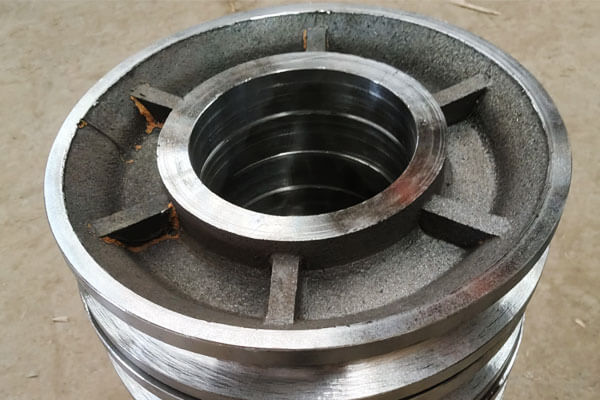
একটি ঢালাই ইস্পাত পুলি প্রধান উপাদান
| উপাদান | ফাংশন | কী উত্পাদন বিবেচনা |
| শেভ/রিম | দড়িকে সমর্থন করে এবং গাইড করে | খাঁজ প্রোফাইল, প্রাচীর বেধ, প্রতিরোধ পরুন |
| দড়ি খাঁজ | দড়ি গ্রহণ করে এবং গাইড করে | ব্যাসার্ধ, গভীরতা, প্রোফাইল নির্ভুলতা, পৃষ্ঠের অবস্থা |
| ফ্ল্যাঞ্জ | শেভের উপর দড়ি ধরে রাখতে সাহায্য করে | উচ্চতা, বেধ, একাগ্রতা |
হাব |
পুলিকে খাদ বা বিয়ারিংয়ের সাথে সংযুক্ত করে | মাত্রিক নির্ভুলতা, কাঠামোগত শক্তি |
| বোর | খাদ accommodates, বুশিং, বা ভারবহন ব্যবস্থা | ব্যাস, গোলতা, একাগ্রতা |
| কীওয়ে | যেখানে প্রযোজ্য সেখানে টর্ক প্রেরণ করে | অবস্থান এবং মাত্রিক নির্ভুলতা |
| মাউন্ট বৈশিষ্ট্য | পার্শ্ববর্তী সরঞ্জামের সাথে ইন্টারফেস | অবস্থান, সমতলতা, প্রান্তিককরণ |
একটি নির্ভুলতা ঢালাই ইস্পাত কপিকল জন্য, এই বৈশিষ্ট্যগুলির জন্য একই উত্পাদন নির্ভুলতার প্রয়োজন হয় না.
ঢালাই প্রক্রিয়া বেশিরভাগ কাঠামোগত জ্যামিতি স্থাপন করতে পারে, যখন বোরের জন্য সিএনসি মেশিনিং ব্যবহার করা হয়, ভারবহন পৃষ্ঠতল, খাঁজ, কীওয়ে, শেষ মুখ, এবং অন্যান্য সমালোচনামূলক ইন্টারফেস.
2. কাস্টম Pulleys জন্য সাধারণ কাস্ট ইস্পাত গ্রেড
একটি ঢালাই ইস্পাত কপিকল জন্য উপাদান নির্বাচন কাজের লোড উপর ভিত্তি করে করা উচিত, প্রভাব অবস্থা, পরিধানের প্রয়োজনীয়তা, অপারেটিং তাপমাত্রা, জারা এক্সপোজার, এবং প্রয়োজনীয় সেবা জীবন.
প্রচলিত কার্বন ঢালাই ইস্পাত ছাড়াও, কাস্টমাইজড কপিকল ডিজাইন কম খাদ ইস্পাত ব্যবহার করতে পারে, উচ্চ-ম্যাঙ্গানিজ পরিধান-প্রতিরোধী ইস্পাত, বা জারা-প্রতিরোধী স্টেইনলেস স্টীল যখন অপারেটিং পরিবেশ অতিরিক্ত কর্মক্ষমতা দাবি করে.
| উপাদান / গ্রেড | অ্যালো পরিবার | মূল কর্মক্ষমতা বৈশিষ্ট্য | সাধারণ পুলি অ্যাপ্লিকেশন |
| ASTM A216 Gr. WCB | কার্বন ঢালাই ইস্পাত | ভাল শক্তি, চমৎকার castability, ভাল মেশিনিবিলিটি, ব্যয়বহুল | সাধারণ-উদ্দেশ্য পুলি, শিল্প উপাদান হ্যান্ডলিং, আলো- মাঝারি শুল্ক উত্তোলন সিস্টেম |
| ASTM A216 Gr. ডব্লিউসিসি | কার্বন ঢালাই ইস্পাত | WCB থেকে উচ্চতর নির্দিষ্ট শক্তি, ভাল দৃঢ়তা এবং castability | ভারী-শুল্ক শিল্প pulleys, ক্রেন উপাদান, চাহিদা উপাদান-হ্যান্ডলিং সিস্টেম |
| কম খাদ ঢালাই ইস্পাত, Cr-Mo / Ni-Cr-Mo | কম খাদ ঢালাই ইস্পাত | উচ্চ শক্তি, উন্নত কঠোরতা, ভাল দৃঢ়তা, তাপ চিকিত্সার পরে ভাল ক্লান্তি কর্মক্ষমতা | ভারী-শুল্ক কপিকল sheaves, নির্মাণ hoists, খনির সরঞ্জাম, উচ্চ-লোড পুলি |
| ASTM A148 উচ্চ-শক্তি গ্রেড | উচ্চ শক্তি ঢালাই ইস্পাত | উচ্চ প্রসার্য এবং ফলন শক্তি, তাপ চিকিত্সার জন্য উপযুক্ত, শক্তিশালী লোড-ভারবহন ক্ষমতা | প্রধান sheaves, ভারী উত্তোলন সরঞ্জাম, বড় শিল্প pulleys, উচ্চ লোড যন্ত্রপাতি |
ASTM A352 LCB / এলসিসি |
নিম্ন-তাপমাত্রা ঢালাই ইস্পাত | কম তাপমাত্রায় উন্নত প্রভাব দৃঢ়তা, ঠান্ডা-পরিষেবা অবস্থার জন্য উপযুক্ত | আউটডোর সারস, ঠান্ডা-অঞ্চল খনির সরঞ্জাম, সামুদ্রিক এবং অফশোর উত্তোলন সিস্টেম |
| Austenitic স্টেইনলেস ঢালাই ইস্পাত, সিএফ 8 / সিএফ 8 এম | স্টেইনলেস ঢালাই ইস্পাত | দুর্দান্ত জারা প্রতিরোধের, ভাল দৃঢ়তা, গ্রেড-নির্দিষ্ট সীমাবদ্ধতা সহ ক্লোরাইড-ধারণকারী পরিবেশের জন্য উপযুক্ত | সামুদ্রিক পুলি, ক্ষয়কারী উপাদান-হ্যান্ডলিং সিস্টেম, রাসায়নিক এবং খাদ্য প্রক্রিয়াকরণ সরঞ্জাম |
| হ্যাডফিল্ড স্টিল, ASTM A128 Gr. খ | উচ্চ-ম্যাঙ্গানিজ অস্টেনিটিক ইস্পাত | ঘষিয়া তুলিয়া ফেলিতে সক্ষম সেবা অধীনে চমত্কার প্রভাব বলিষ্ঠতা এবং শক্তিশালী কাজ-কঠোর প্রতিক্রিয়া | খনির সরঞ্জাম, ঘষিয়া তুলিয়া ফেলিতে সক্ষম উপাদান হ্যান্ডলিং, উচ্চ-প্রভাব পুলি এবং শেভ অ্যাপ্লিকেশন |
| বোরন-অ্যালোয়েড কাস্ট স্টিল | বোরন খাদ ইস্পাত | উচ্চ কঠোরতা, তাপ চিকিত্সার পরে শক্তিশালী পরিধান প্রতিরোধের, চক্রীয় লোডিং দাবি করার জন্য উপযুক্ত | মাধ্যম- হেভি-ডিউটি পুলিতে, উচ্চ পরিধান উপাদান-হ্যান্ডলিং সরঞ্জাম |
3. কাস্টম কাস্ট ইস্পাত পুলি উত্পাদন প্রক্রিয়া
একটি কাস্টম ঢালাই ইস্পাত কপিকল জন্য উত্পাদন প্রক্রিয়া একটি নিয়ন্ত্রিত ক্রম যা প্যাটার্ন নির্ভুলতা.
কারণ পুলি একটি লোড বহনকারী উপাদান, ফাউন্ড্রি অবশ্যই শেভ বিভাগে বিশেষ মনোযোগ দিতে হবে, হাব, ফ্ল্যাঞ্জ ট্রানজিশন, এবং অন্যান্য ক্ষেত্র যেখানে বিভাগের বেধের স্থানীয় পরিবর্তনগুলি দৃঢ়ীকরণ এবং অভ্যন্তরীণ ঢালাই গুণমানকে প্রভাবিত করতে পারে.
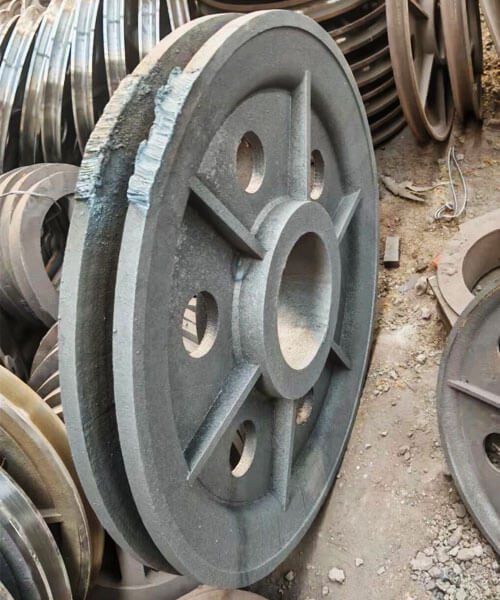
প্যাটার্ন মেকিং
প্যাটার্ন মেকিং কপিকল গহ্বরের মৌলিক জ্যামিতি নির্ধারণ করে এবং তাই ঢালাই নির্ভুলতার উপর সরাসরি প্রভাব ফেলে.
প্যাটার্ন শেভ পুনরুত্পাদন আবশ্যক, হাব, ফ্ল্যাঞ্জ, উপযুক্ত সংকোচন ভাতা এবং মেশিনিং ভাতা অন্তর্ভুক্ত করার সময় এবং অন্যান্য কাস্ট বৈশিষ্ট্য.
জন্য বিনিয়োগ কাস্টিং, একটি মোম প্যাটার্ন সাধারণত একটি নির্ভুল ডাই মধ্যে মোম ইনজেকশন দ্বারা উত্পাদিত হয়.
মোমের প্যাটার্নটি চূড়ান্ত পুলি জ্যামিতিকে ঘনিষ্ঠভাবে উপস্থাপন করে এবং পরবর্তীতে সিরামিক শেল তৈরি করতে ব্যবহৃত হয়.
বালি ঢালাই জন্য, প্যাটার্নটি সাধারণত রজন থেকে তৈরি হয়, কাঠ, ধাতু, বা অন্যান্য উপযুক্ত উপকরণ এবং ছাঁচ গহ্বর গঠন করতে ব্যবহৃত হয়.
পুলি ডিজাইনের উপর নির্ভর করে, নির্ভরযোগ্য ছাঁচ অপসারণের অনুমতি দেওয়ার জন্য প্যাটার্নটি খসড়া এবং বিভাজনের ব্যবস্থাও অন্তর্ভুক্ত করতে পারে.
কাস্টম কপিকল উত্পাদন জন্য, প্যাটার্ন ডিজাইনে ঢালাই সারফেস এবং সারফেসগুলির মধ্যে স্পষ্টভাবে পার্থক্য করা উচিত যাতে চূড়ান্ত যন্ত্রের প্রয়োজন হয়.
অত্যধিক মেশিনিং ভাতা উপাদান অপসারণ এবং খরচ বৃদ্ধি, যদিও অপর্যাপ্ত ভাতা নির্দিষ্ট চূড়ান্ত মাত্রা অর্জন করা কঠিন করে তুলতে পারে.
ছাঁচ এবং কোর মেকিং
ছাঁচটি ঢালাই ইস্পাত কপিলের বাহ্যিক জ্যামিতি সংজ্ঞায়িত করে, যখন কোরগুলি ব্যবহার করা হয় যেখানে প্যাটার্ন দ্বারা সরাসরি অভ্যন্তরীণ গহ্বর বা প্যাসেজ তৈরি করা যায় না.
মধ্যে বালি ing ালাই, ছাঁচের গহ্বর তৈরি করার জন্য নির্বাচিত বালি এবং বাইন্ডার সিস্টেমগুলি প্যাটার্নের চারপাশে কম্প্যাক্ট করা হয়.
কেন্দ্রীয় বোর বা অন্যান্য অভ্যন্তরীণ বৈশিষ্ট্য তৈরি করার জন্য একটি কোর স্থাপন করা যেতে পারে.
মূল শক্তি, মাত্রিক নির্ভুলতা, ব্যাপ্তিযোগ্যতা, এবং অবস্থান বিশেষভাবে গুরুত্বপূর্ণ কারণ ঢালার সময় স্থানচ্যুতি বোরের সারিবদ্ধতা এবং প্রাচীর পুরুত্বকে প্রভাবিত করতে পারে.
মধ্যে বিনিয়োগ কাস্টিং, মোমের প্যাটার্নটি বারবার অবাধ্য সিরামিক স্লারি এবং স্টুকো দিয়ে লেপা হয় যাতে একটি বহুস্তর শেল তৈরি করা হয়.
পর্যাপ্ত শেল শক্তি অর্জন করা হয়েছে, মোম সরানো হয় এবং সিরামিক ছাঁচ বহিস্কার করা হয়.
ছাঁচ বা শেলকে অবশ্যই গলিত ইস্পাত সহ্য করার জন্য পর্যাপ্ত শক্তি সরবরাহ করতে হবে এবং উপযুক্ত ব্যাপ্তিযোগ্যতা এবং তাপীয় আচরণও প্রদান করতে হবে.
নির্ভুল কপিকল ঢালাই জন্য, ছাঁচের ত্রুটিগুলি সরাসরি ঢালাই পৃষ্ঠে স্থানান্তর করা যেতে পারে বা সমালোচনামূলক বৈশিষ্ট্যগুলির মাত্রিক নির্ভুলতা পরিবর্তন করতে পারে.
ইস্পাত গলানো এবং রাসায়নিক নিয়ন্ত্রণ
নির্বাচিত ঢালাই ইস্পাত নির্দিষ্ট খাদ প্রয়োজনীয়তা অনুযায়ী গলিত হয়.
আবেশন গলনা বা বৈদ্যুতিক চাপ গলানোর ব্যবহার করা যেতে পারে খাদ উপর নির্ভর করে, ফাউন্ড্রি সরঞ্জাম, এবং উত্পাদন প্রয়োজনীয়তা.
ঢালা আগে, গলিত ধাতু সাধারণত রাসায়নিক বিশ্লেষণ ব্যবহার করে পরীক্ষা করা হয়, প্রায়ই একটি সঙ্গে স্পেকট্রোমিটার, কার্বন এবং অ্যালোয়িং উপাদানগুলি নির্দিষ্ট রচনা সীমার মধ্যে পড়ে তা যাচাই করতে.
গলিত প্রস্তুতি এছাড়াও জড়িত হতে পারে:
- স্ল্যাগ অপসারণ
- ডিঅক্সিডেশন
- তাপমাত্রা সামঞ্জস্য
- অন্তর্ভুক্তি নিয়ন্ত্রণ
- তাপ সনাক্তকরণ এবং ট্রেসেবিলিটি
কাস্টম পুলির জন্য রাসায়নিক নিয়ন্ত্রণ বিশেষভাবে গুরুত্বপূর্ণ কারণ ইস্পাত গ্রেড পরবর্তী তাপ চিকিত্সার প্রতিক্রিয়া নির্ধারণ করে এবং শক্তিকে প্রভাবিত করে, দৃ ness ়তা, পরিধান আচরণ, এবং নিম্ন-তাপমাত্রা কর্মক্ষমতা.
গেটিং, খাওয়ানো, এবং ঢালা
The gating and feeding system must be designed so that the molten steel fills the pulley cavity smoothly and that solidification shrinkage can be compensated effectively.
Pulley geometry can include relatively heavy sections around the hub and hub-to-sheave transition.
These regions may remain liquid longer than thinner sections and therefore require appropriate feeding.
The gating and riser system is designed to control:
Metal flow → filling sequence → thermal balance → directional solidification → shrinkage compensation
ঢালা সময়, temperature and pouring rate must be controlled within the process window established for the alloy and mold system.
Excessively low metal temperature can lead to incomplete filling or cold shuts, while unsuitable flow conditions can increase turbulence and the possibility of oxide or inclusion-related defects.
Where necessary, casting simulation can be used to evaluate filling and solidification before production and to identify potential hot spots or feeding problems.
দৃ ification ়করণ এবং শীতল
Once the cavity has been filled, the molten steel begins to solidify.
This stage is critical because steel undergoes volumetric contraction during cooling, and poorly controlled solidification can produce shrinkage cavities, internal porosity, গরম ক্র্যাকিং, এবং অবশিষ্ট চাপ.
The objective is generally to promote a controlled and preferably directional solidification pattern, with heavier sections remaining feedable until sufficient metal has solidified elsewhere.
Depending on the casting design, the foundry may use:
- রাইজার
- ঠাণ্ডা
- Controlled mold temperatures
- Optimized section transitions
- Specific pouring conditions
The cooling behavior also influences the resulting microstructure and mechanical properties.
Excessively severe or uneven thermal gradients can contribute to distortion and residual stress, particularly in large or geometrically complex pulleys.
শেকআউট এবং কাস্টিং ক্লিনিং
After the casting has cooled sufficiently, the mold or ceramic shell is removed.
For sand castings, this operation is generally referred to as ঝাঁকুনি, during which the hardened sand mold and cores are broken away from the casting.
For investment castings, the ceramic shell is mechanically removed or otherwise processed to expose the steel casting.
The casting is then separated from its gating and riser system. Typical cleaning operations include:
- Cutting off gates and risers
- গ্রাইন্ডিং
- শট ব্লাস্টিং
- Removal of adhering mold material
- Local dressing of non-functional surface irregularities
The purpose of this stage is to obtain a clean casting suitable for heat treatment and inspection while avoiding unnecessary removal of base metal.
4. ঢালাই ইস্পাত Pulleys যথার্থ যন্ত্র
নির্ভুলতা সিএনসি মেশিনিং converts the cast steel pulley from a near-net-shape casting into a finished functional component.
The rope groove, বোর, কীওয়ে, হাব, and mounting faces are the primary machined features because their dimensional accuracy and positional relationship directly affect rope tracking, rotation, লোড বিতরণ, এবং সমাবেশ.
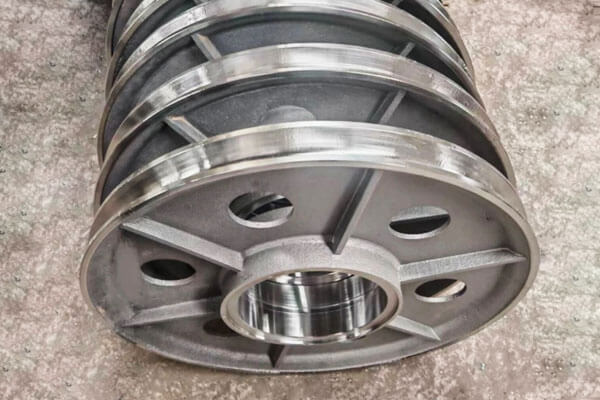
দড়ি খাঁজ মেশিনিং
The rope groove is one of the most critical functional surfaces of the pulley. Its radius, গভীরতা, প্রস্থ, and profile must be matched to the rope type and diameter.
An undersized groove can excessively constrain the rope, while an oversized or improperly shaped groove can provide insufficient support and increase rope deformation and wear.
For wire-rope pulleys, the groove radius is therefore normally designed to provide proper rope seating rather than simply matching the nominal rope radius.
The groove is commonly machined on a CNC turning machine using a form or profiling tool.
After rough and finish turning, grinding or polishing may be applied where a finer and more consistent surface is required.
বোর মেশিনিং
The bore provides the interface with the shaft, ভারবহন, or bushing, so its diameter, গোলতা, and concentricity must be carefully controlled.
The bore is typically produced by boring, রিমিং, or precision grinding.
Depending on the required fit and application, dimensional tolerances may be specified in the hundredths of a millimeter, for example around ±0.02 to ±0.05 mm for some precision applications.
The actual tolerance should be determined by the shaft/bearing fit, pulley size, and applicable engineering specification.
Most importantly, the bore must maintain the required positional relationship with the rope groove and outer sheave surface.
কীওয়ে এবং স্প্লাইন মেশিনিং
Where the pulley is mounted directly to a keyed shaft, the keyway width, গভীরতা, and angular position must be accurately machined.
Its alignment with the pulley groove is important for correct assembly and load transmission.
For applications requiring greater torque capacity or more precise rotational engagement, splined connections may be used.
উভয় ক্ষেত্রেই, machining accuracy is required to prevent excessive backlash, স্থানীয় চাপ ঘনত্ব, or assembly interference.
হাব, মুখ, এবং ফ্ল্যাঞ্জ মেশিনিং
The hub and end faces may require turning, মিলিং, or grinding to obtain the required dimensions and surface condition.
Mounting faces must be sufficiently flat and properly aligned to ensure consistent assembly.
The flange geometry also requires control because excessive variation can affect rope retention and the relationship between the groove and the surrounding structure.
একাগ্রতা এবং রানআউট
The concentricity of the bore relative to the rope groove is particularly important for a rotating pulley.
Excessive eccentricity or radial runout can produce non-uniform rope movement, কম্পন, uneven loading, and additional bearing stress.
Runout is normally verified using a dial indicator, precision gauge, or coordinate measurement equipment.
সমালোচনামূলক উপাদান জন্য, the applicable টিআইআর (Total Indicator Reading) requirement should be defined on the engineering drawing rather than using a generic value.
ডায়নামিক ব্যালেন্সিং
High-speed rotating pulleys may require dynamic balancing after machining.
An imbalance generates centrifugal forces that increase with rotational speed and can contribute to vibration and bearing loading.
Balancing is performed on a dedicated balancing machine. Depending on the correction method, small amounts of material may be removed or balancing weights may be added to achieve the required balance condition.
For low-speed, heavily loaded sheaves, balancing requirements may be less stringent than for high-speed rotating pulleys.
5. সারফেস ফিনিশ এবং ঢালাই ইস্পাত Pulleys তাপ চিকিত্সা
Heat treatment determines the mechanical condition of the cast steel, while surface finishing establishes the required condition of the functional and exposed surfaces.
Both must be considered together with the intended load, পরা, rope type, অপারেটিং পরিবেশ, এবং সেবা জীবন.
তাপ চিকিত্সা
The heat-treatment cycle is selected according to the cast steel grade and required mechanical properties. Common treatments include:
| তাপ চিকিত্সা | প্রাথমিক উদ্দেশ্য |
| স্বাভাবিককরণ | Refine the casting microstructure and establish a more uniform mechanical condition |
| অ্যানিলিং | কঠোরতা হ্রাস করুন, machinability উন্নত, এবং অভ্যন্তরীণ চাপ উপশম |
| শোধন এবং মেজাজ | Develop higher strength and toughness with controlled hardness |
| স্ট্রেস রিলিভিং | Reduce residual stresses from casting, ওয়েল্ডিং, বা মেশিনিং |
| সারফেস হার্ডেনিং | Increase wear resistance of selected surfaces such as the rope groove |
For load-bearing pulleys, quenching and tempering may be selected for suitable carbon and low-alloy cast steels when higher mechanical performance is required.
The tempering temperature must be established according to the steel grade and the required balance between hardness and toughness.
খাঁজ পৃষ্ঠ শক্ত করা
Where rope contact produces significant wear, localized surface hardening may be considered.
Depending on the material and design, methods such as induction hardening, flame hardening, or nitriding may be applicable.
The treatment should be applied selectively because excessive surface hardness or an unsuitable hardened depth can reduce toughness or create undesirable residual stresses.
The groove material condition therefore needs to be considered together with the rope material and actual contact conditions.
খাঁজ পৃষ্ঠ সমাপ্তি
Surface finish directly affects the interaction between the pulley groove and the rope.
A rough surface can increase local abrasion and accelerate rope wear, while an appropriately finished groove provides smoother contact.
A typical target for machined pulley grooves may be around Ra 1.6–3.2 μm, although the required value should be specified according to the rope type, অপারেটিং গতি, লোড হচ্ছে, তৈলাক্তকরণ, and design standard.
Surface finish should not be considered independently of groove geometry.
A smooth but incorrectly profiled groove can still cause excessive rope wear, while the correct profile with controlled surface texture provides a more stable contact condition.
আবরণ এবং জারা সুরক্ষা
Cast steel pulleys used outdoors or in humid and corrosive environments may require protective coatings. সাধারণ বিকল্প অন্তর্ভুক্ত:
- ইপোক্সি আবরণ
- Polyurethane coatings
- Zinc-rich primers
- Other industrial corrosion-protection systems
For marine or offshore service, more aggressive corrosion-protection systems may be specified according to the environmental exposure and coating specification.
The rope-contact groove is often treated differently from non-contact surfaces. Coating thickness must not change the groove dimensions or interfere with rope seating.
In applications where dimensional accuracy is critical, the groove may therefore remain uncoated or receive a carefully controlled treatment.
দড়ি সামঞ্জস্য
Surface finish and groove geometry must ultimately be considered together with the rope specification. Wire rope and synthetic rope do not necessarily require identical groove designs.
For wire rope, the groove should provide adequate support while avoiding excessive pinching or deformation.
Synthetic ropes may require different groove geometry and surface characteristics because of their lower bending stiffness and different contact behavior.
সুতরাং, the pulley manufacturer should confirm the rope diameter, নির্মাণ, উপাদান, operating load, and service conditions before finalizing groove machining and surface treatment.
This ensures that the finished cast steel pulley is designed as an integrated part of the rope-handling system rather than as an isolated rotating component.
6. ঢালাই ইস্পাত Pulleys জন্য মূল মানের প্রয়োজনীয়তা
Quality requirements for cast steel pulleys are driven by safety, নির্ভরযোগ্যতা, এবং সেবা জীবন. The following are essential.
Material Certification. Chemical composition and mechanical properties must be verified and documented. Certificates of analysis and mechanical test reports should accompany each production lot.
অভ্যন্তরীণ সুস্থতা. Castings must be free from harmful defects such as shrinkage porosity, গ্যাস ছিদ্র, অন্তর্ভুক্তি, এবং ফাটল. Non-destructive testing is used to verify internal quality.
মাত্রিক নির্ভুলতা. খাঁজ প্রোফাইল, bore size, একাগ্রতা, রানআউট, and keyway dimensions must meet drawing requirements. Dimensional inspection reports should be provided.
সারফেস কোয়ালিটি. The groove and bore surfaces must be free from defects that could damage rope or cause misalignment. Surface roughness should be measured and documented.
Heat Treatment Verification. Hardness testing and, যেখানে প্রয়োজন, microstructure examination confirm that heat treatment has been performed correctly.
Load Testing. সমালোচনামূলক অ্যাপ্লিকেশনগুলির জন্য, proof load testing or destructive testing may be required to verify strength and safety.
7. কাস্টম কাস্ট ইস্পাত Pulleys অ্যাপ্লিকেশন
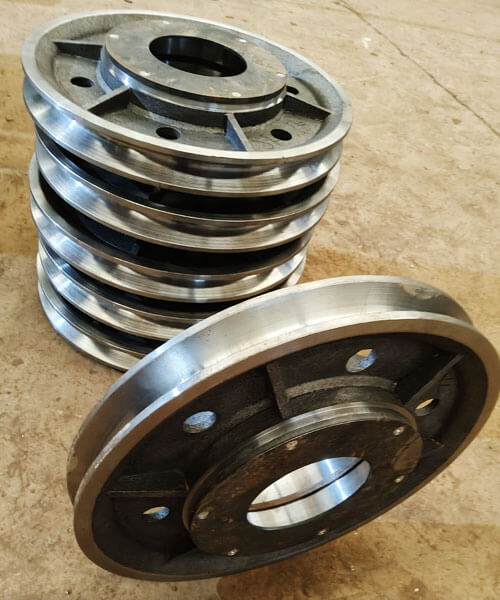
ক্রেন এবং উত্তোলন সরঞ্জাম
Cranes are one of the most important applications for cast steel pulleys.
Sheaves in hoisting systems repeatedly transfer loads from the wire rope to the shaft or bearing assembly and may experience shock loading during lifting, lowering, ত্বরণ, and stopping.
Custom cast steel pulleys are used in:
- Overhead cranes
- Gantry cranes
- Mobile cranes
- Tower cranes
- Port cranes
- Crane blocks and hook assemblies
- Winch and reeving systems
For crane applications, the groove profile, sheave diameter-to-rope diameter relationship, বোর, and structural integrity must be matched to the lifting system.
খনির সরঞ্জাম
Mining machinery imposes particularly severe conditions on mechanical components because of high loads, abrasive dust, প্রভাব, continuous operation, and difficult maintenance environments.
Cast steel pulleys and sheaves can be used in hoisting equipment, rope-handling systems, পরিবাহক, and other heavy-duty machinery.
In applications involving severe impact and abrasion, material selection and surface hardness may become particularly important.
নির্মাণ এবং উপাদান-হ্যান্ডলিং সরঞ্জাম
Construction machinery often incorporates pulley systems for lifting, পজিশনিং, tensioning, or redirecting wire rope.
সাধারণ অ্যাপ্লিকেশন অন্তর্ভুক্ত:
- Construction hoists
- Material-handling systems
- Winches
- Lifting attachments
- Cable-guiding systems
- Specialized handling machinery
Custom casting is particularly useful when a standard pulley cannot meet the required dimensional or mounting configuration.
সামুদ্রিক এবং অফশোর সরঞ্জাম
Marine and offshore environments combine mechanical loading with humidity, নোনা জলের এক্সপোজার, জারা, and limited access for maintenance.
Custom cast steel pulleys can be incorporated into:
- Marine cranes
- Offshore lifting equipment
- Shipboard winches
- Mooring systems
- Deck machinery
- Cable and rope-handling equipment
এই অ্যাপ্লিকেশনের জন্য, the material and corrosion-protection system should be selected according to the actual marine environment.
Stainless cast steel may be considered when corrosion resistance is a primary requirement.
তেল ও গ্যাসের সরঞ্জাম
Oil and gas equipment may expose pulleys and sheaves to high loads, কম্পন, corrosive atmospheres, এবং ক্রমাগত অপারেটিং চক্র.
Custom cast steel components can be used in lifting, hoisting, and specialized material-handling equipment.
Where the application is safety-critical, the material specification, NDT requirements, তাপ চিকিত্সা, and traceability should be defined in advance.
শিল্প যন্ত্রপাতি
Custom pulleys are also used in industrial equipment for:
- তারের রাউটিং
- Tensioning systems
- Hoists
- Conveyor systems
- Specialized transmission equipment
- Automated handling machinery
The major advantage of a custom design is that the pulley can be developed around the complete equipment interface rather than forcing the equipment to accommodate a standard pulley.
8. স্পষ্টতা ঢালাই ইস্পাত পুলির মূল সুবিধা
Precision cast steel pulleys offer several advantages over alternatives.
- উচ্চ শক্তি এবং বলিষ্ঠতা: Cast steel can withstand heavy loads, প্রভাব, and fatigue better than cast iron or aluminum.
- নকশা নমনীয়তা: Casting allows complex shapes, সমন্বিত বৈশিষ্ট্য, and optimized material distribution.
- নিয়ার-নেট আকৃতি: Casting reduces machining time and material waste compared with fabrication from plate or bar.
- ওয়েলডিবিলিটি: Steel castings can be welded and repaired, unlike cast iron.
- স্কেলাবিলিটি: Casting is economical for both small and large production runs, and for very large pulleys that would be difficult to fabricate.
- সামঞ্জস্যপূর্ণ গুণমান: A controlled foundry process produces repeatable properties and dimensions.
- কাস্টমাইজেশন: অ্যালো, তাপ চিকিত্সা, and machining can be tailored to the application.
- খরচ-কার্যকারিতা: অনেক অ্যাপ্লিকেশনের জন্য, cast steel pulleys offer the best combination of performance and total cost.
9. কাস্ট স্টিল পুলি বনাম কাস্ট আয়রন পুলি
Cast steel and cast iron pulleys can both be produced by casting, but their mechanical behavior, প্রভাব প্রতিরোধের, load capacity, and typical service conditions are significantly different.
| মূল বৈশিষ্ট্য | কাস্ট স্টিল পুলি | Cast Iron Pulley |
| শক্তি | উচ্চ প্রসার্য এবং ফলন শক্তি; suitable for heavily loaded components | সাধারণত কম, especially for gray cast iron |
| দৃঢ়তা | High toughness and better resistance to shock loading | Lower toughness; gray iron is relatively brittle |
| প্রভাব প্রতিরোধ | Excellent for repeated or sudden loading | Limited under severe impact conditions |
| নমনীয়তা | Significant plastic deformation capacity before fracture | Low for gray cast iron; highly grade-dependent |
| ক্লান্তি কর্মক্ষমতা | Generally better for cyclic and dynamic loading | More limited, particularly where stress concentrations exist |
| প্রতিরোধ পরুন | Can be improved through alloy selection and heat treatment | Good in some cast iron grades, especially under stable sliding or abrasive conditions |
মেশিনিবিলিটি |
ভাল, but harder alloys may require controlled CNC machining | সাধারণত চমৎকার, particularly for gray cast iron |
| Casting Capability | জটিল জন্য উপযুক্ত, integrated load-bearing geometries | Excellent castability and suitable for complex shapes |
| তাপ চিকিত্সা | Can be normalized, annealed, quenched এবং tempered, or surface hardened depending on grade | Heat-treatment options depend strongly on iron grade and are generally more limited for gray iron |
| Heavy-Duty Service | Well suited to cranes, খনির, hoists, and severe-duty machinery | Better suited to lighter or more stable loading conditions |
| ফ্র্যাকচার আচরণ | More tolerant of overload and impact before fracture | More susceptible to brittle fracture under excessive shock |
| উপাদান ব্যয় | সাধারণত উচ্চতর | সাধারণত কম |
| Best Core Advantage | শক্তি, দৃ ness ়তা, and reliability under demanding loads | খরচ দক্ষতা, castability, এবং machinability |
10. কেন আপনার কাস্টম কাস্ট স্টিল পুলি প্রস্তুতকারক হিসাবে DEZE বেছে নিন?
এই প্রযুক্তি প্রদান করে custom cast steel pulley manufacturing from precision casting through CNC machining and final inspection, allowing the complete component to be developed and produced within an integrated manufacturing workflow.
Our manufacturing approach begins with engineering review and material selection, followed by pattern development, ছাঁচ তৈরি, controlled steel melting and pouring, দৃঢ়ীকরণ, তাপ চিকিত্সা, নির্ভুলতা যন্ত্র, এবং গুণমান পরিদর্শন.
Different cast steel material systems can be selected according to working load, প্রভাব অবস্থা, তাপমাত্রা, পরা, and corrosion exposure.
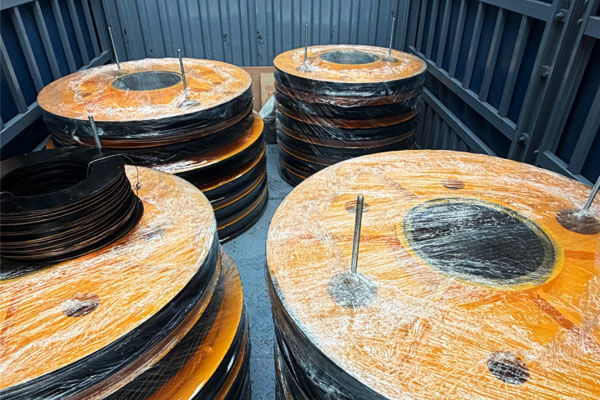
যেখানে প্রয়োজন, the manufacturing process can incorporate hardness verification and appropriate NDT, including PT, এমটি, Ut, or RT, according to the component specification.
The objective is not simply to supply a raw casting. It is to provide a finished custom pulley with controlled material properties, accurate functional geometry, ধারাবাহিক যন্ত্র, and traceable quality documentation.
11. উপসংহার
Custom cast steel pulleys are engineered components for applications where load capacity, প্রভাব প্রতিরোধের, কর্মক্ষমতা পরিধান, মাত্রিক নির্ভুলতা, and long-term reliability are important.
Their performance depends on the combined quality of the material, কাস্টিং, তাপ চিকিত্সা, মেশিনিং, এবং পরিদর্শন.
Precision casting provides an efficient route for producing complex pulley geometry with an integrated sheave and hub structure while reducing unnecessary machining.
Subsequent CNC machining establishes the critical dimensions of the rope groove, বোর, কীওয়ে, হাব, and mounting surfaces.
Heat treatment can then provide the required balance of strength, কঠোরতা, এবং দৃ ness ়তা, while inspection confirms casting integrity and dimensional accuracy.
For crane, খনির, নির্মাণ, সামুদ্রিক, অফশোর, তেল এবং গ্যাস, and industrial machinery applications, the correct pulley should be selected according to the rope specification, লোড অবস্থা, অপারেটিং পরিবেশ, and applicable technical requirements.
A properly engineered cast steel pulley is not simply a wheel with a groove; it is a load-bearing component whose geometry and material condition directly influence the reliability of the complete rope-handling system.
FAQS
ঢালাই ইস্পাত এবং ঢালাই লোহা পুলি মধ্যে পার্থক্য কি??
Cast steel has higher strength and toughness and is weldable.
Cast iron is cheaper and easier to machine but is more brittle and not easily welded.
একটি কপিকল এর খাঁজ প্রোফাইল কি?
The groove profile is the shape of the channel that seats the rope or cable.
It must match the rope diameter and construction to ensure proper seating, পরিধান কমিয়ে দিন, and prevent derailment.
ঢালাই ইস্পাত পুলির জন্য কেন তাপ চিকিত্সা গুরুত্বপূর্ণ?
Heat treatment controls strength, কঠোরতা, দৃ ness ়তা, and residual stresses. It ensures the pulley can withstand its service loads without premature failure.
কিভাবে পুলি মান যাচাই করা হয়?
Quality is verified through material certification, মাত্রিক পরিদর্শন, অ-ধ্বংসাত্মক পরীক্ষা (রঞ্জক অনুপ্রবেশ, magnetic particle, অতিস্বনক, রেডিওগ্রাফিক), কঠোরতা পরীক্ষা, and load testing where required.
মেরামত করা ইস্পাত pulleys নিক্ষেপ করতে পারেন?
হ্যাঁ. Steel castings can be welded and repaired, unlike cast iron. Repairs should be performed by qualified welders using approved procedures.
একটি কপিকল খাঁজ জন্য কি পৃষ্ঠ ফিনিস প্রয়োজন?
The required finish depends on the rope type, অপারেটিং শর্তাবলী, and design specification.
A machined groove around Ra 1.6–3.2 μm may be appropriate for some applications, but there is no universal roughness value for every pulley.
পুলির জন্য কেন ঘনত্ব গুরুত্বপূর্ণ?
The bore and rope groove must maintain an appropriate positional relationship. Excessive eccentricity or runout can cause uneven rotation, unstable rope movement, কম্পন, and nonuniform loading.