
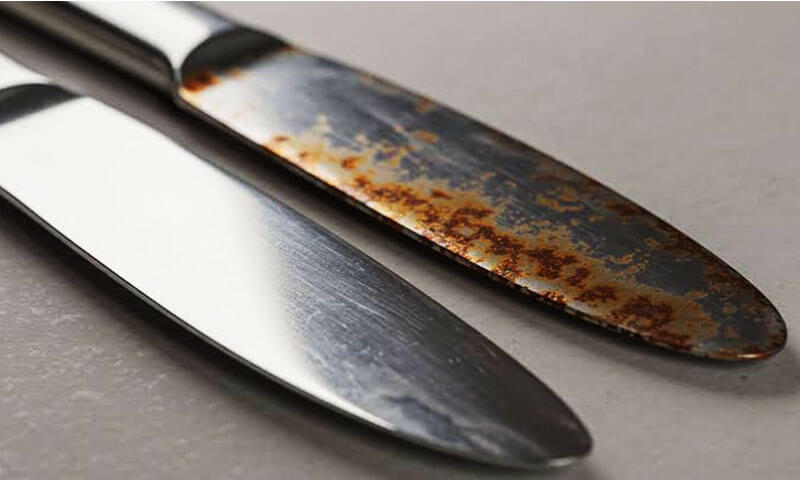
Stainless steel tableware has become an indispensable part of modern daily life.
From kitchen knives and forks to cookware, serving dishes, and thermos flasks, stainless steel offers a unique combination of durability, hygiene, and aesthetic appeal.
Its widespread adoption is largely due to its reputation as a “stainless” material—one that resists rust and corrosion.
However, despite its name, stainless steel is not entirely immune to corrosion. Under certain conditions, it can tarnish, pit, or even rust, compromising both appearance and food safety.
The term “stainless” refers to the alloy’s ability to resist staining and corrosion in most everyday environments, thanks to a thin, invisible, and self-repairing chromium oxide layer.
Yet, this protective layer can be damaged or compromised by aggressive chemicals, mechanical abrasion, and improper care.
Understanding the science behind corrosion and adopting proper protection methods is essential to ensure the longevity and safety of stainless steel tableware.
1. Why Does Stainless Steel Resist Corrosion?
The Role of Chromium in Stainless Steel
The excellent corrosion resistance of stainless steel mainly comes from the presence of chromium (Cr).
Ordinary carbon steel is primarily composed of iron and carbon. When exposed to oxygen and moisture, iron reacts easily with the environment to form iron oxides, commonly known as rust.
This corrosion process continuously consumes the metal because the rust layer is loose, porous, and unable to protect the underlying material.
Stainless steel behaves differently because it contains sufficient chromium, typically at least about 10.5% chromium by weight according to the definition of stainless steel.
When chromium reacts with oxygen in the environment, it forms an extremely thin layer of chromium oxide (Cr₂O₃) on the surface.
This passive film is only a few nanometers thick, but it provides powerful protection.
The chromium oxide film has several important characteristics:
- Extremely dense structure
- Strong adhesion to the metal surface
- Chemical stability
- Ability to repair itself after minor damage
This phenomenon is called passivation.
The passive film acts like an invisible protective barrier, preventing oxygen, water, chloride ions, and other corrosive substances from continuously attacking the internal metal structure.
The Self-Healing Mechanism
One of the most remarkable features of stainless steel is its self-healing property.
If the passive layer is scratched, abraded, or locally damaged, the exposed chromium reacts with oxygen in the air or surrounding environment to reform the protective oxide layer.
This regeneration occurs almost instantly in normal atmospheric conditions, provided that:
- Oxygen is available.
- The environment is not excessively corrosive.
- The passive layer is not continuously damaged faster than it can reform.
Key insight: The self-healing mechanism is why stainless steel tableware can remain corrosion-free even with daily use and washing.
2. Stainless Steel Grades Commonly Used for Tableware
Not all stainless steel grades are equally suitable for tableware applications.
Although stainless steel as a material family provides excellent corrosion resistance, different grades have significant differences in alloy composition, corrosion performance, mechanical properties, cost, and suitability for food-contact environments.
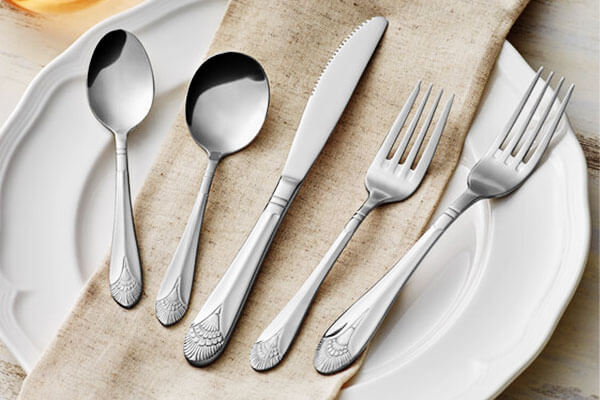
Most stainless steel tableware products are manufactured from austenitic stainless steels in the 300 series, especially 304 and 316 stainless steel, because these grades provide an excellent balance of corrosion resistance, hygiene, formability, and durability.
For more economical products, ferritic 430 stainless steel and some lower-nickel grades such as 201 stainless steel are also used.
The selection of stainless steel grade directly affects the product’s service life, resistance to salt and acidic foods, surface appearance, and long-term safety.
| Stainless Steel Grade | Corrosion Resistance | Key Characteristics | Common Tableware Applications |
| 304 Stainless Steel | Excellent resistance to water, food acids, and daily household environments | The most widely used food-grade stainless steel. Provides an excellent balance of corrosion resistance, toughness, formability, weldability, and cost. Non-magnetic in annealed condition. | Cutlery, spoons, forks, knives, bowls, plates, cups, cookware, lunch boxes, thermos bottles |
| 304L Stainless Steel | Similar to 304 with improved resistance to intergranular corrosion after welding | Low-carbon version of 304. Offers better weldability and improved corrosion stability in welded structures. | Welded food containers, large stainless steel utensils, storage containers, customized tableware |
| 316 Stainless Steel | Superior resistance, especially against chloride-induced pitting corrosion | The addition of molybdenum significantly improves resistance to salt, seawater, and chemical environments. Provides longer service life in demanding conditions. | Premium cookware, high-end cutlery, professional kitchen equipment, specialty food-contact products |
316L Stainless Steel |
Excellent corrosion resistance with improved weld corrosion performance | Low-carbon version of 316. Maintains excellent chloride resistance while reducing the risk of corrosion around welded areas. | High-end tableware, welded food containers, medical-grade utensils, pharmaceutical and food-processing equipment |
| 430 Stainless Steel | Moderate corrosion resistance | Ferritic stainless steel with lower cost and magnetic properties. Provides acceptable corrosion resistance in mild environments but is less resistant than 304 and 316. | Budget cutlery, serving spoons, trays, decorative tableware, kitchen accessories |
| 201 Stainless Steel | Moderate to limited corrosion resistance compared with 304 | Low-nickel stainless steel developed to reduce material cost. Manganese replaces part of the nickel content, resulting in lower corrosion resistance and durability. | Economical tableware, low-cost utensils, products for less demanding applications |
3. Why Stainless Steel Tableware Corrodes: Causes and Mechanisms
Although stainless steel is widely recognized for its excellent corrosion resistance, the term “stainless” does not mean that the material is completely immune to corrosion.
Stainless steel can resist rusting because of the formation of a passive chromium oxide film on its surface, but this protective layer has certain limitations.
Under unfavorable conditions, the passive film can become damaged, weakened, or locally destroyed, allowing corrosion reactions to occur.
For stainless steel tableware, corrosion is usually not caused by a single factor. Instead, it is the result of interactions between material quality, chemical exposure, surface condition, and usage environment.
Understanding these mechanisms is essential for selecting suitable stainless steel grades and maintaining long-term performance.
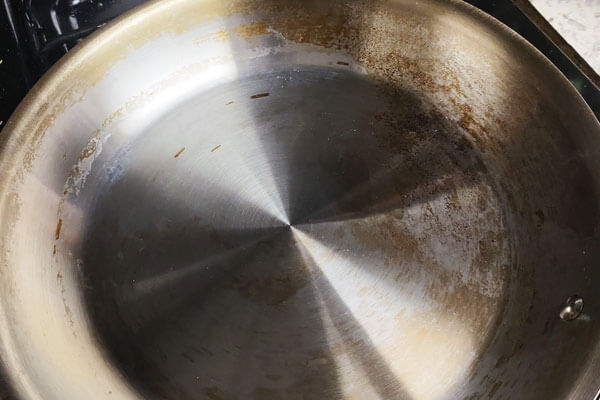
Material Quality and Alloy Composition: The Foundation of Corrosion Resistance
The corrosion resistance of stainless steel tableware begins with the quality of the raw material itself.
A high-quality stainless steel grade relies on a balanced chemical composition and a uniform metallurgical structure to maintain a stable passive film.
Chromium is the key element responsible for passivation. When stainless steel contains sufficient chromium, a dense chromium oxide (Cr₂O₃) layer forms naturally on the surface and protects the underlying metal.
However, if the chromium content is insufficient, unevenly distributed, or affected by impurities, the protective film may become unstable and more vulnerable to corrosion.
Low-quality stainless steel products often contain:
- Insufficient chromium content
- Excessive impurities
- Non-metallic inclusions
- Poor metallurgical uniformity
These defects can create local weak points on the surface. At these locations, tiny electrochemical cells may form between impurity areas and the surrounding stainless steel matrix.
The less stable regions become anodic zones where metal dissolution occurs first, gradually developing into visible rust spots.
One common issue in the tableware market is the use of lower-cost stainless steel grades that are marketed as higher-performance materials.
For example, some economical products use 201 stainless steel, a manganese-based alloy with reduced nickel content, but are incorrectly promoted as 304 stainless steel.
Compared with genuine 304 stainless steel, lower-nickel grades generally have:
- Reduced passive film stability
- Lower resistance to chloride corrosion
- Higher sensitivity to acidic environments
As a result, products made from inferior materials may develop discoloration or rust spots after only a relatively short period of household use.
By contrast, authentic 304 or 316 stainless steel with proper composition and surface finishing provides a much more stable passive layer and significantly better corrosion resistance.
Chloride-Induced Pitting Corrosion: The Most Common Threat to Stainless Steel
Among all environmental factors affecting stainless steel tableware, chloride ions (Cl⁻) are considered one of the most aggressive corrosion triggers.
Chlorides are commonly found in everyday substances such as:
- Table salt (sodium chloride)
- Soy sauce
- Pickled foods
- Salted seafood
- Sea air and coastal environments
- Some cleaning chemicals
Unlike many other contaminants, chloride ions can penetrate weak areas of the passive film and destroy the protective chromium oxide layer.
Once the underlying metal is exposed, localized corrosion begins.
This type of corrosion is known as pitting corrosion.
The dangerous characteristic of pitting corrosion is that it is highly localized. The surface may appear almost normal, while small pits gradually develop beneath the surface.
The corrosion process typically follows several stages:
- Chloride ions accumulate on the stainless steel surface.
- The passive film breaks down at vulnerable locations.
- The exposed metal begins to dissolve.
- The corrosion pit becomes chemically more aggressive.
- Corrosion accelerates and penetrates deeper.
Inside a corrosion pit, metal dissolution creates an acidic environment that attracts additional chloride ions.
This creates an autocatalytic process, meaning the corrosion reaction promotes conditions that accelerate further corrosion.
This explains why stainless steel products used in coastal regions often experience faster corrosion.
Salt particles carried by humid air continuously deposit on the surface, repeatedly challenging the passive film.
For household tableware, one of the most common causes of chloride-related corrosion is leaving salty food in stainless steel containers for extended periods without cleaning.
Occasional contact is usually harmless, but long-term exposure increases corrosion risk significantly.
Acidic Food Exposure and Passive Film Degradation
Stainless steel tableware is frequently exposed to acidic foods and beverages during daily use.
Although most food acids are relatively mild, prolonged contact can gradually affect the passive film.
Common acidic substances include:
- Vinegar containing acetic acid
- Citrus fruits containing citric acid
- Tomatoes containing organic acids
- Dairy products containing lactic acid
These acids can reduce the stability of the chromium oxide layer, especially when exposure is prolonged or combined with elevated temperatures.
For example, storing vinegar-based sauces in stainless steel containers for several days creates a more aggressive environment than briefly serving the same food during a meal.
Similarly, heating acidic foods in stainless steel cookware increases chemical activity and accelerates surface reactions.
The typical effects of long-term acid exposure include:
- Loss of surface brightness
- Reduced gloss
- Surface discoloration
- Increased susceptibility to corrosion
In severe cases, continuous acid exposure may increase the release of metal ions from the stainless steel surface.
However, under normal household conditions, high-quality 304 and 316 stainless steel remain highly resistant to common food acids.
The main concern is not short-term contact, but rather repeated and prolonged exposure without proper cleaning.
Mechanical Damage: How Scratches Increase Corrosion Risk
The passive film of stainless steel is extremely thin, and although it can repair itself naturally, repeated mechanical damage can reduce its protective effectiveness.
One of the most common causes of premature corrosion in stainless steel tableware is improper cleaning.
Examples include:
- Steel wool
- Hard abrasive pads
- Metal scrapers
- Rough cleaning tools
These methods can remove stubborn food residues, but they also create microscopic scratches on the stainless steel surface.
A scratched surface is more vulnerable because:
- The protective film is locally damaged.
- Rough areas trap food particles and salt residues.
- Crevices create oxygen-deficient environments.
- Local corrosion cells can develop.
Although the passive film can regenerate after minor scratches, deep mechanical damage creates areas where corrosion can repeatedly initiate.
Over time, frequent abrasive cleaning may cause:
- Loss of surface brightness
- Increased surface roughness
- More visible staining
- Local rust formation
Therefore, stainless steel tableware should be cleaned using softer materials and mild detergents to preserve the integrity of the passive layer.
Surface Contamination and Foreign Iron Particles
Another frequently misunderstood cause of stainless steel rusting is external contamination.
Sometimes the stainless steel itself is not corroding. Instead, small iron particles from external sources attach to the surface and begin to rust.
Common sources include:
- Carbon steel cleaning tools
- Steel wool fragments
- Metal processing dust
- Construction debris
These iron particles oxidize quickly in the presence of moisture and create rust-colored stains on stainless steel.
This type of contamination can usually be removed through proper cleaning because the underlying stainless steel may remain intact.
However, if contamination is ignored for a long period, the corrosion products can damage the passive film beneath them and eventually lead to actual stainless steel corrosion.
4. How to Protect Stainless Steel Tableware from Corrosion
Stainless steel tableware is designed to provide long-term durability and corrosion resistance, but its performance depends greatly on proper use and maintenance.
Although stainless steel can naturally repair its protective chromium oxide passive film, continuous exposure to aggressive environments, improper cleaning methods, or surface damage can gradually reduce its corrosion resistance.
Effective protection does not require complicated procedures.
The key principles are simple: maintain the integrity of the passive layer, prevent accumulation of corrosive substances, avoid mechanical damage, and keep the surface clean and dry.
4.1 Proper Cleaning Techniques: Preserving the Passive Film
Cleaning is the most frequent interaction between stainless steel tableware and the external environment.
The goal of cleaning is not only to remove food residues but also to protect the passive chromium oxide layer.
The recommended cleaning method is to use warm water, mild detergent, and non-abrasive cleaning tools.
These methods effectively remove grease, food particles, and stains without damaging the stainless steel surface.
| Cleaning Method | Suitable Applications | Influence on Corrosion Resistance |
| Warm water with mild detergent | Daily cleaning of all stainless steel tableware | Removes contaminants while maintaining the stability of the passive layer |
| Soft sponge or microfiber cloth | General cleaning of bowls, cutlery, cookware, and containers | Prevents scratches that can become corrosion initiation points |
| Soft nylon brush | Cleaning grooves, edges, and hard-to-reach areas | Removes trapped residues and reduces the risk of crevice corrosion |
Baking soda paste |
Removing stubborn stains or surface discoloration | Provides gentle cleaning action with limited surface abrasion |
| Diluted white vinegar solution | Removing mineral deposits and water spots | Effective for short-term use; requires thorough rinsing afterward |
| Commercial stainless steel cleaner | Restoring surface brightness and removing stains | Designed to clean without significantly damaging the surface when used correctly |
For everyday maintenance, mild cleaning is usually sufficient.
Stainless steel does not require aggressive polishing or strong chemical treatment because excessive cleaning force may damage the very protective layer that provides corrosion resistance.
Cleaning Methods That Should Be Avoided
Some cleaning practices may appear effective but can accelerate corrosion over time.
Steel Wool and Abrasive Scouring Pads
Steel wool and rough abrasive pads can create microscopic scratches on the stainless steel surface.
These scratches damage the passive film and create locations where chloride ions, food residues, and moisture can accumulate.
Chlorine-Based Bleach
Chloride-containing cleaners are particularly harmful because chloride ions can attack the passive film and trigger pitting corrosion.
Bleach should not be used for routine stainless steel tableware cleaning.
Strong Acidic or Alkaline Cleaners
Highly acidic cleaners, concentrated vinegar solutions, and aggressive chemical cleaners may weaken the passive film, especially during prolonged contact.
Ammonia-Based Cleaners
Although ammonia is effective for some household cleaning tasks, inappropriate use may affect surface appearance and interact negatively with other chemical residues.
4.2 Proper Drying: Preventing Water Spots and Localized Corrosion
After cleaning, drying is just as important as washing. Water itself does not normally corrode stainless steel, but residual moisture can leave behind dissolved minerals, salts, and contaminants.
When water evaporates slowly, minerals such as calcium and magnesium may remain on the surface, forming water spots.
These deposits can trap moisture and create localized environments favorable for corrosion.
The recommended practice is to dry stainless steel tableware immediately after washing using a clean, soft cloth.
| Drying Method | Potential Effect | Recommendation |
| Natural air drying | May leave water spots and mineral deposits | Acceptable for short periods, but not ideal for long-term storage |
| Soft towel drying | Removes moisture and prevents mineral buildup | Recommended method for daily use |
| High-temperature drying | May cause heat discoloration or surface changes | Avoid excessive temperatures |
For premium stainless steel tableware, especially polished surfaces, immediate drying helps maintain both corrosion resistance and appearance.
4.3 Proper Storage: Reducing Environmental Corrosion Risks
Storage conditions have a significant influence on the long-term performance of stainless steel tableware.
Even high-quality stainless steel may experience corrosion if stored in humid, contaminated, or chemically aggressive environments.
The ideal storage environment should be:
- Dry
- Clean
- Well ventilated
- Free from corrosive chemicals
When storing stainless steel products, several practices should be followed.
Avoid Long-Term Contact with Salt and Acidic Foods
Salt and acidic substances are among the most common causes of stainless steel corrosion.
Foods such as:
- Pickled vegetables
- Salted seafood
- Vinegar-based sauces
- Citrus-based foods
should not be stored in stainless steel containers for extended periods.
For long-term storage, glass or ceramic containers are usually better choices because they are chemically inert.
Prevent Contact with Different Metals
When stainless steel contacts other metals in the presence of moisture, electrochemical reactions may occur. This phenomenon is known as galvanic corrosion.
For example, storing stainless steel cutlery together with carbon steel tools or aluminum products in a wet environment may accelerate corrosion.
Using separators, fabric dividers, or dry storage compartments helps reduce this risk.
Prevent Mechanical Damage During Storage
Repeated friction between stacked utensils can create scratches. These damaged areas become more vulnerable to corrosion.
Using:
- Soft cloth separators
- Paper towels
- Dedicated cutlery organizers
can protect polished surfaces and maintain appearance.
4.4 Passivation: Restoring Stainless Steel Corrosion Resistance
Passivation is a chemical treatment used to enhance the corrosion resistance of stainless steel by removing surface contaminants and promoting the formation of a more uniform chromium oxide passive layer.
In industrial manufacturing, passivation is commonly performed after machining, welding, polishing, or fabrication processes. It removes free iron particles and improves surface stability.
For stainless steel tableware, passivation is usually unnecessary under normal household conditions.
However, it may be useful when products experience severe staining, contamination, or surface corrosion.
Common passivation methods include:
| Passivation Method | Application | Working Principle |
| Citric acid passivation | Mild surface contamination or discoloration | Removes free iron contamination and promotes passive film regeneration |
| Nitric acid passivation | Industrial stainless steel processing | Provides strong chemical cleaning and passive layer restoration |
| Commercial stainless steel passivation products | Severe tarnishing or professional restoration | Removes contaminants and improves corrosion resistance |
Professional passivation typically requires controlled chemical concentration, temperature, and treatment time.
For household users, proper cleaning and drying are generally sufficient to maintain stainless steel performance.
4.5 Common Mistakes That Accelerate Stainless Steel Corrosion
Many stainless steel corrosion problems are caused not by material defects but by incorrect usage habits.
| Common Mistake | Possible Consequence | Recommended Practice |
| Leaving salty food in stainless steel containers for a long time | Chloride-induced pitting corrosion | Wash and dry promptly after use |
| Soaking tableware in vinegar or acidic solutions for extended periods | Passive film degradation | Use acidic cleaners only briefly and rinse thoroughly |
| Using steel wool or hard abrasive tools | Surface scratches and corrosion initiation points | Use soft cleaning materials |
| Mixing stainless steel with other metals in wet conditions | Galvanic corrosion | Store different metals separately |
| High-temperature drying | Surface discoloration | Use normal drying methods or moderate heat |
| Storing while wet | Water spots and localized corrosion | Ensure complete drying before storage |
4.6 Additional Protection Tips for Long-Term Performance
Beyond cleaning and storage, several simple habits can significantly extend the service life of stainless steel tableware:
Choose the Correct Stainless Steel Grade
Material selection is the first step in corrosion protection.
- 304 stainless steel is suitable for most household applications.
- 316 stainless steel is preferred for environments with high salt exposure or demanding conditions.
- Lower-cost grades should be carefully evaluated before purchase.
Maintain a Clean Surface
Food residues, especially salty or acidic residues, should not remain on stainless steel surfaces for long periods. Regular cleaning prevents contamination buildup and reduces corrosion risk.
Avoid Unnecessary Chemical Exposure
Stainless steel is resistant to many chemicals, but unnecessary exposure to aggressive cleaners should always be avoided.
5. Safety Assessment: Is Corroded Stainless Steel Tableware Still Usable?
The appearance of rust or corrosion on stainless steel tableware often raises an important question: Is it still safe to continue using the product?
The answer depends on the type, depth, and extent of corrosion, as well as the quality of the stainless steel itself.
Understanding Metal Exposure from Stainless Steel
Stainless steel tableware mainly consists of iron (Fe), chromium (Cr), nickel (Ni), and other alloying elements.
These metals are tightly bound within the stainless steel structure and normally have very limited release under proper usage conditions.
Some alloying elements, such as iron, chromium, and nickel, are also trace elements involved in biological processes. A typical adult human body contains approximately:
- Iron: about 35 g, mainly present in hemoglobin and enzymes
- Chromium: about 50–70 mg, involved in certain metabolic processes
- Nickel: approximately 10 mg, present in very small amounts in the body
However, biological requirements are extremely low, and excessive exposure to certain metal ions may cause adverse effects.
Long-term intake of elevated levels of nickel or chromium compounds may contribute to:
- Gastrointestinal discomfort
- Allergic reactions, particularly in sensitive individuals
- Increased health concerns under prolonged high exposure conditions
Under normal conditions, high-quality stainless steel tableware releases only trace amounts of metal ions because the passive chromium oxide film acts as a protective barrier.
Corrosion, however, can reduce this protection and increase the possibility of metal migration.
When Corroded Stainless Steel Tableware Can Still Be Used
Not all corrosion indicates that stainless steel tableware must immediately be discarded. Minor surface changes are often cosmetic rather than structural.
Mild Surface Discoloration or Small Rust Spots
Light discoloration, yellowish staining, or isolated small rust spots are usually associated with:
- Surface contamination from iron particles
- Mineral deposits from water
- Temporary damage to the passive layer
- Early-stage surface oxidation
In these cases, the stainless steel structure is generally still intact.
After proper cleaning, such as using a mild stainless steel cleaner, baking soda paste, or gentle polishing method, the affected area can often be restored.
Once contaminants are removed, stainless steel can naturally rebuild its passive chromium oxide film when exposed to oxygen.
For tableware with only minor surface staining, continued use is generally acceptable if:
- The surface becomes smooth again after cleaning.
- No deep pits or cavities remain.
- The corrosion does not repeatedly return.
When Stainless Steel Tableware Should Be Replaced
Severely corroded stainless steel tableware should no longer be used for food contact.
Replacement is recommended when corrosion causes:
Deep Pitting or Surface Cavities
Pitting corrosion creates small holes or depressions in the stainless steel surface. These areas are difficult to clean completely and may trap:
- Food particles
- Bacteria
- Salt residues
- Acidic substances
Unlike simple surface staining, deep pits represent actual material loss and indicate that the protective layer has been permanently compromised.
Large-Area Rust Formation
If rust covers a large portion of the surface, it usually indicates either:
- Poor-quality stainless steel material
- Severe environmental exposure
- Long-term damage to the passive layer
Continuous corrosion may increase the release of metal ions and reduce the hygiene performance of the product.
Cracks, Holes, or Structural Damage
If corrosion causes visible cracks, thinning, or perforation, the tableware should be discarded immediately.
Damaged surfaces not only increase corrosion risks but also make effective cleaning impossible.
Relationship Between Corrosion and Food Safety Standards
Stainless steel used for food-contact applications is regulated by international standards designed to control chemical migration and ensure consumer safety.
Regulations such as:
- EU Regulation (EC) No 1935/2004 on food-contact materials
- FDA requirements for food-contact substances
establish requirements for materials that come into contact with food, including restrictions on the migration of certain substances.
Manufacturers of high-quality stainless steel tableware typically select appropriate grades, control alloy composition, and apply suitable surface treatments to minimize metal release.
However, once corrosion significantly damages the surface, the material no longer performs in the same condition as originally manufactured.
Pitted or degraded surfaces may have higher metal ion release rates, especially under acidic or high-temperature conditions.
6. Advanced Protection Technologies for Stainless Steel Tableware
Although stainless steel naturally possesses excellent corrosion resistance through the formation of a passive chromium oxide film, modern manufacturing technologies can further enhance its durability, appearance, hygiene performance, and resistance to aggressive environments.
For premium stainless steel tableware, especially products used in professional kitchens, hospitality, medical environments, and high-end consumer markets, additional surface engineering technologies are often applied.
These treatments improve the stability of the passive layer, reduce surface contamination, enhance wear resistance, and extend service life.
The following table summarizes the major advanced protection technologies commonly used for stainless steel tableware.
| Protection Technology | Working Principle | Main Advantages | Typical Applications |
| Electropolishing | An electrochemical process that selectively removes a thin layer of stainless steel from the surface, smoothing microscopic peaks and reducing surface roughness. | Improves corrosion resistance by creating a cleaner and more uniform passive layer; reduces bacterial adhesion; enhances surface brightness; makes cleaning easier. | Premium cutlery, food-processing utensils, professional kitchen equipment, medical-grade stainless steel products |
| Chemical Passivation | A chemical treatment using nitric acid, citric acid, or other passivation solutions to remove free iron contaminants and promote chromium oxide film formation. | Restores and strengthens the passive layer; improves resistance to rust formation; removes surface contamination after machining or fabrication. | High-quality cookware, welded tableware, customized stainless steel containers |
| PVD (Physical Vapor Deposition) Coating | A vacuum coating process that deposits a thin ceramic-based protective layer, such as titanium nitride (TiN), zirconium nitride (ZrN), or carbon-based coatings, onto stainless steel surfaces. | Provides excellent wear resistance, scratch resistance, and decorative appearance; enables gold, black, bronze, and other premium finishes; improves surface hardness. | Luxury cutlery, decorative tableware, hotel and restaurant products |
Laser Surface Treatment |
Uses controlled laser energy to modify surface structure, remove contaminants, or create specific surface textures. | Improves surface consistency; enables precise marking and decorative patterns; can enhance local surface properties without affecting the bulk material. | Customized stainless steel tableware, branded products, high-end designs |
| Nano-Ceramic Coating | Applies an ultra-thin ceramic-based protective layer containing nano-scale particles that bond with the stainless steel surface. | Reduces fingerprints, stains, and food adhesion; improves chemical resistance; simplifies cleaning and maintenance. | Premium kitchenware, modern household tableware, designer products |
| Anti-Fingerprint Coating (AFP) | A transparent surface coating designed to reduce oil, grease, and fingerprint marks on polished stainless steel. | Maintains a clean appearance; reduces frequent cleaning requirements; improves user experience. | Stainless steel cups, trays, premium cutlery, decorative tableware |
| DLC (Diamond-Like Carbon) Coating | Deposits a carbon-based protective layer with diamond-like properties onto the stainless steel surface. | Extremely high hardness; excellent wear resistance; low friction; strong chemical stability. | High-end knives, specialty utensils, premium performance tableware |
Mechanical Polishing and Mirror Finishing |
Uses abrasive and polishing processes to reduce surface roughness and create a smooth reflective finish. | Improves appearance; reduces contamination accumulation; makes cleaning easier; enhances perceived product quality. | Cutlery, serving utensils, decorative bowls, premium cookware |
| Surface Texturing and Micro-Patterning | Creates controlled microstructures on the stainless steel surface through laser or mechanical methods. | Improves grip performance; can reduce visible scratches; provides decorative effects while maintaining corrosion resistance. | Handles, premium knives, customized tableware designs |
| Antimicrobial Surface Treatments | Incorporates antimicrobial elements or coatings (such as silver-based technologies) to inhibit microbial growth. | Reduces bacterial adhesion and improves hygiene performance in food-contact environments. | Commercial kitchens, healthcare-related food utensils, specialty tableware |
7. Conclusion
There is no such thing as absolutely corrosion-proof stainless steel — there is only stainless steel that remains stable under appropriate service conditions.
The nanoscale chromium oxide passive film that gives stainless steel its remarkable durability is a sophisticated natural defense system, but it is not indestructible.
Chloride salts, food acids, abrasive cleaning and poor material quality can all overcome its protective capacity, leading to visible corrosion and reduced service life.
Stainless steel tableware is not inherently maintenance-free. Its famous “stainless” property is a dynamic equilibrium between film degradation and self-repair.
When users understand this mechanism, select quality materials, avoid prolonged exposure to corrosive foods and adopt gentle cleaning practices, they allow the passive film to function as intended.
The result is utensils that remain safe, hygienic and visually appealing for many years, fully delivering on the performance advantages that have made stainless steel the world’s most popular food-contact metal.
FAQs
Does stainless steel tableware rust?
Stainless steel does not rust in the same way as carbon steel.
However, it can corrode under certain conditions—such as exposure to chlorides, acids, or mechanical damage to the passive layer. External rust spots from contamination can be removed.
Why does my stainless steel cutlery have water spots?
Water spots are mineral deposits (calcium, magnesium) left behind when water evaporates.
They are not corrosion. Wipe dry immediately after washing or use a rinse aid to prevent them.
Is it safe to use rusty stainless steel tableware?
Surface rust (from external contamination) is safe after cleaning. If the rust is pitted or cannot be removed, the tableware should be discarded as it may leach metals into food.
Can I use vinegar to clean stainless steel tableware?
Yes, but use a diluted solution (1:1 with water) and rinse thoroughly. Do not soak for long periods, as vinegar is acidic and can damage the passive layer.
Why does my stainless steel pan have rainbow discolouration?
This is a thin oxide film formed by heat (thermal oxidation) and is not harmful. It can be removed with a stainless steel cleaner or vinegar solution.
How do I clean stubborn stains from stainless steel tableware?
Use a paste of baking soda and water, or a commercial stainless steel cleaner. For tough stains, a diluted vinegar solution can be used sparingly, followed by thorough rinsing.
Can stainless steel tableware be washed in a dishwasher?
Yes. However, avoid high temperatures, harsh detergents, and contact with other metals. Use a cutlery basket with separators to prevent scratching and galvanic corrosion.

