
1. Introduction
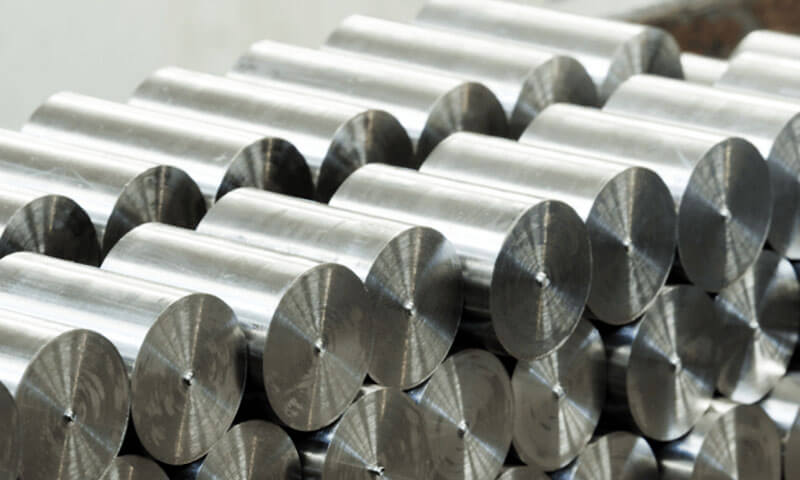
Steel is one of the most widely used engineering materials in the world, and its density is one of the most important physical properties governing how it is selected, designed, processed, and applied.
Density affects mass, inertia, transport cost, structural load, handling behavior, and even energy consumption over the lifecycle of a product.
For this reason, the density of steel is not a trivial catalog value. It is a foundational design parameter.
2. What Density Means in Materials Engineering
In materials engineering, density describes how much mass is contained within a given volume of a material.
It is one of the most fundamental physical properties because it tells engineers how “compact” a material is at the atomic and macroscopic level.
A material such as steel feels heavy and solid because a relatively large amount of matter is packed into a relatively small space, which is why it has a comparatively high density.
The relationship is expressed by the basic equation:
Density = Mass / Volume
or, in symbolic form:
ρ = m / V
where:
- ρ = density
- m = mass
- V = volume
Density is commonly measured in units such as g/cm³ or kg/m³ in the metric system, and lb/in³ or lb/ft³ in imperial units.
From an engineering standpoint, density is an intensive property. This means that its value does not change simply because the amount of material changes.
A small piece of steel and a large steel plate have the same density, even though their mass is very different. What changes is the total amount of material, not the density itself.
This is why density is so important in design and material selection.
It affects weight, inertia, transport cost, structural loading, and overall efficiency, but it remains a stable material characteristic regardless of part size.
3. Typical Density Range of Steel
Most plain carbon and low-alloy steels have a density in the range of 7.75 to 8.05 g/cm³, with 7.85 g/cm³ often used as a conventional reference value. In SI terms, this is roughly 7,850 kg/m³.
That value is not universal. Different grades of steel vary slightly because alloying elements, phase composition, and processing history all influence density.
Stainless steels, for example, may fall somewhat above or below the common carbon-steel reference depending on composition.

4. Why Steel Density Varies
Steel is not a single material. It is a family of iron-based alloys, and density changes depending on composition and structure.
Carbon content
Carbon content affects density only slightly because carbon is present in small amounts. However, it still contributes to differences among grades.
In most practical cases, carbon content is not the main driver of density variation, but it is part of the overall composition balance.
Alloying elements
Alloying elements can raise or lower density depending on their atomic mass and concentration.
Elements such as chromium, nickel, manganese, molybdenum, vanadium, and tungsten alter the density of the final alloy.
In stainless steels, for example, nickel and chromium can shift density slightly upward or downward relative to plain carbon steel.
Microstructure
Steel density can also vary subtly with phase structure. Ferrite, austenite, martensite, and bainite do not all pack atoms in exactly the same way.
The differences are usually small, but in precision engineering they can matter.
Temperature and phase state
Density changes with temperature. As steel heats up, it expands, and its density decreases.
This is relevant in casting, forging, heat treatment, and high-temperature service. At elevated temperature, steel occupies slightly more volume for the same mass.
5. Density of Common Steel Families
For consistency, the typical grades are expressed in U.S. style designations such as AISI/SAE, ASTM, and commonly used trade equivalents.
The values below are nominal room-temperature densities used for engineering comparison and material selection.
Carbon Steel Density
Carbon steel is an iron–carbon alloy family with relatively low total alloying content.
Its density varies only slightly across low-, medium-, and high-carbon grades, but the trend is still useful in design work: as carbon content rises, density decreases very slightly.
| Steel Category | Typical Grades | Density (g/cm³) | Density (kg/m³) | Density (lb/in³) |
| Low-Carbon Steel | AISI 1010, AISI 1018, AISI 1020 | 7.85 | 7850 | 0.2836 |
| Medium-Carbon Steel | AISI 1045, AISI 1050, AISI 1055 | 7.84 | 7840 | 0.2832 |
| High-Carbon Steel | AISI 1080, AISI 1090, AISI 1095 | 7.83 | 7830 | 0.2828 |
High-Strength Low-Alloy Structural Steel (HSLA) Density
HSLA steels are strengthened with small additions of manganese, chromium, molybdenum, niobium, vanadium, or related elements.
Their density remains very close to ordinary carbon steel, so the design difference comes from strength and toughness rather than weight.
| Steel Category | Typical Grades | Density (g/cm³) | Density (kg/m³) | Density (lb/in³) |
| General HSLA Steel | ASTM A572 Gr 50, ASTM A992, ASTM A588 | 7.85 | 7850 | 0.2836 |
| Wear-Resistant HSLA Steel | AR400, AR450, AR500 | 7.82 | 7820 | 0.2825 |
| Cr-Mo Pressure/Structural Steel | AISI 4130, AISI 4140, AISI 8640 | 7.86 | 7860 | 0.2839 |
| Weathering Structural Steel | ASTM A588, ASTM A242 | 7.84 | 7840 | 0.2832 |
Stainless Steel Density
Stainless steels are classified by metallographic structure. Their density is influenced by chromium, nickel, molybdenum, and other alloying elements.
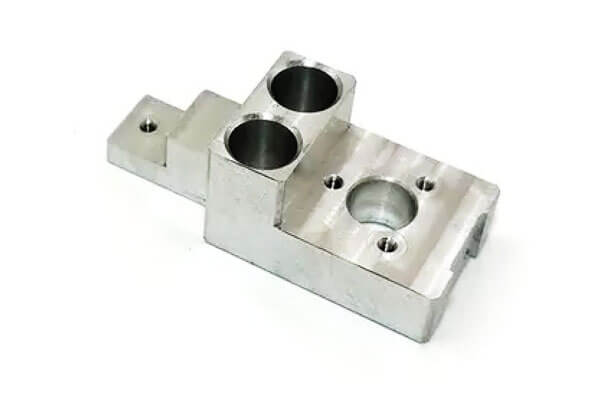
Among the stainless families, austenitic stainless steel generally has the highest density.
| Steel Category | Typical Grades | Density (g/cm³) | Density (kg/m³) | Density (lb/in³) |
| Austenitic Stainless Steel | AISI 304, AISI 304L | 7.93 | 7930 | 0.2865 |
| Austenitic Stainless Steel | AISI 316, AISI 316L | 7.98 | 7980 | 0.2883 |
| High-Temperature Austenitic SS | AISI 310S | 7.98 | 7980 | 0.2883 |
| Ferritic Stainless Steel | AISI 430, AISI 409 | 7.75 | 7750 | 0.2799 |
| Martensitic Stainless Steel | AISI 410, AISI 420, AISI 431 | 7.80 | 7800 | 0.2817 |
| Duplex Stainless Steel | UNS S32205 (2205), UNS S32750 (2507) | 7.81 | 7810 | 0.2820 |
Tool Steel and High-Speed Steel Density
Tool steels and high-speed steels often contain large amounts of tungsten, chromium, vanadium, and cobalt.
These alloying elements increase density relative to ordinary steels, especially in high-speed and cobalt-bearing grades.
| Steel Category | Typical Grades | Density (g/cm³) | Density (kg/m³) | Density (lb/in³) |
| Carbon Tool Steel | AISI T7, AISI T8, AISI T12 | 7.83 | 7830 | 0.2828 |
| Low-Alloy Die Steel | AISI P20, AISI H13, AISI D2 | 7.85 | 7850 | 0.2836 |
| High-Speed Steel | AISI M2, AISI M35, AISI M42 | 8.15 | 8150 | 0.2942 |
| Cobalt-Bearing HSS | AISI T15, HS18-1-2-10 | 8.20 | 8200 | 0.2960 |
Special Functional Steel Density
Special functional steels are engineered for specific service conditions such as free machining, heat resistance, high density, or low density.
Their density can differ more noticeably from standard steels because the alloy design is optimized for a function rather than for general-purpose structural use.
| Steel Category | Typical Grades | Density (g/cm³) | Density (kg/m³) | Density (lb/in³) |
| Leaded Free-Cutting Steel | AISI 12L14, AISI 1215 | 7.97 | 7970 | 0.2879 |
| High-Chromium Heat-Resistant Steel | AISI 309, AISI 310S, AISI 446 | 7.90 | 7900 | 0.2854 |
| Nickel-Base Heat-Resistant Alloy Steel | Incoloy 800, Incoloy 800H | 8.06 | 8060 | 0.2910 |
| Low-Density Light Structural Steel | Special low-density alloy steel grades | 7.70 | 7700 | 0.2781 |
| High-Density Counterweight Steel | Tungsten-alloy counterweight steel grades | 8.30 | 8300 | 0.2996 |
6. How Density Affects Design and Manufacturing
Density is not just a laboratory measurement. It directly shapes engineering decisions.

Weight and structural loading
The most obvious impact of density is weight. A steel beam, frame, or enclosure will usually weigh much more than an equivalent aluminum design.
That can be a disadvantage in transportation, aerospace, robotics, or portable systems. However, the higher mass can also be an advantage where stability, damping, or inertia is desired.
Stiffness-to-weight balance
Steel is dense, but it is also stiff. In many applications, engineers accept higher weight because steel allows smaller cross-sections for the same structural performance.
In other words, density alone does not determine whether steel is efficient. Steel may be heavier by volume, but it can still be efficient by performance per unit cost.
Transportation and energy efficiency
In vehicles, machinery, and moving equipment, density affects fuel economy, acceleration, braking, and payload capacity.
Lower-density materials are often preferred when mass reduction yields direct operating benefits. Still, steel remains common because it is economical and structurally reliable.
Machining and fabrication considerations
Steel density also influences manufacturing handling, fixture design, tool load, and part manipulation.
Heavier parts are harder to move and position, but their rigidity often helps during machining or welding. The mass can also improve vibration damping in some machine structures.
Inertia and dynamic behavior
In rotating systems, density affects moment of inertia. A denser steel rotor, gear, or disk stores more kinetic energy and resists speed changes more strongly than a lighter material.
That can be useful or problematic depending on the application.
7. Universal Misunderstandings
First, treating 7.85 g/cm³ as a fixed density for all steel grades results in an overestimation of the weight of high-carbon steel, while underestimating the weight of stainless steel.
second, confusing theoretical density with bulk density, ignoring the porosity defect of cast steel and leading to inaccurate load design;
third, neglecting temperature-induced density changes for high-temperature boiler steel parts.
8. Inherent Limitations of Density as a Judgment Indicator
Although density is an important reference for steel performance evaluation, it cannot be used as a single screening standard: High density does not equal high-quality steel.
Excessively high density caused by excessive heavy alloy elements may reduce the toughness and cold resistance of steel; low-density lightweight alloy steel may sacrifice partial rigidity to realize lightweight goals.
In engineering practice, density must be matched with hardness, toughness, corrosion resistance and temperature resistance to complete comprehensive material selection.
9. Density Comparison with Other Engineering Materials
Steel becomes easier to understand when it is compared with other common engineering materials.
| Material | Typical Density (g/cm³) | Typical Density (kg/m³) | Typical Density (lb/in³) | Engineering Interpretation |
| Magnesium alloy | 1.70–1.85 | 1700–1850 | 0.061–0.067 | Extremely light, but lower strength and stiffness |
| Aluminum alloy | 2.65–2.80 | 2650–2800 | 0.096–0.101 | Very light, widely used for weight-sensitive designs |
| Titanium alloy | 4.40–4.60 | 4400–4600 | 0.159–0.166 | Lighter than steel, but much stronger per unit weight |
| Cast iron | 6.90–7.30 | 6900–7300 | 0.249–0.264 | Slightly less dense than steel, but more brittle |
| Carbon steel | 7.75–7.85 | 7750–7850 | 0.280–0.284 | Standard dense structural material |
Stainless steel |
7.70–8.00 | 7700–8000 | 0.278–0.289 | Similar to or slightly denser than carbon steel |
| Copper | 8.85–8.95 | 8850–8950 | 0.320–0.323 | Heavier than steel, excellent conductivity |
| Brass | 8.40–8.75 | 8400–8750 | 0.304–0.316 | Heavy but versatile, good appearance and machinability |
| Nickel alloys | 8.20–8.90 | 8200–8900 | 0.296–0.321 | Dense, used when high-temperature or corrosion performance matters |
| Tungsten | 19.0–19.3 | 19000–19300 | 0.686–0.697 | Extremely dense, used in counterweights, shielding, and high-density applications |
10. Conclusion
The density of steel is typically around 7.85 g/cm³, but the exact value varies with alloy family, microstructure, and temperature.
More importantly, density is not an isolated property. It interacts with strength, stiffness, cost, corrosion resistance, manufacturability, and service performance.
Steel remains one of the most important engineering materials precisely because its density sits in a productive middle ground: heavy enough to provide rigidity, stability, and bulk strength, yet economical and versatile enough to dominate construction and industry.
For designers, understanding steel density means understanding how mass influences the entire system, from fabrication and transport to operation and lifecycle cost.
FAQs
Why is steel so dense?
Because it is an iron-based alloy with tightly packed atomic structure and relatively heavy alloying elements compared with lightweight metals.
Does density affect steel strength?
Not directly. Density and strength are different properties, although they both influence design decisions.
Is lower-density steel always better?
No. Lower density can help reduce weight, but the best material depends on strength, stiffness, cost, corrosion resistance, and application needs.
How does steel compare with aluminum?
Steel is much denser and usually stronger in bulk use, while aluminum is much lighter and better for weight-sensitive designs.
Does temperature change steel density?
Yes. As temperature rises, steel expands and density decreases slightly.

