1. Introduction — why dimensional accuracy is a strategic requirement
Aluminum high-pressure die casting (HPDC) injects molten aluminum into a closed die cavity at high speed and pressure to produce complex, near-net-shape components.
In current high-value sectors (EV powertrains, aerospace brackets, 5G electronic housings) the business value of dimensional accuracy is clear: it reduces downstream machining, shortens assembly cycle time, improves first-pass yield, and lowers lifecycle warranty risk.
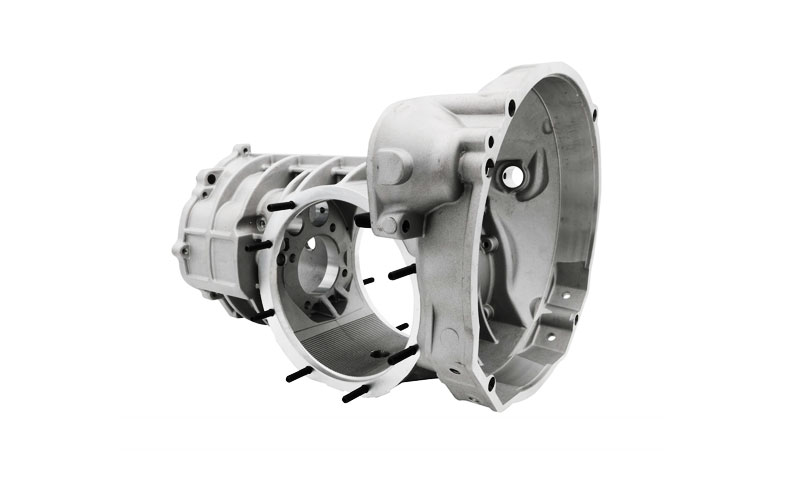
For example, motor housings for electric traction motors commonly require positional tolerances of ±0.05 mm or better for bearing bores and mating faces; certain battery and avionics enclosures specify flatness < 0.02 mm/m and feature position repeatability in the few-tens of microns.
Achieving these tolerances consistently at volume demands an integrated approach spanning alloy selection, die engineering, process control, metrology and maintenance.
2. Dimensional accuracy — definitions, scope and standards
This section defines what we mean by dimensional accuracy for aluminum die castings, explains the measurable metrics engineers use, and summarizes the international and industry standards that set tolerance grades and acceptance practices.

Definitions and measurable concepts
Dimensional accuracy is the degree to which the geometry of a produced casting matches the nominal geometry specified on the engineering drawing.
It has three interrelated dimensions:
• Size accuracy (linear accuracy) — the deviation of a linear feature (diameter, length, thickness) from its nominal dimension. Expressed as ± tolerance (for example Ø50.00 ±0.05 mm).
• Geometric accuracy (form, orientation and location) — the degree to which features conform to form tolerances (flatness, circularity), orientation tolerances (perpendicularity, parallelism), and location/positional tolerances (true position, coaxiality) as defined by GD&T.
• Dimensional stability (time- and condition-dependence) — the capacity of the casting to retain dimensions over time and through subsequent operations (trimming, heat treatment, transport). Stability is affected by residual stress, relaxation, thermal cycling and creep.
Common standards and typical grade mapping
Several international and industry standards guide how tolerances are selected, declared and interpreted for castings.
ISO 8062 (Casting tolerances — CT classes)
- Provides a graded system CT1–CT16 (CT1 highest precision, CT16 lowest), with tables that map nominal dimension and feature class to allowable tolerances for size, form and position.
- Typical die-casting production often targets CT5–CT8 depending on part complexity and criticality: CT5–CT6 for precision electronic or aerospace castings, CT7–CT8 for general automotive housings.
ASTM B880 (Dimensional tolerances for aluminum die castings)
- Gives tolerance guidance, recommended machining allowances and inspection practices tailored to aluminum die-cast parts.
It is widely used in North American supply chains as a complement to ISO guidance.
National and OEM standards
- National standards (e.g., GB/T for China) typically harmonize with ISO but may include regional guidance.
- Automotive and aerospace OEMs publish more stringent, part-specific tolerancing rules; these should be invoked explicitly on drawings when applicable.
Testing Methods for Dimensional Accuracy
Accurate testing of dimensional accuracy is the premise of quality control. Common testing methods for aluminum die castings include:
- Coordinate Measuring Machine (CMM): The most widely used precision testing equipment, which can measure linear dimensions, geometric tolerances, and surface profiles with an accuracy of 0.001–0.01 mm.
It is suitable for high-precision, complex-shaped castings (e.g., aerospace components, electronic enclosures). - Optical Measuring Instrument: Including optical comparators, laser scanners, and 3D optical measuring systems.
Laser scanners can quickly obtain the 3D point cloud data of the casting, compare it with the design model, and generate a deviation report, which is suitable for batch testing of large-scale castings. - Gauge and Caliper: Suitable for simple linear dimensions and geometric tolerances (e.g., diameter, thickness), with an accuracy of 0.01–0.1 mm.
It is widely used in on-site rapid inspection in production lines. - Flatness Tester: Used to test the flatness of the casting surface, with an accuracy of 0.001 mm, suitable for components with strict flatness requirements (e.g., mounting surfaces, sealing surfaces).
3. Key Influencing Factors of Aluminum Die Casting Dimensional Accuracy
Dimensional accuracy in aluminum die casting is a system outcome: it emerges from the interaction of material behaviour, die geometry and metallurgy, processing choices, machine capability, and the production environment.
Any single deviation — or the combination of several small deviations — can manifest as size error, geometric distortion, or reduced dimensional stability.

Material properties — the intrinsic drivers
The alloy chemistry and melt condition define the baseline thermal and solidification behaviour that the die and process must accommodate.
Alloy composition and phase behaviour
- Different aluminum casting alloys (e.g., A380, ADC12, A356) exhibit distinct solidification shrinkage (commonly ~1.2–1.8%) and freezing ranges.
Alloys with larger shrinkage or wider solidification intervals demand more careful feeding and larger, feature-specific shrinkage compensation in the die. - The coefficient of thermal expansion for typical Al alloys (~23–25 ×10⁻⁶ /°C) is significantly higher than steels;
the cumulative contraction from melt temperature (≈650–700 °C) to room temperature is therefore large and must be anticipated in cavity sizing and compensation schemes. - Elevated concentrations of impurities (Fe, Mn, etc.) can produce brittle intermetallics (e.g., Al₃Fe, complex Al–Mn–Si phases) that change local solidification kinetics and mechanical response, encouraging non-uniform shrinkage and local distortion.
Practical note: select an alloy whose shrinkage and solidification characteristics match the intended geometry and feeding strategy; specify composition limits for critical lots.
Melt quality (gas and inclusions)
- Dissolved hydrogen becomes porosity on solidification.
Porosity not only degrades mechanical properties but also produces local compliance and collapsed volumes that appear as dimensional scatter; control targets commonly place hydrogen below ~0.15 ml H₂ / 100 g Al. - Oxide films and non-metallic inclusions (bifilms, slag) act as pseudo-cracks or local stress risers and promote uneven local solidification or collapse.
Laminar metal handling, ceramic filtration and rotary degassing are standard mitigations.
Practical note: record and trend DI (density index) and filtration logs as part of dimensional control; treat high-DI heats as suspects for dimensional deviation.
Die design and tooling — the geometric and thermal template
The die is the physical embodiment of the nominal geometry; its design determines how the liquid metal fills, freezes and releases.
Cavity geometry and shrinkage allowance
- Cavity sizing must incorporate local shrinkage compensation rather than a single global scale factor.
Thin sections and thick bosses contract differently; features adjacent to massive sections require specific compensation. - Surface finish and texture influence heat transfer. Smoother cavity finishes (e.g., Ra ≤ 0.8 µm where practical) give more predictable cooling and reduce localized thermal gradients that cause warpage.
- Draft angles (typically 0.5°–3°) balance ejection ease and geometric fidelity: insufficient draft causes ejection friction and distortion; excessive draft changes intended dimension lines.
Gating and runner strategy
- Gate location, size and runner layout control flow velocity, pressure drops and temperature at the point of fill.
Poor gating produces turbulence, oxide entrainment and local cooling that lead to cold-shuts or uneven feeding and ultimately dimensional defects. - Design runners to minimize pressure loss and equalize fill time for multi-cavity dies; use simulation to verify balanced flow.
Cooling system architecture
- Cooling channel placement, size and flow determine local die temperature and thus solidification rate.
Uneven cooling produces differential contraction and residual stress fields that manifest as warpage.
For complex features, conformal or optimized cooling channels reduce ΔT and the associated dimensional error. - Cooling medium and flow must be sized for section mass—thick sections typically require higher flow or closer channel spacing.
Ejection design
- Ejector pin distribution and ejection force must be engineered to remove parts uniformly.
Localized ejection loads or premature ejection (before adequate solid strength) cause bending or compression distortions.
Ejection timing and force profiles should be validated on prototypes.
Practical note: treat die design as a multi-physics problem (flow, heat transfer, mechanical stress) and validate with casting simulation before final machining.
Process parameters — the direct control levers
Process settings control the transient conditions experienced by the metal and therefore the final geometry.
Injection (speed and pressure)
- Injection speed determines fill dynamics. Excessive speed produces turbulence and air entrainment; too slow a fill allows premature freezing and cold shuts.
Multi-stage profiles (slow–fast–slow) are commonly used for precision parts to control front behavior. - Injection and intensification pressure (typical ranges 10–100 MPa for injection, 5–50 MPa for hold/intensification depending on machine and part) influence density and feeding.
Insufficient pressure yields underfill and shrinkage; overly high pressure can deform the die assembly or promote flash.
Thermal parameters (melt and die temperatures)
- Pouring/melt temperature (commonly 650–700 °C) must be controlled within a narrow band (± ~10 °C).
Higher superheat enhances fluidity but increases liquid shrinkage and oxide formation; lower temperatures reduce fillability. - Die running temperature influences solidification time and surface-to-bulk thermal gradients.
Uniform die temperature (target control band often ±5 °C) reduces uneven shrinkage and distortion.
Holding / feeding parameters (pressure and time)
- Properly tuned holding pressure and duration are essential to compensate solidification shrinkage in feedable regions.
Holding too short leaves voids; holding too long reduces throughput and may lead to part seize or excessive die heat.
Time and pressure must be correlated with section thickness and alloy solidus behavior.
Practical note: use cavity pressure sensing where possible to make switchover and holding termination decisions based on in-die conditions rather than fixed stroke/time.
Equipment performance and condition — the stability backbone
Machine dynamics and maintenance status determine how faithfully the selected process is executed.
Injection system dynamics
- Valve responsiveness, servo control bandwidth and sensor accuracy affect the repeatability of speed and pressure profiles. Oscillation or drift in these systems produces dimensional variability.
Clamping system and platen integrity
- Sufficient and stable clamping force prevents die opening and flash; platen parallelism and guide pillar wear influence parting-line stability and therefore positional tolerances.
Deviations in platen flatness or guide wear manifest directly as changes in part geometry.
Thermal control systems
- Precision and responsiveness of die temperature controllers, thermocouples and cooling units determine the ability to hold die running temperature and uniformity.
Sensor drift, fouled cooling channels or insufficient pump capacity degrade thermal control and therefore dimensional consistency.
Maintenance factor: scheduled calibration and preventive maintenance are non-negotiable for dimensional control — sensor recalibration, valve service, guide pillar inspection and cooling channel cleaning must be planned against shot count and performance indicators.
Environmental and workshop factors — the auxiliary influences
The production environment and handling practices contribute secondary but sometimes decisive effects.
Ambient conditions: large variations in ambient temperature or humidity can alter cooling rates, thermal gradients and hydrogen pickup.
Precision production lines often have controlled ambient temperature (e.g., 20 ± 2 °C) to reduce such drift.
Humidity and atmospheric moisture: elevated humidity increases the risk of hydrogen absorption during melt handling and can accelerate corrosion or scaling on dies, altering cavity finish and heat transfer.
Contamination and housekeeping: dust, lubricant mist or die contamination alters heat transfer locally and can create surface irregularities that affect measured dimensions.
Regular die cleaning and a clean production environment mitigate these risks.
Interactions and systems thinking
All five categories above interact non-linearly.
For example: a marginally high melt temperature combined with an undersized gate and an uneven cooling circuit can magnify shrinkage in a particular region — producing a dimensional error far larger than any single factor alone would predict.
Consequently, controlling dimensional accuracy requires systems engineering: simulation-driven die design, strict melt and process discipline, machine capability verification, and an environmental/maintenance regime that preserves the designed operating window.
4. Formation Mechanisms of Dimensional Deviations in Aluminum Die Castings
Dimensional deviations in aluminum die castings arise from a set of physical processes and mechanical interactions that occur from the moment liquid metal enters the cavity until the finished component is trimmed and released to service.
In engineering terms these processes reduce to four principal mechanisms — phase-change volumetric shrinkage, thermally induced stresses and relaxation, tooling deformation and wear, and alterations introduced by post-processing.
Understanding each mechanism and how they interact is essential for targeted control of casting geometry.

Volumetric change associated with solidification and cooling
Solidification shrinkage and subsequent thermal contraction are the dominant sources of net dimensional change.
The total volume loss occurs in three sequential phases, each with distinct implications for geometry and feeding requirements:
Liquid (pre-solidus) shrinkage.
As the metal cools from pouring temperature toward the liquidus, it undergoes volumetric contraction.
In well-designed gating systems this liquid shrinkage is normally compensated by freely flowing metal from runners and gates, so its direct effect on final dimensions is generally small — provided flow paths remain unobstructed.
Solidification (mushy-zone) shrinkage.
Between liquidus and solidus the alloy forms a partially solid network of dendrites and interdendritic liquid.
This stage is the most critical for dimensional integrity: interdendritic feeding must supply contraction in hot spots and thick sections.
If feeding is inadequate (poor gate design, insufficient holding pressure, or occluded feeders) the result is shrinkage cavities, subsidence, or local collapse — defects that manifest as reduced section thickness, inward distortion of walls, or local dimensional loss.
Solid (post-solidus) thermal contraction.
After the alloy becomes fully solid it continues to cool to ambient temperature and contracts according to its coefficient of thermal expansion.
Non-uniform cooling rates produce differential contraction across the part, generating residual stresses and geometric distortion (warpage, bending or twisting).
The magnitude of final contraction depends on alloy CTE, local section mass, and the thermal history imposed by die cooling.
In addition, microstructural factors (e.g., secondary dendrite arm spacing, segregation of alloying elements) influence the effectiveness of interdendritic feeding and the propensity for microporosity, thereby modulating shrinkage behaviour at both macro and micro scales.
Residual and applied stresses (internal stress effects)
Internal stresses develop whenever contraction is constrained or cooling is non-uniform; these stresses can later relax or cause plastic deformation, producing permanent dimensional change.
Thermally induced stresses.
Surface layers cool and contract faster than the hotter core, creating tensile stress at the surface with compressive stress in the interior.
If these thermal gradients are sufficiently steep relative to the local yield strength, localized plastic deformation occurs and,
upon stress relaxation (for example during ejection or subsequent handling), the part will change shape — a phenomenon commonly observed as spring-back or warp.
Mechanically induced stresses.
External constraints during solidification and release — for instance die cavity constraints, the action of ejector pins, or clamping forces — impose mechanical loads on the casting.
High ejection forces or uneven ejection distribution can locally exceed the part’s strength while it is still weak, producing permanent deformation.
Similarly, if feeding restraint forces exist during solidification, they can lock in tensile stresses that later relax into dimensional change.
Both thermal and mechanical stresses are time-dependent: residual stresses can redistribute and relax during subsequent thermal cycles (e.g., heat treatment) or in-service temperature changes, leading to delayed dimensional drift.
Tooling deformation and die condition
The die is not a rigid, invariant template; it deforms elastically during each shot and may suffer progressive plastic deformation or wear over its life.
These tooling effects directly translate into dimensional trends in produced parts.
Elastic deformation under load.
High injection and intensification pressures, together with clamping loads, cause the die to elastically deflect.
While this deflection recovers after pressure release, the instantaneous cavity geometry under shot can differ from the nominal cavity geometry;
if compensation is not applied in cavity machining, castings will reflect the in-die deformed shape. Excessively large elastic deflections can therefore produce systematic size errors.
Thermo-mechanical expansion.
Repeated thermal cycling of the die causes transient thermal expansion of cavity surfaces and inserts during runs.
Non-uniform die heating can change local cavity dimensions shot-to-shot, creating cyclic variations in part dimensions.
Plastic deformation and wear.
Over multiple cycles, high contact stresses, thermal fatigue, abrasion, and corrosion degrade the die: inserts wear, core tips break down, and cavities may experience plastic creep.
These irreversible changes cause gradual drift in part geometry — often appearing as a slow increase in part size, parting line mismatch, or loss of critical dimension control.
Because tooling condition is cumulative, dimensional control programs must include tooling inspection, scheduled rework or insert replacement, and tracking of part dimension trends against shot count.
Effects introduced by post-processing and handling
Operations performed after casting — trimming, deburring, heat treatment, machining and cleaning — introduce additional mechanisms that can change dimensions.
Trimming and mechanical removal.
Excessive or uneven trimming removes more material than intended and alters local geometry.
Inconsistent trimming forces or poorly maintained trim dies can induce bending or distortion of thin features.
Thermal processing.
Stress-relief, solution heat treatment, ageing (e.g., T6) and other thermal cycles modify both microstructure and internal stress states.
Non-uniform heating, quench asymmetry or fixture constraints during heat treatment produce thermal gradients and constrained contraction, causing warpage or dimensional shifts.
Even controlled heat treatments can generate predictable dimensional change that must be accounted for in design or fixture compensation.
Assembly and handling.
Clamping during subsequent assembly operations, interference fits, or transport loads can produce deformation if the parts remain near yield or have residual stresses.
Repeated handling without proper fixturing can therefore contribute to dimensional instability over time.
Coupled interactions and cumulative effects
These mechanisms rarely act in isolation. For example, a marginally high pouring temperature increases liquid shrinkage and promotes oxide formation;
together with an undersized gate and an uneven cooling circuit this can yield a substantial local shrinkage cavity and a consequent dimensional error far larger than any single factor would predict.
Similarly, die wear that slightly alters cavity surface roughness can change heat transfer rates, shifting solidification patterns and accelerating dimensional drift.
Because of these interactions, diagnostic and control strategies must be multi-faceted:
metallurgical control of melt quality, simulation-led die compensation, tight thermal and pressure control during processing, rigorous die maintenance, and controlled post-process handling and thermal cycles.
5. Advanced Control Strategies for Aluminum Die Casting Dimensional Accuracy
Improving dimensional accuracy beyond “good enough” requires moving from single-factor fixes to integrated, data-driven control systems.
The strategies below combine proven metallurgical and tooling measures with modern sensing, closed-loop process control, predictive analytics and shop-floor governance.
Material Selection and Melt Quality Control
- Optimize Alloy Composition: Select aluminum die casting alloys with low solidification shrinkage rate and good dimensional stability for high-precision components.
For example, A380 alloy is preferred for components requiring high dimensional accuracy, while ADC12 alloy is suitable for general components. - Strict Melt Treatment: Adopt degassing (argon/nitrogen purging) and filtration (ceramic foam filter) to reduce the gas content and impurity content of the melt.
The hydrogen content should be controlled below 0.15 ml/100 g, and the impurity content should be within the standard range. - Control Melt Temperature: Ensure the pouring temperature is stable (±10°C) by using a high-precision furnace temperature controller, avoiding fluctuations in the melt temperature.
Die design and tooling optimization
Objective: design out sensitivity to shrinkage, thermal gradients and ejection damage.
Key actions
- Use simulation (fill + solidification) to define local shrinkage allowances and hot-spot locations rather than a single global scale factor.
- Improve cavity finish (aim Ra ≤ 0.8 µm where practical) and harden/coat critical datums.
- Design cooling to equalize local die temperature (aim die uniformity ±5 °C) — consider conformal cooling for complex cores.
- Optimize gating/runners for laminar, balanced fills; place vents at predicted air traps.
- Make critical features replaceable via hardened inserts and plan EDM compensation pockets for try-out.
- Engineer ejection: distribute pins, use ejector plates or soft ejectors for fragile walls, and validate ejection timing.
Why it matters: tooling sets the thermal and mechanical environment that determines final geometry and repeatability.
Process parameter optimization
Objective: establish robust, repeatable process windows that reliably produce the intended geometry.
Key settings & practices
- Injection profile: use multi-stage control (slow → fast → slow). Typical example speeds: 0.5–1 m/s (initial), 2–4 m/s (fast), 0.5–1 m/s (final) — tune to part geometry.
- Injection/intensification pressure: set by geometry (injection 10–100 MPa; hold/intensification 5–50 MPa). Use cavity pressure feedback to optimize switchover and hold termination.
- Temperatures: pouring 650–700 °C (±10 °C); die running 150–300 °C depending on section — die uniformity ±5 °C target.
- Holding time: 0.5–5 s depending on section thickness; lengthen for heavy sections to ensure feeding, shorten for thin walls for throughput.
- Lock running windows, document setpoints and permitted drift, and log all shots.
Why it matters: process windows determine filling behaviour, feeding effectiveness and thermal history — all directly influence dimensional outcomes.
Equipment maintenance and calibration
Objective: ensure machines perform to specification so process settings produce the expected result.
Key actions
- Preventive maintenance schedule tied to shot count: injection valve and sensor service, proportional valve checks, servo motor inspection.
- Clamping system checks: verify clamp force stability, platen parallelism and guide pillar wear at scheduled intervals.
- Cooling system maintenance: clean cooling channels, verify pump flow and temperature control accuracy.
- Calibration: periodic calibration of CMMs, thermocouples, pressure sensors and machine feedback loops.
Why it matters: equipment degradation and sensor drift are common causes of progressive dimensional drift.
Post-processing control and quality management
Objective: prevent post-casting operations from introducing uncontrolled dimensional change; make quality decisions data-driven.
Key actions
- Standardize trimming and deburring tools and procedures; control material removal and validate on first-parts.
- Control heat treatment with fixtures and validated sequences; anticipate and compensate expected dimensional offsets from solution/quench/age cycles.
- Inspection regime: 100% first-article CMM; thereafter sample-based CMM + more frequent optical scans for drift. Define CTQ features and sampling plans.
- Implement SPC for both process KPIs (melt DI, cavity pressure peak, die temp) and dimensional KPIs (X̄, σ, Cpk). Escalate when limits approach.
- Maintain defect log and root-cause database tied to heat, die, and shot counts.
Why it matters: many dimensional failures are revealed or caused in post-process steps; disciplined QA closes the loop.
Advanced simulation and digitalization
Objective: predict, prevent and adapt in real time using modeling, digital twins and data analytics.
Key tools & uses
- FEM / casting simulation (ProCAST, MAGMA, etc.) for fill, solidification and shrinkage prediction; use outputs for local die compensation, gate placement and cooling design.
- Digital twin: integrate live sensor data (cavity pressure, die T, melt T) to model expected shrinkage and distortions and warn of deviations.
- AI / ML analytics: analyze historical process + inspection data to identify leading indicators of dimensional drift and recommend corrective actions (e.g., subtle switchover timing adjustments).
- Closed-loop control: where validated, feed sensor signals (cavity pressure, die temp) into automatic or operator-assisted control adjustments (switchover, small temp tweaks) within bounded limits.
Why it matters: simulation reduces try-out cycles; live analytics shortens response time and reduces scrap.
6. Case vignette — motor housing example
- Problem: bore centerline offset 0.08 mm consistently after 10,000 shots; assembly failures reported.
- Root causes uncovered: die platen misalignment (0.02 mm), cavity cooling imbalance causing asymmetric shrinkage (ΔT = 18 °C), cavity peak pressure drift of −7% (valve wear).
- Actions: re-align platens, rebalance cooling lines (added a parallel circuit and flow meter), replace proportional valve and switch switchover to cavity pressure.
Result: bore offset reduced to 0.02 mm and Cpk for positional tolerance improved from 0.8 → 1.6 within two weeks.
7. Comparison with Other Casting Processes in Terms of Dimensional Accuracy
| Comparison Criteria | Aluminum Die Casting (HPDC) | Investment Casting (Lost-Wax) | Permanent Mold Casting (Gravity Die) | Sand Casting (Green/Resin Sand) |
| Typical ISO Accuracy Grade (CT) | CT5–CT8 | CT4–CT6 | CT6–CT9 | CT8–CT12 |
| Primary Influencing Factors | Die precision & wear, injection profile, cavity pressure control, thermal balance, machine stability, melt quality | Wax pattern precision, ceramic shell integrity, pouring control, thermal shrinkage of shell | Mold machining accuracy, cooling system uniformity, coating thickness, solidification control | Sand grain size, mold compaction, pattern accuracy, moisture content, pouring practice |
| Strengths in Dimensional Control | High repeatability in batch production; excellent surface finish; tight positional control for cavity-formed features | Highest as-cast dimensional fidelity; excellent surface finish; minimal machining for small complex parts | More stable and accurate than sand casting; improved microstructure and surface finish | Flexible for large geometries; low tooling cost for oversized components |
Limitations in Dimensional Control |
Sensitive to die deformation, wear, and residual stress; less suitable for very large castings | High cost and lower production rate; risk of shell cracking or distortion in thin sections | Less capable for thin, highly intricate shapes; slower cycles than HPDC | Lowest accuracy; significant dimensional fluctuation; large machining allowance required |
| Typical Applications | Automotive housings, transmission cases, electronic enclosures, structural brackets | Aerospace fittings, medical implants, precision valves and turbine parts | Medium-volume automotive parts, pump housings, industrial components | Engine blocks, heavy machinery bases, large structural components |
8. Conclusions
Dimensional accuracy in aluminum die casting is a measurable, controllable outcome when approached as a co-engineering problem.
The pathway to high precision is systematic: choose the right alloy and melt discipline; design the die with thermal balance and compensation informed by validated simulation;
instrument the process (especially cavity pressure and die temperatures); control key parameters with SPC and preventive maintenance; and measure with a disciplined metrology plan.
For production of precision components the investment in simulation, sensorization and maintenance is recovered quickly by reduced rework, lower scrap and increased first-pass assembly yields.