1. Introduction
Aluminum alloys have revolutionized modern manufacturing, thanks to their remarkable combination of lightweight characteristics, corrosion resistance, and versatility.
Among these alloys, 3003 aluminum stands out as one of the most widely used and reliable options for non-heat-treatable alloys.
Its widespread adoption across various industries can be attributed to its excellent workability, good corrosion resistance, and affordable cost.
In this guide, we will explore the key properties and common applications of 3003 aluminum, explain how it compares to other alloys, and discuss why it remains a top choice for many manufacturers.
Whether you’re in food packaging, automotive, or construction, understanding the strengths and limitations of Aluminum 3003 can help you make informed decisions for your projects.
2. What is 3003 Aluminum?
3003 aluminum belongs to the 3xxx series of aluminum alloys, which are primarily alloyed with manganese.
This alloy is known for its balance between strength and workability, making it more durable than pure aluminum without sacrificing its malleability.

The presence of manganese increases its mechanical properties, providing 20% more strength than the 1100 series aluminum, which is nearly pure aluminum.
Chemical Composition:
The specific chemical makeup of 3003 aluminum includes:
- Manganese (Mn): 1.0% to 1.5% (the key alloying element, responsible for increased strength)
- Iron (Fe): 0.7% max
- Silicon (Si): 0.6% max
- Copper (Cu): 0.05% to 0.20% (adds strength and hardness)
- Aluminum (Al): Balance
The manganese content gives 3003 aluminum a notable boost in strength without compromising its corrosion resistance.
These properties make Aluminum 3003 especially suitable for applications that require a lightweight, corrosion-resistant material capable of being shaped or formed into various products.
3. Key Properties of 3003 Aluminum
3003 is prized for its combination of mechanical, physical, and thermal properties. Here’s an in-depth look at its key characteristics:

Corrosion Resistance:
3003 aluminum offers excellent resistance to corrosion, particularly in atmospheric conditions.
This makes it ideal for exterior applications such as roofing and siding, where exposure to moisture or industrial environments is common.
Tensile Strength:
The tensile strength of Aluminum 3003 depends on its temper. In the H14 temper, its tensile strength ranges between 130 MPa to 200 MPa (19,000 psi to 29,000 psi).
While this isn’t as strong as alloys like 5052 or 6061, 3003 is more than sufficient for many non-structural applications where strength is not the primary concern.
Workability:
One of the greatest advantages of 3003 is its exceptional workability. It can be easily shaped, rolled, stamped, or drawn into a variety of forms,
making it perfect for applications where custom shapes or components are needed. Its malleability also makes it ideal for processes such as deep drawing.
Weldability:
Aluminum 3003 is highly weldable, offering ease of joining through processes like MIG and TIG welding.
This makes it a popular choice for fabrication projects that require joining different components.
Non-Heat-Treatable:
Unlike some other aluminum alloys, 3003 is non-heat-treatable, meaning its strength cannot be improved by heat treatment.
Instead, it relies on cold working to achieve its mechanical properties.
Lightweight:
With a density of 2.73 g/cm³, 3003 aluminum is lightweight yet durable, which is why it’s used in industries where weight reduction is crucial—such as transportation and packaging.
Electrical and Thermal Conductivity:
While not as conductive as pure aluminum, 3003 still offers adequate electrical conductivity.
Its thermal conductivity is excellent, making it a popular choice for heat exchangers and radiators.
4. Common Applications of 3003 Aluminum
Due to its excellent corrosion resistance, formability, and overall strength, Aluminum 3003 finds use in a wide range of applications:
Food and Beverage Packaging:
3003 aluminum’s corrosion resistance makes it a perfect material for food containers, beverage cans, and food packaging. Its ability to maintain its integrity and resist rust ensures the safety and freshness of food products.
Cooking Utensils:
Because of its high thermal conductivity and ease of formability, 3003 is often used in the production of pots, pans, and other kitchen tools.
Its ability to distribute heat evenly makes it a favored material in cookware.
Roofing and Siding:
In the construction industry, Aluminum 3003 is frequently employed in roofing, siding, and gutters.
It provides a lightweight and corrosion-resistant material that holds up well in various environmental conditions.
Heat Exchangers and Radiators:
3003 aluminum’s thermal conductivity makes it an excellent choice for heat exchangers and radiators, where efficient heat transfer is required.
Its ability to resist corrosion also extends the lifespan of these components in automotive and HVAC systems.

Automotive Applications:
In the automotive sector, Aluminum 3003 is often used in fuel tanks, heat shields, and various non-structural body parts.
Its lightweight properties contribute to improved fuel efficiency, and its corrosion resistance adds to vehicle longevity.
Signage and Nameplates:
3003 aluminum’s formability and ability to be anodized for an aesthetic finish make it an ideal choice for signage and nameplates, offering both durability and customization options.
5. Advantages of 3003 Aluminum
Cost-Effectiveness:
One of the major benefits of Aluminum 3003 is its affordable cost compared to higher-performance alloys like 5052 and 6061.
This makes it a budget-friendly solution for many industries, especially in applications where extreme strength is not required.

Corrosion Resistance:
3003 aluminum’s ability to resist corrosion in moist environments means lower maintenance costs and longer service life for the products made from it.
Versatile Workability:
Its high formability allows manufacturers to easily shape Aluminum 3003 into a variety of products, reducing production time and costs while increasing design possibilities.
Weldability:
Thanks to its high weldability, fabricators can easily join Aluminum 3003 components without compromising the overall integrity of the structure.
Adequate Strength for Non-Structural Applications:
For applications where extreme strength is not required, Aluminum 3003 offers an excellent balance between affordability, durability, and formability.
6. Disadvantages and Considerations
Limited Strength:
While 3003 aluminum is adequate for non-structural applications, it doesn’t have the strength required for heavy structural work.
If the load-bearing capacity or high tensile strength is a critical factor, stronger alloys such as 5052 or 6061 may be more appropriate.
Non-Heat-Treatable:
The alloy cannot be strengthened beyond its natural state through heat treatment, limiting its use in applications requiring higher strength.
Temperature Limitations:
At very high temperatures, the mechanical properties of 3003 may degrade, affecting its performance.
For high-temperature applications, other alloys or materials might be more suitable.
7. Processing and Fabrication of 3003 Aluminum
When it comes to processing Aluminum 3003, the alloy can be handled in various ways:
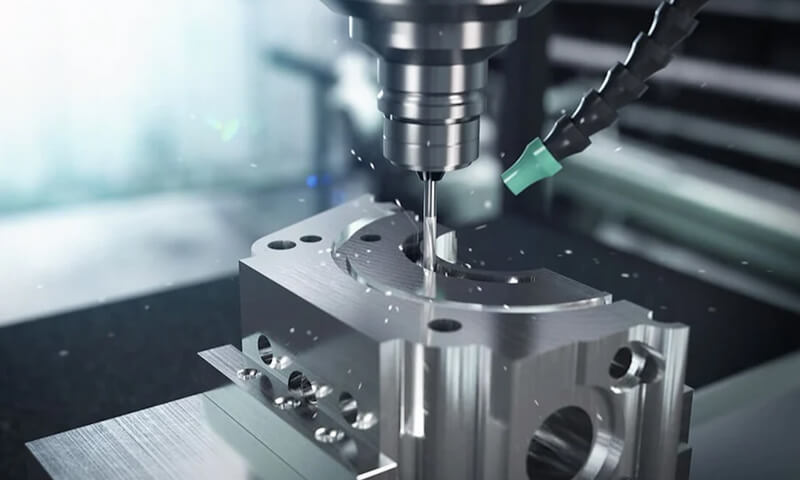
- Cutting, Drilling, and Machining: Standard machining techniques can be applied to Aluminum 3003 with ease.
Its relatively soft nature allows for smooth machining, though care should be taken to avoid tool wear.
Use appropriate tools and speeds to prevent deformation and achieve precise cuts. High-speed steel (HSS) and carbide tools are recommended for machining 3003. - Forming and Bending: 3003 aluminum’s excellent formability makes it ideal for deep drawing, rolling, and bending operations.
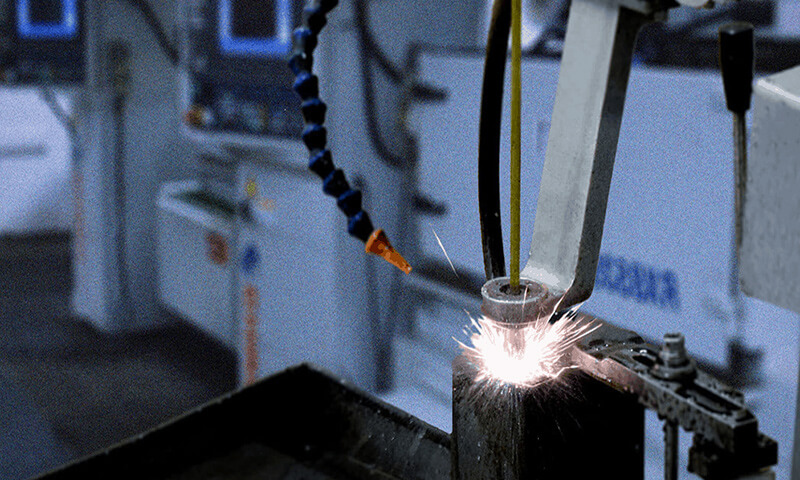
Provide proper support during bending operations to avoid cracking and maintain the desired shape. Use lubricants to reduce friction and ensure smooth forming. - Welding and Joining: Employ the right filler metals and welding techniques, for MIG and TIG welding, 4043 or 5356 filler wires are commonly used.
Ensure proper pre-weld cleaning and post-weld treatment to maintain the integrity of the weld.

Best Practices:
To prevent cracking during forming, avoid excessive strain on the material. When welding, ensure the use of appropriate filler metals to match the material’s properties and corrosion resistance.
8. 3003 Aluminum vs. Other Alloys
Comparing 3003 with other alloys highlights the unique characteristics and suitability for different applications:
- 3003 vs. 5052 Aluminum:
-
- Strength: 5052 has higher tensile and yield strengths, making it more suitable for structural applications.
- Formability: Both alloys are formable, but 5052 is slightly more formable than 3003.
- Corrosion Resistance: Both offer excellent corrosion resistance, but 5052 is slightly better in saltwater environments.
- Weldability: Both are easily weldable, but 5052 requires more care to avoid cracking.
- 3003 vs. 6061 Aluminum:
-
- Strength: 6061 is significantly stronger and can be heat-treated to increase its strength further.
- Formability: 3003 is more formable and easier to work with, while 6061 is more challenging to form.
- Corrosion Resistance: 6061 has good corrosion resistance but is not as resistant as 3003 in harsh environments.
- Weldability: Both are weldable, but 6061 requires more careful temperature control to avoid cracking.
- 3003 vs. 1100 Aluminum:
-
- Strength: 3003 is stronger due to the presence of manganese, while 1100 is softer and more malleable.
- Formability: 1100 is more formable and can be deep-drawn more easily than 3003.
- Corrosion Resistance: Both offer good corrosion resistance, but 3003 is slightly better in marine environments.
- Weldability: Both are easily weldable, but 1100 is more prone to cracking if not handled properly.
9. Testing and Quality Assurance for 3003 Aluminum
Ensuring the quality of Aluminum 3003 involves rigorous testing and adherence to industry standards:
- Standard Tests:
-
- Tensile Testing: Measures the tensile strength, yield strength, and elongation at break.
- Corrosion Testing: Evaluates the alloy’s resistance to various corrosive environments, such as salt spray tests.
- Hardness Testing: Determines the hardness of the material, which is an indicator of its strength and wear resistance.
- Certifications:
-
- Ensure compliance with standards such as ASTM B209 (for flat-rolled products) and ISO 9001 (for quality management systems).
- Look for certifications from reputable organizations, such as the Aluminum Association, to ensure the material meets industry standards.
- Batch Consistency:
-
- Manufacturers must strive for consistency in the quality and properties of aluminum across different production batches.
This ensures reliability and predictability in end products. - Regular quality checks and process controls help maintain batch-to-batch consistency.
- Manufacturers must strive for consistency in the quality and properties of aluminum across different production batches.
10. How to Choose Between Aluminum Alloys
Selecting the right aluminum alloy depends on the specific requirements of your application. Here are some factors to consider:
- Corrosion Resistance: If your application involves exposure to corrosive environments, 3003 is a good choice.
For even more demanding conditions, 5052 or 6061 might be more suitable. - Strength: For structural applications, 6061 or 7075 provide higher strength and can be heat-treated for additional reinforcement.
- Formability: If your design requires complex shapes and deep drawing, 1100 or 3003 are more formable and easier to work with.
- Weldability: All the mentioned alloys are weldable, but 3003 and 5052 are generally easier to weld. 6061 requires more careful temperature control to avoid cracking.
- Consult with Suppliers and Experts: Engage with material experts and suppliers to ensure the correct alloy selection.
They can provide valuable insights and help you choose the most suitable material for your specific needs.
11. Conclusion
3003 aluminum remains one of the most versatile and affordable aluminum alloys available today.
Its affordability and moderate strength make it a popular choice for a variety of applications, from food packaging and cooking utensils to roofing and automotive components.
While it may not have the highest strength among aluminum alloys, its other advantages make it a workhorse material for non-structural applications.
When selecting aluminum for your project, consider the unique benefits 3003 Aluminum offers and consult with experts to ensure you’re making the right choice.
If you have any aluminum alloy processing needs, please feel free to contact us.
FAQs
Q: Can 3003 aluminum be anodized?
A: Yes, 3003 can be anodized, which enhances its corrosion resistance and appearance.
Q: How does Aluminum 3003 compare to 5052?
A: 5052 aluminum is stronger and offers better corrosion resistance, especially in marine environments, but is more expensive than 3003.
Q: Can Aluminum 3003 be heat-treated?
A: No, 3003 is a non-heat-treatable alloy. Its strength comes from its alloying elements and cold working, and it does not benefit from heat treatment.
Q: Where can I find Aluminum 3003?
A: 3003 is widely available through metal suppliers and distributors specializing in aluminum alloys.
Always check for certifications and test results to ensure the quality and consistency of the material.
If you have any needs for aluminum products, please contact us.