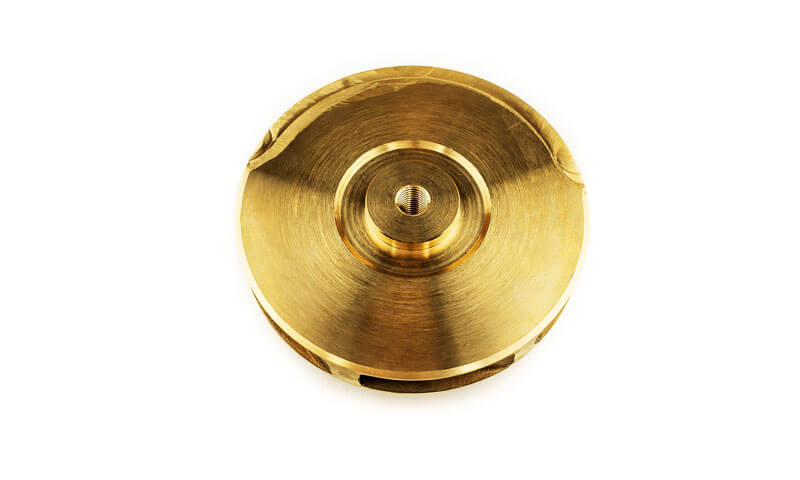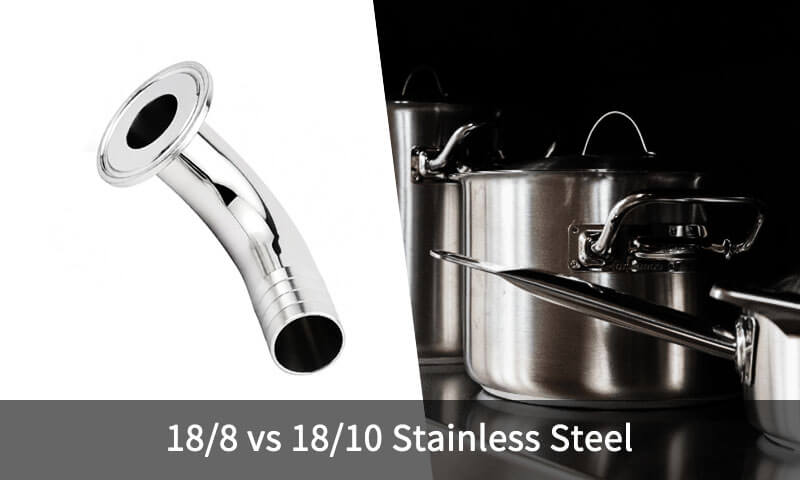
Walk into any kitchenware store, and you will see labels proclaiming “18/8 Stainless Steel” or “18/10 Stainless Steel” on pots, pans, cutlery, and cookware.
These numbers are more than marketing jargon—they represent the chemical composition of the stainless steel and directly influence the performance, durability, and corrosion resistance of the finished product.
This article provides a comprehensive, rigorous comparison of 18/8 and 18/10 stainless steel.
We will explore their definitions, chemical compositions, performance characteristics, applications, cost implications, and how to choose between them.
1. What Is 18/8 Stainless Steel?
18-8 stainless steel is an austenitic stainless steel alloy containing approximately 18% chromium and 8% nickel by weight.
The name “18/8” represents the approximate alloy composition rather than an official international material designation.
In most cases, 18/8 stainless steel corresponds closely to 304 stainless steel, one of the most widely used stainless steel grades worldwide.
The basic structure of 18/8 stainless steel consists primarily of iron, with chromium and nickel as the key alloying elements.
Chromium provides corrosion resistance by forming a thin, stable chromium oxide passive layer on the surface, while nickel stabilizes the austenitic microstructure and improves toughness, ductility, and resistance to chemical attack.
The combination of approximately 18% chromium and 8% nickel creates a balanced material with excellent overall performance, making it suitable for general-purpose applications where corrosion resistance, strength, and affordability are equally important.
Key identifiers:
- AISI Grade: 304
- UNS: S30400
- EN: 1.4301
- Common name: 18/8 stainless steel
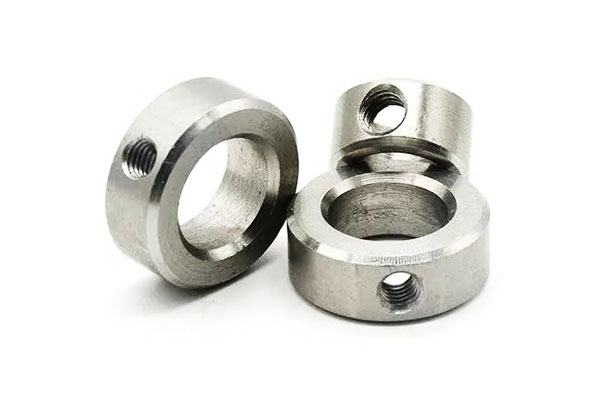
Features of 18/8 Stainless Steel
- Excellent corrosion resistance under general conditions
The chromium-rich passive layer provides reliable protection against atmospheric corrosion, moisture, food acids, and many household chemicals. - Austenitic microstructure with high toughness
The stable face-centered cubic (FCC) structure allows 18/8 stainless steel to maintain good impact resistance and ductility even at low temperatures. - Excellent formability and weldability
18/8 stainless steel can be easily processed through stamping, bending, deep drawing, welding, and machining, making it suitable for complex component manufacturing. - Non-porous and hygienic surface
The dense metallic surface prevents bacterial accumulation and allows easy cleaning, making it ideal for food-contact and sanitary applications. - Good balance between strength and cost
It provides high-performance stainless steel properties while maintaining a relatively economical price compared with higher-alloy grades. - Good oxidation resistance at elevated temperatures
It can withstand moderately high temperatures while maintaining structural stability, although specialized high-temperature alloys are required for extreme conditions.
Limitations of 18/8 Stainless Steel
- Lower resistance to chloride environments compared with 316 stainless steel
In seawater, marine atmospheres, and chloride-containing chemicals, 18/8 stainless steel may experience localized corrosion such as pitting or crevice corrosion. - Slightly lower corrosion resistance than 18/10 stainless steel
The reduced nickel content provides slightly less protection in aggressive chemical environments. - May require surface maintenance in harsh conditions
Although corrosion-resistant, contamination, salt deposits, or chemical exposure can affect surface appearance over time. - Not suitable for highly corrosive applications
Chemical processing, offshore equipment, and pharmaceutical environments requiring extreme corrosion resistance may require higher-alloy stainless steels such as 316 or duplex stainless steel.
Applications of 18/8 Stainless Steel
18/8 stainless steel is widely adopted because it provides reliable performance at a reasonable cost.
Typical applications include:
- Kitchen and household products
Cookware, sinks, utensils, food containers, appliances, and storage equipment. - Food and beverage equipment
Processing machines, tanks, piping systems, and sanitary components. - Industrial components
Machine frames, fasteners, brackets, heat exchangers, valves, and general-purpose equipment. - Architectural applications
Handrails, decorative structures, interior components, and building hardware. - Automotive and transportation components
Exhaust components, trims, brackets, and structural parts requiring corrosion resistance. - Precision manufacturing and casting applications
Stainless steel precision castings, investment cast components, and complex industrial parts.
2. What Is 18/10 Stainless Steel?
18-10 stainless steel is an austenitic stainless steel alloy containing approximately 18% chromium and 10% nickel.
Compared with 18/8 stainless steel, the main difference is the higher nickel content.
Like 18/8 stainless steel, 18/10 stainless steel is closely related to the 304 stainless steel family.
The additional nickel improves the stability of the austenitic structure and enhances several performance characteristics, including corrosion resistance, toughness, surface quality, and long-term durability.
Because of its premium appearance and improved resistance characteristics, 18/10 stainless steel is frequently used in high-quality cookware, luxury tableware, food processing equipment, and applications where both aesthetics and performance are important.
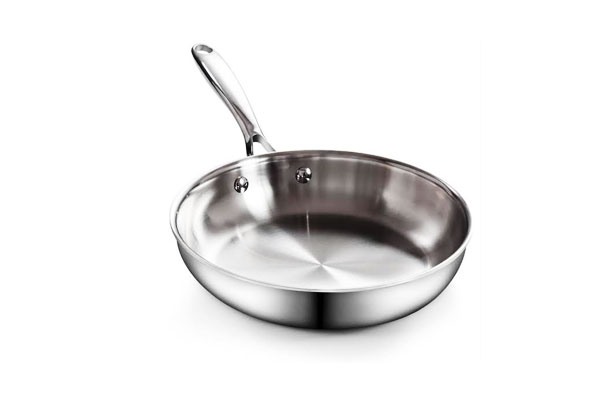
Features of 18/10 Stainless Steel
- Enhanced corrosion resistance
The higher nickel content improves resistance to oxidation, staining, and chemical exposure, especially in humid or mildly aggressive environments. - Superior surface finish and appearance
18/10 stainless steel produces a brighter, smoother, and more reflective surface after polishing, making it preferred for premium products. - Excellent toughness and structural stability
The increased nickel content strengthens the austenitic phase, improving resistance to impact and mechanical stress. - Excellent resistance to repeated cleaning cycles
It maintains surface integrity under frequent washing, sterilization, and exposure to detergents. - Outstanding hygiene performance
The dense, smooth surface minimizes contamination risks and supports strict sanitation requirements. - Excellent fabrication characteristics
Like 18/8 stainless steel, it can be welded, formed, stamped, and machined efficiently.
Limitations of 18/10 Stainless Steel
- Higher material cost
The increased nickel content significantly raises raw material costs compared with 18/8 stainless steel. - Performance improvement may be limited in ordinary environments
For general household and industrial applications, the difference between 18/8 and 18/10 may not justify the additional cost. - Not suitable for extreme chloride environments
Although more corrosion-resistant than 18/8, it still cannot replace specialized grades such as 316 stainless steel in marine or chemical applications. - Higher sensitivity to alloy cost fluctuations
Since nickel prices vary significantly in global markets, 18/10 stainless steel costs may fluctuate more than lower-nickel alternatives.
Applications of 18/10 Stainless Steel
18/10 stainless steel is commonly selected for applications where performance, appearance, and hygiene requirements are higher.
Typical applications include:
- Premium cookware and tableware
High-end pots, pans, cutlery, serving equipment, and kitchen products. - Food processing equipment
Storage vessels, sanitary pipelines, processing machinery, and commercial kitchen systems. - Medical and pharmaceutical equipment
Components requiring clean surfaces, corrosion resistance, and easy sterilization. - Architectural and decorative applications
Luxury interior structures, decorative panels, handrails, and premium finishes. - Precision stainless steel castings
Pump components, valve bodies, instrument parts, and complex industrial components requiring excellent surface quality. - Laboratory and cleanroom equipment
Work surfaces, housings, and equipment frames where contamination control is critical.
3. Chemical Composition: 18/8 and 18/10 Stainless Steel
The performance differences between 18/8 and 18/10 stainless steel originate primarily from their alloy composition, especially the difference in nickel content.
Both materials belong to the austenitic stainless steel family, characterized by a face-centered cubic (FCC) crystal structure that provides excellent corrosion resistance, toughness, and formability.
Although the names “18/8” and “18/10” are widely used in commercial markets, they represent approximate alloy percentages rather than formal metallurgical classifications.
In most cases, both materials are closely related to AISI 304 stainless steel, with the main distinction being the amount of nickel added to the alloy.
| Element | 18/8 Stainless Steel | 18/10 Stainless Steel | Functional Role |
| Chromium (Cr) | Approximately 18% | Approximately 18% | Forms a passive chromium oxide film that provides corrosion resistance |
| Nickel (Ni) | Approximately 8% | Approximately 10% | Stabilizes the austenitic structure and improves toughness, corrosion resistance, and surface quality |
| Carbon (C) | Generally ≤0.08% | Generally ≤0.08% | Controls strength, hardness, and weldability |
| Iron (Fe) | Balance | Balance | Primary structural matrix |
| Other elements | Small amounts of Mn, Si, P, S | Small amounts of Mn, Si, P, S | Improve processing performance and alloy stability |
The Role of Nickel: The Key Difference Between 18/8 and 18/10
Nickel is the primary factor distinguishing 18/8 from 18/10 stainless steel.
Although the difference is only about 2 percentage points, nickel has a significant influence on stainless steel properties.
The main functions of nickel include:
- Stabilizing the austenitic crystal structure at room and low temperatures.
- Improving ductility and toughness.
- Enhancing resistance to chemical corrosion.
- Improving surface brightness and polishability.
- Increasing resistance to stress corrosion cracking under certain conditions.
In 18/10 stainless steel, the additional nickel content provides a more stable austenitic structure and slightly improves resistance to staining, acidic environments, and repeated cleaning cycles.
However, the difference should be understood correctly.
The additional nickel does not transform 18/10 stainless steel into a completely different material category. Instead, it provides incremental improvements that become valuable in premium applications where long-term appearance and durability are important.
4. Performance Comparison: 18/8 vs 18/10 Stainless Steel
Although 18/8 and 18/10 stainless steel share many similarities, the difference in nickel content creates measurable differences in certain performance areas.
Corrosion Resistance
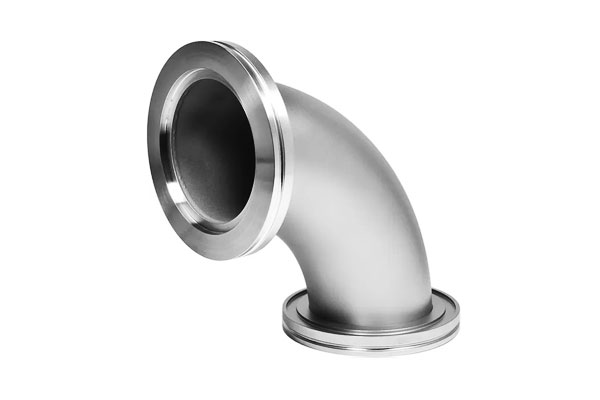
Corrosion resistance is one of the most important factors when selecting stainless steel.
Both 18/8 and 18/10 stainless steels provide excellent protection against atmospheric corrosion because both contain sufficient chromium to form a stable passive oxide film.
In ordinary environments, including indoor applications, freshwater exposure, food contact, and general industrial use, the corrosion resistance difference between the two materials is relatively small.
Both can maintain long service life without protective coatings.
However, the higher nickel content of 18/10 stainless steel provides additional stability in more demanding conditions.
Nickel improves resistance against certain acidic substances, organic compounds, and repeated exposure to cleaning chemicals.
This makes 18/10 stainless steel particularly advantageous in applications such as premium cookware, food processing equipment, and sanitary systems.
| Environment | 18/8 Stainless Steel | 18/10 Stainless Steel |
| Indoor atmosphere | Excellent | Excellent |
| Freshwater environment | Excellent | Excellent |
| Food contact applications | Excellent | Excellent |
| Acidic food exposure | Very good | Slightly better |
| Frequent detergent cleaning | Very good | Better |
| Salt spray environment | Moderate to good | Good |
| Marine or chloride-rich environments | Limited | Limited (316 recommended) |
Durability and Mechanical Performance
Both 18/8 and 18/10 stainless steels belong to the austenitic stainless steel family and typically correspond to AISI 304-type stainless steel compositions.
Their mechanical performance is primarily determined by their austenitic microstructure, cold working condition, grain size, and manufacturing process rather than nickel content alone.
The following table provides typical mechanical property ranges for annealed 18/8 and 18/10 stainless steel.
| Mechanical Property | 18/8 Stainless Steel (Typical AISI 304) | 18/10 Stainless Steel (Premium 304-Type) | Engineering Significance |
| Tensile strength | 515–650 MPa | 520–680 MPa | Indicates resistance to pulling force and structural failure |
| Yield strength (0.2% offset) | ≥205 MPa | 210–250 MPa | Represents load capacity before permanent deformation |
| Elongation at break | 40–60% | 45–60% | Indicates excellent ductility and forming capability |
| Reduction of area | 60–70% | 60–75% | Reflects resistance to fracture during deformation |
| Brinell hardness (HB) | 123–201 HB | 130–210 HB | Indicates resistance to indentation and wear |
Rockwell hardness |
HRB 70–95 | HRB 75–95 | Suitable for general structural and fabricated components |
| Elastic modulus | 193 GPa | 193 GPa | Defines stiffness under elastic loading |
| Impact toughness at room temperature | >100 J (Charpy V-notch, typical) | >120 J (Charpy V-notch, typical) | Demonstrates excellent resistance to sudden impact |
| Fatigue strength (10⁷ cycles, approximate) | 240–260 MPa | 250–280 MPa | Determines long-term durability under cyclic loading |
| Density | 7.90–8.00 g/cm³ | 7.90–8.00 g/cm³ | Indicates similar weight characteristics |
Heat Resistance and Thermal Performance
Austenitic stainless steels are widely used in elevated-temperature applications because they maintain mechanical stability better than many carbon steels.
Both 18/8 and 18/10 stainless steels provide:
- Good oxidation resistance.
- Stable mechanical properties at moderately high temperatures.
- Resistance to thermal cycling.
- Low risk of brittle failure during temperature changes.
The higher nickel content of 18/10 stainless steel improves phase stability at elevated temperatures, allowing it to maintain its austenitic structure more reliably under thermal stress.
| Performance Aspect | 18/8 Stainless Steel | 18/10 Stainless Steel |
| Oxidation resistance | Excellent | Slightly better |
| Thermal cycling resistance | Very good | Excellent |
| High-temperature structural stability | Good | Slightly improved |
| Household cooking temperatures | Excellent | Excellent |
| Extreme high-temperature applications | Limited | Limited (special alloys required) |
For normal cookware, food equipment, and household applications, the heat resistance difference between the two grades is minimal.
However, in industrial environments involving prolonged thermal exposure, 18/10 stainless steel may provide improved reliability.
Surface Appearance and Finish Quality
Surface appearance is one area where the difference between 18/8 and 18/10 stainless steel becomes more noticeable.
Nickel improves the ability of stainless steel to achieve a smooth, bright, and reflective finish after polishing.
As a result, 18/10 stainless steel is often selected for premium products where appearance is a key selling point.
18/10 stainless steel typically provides:
- Higher surface brightness after polishing.
- Better resistance to discoloration.
- More refined metallic appearance.
- Improved retention of decorative finishes.
| Surface Characteristic | 18/8 Stainless Steel | 18/10 Stainless Steel |
| Natural metallic appearance | Good | Excellent |
| Polishing performance | Very good | Superior |
| Gloss retention | Good | Better |
| Resistance to surface staining | Very good | Excellent |
| Premium decorative appearance | Good | Preferred |
This is why many high-end cookware manufacturers, luxury tableware producers, and architectural designers prefer 18/10 stainless steel when visual quality is as important as mechanical performance.
5. 18/8 vs 18/10 Stainless Steel in Food and Kitchen Applications
Food and kitchen applications represent one of the largest consumer markets for stainless steel.
The combination of corrosion resistance, hygiene, durability, and aesthetic appeal makes austenitic stainless steels the preferred material for cookware, cutlery, sinks, food containers, and commercial kitchen equipment.
Food Safety and Hygiene Performance
From a food safety perspective, both 18/8 and 18/10 stainless steels provide excellent performance.
Their surfaces are dense, non-porous, and resistant to bacterial accumulation, making them suitable for direct food contact.
The chromium oxide passive layer prevents metal ions from easily migrating into food, while the smooth stainless steel surface allows effective cleaning and sterilization.
This is why both grades are commonly used in food processing equipment and household cookware.
The difference between the two grades is mainly related to durability under repeated chemical exposure rather than basic food safety.
18/10 stainless steel, with its higher nickel content, provides slightly better resistance to:
- Acidic foods such as tomatoes, citrus fruits, and vinegar-based sauces.
- Repeated exposure to detergents and dishwasher cycles.
- Surface staining caused by minerals and food residues.
- Long-term polishing and cleaning operations.
For normal household cooking, the practical difference is often small.
However, in professional kitchens where equipment is cleaned hundreds or thousands of times per year, the improved stability of 18/10 stainless steel becomes more valuable.
Cookware Performance: Heat Distribution, Durability, and Appearance
In cookware manufacturing, stainless steel is usually combined with aluminum or copper layers to improve thermal conductivity because stainless steel itself has relatively low thermal conductivity.
The stainless steel layer provides:
- Corrosion resistance.
- Structural strength.
- Food-contact safety.
- Surface durability.
The difference between 18/8 and 18/10 cookware is mainly reflected in surface quality and long-term appearance.
| Performance Factor | 18/8 Stainless Steel Cookware | 18/10 Stainless Steel Cookware |
| Food safety | Excellent | Excellent |
| Resistance to staining | Very good | Excellent |
| Resistance to acidic foods | Very good | Excellent |
| Dishwasher durability | Good–excellent | Excellent |
| Surface brightness | Good | Superior |
| Scratch resistance | Good | Slightly better |
| Premium appearance retention | Good | Excellent |
| Material cost | Lower | Higher |
High-end cookware manufacturers often select 18/10 stainless steel because consumers associate it with premium quality, polished appearance, and long service life.
Cutlery and Tableware Applications
Cutlery is one of the most recognizable applications where the difference between 18/8 and 18/10 stainless steel becomes noticeable.
For knives, forks, spoons, and serving utensils, appearance and corrosion resistance are critical because these products are frequently washed, exposed to salt, and handled daily.
18/10 stainless steel is often preferred for premium tableware because it offers:
- A brighter and more reflective polished surface.
- Better resistance to water spots and discoloration.
- Improved resistance to long-term dishwasher exposure.
- A more luxurious appearance.
18/8 stainless steel remains a practical choice for restaurants, institutional kitchens, and household products where cost efficiency is important.
Commercial Food Processing Equipment
In commercial food production environments, stainless steel must withstand continuous exposure to moisture, cleaning chemicals, temperature changes, and mechanical stress.
Both 18/8 and 18/10 stainless steel are widely used for:
- Storage tanks.
- Food preparation surfaces.
- Conveyors.
- Mixing equipment.
- Piping systems.
- Commercial kitchen appliances.
However, 18/10 stainless steel is often selected for premium sanitary equipment where appearance and corrosion resistance must remain stable over decades.
For more aggressive food-processing environments involving salt solutions, chlorides, or harsh chemicals, neither 18/8 nor 18/10 may be sufficient. In such cases, 316 stainless steel containing molybdenum is typically recommended.
6. Cost Comparison: Is 18/10 Worth the Extra Price?
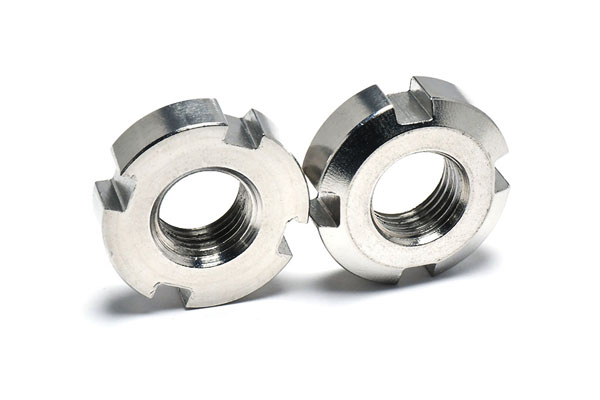
The price difference between 18/8 and 18/10 stainless steel mainly comes from the additional nickel content.
Nickel is an expensive alloying element, and increasing nickel content from approximately 8% to 10% can noticeably increase raw material costs.
However, whether the higher cost of 18/10 stainless steel is justified depends strongly on the application.
Material Cost Difference
Typical market conditions show that 18/10 stainless steel products may cost approximately 5–20% more than comparable 18/8 products, depending on product type, manufacturing process, brand positioning, and nickel price fluctuations.
| Cost Factor | 18/8 Stainless Steel | 18/10 Stainless Steel |
| Nickel content | ~8% | ~10% |
| Raw material cost | Lower | Higher |
| Manufacturing cost | Similar | Slightly higher |
| Product positioning | Standard to premium | Premium |
| Initial purchase price | More economical | More expensive |
The difference is usually more noticeable in consumer products such as cookware and tableware than in industrial components where processing and machining costs dominate.
Lifecycle Cost Consideration
Although 18/10 stainless steel has a higher initial price, its improved surface stability can reduce long-term replacement and maintenance costs.
For example:
- Premium cookware may remain visually attractive for decades.
- Commercial kitchen equipment may require fewer replacements.
- Decorative stainless components maintain appearance longer.
- High-cleanliness environments benefit from easier maintenance.
Therefore, the true economic value should be evaluated based on total lifecycle cost, not only purchase price.
A cheaper material that requires frequent replacement may ultimately cost more than a higher-quality stainless steel product with a longer service life.
7. How to Identify 18/8 and 18/10 Stainless Steel?
| Method | How to Perform | What It Reveals |
| Magnet test | Place a magnet on the steel. | 18/8 and 18/10 are essentially non‑magnetic in the annealed condition. Cold‑worked parts may be weakly magnetic. |
| Colour/Appearance | Visual inspection. | 18/10 (316) often has a brighter, more lustrous finish than 18/8 (304). |
| Chemical spot test | Use a commercial stainless steel identification kit. | Detects the presence of molybdenum (316) or higher nickel content. |
| Spark test | Grind the steel and observe sparks. | 304 and 316 produce similar sparks; difficult to distinguish. |
XRF analysis |
Use a portable X‑ray fluorescence analyser. | Provides quantitative elemental analysis (Cr, Ni, Mo). |
Most reliable method: XRF analysis provides definitive identification of the alloy composition. For consumer products, check the manufacturer’s specifications or labelling.
8. Comprehensive Comparison: How to Choose Between 18/8 and 18/10 Stainless Steel?
Selecting between 18/8 and 18/10 stainless steel requires a comprehensive evaluation of alloy composition, corrosion environment, mechanical requirements, appearance expectations, service life, and total ownership cost.
The following table provides a professional comparison to help determine the most suitable material for different applications.
| Selection Criteria | 18/8 Stainless Steel | 18/10 Stainless Steel |
| Nickel content | Approximately 8% Ni | Approximately 10% Ni |
| Chromium content | Approximately 18% Cr | Approximately 18% Cr |
| Basic corrosion resistance | Excellent for general environments | Excellent with slightly improved resistance |
| Resistance to acidic foods and chemicals | Very good; suitable for normal food contact | Superior; better resistance to repeated chemical exposure |
| Salt and chloride resistance | Good in mild environments; may be limited under prolonged exposure | Slightly improved but not equivalent to 316 stainless steel |
| Surface brightness after polishing | Good reflective finish | Higher gloss and better mirror-polishing capability |
Resistance to staining and discoloration |
Good | Excellent |
| Mechanical strength | Tensile strength typically 515–650 MPa | Tensile strength typically 520–680 MPa |
| Ductility and formability | Excellent elongation (40–60%) | Excellent, slightly improved forming stability |
| Impact toughness | Excellent, including low-temperature performance | Excellent, with slightly enhanced toughness retention |
| Wear and scratch resistance | Good; improves through cold working | Slightly better surface durability |
| Heat resistance | Excellent for normal cooking and industrial temperatures | Excellent, with similar thermal stability |
Food safety performance |
Excellent; widely approved for food contact | Excellent; preferred for premium food applications |
| Dishwasher durability | Good to excellent | Excellent |
| Manufacturing cost | Lower due to reduced nickel content | Higher due to additional nickel |
| Lifecycle cost | Excellent value in moderate environments | Better long-term value in demanding applications |
| Appearance requirements | Suitable for standard products | Better for luxury and decorative products |
| Typical applications | Household cookware, sinks, food containers, general industrial components | Premium cookware, cutlery, commercial kitchens, high-end equipment |
9. FAQs
Is 18/10 stainless steel better than 18/8?
Yes, 18/10 offers superior corrosion resistance, better aesthetics, and enhanced durability compared to 18/8. However, 18/8 is more cost‑effective and sufficient for many applications.
The “better” choice depends on the application.
Is 18/10 stainless steel magnetic?
No. 18/10, like 18/8, is austenitic and essentially non‑magnetic in the annealed condition. Cold working can induce weak magnetism.
How can I tell if my cookware is 18/8 or 18/10?
Check the manufacturer’s label, packaging, or product description. A magnet test can indicate stainless steel (non‑magnetic) but cannot distinguish between 18/8 and 18/10.
Is 18/10 the same as 316 stainless steel?
No, this is a very common misconception. 316 stainless steel contains 2–3% molybdenum and higher nickel content, giving it dramatically better chloride pitting resistance.
18/10 is still a 304-grade material with no intentional molybdenum addition.
When should I pay extra for 18/10 stainless steel?
Specify 18/10 for deep-drawn components, premium cookware and tableware, food processing equipment and parts requiring severe cold forming.
For simple structural parts, architectural trim and general fabrication, standard 18/8 304 is the more economical and fully appropriate choice.
10. Conclusion
The comparison between 18/8 and 18/10 stainless steel demonstrates that both materials are high-performance stainless alloys with excellent corrosion resistance, mechanical reliability, and food-contact safety.
The fundamental difference lies in nickel content.
The additional nickel in 18/10 stainless steel improves the stability of the passive oxide layer, enhances surface appearance, and provides slightly better resistance to staining and long-term environmental exposure.
These advantages make it particularly suitable for premium cookware, commercial kitchens, decorative applications, and products where appearance and durability are critical.
For general-purpose applications, 18-8 stainless steel provides outstanding value and performance.
For premium products and demanding environments where long-term appearance and enhanced corrosion resistance justify additional cost, 18-10 stainless steel is the preferred choice.
Ultimately, selecting the correct stainless steel grade is not about choosing the most expensive material—it is about selecting the material that delivers the best combination of performance, reliability, and lifecycle value for the specific application.