1. Introduzione
Modern manufacturing increasingly demands components with geometrie intricate, tolleranze strette, strutture leggere, and integrated functionality.
Settori come quello automobilistico, aerospaziale, elettronica, and telecommunications are shifting toward highly integrated parts that reduce assembly complexity and improve performance.
Among various manufacturing processes, aluminum die casting has emerged as one of the most efficient and reliable methods for producing such components.
Alluminio die casting involves injecting molten aluminum alloy into precision steel molds under high pressure, allowing manufacturers to produce parts with excellent dimensional accuracy, finiture superficiali lisce, and complex internal features.
The process is particularly suitable for high-volume production of geometrically complex components, including thin walls, costolette, Boss, cavità, and intricate contours.
2. Fundamentals of Aluminum Die Casting for Complex Geometries
A clear understanding of the fundamental principles of aluminum pressofusione is essential when producing components with complex geometries.
In the die casting process, molten aluminum alloy is injected into a precisely machined steel die at high pressure—typically ranging from 10 A 150 MPa—and at high filling velocities of 1–50 m/s.
The molten metal rapidly fills the cavity and solidifies under controlled cooling conditions to form the final part.
When manufacturing geometrically complex components, the process becomes significantly more demanding.
Factors such as mold configuration, metal flow behavior, gestione termica, and solidification dynamics must be carefully optimized.
Any imbalance in filling speed, pressure distribution, or cooling rate can lead to defects such as incomplete filling, air entrapment, Porosità di restringimento, or dimensional distortion.
Perciò, successful die casting of complex parts requires precise integration of design dello stampo, Selezione in lega, and process parameter control.
Defining Characteristics of Complex Aluminum Die-Cast Components
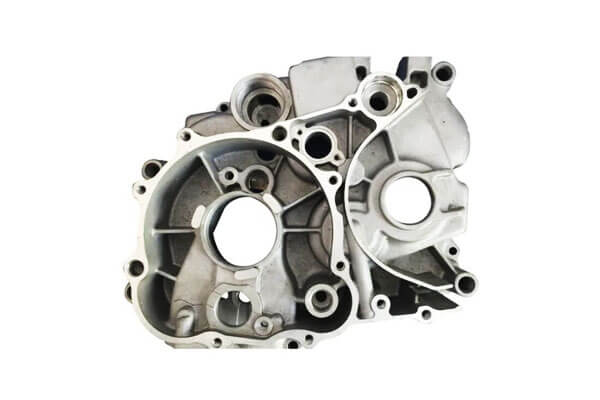
In aluminum die casting, a component is generally considered geometrically complex when its design incorporates structural features that challenge metal flow, solidification uniformity, or mold release.
These features typically include the following:
Strutture a parete sottile
Many advanced die-cast components require wall thicknesses in the range of 0.5–1,5 mm.
Such thin sections demand extremely stable filling conditions. Insufficient filling velocity or pressure can cause defects such as misruns or cold shuts, while excessive turbulence may introduce porosity.
Deep Cavities and Narrow Channels
Components with high aspect ratios (depth-to-width ratios exceeding approximately 4:1) present additional challenges.
Molten metal must travel longer distances through confined passages, increasing the likelihood of air entrapment, riempimento incompleto, and localized thermal gradients. These features also accelerate wear in narrow mold areas.
Sottosquadri, Protrusions, and Internal Features
Designs containing undercuts or internal structures cannot be released from a conventional two-plate die.
They require additional mechanisms such as sliding cores, side actions, or lifters to allow proper part ejection while protecting delicate features.
Integrated Functional Elements
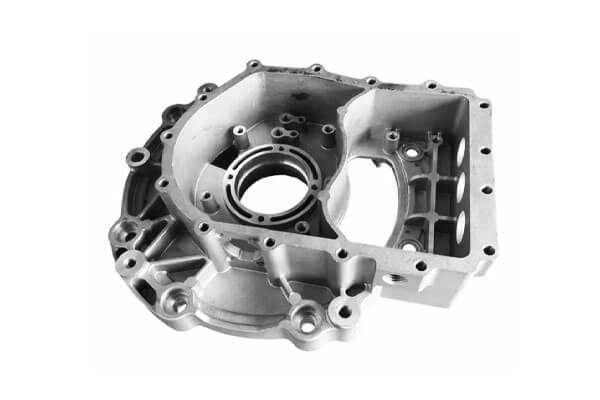
Modern die-cast components often incorporate multiple functions within a single part, compreso Boss, costolette, fori filettati, canali di raffreddamento, and mounting structures.
While this integration reduces secondary machining and assembly operations, it increases the complexity of the mold cavity and gating system.
Asymmetric or Irregular Geometry
Parts with non-uniform wall thicknesses or asymmetric cross-sections tend to solidify unevenly.
Differential cooling can lead to shrinkage defects, sollecitazioni interne, or dimensional distortion, requiring careful thermal management within the die.
Because these structural characteristics interact with metal flow and solidification behavior, manufacturing complex die-cast parts requires a comprehensive design strategy in which die layout, Design gating, Selezione in lega, and process parameters are optimized together.
Advantages of Aluminum Alloys in Complex Die Casting
Aluminum alloys are particularly well suited for producing complex die-cast components because their intrinsic physical and metallurgical properties align closely with the demands of high-speed, high-precision casting processes.
Relatively Low Melting Temperature
Most aluminum casting alloys melt between 580°C and 660°C, which is significantly lower than the melting temperatures of ferrous metals.
This lower processing temperature reduces thermal stress on molds, prolongs die life, and minimizes the risk of damage to delicate mold features such as thin cores or sliding inserts.
Eccellente fluidità
Molten aluminum exhibits high fluidity, enabling it to flow rapidly into sezioni sottili, narrow channels, and detailed cavities before solidification occurs.
This property is essential for achieving full mold filling and accurate reproduction of complex geometrical features.
Elevato rapporto resistenza/peso
Aluminum components are typically 30–50% lighter than comparable steel parts while still providing adequate mechanical strength for structural applications.
This makes aluminum die casting particularly valuable in industries where weight reduction improves efficiency, come quello automobilistico, aerospaziale, ed elettronica.
Good Surface Finish and Machinability
Die-cast aluminum parts generally achieve surface roughness values in the range of RA 1,6-6,3 μm, which allows many components to be used with minimal post-processing.
When additional machining is required, aluminum alloys are relatively easy to machine, enabling tight dimensional tolerances.
Resistenza alla corrosione naturale
Aluminum naturally forms a stable oxide layer on its surface, providing inherent resistance to corrosion in many environments.
Elementi di lega come magnesio (Mg) E zinco (Zn) can further enhance corrosion performance and mechanical properties.
For complex die-cast applications, several aluminum alloys are widely used, compreso ADC12, A380, E A360.
These alloys belong primarily to the Al-Si-Cu O Al–Si–Mg systems and are selected according to performance requirements such as strength, duttilità, castabilità, e resistenza alla corrosione.
3. Key Challenges in Aluminum Die Casting for Complex Geometries
Although aluminum alloys offer excellent properties for high-precision die casting, the production of components with complex geometries introduces a series of technical challenges.
These challenges arise from the interaction of mold design, dinamica del processo, and material behavior.
Addressing them systematically is essential to maintain product quality, produttività, ed efficienza in termini di costi.

Mold Design and Tooling Challenges
The die is the central element of the casting process, and its design largely dictates the manufacturability of complex aluminum parts. Key challenges include:
Undercuts and Core Mechanisms
Complex features such as undercuts, internal threads, and cavities often cannot be ejected with a standard two-plate die.
This necessitates specialized mechanisms such as diapositive, lifters, collapsible cores, or rotating inserts.
These additions increase mold complexity, costo, and potential failure points.
Precise synchronization of these moving elements is critical to prevent damage to delicate features during ejection.
Filling Uniformity and Venting
Parts with narrow channels, cavità profonde, or asymmetrical shapes are prone to uneven filling and air entrapment.
Poor venting can result in porosity, cavità di restringimento, o il freddo si chiude.
Designing vents that effectively release trapped air—often in hard-to-reach areas—is particularly challenging for intricate geometries.
Cooling and Thermal Management
Non-uniform cross-sections create uneven cooling rates, where thick regions solidify more slowly than thin sections.
Uneven thermal dissipation can lead to shrinkage, distorsione dimensionale, or extended cycle times.
Routing cooling channels to achieve uniform heat extraction across complex features—without interfering with slides, core, or inserts—requires careful engineering.
Mold Wear and Longevity
Intricate molds with thin cores, spigoli vivi, or moving elements are highly susceptible to wear and thermal stress from repeated high-pressure injection of molten aluminum.
Wear in critical areas can cause dimensional deviations, difetti superficiali, and premature mold failure, increasing both downtime and production costs.
Process Control Challenges
Even with an optimized mold, the die casting process for complex geometries demands precise control. Minor deviations in process parameters can generate significant defects.
Filling Velocity and Pressure Control
Maintaining the correct metal flow rate and pressure is essential to ensure complete filling of thin walls, narrow channels, and intricate cavities.
Insufficient velocity can cause underfills or cold shuts, while excessive velocity increases turbulence, air entrapment, and mold erosion.
Advanced process control, compreso variable-speed pumps, may be required to dynamically adjust filling for regions with varying wall thickness.
Solidification Management
Uniform solidification is critical to prevent shrinkage, porosità, and distortion.
Uneven wall thickness complicates this, as thick sections cool slowly, leading to shrinkage cavities, while thin sections may solidify too quickly, risking cracks or brittleness.
Achieving consistent cooling requires careful management of temperatura dello stampo, coolant flow, e tempo di ciclo, tailored to part geometry.
Porosity and Defect Formation
Complex geometries are more susceptible to porosità, caused by trapped air, incomplete venting, or non-uniform solidification.
Both macro- and micro-porosity reduce mechanical strength, vita a fatica, e resistenza alla corrosione, particularly in critical aerospace or automotive applications.
Detecting defects in deep cavities or fine features is inherently difficult.
Material-Related Challenges
The properties of the selected aluminum alloy play a decisive role in the castability of complex parts. Key considerations include:
Fluidity vs. Strength Trade-Off
High-fluidity alloys (per esempio., ADC12) can fill intricate features effectively but may have lower mechanical strength.
High-strength alloys (per esempio., A356) provide superior structural performance but have reduced flowability, making them difficult to cast into thin walls or narrow channels.
Selecting an alloy that balances fluidity with required mechanical properties is essential for success.
Oxide Inclusion Control
Aluminum forms pellicole di ossido (Al₂O₃) rapidly during melting and handling.
These inclusions can become trapped in narrow cavities or intricate sections, causing surface defects and compromising part performance.
Effective melt handling, compreso degassante, filtrazione, and careful pouring, is critical to minimize oxide-related defects.
Alloy Segregation
Non-uniform cooling can cause segregazione degli elementi di lega (per esempio., Cu, E) in different regions of the casting.
This leads to variations in local mechanical properties, increasing the risk of defects such as hot tears, screpolature, or brittleness, particularly in thin-walled or highly intricate features.
4. Advanced Solutions for Overcoming Challenges in Aluminum Die Casting of Complex Geometries
Addressing the technical challenges inherent to aluminum die casting of complex geometries requires a multi-faceted approach that integrates innovative mold design, precise process control, material optimization, and rigorous post-casting quality assurance.
These advanced solutions enable manufacturers to produce intricate aluminum components at scale while maintaining high quality, efficienza, ed efficienza in termini di costi.
Innovative Mold Design and Tooling
Recent advances in mold design and tooling have significantly expanded the manufacturability of complex aluminum geometries:
3D-Printed Mold Inserts
Produzione additiva (SONO) tecniche, ad esempio Fusione laser selettiva (SLM), allow production of mold inserts with intricate internal features, compreso conformal cooling channels that closely follow part geometry.
These channels ensure uniform heat extraction, reducing cooling times by 20–40% and minimizing dimensional distortion.
Per esempio, a thin-walled automotive component with complex cavities can see cooling time reduced from 15 secondi a 8 secondi, while dimensional accuracy improves by 15–20%.
Multi-Axis Slides and Collapsible Cores
Avanzato multi-axis slide mechanisms E collapsible cores facilitate the ejection of parts with deep undercuts or internal features.
Segmented or shape-memory alloy cores can retract from internal cavities after solidification, eliminating the need for overly complex slide systems.
This allows production of parts with curved or recessed channels that would be impossible using conventional tooling.
High-Precision Mold Machining
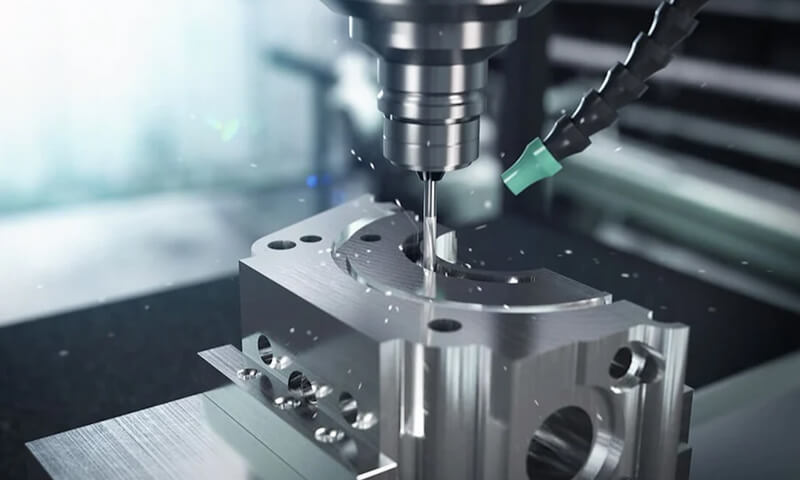
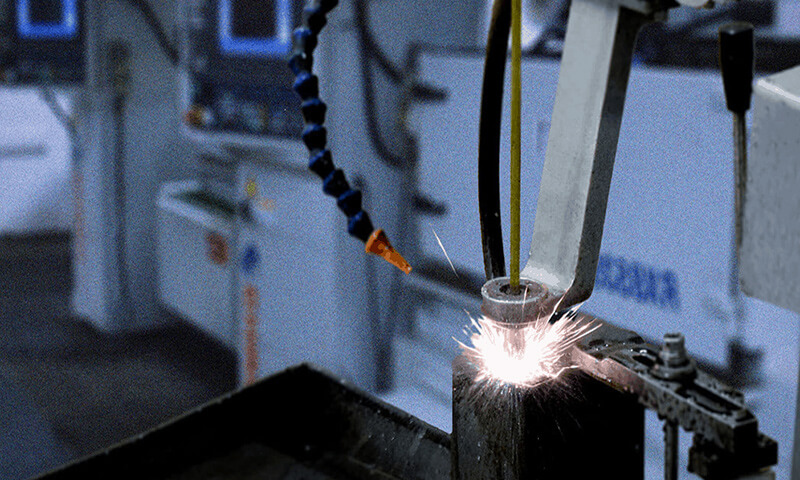
CNC machining and Electrical Discharge Machining (Elettroerosione) enable the creation of molds with sub-micron precision, accurately reproducing fine ribs, narrow channels, and delicate details.
EDM is particularly effective for hard steel molds with complex shapes, producing sharp features without tool wear.
Advanced Mold Coatings
Coatings such as Nitruro di titanio (Stagno) O Carbonio simile al diamante (DLC) ridurre l'attrito, improve filling efficiency, enhance heat transfer, and prolong mold life.
Rivestimenti DLC, Per esempio, can decrease mold wear by 30–50% for parts with intricate undercuts, reducing maintenance costs and increasing productivity.
Advanced Process Control and Simulation
Optimizing process parameters is essential for ensuring defect-free production of complex geometries:
Die Casting Simulation Software
Tools like Procast, Magmasoft, and Flow-3D utilizzo CFD and FEA to simulate metal flow, solidificazione, e raffreddamento.
These simulations allow engineers to identify potential defects (per esempio., porosità, chiusure fredde, restringimento) before mold fabrication.
For complex components, simulations help optimize gate and vent placement, ensuring uniform filling and minimizing air entrapment.
Real-Time Process Monitoring
Sensors integrated into molds and die casting machines provide continuous data on temperature, pressione, and flow velocity.
This enables dynamic adjustments to maintain consistent filling and cooling. Real-time monitoring can reduce defect rates for complex parts by 25–30%.
Automated Process Control Systems
Automazione, compreso ROBOTICO PROVAGGIO, inline inspection, and automated mold cleaning, minimizes human error and ensures consistent process control.
Robotic pouring systems, ad esempio, precisely regulate flow rates to fill thin-walled or intricate features uniformly.
Material Innovations and Melt Quality Control
Optimizing alloy composition and melt quality enhances castability for complex parts:
High-Fluidity, High-Strength Alloys
Leghe come A383 and ADC14 balance fluidity and strength, making them ideal for intricate geometries.
Silicio, rame, and magnesium contents are optimized to improve flowability while maintaining tensile strength.
A383, ad esempio, offerte 15% higher fluidity than ADC12 while sustaining tensile strength of 240 MPa.
Melt Degassing and Filtering
Rotary degassing with inert gases (argon o azoto) removes dissolved hydrogen, reducing porosity.
Filtri in schiuma in ceramica (CFF) with high filtration efficiency (≥95%) remove oxide inclusions, ensuring clean molten metal reaches all cavities.
A 30-pore CFF, Per esempio, can reduce oxide inclusions by 80%, improving surface finish and mechanical properties.
Refinità del grano
Adding grain refiners such as titanium-boron (Ti-B) reduces grain size, improving flow, proprietà meccaniche, and resistance to shrinkage defects.
Grain refinement is especially beneficial for thin-walled sections, promoting uniform solidification and reducing the risk of cracks.
Post-Casting Processing and Quality Assurance
Ensuring the integrity of complex die-cast components requires advanced inspection and finishing methods:
Prove non distruttive (NDT)
Tecniche come X-ray CT scanning, test ad ultrasuoni (UT), e test con particelle magnetiche (Mt) detect internal and surface defects.
CT scanning provides 3D imaging of complex parts, revealing hidden porosity, inclusioni, or dimensional deviations.
Anche a 0.1 mm pore in an internal cavity can be identified before the part proceeds to finishing.
Precision Machining and Surface Finishing
5-axis CNC machining corrects minor dimensional variations in complex features, such as threads or holes, e migliora la finitura superficiale.
Post-casting treatments like anodizing or powder coating enhance corrosion resistance and aesthetic quality, ensuring suitability for high-end applications.
Defect Repair Technologies
High-precision repair techniques, compreso saldatura laser E saldatura ad agitazione dell'attrito, address minor defects without compromising part integrity.
Laser welding is particularly effective for thin-walled parts, providing localized heat input and minimal distortion.
5. Industrial Applications of Aluminum Die Casting for Complex Geometries
The capability to produce complex aluminum die-cast components has significantly broadened the scope of applications across industries where leggero, alta precisione, and cost-effective parts sono essenziali.
By enabling intricate internal features, pareti sottili, and integrated assemblies, complex die casting drives innovation, ottimizzazione delle prestazioni, ed efficienza di produzione.
Industria automobilistica
The automotive sector is the largest consumer of aluminum die-cast components, leveraging complex geometries to reduce weight and enhance performance:
Componenti del motore
Advanced engine blocks, teste dei cilindri, and intake manifolds incorporate integrated coolant channels, Passaggi di petrolio, and mounting points.
These intricate internal features optimize fluid flow and heat transfer while maintaining structural integrity.
Modern die-cast engine blocks can include Sopra 50 Caratteristiche integrate, produced in a single casting operation, minimizing post-processing and assembly complexity.
Transmission and Chassis Components
Components such as transmission cases, Alloggi differenziali, and suspension parts utilize pareti sottili, sottosquadri, and integrated brackets.
These designs reduce weight to improve fuel efficiency without compromising strength or vibration resistance.
Per esempio, a die-cast aluminum suspension knuckle with a complex, asymmetric design can achieve a 30% Riduzione del peso compared to a steel counterpart, while retaining necessary durability.
Electric Vehicle Components
Recinti della batteria, alloggiamenti del motore, and inverter casings are increasingly produced using aluminum die casting, incorporating multi-cavity structures and integrated cooling channels to manage thermal loads and maintain structural integrity.
Complex designs allow precise accommodation of battery cells and wiring, Miglioramento energy efficiency and system compactness.
Industria aerospaziale
Nel settore aerospaziale, aluminum die casting enables leggero, high-strength components with intricate geometries, meeting rigorous safety and performance standards:
Aerostructures
Parentesi, raccordi, and housings for wings, fusoliere, and landing gear feature pareti sottili, cavità profonde, and undercuts, with tolerances often as tight as ±0.005 inches.
Per esempio, a die-cast aluminum wing bracket with a complex curved geometry can reduce weight by 25% compared to a machined steel equivalent, enhancing fuel efficiency and payload capacity.
Componenti del motore
Critical parts such as compressor housings, involucri di turbine, and fuel system components integrate internal cooling channels and complex internal features.
High-strength aluminum alloys combined with precise die casting ensure these components withstand elevated temperatures and pressures.
A multi-stage die-cast compressor housing, ad esempio, can improve airflow efficiency while reducing both weight and production costs.
Elettronica di consumo
The consumer electronics industry benefits from die-cast aluminum components for leggero, durevole, and aesthetically refined products:
Device Enclosures
Computer portatile, tablet, and smartphone enclosures often require pareti sottili, integrated ports, and heat management features.
Complex die casting ensures dimensional precision and smooth surfaces, enabling sleek designs.
Per esempio, a laptop chassis produced with die casting achieves seamless integration, Riduzione del peso, and improved thermal performance.
Dissipatori di calore
Advanced electronics heat sinks utilize intricate fin geometries achievable only through precision die casting.
Magro, closely spaced fins (0.5–1,0 mm) maximize heat dissipation, improving component longevity.
Die-cast heat sinks can achieve 30% higher thermal efficiency than traditional extruded designs.
Dispositivi medici
Medical applications leverage aluminum die casting for biocompatibile, Componenti ad alta precisione:
Strumenti chirurgici
Forceps, retractors, and other surgical tools require intricate jaws, cerniere, and ergonomic handles.
Aluminum alloys like A360 provide resistenza alla corrosione, light weight, e affidabilità strutturale, improving surgeon comfort and instrument performance.
Medical Equipment Housings
Diagnostic equipment such as ultrasound machines and MRI scanners benefit from complex housings with integrated cable channels, mounting points, e sistemi di raffreddamento.
Precision die casting ensures tight tolerances and clean surface finishes, facilitating portability and durability.
Per esempio, a die-cast ultrasound housing with multi-cavity design reduces weight while maintaining mechanical integrity and thermal management.
7. Conclusione
Aluminum die casting for complex geometries represents a highly sophisticated manufacturing process that demands the integration of advanced mold design, precise process control, innovative material selection, e rigorosa garanzia di qualità.
The production of intricate components poses inherent challenges, including mold design complexity, process variability, uneven solidification, and metallurgical inconsistencies.
Tuttavia, modern technological advancements—such as 3D-printed mold inserts, conformal cooling channels, die casting simulation software, and intelligent process monitoring systems—have significantly mitigated these obstacles, enabling the reliable production of high-quality complex parts.
Domande frequenti
What is the maximum complexity achievable in aluminum die-cast parts?
Complexity is governed by mold design, alloy fluidity, e controllo del processo, but modern techniques enable the production of components with thin walls (0.5–1,5 mm), cavità profonde (aspect ratios up to 6:1), intricate undercuts, and integrated features such as threads, costolette, e buchi.
Aerospace internal cooling channels and automotive multi-cavity battery enclosures are examples of routinely produced high-complexity parts.
Can complex aluminum die-cast parts be heat-treated?
SÌ. Leghe come ADC12 and A380 can undergo T6 or similar heat treatments, which homogenize the microstructure, enhance mechanical properties, and mitigate variations caused by uneven cooling in complex geometries.
What is the cost impact of producing complex die-cast parts?
Mentre initial costs for molds—particularly with slides or 3D-printed inserts—are higher, per-part production costs decrease in high-volume runs, as integrated features reduce post-casting machining and assembly.
Low-volume production remains relatively costly, but advanced technologies are steadily reducing this barrier.