1. Zavedení
An angle globe valve is a specialized globe valve where the flow path turns approximately 90° inside the body.
It combines robust throttling/control capability with a compact piping layout and easy access for maintenance.
Angle globe valves are chosen where flow redirection, precise modulation, cavitation control and compact piping are priorities—typical applications include steam control, feedwater regulation, Chemické dávkování, a HVAC systémy.
This article explains design, výkon, selection and practical engineering data so you can specify, size and operate angle globe valves with confidence.
2. What Is an Angle Globe Valve?
An úhel Globe ventil is a specialized form of globe valve in which the inlet and outlet are arranged at approximately 90 stupně to each other, creating an L-shaped flow path within a single valve body.
This eliminates the need for a separate pipe elbow and reduces overall system footprint.
Like all globe valves, the angle globe valve regulates fluid flow by moving a disk (nebo zástrčku) linearly against a stationary seat.
Its key advantage lies in combining flow control precision s flow redirection, making it valuable in systems where piping layout, space constraints, or condensate management are critical.

Key Features of Angle Globe Valves
- Compact flow redirection: Built-in 90° turn reduces external fittings, hmotnost, and pressure drop from additional elbows.
- Throttling capability: Provides stable and accurate flow control, superior to gate or butterfly valves.
- Versatile trim designs: Available with plug, klec, or tilting-disc trims to optimize control, minimize cavitation, or improve erosion resistance.
- Maintenance efficiency: Bonnet and trim access allow easier inspection and replacement without dismantling long pipe runs.
- Condensate and drainage advantages: Especially effective in parní služba, where the angle pattern facilitates removal of condensate and non-condensable gases.
3. Basic Design and Components of Angle Globe Valves
The angle globe valve is engineered to combine precise flow control with space-saving geometry.
Its design re-routes fluid through a 90° turn inside the valve body, eliminating the need for a separate elbow fitting.

Anatomy of an Angle Globe Valve
Key components include:
- Tělo (úhel vzoru): The main pressure boundary forming the 90° L-shaped flow path. Obvykle lité nebo kované.
- Bonnet: Houses the stem, balení, and guides. Bolted or welded to the body for sealing.
- Disc/Plug: The movable element that regulates flow. Can be flat, kuželovitý, or plug-shaped depending on service.
- Seat Ring: Stationary sealing surface, usually hardfaced or replaceable for wear resistance.
- Zastavit: Connects the actuator/handwheel to the disc, providing linear motion.
- Balení: Grafit, PTFE, or elastomeric materials used around the stem to prevent leakage.
- Ruční kolo/pohon: Manual or automated operator providing stem motion.
- Jho & Žláza: Structural support for the actuator and packing adjustment.
- Cage (volitelný): Used in control variants to reduce noise, vibrace, and cavitation by staging the pressure drop.
Variants of Angle Globe Valves
- Y-Pattern Angle Globe Valve: Combines the 90° redirection with a Y-shaped body, further reducing pressure drop (Δp 10% lower than standard angle designs) and improving flow capacity (CV 15% vyšší). Ideal for high-velocity fluids (NAPŘ., steam turbines).
- Removeable Seat Angle Globe Valve: Seat rings are threaded or bolted for easy replacement, extending valve life by 50% (no need to replace the entire body if the seat wears).
- Cage-Guided Angle Globe Valve: Cage controls plug alignment, reducing vibration and wear—service life extended by 40% in high-velocity applications.
- Tilting-Disc vs. Plug Designs: Tilting-disc designs (disc pivots to open/close) offer faster response (10% quicker than plug valves) but lower precision; plug designs provide ±0.5% flow accuracy, suitable for critical control.
Stavební materiály
Výkon, trvanlivost, and safety of an angle globe valve depend heavily on the materials used for its tělo, oříznout, balení, and gaskets.

Tělo & Materiály kapoty
The valve body and bonnet form the primary pressure boundary. Mezi běžné volby patří:
| Materiál | Servisní podmínky | Klíčové vlastnosti | Typické aplikace |
| Uhlíková ocel (A216 WCB) | ≤425°C, mírný tlak | Vysoká síla, nákladově efektivní | Distribuce páry, water supply |
| Nerez (304/316) | ≤600°C, korozivní média | Vynikající odolnost proti korozi, hygienický | Chemické zpracování, jídlo & Pharma |
| Bronz/Mosaz | ≤260 °C, nízký tlak | Dobrá odolnost proti korozi, castiability | Námořní služba, pitná voda |
| Duplexní nerez (2205, 2507) | ≤300°C, chloride-rich fluids | High pitting & stress corrosion resistance | Offshore, mořská voda, Odsolování |
| Slitiny niklu (Monel 400, Hastelloy C276) | ≤600°C, highly corrosive | Superior chemical resistance | Kyseliny, alkálie, kyselý plyn |
Ořezové materiály (Disk, Sedadlo, Zastavit)
Trim components are exposed to direct fluid contact and wear. Materials are selected based on Odolnost proti erozi, tvrdost, a požadavky na těsnění.
| Trim Material | Vlastnosti | Poznámky k aplikaci |
| 13% Cr Stainless (410, 420) | Good hardness, Mírná odolnost proti korozi | General water/steam service |
| 316 Nerez | Odolný proti korozi, nemagnetické | Chemical and food industry |
| Stellite (Cobalt Alloy Hardfacing) | Extrémní tvrdost, nosit odpor | Vysokotlaká pára, erosive flows |
| Tungsten Carbide Coating | Very high erosion resistance | Kaše, abrazivní média |
| Bronze/Babbit-lined Seats | Nízké tření, good conformability | Ložiska, low-temp throttling |
4. Mechanický & Sealing Performance of Angle Globe Valve
The angle globe valve’s reputation for těsné uzavření a přesné škrcení stems from its mechanical design and sealing characteristics.
Unlike gate or butterfly valves, which rely on sliding or rotational sealing, the angle globe employs a linear plug-to-seat contact, which concentrates load on a smaller area for effective sealing.

Sealing Types
Angle globe valves are available with multiple sealing configurations depending on service conditions:
| Seal Type | Materiál | Teplotní rozsah | Rozsah tlaku | Typické případy použití |
| Kov na kov | 13Cr SS, Stellite, or Tungsten Carbide | Až 650°C (graphite packing up to 600°C) | Třída 1500–2500 | Vysokoteplotní pára, erosive fluids |
| Měkké sedadlo | PTFE, Nahlédnout, Elastomery | Up to 260°C (PTFE), 300° C. (Nahlédnout) | Class 150–600 | Corrosive chemicals, oxygen service |
| Resilient Seated | EPDM, NBR, Viton | Up to 200°C | PN10–PN40 | Voda, HVAC, low-pressure general service |
Leakage Class Performance
Leakage class defines how tightly a valve can shut off under standard test conditions. For angle globe valves, performance depends on design sedadla, materiál sedadla, a test standard.
ANSI/FCI 70-2 (Control Valve Leakage Classes)
- Třída IV (≤0.01% of rated Cv leakage): Standard for most metal-to-metal seated angle globe valves.
- Třída V (≤0.0005 ml per psi per inch seat dia. per min): High-integrity sealing for critical isolation (NAPŘ., Nadací voda kotle, high-pressure steam).
- Třída VI (bublinková, ≤0.15 ml/min per inch of seat diameter): Typical for soft-seated angle globe valves with PTFE, Nahlédnout, or elastomer seals.
Bidirectional vs. Unidirectional Sealing
- Unidirectional Sealing: Seat is designed to seal against flow from one direction (inlet → outlet).
Most common in angle globes, as the 90° flow path naturally directs pressure to the seat. - Obousměrná těsnění: Symmetric seat design seals against flow from either direction.
Used in systems with reverse flow risks (NAPŘ., pump recirculation lines). Adds 10–15% to valve cost but eliminates check valve requirements.
Stem Packing Best Practices
- Live-Loaded Packing: Spring-loaded glands maintain constant packing compression as materials wear, reducing fugitive emissions by 90% (meets EPA Method 21 for VOCs).
- Multi-Layer Packing: Alternating layers of graphite and metal foil (for high temp) or PTFE and EPDM (for chemicals) improve seal integrity—service life extended by 2–3 years.
- Bonnet Venting: Small vents in the bonnet release pressure buildup from packing degradation, preventing stem blowout (critical for high-pressure systems, ANSI třída 3000+).
5. Pressure–Temperature (P–T) Capability and Standards
The pressure–temperature (P–T) performance of angle globe valves is dictated by výběr materiálu, design class, a compliance with global valve standards.
Since angle globe valves are often applied in parní služba, Korozivní chemikálie, and cryogenic systems, precise knowledge of their limits is critical for safe operation and lifecycle reliability.
P–T Rating Table for Common Materials
| Materiál | ANSI třída | Maximální tlak (psi) | Maximální teplota (° C.) | Min teplota (° C.) | Pn ekvivalent | Typické aplikace |
| Uhlíková ocel (A105) | 150 | 285 | 650 | -29 | Pn 10 | Pára, voda, ropovody |
| 300 | 740 | 650 | -29 | Pn 25 | Boiler feed, refinery service | |
| 600 | 1,480 | 650 | -29 | Pn 40 | High-pressure power plants | |
| 316L Nerezová ocel | 150 | 285 | 870 | -196 | Pn 10 | Cryogenic LNG, kyseliny |
| 300 | 740 | 870 | -196 | Pn 25 | Pharma, food-grade service | |
| 600 | 1,480 | 870 | -196 | Pn 40 | High-purity chemical plants | |
| Duplex 2205 | 150 | 285 | 315 | -40 | Pn 10 | Mořská voda, brine service |
| 300 | 740 | 315 | -40 | Pn 25 | Offshore ropa & plyn | |
| Hastelloy C276 | 150 | 285 | 1,000 | -270 | Pn 10 | Aggressive acids, chlór |
| 300 | 740 | 1,000 | -270 | Pn 25 | Corrosive chemical reactors |
Applicable Standards
Angle globe valves are designed, manufactured, and tested under strict international codes to ensure performance consistency:
- ASME B16.34 – Defines P–T ratings, Tloušťka stěny, and materials for industrial valves.
- API 602 – Covers small-bore forged globe valves (≤ 2 palce, Class 800–4500), often used in high-pressure lines.
- ISO 5211 – Standardizes actuator mounting dimensions, enabling interchangeability across actuator manufacturers.
- API 598 / ISO 5208 – Specify hydrostatic and seat leakage testing (Shell: 1.5 × MOP; sedadlo: 1.1 × MOP).
- MSS SP-81 / SP-118 – Define face-to-face and end-to-end dimensions for angle globe valves, ensuring compatibility with piping layouts.
- V 12516 – European standard for valve strength and P–T ratings, often applied in PN-class systems.
6. Manufacturing Processes of Angle Globe Valve
The manufacturing of angle globe valves demands rigorous control over geometric precision, material integrity, and performance consistency—each process step is tailored to optimize the valve’s 90° flow redirection, spolehlivost těsnění, a dlouhodobou trvanlivost.
Body Manufacturing
The valve body is the structural core that encloses the flow path and redirects fluid at 90°, so its manufacturing process is determined by pressure rating, material type, a objem výroby.
Two dominant methods are obsazení (for complex geometries and high volume) a kování (for high strength and high-pressure applications).

Obsazení
Obsazení is ideal for producing bodies with intricate internal passages (NAPŘ., radiused 90° bends, multi-port cavities) and is cost-effective for medium-to-high production volumes.
Investiční obsazení (Lití ztraceného vozu)
- Aplikace: Vysoká přesnost, těla odolná proti korozi (316L Nerezová ocel, Hastelloy C276) for critical services (léčiv, offshore ropy & plyn).
- Procesní tok:
-
- Vytváření voskového vzoru: 3D-tištěné voskové vzory (tolerance ±0.03 mm) replicate the valve body’s internal 90° passage and external features—3D printing eliminates mold mismatches common in traditional wax injection.
- Budova keramické skořápky: Wax patterns are dipped in ceramic slurry (hlinito-křemičitý) and coated with sand; the shell is dried in controlled humidity (40–60 %) to form a rigid mold (6–8 layers, total thickness 5–10 mm).
- Odvoskování & Střelba: The shell is heated to 1,000–1,100°C to melt and drain wax (Dewaxing) and sinter the ceramic (střelba), creating a porous mold that withstands molten metal temperatures.
- Nalití kovu: Roztavený kov (NAPŘ., 316L at 1,500°C, Hastelloy C276 at 1,450°C) is poured into the shell under vacuum to avoid porosity; the mold is cooled at 50–100°C/hour to prevent thermal cracking.
- Odstranění skořápky & Dokončení: The ceramic shell is shattered via vibration; the cast body is sandblasted (grit size 80–120) to remove residual ceramic, then trimmed to remove casting risers.
- Klíčové metriky: Dimensional tolerance ±0.05 mm (critical for 90° passage alignment); pórovitost <0.5% (tested via X-ray); surface roughness Ra 12.5–25 μm (before machining).
Lití písku
- Aplikace: Low-to-medium pressure bodies (carbon steel A105, brass C36000) for general industrial use (HVAC, úpravy vody).
- Procesní tok:
-
- Příprava forem: Resin-bonded sand (phenolic resin + křemičitý písek) is compacted around a metal pattern (aluminum or cast iron) to form two halves (zvládnout a přetáhnout); jádra (sand or metal) create the internal 90° passage.
- Sestava plísní: The two mold halves are clamped together; vtokové systémy (Sprue, běžec, Riser) are added to direct molten metal and feed shrinkage.
- Nalití kovu: Molten carbon steel (1,530–1,550°C) nebo mosaz (900–950 ° C.) is poured into the sprue; risers are sized to provide additional metal as the casting cools and shrinks.
- Shakeout & Čištění: Po vychladnutí (2–4 hours for small bodies, 8–12 hours for large ones), the mold is broken apart (Shakeout); the casting is shot-blasted (grit size 60–80) to remove sand.
- Klíčové metriky: Dimensional tolerance ±0.2 mm; surface roughness Ra 25–50 μm (before machining); Mechanické vlastnosti (tensile strength ≥485 MPa for A105) verified via tensile testing of cast coupons.
Kování
Forging is used for high-pressure valve bodies (ANSI Class 2500–4500) where strength and fatigue resistance are critical (NAPŘ., ventily napájecí vody kotlů elektrárny).
Proces zarovnává kovová zrna pro zvýšení mechanického výkonu.
- Procesní tok:
-
- Příprava sochoru: Kovové předvalky (Legovaná ocel A182 F91, Hastelloy C276) jsou nařezány na váhu (10–15% přebytek k zohlednění ztráty při kování) a zahřát na 1 100–1 300 °C (austenitizační teplota pro ocel).
- Horké kování: Zahřátý předvalek se lisuje do matrice (ve tvaru těla ventilu) pomocí hydraulických lisů (1,000– 5000 tun);
průchod 90° je vytvořen kombinací kování v uzavřené zápustce (vnější tvar) a piercing (vnitřní průchod). - Tepelné zpracování: Kovaná tělesa procházejí žíháním (800–900 ° C., drží 2–4 hodiny, chlazené na 50 °C/hod) ke snížení zbytkového napětí;
vysoce legovaná těla (Hastelloy C276) přijímat rozpouštěcí žíhání (1,150° C., uhašeno ve vodě) pro obnovení odolnosti proti korozi. - Příprava na obrábění: Kovaná těla jsou hrubě opracována, aby se odstranily otřepy (přebytečný kov) a upravte rozměry na ±0,5 mm od konečných specifikací.
- Klíčové metriky: Grain flow alignment (verified via macroetching); tensile strength 20–30% higher than cast bodies (NAPŘ., A182 F91 forged: ≥690 MPa vs. obsazení: ≥620 MPa); hardness HB 180–220 (after annealing).
Trim Machining (Zástrčka, Seat Ring, Cage)
Střih (zástrčka, seat ring, klec) directly controls flow and sealing, so its machining requires micron-level precision.
Common materials include 17-4PH stainless steel, Stellite 6 (cobalt alloy), and tungsten carbide-coated steel.
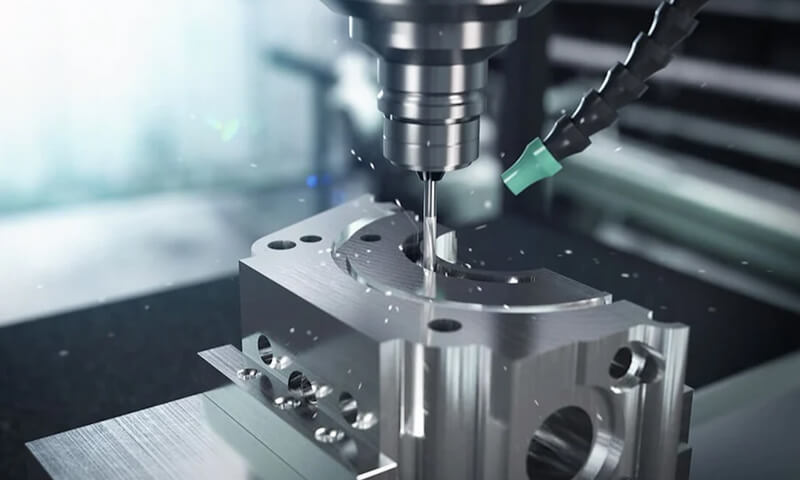
Otočení CNC & Frézování
- Proces:
-
- Blank Preparation: Trim blanks (NAPŘ., 17-4PH round bar) are cut to length and heat-treated (solution annealed at 1,050°C, aged at 480°C) to reach hardness HB 300–320.
- Otočení CNC: 5-axis CNC lathes (NAPŘ., Haas UMC-750) shape the plug’s external profile (NAPŘ., parabolický, Vroubkovaný) with diameter tolerance ±0.01 mm; the seat ring’s sealing surface is turned to a flatness of ≤0.005 mm.
- CNC frézování: For multi-port cages, CNC mills drill 8–12 precision holes (diameter ±0.02 mm) at equal angles to create staged flow paths;
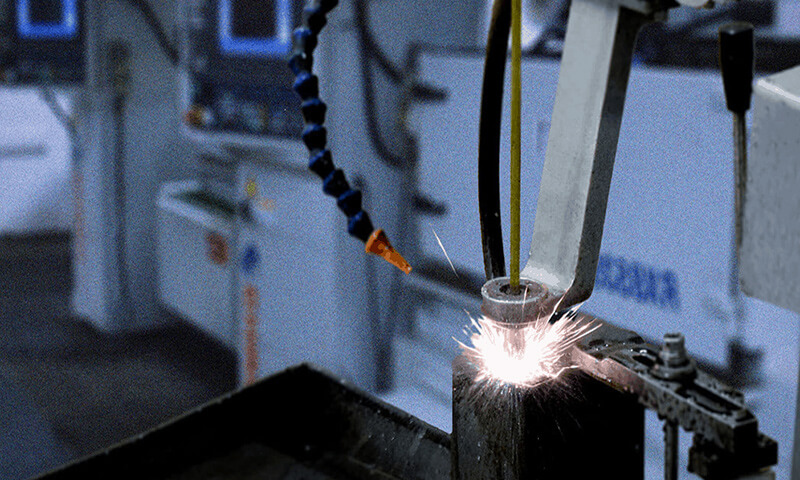
V-notched plugs have their notches cut via wire EDM (elektrické výbojové obrábění) for angle accuracy ±0.1°.
- Key Controls: Řezací nástroje (diamond-coated carbide for 316L, CBN for Stellite 6) are used to avoid material deformation; chladicí kapalina (synthetic for stainless steel, mineral oil for alloys) maintains temperature <50°C to prevent thermal expansion errors.
Lapování (Sealing Surface Finishing)
- Účel: Achieve airtight sealing between plug and seat ring (critical for ISO 5208 Class V/VI leakage).
- Proces:
-
- Lapping Compound Selection: Fine-grit alumina (0.5–1 μm) for metal-to-metal trim; diamond paste (0.1 μm) for soft-seated trim (PTFE-coated plug).
- Lapping Operation: The seat ring is clamped to a lapping machine; the plug is pressed against it with controlled force (50–100 N) and rotated at 50–100 RPM.
The process is repeated with progressively finer compounds until the sealing surface reaches Ra ≤0.4 μm. - Ověření: Sealing surfaces are inspected via optical profilometry to confirm roughness and flatness; a “light test” (holding the plug and seat together against a light source) ensures no gaps.
Povlak (Abrasion/Corrosion Resistance)
- Tungsten Carbide Coating: For trim used in abrasive slurries (hornictví, odpadních vod), HVOF (high-velocity oxygen fuel) spraying applies a 50–100 μm tungsten carbide coating to the plug and seat ring.
The coating is ground to Ra ≤0.8 μm and hardness HV 1,200–1,600. - Povlak PTFE: For food/pharmaceutical trim, a 20–30 μm PTFE coating is applied via electrostatic spraying and cured at 380°C.
The coating meets FDA 21 Část CFR 177 and has a friction coefficient of 0.04 (reducing stem wear).
7. Industry Applications of Angle Globe Valves
Úhlové kulové ventily are widely used across multiple industries where flow redirection, přesné škrcení, and compact piping layouts jsou vyžadovány.

Their unique 90° flow path a robust throttling capability make them suitable for both high-pressure/temperature systems a critical control applications.
| Průmysl | Typical Fluids | Běžné materiály | Tlak & Teplota | Klíčové výhody / Poznámky |
| Výroba energie | Pára, Boiler Feedwater, Chladící voda | Uhlíková ocel (A216 WCB), 316/316L ss, Duplex 2205 | 150–1500 psi, -29° C až 650 ° C. | Compact piping, přesné škrcení, high-temp/pressure capability |
| Olej & Plyn | Crude Oil, Refined Hydrocarbons, Process Gas | Slitinová ocel, Duplex Ss, Hastelloy | 300–4500 psi, -40°C to 800°C | Corrosion/erosion resistance, flow redirection, subsea suitability |
| Chemikálie & Petrochemický | Kyseliny, Caustics, Corrosive Solvents | 316 Ss, Hastelloy C276, Monel | 150–1500 psi, -196° C až 650 ° C. | Precise modulating control, odolnost proti korozi, reduced erosion |
HVAC / District Energy |
Chilled Water, Hot Water, Pára | Bronz, Nerez | 10–300 psi, 0°C až 200 °C | Space-saving, energy-efficient flow control, easy actuator integration |
| Marine / Budování lodí | Mořská voda, Ballast Water, Pára | Bronz, Duplex Ss, 316 Ss | 150-600 psi, -10°C to 250°C | Biofouling resistance, compact 90° flow path, maintenance access |
| Buničina & Papír / Industrial Process | Process Water, Chemicals, Pára | Uhlíková ocel, 316 Ss, Slitinová ocel | 150–1000 psi, 0°C to 450°C | Erosion resistance, přesné škrcení, high-cycle durability |
8. Competitive Comparison: Angle Globe vs. Similar Valves
| Funkce / Typ ventilu | Angle Globe ventil | Straight Globe Valve | Kulový ventil | Angle Check Valve |
| Cesta průtoku | 90° angle, directional change | Inline, Přímo | Přímý průchozí (full-port or reduced-port) | 90° angle, prevents backflow |
| Pokles tlaku | Mírné až vysoké (due to 90° turn) | Mírný, lower than angle globe | Nízký (especially full-port) | Mírný, depends on flow velocity |
| Řízení toku | Přesné škrcení, linear/equal % | Přesné škrcení, linear/equal % | On/off; modulating with V-port design | Žádný (automatic check; unidirectional) |
| Vypínací schopnost | Vynikající, tight seat load | Vynikající | Vynikající (těsné uzavření, Měkká/kovová sedadla) | Automatický, prevents reverse flow |
| Trvanlivost | Vysoký, suitable for high pressure/temp | Vysoký, suitable for high pressure/temp | Vysoký, Méně pohyblivých částí | Mírné až vysoké; wear on seat/hinge |
Instalační prostor |
Kompaktní; suitable for directional piping | Vyžaduje více prostoru | Kompaktní | Kompaktní, 90° directional piping |
| Typické aplikace | Chemikálie, pára, HVAC | General process lines, Distribuce vody | Olej & plyn, Distribuce vody, HVAC | Výtlačné potrubí čerpadla, Nadací voda kotle |
| Obousměrný tok | Ano (depending on seat orientation) | Ano | Ano (v závislosti na designu) | Žádný, unidirectional |
| Automatizace / Aktualizace | Manuál, elektrický, pneumatický, Hydraulické | Elektrický, Manuál, pneumatický, Hydraulické | Manuál, elektrický, pneumatický | Usually manual or spring-assisted |
| Kavitace / Odolnost proti erozi | High with staged/trimmed designs | Mírný | Mírné až vysoké (hard trim possible) | Mírný; seat design critical |
Klíčové statistiky:
- Angle Globe Valves are ideal for precise throttling and directional flow in tight layouts.
- Straight Globe Valves provide similar control but need more piping space.
- Kulové ventily vynikat v fast on/off operations with minimal pressure drop.
- Úhel Zpětné ventily jsou unidirectional, automatic valves, preventing backflow while fitting compact, angled piping layouts.
9. Závěr
Angle globe ventily are versatile control valves that balance precise throttling, good cavitation control and compact piping layout.
Proper material and trim selection, accurate sizing (Kv/Cv), attention to P–T capability and professional actuator specification are essential to realize their advantages.
Use staged trims and hardened materials for erosive service, live-loaded packing for emission control, and vendor Cv/torque data to finalize actuator sizing.
Časté časté
Are angle globe valves bidirectional?
Many are designed for unidirectional service with pressure-assisted sealing; however properly designed double-seat or balanced trims provide bidirectional capability—verify vendor specification.
How do I choose between an angle globe and a Y-pattern globe?
Y-pattern reduces flow-turn angle and pressure drop but often at some loss of throttling precision.
Choose the Y-pattern where lower ΔP and reduced actuator torque are priorities.
What material should I use for an angle globe valve in seawater?
Duplex 2205 nerez (Dřevo 32–35) is ideal. It resists seawater corrosion (rate <0.002 MM/rok) and has high strength, překonat 304 (pitting risk) or carbon steel (rapid rusting).
How do I prevent cavitation in an angle globe valve?
Use multi-port staged trim to reduce ΔP incrementally (each stage <10 psi), upsize the valve to lower velocity, or heat the fluid to raise its vapor pressure.
For severe cavitation, select venturi or sacrificial insert trims.
Can angle globe valves be used for ESD?
Yes—spring-return pneumatic actuators achieve full stroke in 1–3 seconds, meeting ESD requirements.
Však, they are less precise than electric actuators; use them for on/off ESD, not continuous modulation.
What is the typical service life of an angle globe valve in high-temperature steam?
4–6 years with proper maintenance. Use Stellite 6 oříznout (resists oxidation) and graphite packing (vysoká teplota), and inspect trim annually.