
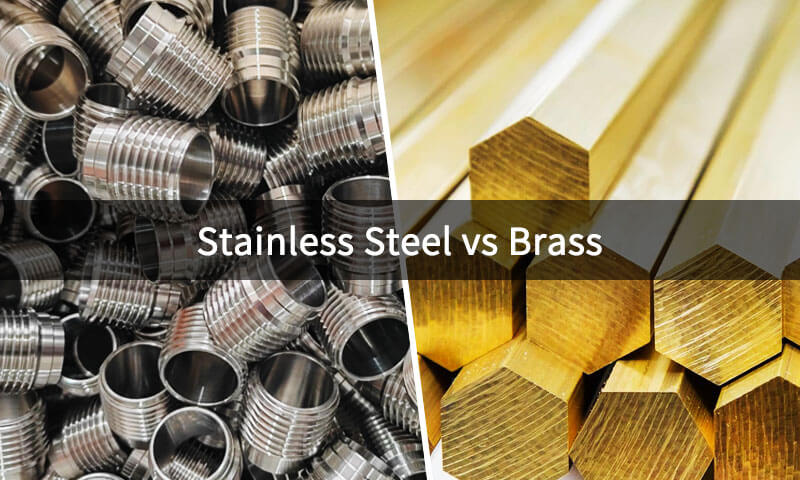
In the world of metals, few comparisons generate as much practical debate among engineers, machinists, and product designers as the choice between stainless steel and brass.
These two materials occupy overlapping yet distinct territories across countless industries—from marine hardware and architectural fittings to precision instrumentation and consumer electronics.
While both metals offer exceptional performance in their respective domains, their underlying metallurgical differences dictate divergent paths in application, Manifattura, and lifecycle economics.
Dan l-artikolu jipprovdi rigoruża, side-by-side examination of stainless steel and brass across every dimension that matters to industry professionals:
kompożizzjoni materjali, imġieba mekkanika, thermal and electrical properties, Reżistenza għall-korrużjoni, manifattura, estetika, spiża, u applikazzjonijiet fid-dinja reali.
1. Stainless steel vs.. Brass: What Is the Difference?
Stainless steel and brass are fundamentally different engineering alloy families. Stainless steel is primarily an iron-chromium alloy, waqt brass is primarily a copper-zinc alloy.
Their different chemical compositions lead to substantial differences in strength, imġieba tal-korrużjoni, konduttività, makkinabilità, dehra, and manufacturing performance.
X'inhu Stainless Steel?
Azzar li ma jissaddadx is a family of ferrous alloys containing at least approximately 10.5% kromju bil-massa.
Chromium is the defining alloying element because it enables the formation of a thin, aderenti, chromium-rich passive oxide film on the material surface.
This passive layer provides stainless steel with its characteristic corrosion resistance.
Meta l-wiċċ ikun bil-ħsara mekkanikament, the passive film can reform when sufficient oxygen is available, helping protect the underlying metal from continued oxidation.

The composition of stainless steel can be further adjusted through additional alloying elements to achieve specific combinations of strength, ebusija, Reżistenza għall-korrużjoni, weldjabbiltà, and temperature performance.
| Element tal-liga | Funzjoni primarja |
| Kromju (Cr) | Provides passivation and corrosion resistance; itejjeb ir-reżistenza għall-ossidazzjoni |
| Nickel (Fi) | Stabbilizza l-awstenita u ttejjeb it-toughness, duttilità, u reżistenza għall-korrużjoni |
| Molibdenu (Mo) | Improves resistance to pitting and crevice corrosion, speċjalment f'ambjenti li fihom il-klorur |
| Karbonju (Ċ) | Increases strength and hardenability but may reduce weld-related corrosion resistance at higher levels |
| Nitroġenu (N) | Increases strength and can improve pitting corrosion resistance |
| Manganiż (Mn) | Supports austenitic phase stability and contributes to strength |
| Ram (Cu) | Used in certain grades to improve precipitation hardening or corrosion performance |
Depending on composition and processing, stainless steels can develop different microstructures, inkluż awstenitiku, ferritiku, martensitiku, duplex, and precipitation-hardening structures.
These microstructural differences explain why stainless steels can range from highly ductile sheet materials to extremely hard wear-resistant components.
Key characteristics include:
- Exceptional corrosion and oxidation resistance
- High tensile strength and hardness
- Excellent cryogenic and elevated-temperature performance
- Bijokompatibilità (certain grades)
- Full recyclability without quality degradation
Common Stainless Steel Grades
| Grad | Us | Karatteristiċi ewlenin | Applikazzjonijiet tipiċi |
| 304 | S30400 | Reżistenza għall-korrużjoni ġenerali eċċellenti, Formabilità, u weldabilità | Tagħmir tal-kċina, Ipproċessar tal-ikel, arkitettura |
| 304L | S30403 | Low-carbon grade with improved resistance to sensitization after welding | Tankijiet iwweldjati, pajpijiet, and fabricated equipment |
| 316 | S31600 | Improved resistance to pitting and crevice corrosion | Kimika, Marine, u tagħmir farmaċewtiku |
| 316L | S31603 | Excellent corrosion resistance and weldability; suitable for welded structures | Tagħmir tal-proċess, marine fabrications, komponenti mediċi |
| 2205 | S32205 | Struttura duplex; qawwa għolja, reżistenza eċċellenti għall-klorur, and good resistance to stress corrosion cracking | Tagħmir offshore, Ipproċessar kimiku, desalinizzazzjoni, Bastimenti tal-pressjoni |
904L |
N08904 | Super austenitic grade with excellent resistance to strong acids and chloride-containing environments | Ipproċessar kimiku, acid-handling equipment, sistemi tal-ilma baħar |
| 17-4PH | S17400 | High strength through precipitation hardening with good corrosion resistance | Aerospazjali, Xaftijiet, valvi, and high-strength components |
| 410 | S41000 | Heat-treatable martensitic grade with good strength and moderate corrosion resistance | Valvoli, pompi, Xaftijiet, and general mechanical parts |
| 440Ċ | S44004 | Very high hardness and excellent wear resistance after heat treatment | Bearings, għodod tal-qtugħ, strumenti kirurġiċi, and precision wear components |
| 430 | S43000 | Ferritiku, manjetiċi, Ekonomiku, and resistant to atmospheric corrosion | Appliances, trim tal-karozzi, applikazzjonijiet dekorattivi |
X'inhu Brass?
Brass huwa a copper-zinc alloy family in which zinc is the principal alloying element.
Depending on the zinc content and additional alloying elements, brass can provide a broad range of properties, from highly ductile sheet-forming alloys to high-strength, reżistenti għall-ilbies, or highly machinable engineering materials.
The copper-rich matrix gives brass its characteristic yellow-gold appearance, Reżistenza tajba għall-korrużjoni, and high thermal and electrical conductivity.

Zinc increases strength and hardness while influencing the alloy’s microstructure and manufacturing behavior.
Brass is commonly divided into alpha brasses, alpha-beta brasses, and more highly alloyed specialized grades.
Lower-zinc alpha brasses generally provide excellent ductility and cold-forming performance, while higher-zinc alpha-beta brasses can offer increased strength and are often more suitable for hot working or mechanical applications.
Additional alloying elements can further modify performance:
- Ċomb has traditionally been used to improve machinability and chip breaking.
- Landa can improve corrosion resistance, particularly in certain marine environments.
- Aluminju can increase strength and improve resistance to oxidation and corrosion.
- Silikon can improve strength, casting characteristics, and lead-free machinability.
- Manganese and iron may be added to specialized high-strength copper alloys.
Key characteristics include:
- Outstanding machinability (the benchmark for machinability ratings)
- Excellent thermal and electrical conductivity
- Superior acoustic properties
- Natural antimicrobial surface properties
- Good corrosion resistance in non-oxidizing environments
Common Brass Grades
| Us | Karatteristiċi Tipiċi | Karatteristiċi ewlenin | Applikazzjonijiet tipiċi |
| C26000 | Skartoċċ ram | Excellent ductility and cold formability | Sheet metal components, decorative products, formed parts |
| C36000 | Ram b'magni ħielsa | Outstanding machinability and chip control | Fittings, valvi, connectors and precision-turned parts |
| C46400 | Ram navali | Good strength and improved seawater corrosion resistance | Ħardwer tal-baħar, shafts and industrial components |
C38500 |
Ram arkitettoniku | Good machinability and attractive appearance | Decorative hardware and architectural components |
| C69300 | Lead-free silicon brass | Saħħa tajba, corrosion resistance and machinability | Plumbing fittings and potable-water components |
| C37700 | Forġa ram | Good hot-workability and mechanical strength | Forged valves, fittings and mechanical hardware |
2. Propjetajiet mekkaniċi: Saħħa, Ebusija u Ebusija
The mechanical properties of stainless steel and brass differ significantly because of their different alloy systems and microstructures.
B'mod ġenerali, stainless steel provides higher strength, ebusija, and load-bearing capability, while brass offers a useful combination of moderate strength, duttilità, makkinabilità, u stabbiltà dimensjonali.
Qawwa tat-tensjoni, Yield Strength and Ductility
Representative mechanical properties of commonly used stainless steel and brass grades are shown below.
| Proprjetà | 304 Azzar li ma jissaddadx | 316 Azzar li ma jissaddadx | C36000 Ram | C46400 Ram Navali |
| Qawwa tat-tensjoni (MPA) | ~515–620 | ~515–620 | ~330–470 | ~380–550 |
| Saħħa tar-rendiment (MPA) | ~205–310 | ~205–310 | ~140–310 | ~170–310 |
| Titwil (%) | ~40–60 | ~40–60 | ~18–45 | ~20–40 |
| Ebusija (HB) | ~123–217 | ~123–217 | ~80–160 | ~90–170 |
Values are representative ranges for common wrought product conditions rather than universal specification limits.
Actual properties depend strongly on temper, ħxuna, forma tal-prodott, and applicable material standard.
Strength and Load-Bearing Capability
Stainless steel generally provides higher and more consistent load-bearing capability than conventional brass.
Gradi awstenitiċi bħal 304 u 316 combine relatively high tensile strength with excellent ductility, making them suitable for structural, li fihom il-pressjoni, and mechanically loaded components.
Brass offers moderate strength but excellent machinability and adequate mechanical performance for fittings, konnetturi, komponenti tal-valv, u ħardwer għal skopijiet ġenerali.
Cold working can significantly increase brass strength, although this reduces ductility.
Work Hardening and Cold-Worked Strength
Both stainless steel and brass can be strengthened through cold working.
304 u 316 stainless steel exhibit particularly strong strain-hardening behavior, allowing substantial increases in yield strength during forming.
The trade-off is reduced ductility and increased forming or machining difficulty.
Brass also responds to cold working, with strength determined strongly by alloy and temper.
This allows manufacturers to select different material conditions to balance strength and formability.
Ebusija u reżistenza għall-ilbies
Standard 304 u 316 stainless steels have moderate hardness in the annealed condition and are not optimized for severe abrasive wear.
B'kuntrast, martensitic stainless steels such as 420 and 440C can be heat treated to approximately 40–60 HRC, providing much higher hardness and wear resistance.
Conventional brass is generally softer, typically making it more suitable for applications where machinability, frizzjoni baxxa, and moderate loading are more important than extreme wear resistance.
Toughness and Impact Resistance
Austenitic stainless steels offer excellent toughness and ductility across a wide temperature range and can retain strong impact resistance at cryogenic temperatures.
This makes grades such as 304 u 316 suitable for demanding low-temperature applications.
Brass provides good room-temperature toughness, but its low-temperature performance varies considerably with alloy and condition.
Material selection should therefore consider the actual operating temperature and impact requirements.
Prestazzjoni tal-għeja
Both stainless steel and brass can be used under cyclic loading, but fatigue performance depends strongly on alloy condition, finitura tal-wiċċ, ġeometrija tal-komponenti, konċentrazzjoni tal-istress, and manufacturing quality.
Stainless steel generally offers a broader mechanical performance envelope, while brass is effective for moderately stressed components where machinability and conductivity are also important.
3. Konduttività Termali u Elettrika: Stainless steel vs.. Brass
Thermal and electrical conductivity represent one of the clearest differences between stainless steel and brass.
Konduttività termali
Brass is well suited to applications requiring efficient heat transfer.
Its relatively high thermal conductivity allows heat to spread quickly through a component, making brass useful for heat-transfer hardware, thermal fittings, radjaturi, Skambjaturi tas-sħana, and certain electrical components.
Stainless steel has comparatively low thermal conductivity.
This can be advantageous where thermal insulation or controlled heat transfer is desired, but it also means that localized heating can produce greater temperature gradients within a component.
During welding and machining, this characteristic requires appropriate process control to manage heat accumulation and thermal distortion.
Konduttività elettrika
Brass also has a major advantage in electrical applications because its copper-rich composition provides substantially better electrical conductivity than stainless steel.
It is widely used for electrical terminals, konnetturi, contact components, grounding hardware, and conductive fittings where mechanical strength and corrosion resistance must be combined with electrical performance.
Stainless steel is a relatively poor electrical conductor compared with brass and copper alloys.
It is consequently rarely selected as the primary conductive material when electrical efficiency is a major design requirement.
Its value instead lies in applications where durabilità mekkanika, Reżistenza għall-korrużjoni, and structural stability are more important.
4. Reżistenza għall-korrużjoni: Stainless steel vs.. Brass
Corrosion resistance is one of the most important considerations when choosing between stainless steel and brass.

Reżistenza għall-Korrużjoni tal-Azzar Stainless
Stainless steel obtains its characteristic corrosion resistance primarily from chromium. Exposure to oxygen allows a thin chromium-rich passive film to form on the surface, which acts as a protective barrier against further corrosion.
The effectiveness of this protection depends heavily on alloy composition and environmental conditions.
Gradi awstenitiċi bħal 304 u 316 generally provide strong resistance to atmospheric corrosion, umdità, food-processing environments, and many industrial media.
Molybdenum-containing grades such as 316 offer improved resistance to localized chloride attack compared with conventional 304.
Madankollu, stainless steel is not completely corrosion-proof. Depending on grade and environment, it can experience:
- Korrużjoni tal-pitting
- Korrużjoni tal-qsim
- Tkissir tal-korrużjoni tal-istress
- Korrużjoni intergranulari
- Korrużjoni galvanika
Konsegwentement, selecting the appropriate stainless steel grade is essential, particularly for marine, chemical-processing, and high-chloride applications.
Corrosion Resistance of Brass
Brass benefits from the inherent corrosion resistance of copper and generally performs well in atmospheric conditions, freshwater systems, plumbing applications, and many industrial environments.
Its corrosion products can form relatively protective surface layers that slow further deterioration.
Madankollu, brass has specific corrosion mechanisms that require attention. Dezincification is particularly important for certain brass alloys exposed to aggressive water chemistry.
F'dan il-proċess, zinc is selectively removed from the alloy, potentially leaving behind a porous, copper-rich structure with reduced mechanical integrity.
Some brass alloys can also be affected by stress corrosion cracking or corrosion in specific chemical environments. Alloy selection is therefore important when brass is intended for long-term fluid service.
5. Machinability and Manufacturing Performance
Machinability is an area where brass generally has a significant advantage over conventional stainless steel.

Machinability of Brass
Brass is widely regarded as one of the most machinable engineering metals.
Many brass grades produce relatively short, manageable chips and can be processed efficiently by turning, tħin, tħaffir, Tapping, u kamini.
Free-machining grades are particularly well suited to automated CNC production.
Their machining characteristics allow manufacturers to achieve high production rates while maintaining good dimensional consistency and reducing tool-management requirements.
Machinability of Stainless Steel
Stainless steel is generally more demanding to machine. Many austenitic grades exhibit significant Aħdem twebbis, meaning that improperly controlled cutting can rapidly harden the machined surface and make subsequent tool engagement more difficult.
Stainless steel also has relatively low thermal conductivity compared with brass, causing more heat to remain concentrated near the cutting zone.
Proper cutting parameters, rigid workholding, suitable tooling, effective coolant delivery, and adequate chip evacuation are therefore important.
Different stainless steel families behave differently. Free-machining grades can be processed more easily, while hardened martensitic grades may require specialized tooling and carefully controlled cutting conditions.
Formazzjoni u Fabbrikazzjoni
Stainless steel and brass both support a broad range of manufacturing processes, but their forming behavior differs.
Austenitic stainless steels generally provide excellent ductility and can be deep drawn, mgħawweġ, irrumblat, ittimbrat, iwweldjat, u fabbrikati.
Their strong work-hardening tendency, madankollu, may require controlled forming sequences and intermediate annealing for demanding operations.
Brass is also highly formable, particularly in ductile alpha-brass grades. It can be stamped, mgħawweġ, miġbuda, falsifikati, u maħduma b'mod effiċjenti.
The specific alloy and temper determine whether cold forming or hot working is most appropriate.
Casting and Complex Components
Both materials can be produced through casting, but their casting characteristics differ substantially because of their different melting behavior and solidification characteristics.
Brass is widely used for ikkastjar ta 'investiment, ikkastjar tar-ramel, Die Casting, u ikkastjar ċentrifugali, particularly for fittings, valvi, ħardwer dekorattiv, and complex components.
Stainless steel is also highly compatible with investment casting and ikkastjar tar-ramel, making it suitable for complex valve bodies, komponenti tal-pompa, impellers, industrial hardware, u komponenti ta 'preċiżjoni.
Investment casting is especially valuable when stainless steel parts require complex geometry combined with controlled dimensional accuracy.
6. Stainless steel vs.. Brass: Appearance and Surface Finish
Appearance can be an important selection factor when components are visible or form part of an architectural, dekorattivi, or consumer product.
Stainless Steel Appearance
Stainless steel typically has a silver-white, neutral metallic appearance.
Its visual character can range from relatively dull and industrial to highly reflective, depending on the manufacturing process and surface treatment.
Common stainless steel finishes include:
- Mill finish: Retains the characteristic appearance produced during rolling, tifforma, jew magni.
- Brushed finish: Produces a directional texture that reduces visible fingerprints and minor scratches.
- Satin finish: Provides a uniform, low-reflectivity surface suitable for architectural and consumer applications.
- Polished finish: Joħloq bla xkiel, reflective appearance ranging from semi-polished to mirror-like.
- Electropolished finish: Removes a controlled amount of surface material to produce a cleaner, aktar lixx, and more corrosion-resistant surface.
Stainless steel is particularly attractive when a component needs a nadif, modern, Iġjeniku, and corrosion-resistant appearance.
Brass Appearance
Brass has a naturally warm yellow-gold metallic appearance, making it particularly popular for decorative and architectural applications.
Its color can vary according to copper and zinc content and can range from pale yellow to deeper golden tones.
Brass can also develop a surface patina over time as it reacts with its environment.
Some applications deliberately retain this aging effect, while others use polishing, clear coating, kisi, or other treatments to preserve the original appearance.
Typical brass finishes include polished, brushed, satin, antique, and plated surfaces.
Because brass is relatively easy to polish and machine, it can achieve an attractive decorative finish while retaining its underlying metallic character.
7. Tqabbil tal-Ispejjeż: Stainless steel vs.. Brass
Material cost is an important consideration, but comparing stainless steel and brass solely by their raw material prices can lead to an inaccurate economic assessment.
The actual cost of a component depends on alloy grade, disponibbiltà materjali, ġeometrija tal-parti, proċess tal-manifattura, rekwiżiti tal-magni, trattament tal-wiċċ, volum tal-produzzjoni, u l-ħajja tas-servizz.

Spiża tal-Materjal
Brass contains a high proportion of copper, which is a relatively valuable base metal. Bħala riżultat, brass can have a relatively high raw-material cost, particularly for copper-rich grades.
Stainless steel is based primarily on iron and can be economically attractive in many applications.
Madankollu, alloying additions such as nickel and molybdenum can substantially affect the price of higher-performance grades.
Pereżempju, high-alloy stainless steels designed for severe corrosion environments generally cost more than standard grades.
Għalhekk, neither material should be considered universally cheaper. The selected grade is often more important than the material family itself.
Manufacturing Cost
Brass generally provides an advantage in machining-intensive production because of its excellent machinability.
Faster machining, efficient chip formation, and lower tool wear can reduce manufacturing costs, particularly for large quantities of small precision components.
Stainless steel normally requires more careful machining control. Cutting parameters, għodda, coolant management, and workholding must be optimized to control heat generation and work hardening. These factors can increase processing costs.
Madankollu, stainless steel can become economically favorable when its greater durability and corrosion resistance reduce maintenance, sostituzzjoni, or failure costs during service.
Spiża taċ-Ċiklu tal-Ħajja
Għal komponenti industrijali, the most meaningful comparison is often total cost of ownership rather than initial purchase price.
Brass can provide excellent economic value where moderate strength, Reżistenza tajba għall-korrużjoni, makkinabilità għolja, and conductivity are sufficient.
Stainless steel may provide a better long-term economic solution when the component operates in aggressive environments, carries significant loads, or requires extended service life with minimal maintenance.
A practical cost evaluation should therefore consider:
Spiża tal-materjal + manufacturing cost + finishing cost + manutenzjoni + replacement risk + expected service life.
This approach is particularly important for valves, fittings, komponenti tal-pompa, industrial hardware, and other components where material failure can create substantial downstream costs.
8. Applications of Stainless Steel and Brass
Although stainless steel and brass can sometimes serve similar functions, their different mechanical, termali, elettriku, and corrosion properties make them better suited to different application environments.
Applikazzjonijiet ta 'Stainless Steel
Stainless steel is widely used where strength, Reżistenza għall-korrużjoni, Durabilità, iġjene, and temperature resistance are critical.
Applikazzjonijiet komuni jinkludu:
| Industrija | Typical Stainless Steel Applications |
| Ikel & Xorb | Tankijiet, pajpijiet, tagħmir għall-ipproċessar, fittings |
| Ipproċessar kimiku | Valvoli, pompi, pajpijiet, bastimenti |
| Marine | Xaftijiet, Qafliet, fittings, komponenti tal-pompa |
| Żejt & Gass | Valvoli, konnetturi, komponenti strutturali |
| Farmaċewtiku | Processing equipment, fittings, pajpijiet |
| Arkitettura | Poġġamani, façades, attrezzaturi |
| Karozzi | Komponenti tal-egżost, parentesi, partijiet ta 'preċiżjoni |
| Mediku | Surgical instruments and equipment |
Applikazzjonijiet tar-ram
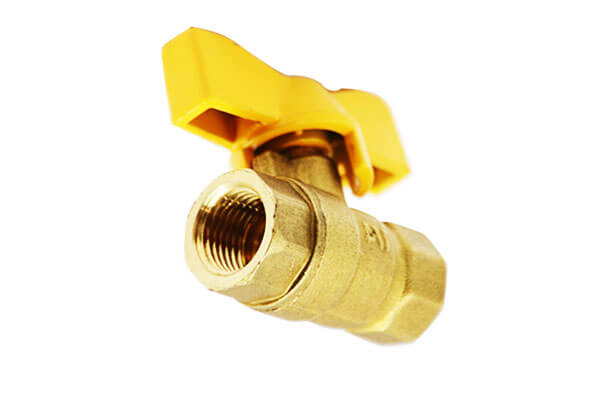
Brass is particularly valuable where machinability, konduttività elettrika, Konduttività termali, Reżistenza għall-korrużjoni, and appearance are important.
Applikazzjonijiet tipiċi jinkludu:
| Industrija | Typical Brass Applications |
| Plumbing | Fittings, konnetturi, valvi, adapters |
| HVAC | Valvoli, fittings, konnetturi |
| Elettriku | Terminali, kuntatti, konnetturi |
| Tagħmir industrijali | Boxxli, gerijiet, fittings, ħardwer |
| Marine | Marine fittings and hardware |
| Arkitettura | Mankijiet, aqta ', ħardwer dekorattiv |
| Karozzi | Konnetturi, fittings, komponenti ta' preċiżjoni |
| Strumentazzjoni | Small fittings, konnetturi, komponenti |
9. Tqabbil komprensiv: Stainless steel vs.. Brass
Stainless steel and brass are both established engineering materials, but they are optimized for different performance priorities.
| Proprjetà | Azzar li ma jissaddadx | Brass |
| Familja materjali | Iron-based alloy containing chromium | Copper-zinc alloy |
| Saħħa | Ġeneralment ogħla | Moderat għal għoli, depending on alloy and temper |
| Ebusija | Firxa wiesgħa; some grades can be heat treated to high hardness | Generally moderate; higher-strength specialty brasses are available |
| Ebusija | Excellent in suitable grades, particularly austenitic stainless steel | Good for many general-purpose applications |
Reżistenza għall-korrużjoni |
Eċċellenti; highly dependent on grade and environment | Tajjeb għal eċċellenti; varies significantly with alloy and environment |
| Konduttività elettrika | Relattivament baxx | Significantly higher |
| Konduttività termali | Relattivament baxx | Significantly higher |
| Makkinabilità | Moderat; varies considerably by grade | Generally excellent |
| Formabilità | Good for austenitic grades | Ġeneralment tajjeb |
| Ilbes reżistenza | Excellent for selected martensitic and hardened grades | Moderat; dipendenti fuq il-liga |
| Magnetiżmu | Depends on metallurgical structure; many grades are magnetic or non-magnetic | Ġeneralment mhux manjetiku |
| Dehra | Silver-white metallic appearance | Yellow-gold metallic appearance |
Reżistenza għas-sħana |
Generally excellent | Moderat għal tajjeb, skond il-liga |
| Weldabilità | Grade-dependent; austenitic grades generally weld well | Ġeneralment tajjeb, but alloy-specific precautions may apply |
| Typical manufacturing | Ikkastjar, Forġa, Magni CNC, tifforma, iwweldjar | Ikkastjar, Forġa, estrużjoni, ittimbrar, Magni CNC |
| Applikazzjonijiet tipiċi | Tagħmir kimiku, Komponenti tal-Baħar, tagħmir għall-ikel, valvi, partijiet strutturali | Fittings, konnetturi, komponenti elettriċi, ħardwer dekorattiv, valvi |
| L-aktar adattat għal | Saħħa, Durabilità, Reżistenza għall-korrużjoni, demanding environments | Makkinabilità, konduttività, dehra, general-purpose fittings |
10. Custom Stainless Steel and Brass Parts from DEZE
Funderija DEZE jipprovdi custom stainless steel u ram casting and CNC machining solutions for industrial components that require controlled dimensional accuracy, Reżistenza għall-korrużjoni, Qawwa mekkanika, and reliable production consistency.
The manufacturing process can be tailored from material selection and casting-process development through machining, irfinar, trattament tas-sħana, u spezzjoni finali.
| Kapaċità | DEZE Custom Stainless Steel u Brass Partijiet |
| Materjali | 304, 304L, 316, 316L, 17--4ph, 410, 420, 440Ċ, duplex;C26000, C36000, C46400, C87800, C89833. |
| Proċessi ta' manifattura | Ikkastjar ta 'investiment, ikkastjar tar-ramel, Tidwir CNC, Tħin tas-CNC, tħaffir, tħin |
| Piż tal-parti | 0.01–1000 kg |
| Kapaċità dimensjonali | Custom components according to drawings, 3Mudelli D., and engineering specifications |
| Tolleranzi tal-ikkastjar | Investment casting can achieve ISO 8062 CT5–CT7 under suitable conditions |
| Finituri tal-wiċċ | Kif mitfugħa, bil-makna, illustrat, passivat, elettropolizzat |
| Kontroll tal-kwalità | ISO 9001:2015 Ċertifikat; 100% NDT u spezzjoni dimensjonali. |
| Żmien taċ-ċomb | 6‑12-il ġimgħa għall-għodda; 2‑4 ġimgħat għal ordnijiet ripetuti. |
11. Konklużjoni
Stainless steel and brass represent two fundamentally different approaches to engineering material selection.
Azzar li ma jissaddadx is generally the better choice when high mechanical strength, Durabilità, Reżistenza għall-korrużjoni, ebusija, or elevated-temperature performance is the primary requirement.
Its extensive grade system also allows engineers to optimize properties for applications ranging from food-processing equipment to marine and chemical-processing components.
Brass, b'kuntrast, is particularly attractive when machinability, konduttività elettrika u termali, Reżistenza għall-korrużjoni, and appearance are important.
Its relatively easy machining characteristics make it highly suitable for fittings, konnetturi, valvi, komponenti ta' preċiżjoni, u ħardwer dekorattiv.
For custom components, material selection and manufacturing-process selection should be evaluated together.
A technically appropriate alloy combined with the right casting, Forġa, magni, and finishing strategy can provide a substantially better balance between performance, manifattura, u l-ispiża totali.
FAQs
Is stainless steel stronger than brass?
B'mod ġenerali, stainless steel provides higher strength and hardness than conventional brass.
Madankollu, the actual mechanical properties depend strongly on the specific alloy, temper, u trattament tas-sħana.
Specialty brasses can provide considerably higher strength than standard free-machining brass grades.
Which is more corrosion resistant, stainless steel or brass?
There is no universal answer because corrosion resistance depends on the alloy and service environment.
Stainless steel generally performs better in many aggressive environments, particularly when an appropriate grade such as 316L is selected.
Brass can provide excellent resistance in water and atmospheric environments but may be susceptible to dezincification or other forms of corrosion under unfavorable conditions.
Is brass easier to machine than stainless steel?
IVA. Brass is generally easier to machine and typically provides efficient chip formation and good tool life.
Stainless steel can require more careful control of cutting speed, rata ta 'għalf, għodda, and heat management because some grades work-harden readily.
Is stainless steel more expensive than brass?
Mhux bilfors. The cost depends on the specific grade, material market conditions, ġeometrija tal-komponenti, and manufacturing process.
High-alloy stainless steels can be expensive, while copper-rich brass alloys can also carry substantial material costs. Manufacturing and life-cycle costs should be considered alongside raw-material price.
Can stainless steel and brass be used together?
IVA, but galvanic corrosion must be considered when the two metals are electrically connected in the presence of an electrolyte.
Appropriate material selection, iżolament, Kisi, and environmental control may be required, particularly in marine or continuously wet environments.
Is-sadid tar-ram?
LE. Brass does not rust because it contains no iron. Madankollu, it does corrode—it tarnishes, develops a patina, and can undergo dezincification (selective leaching of zinc).

