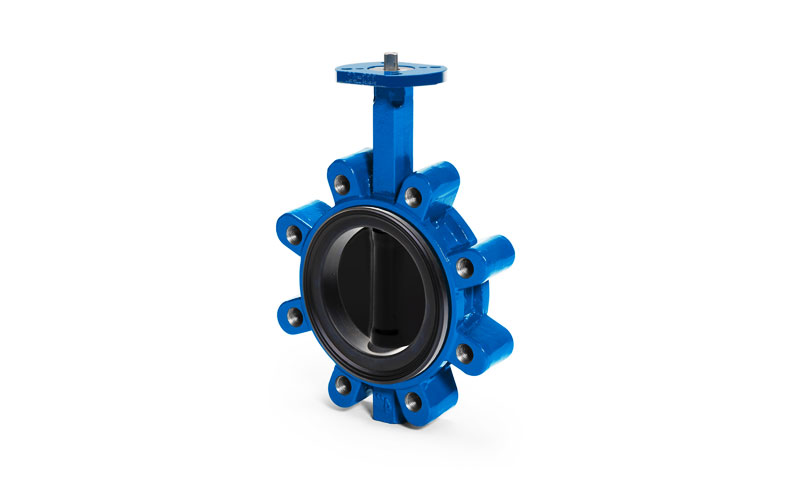
Fi 1.4307 stainless steel is one of the most widely used low-carbon austenitic stainless steels in European and international manufacturing.
Better known as the EN equivalent of 304L-azzar li ma jissaddadx, it combines good corrosion resistance, formabbiltà eċċellenti, reliable weldability, and broad compatibility with modern manufacturing processes.
Its relatively low carbon content is particularly important. Compared with standard EN 1.4301 / Aisi 304, Fi 1.4307 stainless steel is designed to reduce the risk of chromium carbide precipitation during welding or prolonged exposure to sensitization temperatures.
Bħala riżultat, it is especially suitable for welded structures, fabricated equipment, sistemi ta' pajpijiet, Tankijiet, food-processing machinery, Komponenti arkitettoniċi, and custom precision parts.
1. What Is EN 1.4307 Azzar li ma jissaddadx?
Fi 1.4307 huwa an austenitic chromium‑nickel Azzar li ma jissaddadx belonging to the 18/8 familja (bejn wieħed u ieħor 18% kromju u 8% Nickel).
It is the European standard equivalent of AISI 304L (US S30403) and is also known by the chemical symbol X2CrNi18‑9.
The “L” designation indicates its low carbon content (≤0.030%), which provides superior resistance to intergranular corrosion after welding.
As an austenitic grade, 1.4307 għandu a face‑centred cubic (FCC) struttura tal-kristall, which imparts excellent ductility, Formabilità, u toughness.

Like other conventional austenitic stainless steels, Fi 1.4307 is generally non-magnetic in the fully annealed condition.
Madankollu, cold working can induce a certain amount of deformation-induced martensite, which may result in slight magnetic behavior depending on the degree of deformation and the material chemistry.
The alloy is therefore frequently selected when a manufacturer requires a corrosion-resistant material that can be formed, iwweldjat, bil-makna, and finished without the processing limitations associated with higher-carbon stainless steel grades.
Fi 1.4307 Stainless Steel Designations and International Equivalents
| Standard | Denominazzjoni |
| Fi (Ewropea) | 1.4307 |
| EN Chemical Symbol | X2CrNi18‑9 |
| Aisi (Amerikana) | 304L |
| Us | S30403 |
| Minn | 1.4307 |
| Huwa (Ġappuniż) | SUS304L |
| ISO | X2CrNi18‑9 |
| GB (Ċiniż) | 022Cr19Ni10 |
2. Kompożizzjoni Kimika ta' 1.4307 Azzar li ma jissaddadx
The low carbon content is the defining feature of 1.4307, distinguishing it from standard 304 (1.4301). The table below shows the specified composition per EN 10088.
| Element | Piż % (Fi 10088) | Rwol |
| Karbonju (Ċ) | ≤ 0.030 | Key differentiator – low carbon prevents sensitisation and intergranular corrosion after welding. |
| Silikon (U) | ≤ 1.00 | Deossidant; itejjeb ir-reżistenza għall-ossidazzjoni. |
| Manganiż (Mn) | ≤ 2.00 | Deossidant; stabilises austenite; ittejjeb il-ħdim sħun. |
| Fosfru (P) | ≤ 0.045 | Impurità kkontrollata; reduces toughness if too high. |
| Kubrit (S) | ≤ 0.015 | Impurità kkontrollata; improves machinability but reduces corrosion resistance. |
Kromju (Cr) |
17.0 - 19.5 | Primary corrosion‑resistant element; forms passive chromium oxide film. |
| Nickel (Fi) | 8.0 - 10.5 | Stabilises austenitic structure; improves corrosion resistance and toughness. |
| Ħadid (Fe) | Bilanċ | Metall bażiku. |
| Nitroġenu (N) | ≤ 0.11 | Strengthens austenite; improves pitting resistance. |
għarfien ewlieni: The carbon content of ≤0.030% is the critical difference between 1.4307 (304L) u 1.4301 (304) Azzar li ma jissaddadx.
This low carbon content prevents the precipitation of chromium carbides at grain boundaries during welding, eliminating sensitisation and ensuring excellent corrosion resistance in welded structures.
3. Mechanical Properties of EN 1.4307 Azzar li ma jissaddadx
Mechanical properties vary according to product form, ħxuna, trattament tas-sħana, cold-work level, and applicable standard.
The following values represent typical minimum or commonly specified properties for solution-annealed EN 1.4307 prodotti.
| Proprjetà | Valur tipiku / Rekwiżit | Sinifikat tal-Inġinerija |
| Proof Strength, RP0.2 | ≥170–210 MPa* | Resistance to the onset of permanent deformation |
| Qawwa tat-tensjoni, Rm | Approximately 480–680 MPa* | Maximum tensile stress before fracture |
| Elongation at Fracture | Typically ≥ 40–45%* | Jindika duttilità eċċellenti u kapaċità ta 'formazzjoni |
| Modulu elastiku | Approximately 190–200 GPa | Determines elastic stiffness |
| Ebusija | Typically ≤215 HBW in annealed condition** | Moderate hardness with good formability |
4. Proprjetajiet Fiżiċi u Termali
The following values are representative for EN 1.4307 / X2CrNi18-9 stainless steel.
Actual properties may vary slightly depending on product form, manufacturing condition, temperatura, and the applicable material standard.
| Proprjetà | Valur tipiku | Sinifikat tal-Inġinerija |
| Densità | Appross. 7.9–8.0 g/cm³ | Important for component weight and mass calculations |
| Electrical resistivity at 20°C | Appross. 0.73 µΩ·m | Relevant for electrical and resistance-heating applications |
| Thermal conductivity at 20°C | Appross. 14–15 W/(m·K) | Inferjuri mill-azzar tal-karbonju; affects heat dissipation and machining |
| Specific heat capacity at 20°C |
Appross. 500 J/(kg·K) |
Determines the energy required to raise material temperature |
| Mean coefficient of thermal expansion, 20–100 ° C. | Appross. 16–17 × 10⁻⁶/K | Important for dimensional stability during heating and cooling |
| Firxa tat-tidwib | Appross. 1,400–1,450°C | Relevant to welding and melting processes |
| Imġieba manjetika | Ġeneralment non-magnetic in the annealed condition | Useful for applications requiring low magnetic response |
One of the most important engineering characteristics of 1.4307 huwa tiegħu relatively high coefficient of thermal expansion compared with ferritic steels and carbon steels.
Components subjected to significant temperature fluctuations may therefore experience greater dimensional change.
This must be considered when designing long pipelines, Skambjaturi tas-sħana, welded structures, assemblaġġi ta' preċiżjoni, and components joined to materials with different thermal expansion behavior.
Prestazzjoni tat-Temperatura
- Low-temperature performance: Like all austenitic stainless steels, 1.4307 exhibits no ductile-to-brittle transition and retains excellent toughness down to cryogenic temperatures.
It is suitable for service down to -196°C and is widely used for cryogenic storage and processing equipment. - Prestazzjoni f'temperatura għolja: Continuous service temperature is typically limited to 800–870°C for oxidation resistance.
The low carbon content slightly reduces high-temperature creep strength relative to higher-carbon 1.4301, so it is not the first choice for load-bearing high-temperature structures.
5. Reżistenza għall-korrużjoni ta ' 1.4307 Azzar li ma jissaddadx
Corrosion resistance is one of the defining advantages of EN 1.4307 Azzar li ma jissaddadx.
Its corrosion performance is primarily derived from the formation of a thin, aderenti, and self-repairing chromium oxide passive film fuq il-wiċċ.
When the surface is mechanically damaged, oxygen exposure allows this passive layer to reform, provided the environment is suitable for repassivation.
Reżistenza għall-Korrużjoni Ġenerali
Fi 1.4307 stainless steel performs well in environments involving:
- Indoor and normal outdoor atmospheric exposure.
- Freshwater and many clean water systems.
- Food-processing environments.
- Organic chemicals.
- Many mildly oxidizing acids.
- Pharmaceutical and sanitary equipment.
- General industrial fabrication.
The actual corrosion resistance depends heavily on surface finish, kwalità tal-fabbrikazzjoni, espożizzjoni kimika, temperatura, konċentrazzjoni tal-klorur, and cleaning conditions.
A bla xkiel, properly cleaned, and passivated surface generally performs better than a rough or contaminated surface.
Iron contamination introduced during machining, tħin, or fabrication can compromise surface corrosion resistance if not removed.
Resistance to Intergranular Corrosion
The major metallurgical advantage of EN 1.4307 over EN 1.4301 huwa tiegħu kontenut ta 'karbonju aktar baxx, generally limited to approximately 0.03% massimu.
During welding or exposure to certain elevated temperatures, carbon can combine with chromium to form chromium carbides at grain boundaries.
This process can locally reduce the chromium concentration and create regions more susceptible to intergranular corrosion.
The reduced carbon content of 1.4307 minimizes this risk. Bħala riżultat, the material is particularly suitable for:
- Welded pressure vessels.
- Tanks and pipelines.
- Fabricated process equipment.
- Structures where post-weld solution annealing is impractical.
- Components containing multiple welds or complex welded geometries.
Korrużjoni ta' ħofor u xquq
Although EN 1.4307 stainless steel provides good general corrosion resistance, it is not specifically designed for severe chloride environments.
Chloride ions can locally damage the passive film and initiate Pitting korrużjoni jew korrużjoni tax-xquq.
The risk increases with:
- Higher chloride concentration.
- Elevated temperature.
- Stagnant conditions.
- Crevices and deposits.
- Rough or contaminated surfaces.
- Poor drainage.
Konsegwentement, Azzar li ma jissaddadx 1.4307 may not be the preferred choice for direct seawater exposure, highly concentrated salt solutions, or aggressive chloride-containing process media.
F'dawn l-ambjenti, molybdenum-containing grades such as Fi 1.4404 / 316L generally provide improved resistance.
Qsim tal-korrużjoni tal-istress
Like all standard austenitic stainless steels, 1.4307 stainless steel is susceptible to chloride stress corrosion cracking at temperatures above approximately 60°C.
The low-carbon modification does not improve SCC resistance. For hot chloride service environments, duplex or ferritic stainless steels offer inherently better performance.
6. Weldability of EN 1.4307 Azzar li ma jissaddadx
Fi 1.4307 is widely regarded as having weldjabbiltà eċċellenti, which is one of the main reasons for its extensive use in tanks, pajpijiet, process equipment, strutturi arkitettoniċi, and fabricated stainless steel components.
Its low carbon content reduces the tendency toward sensitization and improves resistance to intergranular corrosion in the heat-affected zone after welding.
F'ħafna applikazzjonijiet, this allows welded assemblies to be used without post-weld solution annealing.
Suitable Welding Processes
Fi 1.4307 can be welded using most conventional fusion-welding processes, inkluż:
- TIG/GTAW welding.
- MIG/GMAW welding.
- Plasma arc welding.
- Iwweldjar bil-lejżer.
- Iwweldjar tar-reżistenza.
- Orbital welding.
- Submerged arc welding for suitable heavy-section applications.
The choice of process depends on component thickness, joint geometry, volum tal-produzzjoni, rekwiżiti dimensjonali, and surface-quality expectations.
Għażla tal-metall tal-mili
For welded joints, filler materials are commonly selected to provide compatible corrosion resistance and weld-metal properties.
Depending on the applicable standard and service conditions, commonly used filler categories include ER304L (AWS A5.9)-type consumables; 308L is also suitable, which are designed for welding 304L-type stainless steels.
7. Common Manufacturing Processes for 1.4307 Stainless Steel Components
Fi 1.4307 stainless steel is valued not only for its corrosion resistance and weldability, but also for its broad manufacturing versatility.
Fabbrikazzjoni tal-folja tal-metall
Fabbrikazzjoni tal-folja tal-metall is one of the most widely used manufacturing routes for EN 1.4307.
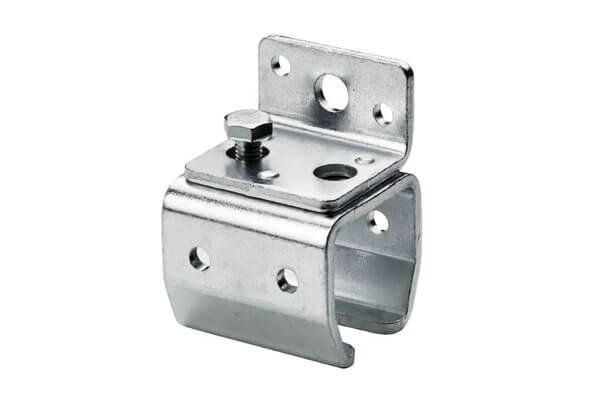
The material is supplied in sheet, pjanċa, strixxa, or coil form and can be processed through cutting, liwi, Punching, rolling, and forming operations to produce components ranging from simple brackets to large fabricated enclosures and process equipment.
Because EN 1.4307 combines good ductility with reliable corrosion resistance, it is particularly suitable for components requiring complex bends, welded seams, or hygienic surfaces.
Applikazzjonijiet tipiċi
Common applications include food-processing equipment, stainless steel cabinets, machine guards, kompartimenti elettriċi, tankijiet tal-ħażna, ducting, pannelli arkitettoniċi, Tagħmir għall-ipproċessar kimiku, and fabricated piping components.
Magni CNC
Magni CNC is used when EN 1.4307 components require high dimensional accuracy, toqob ta 'preċiżjoni, ħjut, uċuħ tas-siġillar, or complex three-dimensional geometries.
Typical operations include CNC turning, tħin, tħaffir, boring, Tapping, u tħin.
The process is particularly suitable for custom components, prototipi, baxx- għal produzzjoni ta’ volum medju, and parts that require tight tolerances that may be difficult to achieve through forming or casting alone.
Applikazzjonijiet tipiċi
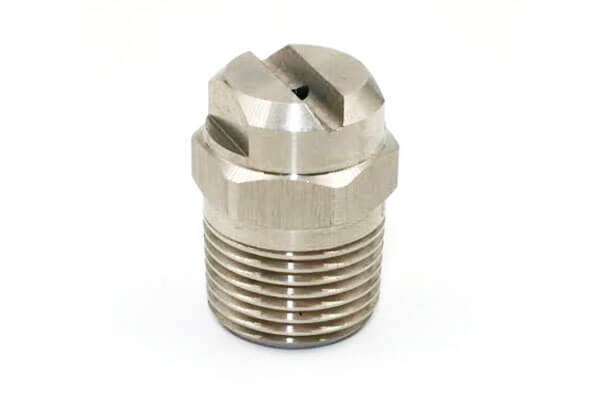
Fi 1.4307 CNC-machined components include valve bodies and fittings, komponenti tal-pompa, Xaftijiet, flanġijiet, manifolds, Housings ta 'preċiżjoni, threaded connectors, medical and laboratory equipment parts, and custom components for food and chemical processing systems.
Ikkastjar ta 'investiment
Ikkastjar ta 'investiment, Magħruf ukoll bħala l-ikkastjar tax-xama mitlufa, is suitable for manufacturing EN 1.4307 stainless steel components with complex geometry that would require extensive machining if produced from solid bar or billet.
The process involves producing a wax pattern, building a ceramic shell around the pattern, removing the wax, and pouring molten stainless steel into the resulting cavity.
Wara s-solidifikazzjoni, the ceramic shell is removed and the casting undergoes cleaning, irfinar, u, fejn meħtieġ, Magni ta 'preċiżjoni.
Applikazzjonijiet tipiċi
Typical EN 1.4307 investment-cast components include valve and pump bodies, fittings tal-pajpijiet, impellers, parentesi, ħardwer tal-baħar, food-processing machinery components, fittings arkitettoniċi, and complex industrial equipment parts.
Iwweldjar u Fabbrikazzjoni
Iwweldjar is a core manufacturing process for 1.4307 Azzar li ma jissaddadx, particularly when producing large assemblies that cannot be economically manufactured as a single piece.
Components may be cut and formed separately before being joined through TIG, Jien, laser, reżistenza, or other suitable welding processes.
This approach allows manufacturers to create tanks, Gwarniċi, sistemi ta' pajpijiet, housings tat-tagħmir, and custom structural assemblies.
Applikazzjonijiet tipiċi
Welded EN 1.4307 structures are widely used in storage tanks, reċipjenti tal-proċess, pipelines, food and beverage equipment, pharmaceutical systems, industrial frames, exhaust assemblies, strutturi arkitettoniċi, and custom machinery.
Deep Drawing and Stamping
Deep drawing and stamping are high-efficiency forming processes used primarily for medium- to high-volume production of thin-walled EN 1.4307 stainless steel components.
In stamping, sheet metal is cut or formed using dies and presses.
Deep drawing extends this principle by transforming a flat sheet blank into a hollow or three-dimensional shape through controlled plastic deformation.
These processes are particularly effective for producing consistent components with short cycle times once the tooling has been developed.
Applikazzjonijiet tipiċi
Typical applications include sinks, tagħmir tal-kċina, kontenituri tal-ikel, appliance components, stainless steel housings, cups and vessels, Komponenti tal-karozzi, medical equipment parts, and thin-walled industrial enclosures.
Qtugħ bil-lejżer
Qtugħ bil-lejżer is a highly flexible thermal cutting process used to produce precise two-dimensional profiles from EN 1.4307 sheet and plate.
A focused laser beam melts or vaporizes the material along a programmed cutting path, while an assist gas removes molten material from the cutting zone.
The process is commonly integrated into automated sheet metal manufacturing systems and can rapidly produce complex profiles without dedicated punching dies.
Applikazzjonijiet tipiċi
Laser-cut EN 1.4307 components are commonly used for machine panels, parentesi, kompartimenti, flanġijiet, mounting plates, Komponenti arkitettoniċi, tagħmir għall-ipproċessar tal-ikel, industrial guards, control cabinets, and parts subsequently formed or welded into larger assemblies.
8. Surface Finishes for EN 1.4307 Azzar li ma jissaddadx
Surface finish is an important part of EN 1.4307 stainless steel component manufacturing.
It affects not only appearance, iżda wkoll Reżistenza għall-korrużjoni, tindif, frizzjoni, ilbes imġieba, ħruxija tal-wiċċ, and suitability for hygienic applications.
Għalkemm 1.4307 stainless steel inherently develops a passive chromium-rich oxide film, manufacturing operations such as cutting, iwweldjar, tħin, magni, and forming can alter the surface condition.
Appropriate finishing and post-treatment can therefore help restore or improve the functional performance of the finished component.
Common Surface Finishes
| Finitura tal-wiċċ | Typical Characteristics | Main Benefits | Applikazzjonijiet tipiċi |
| 2B | Lixx, cold-rolled and annealed surface with light skin pass | Good general-purpose finish, reżistenti għall-korrużjoni, Ekonomiku | Tagħmir tal-ikel, Tankijiet, appliances, komponenti industrijali |
| BA | Bright annealed, wiċċ li jirrifletti | High brightness and smooth appearance | Komponenti dekorattivi, appliances, architectural products |
| LE. 3 / LE. 4 | Mechanically polished with progressively finer abrasive | Dehra attraenti, improved surface uniformity | Architectural parts, tagħmir tal-kċina, tagħmir għall-ipproċessar tal-ikel |
| LE. 8 / Mirror | Highly polished reflective surface | Excellent appearance and very low surface roughness | Decorative and architectural applications |
Brushed / Satin |
Directional abrasive texture | Hides fingerprints and minor scratches | Pannelli arkitettoniċi, elevators, appliances |
| Bead Blasted | Uniform matte texture produced by abrasive blasting | Low-glare appearance and consistent texture | Architectural and industrial components |
| Elettropolished | Electrochemical removal of a thin surface layer | Very smooth surface, improved cleanability and corrosion performance | Farmaċewtiku, mediku, tagħmir għall-ipproċessar tal-ikel |
| Passivated | Chemically treated to promote a clean passive surface | Removes free iron/contamination and supports corrosion resistance | Precision industrial and corrosion-sensitive components |
9. Applications of EN 1.4307 Azzar li ma jissaddadx
The combination of low carbon content, Reżistenza tajba għall-korrużjoni, weldjabbiltà eċċellenti, formabbiltà tajba, and attractive surface characteristics makes EN 1.4307 stainless steel suitable for a broad range of industrial applications.
Industrija tal-Ikel u tax-Xorb
Food processing is one of the most important application areas for 1.4307 Azzar li ma jissaddadx.
Its corrosion resistance and ease of cleaning make it suitable for equipment that comes into contact with water, prodotti tal-ikel, cleaning solutions, and atmospheric moisture.
Komponenti tipiċi jinkludu:
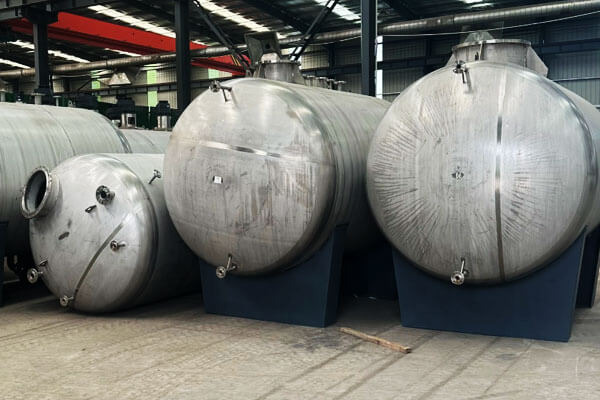
- Processing tanks and vessels.
- Makkinarju għall-ipproċessar tal-ikel.
- Conveyors and structural components.
- Hoppers and chutes.
- Piping and fittings.
- Tagħmir għat-taħlit.
- Storage containers.
- Kitchen and catering equipment.
Architectural and Building Applications
1.4307 stainless steel is also widely used in architectural applications where a combination of corrosion resistance, dehra, and fabrication flexibility is required.
Prodotti tipiċi jinkludu:
- Pannelli dekorattivi.
- Interior wall cladding.
- Elevator components.
- Poġġamani.
- Architectural trim.
- Door and window components.
- Stainless steel fixtures.
- Decorative structural elements.
Chemical and Process Equipment
1.4307 stainless steel can be used in many chemical-processing environments where the combination of corrosion resistance and weldability is sufficient.
Eżempji jinkludu:
- Process tanks.
- Reċipjenti tal-ħażna.
- Pipework.
- Pumps and fittings.
- Heat-transfer equipment.
- Industrial manifolds.
- Chemical handling equipment.
Industrija tal-Karozzi
1.4307 stainless steel can be used in karozzi and transportation applications requiring corrosion resistance and good fabrication characteristics.
Applications may include:
- Exhaust-related components.
- Brackets and supports.
- Heat shields.
- Trim dekorattiv.
- Structural fabricated components.
- Fluid-handling components.
Pharmaceutical and Medical Equipment
Il-kombinazzjoni ta 'reżistenza għall-korrużjoni, tindif, and weldability makes 1.4307 stainless steel suitable for selected pharmaceutical and medical equipment.
Applications can include:
- Processing vessels.
- Tagħmir tal-laboratorju.
- Fluid-handling systems.
- Gwarniċi tat-tagħmir.
- Pharmaceutical processing components.
- Sanitary piping assemblies.
Żejt, Gass, and Industrial Equipment
1.4307 stainless steel is used in selected oil, gass, enerġija, and general industrial applications where environmental conditions fall within its corrosion-resistance capabilities.
Komponenti tipiċi jinkludu:
- Fittings tal-pajpijiet.
- Parentesi.
- Alloġġi tat-tagħmir.
- Valvoli and manifolds.
- Storage equipment.
- Komponenti strutturali.
- Instrumentation hardware.
10. Vantaġġi u Limitazzjonijiet
Fi 1.4307 stainless steel is best understood as a low-carbon, fabrication-oriented member of the 18Cr–8Ni austenitic stainless steel family.
Key Advantages of 1.4307 Azzar li ma jissaddadx
Excellent resistance to intergranular corrosion in welded conditions
The carbon content of EN 1.4307 is typically limited to ≤0.030%, substantially reducing the tendency for chromium carbide precipitation at grain boundaries during welding.
Bħala riżultat, properly fabricated 1.4307 components generally have good resistance to weld-related intergranular corrosion without requiring post-weld solution annealing in many conventional applications.
This characteristic makes the grade particularly attractive for welded tanks, pajpijiet, tagħmir għall-ipproċessar tal-ikel, strutturi arkitettoniċi, and fabricated machinery.
Excellent ductility and cold-forming capability
The austenitic microstructure provides high ductility and allows 1.4307 to undergo substantial plastic deformation without cracking.
It is therefore well suited to liwi, Tpinġija fil-fond, ittimbrar, rolling, and other cold-forming operations.
This combination of ductility and corrosion resistance makes it particularly useful for thin-walled components and geometrically complex sheet-metal products.
Good low-temperature toughness
Bħala azzar inossidabbli awstenitiku, Fi 1.4307 does not exhibit the pronounced ductile-to-brittle transition characteristic of ferritic and many carbon steels.
Properly produced austenitic 304L-type material can retain useful toughness at cryogenic temperatures, with applications extending toward approximately −196°C (77 K) when the relevant product form, kundizzjoni, standard, and design requirements are satisfied.
Dan jagħmel 1.4307 a candidate for selected low-temperature vessels, tagħmir tal-laboratorju, cryogenic auxiliaries, and fluid-handling systems.
Actual cryogenic qualification should always be based on the applicable material specification and testing requirements.
Strong general-purpose corrosion resistance
Fi 1.4307 provides corrosion performance broadly comparable to conventional 1.4301/304 stainless steel in many atmospheric, food-processing, and moderately corrosive environments.
Its approximately 18% kromju content supports formation of a protective passive film, while nickel stabilizes the austenitic structure and contributes to its ductility and corrosion performance.
Konsegwentement, 1.4307 offers an effective balance between Reżistenza għall-korrużjoni, manifattura, u l-ispiża tal-materjal for general-purpose stainless steel applications.
Excellent hygienic and cleanability characteristics
When appropriately finished, Fi 1.4307 provides a smooth, non-porous metallic surface that can be readily cleaned and maintained.
Illustrar mekkaniku, passivazzjoni, and electropolishing can further improve surface cleanliness and reduce sites where contaminants or process residues can accumulate.
This makes the grade widely applicable to food-processing, xorb, Farmaċewtiku, laboratory, and sanitary equipment, provided the selected surface finish and fabrication practices meet the relevant industry requirements.
Broad manufacturing compatibility
Fi 1.4307 stainless steel can be processed using virtually all conventional stainless steel manufacturing technologies.
This manufacturing flexibility is particularly valuable for custom stainless steel components because the same material can be used across prototypes, assemblaġġi fabbrikati, Partijiet maħdumin bi preċiżjoni, u kkastjar kumpless.
Inherent Limitations of 1.4307 Azzar li ma jissaddadx
Moderate resistance to pitting and crevice corrosion
Għalkemm 1.4307 performs well in many general environments, it does not contain the molybdenum addition characteristic of 316L/1.4404 stainless steel.
Konsegwentement, its resistance to Pitting u korrużjoni ta 'xquq indotta mill-klorid is significantly more limited than that of molybdenum-alloyed austenitic stainless steels.
Long-term exposure to seawater, concentrated chloride solutions, marine splash zones, or severe salt environments may therefore require 1.4404/316L, Azzar li ma jissaddadx duplex, or a higher-alloy material.
Chloride stress corrosion cracking remains a service consideration
Like other austenitic stainless steels, Fi 1.4307 can be susceptible to chloride-induced stress corrosion cracking under the combined conditions of tensjoni tat-tensjoni, chloride contamination, and elevated temperature. The risk increases as temperature and chloride severity increase.
There is no universal temperature threshold applicable to every service condition; għalhekk, values around 60° C. should be regarded only as an engineering warning range rather than a guaranteed safe/unsafe boundary.
Not a preferred grade for heavily loaded high-temperature structures
1.4307 stainless steel is a general-purpose corrosion-resistant grade rather than a specialized creep-resistant alloy.
F'temperaturi elevati, its long-term mechanical performance and creep resistance may become limiting factors.
For components subjected to sustained mechanical loading at high temperature, dedicated heat-resistant stainless steels or nickel-based alloys may provide a more appropriate solution.
Moderate machinability and significant work hardening
Compared with free-machining steels, Azzar li ma jissaddadx 1.4307 can be more demanding to machine. Its austenitic structure tends to work harden, while its relatively low thermal conductivity can concentrate heat near the cutting zone.
Effective machining therefore requires rigid fixturing, appropriate carbide tooling, parametri tat-tqattigħ ikkontrollati, adequate coolant, and good chip evacuation.
Poor machining conditions can accelerate tool wear and degrade surface finish.
Higher material cost than carbon steel and some alternative stainless grades
The presence of chromium and nickel makes 304L stainless steel substantially more expensive than ordinary carbon steel. Its price can also vary considerably with nickel market conditions and product form.
Madankollu, comparing material price alone can be misleading.
Longer service life, reduced corrosion-related maintenance, weldjabbiltà, tindif, and lower replacement frequency can make 1.4307 economically attractive over the complete life cycle of a component.
11. Analiżi Komparattiva: Fi 1.4307 vs. Fi 1.4301 vs. Fi 1.4404 Azzar li ma jissaddadx
Fi 1.4307, Fi 1.4301, u en 1.4404 are all widely used austenitic stainless steels, but they are optimized for somewhat different service conditions.
| Proprjetà | Fi 1.4307 (304L) | Fi 1.4301 (304) | Fi 1.4404 (316L) |
| Common designation | X2CrNi18-9 | X5CrNi18-10 | X2CrNiMo17-12-2 |
| AISI equivalent | 304L | 304 | 316L |
| Us | S30403 | S30400 | S31603 |
| Typical Cr content | ~17.5–19.5% | ~17.5–19.5% | ~16.5–18.5% |
| Typical Ni content | ~8.0–10.5% | ~8.0–10.5% | ~10.0–13.0% |
| Typical Mo content | Xejn | Xejn | ~2.0–2.5% |
| Maximum C | ≤0.030% | ≤0.070% | ≤0.030% |
| Mikrostruttura | Austenitic | Austenitic | Austenitic |
| Weldabilità | Eċċellenti | Tajjeb; greater sensitization risk than 304L | Eċċellenti |
| Reżistenza għall-korrużjoni ġenerali | Tajjeb | Tajjeb | Tajjeb ħafna |
Reżistenza għall-pitting (Injam) |
≈ 19.6 | ≈ 19.6 | ≈ 25.9 |
| Formabilità | Eċċellenti | Eċċellenti | Eċċellenti |
| Typical minimum yield strength* | ≥170 MPa | ≥190 MPa, depending on product standard | ≥220 MPa, depending on product standard |
| Typical tensile strength* | ≥485 MPa | ≥500 MPa | ≥530 MPa |
| Applikazzjonijiet tipiċi | Fabbrikazzjonijiet iwweldjati, tagħmir għall-ikel, Tankijiet, architectural parts | General-purpose stainless components, appliances, arkitettura | Kimika, Marine, Farmaċewtiku, food-processing and chloride-exposed equipment |
| Best selection when… | Extensive welding and low sensitization risk are priorities | Għan ġenerali 304 performance is sufficient | Chlorides and localized corrosion are major concerns |
*Mechanical-property requirements vary with product form, ħxuna, delivery condition, and governing standard.
Values should therefore be verified against the applicable EN product specification rather than treated as universal material constants.
12. Custom Precision Stainless Steel Parts from DEZE
Funderija DEZE jipprovdi custom stainless steel casting and precision machining solutions for components manufactured from EN 1.4307 (304L) and other austenitic and heat-resistant stainless steel grades.
The manufacturing approach is selected according to part geometry, rekwiżiti dimensjonali, volum tal-produzzjoni, material specification, u l-kundizzjonijiet tas-servizz.
For complex stainless steel components, ikkastjar ta 'investiment can reproduce intricate contours, sezzjonijiet irqaq, karatteristiċi interni, and integrated mounting structures while reducing the amount of subsequent machining.
Where tighter dimensional requirements apply, cast components can undergo CNC turning, tħin, tħaffir, tħin, and other secondary operations.
| Kapaċità | Dettalji |
| Materjali | Fi 1.4307 (304L), 1.4301 (304), 1.4404 (316L), 1.4541 (321), 1.4845 (310S). |
| Casting process | Ikkastjar ta 'investiment (Xama mitlufa), ikkastjar tar-ramel. |
| Piż tal-parti | 0.05 kg biex 1000 kg. |
| Dimensjonijiet | Sa 6000 mm dijametru. |
| Tolleranzi | ±0.1-0.3 mm (CT6‑CT9 per ISO 8062). |
| Finitura tal-wiċċ | Ra 1.6-6.3 µm kif fondut; electropolishing disponibbli. |
| Trattament tas-sħana | Ittemprar tas-soluzzjoni, serħan mill-istress. |
| Magni | Tidwir CNC, tħin, tħaffir, u tħin. |
| Kwalità | ISO 9001:2015 Ċertifikat; 100% NDT and dimensional inspection. |
| Żmien taċ-ċomb | 8‑12 weeks for tooling; 2‑4 ġimgħat għal ordnijiet ripetuti. |
13. Konklużjoni
Fi 1.4307 stainless steel is far more than simply a “low-carbon version of 304”.
It is a purpose-engineered austenitic stainless steel grade that solves one of the most persistent practical problems of standard 18/10 Azzar li ma jissaddadx: intergranular corrosion in welded heat-affected zones.
By limiting carbon to 0.03% massimu, the grade retains nearly identical mechanical properties and general corrosion performance as 1.4301, while adding the critical benefit of full corrosion integrity in the as-welded condition.
For food processing equipment, tankijiet kimiċi, architectural structures and water systems — all applications where welded fabrication is the norm and post-weld annealing is impractical — 1.4307 is the technically correct and cost-optimal material choice.
It occupies an essential niche between general-purpose 1.4301 and higher-alloy 1.4404, providing reliable, cost-effective corrosion performance for the vast majority of moderately corrosive industrial environments.
FAQs
Huwa 1.4307 azzar li ma jissaddadx manjetiku?
Fil-kondizzjoni ittemprat, Fi 1.4307 stainless steel is generally essentially non-magnetic or only very weakly magnetic.
Madankollu, cold forming can induce some martensitic transformation, resulting in measurable magnetic response.
Huwa 1.4307 equivalent to 316L stainless steel?
LE. 1.4307 is a 304L-type stainless steel, Billi 1.4404 is the European designation commonly associated with 316L.
The key distinction is that 1.4404 contains molybdenum, giving it substantially better resistance to chloride-induced pitting and crevice corrosion.
What is the maximum operating temperature for 1.4307?
Up to 800°C for continuous service and 850°C for intermittent service. Above 850°C, oxidation scaling increases significantly.
Is EN 1.4307 the same as 304L stainless steel?
IVA. Fi 1.4307 corresponds to X2CrNi18-9 and is commonly associated with AISI 304L / US S30403.
The exact equivalence should nevertheless be confirmed against the applicable product standard because chemical and mechanical requirements can vary between specifications.
X'inhi d-differenza bejn 1.4307 u 1.4301 Azzar li ma jissaddadx?
The principal difference is carbon content. 1.4307 has a maximum carbon content of approximately 0.030%, Billi 1.4301 permits up to approximately 0.070%.
The lower carbon content of 1.4307 stainless steel improves resistance to weld-related sensitization and makes it particularly suitable for welded fabrication.