
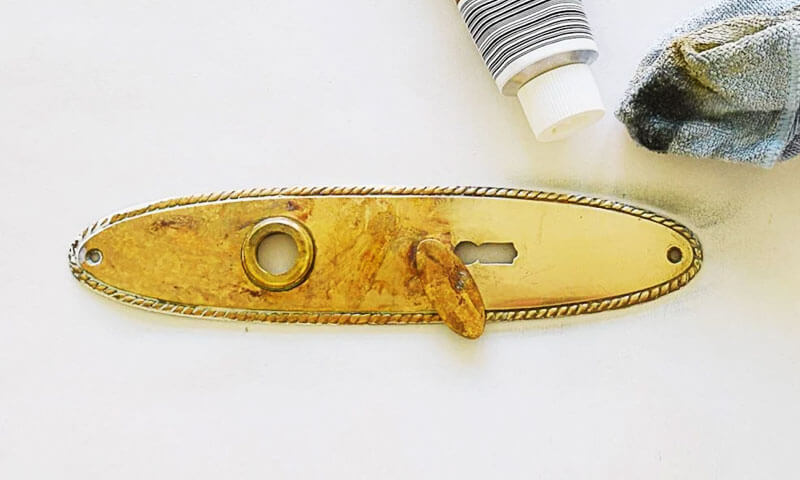
Introduzzjoni
Brass is one of the most useful and visually distinctive copper alloys in manufacturing, arkitettura, ħardwer, komponenti elettriċi, u prodotti dekorattivi.
It is valued for its warm color, makkinabilità, Reżistenza għall-korrużjoni, and attractive finish. But brass also has one inevitable characteristic: it changes with time.
Exposure to air, umdità, skin oils, imluħa, industrial residues, and pollutants gradually causes tarnish, kulur, or surface contamination.
Effective brass cleaning is never a simple one-size-fits-all wiping or washing process.
It requires systematic judgment of brass alloy grade, finitura tal-wiċċ, contamination category, component function and service environment, as well as strict control of cleaning chemicals, operating parameters and follow-up anti-corrosion treatment.
1. What is Brass and Why It Tarnishes
Brass is primarily an alloy of ram u żingu
Brass tarnishes because its surface reacts with oxygen, umdità, carbon dioxide, sulfur compounds, imluħa, and other environmental contaminants.
The process does not usually destroy the part quickly, but it changes the surface appearance from bright gold to dull brown, dark amber, or greenish tones.
F'xi ambjenti industrijali, the problem is not tarnish alone but oxide buildup, grease accumulation, flux residue, marki tas-swaba', machining oil, or chemical contamination.

That means “cleaning brass” can mean several different things:
- removing dirt and grease,
- removing tarnish,
- restoring shine,
- preparing for coating or plating,
- or preserving a controlled aged finish.
2. Identify the Brass Part Before Cleaning
Qabel ma tuża kwalunkwe metodu ta 'tindif, identify the part as accurately as possible. It-tindif tar-ram huwa sempliċi biss meta l-parti tkun ram pur u mhux miksi.
Problems arise when the surface is lacquered, indurati, miżbugħa, mechanically polished, or mixed with other materials.
Check whether the brass is:
- solid brass or brass-plated
- lacquered or bare
- decorative or functional
- bil-makna, mitfugħa, or stamped
- elettriku, plaming, or ornamental
Dan huwa importanti minħabba li t-tindif bl-aċidu aggressiv jista 'jqaxxar il-kisi, discolor surfaces, or attack solder joints and nearby metals.
A lacquered decorative handle, per eżempju, m'għandux jiġi ttrattat bl-istess mod bħal korp jew terminali tal-valv tar-ram mhux miksi.
3. Standard Method for Cleaning Brass
The most effective way to clean brass is to qabbel il-metodu tat-tindif mal-livell ta 'kontaminazzjoni, the part’s surface condition, and the intended final finish.
Light surface dirt, moderate tarnish, u l-ossidazzjoni qawwija m'għandhiex tiġi ttrattata bl-istess approċċ.
A controlled, stepwise method reduces the risk of scratching, kulur, or unnecessary metal loss.

Mild Soap and Water
L-aħjar għal: light dirt, trab, grass, and fingerprints
For routine maintenance, l-ewwel pass sikur huwa ilma sħun b'sapun ħafif jew deterġent newtrali.
Dan il-metodu jneħħi l-kontaminazzjoni ta 'kuljum mingħajr ma jattakka l-wiċċ tar-ram jew jibdel il-finitura tiegħu. It is especially suitable for:
- newly handled parts,
- lightly soiled decorative items,
- lacquered brass,
- and functional components that should not be exposed to harsh chemicals.
Use a soft cloth or a non-abrasive sponge, rinse thoroughly, and dry immediately to prevent water spots or renewed tarnish.
Lemon and Baking Soda Paste
L-aħjar għal: moderate tarnish
A paste made from lemon juice and baking soda is a practical natural method for removing moderate tarnish.
The mild acidity of lemon helps break down oxidation, while baking soda provides a gentle polishing action.
This method is well suited to:
- household brass fittings,
- ħardwer dekorattiv,
- and brass surfaces that have lost some brightness but are not heavily oxidized.
Apply the paste evenly, leave it in contact only briefly, then wipe gently and rinse completely.
This approach is effective, but it should still be used carefully on thin or precision surfaces to avoid unnecessary abrasion.
Vinegar, Salt, and Flour Paste
L-aħjar għal: heavily tarnished items
For more severe tarnish, a vinegar–salt–flour paste is often more aggressive and therefore more effective.
Vinegar provides the acidic action, salt increases cleaning activity, and flour helps thicken the mixture so it stays in contact with the surface.
This method is appropriate when:
- the brass has dark or stubborn oxidation,
- the part has not been cleaned for a long time,
- or a deeper restoration is needed before final polishing.
Minħabba li din it-taħlita hija aktar b'saħħitha mit-tindif bis-sapun u l-ilma jew il-lumi, għandu jintuża b'aktar attenzjoni.
Tħallix fuq ir-ram itwal milli meħtieġ, u dejjem laħlaħ u nixxef sewwa wara.
Commercial Brass Cleaners
L-aħjar għal: riżultati ta 'malajr u ittebba qawwija
Lostri tar-ram kummerċjali ħafna drabi huma l-aħjar għażla għal partijiet dekorattivi jew viżibbli tar-ram.
Huma fformulati biex ineħħu t-tebba filwaqt li jimminimizzaw il-ħsara fil-wiċċ. Ħafna fihom taħlita ta 'abrażivi ħfief, solventi, and corrosion inhibitors.
Use polish when:
- ir-ram għandu ittebba viżibbli,
- finitura isbaħ hija mixtieqa,
- il-wiċċ huwa illustrat jew dekorattiv,
- and a repeatable, riżultati kkontrollati kwistjonijiet.
Cleaners kummerċjali huma ġeneralment aktar prevedibbli minn taħlitiet improvizzati, iżda xorta għandhom jiġu ttestjati fuq żona żgħira l-ewwel, speċjalment jekk il-parti jkollha kisja speċjali, inċiżjoni fina, or a sensitive finish.
Illustrar mekkaniku
Tindif mekkaniku juża ċraret, roti tal-buffing, pads mhux minsuġa, jew komposti tal-illustrar.
Jista 'jrestawra l-luminożità malajr, iżda ġġorr ukoll l-ogħla riskju li jitneħħa l-metall, trufijiet arrotondati, jew it-tolleranzi li jinbidlu.
Illustrar mekkaniku huwa adattat meta:
- dehra tal-wiċċ hija kritika,
- il-parti hija ħoxna biżżejjed biex tittollera l-irfinar,
- u l-operatur jifhem il-livell tal-finitura meħtieġ.
Huwa inqas adattat għal irqiq, Preċiżjoni, bil-kamin, jew komponenti dimensjonali sensittivi.
Ketchup or Tomato Paste
L-aħjar għal: malajr, tindif ħafif
Ketchup jew pejst tat-tadam jistgħu wkoll inaddfu ram minħabba l-aċidi naturali fit-tadam, li jgħinu biex itaffu l-wiċċ ittebba.
Din hija għażla tad-dar sorprendentement effettiva għal tindif ħafif għal moderat meta prodott speċjalizzat ma jkunx disponibbli.
Jista 'jintuża fuq:
- biċċiet żgħar dekorattivi tar-ram,
- oġġetti każwali tar-ram tad-dar,
- u partijiet fejn ġentili, readily available cleaner is preferred.
L-effett huwa ġeneralment aktar ħafif minn dak ta 'tindif kummerċjali aktar b'saħħithom, għalhekk huwa l-aħjar meqjus bħala għażla ta 'kuljum konvenjenti aktar milli metodu ta' restawr tqil.
Yogurt
L-aħjar għal: mild tarnish, experimental or low-intensity cleaning
Il-jogurt jista 'wkoll jipproduċi effett ta' tindif ħafif minħabba l-aċidità naturali tiegħu. Fil-prattika, jista 'jwettaq l-istess għall-ketchup għat-tneħħija tat-tebba ħafifa.
It is not a standard industrial cleaner, but it can be used as a low-aggression household option when the goal is only to soften surface dullness rather than aggressively restore a mirror finish.
4. Specialized Cleaning for Typical Functional Brass Components
Mhux il-partijiet kollha tar-ram għandhom jitnaddfu bl-istess mod. The correct method depends on the part’s funzjoni, Ġeometrija, kundizzjoni tal-wiċċ, compliance requirements, and tolerance sensitivity.

Food-contact brass parts
Eżempji: faucets, kitchen hardware, drinking-water valves
For food-contact or potable-water-related brass parts, the main priorities are sigurtà, residue control, u l-konformità.
The cleaning process must avoid toxic residues, kimiċi aggressivi, and abrasive damage that could alter the surface condition or introduce contamination.
Recommended cleaning sequence
- Dry wipe to remove loose dust and surface debris
- Soak or wash with a neutral food-grade detergent
- Rinse thoroughly with clean or purified water
- Air-dry naturally in a clean environment
For slight oxidation, a diluted citric acid solution may be used, but the part must be rinsed longer and more thoroughly than usual to ensure that no acid remains on the surface or in hidden cavities.
Strong industrial acids, harsh alkaline cleaners, and abrasive pads should be avoided completely.
Electrically conductive brass parts
Eżempji: busbars, terminali, konnetturi, blokki ta' kuntatt
Electrical brass components require a very different standard.
Here the cleaning goal is not appearance but low contact resistance, oxide removal, and dry, contamination-free surfaces.
Any remaining oil, melħ, or moisture can increase resistance, generate heat, or accelerate electrochemical corrosion in service.
Recommended cleaning sequence
- Alkaline degreasing to remove oils and processing residue
- Mild citric-acid deoxidation to remove surface oxide film
- Multi-stage rinse with deionized water
- Dry with oil-free compressed air
For these parts, the surface must be left clean but not coated with wax or oily residue on contact areas, because even a thin film can interfere with conductivity and assembly performance.
In electrical service, dryness is not optional; it is a reliability requirement.
Brass musical instruments
Eżempji: trumbetti, tromboni, qrun, wind instruments
Brass musical instruments are especially sensitive because they often have ultra-thin walls, long internal passages, precise joints, and cosmetically important surfaces.
The cleaning process must therefore be gentle, intern, and residue-free.
Recommended cleaning sequence
- Uża a dedicated mild brass cleaner designed for musical instruments
- Clean the exterior with soft cloths only
- Clean the interior tubes and passages with soft flexible brushes
- Rinse carefully and dry all internal channels thoroughly
Strong acids, stiff brushes, and abrasive powders are inappropriate because they can scratch the finish, thin the wall locally, or damage soldered and fitted joints.
Internal drying is particularly important because trapped moisture can promote verdigris formation inside the tubing where it may not be visible until the damage has progressed.
Cast brass parts
Eżempji: sand-cast brass, investment-cast brass, korpi tal-pompa, fittings kumplessi
Cast brass typically has rougher surfaces, kavitajiet interni, dead corners, and residual casting debris bħal ramel, frammenti refrattorji, or flux residues.
These hidden contaminants often matter more than the visible surface.
Recommended cleaning sequence
- High-pressure warm-water flushing
- Medium-frequency ultrasonic cleaning where the geometry permits
- Alkaline degreasing
- Soft-brush cleaning of recesses and cavities
- Full rinse and drying
Għal partijiet mitfugħa, the main challenge is to reach hidden zones.
Cleaning must therefore focus on blind holes, corner pockets, threaded interiors, and other recesses where contamination can remain trapped and later affect sealing, assemblaġġ, jew prestazzjoni tal-korrużjoni.
Plated and painted brass surfaces
Eżempji: decorative brass with electroplating, varnish, żebgħa, or lacquer
Plated or coated brass must be treated as a surface system, not as bare brass. The coating is part of the product function, so aggressive cleaning can permanently damage the finish.
Recommended cleaning sequence
- Dry wiping only for light dust
- Jekk meħtieġ, wipe with diluted neutral detergent and a soft cloth
Aċidi, strong alkalis, abrasive powders, and hard brushes are not acceptable because they can cause:
- coating peeling,
- kulur,
- loss of gloss,
- or local failure of the protective layer.
In this category, the goal is preservation, not restoration.
5. Post-Cleaning Treatment and Long-Term Anti-Tarnish Protection
Cleaning brass is not the final step. If residue, umdità, or acid ions remain on the surface, tarnish can return quickly and the part may begin to discolor again almost immediately.
A proper post-cleaning workflow must therefore include rinsing, neutralization, tnixxif, and protection.
Thorough rinsing and drying
After any chemical cleaning, the brass should be rinsed in stages.
Multi-stage rinsing
- Rinse first with ordinary clean water to remove the bulk of the cleaner.
- Follow with deionized water for the final rinse, especially on visible, Preċiżjoni, or electrical parts.
The use of deionized water helps avoid mineral spotting from hard water and prevents residue that could interfere with appearance or function.
Drying methods
Drying should match the part type:
- General parts: air dry in a clean, nixxef, ventilated space
- Precision or electrical parts: blow dry with oil-free compressed air
- Batch industrial parts: low-temperature hot-air drying, with the temperature kept at or below 60°C
High-temperature drying should be avoided. Sħana eċċessiva tista 'taċċellera l-ossidazzjoni u tista' tiskura l-wiċċ aktar milli tipproteġiha.
For brass, it-tnixxif b'temperatura baxxa kkontrollata huwa ħafna aktar sikur minn sħana aggressiva.
Neutralization treatment
Mandatory for acid-cleaned brass parts
Kwalunkwe parti tar-ram imnaddfa b'soluzzjoni aċiduża għandha tiġi newtralizzata. Dan huwa speċjalment importanti minħabba li l-aċidu residwu jista 'jżomm jattakka l-metall wara li jintemm il-pass tat-tindif viżibbli.
Recommended neutralization method
- Immerse or wipe the part with 0.3%–0.5% sodium bicarbonate solution
- Żomm għal 1–2 minuti
- Rinse again with clean water
- Dry completely
This step is not cosmetic. It helps prevent:
- dezincification kompliet,
- pitting,
- and renewed tarnish caused by acid residue.
Surface protection and anti-tarnish strategies
Protection should be selected according to the part’s service environment and intended storage life.
Temporary protection
For parts in short-term storage or awaiting assembly:
- use a thin water-soluble anti-rust film,
- or a light industrial anti-tarnish oil.
This is suitable for machining blanks, stored inventory, and non-contact components. Madankollu, the film should be removed before use on conductive or friction-sensitive surfaces.
Long-term passive protection
For longer service life, especially in outdoor or humid environments, stronger protective strategies are needed.
Chromium-free passivation
Modern chromium-free brass passivators can form a thin transparent protective film that reduces oxygen and moisture attack while maintaining appearance.
This is suitable for industrial parts where environmental compliance matters.
Protective wax
Decorative brass can be coated with a specialized brass wax after cleaning and drying.
The wax is then buffed with a microfiber cloth to create a water-resistant barrier and preserve brightness.
Transparent protective coating
Għal ram arkitettoniku jew komponenti dekorattivi ta 'barra, kisi akriliku trasparenti rqiq jista 'jipprovdi protezzjoni fit-tul filwaqt li jippreserva d-dehra metallika.
Din hija waħda mill-aħjar għażliet meta l-finitura viżwali u r-reżistenza għat-temp huma t-tnejn importanti.
6. Common Operational Mistakes, Perikli, and Avoidance Strategies
Ħafna fallimenti tat-tindif tar-ram ma jiġux mill-cleaner innifsu iżda mill- wrong tool, wrong dwell time, or wrong post-treatment. L-iżbalji l-aktar komuni huma prevedibbli u evitati.
| Żball | Main risk | Better practice |
| Steel wool or wire brush | Grif, embedded steel, rust spots | Xkupilja tan-najlon artab jew drapp tal-microfiber |
| Long soak in strong acid | Dezincification u pitting | Use mild, controlled cleaners |
| No rinse / no neutralization | Korrużjoni kontinwa u verdigris | Laħlaħ u newtralizzazzjoni obbligatorja |
| Harsh abrasive on plated brass | Coating damage and finish loss | Gentle chemical cleaning only |
| High-heat drying | Oxidation and blackening | Air dry or low-temp dry |
| Mixing acid and alkali | Saħħan, dħaħen, neutralization failure | Keep cleaners separate |
7. Post-Cleaning Defect Troubleshooting
Even when brass has been cleaned, surface issues can appear afterward if the process was not controlled properly. These issues usually point to one of a few common process problems.
| Post-cleaning issue | Likely cause | Corrective action |
| Foggy surface / white spots | Hard-water residue | Final rinse with deionized water, then dry immediately |
| Fast green verdigris return | Incomplete cleaning or residual ions | Re-clean, strengthen neutralization, apply passivation |
| Surface darkening after acid | Over-etching / diżinfezzjoni | Gentle repolish, then protect |
| Local discoloration / spot corrosion | Uneven cleaning or chloride residue | Ittratta mill-ġdid bl-aċidu ċitriku, rinse fully, passivate |
8. Konklużjoni
Brass cleaning is a systematic technical work that integrates metallurgical characteristics, chemical application, process control and anti-corrosion protection.
Il-prinċipju ewlieni li għaddej mill-proċess kollu huwa mild priority, graded treatment, strict control of chemicals and time, and emphasis on post-protection.
Different from steel and aluminum cleaning, brass must always guard against dezincification corrosion caused by inappropriate chemical agents and prolonged soaking; its unique surface luster and decorative performance also require avoiding hard mechanical scratches.
With the continuous upgrading of environmental protection requirements and industrial precision manufacturing, modern brass cleaning technology is also developing toward low-toxicity, zero-residue, high-efficiency and intelligent directions.
Environment-friendly buffered cleaners, fully automatic ultrasonic cleaning lines and chromium-free passivation processes have gradually replaced traditional high-corrosion chemical formulas.
Mastering scientific brass cleaning technology can not only restore the appearance and functional performance of brass parts, but also effectively delay material corrosion and reduce replacement costs, creating greater value for industrial production and daily use.
FAQs
What is the safest way to clean brass?
Warm water, mild soap, and a soft cloth are the safest first step for most brass parts.
Can vinegar clean brass?
IVA, diluted vinegar can help remove tarnish, but it should be used carefully, rinsed thoroughly, and dried immediately afterward.
Can I use toothpaste to clean brass?
It can work as a mild abrasive in some cases, but it is less controlled than a proper brass polish and may scratch softer finishes.
How do I know if brass is lacquered?
Jekk il-wiċċ jirreżisti ittebba għal żmien twil jew juri dehra miksija ċara, it may be lacquered. Test żgħir fuq żona li ma tidherx jista 'jgħin biex jikkonfermah.
How do I keep brass from tarnishing again?
Keep it dry, jimmaniġġjawha inqas b'idejn vojta, and use a protective wax, laker, jew metodu ta’ ħażna xieraq għall-funzjoni tal-parti.

