1. Įvadas
Trumpas atsakymas yra ne: aliuminis nerūdija. Rūdys yra korozijos produktas, susijęs su geležimi ir geležies turinčiais lydiniais, tokiais kaip plienas.
Aliuminis elgiasi kitaip: kai yra veikiamas deguonies, jis suformuoja ploną, tvirtai prilipusi aliuminio oksido plėvelė, kuri sulėtina tolesnį ataką, o ne pleiskanoja ir atskleidžia šviežią metalą.
Ši oksido plėvelė yra pagrindinė priežastis, dėl kurios aliuminis plačiai laikomas natūraliai atspariu korozijai metalu.
Tai nereiškia, kad aliuminis yra atsparus korozijai. Tai reiškia, kad korozijos mechanizmas skiriasi.
Aliuminis gali dėmėti, duobė, patiria galvaninį smūgį, ir degraduoja agresyvioje aplinkoje; tiesiog nesudaro „rūdžių“ technine prasme.
Tikrasis klausimas, tada, ar aliuminis nerūdija, bet kokiomis sąlygomis jo apsauginis oksido sluoksnis sugenda arba tampa nepakankamas.
2. Rūdžių apibrėžimas: Kritinis skirtumas tarp rūdžių ir korozijos
Kas yra rūdys?
Rūdys yra pažįstamas rausvai rudas korozijos produktas, susidarantis, kai geležis arba plienas reaguoja su deguonimi ir drėgme. Jis yra akytas, prastai laikosi, ir neapsaugo apatinio metalo.
Dėl to, susidarius rūdims korozija gali plisti toliau. Aliuminis nesukuria tokios geležies oksido rūdžių chemijos. Vietoj, ant jo paviršiaus greitai susidaro kompaktiška aliuminio oksido plėvelė.
Korozija vs. rūdis: platesnė perspektyva
Korozija yra platesnis medžiagų mokslo terminas. Tai reiškia metalo skilimą aplinkoje dėl elektrocheminių ar cheminių reakcijų.
Daugelis inžinerinių lydinių yra naudingi pasyvioms plėvelėms; kai tos plėvelės sugenda lokaliai, Rezultatas yra vietinė korozija, pvz., duobių ar plyšių korozija, o ne rūdys siaurąja geležies prasme.

Aliuminio oksidacija: ne rūdžių, bet apsauginis skydas
Aliuminis atsparus progresuojančiai oksidacijai, dėl kurios plienas rūdija. Jo atviras paviršius susijungia su deguonimi ir sudaro tik kelių dešimties milijonų colio storio inertinę aliuminio oksido plėvelę..
Ta plėvelė tvirtai prilimpa, yra skaidrus, ir blokuoja tolesnę oksidaciją. Jei jis subraižytas, jis greitai užsisandarina.
| Fenomenas | Kokios formos | Apsauginis? | Tipiška išvaizda |
| Geležies rūdijimas | Geležies oksidai/hidroksidai | Ne | Raudonai ruda, dribsniai, akytas |
| Aliuminio oksidacija | Aliuminio oksidas | Taip, paprastai | Plonas, skaidrus, dažnai nematomas |
3. Aliuminio oksidacijos mokslas: Mechanizmai ir savybės
Oksidacijos procesas: greitas, plonas, ir savaime ribojantis
Aliuminis labai greitai oksiduojasi, kai jį veikia oras arba drėgmė, bet reakcija elgiasi labai skirtingai nei geležies korozija.
Ant šviežiai eksponuoto aliuminio, beveik iš karto susidaro plona oksido plėvelė, ir ta plėvelė sulėtina tolesnį deguonies transportavimą į metalo paviršių.
Daugumoje įprastų aplinkų, rezultatas yra pasyvavimas, nematoma korozija rūdžių prasme.
Natūralus oksido sluoksnis yra itin plonas, prisirišęs, ir pakankamai stabilus, kad aliuminis būtų natūraliai atsparus korozijai atmosferos sąlygomis.
Tai yra pagrindinė metalurgijos priežastis, dėl kurios aliuminis nerūdija.
Rūdys yra porėtos, neapsauginis produktas nuo korozijos; aliuminio oksidas yra kompaktiška barjerinė plėvelė, kuri slopina tolesnę reakciją, o ne ją skatina.
Praktiškai, aliuminio paviršiaus chemija daugeliu įprastų sąlygų yra apsisaugojusi, todėl metalas ir toliau taip plačiai naudojamas transporte, statyba, ir plataus vartojimo prekės.

Pagrindinės aliuminio oksido savybės (Al₂O3)
Priežastis, kodėl aliuminio oksidas taip gerai veikia kaip apsauginis sluoksnis, yra ta, kad jo savybės iš esmės skiriasi nuo geležies rūdžių..
Rūdys būna stambios, akytas, ir dribsniai, todėl jis veiksmingai neapsaugo pagrindinio plieno.
Priešingai, aliuminio oksidas yra kompaktiškas, tvirtai prigludę, ir chemiškai stabilus per naudingą aplinkos langą.
Aliuminio korozijos nuorodose pažymima, kad natūrali oksido plėvelė yra stabili maždaug ph 4 į 8 diapazonas, o stipresnės rūgštys ar šarmai gali jį ištirpinti.
Išsamesnis palyginimas parodytas žemiau.
| Nuosavybė | Aliuminio oksidas (Al₂O3) | Geležies oksidas / rūdis (Fe₂O3·nH2O ir susiję rūdžių produktai) |
| Sukibimas | Tvirtai prilimpa; lieka prilipęs prie metalinio paviršiaus. | Blogai laikosi; linkęs pleiskanoti ir atsiskirti. |
| Poringumas | Labai mažas akytumas natūralioje plėvelėje; sudaro veiksmingą barjerą deguoniui ir drėgmei. | Labai porėtas ir pralaidus, leidžianti prasiskverbti korozinėms rūšims. |
| Cheminis stabilumas | Stabilus ir saugus vidutinio sunkumo aplinkoje; natūrali plėvelė yra stabili maždaug pH 4–8 diapazone. | Chemiškai nestabili kaip apsauginė plėvelė; korozija gali tęstis, kai lieka drėgmės ir deguonies. |
Atsparumas dilimui |
Sunku, atsparus dilimui, ir naudojamas abrazyviniuose / keramikiniuose įrenginiuose. | Minkšta, trapus, ir lengvai nusitrina. |
| Išvaizda | Paprastai natūralioje plėvelėje skaidrus arba bespalvis; anoduotos plėvelės gali būti tyčia nuspalvintos. | Paprastai nuo rausvai rudos iki oranžinės rudos spalvos. |
Savaiminio gydymo mechanizmas: kritinis pranašumas
Viena iš vertingiausių aliuminio savybių yra oksido plėvelė savigyda. Jei paviršius subraižytas arba ką tik apnuogintas, deguonis iš karto reaguoja su nauju aliuminio paviršiumi ir vėl susidaro šviežias oksido sluoksnis.
Tai nereiškia, kad aliuminis yra atsparus bet kokiai korozijai, bet tai reiškia, kad nedidelis paviršiaus pažeidimas paprastai nesielgia kaip plitimas, geležyje matoma savaime plintanti korozija.
Šis savaiminio pasyvavimo elgesys yra pagrindinė priežastis, dėl kurios aliuminis yra atsparus korozijai ore.
Natūrali oksido plėvelė yra tik kelių nanometrų storio, bet to pakanka blokuoti tolesnį greitą puolimą daugelyje aplinkų.
Kai anoduota, oksido sluoksnis tampa daug storesnis ir labiau apsaugotas, Štai kodėl anoduotas aliuminis gali būti naudojamas ten, kur svarbi išvaizda ir ilgaamžiškumas.
4. Kai aliuminis korozuoja: Oksido sluoksnio apribojimai
Aplinkos sąlygos, kurios ardo oksido sluoksnį
Rūgštinė ir šarminė aplinka
Natūralus aliuminio oksidas yra stabilus tik esant vidutiniam pH langui. Rūgščiomis sąlygomis, oksidas ištirpsta veikiant rūgštims; šarminėmis sąlygomis, jis ištirpsta sudarydamas aliuminato rūšis, tokias kaip Al(Oi)₄⁻.
Praktiškai, stiprios rūgštys ir stiprios bazės gali uždengti apsauginę plėvelę ir nuolat atskleisti šviežią aliuminį.
Chloridų turtinga aplinka
Chloridai yra ypač agresyvūs, nes trukdo pasyvuoti ir skatina vietinį plėvelės skilimą.
Klasikinėje korozijos apžvalgoje apie duobėjimą paaiškinama, kad duobės atsiranda, kai suyra apsauginė pasyvi plėvelė, ir kad chlorido jonai paprastai yra pagrindinės agresyvios rūšys.
Todėl aplinka, kurioje gausu chlorido, kelia vieną iš svarbiausių aliuminio lydinių korozijos pavojų.
Aukštos temperatūros aplinka
Esant aukštai temperatūrai, natūralus oksidas išlieka svarbus, bet dizaino problema keičiasi.
Dangos, paviršiaus apdorojimas, ir lydinio pasirinkimas tampa svarbesnis, nes terminis poveikis gali sustiprinti oksidaciją ir sutrikdyti paviršiaus apsaugą.
Aliuminui, sukurtos anodinio oksido plėvelės dažnai naudojamos būtent todėl, kad jos suteikia tvirtesnę ir labiau kontroliuojamą apsauginę barjerą nei vien natūrali plėvelė..

Įprastos aliuminio korozijos rūšys – ne rūdys
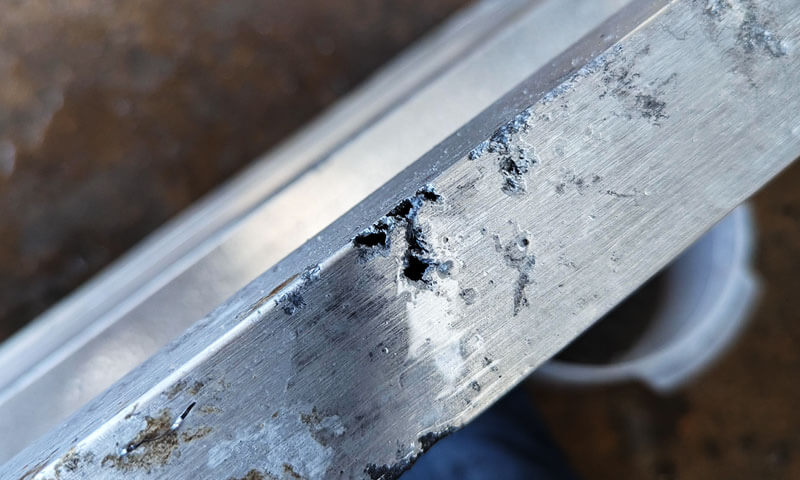
Taškinė korozija
Įdubimas yra lokalizuotas tirpimas, atsirandantis ten, kur suyra pasyvioji plėvelė.
Tai vienas iš svarbiausių aliuminio korozijos režimų, nes jis gali būti gilus, lokalizuota, ir sunku anksti aptikti. Užteršimas chloridu yra klasikinis trigeris.
Galvaninė korozija
Kai aliuminis elektra sujungiamas su tauresniu metalu esant drėgmei, pirmiausia gali rūdyti aliuminis.
Tai yra tiek dizaino, tiek chemijos problema: nepanašus metalinis kontaktas, sulaikyta drėgmė, ir prasta izoliacija padidina riziką.
Plyšių korozija
Plyšinė korozija atsiranda apsaugotose uždarose zonose, kur vietinė chemija skiriasi nuo atviro paviršiaus.
Jis glaudžiai susijęs su duobių atsiradimu, nes abu atsiranda dėl pasyvaus plėvelės skilimo ir lokalaus elektrocheminio disbalanso.
Filiforminė korozija
Filiforminė korozija atrodo kaip atsitiktinė, nesišakojantys balti korozijos produkto tuneliai, dažnai po dangomis arba ant neapsaugoto metalo.
Paprastai tai labiau kenkia išvaizdai nei stiprumui, nors plonas lapas gali būti perforuotas.
Tarpkristalinė korozija
Kai kurios aliuminio lydinių šeimos yra pažeidžiamos tarpgranulinio poveikio, kai legiruojant arba termiškai apdorojant susidaro nepalankūs grūdelių ribos krituliai..
Klasikinis pavyzdys yra didesnio magnio kaltiniai lydiniai, kur beveik nuolatiniai Al₈Mg5 krituliai ties grūdelių ribomis gali padidinti jautrumą pleiskanojimui arba įtempių korozijos įtrūkimams.
Vario turintys lydiniai tam tikromis sąlygomis taip pat gali būti pažeidžiami tarpgranulinių formų.
Aliuminio „baltosios rūdys“: klaidingas pavadinimas
„Baltosios rūdys“ tinkamai priklauso cinkui ir cinkuotam plienui, ne aliuminio.
Kai ant aliuminio atsiranda baltų dėmių arba baltų paviršiaus likučių, Šis reiškinys dažniausiai yra oksidacijos arba korozijos produktas, o ne tikros rūdys.
Kitaip tariant, išvaizda gali atrodyti panaši į „baltąsias rūdis,“, bet chemija kitokia.
5. Aliuminio lydiniai: Kaip sudėtis veikia atsparumą korozijai
Aliuminio atsparumą korozijai lemia ne vien „aliuminis“.. Inžinerinėje praktikoje, aliuminio detalės korozijos savybės labai priklauso nuo jos lydinio serija, temperamentas, Mikrostruktūra, ir aplinka.

Pagrindiniai legiravimo elementai ir jų korozijos poveikis
Magnis (Mg)
Magnis yra vienas iš svarbiausių aliuminio legiravimo elementų, ypač į 5xxx serija.
Tai dažnai siejama su puikiu atsparumu korozijai, ypač jūrinėje aplinkoje.
Lydiniai, tokie kaip 5052 ir 5083 yra plačiai naudojami, nes sujungia gerą stiprumą su dideliu atsparumu jūros vandeniui ir atmosferinei korozijai.
Magnis padeda lydiniui išlaikyti stabilų apsauginį oksido elgesį ir palaiko gerą veikimą aplinkoje, kurioje yra chlorido. Štai kodėl 5xxx lydiniai yra paplitę:
- laivų statyba,
- atviroje jūroje esančios struktūros,
- Jūrų įranga,
- slėgio indai,
- ir transporto įranga.
Tačiau, yra svarbus apribojimas. Kai magnio kiekis padidėja ir lydinys yra veikiamas nuolatinio tempimo įtempio, rizika Streso korozijos įtrūkimas gali padidėti.
Kitaip tariant, magnis pagerina atsparumą korozijai daugelyje nustatymų, bet tik tinkamos sudėties ir aptarnavimo lange.
Vario (Cu)
Vario dedama pirmiausia siekiant padidinti stiprumą, ypač į 2xxx serija tokių kaip 2024 ir 2017.
Šie lydiniai vertinami ten, kur mechaninės savybės yra labai svarbios, bet varis paprastai sumažina atsparumą korozijai.
Priežastis metalurginė: regionai, kuriuose gausu vario, gali tapti elektrochemiškai aktyviomis vietomis, skatinančiomis lokalizuotą ataką. Dėl to, 2xxx lydiniai yra labiau linkę:
- Tarpgranuliuota korozija,
- duobė,
- ir streso korozijos įtrūkimas.
Dėl šios priežasties, 2xxx lydiniai plačiai naudojami aviacijos ir kosmoso konstrukcijose, kur tvirtumas yra būtinas, tačiau jiems dažnai reikia apsauginių priemonių, tokių kaip anodavimas, apkala, arba dangos, kad būtų pasiektas priimtinas ilgaamžiškumas.
Silicis (Ir)
Silicis dažniausiai naudojamas tobulinti išliejamumas, ypač į 3xxx ir 4xxx šeimos.
Šie lydiniai pasižymi vidutiniu atsparumu korozijai ir geromis gamybos savybėmis. Jie plačiai naudojami:
- automobilių komponentai,
- virtuvės reikmenys,
- šilumokaičio dalys,
- ir liejinius gaminius, kuriuose svarbu sklandumas ir apdirbamumas.
Silicis paprastai nesukuria tokios pačios korozijos poveikio, kaip ir lydiniai, kuriuose yra daug vario.
Vietoj, jis dažniau naudojamas kaip apdorojimo pagalbinė priemonė, padedanti kontroliuoti liejimo elgesį ir mechaninį atsaką nepažeidžiant korozijos savybių..
Cinkas (Zn)
Cinkas yra pagrindinis stiprinantis elementas 7xxx serija, įskaitant lydinius, tokius kaip 7075 ir 7050.
Tai yra vieni stipriausių aliuminio lydinių, tačiau jie taip pat yra labiau pažeidžiami su korozija susijusių problemų nei mažesnio lydinio serijos.
Didelio stiprumo 7xxx lydiniams dažnai reikia kruopščiai parinkti grūdinimą, nes jie gali būti jautrūs:
- Streso korozijos įtrūkimas,
- Tarpgranuliuota korozija,
- ir turto praradimas agresyvioje aplinkoje.
Dėl šios priežasties, specialios terminio apdorojimo sąlygos, tokių kaip T73, dažnai naudojami, kai reikia pagerinti atsparumą korozijai, net jei bus paaukota kokia nors didžiausia jėga.
Čia vėl, inžinerinė taisyklė aiški: didžiausias stiprumas automatiškai nereiškia maksimalaus patvarumo.
Chromas (Kr) ir titanas (Iš)
Chromo ir titano paprastai pridedami nedideli kiekiai, siekiant patobulinti grūdelių struktūrą ir pagerinti metalurgijos kontrolę..
Paprastai jie nėra pagrindiniai stiprumo elementai, tačiau jie atlieka svarbų pagalbinį vaidmenį.
Šie nedideli papildymai padeda tobulėti:
- grūdų tobulinimas,
- nuosavybės nuoseklumas,
- stiprumo stabilumas,
- ir daugeliu atvejų bendrą stiprumo ir atsparumo korozijai pusiausvyrą.
Geras pavyzdys yra 6xxx serija, tokių kaip 6061 ir 6063.
Šiuose lydiniuose kaip pagrindinė stiprinimo sistema naudojamas magnis ir silicis, chromas ir titanas padeda patobulinti struktūrą ir palaiko naudingą atsparumo korozijai derinį, stiprybė, ir formavimas.
Tai yra viena iš priežasčių, kodėl 6xxx lydiniai dažnai laikomi bendrosios paskirties inžinerinėmis medžiagomis.
Įprastų aliuminio lydinių šeimų korozijos elgsena
| Lydinių šeima | Pagrindinė lydinio logika | Atsparumo korozijai tendencija | Tipiškas inžinerinis naudojimas |
| 1xxx | Beveik grynas aliuminis | Labai aukštas | Cheminis tvarkymas, elektrinis, atmosferos paslauga |
| 3xxx | Stiprintas manganu | Labai gerai | Stogo dengimas, prietaisai, virtuvės reikmenys, šilumokaičio dalys |
| 5xxx | Sustiprintas magniu | Labai gerai, ypač jūrų tarnyboje | Laivų statyba, atviroje jūroje esančios struktūros, transporto |
6xxx |
Magnis + Silicis | Nuo gero iki labai gero | Struktūriniai išspaudimai, kadrai, bendrosios paskirties inžinerija |
| 2xxx | Sustiprintas variu | Mažesnis nei 1xxx, 3xxx, 5xxx, 6xxx | Oro erdvės struktūros, kuriose stiprumas yra labai svarbus |
| 7xxx | Sustiprintas cinku | Dažnai žemesnė; Kai kuriais atvejais jautrus SCC | Didelio stiprumo aviacijos ir gynybos komponentai |
6. Apsauginis aliuminis: Atsparumo korozijai didinimas
Anodavimas: sutirštinti oksido sluoksnį
Anodavimas yra vienas iš svarbiausių aliuminio paviršiaus apdorojimo būdų, nes jis sąmoningai storina ir kontroliuoja oksido sluoksnį..
Anodinio oksido plėvelių literatūroje išskiriamos barjerinio ir poringo tipo plėvelės, ir pažymi, kad sandarias akytas plėveles galima naudoti ten, kur reikalingas puikus atsparumas korozijai.
Praktiškai, anodavimas paverčia aliuminio pasyvią plėvelę labiau sukurtu apsauginiu sluoksniu.
Apsauginės dangos
Apsauginės dangos veikia kaip fizinis barjeras tarp aliuminio ir jo aplinkos, užkirsti kelią korozinėms medžiagoms patekti į metalinį paviršių. Įprastos dangos apima:
- Dažai ir miltelinis dažymas: Taikoma aliuminio paviršiams tiek estetiniais, tiek apsauginiais tikslais. Miltelinis dažymas yra ypač patvarus, pasižymintis puikiu atsparumu drožlėms, išblukimas, ir korozija.
Tačiau, jis yra mažiau efektyvus nei anodavimas atšiaurioje aplinkoje, nes laikui bėgant dangos gali nulupti arba įtrūkti. - Cheminės konversijos dangos: Plonas, prilipusios dangos (Pvz., chromatas, fosfatas) kurios sudaro apsauginį sluoksnį ant aliuminio.
Šios dangos dažnai naudojamos kaip gruntas prieš dažymą, padidina sukibimą ir atsparumą korozijai. - Keraminės dangos: Naudojamas aukštoje temperatūroje (Pvz., aviacinių variklių komponentai), keraminės dangos užtikrina atsparumą karščiui ir apsaugą nuo korozijos esant aukštesnei nei 500°C temperatūrai.
Galvaninės korozijos išvengimas
Aliuminio mazgai turi būti suprojektuoti taip, kad esant drėgmei būtų sumažintas elektrinis kontaktas su tauresniais metalais.
Izoliacinės poveržlės, sandarikliai, dangos, ir geras drenažas padeda sumažinti galvaninį poveikį. Mišriose metalo konstrukcijose, dizaino detalės dažnai yra svarbesnės nei pats lydinys.
Tinkama priežiūra ir valymas
Valymas yra svarbus, nes nuosėdos, druskos plėvelės, sulaikyta drėgmė, o užterštumas gali pakeisti vietinę chemiją.
A švarus, sausas, ir gerai nusausintam aliuminio paviršiui yra daug mažesnė tikimybė, kad susidarys dėmės ar vietinis pažeidimas, nei ant paviršiaus, kuris ilgą laiką išlieka šlapias arba užterštas.
7. Išvada: Aliuminis nerūdija, bet gali rūdyti
Norėdami atsakyti į klausimą „Ar aliuminis nerūdija?“ su visišku aiškumu: Ne, aliuminis nerūdija.
Aliuminis nėra nepažeidžiamas. Rūgščioje arba šarminėje terpėje, Chlorido turtinga aplinka, plyšius, galvaninės poros, ir tam tikros lydinio / tempimo sąlygos, pasyvioji plėvelė gali lokaliai sugesti ir progresuoti korozija.
Tais atvejais, teisingas klausimas yra ne „Kodėl aliuminis surūdijo?“, bet „Koks aliuminio korozijos mechanizmas yra, ir kaip tai turėtų būti kontroliuojama?“
Todėl tiksliausia santrauka yra tokia: aliuminis nerūdija, bet jis gali ėsdinti, o šio skirtumo supratimas yra raktas į gerą naudojimą.
DUK
Ar aliuminis rūdija vandenyje?
Ne. Aliuminis nerūdija geležine prasme. Paprastai susidaro apsauginė oksido plėvelė, nors, priklausomai nuo aplinkos, vis tiek gali atsirasti vandens dėmių ar vietinės korozijos.
Kodėl aliuminis kartais pasidaro baltas?
Baltos spalvos paviršiaus likučiai dažniausiai yra oksidiniai arba korozijos produktai, ne tikros rūdys. Terminas „baltosios rūdys“ paprastai vartojamas cinkui, ne aliuminio.
Ar aliuminis gali greičiau korozuoti, jei liečiasi su plienu?
Taip. Skirtingas metalo kontaktas esant drėgmei gali sukelti galvaninę koroziją, ypač jei jungtis nėra izoliuota arba tinkamai padengta.
Atsparus rūdijimui anoduoto aliuminio?
Jokia medžiaga nėra visiškai atspari rūdijimui ar korozijai. Anodavimas pagerina atsparumą korozijai, nes sutirština oksido sluoksnį ir padidina jo apsaugą.