1. Esittely
In the world of material engineering, lämpökäsittelyprosessit ovat perustavanlaatuisia metallien ominaisuuksien parantamisessa,
especially in applications that demand high strength, kulumiskestävyys, ja kestävyys.
One such process, hiiletys, is specifically designed to improve the surface hardness of steel components while preserving the toughness of their core.
This makes carburizing an essential technique in the automotive, ilmailu-, ja raskas koneteollisuus.
This blog will delve into the carburizing heat treatment process, sen edut, sovellukset,
and how it compares to other heat treatment methods to help you understand its value in modern manufacturing.
2. What is Carburizing?
Carburizing is a surface hardening process where carbon is introduced into the surface layer of a vähähiilinen teräs osa, making it harder and more resistant to wear and fatigue.
The process involves heating the part in the presence of a carbon-rich environment, which enables the diffusion of carbon atoms into the surface.
This results in a hardened outer layer that is wear-resistant, while the core remains tough and ductile, providing the part with the strength it needs without becoming brittle.
Common carburizing methods include:
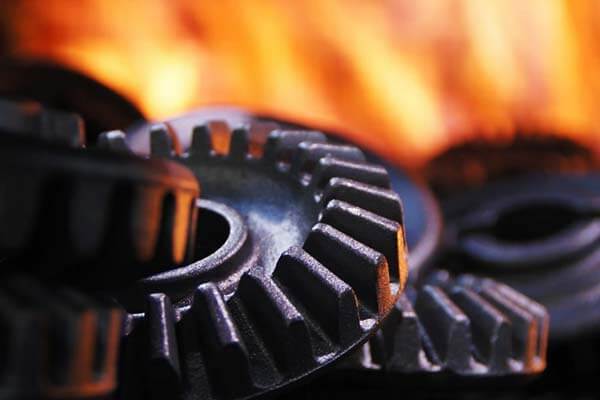
- Pack Carburizing: A traditional technique where the part is surrounded by a carbon-rich solid medium, such as charcoal or other carbonaceous materials, and heated to allow carbon diffusion.
- Kaasuhiiletys: This Involves exposing the part to a carbon-rich gas, typically methane or propane, at high temperatures.
This method offers greater control over the carburizing process, allowing for quicker results.
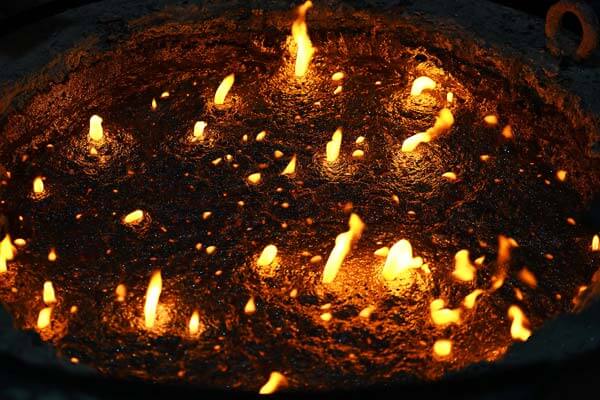
Gas carburization - Liquid Carburizing: The part is immersed in a molten salt bath that contains carbon sources, enabling uniform carbon diffusion across the material’s surface.
Liquid Carburizing
Each method has distinct advantages depending on the application, desired outcome, and material specifications.
3. The Carburizing Process
Carburizing involves several critical stages that must be carefully controlled to ensure optimal results:
- Lämmitys: The steel part is heated to a temperature between 900°C and 1000°C. This high temperature allows for the diffusion of carbon into the surface.
- Carbon Infusion: The material is then exposed to carbon sources—whether in a gas, nestettä, or solid form—leading to the absorption of carbon into the steel’s surface layer.
The depth of this infusion determines the surface hardness. - Sammutus: After carbon infusion, the part is rapidly cooled using oil or water.
This rapid cooling locks in the hardened surface layer, preventing it from reverting to its original, softer state. - Karkaisu: To relieve internal stresses caused by the quenching process, the carburized part is tempered at a lower temperature.
This step helps achieve the desired balance between surface hardness and core toughness.
Precise control over the time, lämpötila, and carbon content is critical to ensuring the success of the carburizing process, which directly impacts the performance and durability of the treated parts.
4. Benefits of Carburizing Heat Treatment
Carburizing heat treatment is an essential process in the manufacturing of high-performance components, particularly in industries where durability and wear resistance are paramount.
This process offers a wide range of benefits that make it indispensable for producing parts that can withstand extreme operating conditions.
Here’s a closer look at the key advantages of carburizing:
Surface Hardening for Enhanced Wear Resistance
One of the primary benefits of carburizing is the significant increase in surface hardness.
During the carburizing process, carbon is diffused into the outer layer of the steel, resulting in a hardened surface that is highly resistant to abrasion and wear.
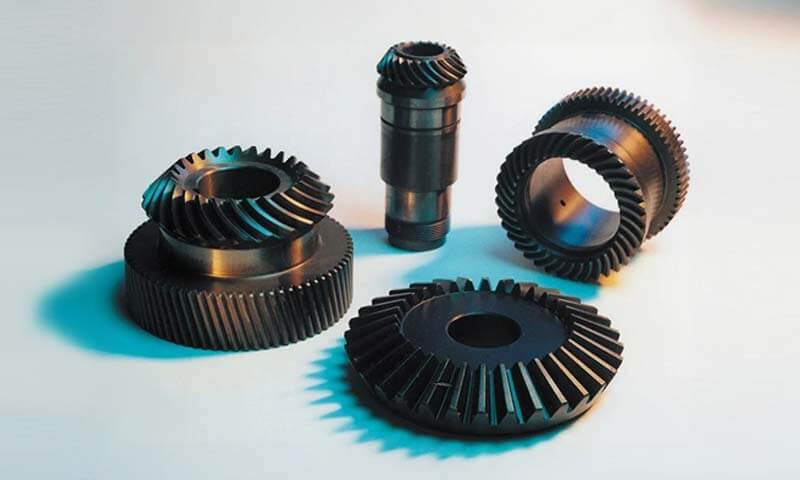
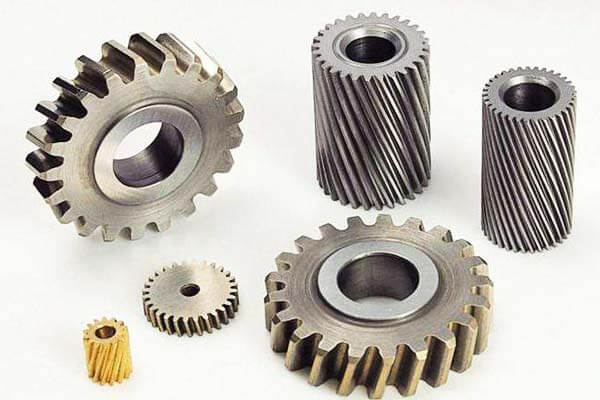
This is particularly advantageous for parts that undergo continuous friction, kuten vaihteet, nokka-akselit, ja laakerit.
The improved hardness ensures that the component maintains its functionality over extended periods, even under demanding conditions.
Improved Tensile Strength
Carburizing enhances the tensile strength of steel, particularly in parts that need to bear high loads or resist stress during operation.
The hardened surface increases the ability of the component to resist deformation, while the tough core ensures that the part can absorb shocks and impacts without failure.
This combination of surface hardness and core toughness is what makes carburized parts ideal for critical applications in automotive, ilmailu-, ja teollisuuskoneet.
Retained Toughness and Ductility in the Core
One of the most significant advantages of carburizing over other hardening processes (such as full hardening or induction hardening) is that it retains the toughness and ductility of the core material.
While the surface becomes hard and wear-resistant, the core of the material remains relatively soft, allowing it to absorb impact and stress.
This means that parts subjected to heavy loads or shock impacts can maintain their structural integrity, reducing the risk of failure or fracture.
Parempi väsymyksenkestävyys
Carburizing also enhances the fatigue resistance of steel components.
The process induces compressive residual stresses on the surface of the part, which helps resist crack formation and propagation during cyclic loading.
This is especially crucial for parts that are constantly subjected to dynamic forces, such as gears in transmissions or aircraft landing gear.
The result is a component that can withstand repeated stress cycles without suffering from premature failure, extending its operational lifespan.
Extended Component Life
The combination of enhanced hardness, improved tensile strength, and superior wear resistance leads to significantly longer service life for carburized components.
Parts treated through carburizing can endure extreme wear conditions, reduce the frequency of maintenance, and lower the likelihood of failure.
For industries where downtime is costly, carburizing provides a reliable solution to reduce component wear and the need for frequent replacements.
Minimaalinen särö
Compared to other heat treatments, carburizing is a relatively low-temperature process that minimizes the risk of thermal distortion.
Unlike processes like hardening, which can cause significant dimensional changes and warping due to the high temperatures involved,
carburizing introduces carbon at a lower temperature (typically between 900°C and 1000°C).
This results in minimal changes to the shape or size of the part, making it ideal for precision components where maintaining tight tolerances is critical.
Massatuotannon kustannustehokkuus
Carburizing can be a highly cost-effective solution for mass production of high-performance components.
Because the process increases the wear and fatigue resistance of parts without altering their core material properties,
manufacturers can reduce the frequency of part replacements and extend maintenance intervals.
Lisäksi, carburizing can be more affordable than alternative hardening methods, such as case hardening, since it eliminates the need for complex, high-temperature quenching processes.
Better Lubrication Retention
Another unique benefit of carburizing is the improvement in the ability of the treated surface to retain lubricants.
The hardened surface layer has a higher affinity for oil, which helps reduce friction in parts that undergo constant motion, such as bearings, vaihde, ja kamerat.
This improves overall efficiency and reduces wear on components that would otherwise require frequent re-lubrication, thus lowering operational costs.
Increased Reliability and Performance
Carburizing ensures that components can function in high-demand applications with improved reliability and performance.
Whether it’s a highly loaded gear in an automotive transmission or an aerospace component exposed to high-stress environments,
carburizing helps ensure that parts are not only stronger and more durable but also capable of maintaining consistent performance throughout their lifecycle.
5. Applications of Carburizing Heat Treatment
Carburizing is used in a variety of industries where components need to withstand extreme wear and mechanical stress while retaining a strong and tough core:
- Autoteollisuus Teollisuus: Komponentit, kuten vaihteistot, nokka-akselit, kampiakselit,
and drivetrains benefit from carburizing as it helps extend their service life and reliability under high-performance conditions.Applications of Carburizing - Ilmailu-: Parts like aircraft engine components, laskutelineet, and transmission parts undergo carburizing
to ensure they can endure the demanding conditions of flight without compromising their structural integrity. - Teollisuuslaitteet: Pumput, kompressorit, and actuators that face high-stress conditions during operation also undergo carburizing to improve their performance and durability.
- Työkalu ja meistit: Muotit, kuoli, and cutting tools are often carburized to increase their wear resistance, ensuring consistent performance and long tool life in manufacturing processes.
6. Hiiletys vs. Muut lämpökäsittelymenetelmät
Carburizing is one of several heat treatment methods used to improve the mechanical properties of steel components,
particularly in industries where high wear resistance, vahvuus, and fatigue resistance are required.
To fully appreciate the advantages of carburizing, it’s important to compare it with other common heat treatment processes, such as hardening, nitroiva, ja induktiokarkaisu.
Let’s explore how carburizing stacks up against these alternatives in terms of surface hardening, depth of hardness, ja soveltuvuus.
Kovettumista (Sammutus) vs.. Carburizing
Kovettumista (or Quenching) is a heat treatment process in which steel is heated to a high temperature (usually above its critical point)
ja jäähdytetään sitten nopeasti (sammutettu) vedessä, öljy, or air to harden the material.
Vertailu:
- Surface Hardness vs. Core Properties: The key difference between carburizing and quenching is that sammutus typically hardens the entire cross-section of the steel,
kun taas hiiletys hardens only the surface layer, leaving the core material relatively softer and more ductile.
This makes carburizing ideal for parts that require a hard exterior for wear resistance but need a tough interior to absorb shock and stress. - Depth of Hardness: Carburizing produces a gradual hardness gradient, with the surface layer being significantly harder than the core.
Sitä vastoin, kovettuminen results in a uniform hardness throughout the entire piece, which may not always be desirable for components subjected to both wear and shock. - Sovellukset: Sammutus is often used when uniform hardness across the entire component is necessary (ESIM., cutting tools or small machine parts).
Kuitenkin, hiiletys is preferred for parts like gears, nokka-akselit, ja kampiakselit, where a high wear-resistant surface is needed without compromising the toughness of the core.
Typpi vs. Carburizing
Nitroiva is a surface-hardening process that involves introducing nitrogen into the surface of steel at lower temperatures (typically between 500°C and 550°C).
The nitrogen reacts with the surface to form nitrides, which increases hardness and improves wear and corrosion resistance.
Vertailu:
- Surface Hardness and Wear Resistance: Molemmat hiiletys ja nitroiva improve the surface hardness and wear resistance of steel.
Kuitenkin, nitroiva tends to produce a harder, more wear-resistant surface at lower temperatures, making it suitable for applications where minimal distortion is important.
Kuitenkin, hiiletys typically provides a deeper and more robust hardened layer, ideal for parts subjected to high wear and fatigue. - Väsymyslujuus: Nitroiva has the advantage of inducing puristusjäännösjännitykset on the surface of the material, which can improve väsymiskestävyys in dynamic applications.
Vertailun vuoksi, hiiletys also induces compressive stresses but can provide a more pronounced benefit in terms of improving fatigue strength due to the deeper hardened layer. - Process Temperatures: The lower temperature of nitroiva (compared to carburizing) makes it suitable for materials that cannot withstand the higher heat involved in carburizing,
kuten korkeahiiliset teräkset or parts that require minimal dimensional change. Carburizing, kuitenkin, is better suited for large components requiring deep surface hardening. - Sovellukset: Nitroiva is often used in applications like molds, kuoli, and engine parts where wear resistance and fatigue strength are essential, but minimal distortion is also required.
Carburizing is typically chosen for parts in the automotive and aerospace industries, kuten vaihteet ja akselit, where both high wear resistance and core toughness are critical.
Induktiokarkaisu vs. Carburizing
Induktiokarkaisu is a localized heat treatment process where the surface of the steel is rapidly heated using electromagnetic induction, followed by immediate quenching to harden the surface.
This process is highly effective for selectively hardening specific areas of a component.
Vertailu:
- Kovettumisen syvyys: Induction hardening is highly localized, meaning it is typically used for parts that only require hardening of specific areas (ESIM., the outer surface of a shaft).
Sitä vastoin, hiiletys provides a more uniform hardening across a deeper surface layer, making it ideal for parts like gears and camshafts that require an overall hardened surface. - Speed and Precision: Induction hardening is a faster process, especially when local hardening is required.
Kuitenkin, hiiletys involves longer processing times, as it requires carbon diffusion into the surface at a lower temperature over an extended period.
Kääntöpuolella, hiiletys provides a more consistent and deeper hardness layer, which is advantageous for applications requiring a greater degree of wear resistance. - Lämmön vaikutusalue: Induction hardening can lead to a smaller heat-affected zone (Hass) as only the surface layer is treated,
kun taas hiiletys involves a more gradual and deeper treatment, which may be more desirable for parts exposed to high loads and stresses. - Sovellukset: Induction hardening is commonly used for parts like shafts, vaihde, and rolls that require localized hardness in specific areas (ESIM., laakeripinnat).
Carburizing is typically used for components that need a hardened surface but must retain a tough, shock-resistant core, such as automotive gears, nokka-akselit, ja kampiakselit.
Other Surface Coatings vs. Carburizing
While carburizing enhances the hardness and fatigue resistance of materials,
it’s essential to compare it with other surface treatment methods like kova kromipinnoitus, physical vapor deposition (PVD) pinnoitteet, tai lämpösuihkupinnoitteet.
Vertailu:
- Pinnan kovuus: Carburizing offers deep, high hardness within the material’s surface layer,
kun taas kova kromipinnoitus ja PVD -pinnoitteet provide high surface hardness but with thinner coatings.
Carburizing may therefore offer superior protection in applications subject to high wear conditions. - Kulumiskestävyys: Kun taas lämpösuihkupinnoitteet ja kova kromipinnoitus provide good wear resistance, they typically don’t offer the depth of hardness that carburizing can deliver.
Lisäksi, hiiltynyt surfaces are often less prone to cracking or delamination compared to some coatings. - Kustannukset ja kestävyys: Carburizing is often more cost-effective for mass production since it doesn’t require additional coatings, and the material’s entire surface is hardened.
Plated coatings, toisaalta, maybe more expensive and require additional maintenance as they wear off over time.
7. Challenges in Carburizing Heat Treatment
Kun taas hiiletys is an effective and widely used heat treatment method, se ei ole ilman haasteitaan.
The process must be carefully controlled to achieve the desired results, and certain factors can complicate or limit its effectiveness.
Alla, we will explore some of the most common challenges associated with carburizing heat treatment and how to address them.
Aineellinen yhteensopivuus
One of the most significant challenges in carburizing is ensuring that the material being treated is compatible with the carburizing process.
Vähähiiliset teräkset are ideal candidates for carburizing because their surface can easily absorb carbon, forming a hardened layer.
Kuitenkin, korkeahiiliset teräkset, kevytmetalliterät, tai ruostumattomat teräkset can be more difficult to carburize effectively, as they already have high carbon content in the surface layers.
Lisäksi, these materials may not benefit as much from carburizing because their surface carbon saturation might already be high, limiting the effectiveness of the carburization process.
Ratkaisu: It’s essential to perform a material selection analysis before choosing carburizing for a specific part.
If a material is not ideal for carburizing, other surface treatments, such as nitriding or induction hardening, voisi olla sopivampi.
Achieving Uniform Carbon Depth
Achieving a uniform carbon depth across the entire surface of the component is crucial in carburizing.
Kuitenkin, yhtenäisyys can sometimes be challenging due to factors such as lämpötilan vaihtelut within the furnace, uneven carbon diffusion rates, ja variations in surface preparation.
A non-uniform carbon depth can result in parts with inconsistent hardness and performance, potentially leading to premature wear, halkeilu, or failure.
Ratkaisu: Proper furnace calibration and tight process controls (including temperature, hiilipitoisuus, and gas flow) are key to achieving uniform results.
Lisäksi, regular monitoring of the carburizing process and periodic checks on the workpieces can help ensure consistency.
Surface Distortion and Warping
Carburizing is a high-temperature process that involves heating parts to temperatures of 850°C to 950°C (depending on the method).
At such temperatures, there is a risk of surface distortion or warping due to the thermal expansion of the material.
This is particularly true for larger or more complex parts that may not cool uniformly after carburizing.
Distortion can lead to dimensional inaccuracies, making it difficult to meet tolerance specifications.
Ratkaisu: Hidas, ohjattu jäähdytys after carburizing can help minimize distortion.
Lisäksi, using fixtures to hold parts in place during cooling, and performing post-treatment processes such as hionta tai straightening,
can help address warping and ensure parts retain their intended shape and dimensions.
Carbon Control and Excess Carbon
During carburizing, it’s critical to control the amount of carbon that is absorbed into the material.
Excess carbon absorption can lead to karbidin muodostuminen, which makes the surface too hard and brittle,
compromising the material’s toughness and increasing the risk of halkeilu tai haketus kuormituksen alla.
Päinvastoin, insufficient carbon absorption results in poor surface hardness, defeating the purpose of the process.
Ratkaisu: Accurate control of the carbon potential within the furnace atmosphere is essential.
This requires careful monitoring of gas composition (kuten carbon monoxide ja metaani) and maintaining an optimal ratio for the desired level of carbon diffusion.
Lisäksi, jälkihoito prosesseja kuten karkaisu can help remove any excess carbon and balance the material’s properties.
Process Time and Energy Consumption
It is a relatively time-intensive process, especially compared to other surface hardening techniques like induktion kovettuminen tai nitroiva.
The lengthy duration of carburizing (which can range from several hours to days, depending on the material and the depth of hardening required)
contributes to higher energiankulutus, which can be costly.
In mass production environments, these extended cycle times can lead to reduced throughput and increased operational expenses.
Ratkaisu: Advances in uunin tekniikkaa and process optimization can help reduce cycle times without sacrificing quality.
Tekniikat, kuten low-pressure carburizing (LPC) can also speed up the process, leading to shorter treatment times and reduced energy usage.
Lisäksi, integrating automaattiset järjestelmät for temperature and atmosphere control can increase the efficiency of the process.
Surface Finish and Post-Treatment Requirements
While carburizing improves the surface hardness of materials, it may not always result in a smooth or polished surface.
Usein, carburized parts require additional post-treatment processes pitää hionta, kiillotus, tai ammuttu räjähdys to achieve the desired surface finish and dimensional accuracy.
läsnäolo carburizing stains, hapetus, tai pistorasia on the surface can detract from the aesthetic or functional quality of the parts.
Ratkaisu: To address surface finish issues, hionta tai kiillotus can be performed after carburizing to remove any oxidation or imperfections that may have formed during the treatment.
Jotkut menetelmät, kuten low-pressure carburizing (LPC), can also reduce the amount of oxidation and improve the surface quality directly after treatment.
Cost of Carburizing
While carburizing is often cost-effective for high-volume production of parts that require high wear resistance,
the process can become expensive, erityisesti varten suuret komponentit tai monimutkaiset geometriat.
Se energy costs, material costs, ja työvoimakustannukset associated with carburizing may be prohibitive for small-scale or low-budget projects.
Ratkaisu: To manage costs, companies can explore alternative heat treatments for less demanding applications.
Lisäksi, käyttäminen automaattiset järjestelmät ja high-efficiency furnaces can reduce energy consumption and labor costs.
For smaller components, more localized hardening processes like induktion kovettuminen may be a more cost-effective option.
Control of Hardness Gradient
The goal of carburizing is to create a gradual hardness gradient in which the outer surface is significantly harder than the core material, providing wear resistance while maintaining toughness inside.
Kuitenkin, achieving the right gradient is often tricky. Jos hardness gradient is too steep or not uniform, parts may exhibit stressipitoisuudet or fail prematurely.
Ratkaisu: Carefully controlling the carbon diffusion rate and using lämpötila ja quenching processes that allow for a smooth transition in hardness can help create the desired gradient.
Post-carburizing karkaisu tai stressin lievitystä treatments may also be needed to ensure the right balance of hardness and toughness throughout the part.
8. Johtopäätös
Carburizing heat treatment plays a crucial role in improving the strength, kulumiskestävyys,
and durability of parts. Its ability to provide a hardened surface while maintaining core toughness makes it an essential process for industries that require high-performance components.
By selecting the right carburizing process and maintaining control over the conditions, manufacturers can significantly improve the longevity and reliability of their products.
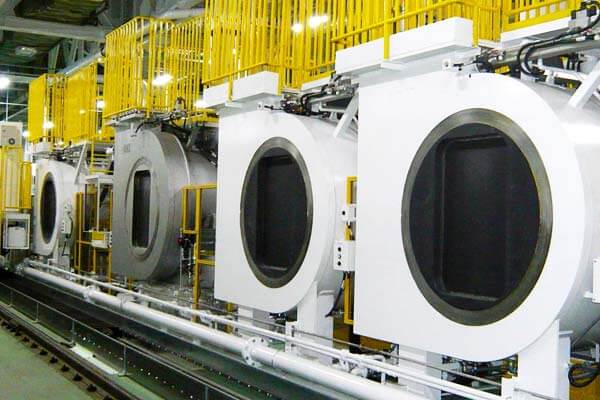
At Tämä, we offer advanced carburizing heat treatment solutions that are tailored to your specific requirements.
Ota yhteyttä today to learn how our carburizing services can enhance the performance and durability of your components.