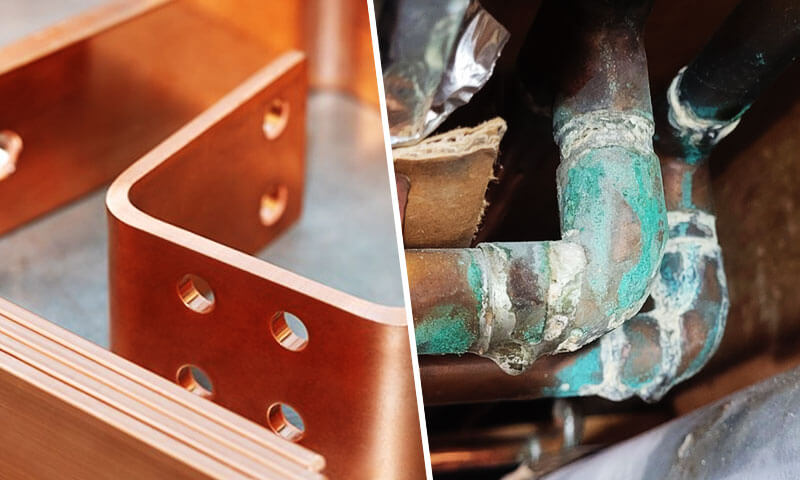
በማንኛውም የድሮ ከተማ ውስጥ ይራመዱ, እና እርስዎ ያዩታል-በመዳብ ጣሪያዎች ላይ ልዩ አረንጓዴ ፓቲና, ሐውልቶች, እና የስነ-ህንፃ ዝርዝሮች.
ይህ አዶ ቨርዲግሪስ ብዙውን ጊዜ ዝገትን ይመስላል, ግን ነው? መዳብ እንደ ብረት ዝገት ነው?? መልሱ አጭሩ አይደለም ነው።, ነገር ግን የተሟላው ታሪክ እጅግ በጣም የተወሳሰበ እና በሳይንስ የበለጸገ ነው።.
መዳብ በሰው ልጅ ውስጥ ካሉት በጣም ጥንታዊ እና ሁለገብ ብረቶች አንዱ ነው።, ከኤሌክትሪክ መስመር ዝርጋታ እና ከቧንቧ እስከ የስነጥበብ ስራ እና ሳንቲም ድረስ በሁሉም ነገር በሺዎች ለሚቆጠሩ አመታት ጥቅም ላይ ይውላል.
የመቆየቱ እና የዝገት መቋቋም ስፍር ቁጥር በሌላቸው መተግበሪያዎች ውስጥ አስፈላጊ እንዲሆን አድርጎታል።. ነገር ግን መዳብ ለኤለመንቶች ሲጋለጥ እንዴት እንደሚሰራ ግራ መጋባት ቀጥሏል።.
ይህ ጽሑፍ ጥብቅ ያቀርባል, የመዳብ የዝገት ባህሪ አጠቃላይ ምርመራ.
ስለ ዝገቱ ኬሚካላዊ ፍቺ እንመረምራለን, የመዳብ ትክክለኛ የዝገት ዘዴዎች, የተለያዩ የመዳብ ዝገት ዓይነቶች, በጥንካሬው ላይ ተጽእኖ የሚያሳድሩ የአካባቢ ሁኔታዎች, እና የምህንድስና እና ዲዛይን ተግባራዊ እንድምታ.
1. የመዳብ ዝገት ያደርጋል?
መልሱ ነው። አይ.
መዳብ ያደርጋል አይደለም ዝገት ምክንያቱም ዝገት የሚፈጠር ዝገት ምርት ነው በብረት እና በብረት ላይ የተመሰረቱ ውህዶች ላይ ብቻ, እንደ የካርቦን ብረት እና የብረት ብረት.
ዝገት በኬሚካላዊ መልኩ እርጥበት ከተሞላ የብረት ኦክሳይድ ነው, በዋናነት Fe₂O₃·nH₂O እና ፌፊ, ብረት ከኦክሲጅን እና እርጥበት ጋር ሲገናኝ የሚበቅል.
ብረት ባልሆኑ ብረቶች ላይ ከሚገኙ ብዙ የመከላከያ ኦክሳይድ ፊልሞች በተለየ መልኩ, ዝገቱ ባለ ቀዳዳ ነው።, ተሰባሪ, እና ከሥሩ ብረት ጋር ተያይዟል.
ሲወዛወዝ, ትኩስ ብረት ያለማቋረጥ ይጋለጣል, ዝገት ወደ ቁሱ ውስጥ በጥልቀት እንዲገባ ማድረግ.

መዳብ በመሠረቱ የተለየ ባህሪ አለው.
ዝገትን ከማምረት ይልቅ, መዳብ ይሠራል ኦክሳይድ, ቀስ በቀስ ቀጭን የመዳብ ኦክሳይድ ንብርብሮችን ይፈጥራል.
ረዘም ላለ ጊዜ በከባቢ አየር መጋለጥ, እነዚህ ኦክሳይድ ንብርብሮች ከእርጥበት ጋር ምላሽ ይሰጣሉ, ካርቦን ዳይኦክሳይድ, የሰልፈር ውህዶች, እና ሌሎች የአካባቢ ንጥረ ነገሮች ጥቅጥቅ ያለ ለማምረት, የተረጋጋ ወለል ፊልም በተለምዶ በመባል ይታወቃል patina.
ይህ ልዩነት በብረታ ብረት እና በብረታ ብረት መካከል በጣም አስፈላጊ ከሆኑት ልዩነቶች አንዱ ነው.
እንደ ዝገት ሳይሆን, የመዳብ ፓቲና ከሥነ-ስርጭቱ ጋር በጥብቅ የተቆራኘ እና እንደ ተፈጥሯዊ መከላከያ ሽፋን ይሠራል.
ዝገትን ከማፋጠን ይልቅ, የኦክስጅንን ፍጥነት በእጅጉ ይቀንሳል, እርጥበት, እና ብክለቶች ወደ ታችኛው ብረት ሊደርሱ ይችላሉ.
በውጤቱም, መከላከያው ሙሉ በሙሉ ከተቋቋመ በኋላ ዝገት በከፍተኛ ሁኔታ ይቀንሳል.
2. ሙሉው የመዳብ ዝገት ሂደት
የመዳብ ዝገት ድንገተኛ ክስተት አይደለም ነገር ግን ቀስ በቀስ የኤሌክትሮኬሚካላዊ ለውጥ ለብዙ አመታት ይከሰታል.
ብረቱ ከኦክስጅን ጋር ሲገናኝ, እርጥበት, ካርቦን ዳይኦክሳይድ, እና የከባቢ አየር ብክለት, የእሱ ገጽታ በተከታታይ ሊገመቱ የሚችሉ ለውጦችን ያደርጋል.
ደረጃ 1: ትኩስ የብረት መዳብ
አዲስ የተመረተ መዳብ ደማቅ ቀይ-ብርቱካናማ ብረት ለስላሳ መልክ ያሳያል, አንጸባራቂ ገጽ.
በዚህ ደረጃ, ብረቱ በጣም ንቁ ነው, ምክንያቱም ምንም መከላከያ ኦክሳይድ ፊልም እስካሁን አልተሰራም.
አየር ከተጋለጡ በኋላ ወዲያውኑ, የኦክስጅን ሞለኪውሎች ከመዳብ ወለል ጋር ምላሽ መስጠት ይጀምራሉ.
ምንም እንኳን ይህ ምላሽ በደቂቃዎች ውስጥ ይጀምራል, የተፈጠረው ኦክሳይድ ንብርብር መጀመሪያ ላይ ጥቂት ናኖሜትሮች ውፍረት ያለው እና ለዓይን የማይታይ ነው.
ይህ አልትራቲን ኦክሳይድ ፊልም በአካባቢ ጥበቃ ላይ የመጀመሪያውን የመከላከያ መስመር ይወክላል.
ደረጃ 2: የመጀመሪያ ኦክሳይድ
መጋለጥ እንደቀጠለ ነው።, የላይኛው ቀስ በቀስ ይሠራል ኩባያ ኦክሳይድ (ኩ₂ኦ).
ይህ ኦክሳይድ እንደ ቀይ-ቡናማ ፊልም ሆኖ ይታያል እና ከስር ያለው ብረት ጋር ተጣብቆ እና ተጣብቆ ይቆያል.. ከብረት ዝገት በተለየ, አይሰነጠቅም ወይም አይላጣም.
ይልቁንም, ወደ መዳብ ንጣፍ ውስጥ የኦክስጂን ስርጭትን የሚቀንስ እንደ መከላከያ እንቅፋት ሆኖ ያገለግላል.
በዚህ ደረጃ ውስጥ ያለው የኦክሳይድ መጠን በበርካታ የአካባቢ ሁኔታዎች ላይ የተመሰረተ ነው, የሙቀት መጠንን ጨምሮ, እርጥበት, እና የኦክስጅን አቅርቦት.
በተለመደው የከባቢ አየር ሁኔታ, ሂደቱ በአንጻራዊ ሁኔታ ቀርፋፋ እና ተመሳሳይ ነው.
ደረጃ 3: የጨለማ ኦክሳይድ ንብርብር እድገት
ከረጅም ጊዜ ተጋላጭነት ጋር, የኩፕረስ ኦክሳይድ ክፍል የበለጠ ኦክሳይድ ወደ ውስጥ ይገባል። ኩባያ ኦክሳይድ (ኩኦ).
የላይኛው ቀለም ቀስ በቀስ ከቀይ-ቡናማ ወደ ጥቁር ቡናማ ወይም ወደ ጥቁር ሊጠጋ ይችላል, በተጋለጡ የመዳብ ጣሪያ ፓነሎች ላይ በተለምዶ የሚታይ ለውጥ, የኢንዱስትሪ መሳሪያዎች, እና ከበርካታ አመታት አገልግሎት በኋላ የውጪ ቅርጻ ቅርጾች.
ምንም እንኳን መልክው በከፍተኛ ሁኔታ ቢቀየርም, የኦክሳይድ ንብርብር ተጣብቆ እና ተከላካይ ሆኖ ይቆያል.
በዚህ ደረጃ, የኦክሳይድ ፊልም የኦክስጂንን እና የእርጥበት መጓጓዣን መገደቡን ስለሚቀጥል ወደ መሰረታዊ ብረት ውስጥ ዝገት መግባቱ በጣም ውስን ነው ።.
ደረጃ 4: የመከላከያ አረንጓዴ ፓቲና ምስረታ
ከቤት ውጭ ባሉ አካባቢዎች, በተለይም እርጥበት እና የከባቢ አየር ካርቦን ዳይኦክሳይድ በሚገኙበት, የኦክሳይድ ንብርብር ተጨማሪ ኬሚካዊ ግብረመልሶችን ይወስዳል.
የመዳብ ውህዶች ቀስ በቀስ ወደ የተረጋጋ ዝገት ምርቶች ይለወጣሉ መሰረታዊ የመዳብ ካርቦኔት (ኩ₂(ኦህ)₂CO₃), ሰልፈር የያዙ አከባቢዎች መሰረታዊ የመዳብ ሰልፌት ውህዶችን ሊፈጥሩ ይችላሉ።.
ከፍ ያለ የክሎራይድ ክምችት ያላቸው የባህር ዳርቻ ክልሎች ተጨማሪ የመዳብ ክሎራይድ የዝገት ምርቶችን ሊያመነጩ ይችላሉ።.
እነዚህ ግብረመልሶች ከታሪካዊ የመዳብ መዋቅሮች ጋር የተቆራኘውን ልዩ አረንጓዴ ወይም ሰማያዊ-አረንጓዴ ፓቲና ይፈጥራሉ.
ከታዋቂ እምነት በተቃራኒ, ይህ አረንጓዴ ገጽ ነው የቁሳዊ ውድቀት ምልክት አይደለም. ይልቁንም, የወደፊቱን የዝገት ደረጃዎችን በእጅጉ የሚቀንስ የበሰለ መከላከያ ንብርብርን ይወክላል.
ሙሉ በሙሉ ከዳበረ በኋላ, ፓቲና እንደ ውጤታማ የአካባቢ እንቅፋት ሆኖ ያገለግላል, የኦክስጅን ስርጭትን መገደብ, እርጥበት, እና ወደ ታችኛው ብረት የሚበክሉ.
ለተፈጥሮ ፓቲና መፈጠር የሚያስፈልገው ጊዜ በስፋት ይለያያል.
በንጹህ የገጠር አካባቢዎች, የተሟላ እድገት ለበርካታ አስርት ዓመታት ሊወስድ ይችላል።, ከፍተኛ እርጥበት እና ከፍተኛ ምላሽ ሰጪ ውህዶች በመኖራቸው ምክንያት የኢንዱስትሪ ወይም የባህር ውስጥ አየር ብዙውን ጊዜ ሂደቱን ያፋጥነዋል።.
ደረጃ 5: የረጅም ጊዜ የገጽታ መረጋጋት
ፓቲና ሙሉ በሙሉ ካደገ በኋላ, መዳብ በሚያስደንቅ ሁኔታ የተረጋጋ የአገልግሎት ደረጃ ውስጥ ይገባል.
የዝገት መጠኑ በከፍተኛ ሁኔታ ይቀንሳል ምክንያቱም ጥቅጥቅ ያለ የገጽታ ፊልም እንደ ራስን መፈወሻ መከላከያ ማገጃ ይሠራል..
ጥቃቅን ጭረቶች ወይም አካባቢያዊ ጉዳቶች በተለምዶ በቀጣይ ኦክሳይድ እና በፓቲና እድገት አማካኝነት በተፈጥሮ ይስተካከላሉ, ተከላካይ ንብርብር በጊዜ ሂደት እንዲታደስ ማድረግ.
ይህ ራስን የመከላከል ባህሪ መዳብ ለረጅም ጊዜ የመሠረተ ልማት አውታሮች እና ተፈላጊ የምህንድስና መተግበሪያዎች በስፋት ከተገለፀባቸው ዋና ዋና ምክንያቶች አንዱ ነው.
የስነ-ህንፃ ሽፋን, ጣሪያ ስርዓቶች, የባህር ክፍሎች, የሙቀት መለዋወጫዎች, የቧንቧ መስመሮች, እና ትክክለኛ የኢንዱስትሪ ቀረጻዎች በትንሹ ጥገና ለብዙ አስርት ዓመታት እጅግ በጣም ጥሩ መዋቅራዊ ታማኝነትን ሊጠብቁ ይችላሉ።.
3. የመዳብ ዝገት ዓይነቶች
ምንም እንኳን መዳብ በጣም ጥሩ የሆነ ዝገት በመቋቋም የታወቀ ቢሆንም, ከመበስበስ ሙሉ በሙሉ አይከላከልም.

ዩኒፎርም የከባቢ አየር ዝገት
ዩኒፎርም የከባቢ አየር ዝገት በጣም የተለመደው እና አነስተኛ ጎጂ የሆነ የመዳብ ዝገት አይነት ነው።.
ሁሉም የተጋለጠው ገጽ ከኦክሲጅን ጋር ቀስ በቀስ ምላሽ ሲሰጥ ይከሰታል, እርጥበት, ካርቦን ዳይኦክሳይድ, እና የከባቢ አየር ብክለትን ይከታተሉ.
ወደ ብረት ውስጥ ዘልቆ ከመግባት ይልቅ, ምላሹ ቀስ በቀስ ወደ የተረጋጋ አረንጓዴ ፓቲና የሚያድግ ቀጭን ኦክሳይድ ፊልም ይፈጥራል.
ምክንያቱም የዝገት ምርቶች ከንጣፉ ጋር በጥብቅ የተያያዙ ናቸው, ዋናውን መዳብ ከአካባቢያዊ ጥቃቶች በተሳካ ሁኔታ ይከላከላሉ.
ይህ ሊገመት የሚችል የዝገት ባህሪ ለምን የመዳብ ጣሪያዎችን ያብራራል, የሕንፃ ፊት ለፊት, ሐውልቶች, እና የውጪ ቅርጻ ቅርጾች በትንሽ ጥገና ከመቶ አመት በላይ በመዋቅራዊ ደረጃ ሊቆዩ ይችላሉ።.
Galvanic Corrosion
የጋለቫኒክ ዝገት የሚከሰተው መዳብ በኤሌክትሪክ ከተገናኘ ይበልጥ ንቁ ከሆነ ብረት ጋር ሲገናኝ ሁለቱም ለኤሌክትሮላይት እንደ ዝናብ ውሃ ሲጋለጡ ነው., የባህር ውሃ, ወይም የኢንዱስትሪ condensate.
መዳብ በ galvanic ተከታታይ ውስጥ በአንጻራዊነት ክቡር ስለሆነ, አነስተኛው የከበረ ብረት አኖድ ይሆናል እና ይበላሻል.
እንደ የካርቦን ብረት ያሉ ቁሳቁሶች, ዚንክ, አሉሚኒየም, እና ማግኒዚየም በቀጥታ ከመዳብ ጋር ሲጣመር በጣም የተጋለጡ ናቸው.
ምንም እንኳን መዳብ ራሱ ብዙም ያልተነካ ቢሆንም ትክክለኛ ያልሆነ ጥምረት በአቅራቢያው ያሉትን ክፍሎች ዝገት ያፋጥናል.
የኤሌክትሪክ መከላከያ, የዲኤሌክትሪክ እቃዎች, እና ተመሳሳይ የሆኑ ብረቶች በሚቀላቀሉበት ጊዜ ጥንቃቄ የተሞላበት ቁሳቁስ መምረጥ አስፈላጊ ነው.
ፒቲንግ ዝገት
ፒቲንግ ዝገት በብረት ወለል ላይ ትናንሽ ግን ጥልቅ ጉድጓዶች በመፍጠር የሚታወቅ አካባቢያዊ የጥቃት አይነት ነው.
ምንም እንኳን መዳብ በአጠቃላይ ጉድጓዶችን መቋቋም የሚችል ቢሆንም, ጥሩ ያልሆነ የውሃ ኬሚስትሪ - ዝቅተኛ ፒኤችን ጨምሮ, ከፍተኛ የክሎራይድ ክምችት, ከፍ ያለ የሟሟ ኦክስጅን, ወይም የቀዘቀዘ ውሃ-የመከላከያ ኦክሳይድ ፊልም አካባቢያዊ መፈራረስ ሊጀምር ይችላል።.
ምክንያቱም አብዛኛው ገጽ ሳይበላሽ ሲቀር ጉድጓዶች ወደ ውስጥ ዘልቀው ሊገቡ ይችላሉ።, በመደበኛ ምርመራ ወቅት ለመለየት አስቸጋሪ ናቸው.
በቧንቧ ስርዓቶች ውስጥ, የሙቀት መለዋወጫዎች, እና የማቀዝቀዣ መሳሪያዎች, ያልታከመ የጉድጓድ ዝገት ውሎ አድሮ የደም መፍሰስን ወይም የግፊት መቀነስ ሊያስከትል ይችላል።.
የአፈር መሸርሸር - ዝገት
መዳብ በተለመደው የአሠራር ሁኔታ ውስጥ በሚፈስሱ ፈሳሾች ውስጥ በተለየ ሁኔታ በደንብ ይሠራል.
ቢሆንም, ከመጠን በላይ ከፍተኛ ፍሰት ፍጥነቶች, የተንጠለጠሉ አስጸያፊ ቅንጣቶች, ወይም የተዘበራረቀ ፍሰት ቀስ በቀስ የመከላከያ ኦክሳይድ ፊልምን ከላይኛው ክፍል ላይ ማስወገድ ይችላል.
ይህንን የመከላከያ ንብርብር ደጋግሞ ማውለቅ አዲስ ብረትን ለቀጣይ ዝገት ያጋልጣል, የተፋጠነ ግድግዳ መጥፋትን ያስከትላል.
ይህ የተቀናጀ የሜካኒካል እና ኤሌክትሮኬሚካላዊ መበላሸት የአፈር መሸርሸር-corrosion በመባል ይታወቃል.
ክስተቱ በተለይ በፓምፕ አስተላላፊዎች ውስጥ በጣም አስፈላጊ ነው, ኮንዲነር ቱቦዎች, የባህር ዳርቻዎች, ቫልቮች, እና የፈሳሽ ፍጥነት ከፍ ያለ የሃይድሮሊክ ስርዓቶች.
ትክክለኛ የሃይድሮሊክ ንድፍ, ለስላሳ ፍሰት መንገዶች, እና ተገቢ ቅይጥ ምርጫ ጉልህ የአፈር መሸርሸር-corrosion ስጋት ይቀንሳል.
የጭንቀት ዝገት ስንጥቅ (ኤስ.ሲ.ሲ)
የጭንቀት ዝገት መሰንጠቅ የሚፈጠረው የመሸከም ጭንቀት እና የበሰበሰ አካባቢ በተጋለጡ ቁሶች ላይ በተመሳሳይ ጊዜ ሲሰሩ ነው።.
የተጣራ መዳብ ለኤስ.ሲ.ሲ ጥሩ የመቋቋም ችሎታ ያሳያል, ነገር ግን አንዳንድ የመዳብ ቅይጥ -በተለይ አንዳንድ አሞኒያ ለያዙ አካባቢዎች የተጋለጡ አንዳንድ ናሶች - በታሪክ በሚታወቀው ዘዴ መሰንጠቅ ሊያጋጥማቸው ይችላል። የወቅቱ ስንጥቅ.
ቀሪ የማምረት ጫናዎች, ቀዝቃዛ መስራት, ወይም ውጫዊ ጭነት ስንጥቅ መነሳሳትን ሊያፋጥን ይችላል. ትክክለኛው የጭንቀት እፎይታ የሙቀት ሕክምና እና ተስማሚ ቅይጥ ምርጫ ውጤታማ የመከላከያ እርምጃዎች ናቸው.
የማይክሮባዮሎጂ ተፅእኖ ያለው ዝገት (MIC)
በተወሰኑ የኢንዱስትሪ የውሃ ስርዓቶች ውስጥ, ረቂቅ ተሕዋስያን በአካባቢው ኬሚካላዊ ሁኔታዎችን በመለወጥ ወይም ጎጂ የሆኑ ሜታቦሊዝም ምርቶችን በማምረት ዝገትን ሊነኩ ይችላሉ..
ምንም እንኳን መዳብ የባክቴሪያዎችን እድገትን የሚገታ ተፈጥሯዊ ፀረ-ተሕዋስያን ባህሪያት ቢኖረውም, ባዮፊልሞች አሁንም በማይቆሙ ሁኔታዎች ውስጥ ሊዳብሩ ይችላሉ።.
እነዚህ አካባቢያዊ የተደረጉ ባዮሎጂያዊ አካባቢዎች ጉድጓዶች ወይም ከተቀማጭ በታች የዝገት እድልን ይጨምራሉ.
ኤምአይሲ በአብዛኛው የሚያጋጥመው በማቀዝቀዣ የውኃ ስርዓቶች ውስጥ ነው, የባህር ውስጥ መገልገያዎች, እና የውሃ ጥራት አያያዝ በቂ ያልሆነበት የኢንዱስትሪ ሂደት መሳሪያዎች.
4. የመዳብ ዝገት ላይ ተጽዕኖ የሚያሳድሩ ምክንያቶች
የመዳብ ዝገት የሚተዳደረው በራሱ ቁሳቁስ ብቻ ሳይሆን በአካባቢው አካባቢ እና በአገልግሎት ሁኔታዎች ላይ ነው.
መዳብ ኦክሳይድ የሚፈጥርበት ፍጥነት - እና የተፈጠረው ዝገት መከላከያ ሆኖ ቢቆይ ወይም አካባቢያዊ ከሆነ - በብዙ መስተጋብር ሁኔታዎች ላይ የተመሠረተ ነው።.

የከባቢ አየር አካባቢ
የአካባቢ መጋለጥ የመዳብ ዝገት ባህሪን ከሚወስኑ ዋና ዋና ነገሮች አንዱ ነው.
በንጹህ የገጠር አካባቢዎች, ኦክሳይድ ቀስ በቀስ ይቀጥላል, ጥቅጥቅ ያለ መከላከያ ፓቲና ለበርካታ አስርት ዓመታት እንዲዳብር መፍቀድ.
በተቃራኒው, የባህር ዳርቻ ክልሎች መዳብን በክሎራይድ የበለፀገ የጨው መርጨት ያጋልጣሉ, የኢንዱስትሪ ከተሞች በብረት ወለል ላይ ያለውን ኬሚካላዊ ምላሽ የሚያፋጥኑ ሰልፈር ዳይኦክሳይድ እና ናይትሮጅን ኦክሳይድን ሲያስተዋውቁ.
እርጥበት ለኤሌክትሮኬሚካላዊ ዝገት የሚያስፈልገውን ኤሌክትሮላይት ስለሚያቀርብ እርጥበት ወሳኝ ሚና ይጫወታል.
ተደጋጋሚ እርጥብ-ደረቅ ብስክሌት በአጠቃላይ ያለማቋረጥ ከደረቁ አካባቢዎች ይልቅ የፓቲና አፈጣጠርን ያፋጥናል።.
የውሃ ኬሚስትሪ
በቧንቧ ስርዓቶች ውስጥ መዳብ ሲሰራ, የሙቀት መለዋወጫዎች, ኮንዲሽነሮች, ወይም የማቀዝቀዣ ወረዳዎች, የውሃ ጥራት ዝገትን የሚነካ ዋነኛው ምክንያት ይሆናል።.
ዝቅተኛ ፒኤች ያለው ኃይለኛ ውሃ, ከመጠን በላይ የተሟሟ ኦክስጅን, ከፍተኛ የክሎራይድ ክምችት, ወይም ከፍ ያለ የአሞኒያ ይዘት የመከላከያ ኦክሳይድ ንብርብርን ሊያደናቅፍ ይችላል።.
በተቃራኒው, ከተመጣጣኝ ኬሚስትሪ ጋር ያለው ውሃ የአገልግሎት ህይወትን በእጅጉ የሚያራዝም የተረጋጋ ተገብሮ ፊልም እንዲፈጠር ያበረታታል።.
የውሃ ፍጥነትም እንዲሁ አስፈላጊ ነው. መካከለኛ ፍሰት ንጹህ ንጣፎችን ለመጠበቅ ይረዳል, የቀዘቀዘ ውሃ ግን የአካባቢያዊ ዝገትን እና ባዮሎጂያዊ እድገትን ያበረታታል.
ከመጠን በላይ ከፍተኛ የፍሳሽ መጠን መከላከያ ፊልሞችን በሜካኒካዊ መንገድ በማስወገድ የአፈር መሸርሸር-ዝገትን ይፈጥራል.
የሙቀት መጠን
የሙቀት መጠኑ ከዝገት ጋር የተያያዘ እያንዳንዱ ኤሌክትሮኬሚካላዊ ምላሽ ላይ ተጽዕኖ ያሳድራል።.
ከፍተኛ ሙቀት በአጠቃላይ ምላሽ ኪነቲክስ ይጨምራል, የኦክሳይድ መፈጠርን ማፋጠን, እና የዝገት ምርቶችን ስብጥር ሊለውጥ ይችላል.
በሙቀት መለዋወጫዎች ውስጥ, ማሞቂያዎች, እና የኢንዱስትሪ ማቀነባበሪያ መሳሪያዎች, ከፍ ያለ የሙቀት መጠን የአሎይ ምርጫን እና የውሃ ኬሚስትሪን በጥንቃቄ መመርመርን ይጠይቃል.
የሙቀት ብስክሌት የረጅም ጊዜ የዝገት አፈፃፀም ላይ ተጽዕኖ የሚያሳድሩ ልዩ ልዩ የማስፋፊያ ጭንቀቶችን ሊፈጥር ይችላል።.
የከባቢ አየር ብክለት
የኢንዱስትሪ ልቀቶች በተጋለጠው የመዳብ ገጽታ እና የዝገት ባህሪ ላይ ከፍተኛ ተጽዕኖ ያሳድራሉ.
ሰልፈር የያዙ ጋዞች የመዳብ ሰልፌት ውህዶች እንዲፈጠሩ ያበረታታሉ, ካርቦን ዳይኦክሳይድ ለመሠረታዊ የመዳብ ካርቦኔት እድገት አስተዋጽኦ ያደርጋል.
የባህር ዳርቻ ክሎራይድ ክምችቶች የፓቲንን ስብጥር እና ቀለም የሚቀይሩ የመዳብ ክሎራይድዎችን ሊያመነጩ ይችላሉ።.
የአካባቢ ጥበቃ ደንቦች በአለም አቀፍ ደረጃ የሰልፈር ልቀትን ቀንሰዋል, በዘመናዊ የመዳብ ሕንፃዎች ላይ የተሠራው ተፈጥሯዊ ፓቲና ብዙውን ጊዜ በታሪካዊ ሕንፃዎች ላይ ከሚታየው ይለያል.
ከተመሳሳይ ብረቶች ጋር ግንኙነት ያድርጉ
የመዳብ በአንጻራዊነት የከበረ ኤሌክትሮኬሚካላዊ እምቅ አቅም የጋላቫኒክ ተኳሃኝነትን አስፈላጊ የንድፍ ግምት ያደርገዋል.
ከአሉሚኒየም ጋር ቀጥተኛ ግንኙነት, አንቀሳቅሷል ብረት, የካርቦን ብረት, ወይም ማግኒዚየም እርጥብ በሆኑ አካባቢዎች አነስተኛ ጥራት ያላቸውን ንጥረ ነገሮች ዝገትን የሚያፋጥኑ ጋላቫኒክ ሴሎችን ሊፈጥር ይችላል።.
ትክክለኛ የጋራ ንድፍ, ማገጃ ማጠቢያዎች, ዲኤሌክትሪክ ማህበራት, እና ተኳኋኝ ማያያዣ ቁሳቁሶች በምህንድስና ሥርዓቶች ውስጥ የ galvanic corrosion ለመቀነስ በሰፊው ጥቅም ላይ ይውላሉ.
የወለል ሁኔታ እና የማምረት ዘዴ
የመነሻ ገጽ ሁኔታ የመከላከያ ፊልሞች ምን ያህል በፍጥነት እንደሚዳብሩ ላይ ተጽዕኖ ያሳድራል።.
በጣም የተወለወለ መዳብ በአጠቃላይ ከሸካራ ወይም በከፍተኛ ሁኔታ ከተሠሩት ወለሎች የበለጠ ኦክሳይድ ያደርጋል.
የመሬት ላይ ብክለት, የማሽን ቀሪዎች, ወይም የተከተቱ የውጭ ቅንጣቶች የኦክሳይድ አፈጣጠርን ሊያውኩ እና የአካባቢያዊ ዝገት ቦታዎችን ሊፈጥሩ ይችላሉ።.
እንደ መጣል ያሉ የማምረት ሂደቶች, ማስመሰል, ማንከባለል, ማሽነሪ, እና ብየዳ ደግሞ እህል መዋቅር እና ቀሪ ውጥረቶችን ተጽዕኖ ይችላሉ, የረጅም ጊዜ የዝገት አፈፃፀምን በተዘዋዋሪ ይነካል.
5. አረንጓዴ ፓቲና ማለት መዳብ ተጎድቷል ማለት ነው??
አይ, አረንጓዴ ፓቲና ማለት መዳብ ተጎድቷል ማለት አይደለም. እንዲያውም, በመዳብ ላይ ያለው አረንጓዴ ፓቲና የጥበቃ ምልክት ነው, ማዋረድ አይደለም።. ለምን እንደሆነ እነሆ:
የፓቲና የመከላከያ ተፈጥሮ
| ባህሪ | ፓትና (አረንጓዴ) | ዝገት (ቀይ-ቡናማ) |
| መጣበቅ | Adherent, ከብረት ጋር በጥብቅ ተጣብቋል | የማይታዘዝ, ጠፍጣፋ |
| Porosity | ጥቅጥቅ ያለ, በአንጻራዊነት ቀዳዳ የሌለው | አፍቃሪ, እርጥበት እንዲገባ ያስችላል |
| የመከላከያ ውጤት | ተጨማሪ ዝገትን በከፍተኛ ሁኔታ ይቀንሳል | ዝገትን ያፋጥናል (ካታሊቲክ) |
| የድምጽ ለውጥ | አነስተኛ (ምንም spalling) | ትልቅ (ስፓሊንግ, ስንጥቅ) |
| ሜካኒካል ታማኝነት | መዋቅራዊ ታማኝነትን ይጠብቃል። | መዋቅራዊ ድክመትን ያስከትላል |
የፓቲና ንብርብር መዋቅር
በመዳብ ላይ ያለው አረንጓዴ ፓቲና ባለ ብዙ ሽፋን መዋቅር ነው:
| ንብርብር | ውፍረት (µm) | ቅንብር | ተግባር |
| ውጫዊ ንብርብር | 10-50 | ኩ₂CO₃(ኦህ)₂ (መሰረታዊ የመዳብ ካርቦኔት) + CuSO₄ · 3Cዩ(ኦህ)₂ (መሰረታዊ የመዳብ ሰልፌት) | የአየር ሁኔታ ጥበቃ; የውበት ንብርብር |
| መካከለኛ ንብርብር | 5-20 | ኩ₂ኦ (ኩባያ ኦክሳይድ) | ማጣበቂያ እና መከላከያ |
| የውስጥ ንብርብር | 5-10 | ኩ (መዳብ) | ብረት ብረት |
ፓቲና እንደ አርክቴክቸር ባህሪ
አረንጓዴው ፓቲና መከላከያ ብቻ አይደለም - ለሥነ-ውበት ባህሪያት በጣም የተከበረ ነው. ምሳሌያዊ ምሳሌዎች ያካትታሉ:
- የነጻነት ሃውልት (ኒው ዮርክ): የመዳብ ሐውልቱ አረንጓዴውን ፓቲና አሠራ 20-30 ዓመታት.
የ patina በግምት ነው 0.1 ሚ.ሜ ውፍረት ያለው እና ሃውልቱን ለበለጠ ጊዜ ጠብቆታል 130 ዓመታት. - የአውሮፓ ካቴድራሎች የመዳብ ጣሪያዎች: ብዙ ታሪካዊ ሕንፃዎች ለብዙ መቶ ዘመናት ውብ አረንጓዴ ፓቲናዎችን ያደጉ የመዳብ ጣሪያዎች አሏቸው.
- የሕዝብ ሕንፃዎች ጣሪያዎች: በሕዝባዊ ሕንፃዎች ላይ የመዳብ ጣሪያ ብዙውን ጊዜ መከላከያ እና ውበት ያለው ፓቲና ይሠራል.
6. የተለያዩ የመዳብ ውህዶች የዝገት መቋቋም
ምንም እንኳን ሁሉም የመዳብ ውህዶች ከመዳብ እራሱ የዝገት የመቋቋም ደረጃን ይወርሳሉ, ንጥረ ነገሮች በተለያዩ አካባቢዎች ውስጥ አፈጻጸም ላይ ጉልህ ተጽዕኖ.
| ቅይጥ | ዋና የአመልካቾች | የከባቢ አየር ዝገት መቋቋም | የባህር ውስጥ ዝገት መቋቋም | የኬሚካል መቋቋም | የተለመዱ መተግበሪያዎች |
| ንጹህ መዳብ (C11000) | ኩ ≥99.9% | በጣም ጥሩ | ጥሩ | ጥሩ | የኤሌክትሪክ መቆጣጠሪያዎች, የጣሪያ ስራ, የቧንቧ ስራ, የሙቀት መለዋወጫዎች |
| ከኦክስጅን ነፃ የሆነ መዳብ (C10100) | ኩ ≥99.99% | በጣም ጥሩ | ጥሩ | በከፍተኛ ንፅህና አካባቢዎች ውስጥ በጣም ጥሩ | የቫኪዩም መሣሪያዎች, ኤሌክትሮኒክስ, ሴሚኮንዳተር ኢንዱስትሪ |
| ናስ (Cu-Zn) | መዳብ + ዚንክ | በጣም ጥሩ | መጠነኛ | መጠነኛ | ቫልቮች, መግጠሚያዎች, የቧንቧ እቃዎች, ጌጣጌጥ ሃርድዌር |
| ነሐስ (ከቁልፍ ጋር) | መዳብ + ቆርቆሮ | በጣም ጥሩ | በጣም ጥሩ | ጥሩ | ተሸካሚዎች, ቡሽንግ, የባህር ሃርድዌር, ጊርስ |
የሲሊኮን ነሐስ (ከእሱ ጋር) |
መዳብ + ሲሊኮን | በጣም ጥሩ | በጣም ጥሩ | በጣም ጥሩ | አርክቴክቸር ማያያዣዎች, የባህር ክፍሎች, ኢንቨስትመንት castings |
| አሉሚኒየም ነሐስ (ከ ጋር) | መዳብ + አሉሚኒየም | በጣም ጥሩ | የላቀ | በጣም ጥሩ | ፓምፕ ኢነርፖሎች, ቫልቮች, የባህር ዳርቻ መሳሪያዎች, የመርከብ ፕሮፖዛል |
| ኩባያ (90/10, 70/30) | መዳብ + ኒኬል | በጣም ጥሩ | የላቀ | በጣም ጥሩ | የባህር ውሃ ቧንቧዎች, ኮንዲሽነሮች, የጨዋማ እፅዋት, የባህር ዳርቻ ስርዓቶች |
| የቤሪሊየም መዳብ (ጋር) | መዳብ + ቤሪሊየም | በጣም ጥሩ | ጥሩ | ጥሩ | የኤሮስፔስ አካላት, ምንጮች, ትክክለኛ ሻጋታዎች, የኤሌክትሪክ ማገናኛዎች |
7. መዳብ vs. ብረት: የዝገት ባህሪ ንፅፅር ትንተና
መዳብ እና ብረት ለዝገት ባህሪ ሁለት መሠረታዊ የተለያዩ አቀራረቦችን ያመለክታሉ.
ሁለቱም ብረቶች ለኦክሲጅን እና ለእርጥበት ሲጋለጡ ኤሌክትሮኬሚካላዊ ምላሽ ሲያገኙ, የእነሱ የዝገት ምርቶች ባህሪ ዝገት አጥፊ ወይም መከላከያ መሆኑን ይወስናል.
| ገጽታ | መዳብ | ብረት (አረብ ብረት / ብረት) |
| የዝገት ምርት | የመዳብ ኦክሳይድ, ካርቦኔትስ, ሰልፌቶች, ክሎራይቶች | የሃይድሪድ ብረት ኦክሳይድ (ዝገት) |
| የዝገት ምርት ቀለም | ቀይ-ቡናማ, ጥቁር, አረንጓዴ, ሰማያዊ-አረንጓዴ | ቀይ-ቡናማ, ብርቱካንማ-ቡናማ |
| የድምጽ መስፋፋት | አነስተኛ (1-1.5×) | ትልቅ (3-7×) |
| የመከላከያ ውጤት | አዎ (ፓቲና መከላከያ ነው) | አይ (ዝገት ዝገትን ያፋጥናል) |
| ስፓሊንግ/ፍላኪንግ | አነስተኛ | ሰፊ |
| ሜካኒካል ደካማነት | ቀርፋፋ (ከብዙ አሥርተ ዓመታት እስከ መቶ ዓመታት) | ፈጣን (ከወራት እስከ አመታት) |
የዝገት መጠን (በከባቢ አየር ውስጥ) |
0.1-2.0 µm በዓመት | 10-100 µm በዓመት |
| የውሃ ውስጥ ዝገት | መጠነኛ (ከመከላከያ ፊልሞች ጋር) | ፈጣን (በባህር ውሃ ውስጥ ከባድ) |
| የህይወት ተስፋ (መዋቅራዊ) | 100+ ዓመታት (ብዙ ሕንፃዎች ለብዙ መቶ ዓመታት) | 10-50 ዓመታት (ካልተሸፈነ) |
| ጥገና | አነስተኛ (ተገብሮ ጥበቃ) | ከፍተኛ (ሽፋን, መቀባት, ክትትል) |
| የዝገት ዋጋ | ዝቅተኛ | በጣም ከፍተኛ |
8. የመዳብ ዝገትን እንዴት መከላከል እንደሚቻል
ምንም እንኳን መዳብ በተፈጥሮው ዝገትን የሚቋቋም ቢሆንም, የአገልግሎት ህይወትን ከፍ ለማድረግ አሁንም ትክክለኛ የምህንድስና ልምዶች ያስፈልጋሉ።, በተለይም እንደ የባህር ውስጥ ስርዓቶች ባሉ ኃይለኛ አካባቢዎች, የኬሚካል ማቀነባበሪያ ተቋማት, እና የኢንዱስትሪ የውሃ ወረዳዎች.
ተገቢውን የመዳብ ቅይጥ ይምረጡ
የቁሳቁስ ምርጫ የመጀመሪያው እና በጣም አስፈላጊው የዝገት መቆጣጠሪያ ስልት ነው።.
የተለያዩ የመዳብ ውህዶች የተለያዩ የአካባቢ ጥበቃ ደረጃዎችን ይሰጣሉ:
- ንጹህ መዳብ ለኤሌክትሪክ አፕሊኬሽኖች እና ለአጠቃላይ የከባቢ አየር መጋለጥ ተስማሚ ነው.
- Cupronickel alloys የላቀ የባህር ውሃ መቋቋም.
- አሉሚኒየም ነሐስ ለባህር መሸርሸር በጣም ጥሩ መከላከያ ይሰጣል, ቁስሉ, እና ይለብሱ.
- የሲሊኮን ነሐስ ለሥነ ሕንፃ እና ለኢንዱስትሪ አካላት በጣም ጥሩ የዝገት መቋቋምን ይሰጣል.
በእውነተኛው የአገልግሎት አካባቢ ላይ በመመርኮዝ ቅይጥ መምረጥ ያለጊዜው ውድቀትን ይከላከላል እና የጥገና መስፈርቶችን ይቀንሳል.
የአካባቢ ሁኔታዎችን ይቆጣጠሩ
የተጋላጭነት ሁኔታዎችን በመቆጣጠር የዝገት መጠን ብዙ ጊዜ ሊቀንስ ይችላል።.
አስፈላጊ የቁጥጥር እርምጃዎች ያካትታሉ:
- ትክክለኛውን የውሃ ኬሚስትሪ መጠበቅ.
- የክሎራይድ ክምችት መቆጣጠር.
- የተበላሹ የውሃ ዞኖችን መከላከል.
- ከመጠን በላይ ፍሰት ፍጥነት መቀነስ.
- ለኢንዱስትሪ ብክለት ተጋላጭነትን መገደብ.
- አላስፈላጊ የእርጥበት ክምችትን ማስወገድ.
በማቀዝቀዣ ስርዓቶች እና በሂደት መሳሪያዎች ውስጥ, የውሃ ህክምና መርሃ ግብሮች በጣም አስፈላጊ ናቸው ምክንያቱም የኬሚካላዊ አለመመጣጠን አለበለዚያ ዝገትን የሚቋቋሙ የመዳብ ውህዶችን ሊጎዳ ይችላል.
የ Galvanic Corrosion ይከላከሉ
ብዙ የመዳብ ውድቀቶች የሚከሰቱት በመዳብ በራሱ ሳይሆን ከተመሳሳይ ብረቶች ጋር ተገቢ ባልሆነ ግንኙነት ነው።.
መዳብ ከአሉሚኒየም ጋር ሲገናኝ, ዚንክ, ማግኒዥየም, ወይም የካርቦን ብረት እርጥብ በሆነ አካባቢ, ኤሌክትሮኬሚካል ሴል ሊፈጠር ይችላል. ያነሰ ክቡር ብረት አኖድ ይሆናል እና በፍጥነት ይበሰብሳል.
የተለመዱ የመከላከያ ዘዴዎች ያካትታሉ:
- የዲኤሌክትሪክ ማግለል ክፍሎችን መጠቀም.
- ተስማሚ ማያያዣዎችን መምረጥ.
- በግንኙነት ቦታዎች ላይ የመከላከያ ሽፋኖችን መተግበር.
- እርጥበታማ በሆኑ አካባቢዎች ውስጥ በቀጥታ ከብረት-ከብረት ግንኙነት መራቅ.
ትክክለኛው የስርዓት ንድፍ ብዙውን ጊዜ ከወለል ሕክምና ብቻ የበለጠ ውጤታማ ነው።.
የመከላከያ የገጽታ ሕክምናዎችን ይተግብሩ
ምንም እንኳን መዳብ በተፈጥሮው የመከላከያ ፓቲና ይሠራል, ለተወሰኑ አፕሊኬሽኖች ተጨማሪ የገጽታ ሕክምናዎች ሊያስፈልግ ይችላል።.
| ሕክምና | ሂደት | ጥበቃ | መተግበሪያዎች |
| ማላቀቅ | ግልጽ acrylic ወይም polyurethane ሽፋን | መበከልን ይከላከላል; የጌጣጌጥ ገጽታዎችን ይከላከላል | አርክቴክቸር, ጌጣጌጥ, ኤሌክትሪክ |
| ስሜታዊነት | የናይትሪክ አሲድ ዳይፕ (10-25%, 40-60° ሴ) | የመከላከያ ኦክሳይድ ፊልም ይፈጥራል; የመሬት ላይ ብክለትን ያስወግዳል | የኤሌክትሪክ እውቂያዎች, ትክክለኛ አካላቶች |
| ክሮም ሪቪንግ ልወጣ | ክሮሚክ አሲድ ሕክምና | የተሻሻለ የዝገት መቋቋም | የኤሌክትሪክ, የባህር ውስጥ, ኤሮስፔስ |
| ኤሌክትሮላይንግ | ቆርቆሮ, ኒኬል, ወይም የብር ንጣፍ | የቆርቆሮ ጥበቃ; conductivity | የኤሌክትሪክ እውቂያዎች, የቧንቧ ስራ |
| Benzotriazole (ቢቲኤ) | የኬሚካል መከላከያ | የመከላከያ ፊልም ይፈጥራል | የኤሌክትሪክ, የማቀዝቀዣ ስርዓቶች |
ትክክለኛ ንድፍ እና ጥገና
ጥሩ የምህንድስና ዲዛይን የመዳብ ዝገት አፈፃፀም ላይ ከፍተኛ ተጽዕኖ ያሳድራል።.
የሚመከሩ ልምዶች ያካትታሉ:
- ክምችቶች በሚከማቹባቸው ሹል ማዕዘኖች መራቅ.
- የውሃ ማፍሰሻ ዘዴዎችን በመንደፍ የተበላሸ ውሃን ለመከላከል.
- ለስላሳ የውስጥ ፍሰት ምንባቦችን መጠበቅ.
- ለኬሚካል ወይም ለባህር ውሃ የተጋለጡ ቦታዎችን መመርመር.
- ወሳኝ በሆኑ መሳሪያዎች ውስጥ የዝገት ደረጃዎችን መከታተል.
የመዳብ የተፈጥሮ ዝገት የመቋቋም ጥቅም ይሰጣል, ነገር ግን ትክክለኛ ንድፍ ጥቅሙ ሙሉ በሙሉ መፈጸሙን ያረጋግጣል.
9. የመዳብ ዝገት በኤሌክትሪክ ኃይል ላይ ተጽዕኖ ያሳድራል።?
መዳብ በጣም ጥሩ የኤሌክትሪክ ምቹነት ስላለው እንደ ተመራጭ የኤሌክትሪክ ማስተላለፊያ ተደርጎ ይቆጠራል, ከፍተኛ ትብብር, እና የረጅም ጊዜ አስተማማኝነት.
ቢሆንም, የመዳብ ዝገት በኤሌክትሪክ አፈፃፀም ላይ ምንም ተጽእኖ የለውም የሚለው ግምት የተሳሳተ ነው.
የመዳብ ዝገት የኤሌክትሪክ conductivity ላይ ተጽዕኖ ይችላል, በተለይም በእውቂያ መገናኛዎች, የግንኙነት ነጥቦች, እና ከፍተኛ-የአሁኑ መተግበሪያዎች.
የተፅዕኖው መጠን የሚወሰነው በተፈጠሩት የዝገት ምርቶች ዓይነት ላይ ነው, የዝገት ንብርብር ውፍረት, የአካባቢ ሁኔታዎች, እና የተጎዳው ወለል ዋናው የአሁኑን ተሸካሚ መንገድ አካል እንደሆነ.
የመዳብ ዝገት ምርቶች በኤሌክትሪካዊ ብቃት ላይ እንዴት ተጽዕኖ እንደሚያሳድሩ
የመዳብ ዝገት ነጠላ ኬሚካላዊ ምላሽ አይደለም. የተለያዩ አከባቢዎች የተለያዩ የዝገት ውህዶች ያመነጫሉ, እና እያንዳንዱ ውህድ በኤሌክትሪክ አፈፃፀም ላይ የተለየ ተጽእኖ ይኖረዋል.
| የዝገት ምርት | በኤሌክትሪክ ንክኪነት ላይ ተጽእኖ | የዝገት ባህሪያት እና ሜካኒዝም |
| ኩ₂ኦ (ኩፐረስ ኦክሳይድ) | ትንሽ ቅነሳ | ከሌሎች የመዳብ ዝገት ምርቶች ጋር ሲነፃፀር በአንጻራዊነት ዝቅተኛ የመቋቋም ችሎታ ያለው ሴሚኮንዳክተር. ቀጭን Cu₂O ፊልሞች አብዛኛውን ጊዜ በኮንዳክሽን ላይ የተወሰነ ተጽእኖ አላቸው።. |
| ኩኦ (ኩሪክ ኦክሳይድ) | መጠነኛ ቅነሳ | ከCu₂O የበለጠ በኤሌክትሪክ የሚቋቋም. የኦክሳይድ ንብርብር እየጨመረ ሲሄድ, የግንኙነት መቋቋም በከፍተኛ ሁኔታ ይጨምራል. |
ኩ₂ኤስ (የመዳብ ሰልፋይድ) |
ጉልህ የሆነ ቅነሳ | ድኝ-የያዙ አካባቢዎች ውስጥ ቅጾች. ደካማ የኤሌክትሪክ ምቹነት ያለው እና የኤሌክትሪክ ግንኙነቶችን በእጅጉ ሊያበላሸው ይችላል. |
| ኩ₂CO₃(ኦህ)₂ (መሰረታዊ የመዳብ ካርቦኔት / ፓትና) | ዝቅተኛ conductivity; ወፍራም በሚሆንበት ጊዜ መከላከያ ሊሆን ይችላል | በውጫዊ የመዳብ መዋቅሮች ላይ የሚገኘው አረንጓዴ ፓቲና በጣም የተረጋጋ ነገር ግን በኤሌክትሪክ የማይሰራ ነው, በግንኙነት ቦታዎች ላይ የማይመች ማድረግ. |
| CuCl₂ (መዳብ ክሎራይድ) | ጉልህ የሆነ ቅነሳ | በባህር ውስጥ ወይም በክሎራይድ የበለጸጉ አካባቢዎች ውስጥ የተለመደ. የአካባቢያዊ ዝገትን ያበረታታል እና ያልተረጋጋ ይፈጥራል, ከፍተኛ የመቋቋም ክልሎች. |
ዋናው ነጥብ ይህ ነው። በተጋለጠው መዳብ ላይ ያለው ቀጭን ኦክሳይድ ፊልም በአብዛኛው አሁን ባለው ፍሰት ላይ ብዙም ተጽእኖ አይኖረውም።, ነገር ግን በኤሌክትሪክ መገናኛዎች ላይ የዝገት ንብርብሮች ከፍተኛ ተጽዕኖ ሊያሳድሩ ይችላሉ.
በኤሌክትሪክ እውቂያዎች ላይ የመዳብ ዝገት ውጤት
የኤሌክትሪክ እውቂያዎች ቀልጣፋ የአሁኑ ዝውውር ለማረጋገጥ እጅግ በጣም ዝቅተኛ የመቋቋም ያስፈልጋቸዋል.
በጣም ቀጭን ዝገት ፊልም እንኳን ከብረት ወደ ብረት ግንኙነት ውስጥ ጣልቃ ሊገባ ይችላል ምክንያቱም አሁኑኑ በቀጥታ በመዳብ ከማለፍ ይልቅ ከፍተኛ የመቋቋም ችሎታ ባለው መከላከያ ውስጥ ማለፍ አለበት ።.
ተፅዕኖው እንደ የመገናኛ ቁሳቁስ እና የመከላከያ ዘዴ ይለያያል.
| የእውቂያ አይነት | የዝገት ውጤት | የተለመዱ የመከላከያ ዘዴዎች |
| በወርቅ የተለጠፉ እውቂያዎች | አነስተኛ ተጽዕኖ ምክንያቱም ወርቅ በጣም ዝገትን የሚቋቋም እና በኬሚካል የተረጋጋ ነው።. | አብዛኛውን ጊዜ ትንሽ ጥበቃ ያስፈልገዋል; በትክክለኛ ኤሌክትሮኒክስ ውስጥ በስፋት ጥቅም ላይ የዋለ. |
| በቆርቆሮ የተሸፈኑ እውቂያዎች | መካከለኛ ተጽዕኖ; ቲን ኦክሳይድ ቀስ በቀስ ይፈጥራል ነገር ግን በአንዳንድ ሁኔታዎች ተቃውሞን ሊጨምር ይችላል. | ወቅታዊ ምርመራ እና ትክክለኛ የግፊት መቆጣጠሪያ. |
| በብር-የተለጠፉ እውቂያዎች | መካከለኛ ተጽዕኖ; ብር ሰልፈርን በያዙ አካባቢዎች ሊበላሽ ይችላል።, የብር ሰልፋይድ መፍጠር. | የመከላከያ ሽፋኖች እና ቁጥጥር የሚደረግባቸው የአሠራር አካባቢዎች. |
ባዶ የመዳብ እውቂያዎች |
ጉልህ ተጽዕኖ; ኦክሳይድ እና ሰልፋይድ ንብርብሮች የግንኙነት መከላከያ ይጨምራሉ. | ቆርቆሮ መለጠፍ, የኒኬል ሽፋን, ወርቅ, አንቲኦክሲደንትስ ውህዶች, ወይም የእውቂያ ቅባቶች. |
| የነሐስ እውቂያዎች | መካከለኛ ተጽዕኖ; ማዳከም ቅይጥ እንዲዳከም እና የኤሌክትሪክ አስተማማኝነት ላይ ተጽዕኖ ይችላሉ. | ዝገት የሚቋቋም የናስ ደረጃዎች, መትከል, እና የአካባቢ ቁጥጥር. |
ለሚፈልጉ የኤሌክትሪክ ስርዓቶች, እርቃን መዳብ በቀጥታ እንደ የመገናኛ ወለል በቀጥታ ጥቅም ላይ ይውላል. ይልቁንም, የመዳብ ክፍሎች በተለምዶ በቆርቆሮ ይለበጣሉ, ኒኬል, ብር, ወይም ወርቅ የተረጋጋ የኤሌክትሪክ አፈጻጸም ለመጠበቅ.
10. ስለ መዳብ ዝገት እና ዝገት የተለመዱ አፈ ታሪኮች
| አፈ ታሪክ | እውነታ |
| "መዳብ እንደ ብረት ዝገት" | መዳብ አይበላሽም. ኦክሳይዶችን በመፍጠር ይበላሻል, ካርቦኔትስ, እና ሰልፌትስ - የብረት ኦክሳይድ አይደለም. አረንጓዴው ፓቲና ዝገት አይደለም. |
| "አረንጓዴ ፓቲና ማለት መዳብ እየበሰበሰ ነው." | አረንጓዴው ፓቲና ተጨማሪ ዝገትን የሚቀንስ ተከላካይ ንብርብር ነው።. መጎዳትን አያመለክትም።. |
| "መዳብ ሙሉ በሙሉ ዝገት-ተከላካይ ነው." | የትኛውም ብረት ሙሉ በሙሉ ዝገትን አይከላከልም።. መዳብ ዝገትን የሚቋቋም ቢሆንም በሽታ የመከላከል አቅም የለውም. በተወሰኑ ኬሚካሎች ሊበላሽ ይችላል, አሲዳማ ውሃ, እና የ galvanic መጋጠሚያ. |
| "ሁሉም የመዳብ ውህዶች ተመሳሳይ የዝገት የመቋቋም ችሎታ አላቸው። | የዝገት መቋቋም በንጹህ ናስ እና በተለያዩ የመዳብ ቅይጥ መካከል በእጅጉ ይለያያል. ከፍተኛ-ዚንክ ብራሶች ለዲዚንሲንግ የተጋለጡ ናቸው; ኒኬል-አልሙኒየም ነሐስ በጣም ዝገትን የሚቋቋም ነው።. |
"መዳብ በባህር ውሃ ውስጥ መጠቀም አይቻልም." |
የመዳብ ቅይጥ (በተለይም ኒኬል-አልሙኒየም ነሐስ, ሲሊኮን ነሐስ, እና የመዳብ-ኒኬል ቅይጥ) በባህር ውሃ ውስጥ በሰፊው ጥቅም ላይ ይውላሉ. ቢሆንም, አንዳንድ ብራሶች ለዲዚንክሽን የተጋለጡ ናቸው. |
| "የመዳብ ዝገት ሁልጊዜ ይታያል." | ከመሬት በታች ዝገት ሊከሰት ይችላል (ለምሳሌ., ጉድጓዶች, ማዳከም) እና ውድቀት እስኪከሰት ድረስ ላይታይ ይችላል. |
| "መቀባት ከዝገት መጎዳት ጋር ተመሳሳይ ነው።" | ታርኒንግ መከላከያ ሊሆን የሚችል የገጽታ ቀለም ነው። (patina) ወይም ሙሉ ለሙሉ ውበት. የግድ ጎጂ አይደለም. |
11. ማጠቃለያ
መዳብ እንደ ብረት አይበላሽም, ነገር ግን የመከላከያ ኦክሳይድ ንብርብሮችን እና የተረጋጋ ፓቲን የሚፈጥር ቁጥጥር የሚደረግበት የዝገት ሂደትን ያካሂዳል.
ይህ ልዩ የዝገት ባህሪ የመዳብ እና የመዳብ ውህዶች በሺዎች ለሚቆጠሩ ዓመታት አስፈላጊ የምህንድስና ቁሳቁሶች ሆነው እንዲቀጥሉ ከሚያደርጉት ዋና ምክንያቶች አንዱ ነው።.
ቢሆንም, የመዳብ ዝገት ባህሪ በአካባቢያዊ ሁኔታዎች ላይ በጥብቅ ይወሰናል, ቅይጥ ቅንብር, የማምረት ጥራት, እና የማመልከቻ መስፈርቶች.
ንጹህ መዳብ እጅግ በጣም ጥሩ የዝገት መቋቋም እና የኤሌክትሪክ ምቹነት ይሰጣል, እንደ ነሐስ ያሉ ልዩ የመዳብ ቅይጥ, አሉሚኒየም ነሐስ, ሲሊኮን ነሐስ, እና cupronickel ለበለጠ ተፈላጊ መተግበሪያዎች የተሻሻለ አፈጻጸምን ያቀርባል.
ቁሳቁሶችን ለሚመርጡ መሐንዲሶች, ዋናው ግምት መዳብ መበላሸቱ አይደለም, ነገር ግን የዝገት አሠራሩ ከታሰበው የአገልግሎት አካባቢ ጋር የሚስማማ መሆን አለመሆኑን.
የሚጠየቁ ጥያቄዎች
በጨው ውሃ ውስጥ የመዳብ ዝገት ይሠራል?
አይ, መዳብ በጨው ውሃ ውስጥ አይበላሽም - ይበላሻል. አንዳንድ የመዳብ ቅይጥ (እንደ ኒኬል-አልሙኒየም ነሐስ እና የሲሊኮን ነሐስ) የጨው ውሃ ዝገትን በከፍተኛ ሁኔታ ይቋቋማሉ.
ቢሆንም, ከፍተኛ-ዚንክ ብራሶች ለዲዚንሲንግ ሊጋለጡ ይችላሉ.
ለምን መዳብ ወደ አረንጓዴ ይለወጣል?
አረንጓዴው ቀለም ፓቲና ነው-የመሠረቱ የመዳብ ካርቦኔት እና ሰልፌት መከላከያ ሽፋን.
ይህ ንብርብር ለዓመታት ለከባቢ አየር CO₂ ተጋላጭነት ይፈጥራል, እርጥበት, እና የሰልፈር ውህዶች. ተፈጥሯዊ እና መከላከያ ነው.
አረንጓዴ መዳብ ለመንካት ደህንነቱ የተጠበቀ ነው።?
አዎ, አረንጓዴው ፓቲና ለመንካት ደህንነቱ የተጠበቀ ነው።. በረት ነው።, መርዛማ ያልሆነ የመዳብ ድብልቅ. ቢሆንም, እንደ አጠቃላይ የንፅህና አጠባበቅ ልምምድ ከተደረገ በኋላ እጅን መታጠብ.
በመጠጥ ውሃ ስርዓት ውስጥ መዳብ መጠቀም ይቻላል?
አዎ. መዳብ በመጠጥ ውሃ ስርዓት ውስጥ በስፋት ጥቅም ላይ ይውላል. ከመጠጥ ውሃ ጋር ለመገናኘት የተፈቀደ እና በተፈጥሮ ፀረ ጀርም ነው.
ማደንዘዣ-ተከላካይ (ዶር) ናስ ለመገጣጠም ይመረጣል.
በመጥፎ እና በቆርቆሮ መካከል ያለው ልዩነት ምንድነው??
ታርኒንግ ከቀጭን ምላሽ ንብርብር የገጽታ ቀለም ነው - መከላከያ ወይም ውበት ሊሆን ይችላል።. ዝገት የብረታ ብረት ኬሚካላዊ መበስበስ ነው; ዩኒፎርም ወይም አካባቢያዊ ሊሆን ይችላል.
መዳብ ከአሲድ ጋር ምላሽ ይሰጣል?
አዎ. መዳብ ከአሲዶች ጋር ምላሽ ሲሰጥ የመዳብ ጨዎችን እና ሃይድሮጂን ጋዝ ይፈጥራል (ወይም ሌሎች ምርቶች). ለዚህም ነው አሲዳማ ውሃ የመዳብ ቧንቧ ዝገት ሊያስከትል የሚችለው.
አረንጓዴ ፓቲናን ከመዳብ እንዴት ማፅዳት ይቻላል??
በጨው እና ኮምጣጤ ድብልቅ ማጽዳት ይችላሉ, ወይም የሎሚ ጭማቂ እና ጨው.
ቢሆንም, የታችኛውን ብረት ስለሚከላከል ፓቲንን ማስወገድ አይመከርም. ለጌጣጌጥ ዓላማዎች, የንግድ የመዳብ ማጽጃ መጠቀም ይችላሉ.
የመዳብ ዝገት አደገኛ ነው?
በአጠቃላይ አይደለም. የመዳብ ዝገት ምርቶች በጠንካራ ቅርጽ ውስጥ መርዛማ አይደሉም.
ቢሆንም, የመዳብ ጨው በከፍተኛ ክምችት ውስጥ መርዛማ ሊሆን ይችላል, በተለይም በመጠጥ ውሃ ውስጥ (ምንም እንኳን መዳብ የሚፈለግ ጥቃቅን ንጥረ ነገር ቢሆንም).
መዳብ በከባቢ አየር ውስጥ ይበሰብሳል??
አዎ, መከላከያ ፓቲን ይፈጥራል. በገጠር አካባቢዎች, ፓቲና በዋነኝነት የመዳብ ካርቦኔት ነው። (አረንጓዴ); በኢንዱስትሪ አካባቢዎች, የመዳብ ሰልፌት ሊሆን ይችላል (አረንጓዴ) ወይም የመዳብ ሰልፋይዶች (ግራጫ-ጥቁር).
ፓቲና ከስር ያለውን ብረት ይከላከላል.
መዳብ ወደ አረንጓዴነት ለመለወጥ ምን ያህል ጊዜ ይወስዳል?
በተለምዶ 5-20 ዓመታት, በአካባቢው ላይ በመመስረት. ኃይለኛ በሆኑ አካባቢዎች (የባህር ዳርቻ, የኢንዱስትሪ), ፓቲና በፍጥነት ይሠራል; በደረቁ, ንጹህ አካባቢዎች, አሥርተ ዓመታት ሊወስድ ይችላል።.