
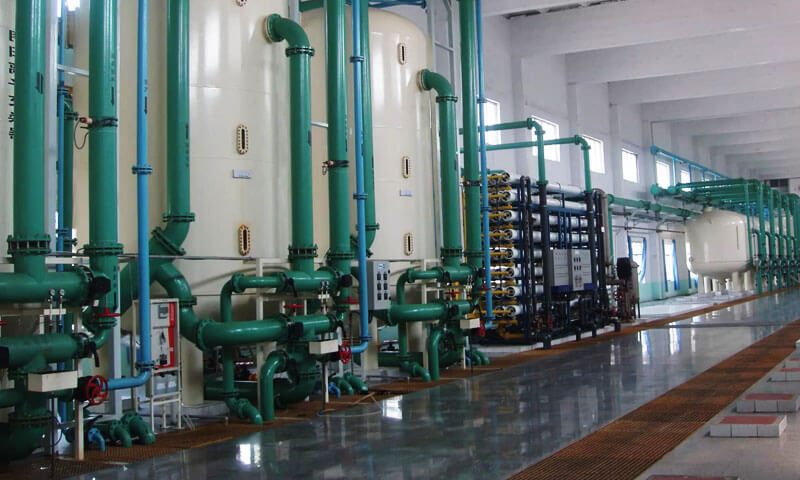
1. Увођење
Fresh water is the defining resource challenge of the twenty-first century. More than two billion people already live in water-stressed regions, and by 2030, global fresh water demand is projected to exceed supply by approximately 40%.
Against this backdrop, seawater desalination has moved from a niche industrial process to a strategic pillar of national water security.
The numbers tell the story. The global desalination market was valued at approximately USD 18–20 billion in 2024 and is projected to exceed USD 35 billion by the early 2030s, growing at a compound annual growth rate of roughly 7–9%.
More than 21,000 desalination plants now operate worldwide, производњу преко 100 million cubic meters of fresh water per day.
The Middle East and North Africa account for roughly half of global capacity, but the fastest growth is now occurring in Asia-Pacific, Latin America, and even water-stressed regions of Europe and North America.
Behind every one of those plants stands a supply chain of precision-engineered components: high-pressure pumps, energy recovery devices, Тела вентила, цеви измењивача топлоте, membrane housings, подметач, and corrosion-resistant castings.
These components operate under some of the most aggressive conditions in industrial engineering—high-pressure seawater, повишене температуре, хлориди, растворени кисеоник, and abrasive suspended solids.
This article examines the seawater desalination industry from the perspective of a precision equipment manufacturer.
It covers the engineering challenges, the critical components, material selection strategy, Производни процеси, дизајн за производност, and the opportunities that lie ahead.
2. Understanding the Seawater Desalination Industry
Seawater desalination removes dissolved salts and other unwanted constituents from seawater to produce freshwater.
The process generally includes seawater intake, предтретман, salt removal, пост-третман, and management of the concentrated residual stream.
Two established approaches dominate industrial desalination: membrane-based separation, particularly seawater reverse osmosis (СВРО), and thermal desalination, including multi-stage flash distillation (MSF) and multi-effect distillation (ВИТХ).
Their different operating principles create distinct requirements for equipment and materials.

Seawater Reverse Osmosis (СВРО)
SWRO uses semipermeable membranes to separate water from dissolved salts.
High-pressure pumps provide the pressure needed to drive water through the membranes, while most dissolved salts remain in the concentrate stream.
A typical SWRO process includes:
- Seawater intake:Water is collected through an offshore or coastal intake system.
- Предтретман:Screening, филтрација, and other treatment steps reduce suspended solids and contaminants that could damage or foul the membranes.
- High-pressure pumping:Feedwater pressure is increased to meet the requirements of the membrane system.
- Membrane separation:Water passes through the membranes, producing permeate and a concentrated brine stream.
- Energy recovery:Suitable equipment recovers part of the pressure energy in the concentrate.
- Пост-третман:The product water is conditioned to meet the required water-quality specification.
Пумпе високог притиска, Тела вентила, подметач, раздјелнике, energy-recovery devices, and pressure-containing components must operate reliably within this process.
Their material selection and manufacturing quality are therefore important to both operational reliability and maintenance planning.
Energy recovery is particularly significant because it reuses energy remaining in the pressurized concentrate rather than allowing that energy to be entirely dissipated.
Thermal Desalination
Thermal desalination separates freshwater through evaporation and condensation.
It is particularly relevant in regions with established thermal infrastructure or where process conditions favor heat-driven desalination.
The principal technologies include:
Multi-stage flash distillation (MSF):Heated seawater passes through successive chambers maintained at progressively lower pressures.
A portion of the water flashes into vapor, which is condensed to produce freshwater.
Multi-effect distillation (ВИТХ):Water evaporates across multiple effects, with vapor from one stage supplying heat to another. This arrangement reuses thermal energy across the process.
Thermal plants use heat exchangers, evaporator components, пумпе, вентили, цевовод, подржава, and other equipment that must withstand combinations of temperature, saline water, скалирање, и корозија.
Compared with SWRO, thermal desalination places greater emphasis on heat transfer, топлотна стабилност, and resistance to temperature-related degradation.
The appropriate process depends on energy availability, feedwater characteristics, product-water requirements, and project economics.
Предтретман, Пост-третман, and Brine Management
Desalination equipment extends beyond the main separation stage.
Pretreatment systems remove suspended matter and reduce the risk of membrane fouling or downstream equipment damage.
Post-treatment processes may adjust pH, add minerals, or otherwise condition the product water to meet its intended use.
Brine management is also an essential part of the plant design. The concentrate contains elevated salt concentrations and may include residual treatment chemicals.
Its handling and discharge arrangements must account for local environmental requirements, receiving-water conditions, and the characteristics of the process stream.
Из производне перспективе, these auxiliary systems require dependable filter housings, Тела вентила, раздјелнике, фитинги, chemical-dosing components, and other fluid-handling equipment.
Comparison of Major Desalination Technologies
| Фактор | Seawater Reverse Osmosis | Thermal Desalination |
| Separation принцип | Membrane separation driven by pressure | Evaporation and condensation |
| Primary енергија requirement | Electrical energy for pumps and associated equipment | Thermal energy, together with electrical power |
| Критички опрема | Пумпе високог притиска, membranes, вентили, energy-recovery devices | Испаривачи, Измењивачи топлоте, пумпе, вентили |
| Main оперативни concerns | Pressure integrity, membrane fouling, корозија, потрошња енергије | Heat transfer, скалирање, корозија, Термални бициклизам |
| Производња priorities | Accurate hydraulic components, интегритет притиска, компатибилност материјала | Термичка стабилност, отпорност на корозију, Димензионална стабилност |
| Цоммон project разматрања | Membrane performance, коришћење енергије, feedwater quality | Heat availability, temperature conditions, process integration |
Neither process is universally preferable for every project. Technology selection should reflect the specific water source, energy supply, required capacity, Услови животне средине, и коштати животни циклус.
3. Major Engineering Challenges in Seawater Desalination Equipment
Seawater desalination presents a combination of mechanical, хемијски, and operational challenges.
A component may experience several degradation mechanisms simultaneously, so material selection and manufacturing controls must reflect the full service environment.
Chloride-Induced Corrosion
Seawater contains a high concentration of chloride ions, which can promote localized corrosion in susceptible alloys.
The most relevant forms include pitting corrosion, Цревице Цорросион, and chloride stress-corrosion cracking.
Pitting can initiate at local weaknesses in a passive surface. Crevice corrosion may develop in narrow gaps around gaskets, причвршћивачи, депозити, or poorly flushed regions.
Stress-corrosion cracking requires the combination of a susceptible material, a suitable corrosive environment, and tensile stress.
For manufacturers, the implications extend beyond selecting a corrosion-resistant alloy.
Casting soundness, стање површине, crevice geometry, machining quality, and contact with dissimilar metals can all affect component performance.
High Pressure and Mechanical Loading
SWRO systems use high-pressure pumping to overcome the osmotic pressure of seawater and achieve the required membrane performance.
Сходно томе, selected pump casings, Тела вентила, раздјелнике, and connecting components must satisfy demanding pressure and mechanical requirements.
Critical design considerations include:
- Wall thickness and local stress concentrations
- Flange and bolted-connection geometry
- Pressure-related deformation
- Casting soundness and internal discontinuities
- Dimensional accuracy of sealing interfaces
- Inspection and pressure-testing requirements
A component may meet its dimensional drawing yet remain unsuitable if its material, квалитет ливења, or mechanical properties do not satisfy the design specification.
Ерозија, Кавитација, and Fluid-Induced Wear
Pump impellers and other flow-contacting components can experience surface damage caused by fluid velocity, suspended particles, and local pressure changes.
Erosioninvolves material loss caused by flowing fluids and entrained particles. Cavitationoccurs when vapor bubbles form and collapse in low-pressure regions, producing localized impacts that damage the surface.
These mechanisms depend on hydraulic design as well as material properties. Blade geometry, прелазе протока, површинска завршна обрада, operating point, and the presence of suspended solids all influence performance.
Из овог разлога, a durable impeller requires more than a strong alloy.
It also requires accurate geometry, appropriate surface finishing, adequate casting integrity, and machining of the required functional interfaces.
Scaling and Fouling
Mineral scaling occurs when dissolved constituents precipitate and accumulate on equipment surfaces. Fouling can also result from suspended particles, organic matter, and biological growth.
Deposits may restrict flow passages, reduce heat-transfer performance, interfere with valves, and increase maintenance requirements.
In membrane systems, inadequate pretreatment can contribute to membrane fouling and higher operating pressure.
Manufacturers can help by producing geometries that meet the equipment design, minimizing unintended dead zones where practical, and ensuring that components can be inspected, очишћени, and maintained.
Temperature and Thermal Cycling
Thermal desalination systems expose components to heated saline water, пара, and repeated temperature changes.
Термално ширење, скалирање, корозија, and differential movement must be considered during design.
The appropriate material may differ substantially from that selected for a high-pressure SWRO pump.
Нарочито, high-temperature mechanical properties and resistance to the actual process atmosphere become important in thermal systems.
Energy Efficiency and Reliability
Energy consumption is a major consideration in desalination economics. Pump efficiency, hydraulic design, обнављање енергије, and operating conditions all influence the electricity required to produce water.
From the manufacturing side, конзистентност димензија, proper alignment, suitable surface condition, and dependable pressure-containing components help support the intended equipment performance.
These benefits should be evaluated at the system level: no isolated casting or machined component can guarantee plant energy savings without considering the full hydraulic design and operating conditions.
4. Precision Equipment and Components Used in Seawater Desalination Plants
Seawater desalination plants depend on interconnected mechanical systems.
Each component must perform its assigned function while meeting requirements for fluid compatibility, радни притисак, Димензионална тачност, and maintainability.
For precision equipment manufacturers, the main challenge is to ensure that material selection, геометрија компоненти, and manufacturing quality align with the requirements of the complete system.

High-Pressure Pumps and Impellers
High-pressure pumps are fundamental to SWRO systems. They provide the pressure required to drive seawater through the membrane system, while impellers and other hydraulic components transfer energy to the fluid.
Typical components include pump casings, подметач, покрива, чворишта, шахтови, и интерфејси за монтажу.
| Компонента | Главна функција | Critical Manufacturing Requirements |
| Пумпа casing | Contains pressurized fluid and directs flow | Casting integrity, pressure-related strength, Димензионална тачност |
| Impeller | Transfers mechanical energy to the fluid | Accurate blade geometry, површинска завршна обрада, баланс |
| Пумпа cover | Closes and seals the pump assembly | Флатнесс, sealing-face accuracy, bolt-hole positioning |
| Схафт интерфејс и чвориште | Connects the rotating component to the shaft | Прецизност отвора, концентричност, прикладан |
| Монтажа компоненте | Support installation and alignment | Dimensional consistency and mechanical strength |
Material selection depends on the pump’s pressure, хемија флуида, температура, and hydraulic conditions.
Duplex and super duplex stainless steels are candidates for selected seawater applications, while nickel-aluminum bronze may be suitable for other marine pump and impeller designs.
Casting establishes the main component geometry; CNC machining then produces the critical interfaces required for assembly and operation.
Valve Bodies and Flow-Control Components
Вентили regulate, изоловати, and direct fluid flow throughout desalination systems.
Their bodies and internal components must provide structural integrity while accommodating flow passages, прикључци, седишта, и заптивне површине.
Common products include isolation-valve bodies, check-valve bodies, control-valve housings, бонети, покрива, и многоструке.
The main manufacturing requirements include:
- Reliable pressure-containing geometry.
- Accurate internal passages and connection interfaces.
- Properly machined valve seats and sealing faces.
- Appropriate material compatibility with seawater or concentrated brine.
- Inspection according to the component specification.
A valve body can be structurally strong yet fail to seal properly if the seat, боре, or flange geometry is inaccurate. Casting and machining therefore need to be planned together.
Energy-Recovery Equipment Components
Energy-recovery devices transfer part of the pressure energy in the SWRO concentrate stream to incoming feedwater.
Their purpose is to reduce the external energy required by the high-pressure pumping system.
Depending on the equipment design, associated components may include housings, раздјелнике, рукавима, rotating or stationary parts, and precision interfaces.
These components may require close dimensional control, материјали отпорни на корозију, accurately finished sealing surfaces, and appropriate inspection.
The actual requirements depend on whether the equipment uses a pressure exchanger, turbine-based recovery system, or another configuration.
Heat Exchangers and Thermal-Process Equipment
In MED and MSF plants, heat exchangers and evaporator equipment transfer thermal energy between process streams.
Relevant manufactured components may include selected housings, покрива, подржава, Тела вентила, фитинги, and other structural or flow-related parts.
Material selection must account for operating temperature, salinity, скалирање, корозија, и термални бициклизам.
Manufacturing priorities include dimensional stability, sound casting structure where applicable, reliable connections, and appropriate finishing of sealing surfaces.
Pretreatment and Auxiliary Components
Pretreatment and auxiliary systems support the stable operation of the main desalination process.
Depending on the plant configuration, they may contain filtration housings, раздјелнике, компоненте вентила, chemical-dosing equipment, млазнице, and custom fittings.
Although these parts may not operate at the highest pressures in the plant, their failure can disrupt the treatment process.
The material and manufacturing requirements should therefore reflect the specific fluid, излагање хемикалијама, притисак, and maintenance conditions.
5. Material Selection for Seawater Desalination Equipment
Material selection is a critical factor in the reliability and service life of seawater desalination equipment.
Components are exposed to chloride-rich seawater, концентровани слани раствор, флуктуације притиска, fluid-induced wear, и, in thermal desalination systems, повишене температуре.
Selecting an unsuitable material can lead to localized corrosion, цурење, premature replacement, and unplanned maintenance.
Дуплек нерђајући челик
Дуплекс нерђајући челици combine ferritic and austenitic microstructures, providing a useful balance of mechanical strength and resistance to chloride-induced localized corrosion.
They are widely considered for selected seawater-wetted components where conventional austenitic stainless steels may not provide sufficient corrosion resistance.
Duplex 2205-type materials are potential candidates for pump casings, Тела вентила, раздјелнике, and other fluid-handling components, provided the actual operating conditions meet the material’s requirements.
За ливене компоненте, CD3MN is a common 2205-type duplex casting grade, specified under ASTM A995 Grade 4A for relevant pressure-containing casting applications.
The performance of duplex castings depends on more than chemical composition.
Proper solution heat treatment, ferrite-austenite phase balance, ливење солидности, and machining quality are essential to achieving the specified properties.
Супер дуплекс од нерђајућег челика
Super duplex stainless steels offer higher alloy content and generally greater resistance to pitting and crevice corrosion than standard duplex grades in suitable chloride environments.
They are often evaluated for demanding seawater and concentrated-brine applications.
За ливене компоненте, CE3MN is a common 2507-type super duplex casting grade, associated with ASTM A995 Grade 5A.
Typical applications may include high-pressure pump casings, Тела вентила, and other critical wetted components where greater corrosion resistance is required.
Међутим, the final selection must account for temperature, концентрација хлорида, брзина флуида, услови пукотина, and mechanical loading.
Super duplex castings also require strict metallurgical control. Incorrect heat treatment or an unsuitable phase balance can compromise corrosion resistance and mechanical performance, even when the specified alloy composition is achieved.
Никл-алуминијум бронза
Nickel-aluminum бронза, particularly UNS C95800, is an established material for marine and seawater-handling equipment.
It combines useful mechanical strength with good corrosion resistance in suitable marine environments, making it a candidate for pump impellers, Тела вентила, and related fluid-handling components.
Unlike duplex stainless steel, C95800 is a copper-based alloy. Its performance depends on chemical composition, понашање учвршћивања, микроструктура, and the surrounding water conditions.
For pump impellers, material selection must also consider erosion, кавитација, and fluid velocity.
Порозност ливења, unfavorable phase distribution, or unsuitable heat treatment can reduce service life, particularly in contaminated or aggressive seawater.
Other Stainless Steels and Specialty Alloys
Conventional austenitic stainless steels, као што је 316л, may be suitable for selected auxiliary components or less aggressive service conditions.
Међутим, they can be vulnerable to pitting and crevice corrosion in seawater, especially where deposits, narrow gaps, повишене температуре, or stagnant conditions are present.
For more demanding applications, titanium and selected nickel-based alloys may offer advantages, depending on the fluid chemistry, component design, и условима рада.
Their higher material and manufacturing costs must be evaluated against the required corrosion performance and expected service life.
Carbon steel may also be suitable for certain structural or auxiliary components where direct seawater exposure is avoided or an appropriate protective system is specified.
Its use in wetted service requires careful assessment of coating integrity, corrosion allowance, и захтеви за одржавање.
6. Precision Manufacturing Processes for Seawater Desalination Equipment
Precision manufacturing translates the equipment design into a component that can be assembled and operated reliably. The appropriate route depends on the alloy, величина, сложеност, production quantity, and final tolerances.

Инвестициони ливење
Инвестициони ливење is suitable for complex components requiring detailed geometry and near-net-shape production.
It may be considered for smaller pump components, intricate brackets, and selected valve or flow-control parts.
The process uses a pattern to form a ceramic shell, који се затим пуни растопљеним металом.
Its benefits include good reproduction of complex shapes and the potential to reduce machining allowances.
Међутим, investment casting is not automatically the best choice for every component.
Alloy-specific process qualification, shell design, величина ливења, унутрашњи пролази, инспекција, and total manufacturing cost must be evaluated.
Ливење песка
Ливење песка is widely applicable to larger or geometrically complex components, including pump casings, Тела вентила, кућишта, and covers.
The process allows flexibility in component size and core design, making it useful for producing internal passages and integrated features.
Its success depends on suitable pattern design, gating and risering, melt control, пуњење, и учвршћивање.
За компоненте које садрже притисак, the foundry must also establish an appropriate inspection plan to assess casting soundness.
V-Process and Other Specialized Casting Routes
В-процес ливење uses dry, unbonded sand held by vacuum. For suitable large components, it may offer good surface reproduction and dimensional consistency.
Centrifugal casting can be appropriate for hollow or rotationally symmetric components, but it is generally not the default method for complex valve bodies or impellers with intricate blade passages.
The practical principle is to choose the process according to the component’s geometry and requirements, rather than assuming that a single casting technology is ideal for all desalination equipment.
CNC Machining and Precision Finishing
After casting and any specified heat treatment, CNC machining establishes the final dimensions of critical functional features.
Typical operations include:
- Milling mounting faces and flange surfaces.
- Turning cylindrical interfaces.
- Boring shaft holes and precision passages.
- Drilling and threading connection features.
- Machining valve seats and sealing surfaces.
- Finishing designated fluid-contacting surfaces.
Machining strategy should account for casting allowance, component rigidity, избор датума, преостали стрес, and inspection requirements.
Ковање
Forging is used for shafts, спојнице, and high-integrity components where wrought properties are required. Duplex and super duplex forgings offer:
- Higher strength and fatigue resistance than castings.
- Better homogeneity and fewer defects.
- Grain flow aligned with stress direction.
Додатна производња
Metal additive manufacturing (Сонм, ДМЛС) is emerging for complex desalination components such as:
- Impellers with optimized hydraulic geometry.
- Heat exchanger cores with high surface density.
- Valve internals with integrated flow channels.
Challenges remain in porosity control, површинска завршна обрада, and certification, but the technology is advancing rapidly.
Surface Preparation and Final Inspection
Surface preparation depends on the material and component function. Operations may include cleaning, уклањање ивица, обрада, passivation where applicable, or specified protective coatings.
Final inspection may involve chemical analysis, мерење димензија, визуелни преглед, suitable nondestructive testing, механичко испитивање, and pressure testing where required.
These activities verify different aspects of quality and should be selected according to the component specification and operating risk.
7. Customization and Design for Manufacturability (ДФМ)
Дизајн за производност (ДФМ) helps ensure that a component can be produced consistently without sacrificing its engineering requirements.
За опрему за десалинизацију, early coordination between the equipment designer and manufacturer can reduce avoidable changes during tooling, ливење, и машинска обрада.
Drawing and 3D Model Review
The review should identify critical dimensions, wall thicknesses, унутрашњи пролази, machining surfaces, материјални захтеви, and inspection criteria.
For pump components, particular attention should be given to blade geometry, shaft interfaces, концентричност, and specified balancing. For valve bodies, the priorities include pressure-containing walls, internal flow passages, flange geometry, и заптивне површине.
Casting Geometry Optimization
Abrupt wall-thickness transitions can create uneven solidification and increase the risk of shrinkage defects.
Appropriate radii, wall transitions, ребра, шефови, and core arrangements help improve manufacturability.
The goal is not to simplify the component at the expense of function, but to achieve the required geometry using a reliable production process.
Machining Allowance and Datum Strategy
The casting design should identify which surfaces will be machined and how much material must remain for final finishing.
A consistent datum strategy helps maintain relationships between bores, монтажне површине, and sealing interfaces.
Adequate machining allowance prevents undersize features, while excessive allowance adds cost and can increase distortion during material removal.
Prototype Validation and Production Consistency
For new components, the first article should validate the casting route, димензије, материјално стање, and inspection requirements before repeat production is released.
Changes to alloy, геометрија, алат за алате, топлотни третман, or machining sequence should be controlled and documented where they affect product conformity.
A disciplined DFM process helps reduce manufacturing uncertainty and supports more consistent repeat orders.
8. Custom Seawater Desalination Equipment Solutions from DEZE Tech
ТХИС Тецх is a precision equipment manufacturer specializing in custom components for the seawater desalination industry.
Our capabilities span investment casting, прецизна обрада, ковање, and integrated manufacturing of corrosion-resistant components.
Core Capabilities
| Способност | Спецификација |
| Инвестициони ливење | До 2500 kg per piece; дуплекс, Супер Дуплек, титанијум, Легуре никла |
| Прецизна обрада | 3-ос, 4-ос, and 5-axis CNC; tolerances to ±0.01 mm |
| Ковање | Open and closed die; up to 2,500T press capacity |
| Топлотни третман | Решење жарења, старење, stress relief with documented records |
| Дорада површине | Кисело, пасивација, електрополирање, премазивање |
| Тестирање | Spectrometer, механичко испитивање, НДТ, corrosion testing |
| Инжењерска подршка | ДФМ анализа, симулација ливења, Феа, ЦФД, reverse engineering |
Why DEZE Tech
- Deep metallurgical expertise: We understand duplex and super duplex metallurgy, топлотни третман, and failure mechanisms.
- Integrated manufacturing: Ливење, обрада, топлотни третман, and testing under one roof.
- Прилагођавање: Every component is engineered to the specific duty point and environment.
- Документација: Full traceability and quality records for regulatory and client requirements.
- Responsive engineering: DFM feedback and design optimization before production.
9. Opportunities for Seawater Desalination
The seawater desalination industry is evolving from a capacity-driven market into one increasingly focused on energy efficiency, equipment reliability, resource recovery, и коштати животни циклус.
Expanding water demand remains an important driver, but the next stage of industry development will depend equally on how efficiently plants convert seawater into usable freshwater and how reliably they operate under demanding conditions.
From a precision equipment manufacturer’s perspective, these changes create opportunities beyond supplying standard replacement parts.
They increase the need for application-specific pump components, corrosion-resistant valve bodies, energy-recovery equipment, прецизни одливци, and reliably manufactured parts that can withstand extended service in seawater and concentrated brine.
Market Growth and Emerging Demand
Several market segments offer opportunities for desalination equipment manufacturers.
Large-scale municipal desalination:
Established desalination markets in the Middle East continue to require equipment for new installations, capacity expansion, and replacement of aging components.
As water-security planning expands in other coastal regions, project developers also need equipment suitable for local water chemistry, energy availability, и условима рада.
Asia-Pacific and other coastal markets:
Population growth, industrial development, and water-resource constraints create opportunities for desalination projects across parts of Asia-Pacific, Северна Африка, and Latin America.
Project requirements vary considerably, making flexible equipment design and reliable local supply chains important.
Industrial desalination:
Рударство, petrochemical processing, генерација електричне енергије, and other water-intensive industries require dependable water supplies.
Their treatment systems may face more complex fluid chemistry or operating requirements than municipal plants, creating demand for specialized pumps, вентили, filtration equipment, and corrosion-resistant components.
Small-scale and decentralized plants:
острва, remote industrial sites, coastal communities, and isolated facilities may benefit from modular desalination systems.
These installations favor compact equipment, standardized interfaces, simplified maintenance, and components that can be replaced without extensive system modifications.
Replacement and modernization:
New construction is only one source of demand. Existing plants need component replacement, equipment upgrades, corrosion-related repairs, and improvements to energy efficiency.
Manufacturers that can reproduce legacy parts from drawings or engineering models may serve an important aftermarket requirement.
Technology Trends Shaping Equipment Requirements
| Technology Trend | Industry Direction | Implications for Equipment Manufacturers |
| Енергија Ефикасност | More efficient membranes, пумпе, and energy-recovery systems | Greater emphasis on hydraulic geometry, прецизна обрада, component balance, and dependable interfaces |
| Digitalization | Wider use of monitoring sensors, предиктивно одржавање, and digital plant models | Opportunities for sensor-compatible housings, improved component traceability, and designs that simplify inspection |
| Хибрид Десалинизација Системи | Integration of membrane, термички, and renewable-energy technologies where technically and economically appropriate | More varied requirements for pressure, температура, Термални бициклизам, и компатибилност материјала |
Brine Resource Recovery |
Evaluation of methods to recover salts, minerals, and other resources from concentrated streams | Demand for specialized equipment and materials compatible with concentrated brine and process chemicals |
| Modular Plant Дизајн | Greater use of packaged and skid-mounted systems in suitable applications | Need for compact components, repeatable dimensions, standardized connections, and efficient manufacturing |
| Lower-Carbon Производња | More attention to energy consumption, искоришћеност материјала, and manufacturing waste | Opportunities to reduce scrap, оптимизовати дизајн ливења, and improve machining efficiency |
These trends should not be interpreted as a requirement for every plant to adopt the same technology.
Equipment choices will continue to depend on plant capacity, feedwater conditions, трошкови енергије, water-quality targets, and project economics.
The more important shift is that equipment performance is increasingly evaluated at the system level.
A pump component, на пример, must meet its material and dimensional requirements while supporting the hydraulic design of the complete pump assembly.
Opportunities in Materials and Precision Manufacturing
The evolution of desalination creates several specific opportunities for component manufacturers.
Advanced corrosion-resistant alloys:
Duplex and super duplex stainless steels, никл-алуминијум бронза, титанијум, and selected specialty alloys will remain important options for different desalination applications. Међутим, no single material is suitable for every environment.
The opportunity lies in matching the alloy to the actual combination of chloride exposure, притисак, температура, услови протока, и потребан радни век.
Integrated casting and CNC machining:
Custom castings can create complex geometries for pump casings, подметач, Тела вентила, и многоструке, while CNC machining produces the final bores, Лица за заптивање, монтажни интерфејси, и друге функционалне карактеристике.
Coordinating both stages helps reduce manufacturing handoffs and supports dimensional consistency.
Адитивна производња:
Additive manufacturing may offer advantages for selected complex geometries, prototype development, and specialized components.
Its suitability depends on the alloy, component size, потребна механичка својства, површинска завршна обрада, qualification requirements, and economics.
It should be evaluated as a complementary manufacturing route rather than a universal replacement for conventional casting or machining.
Material efficiency and responsible sourcing:
Reducing casting defects, optimizing machining allowances, improving metal yield, and reclaiming suitable process materials can reduce waste.
Recycled alloy feedstock can be considered when it meets the required chemical composition, чистоћа, следљивост, and material specification.
For critical corrosion-resistant components, verified material quality must take priority over recycled content alone.
Digital traceability:
Equipment owners and engineering contractors increasingly benefit from accessible records covering material identity, хемијски састав, топлотни третман, обрада, и инспекција.
Digital material records and component passports can improve maintenance planning and simplify verification across the supply chain.
Blockchain is one possible implementation, but the underlying requirement is reliable, доследан, and retrievable data.
Regional manufacturing and supply-chain resilience:
Production closer to project locations or major customer markets can reduce logistics complexity and improve responsiveness for selected components.
Међутим, localization must be supported by adequate technical capability, контрола квалитета, and material availability; geographical proximity alone does not guarantee manufacturing reliability.
The Long-Term Opportunity: Reliable Components, Not Just More Equipment
An important opportunity lies in shifting attention from purchase price to component lifecycle performance.
Desalination plants operate as interconnected systems, and a failure in one critical pump, вентил, or pressure-containing component can create maintenance work or interrupt downstream operations.
For manufacturers such as ТХИС Тецх, this creates an opportunity to contribute through custom component production, appropriate material selection, прецизна обрада, and inspection according to the customer’s technical requirements.
The goal is not to claim that one casting material or manufacturing method can eliminate all failures.
It is to ensure that each component is produced for its intended service environment and verified against the relevant specifications.
The strongest long-term opportunity in desalination is the combination of efficient plant design, suitable corrosion-resistant materials, прецизна производња, and disciplined lifecycle management.
Manufacturers that develop these capabilities can support both new desalination projects and the modernization of existing infrastructure.
10. Закључак
The seawater desalination industry depends on equipment that can operate reliably under challenging combinations of chloride exposure, притисак, температура, проток течности, and continuous-duty requirements.
Пумпе, подметач, Тела вентила, energy-recovery components, Измењивачи топлоте, and auxiliary systems each impose different material and manufacturing demands.
Reliable component production requires a coordinated approach to material selection, casting-process design, термичка обрада где је наведено, ЦНЦ обрада, дорада површине, и инспекцију квалитета.
No single alloy or manufacturing process is suitable for every application, and the final choice should always reflect the actual operating conditions and applicable technical requirements.
For OEMs and desalination equipment builders, a capable precision manufacturing partner can help translate drawings and material specifications into components with controlled geometry, verified quality, and appropriate service characteristics.
DEZE Tech’s role is to support custom casting and machining requirements at the component level, helping customers coordinate manufacturing around the needs of seawater desalination equipment.
The long-term objective is straightforward: manufacture components that meet their intended requirements and contribute to dependable, maintainable desalination systems.
Често постављана питања
What equipment is used in seawater desalination plants?
Major equipment includes seawater intake systems, филтри, high-pressure pumps, membranes or thermal separation equipment, energy-recovery devices, вентили, раздјелнике, Измењивачи топлоте, post-treatment systems, and brine-discharge equipment.
What is the difference between SWRO and thermal desalination?
SWRO uses high-pressure pumps and semipermeable membranes to separate water from dissolved salts.
Thermal desalination uses evaporation and condensation, typically through systems such as MSF or MED. They have different energy requirements and equipment needs.
Why are duplex stainless steels used in desalination equipment?
Duplex stainless steels combine relatively high strength with resistance to localized corrosion in suitable chloride environments.
Their suitability depends on the grade, материјално стање, температура, хемија воде, микроструктура, и дизајн компоненти.
What materials are best for seawater desalination equipment?
Супер дуплекс од нерђајућег челика (ASTM A995 Grade 5A/6A), титанијум, 6Mo austenitic stainless steel, and copper-nickel alloys are the primary materials.
Can 316L be used in desalination plants?
А: 316L can be used in ambient-temperature, low-chloride, low-velocity applications such as non-critical piping and structural components.
It is not suitable for high-pressure, високе температуре, or high-velocity seawater service.

